The Wahoo KICKR is probably the most anticipated trainer to hit the market in quite a while, if not one of the most anticipated sports technology products for endurance athletes to hit the market. But, how does it live up to the promises and fanfare? Well, I’ve spent the last two months using it week in and week out. Every aspect of this trainer I’ve poked at or dove into. Heck, I even took parts of it apart (with wire cutters!).
In doing so, I’ve got a pretty good grasp on how the unit works, as well as all the details inside and out. Because I want to be transparent about my reviews, once my evaluation period with the Wahoo KICKR has elapsed, I send it back to them in the Atlanta. Simple as that. Sorta like hiking in wilderness trails – leave only footprints.
Lastly, at the end of the day keep in mind I’m just like any other regular triathlete out there. I write these reviews because I’m inherently a curious person with a technology background (my day job), and thus I try and be as complete as I can. But, if I’ve missed something or if you spot something that doesn’t quite jive – just let me know and I’ll be happy to get it all sorted out. Also, because the technology world constantly changes, I try and go back and update these reviews as new features and functionality are added – or if bugs are fixed.
Unboxing:
First, let’s get this thing unboxed. Twice.
Here’s the outer shipping box that the KICKR comes in. If you buy your KICKR via the interwebs, it’ll likely come in this box.
Inside the heavy-duty cardboard box, you’ll find the KICKR’s inner box.
Thus, if you buy your KICKR at a local bike shop, you’ll likely find it looking more like this:
From there you’ll crack open the outer shell and find the protective cardboard inside. Mine held up pretty well given the travelling it did. It first flew from Taipei to Las Vegas via UPS. Then, I dragged it across the Vegas CES show floor to my hotel (no easy feat for those familiar with Vegas). After that, I took it from Vegas to Houston to Paris via commercial airliner (checked luggage). And then finally, I dragged it again through the subways of Paris to my apartment. I’d imagine it should hold up pretty well in a mini-van ride home from the bike shop.
Below the cardboard is the KICKR, fully packaged up in plastic.
After removing the KICKR, you’ll find another small box and a manual.
Inside the small box is the power block. It’s 100-240v, with a replaceable US cable on it. As I’ll discuss later, the power block itself works just fine in Europe.
Then we’ve got the quick start guide. Though, I highly doubt you’ll need it after this post.
Below is a plastic clip for disc brakes on mountain bikes, to keep them from potentially becoming engaged while riding the trainer.
Thus, with all the pieces taken out of the box, here’s what you’ve got. The trainer, the power cord, a small manual and warranty statement, and then the little plastic doohickey.
All good?
Good.
Let’s take a quick tour of the unit before we dive into it.
First up to note is that you’ll unfold the legs for riding, allowing you to store it in smaller spaces. There’s a handle on the back to pick it up – it says ‘Crank it up’ on it.
The legs that fold out have these all-metal clips on them. They feel strong and I don’t suspect they’ll break.
As I’ll discuss in more detail in the next section, the trainer includes a cassette, which is pre-mounted onto the flywheel. It also includes the training skewer.
Down below, you’ll see a small round knob, along with a blue metal lever. This allows you to control the height of the KICKR. This is of use for different tire sizes, so the rider isn’t so high off the ground (perfect for The Girl with her 650 wheels).
Finally, note on the backside of the unit, the large flywheel isn’t ‘open’ like some trainers, rather closed. The entire flywheel does rotate though, including where you see those silver arrows (it rotates in that direction).
With the high level overview complete, lets start getting detailed.
Weight/Size Comparisons:
When it comes to size, the unit is definitely the heftiest of the bunch…by far. As in, put that kid on a diet and take away the marshmallows! Yes folks, that’s pounds below:
46 pounds in total (about 21kg)!
To put that in perspective, the CompuTrainer weighed in at 22 pounds, and the Tacx Genius at 25 pounds, and the LeMond Revolution at 34 pounds.
Now, I don’t think the weight is really a bad thing. Yes, beastly, but not bad. It’s stable, and that’s one of my most important trainer aspects. I HATE wobbly trainers. The weight likely comes from the components. The thing is made out of steel for all major components. Which means that it will hopefully last a long time. Where it does pose a slight problem is for those folks that may take trainers with them while travelling. Most airlines have a 50-pound weight limit for checked luggage (without additional fees), and this just sorta barely slides in under that.
When people talk about the CompuTrainer, there’s one thing they always say: “It’s build like a rock”, which is immediately followed by “I’ve had mine for 10 years, and it still keeps on ticking”. I think from a materials standpoint, the KICKR is in the same ballpark. Of course, time will be the true test.
From an electronics standpoint, having Bluetooth 4.0 and ANT+ in there should make it relatively future proof for a while. You can still connect modern smart-phones with legacy Bluetooth headsets from years ago, and thus I don’t see backwards compatibility being an issue anytime in the next 6-10 years.
Lastly…one final thing to touch on.
LeMond Revolution Pro this is not. It’s funny, a lot of folks have made observations that the Wahoo KICKR is simply a rip-off of the LeMond Revolution Pro Trainer. To help understand why that isn’t the case, let’s run through the main differences.
A) The LeMond trainer is wind-based, thus wind provides resistance. The Wahoo KICKR is electronic. No wind is used, nor emitted.
B) The LeMond trainer does not have resistance control. The Wahoo KICKR does. In other words, you can’t control the LeMond, you can control the KICKR.
C) The LeMond trainer uses private-ANT to communicate between itself and the PowerPilot head unit. Thus no connecting your ANT+ head unit (i.e. Garmin Edge 500) to the LeMond. The KICKR uses open-ANT+, and provides speed and power (and thus distance).
D) The LeMond does not have Bluetooth Smart (or any Bluetooth in it). The Wahoo KICKR does.
E) The LeMond trainer has no API or development aspects to it for 3rd parties. The Wahoo KICKR does.
F) The LeMond trainer does not have an adjustable height. The Wahoo KICKR does. Same goes for adjustable legs.
The point here isn’t to just be a bulleted list of things the LeMond trainer doesn’t do. Instead, juts to be clear on differences. And certainly, there are things the Wahoo KICKR doesn’t do. For example:
A) The Wahoo KICKR is relatively normal from a loudness standpoint. The LeMond trainer is 100db. Not so quiet.
B) The Wahoo KICKR weighs 46 pounds and eat kittens for breakfast. The LeMond trainer weighs a fraction of that.
C) The Wahoo KICKR has a sorta-mostly-realistic road feel. The LeMond Revolution has a very realistic road feel.
As you can see, the KICKR is no more compatible to the LeMond Revolution Pro than a mountain bike is comparable to a road bike. Yes, they both vaguely look the same from a distance, but that’s about where it ends. If you wanted to add up the things that are similar, it’d look roughly like this:
A) Both trainers use a cassette to attach your bike to them.
B) Both trainers have three legs
C) Both trainers have a big round thing on them.
D) Uhh..both trainers attach bikes to them? Umm, end of list.
The LeMond Revolution was actually based on a Russian Physicist design that Greg LeMond worked with in the 1980’s. He adapted it as part of the Revolution Pro. Again, both trainers have their markets, but it’s important that if you’re comparing the two on looks alone, then you’re likely missing the forest from the trees.
Hardware Setup:
During the next few sections I’m going to walk through using the trainer on a day to day basis, and then after that I’ll dive into some of the 3rd party apps.
Attaching your bicycle to the trainer:
First up, is getting the unit attached to your bicycle. To do so, you’ll be removing your rear wheel. It has no action in this game. Instead, the KICKR comes with a rear cassette that replaces the cassette on your rear wheel. This has both benefits and annoyances. From a benefits side you remove issues around rolling resistance of the wheel itself, as well as wear and tear on the wheel. Trainers are notorious for chewing up wheels (quite literally, leaving fine black dust everywhere). The downside though is that you have to take off your rear wheel and put it back on. Some bikes are easy, and others are a bit of a pain in the butt (such as my P3C). If it were me, I’d probably have preferred not removing my wheel – but that’s just a personal preference.
Once you’ve got your wheel removed, you’re going to go ahead and place it on the skewer that’s provided with the KICKR. I find it easiest to remove the skewer entirely and then thread the skewer in once your bike is on the cassette.
After that’s complete, ensure you tighten up the skewer.
Done, you’re ready to ride.
Now, if you have a smaller bike (or one with a different wheel size), you can also adjust the height of the trainer down along the bottom:
For example, when The Girl rides her bikes, I’ll sometimes remember to adjust it so that it’s lower to the ground for her.
If you haven’t yet plugged the trainer in, be sure to do that. The cable that comes with it plugs into a standard American outlet. But, it’s 100-240v, which means it works anywhere in the world with a simple $1-2 adapter. That’s how I use it over here in France.
In fact, if you want to get all fancy, you can simply change out the actual cable from the power block to the wall. Again, a couple dollars.
Ok, and the power cable plugs into the trainer at the bottom, under it.
With that, let’s start using it.
Software Setup:
Wahoo Fitness provides the Wahoo Fitness App on the iPhone/iPad platform, which is their fitness application that connects to the trainer and records data. This is the same application that also works outdoors while cycling or running. And, the same application that connects to both ANT+ devices (with the ANT+ adapter), as well as Bluetooth Smart devices (for compatible devices). The applications records your workout, as well as exports the data to any number of formats (i.e. CSV/TCX/etc…) and services (Training Peaks, Nike+, Garmin Connect, Strava, etc…).
After downloading the free app, you’ll be brought here:
Next up is pairing to your KICKR trainer. To do this, we’ll dive into the settings. It’s here we can pair any number of devices – from the KICKR to heart rate straps, to speed and cadence sensors. Note that I created a separate ‘profile’ for the trainer. I do this so that I can disable the GPS on it, and then not mess up my running or outdoor cycling settings with GPS on.
At any rate, within settings we’ll have a list of sensors we can pair with:
We’ll click to add a sensor, and then add a power meter sensor:
Once we do this, it’ll start searching for the Bluetooth Smart power meter device profile. In the event you happen to have a Stages Power Meter nearby, note that it would pick it up as well – so just be aware of which one you pair to.
Once that’s done (and it’ll only take a second), you’ll want to pair any other sensors you have. I recommend picking up the Wahoo Blue SC, since at this time the KICKR doesn’t provide cadence information. The Blue SC does, and will then keep everything Bluetooth Smart.
And finally, pair up a heart rate monitor if you have one:
Next is a REALLY important item, especially if you have the Blue SC. You’ll want to change the speed data to pull the speed data back to the KICKR. Otherwise it’ll pull from the BlueSC, which won’t have any speed data since you won’t have a magnet flying past the magnet since your wheel is off the bike.
And, while you’re at it, ensure that the cadence is coming from the combo sensor, and not from the KICKR.
Finally, you’ll want to scroll down in all the data pages that are offered and ensure the KICKR Training Page is enabled:
There are numerous training pages available to you, below is a quick gallery of them. My only complaint though is that at the end of the day I’d really much rather just customize these myself – like on most devices. Pick and choose them. Sorta like how I can do on the RFLKT. Instead, they are pre-canned and I have to live with whatever I was given, and on the pages they were set. Note when it says ‘Tap to Toggle mode’, it means that you can tap the page to then alternate through variations of that data from Current data (instant), to previous and current laps and averages.
Ok, with all the data pages out of the way, let’s get into controlling the KICKR.
Resistance Control:
The KICKR has four user accessible control modes. Each one of these modes controls the trainer in slightly different ways. All of these modes are found when you enabled the KICKR control page, and are just sub-sections of that page.
Level Mode:
In this mode, the KICKR has a simplified resistance level bands. From 0 to 9. These are somewhat abstract, and simply levels that Wahoo has effectively christened. Just like your stationary bike at the gym has random levels on it, these are sorta random too. But, if you just want an easy option for remembering what setting you had it on last – this is it. I prefer the other options.
Resistance Mode:
This mode simply controls the resistance of the brank unit – on a scale from 0 to 100%, with 100% being ‘full stop’. If you’re thinking of incline, that’s later on in a different mode.
Erg Mode:
Erg mode is without question my favorite, and where I spend the vast majority of my time. It’s simple, and potentially brutal. In this mode you simply specify an exact wattage, and the unit holds it. No messing around here. Input wattage, trainer responds, you hurt. Rinse, repeat. It’s how I do most of my workouts – based on set wattages. You utilize the +/- buttons to increase the digits that make-up the watts. In general, I find the KICKR will adjust it within 1-2 seconds. Enough that it doesn’t stop-you dead if you go from 100w to 400w.
As you’re riding, the unit will show you the target power (what it’s putting out) above, and then the actual recorded power below.
Sim Mode:
Last is ‘Sim Mode’ – short for simulation. In this mode, it allows you to simulate different settings based on not only slope and wind speed, but also rolling resistance. First though, you’d define a slope (i.e. hill), and then you’d define the wind speed (i.e. pain).
Then, you click on the ‘Bike Type’ setting and you can define the exact Coefficient of Rolling Resistance and Drag Coefficient of your setup (primarily your wheels).
I haven’t played with this particular setting too much – but the potential is pretty impressive. There’s plenty of apps and data sources out there today that allows you to pull in and specify this information. Which would primarily serve to better simulate the impact of your tires (and body drag) – given that the KICKR doesn’t otherwise include any of those forces in its equations.
General Wahoo Fitness App Items:
After you’re done riding, you’ll want to save your workout. Note that you can press pause at any time to stop recording. Also note that incoming calls/texts do not impact the KICKR from recording, it’ll continue to do so in the background. At the end of the workout after you’ve pressed stop, you’ll get this screen:
Upon saving you’ll get some workout summary details. This includes overall averages, as well as lap averages. I don’t find the lap averages page terribly useful, primarily due to the lack of power information on there.
From there, if you click the little icon in the upper right corner, it’ll allow you to save it out to various destinations that you’ve pre-configured. In my case, I’ve setup the unit to share to Training Peaks and Garmin Connect. Additionally, I can e-mail the workout files. E-mailing is great because it includes the files in a slew of common formats, that virtually any application on the planet can accept.
If you haven’t setup sharing ahead of time, fear not, the workout is still saved locally and you can share it later. You can pre-configure these sharing options though with a number of services. Below are the current services.
With that, you’re data is transmitted off to the service and you’re good to go.
You can see how I often feel that the best application out there for use on the iPhone and flexibility of the data is actually the default Wahoo App. I’m one who just wants the data in the formats I want it in, and care little about putting it in yet another app’s online site. Thus, this allows me to get it to Training Peaks or Garmin Connect (my two main dumping grounds for files), and not worry about it.
Note that the application supports user profile settings such as setting up heart rate zones, power zones, weight, and audio cues as well. You can see some of the zones information in my various screenshots above.
Trainer Feel:
A lot of people ask about ‘feel’ when talking about trainers. I’m a horrible person to ask about that. Perhaps because with the exception of the LeMond Revolution Pro, most trainers for me fall into two categories: Feels fine, or feels sucky. The Wahoo KICKR falls into the ‘feels fine’ category. Admittedly, at the upper end of that. The LeMond revolution is the only trainer that I say ‘Yes, I FEEL that!’.
I train so much in erg-mode, that ‘feel’ isn’t really part of the equation. Rather, providing consistent resistance is of more importance to me. Which isn’t to say I don’t value feel at all. It’s just that I personally don’t rank it high on my list of important items in a trainer. Rather, I prefer accuracy, durability, interoperability, and anything else ending with the letter ‘y’. Touch-feely does not count.
But, others who have ridden KICKR that do rate feel higher, do like the feel more than most trainers…for what it’s worth.
Noise Levels:
Noise levels across trainers are a funny duck. There are many aspects that impact noise, from cassettes to trainer tires to room flooring (i.e. wood vs carpet), to trainer mats and so on. The most important non-environmental factor across trainers is actually speed. Not wattage. I can keep the wattage at a set amount, and simply vary my speed (via gearing or cadence) to change the volume
I previously had done a sound test back in early January, comparing the KICKR to both the LeMond Revolution as well as the Kinetic Road Machine. In that test I used a few different benchmarks, though keeping the gearing and speed levels the same – resistance was the one variable. I generally went from low speed to high speed and just let it be.
This time, I decided to approach it slightly differently. Instead of focusing as much on a high-end speed, I’d just focus on a very common threshold – 200 watts at 20MPH. I kept my gearing exactly the same across all three units (well, you’ll see I had to gear down one ring on the Kinetic because I was too fast).
I then increased the speed to 30MPH, and then to 50MPH on both the KICKR and the CompuTrainer. The sole purpose of this was merely to make it as loud as possible.
Thus, in effect I’ve given you noise levels at ‘normal’ (20MPH), not-so-normal-but-perhaps-occasional (30MPH), and outright silly (50MPH).
Here’s the new video montage:
And, for those that don’t care about video, here’s the simple table.
Trainer
20MPH (200w)
30MPH (200w)
50MPH (200w)
Wahoo KICKR
68.7db
83.5db
86.1db
RacerMate CompuTrainer
69.7db
82.4db
85.8db
Kinetic Road Machine
70.0db
82.6db
N/A
I didn’t include the LeMond Revolution Pro this time, because honestly it’s like bringing a bull into a china shop. I’ve well established it’s incredibly loud at every level, well beyond these other trainers. Not even in the same city, let alone ballpark. And just repeating how much louder it is than the other ones seems silly. You can watch my previous video here on it.
Calibration:
The KICKR supports a calibration spin down method, which enables you to account for any resistance in the system, and/or environmental or manufacturing variations. In order to initiate the spin down, from within the Wahoo Fitness app you’ll simply select the little wheel icon from the upper right corner. You can trigger this at any time during a workout (before starting, during, paused), though I’d recommend you pause the workout so you don’t have a random data blob in the middle that doesn’t match the rest of your workout.
When you do so, you’ll see the button for ‘Calibrate KICKR’ – which will give you instructions to perform the spin down. In short, you’ll be going up to 23MPH, and then coasting until you see a notification (10MPH).
You can see the system will wait until you’ve reached the correct speed:
Then, as you coast down from 23MPH to 10MPH, it’ll
Finally, spin-down complete!
No specific calibration value is outputted during calibration – just a good to go!
3rd party apps also have access to the calibration API’s. And the API’s for 3rd party apps also provide more detailed feedback on the above calibration method (result feedback). And in fact, they have two options. The first is the roll-down like above. Different apps have implemented that different ways. You’ll see for example in Trainer Road that the upper left corner will say ‘Calib Ready’ when it’s prepared for a calibration:
The second method that apps have available to them is a zero-offset. This test is done with the unit at a stand-still (no pedaling). Today, to my knowledge no 3rd party apps have yet taken advantage of this functionality – though it is there. You can see this available in a non-public toolset that Wahoo has for testing, which will give identical results for 3rd party apps.
I’d expect to see this added in an app like Golden Cheetah, which caters to users that may have more desire to tinker. Wahoo believes that the current roll-down method is very accurate, and is their preferred method. In my testing, I’d agree with that assessment. It’s easy and straight-forward.
January 2016 Update Note: In addition to the spin-down type calibration, Wahoo now also offers a physical calibration tool. This is essentially a weight that’s used to calibrate your KICKR if you believe it’s out of whack. You can either buy this tool from them, or you can contact their support desk and they’ll loan it to you (though I think there is sometimes a waiting list).
Firmware Updates:
The Wahoo KICKR can receive over the air firmware updates via Bluetooth Smart. When a new firmware update is available, the Wahoo App will notify you of the update, and then redirect you over to the Wahoo Utility app, which performs the actual update:
The updater will first download the software package from the internet, and then apply the update.
I find the process usually takes a few minutes to complete. So I often just leave it sitting on the flywheel to update. I figure that gives it the best connectivity to the communications pod a few inches away.
Once complete it’ll ask you to unplug the KICKR trainer and then reset any KICKR apps that you may have had open. Overall a very painless process that I’ve done numerous times over the last two months.
January 2016 Notes: In addition to the main production Wahoo firmware updates, you can also get Wahoo KICKR beta firmware updates (such as FE-C), which can sometimes add new features ahead of release. These beta updates may last months. To access the beta updates, you’ll need the Wahoo Utility app, and then you can follow the steps in this short movie clip to access the beta firmware menu.
Power Accuracy:
I’ve spent a LOT of time riding the KICKR over the past two months. Tons of time. And if there’s nothing else that’s impressive, it’s aspects of the accuracy component. Now, I say ‘aspects’ because there are actually two pieces I look at when I’m talking about resistance controlling trainers. The first is how quickly the unit controls the resistance, and how it responds to your output. Remember, the trainer is designed to hold a given wattage in most circumstances – either directly or indirectly. Meaning it’s holding a specific value such as watts, or it’s holding a grade. You want to ensure that if its holding a wattage, that it can do that even when I dramatically change my output.
Take for example the Tacx Genius. This trainer had a very slow response to my sudden changes in wattage. Sometimes 10-15 seconds if I made a sudden jump, before it would pull the resistance unit back in to what it was set out. The CompuTrainer on the other hand, very quick, it doesn’t let you get out of line.
I found the KICKR more in line with the CompuTrainer. It kept the wattage right on-par, despite any fluctuations on my part. And within 1-2 seconds it would adapt to any major shifts. Significant wattage changes saw roughly the same ramp. I saw slightly more ramp when I was talking major shifts. For example, during a TrainerRoad workout that went from 155w to 465w, it took about 4-5 seconds for it to ramp up. This isn’t really a bad thing per se, as it means you don’t have the brick-wall syndrome (where it feels like you’ve just smacked a brick-wall), and thus it allows your legs to adapt to the change.
The second piece is accuracy against other power meters. Anytime I test against other power meters, there’s an aspect of ‘Who’s right?’. And honestly, I’m not here to answer that. And thankfully, in this case, I don’t really think there’s a reason to try and answer that. To put it into perspective, see below:
The two Edge 800’s are paired to the Quarq and Stages PM, while the iPhone is controlling the KICKR. The big iPhone number (200w) is wattage set-point. The small iPhone number (199w) is my current instant-power. On the Edge 800’s you see my 10-second power as the upper number (200w and 206w respectively), and the number directly below that is the 30s average (199w and 205w respectively). Cadence is also displayed, based on those units internal power-meter provided cadence sensors.
With the latest KICKR firmware late last week, they’ve resolved any outstanding beta bugs I was seeing, and things are very stable now – from low speed to high speed, as well as coasting. Previous beta drops (again now solved) had some issues with coasting where it didn’t account for it, thus skewing some of my numbers from those workouts for any time I was coasting (which was pretty rarely).
Here’s a workout I completed on the latest firmware, and you can see just how solid it tracked against both the Quarq:
From a power meter variability standpoint, here’s how things tracked. First, in raw watts. What you see is that post-calibration (at about the 600 marker), things are right on top of each other. Generally within 10w of variability, but often within just a couple watts.
Now where you see differences is those five spikes – or quick accelerations I did. The reason for the differences isn’t actually dramatic differences in power readings. Instead, it’s just inherent lag between data sets albeit synchronized).
That said, here’s what things look like from a percentage standpoint (I cut it off at 60-80% so you’d get more action on the graph):
Again, you’ll see the big jumps during the accelerations just due to tracking. If you look at the point after the calibration, things get remarkably stable. This was mostly a 10-minute relatively steady-state effort. Post-accelerations you see a bit more variability. This is partially the result of just the way that the Quarq reports power back having more variability in it – like most all power meters out there today. For fun, I picked a completely random 15-20 second snip (I really just scrolled a bunch and just stopped and copied a chunk of data. What you see there is that the KICKR has much less variability between data points, and thus you’ll see that more stable line.
You’ll note that all three are within 2.3% of each other. In the above, I went ahead and included the Stages data that I was capturing as well. Just for perspective on data frequency. I have specifically not included it in the other graphs as I’m still working with them on the a follow-up review, and I don’t want this to become another Stages PM review. As I’ve said elsewhere, I’ll definitely post an update to that in the future. But I don’t have a timeframe for doing so.
On the KICKR front, obviously, because of a lack of rear-wheel, I cannot compare it with a PowerTap output – which would otherwise be on the rear wheel.
January 2016 Note: While my experience with the KICKR has been very solid on the accuracy front (on both my initial KICKR this review is based on, as well as the one I later purchased). However, some folks have seen power accuracy issues. It appears that early models (i.e. those in the first year), were very solid. Then somewhere along the way accuracy slipped. In early 2015, Wahoo added a person dedicated to accuracy testing of KICKR’s, as well as introduced a number of power accuracy improvements. These appear targeted at later-production KICKR’s that were having accuracy issues.
RFLKT Control:
At present, one cannot control the KICKR trainer using RFLKT. It is coming, but it’s just not there yet today. RFLKT today allows you to view information provided by your iPhone over a Bluetooth channel. Think of it as a remote display. 3rd party applications are being developed by various companies to take advantage of this. Effectively replacing a Garmin on your handlebars. Instead, app makes such as Strava would have connectivity to the RFLKT, and be able to display whatever they pleased on it.
You can and will however get data fields from KICKR presented to RFLKT. For example, I can pipe the wattage to the unit, and stop and start the training effort from the RFLKT.
Down the road, I’d like to see everything from being able to control wattage/resistance (basic) to starting a calibration routine. All this is relatively straightforward from a programming standpoint – it’s just a matter of where it stands on Wahoo’s internal development totem pole. And note that this would be controlled by either the Wahoo App, or another application (Wahoo or 3rd party). Meaning that the RFLKT wouldn’t directly control the Wahoo KICKR, but instead would pair to an phone or computer app, which in turn controls both. All of this control is done over Bluetooth Smart, as the current crop of RFLKT units do not have ANT+ within them.
ANT+ & Bluetooth Smart:
The KICKR is unique in that it’s the only trainer on the market today that is fully Bluetooth and ANT+ enabled. The unit contains the necessary hardware for communication to existing ANT+ devices (such as the Garmin Edge 500 or Forerunners), as well as Bluetooth Smart support for phone and tablet based devices.
Bluetooth Smart integration requires the use of a Bluetooth 4.0 device. Which means you have have an iPhone 4s or newer, or a 3rd generation iPad or newer. Additionally, at this stage the only Bluetooth Smart device support for these device profiles is on the Apple platform.
From the ANT+ side, the unit uses the ANT+ Bike Power Meter device profile to broadcast your current power and speed. This means it’s compatible with all current ANT+ power meter head units. For example, the Garmin FR310XT/FR910XT/Edge 500/Edge 510/Edge 705/Edge 800/Edge 810, all CycleOps Joule units and Joule GPS, Timex Global Trainer, Magellan Switch, and countless other apps. It will not at this time broadcast cadence though, so you’ll need to add an ANT+ cadence meter into the mix in order to get that on an ANT+ enabled device.
On the Bluetooth Smart side, it uses the standardized Bluetooth Smart Power Meter device profile to broadcast the same power and speed information. This means that it’s compatible with devices that support that device profile. At present, that’s only software apps, and no physical head units. The unit utilizes the same standard as the Kinetic inRide and Stages Power Meter, which are both based upon the agreed and ratified spec for Bluetooth Smart PM’s.
Finally, at this time (as of March 5th), Bluetooth Smart is currently the only way to control the resistance in the KICKR trainer. Meaning, you have to have a compatible Apple device (either phone/tablet/Mac) to control the unit. The next step is ANT+ control, which the Wahoo team is working away on. They expect it’ll be released to developers in the coming weeks (which I’ll talk about in a second).
At this point, support for Bluetooth Smart control on Windows simply isn’t on their radar. Instead, they’d leverage ANT+ support for that. On the Android side, Bluetooth Smart control will be coming, but it’s really in the hands of the handset manufactures right now, more than Wahoo (Wahoo is waiting on them). Samsung will be first, and HTC following that. The good news there is that the ANT+ support with a couple dollar OTG cable should largely get Android folks up and running quickly once the Wahoo ANT+ support is finalized.
Finally of note, is that CycleOps has committed to adding in the ANT+ Resistance Control spec to their trainers as well, as soon as it’s finalized by Wahoo Fitness. This is actually pretty significant, as in doing so it completely opens up their platform to the same level of 3rd party development that Wahoo will have (minus the Bluetooth Smart side for the moment). Further, I think it’ll hopefully pressure other companies to do the same (looking at you Tacx).
January 2016 Update: In 2015 many companies adopted the ANT+ FE-C standard for control of trainers from apps such as Zwift, TrainerRoad, and Kinomap (among many others). At this time, Wahoo is currently beta testing this for the KICKR & KICKR SNAP, which can be accessed via the beta firmware option (see the end of the Firmware Updates section above to access it.)
3rd Party Apps:
January 2016 Note: It’s really best to just see my trainer app guide (it’s massive), since everything posted below, while generally still correct, is rather outdated. Whereas my guide is huge and covers some 20 apps!
Perhaps the biggest single reason the KICKR is so different than other trainers is the open nature of it. Thus, I really wanted to dive into what some of the 3rd party apps are doing. Now, this section is a bit unique in that I’m not so much doing a deep-dive review on these apps. More just talking about what they do. Some of these apps are still in development, and some are complete (I’ll note which ones). And realistically, there’s a TON more apps in the pipeline by a lot of folks I’ve talked with. As these companies release apps I’ll add them in here. Sort of a gallery. Well, at least until there’s too many. Many of these companies are waiting for the ANT+ Resistance Control. In talking with Wahoo over the weekend, they hope to have this in developers hands in the next 1-2 weeks. After getting the units into your hands today, that’s their next big-ticket item to knock out.
Once that happens, it really opens the door to all of the PC apps, and apps that don’t have Bluetooth Smart in it. That’s because these apps can use the ANT+ USB adapter, as well as the existing Wahoo Fitness iPhone ANT+ adapter (for pre-iPhone 4s units).
But ultimately, I knew folks really wanted to hear what I had to say – so I wanted to go ahead get the review out the door, even if all the apps weren’t quite finished. As such, a huge thanks to all the developers below who I pestered endlessly to get me pre-release builds to be able to put this all together in time.
3rd Party Apps: Trainer Road:
TrainerRoad is one of the apps that is fully KICKR ready today (if you have a Mac, pending ANT+ support for Windows). In fact, it’s actually supported KICKR since all the way back in August at Eurobike. TrainerRoad is a subscription based app that’s available on Windows and PC’s (not on iPads/iPhones) that has a massive workout library and guides you through completing workouts with your data being recorded on the computer and then uploaded upon completion to a central web platform.
The first step that you’ll complete is to pair the computer to the KICKR. To do so you’ll simply click the ‘Pair’ button next to Wahoo KICKR, and it’ll find the trainer via Bluetooth Smart. This only takes a few seconds. Additionally, I’ve also paired in a Bluetooth Smart Heart Rate Strap as well as Bluetooth Smart Speed/Cadence sensor. TrainerRoad also lets you use existing ANT+ sensors you may have too. So if you have an ANT+ HR strap or sensor, you can mix and match with KICKR to get all your data.
TrainerRoad has a massive online workout database, and you can also create your own workouts for it as well. In my case, I just cracked open a quick workout and went to town.
TrainerRoad has the concept of target power – which is the power you should be attaining. In the case of KICKR, the software will automatically control the trainer to be that particular resistance/wattage. So in this case ,you can see that it’s currently set for 403w, and I’m achieving 404w. On the right side, you’ll see my heart rate (156bpm), and my cadence (83RPM). In the middle you’ve got my interval time, and time left in the interval.
Looking at the graphs, it’ll track that information as I go along throughout the workout.
Additionally, as you can see below, as I complete intervals it’ll automatically spit out summary information for each set. In this case my precision is at a bit of a disadvantage due to the slight ramp rate from 124w to 465w (in this case), thus it’s a bit lower than you’d probably have for a longer interval.
TrainerRoad has a pretty huge and loyal following, and is currently in their second season in the market.
About the only thing I’d love to see them integrate into this is support for RFLKT – primarily to control the workout resistance as required (and or pause/stop). Today you need access to a keyboard (or, to place your sweaty hands on your laptop/keyboard). This would seem to be a perfect use case for RFLKT.
The again, most every app I talk about here is a perfect use-case for RFLKT.
Note that TrainerRoad also supports videos like Sufferfest, which are synchronized to both the resistance and the video itself. I demo’d one of these in TrainerRoad as part of my Kinetic inRide Review, so you can check it out there.
3rd Party Apps: Kinomap:
Next up is Kinomap. Kinomap is different from the likes of TrainerRoad in that Kinomap’s focus is primarily on recreation of outdoor rides. They do this by providing a subscription service that includes unlimited use of a video library. That video library has GPS courses which are synchronized to it, which in turn control the KICKR trainer to feel like outdoors.
You’ll pair the Kinomap application to the KICKR, as well as any ANT+ or Bluetooth Smart sensors you have:
You can also specify resistance attributes as well as which format to show your speed/distance data in (such as MPH or KPH):
First up is picking out a course to ride.
There are courses on road, as well as off-road. Interestingly, because Kinomap can also be used for running and rowing, there are courses on water as well. I’d suggest you use the video filtering options to focus on cycling courses:
Once you’ve got the video selected you’ll ensure that your sensors are still paired:
At which point you’ll go ahead and start. Within the main Kinomap screen there are a few different views you can use. The video is pretty much always present, but the bottom half of the screen can be configured differently depending on whether you want to view a map, a dashboard of stats, or an elevation profile.
Once the video has started, you’ll be shown how far ahead or behind the video you are. As you can see in the above screenshot, you can select how the software reacts when you fall behind. It can stop and wait for you, or it can change the video rate.
Also of note is that the video can be seperately split out to an external display. You can see some of these options here.
To do so, you’ll need the little adapter if plugging into an HDMI source (like a TV). But this is ideal if you want to display things on a much bigger screen.
At the completion of your workout, you can upload your session details to a variety of sites, including Training Peaks.
If you’re most familiar with entertainment based suites like that of the CompuTrainer Real Course videos, or the Tacx videos, you’ll probably find yourself drawn to Kinomap. It’s a bit pricier than the other options, but the all-you-can-eat aspect of it is hugely appealing. The video quality is generally lower than the perfectly image-stabilized videos you’ll find by Tacx, but at the same price you’re not paying $30-$100US for each one.
Also note that you can indeed create your own videos with GPS data and upload them to the Kinomap service.
3rd Party Apps: iMobileIntervals
Next up is iMobileIntervals. This somewhat lesser known app joins the fray at a cheaper $5.99 – one-time purchase price. The app has long interfaced with Wahoo Fitness devices, and in fact was pretty much one of the very first apps to talk to the original Wahoo Fitness ANT+ adapter.
This app can be used to quickly and easy create and execute workouts with predefined interval times. Additionally, you can control the KICKR in a standard ERG mode as well (meaning, just control wattage on the fly). The first step is pairing to the KICKR trainer, which takes about one button press:
And just like that, you’re ready to begin.
When you first start out, you can load up previously saved workouts of your own, create a new workout, and pull one from a library of workouts.
The library can be sorted by category of workouts, as well as other attributes such as username. You can then publically save your workouts as well for others to use.
I went ahead and created my own workout. You can simply add warm-up and cool-down chunks, and then repeating intervals very quickly and easily.
As you can see from the timestamps, creating the below workout only took me about 1-2 minutes.
Once you’re done creating the workout, it’ll be time to complete the workout (it’ll save it for you as well). While executing the workout you can skip to different parts by simply using the music-style controls. This is useful (and unique) in the event you’re short on time and need to move into the next section. You can also specify a wattage offset in the event that you’re just not holding on anymore.
Last but not least, two items of note. First is that you can define and display TSS/NP/IF information within the app, and that you can pair to other ANT+ and Bluetooth Smart sensors. The app is interestingly enough the only app today to support the Wahoo RFLKT.
If you aren’t sure which apps you want to use with the KICKR today, the iMobileIntervals certainly is a good way to go – especially if you need an interim solution. Obviously, the graphics on it aren’t exactly the most visually stunning, but the functionality is there and works – which is what most folks are looking for. And for the price, it’s hard to beat.
3rd Party Apps: Golden Cheetah:
Next up is Golden Cheetah. Golden Cheetah is an opensource software suite primarily focused on cycling that has historically had its roots in the analytics side. A while back they added a training mode which enabled you to connect to and control some trainers (as well as get virtual power from other trainers with known power curves).
The latest beta builds of Golden Cheetah will shortly allow you to connect to and control the Wahoo KICKR. I got to play with some early previews of it, and will give you the quick rundown. At present, this will require a Mac, since ANT+ control isn’t there yet. But as soon as Wahoo releases ANT+ control, then the Golden Cheetah folks will add it in so that Windows users are also good to go.
First up is adding the Wahoo KICKR Trainer:
It’ll then go off and search for the trainer using the Bluetooth Smart within most recent Mac models. If you have an older Mac, you can simply pickup a $12 Bluetooth Smart USB adapter.
Once the device is found, you’ll go ahead and give it a name:
With the trainer added, we can start to control it.
Instead though, I’m going to create a workout. Golden Cheetah has two options here. The first is to pull workouts from the large online (and free) workout database ErgDB. The second is to simply create your own. In my case, I just created a quick demo one, that you can see below.
For this workout, I used predefined wattage steps – though I could have used % of FTP Wattage or gradient as well. Each chunk in the workout has a specific number of minutes assigned to it (which I supplied). As I’m building this, it’ll create a small graph of the workout as well.
These workouts can be saved locally, or published as well. If you save them locally, you can see how easy they are to edit:
Finally comes time to load up the workout, or to control the unit in a general resistance mode.
While controlling the unit your data will be displayed up on the top. In my case, my current KICKR power, my current KICKR speed, and distance information as well. Additionally, the app would normally display the assigned power level, and the steps within the workout would be overlaid onto the screen. I was running into a bit of a pre-beta bug, so it wasn’t showing up for me.
In addition to the raw data, I can also add in media files (such as movies) that can be display alongside my data – to make the trainer ride slightly more bearable. Once the workout has completed, it’s automatically saved into your workout history within Golden Cheetah. And from there you can easily export it out to numerous formats, or straight to services such as TrainingPeaks, Strava, RideWithGPS and more.
For many folks, the free Golden Cheetah may be the best bet if your looking for one-stop shopping around training and analysis all for the unbeatable price of…free.
3rd Party Apps: Strava Segments by Wahoo
Ok, this one isn’t exactly third party. It’s made by Wahoo. It’s just not released yet. And, there’s no specific timetable to release it. But, it’s cool enough that I wanted to give you a brief tour. I’ve previously shown off bits of it back at Eurobike and Interbike. But this time I had a bit more hands-on time with it.
The Segments app allows you to search out and load up any Strava Segment uploaded anywhere in the world. I simply enter in a city name and/or location, and then off I go.
By doing so, I’ll see the various segments available within that view. I can then zoom around the map (typical pinch/zoom) to look at a given segment. By doing so I’ll pull open the current Leaderboard for that segment, as well as a course profile. You’ll note it also has my best time listed (if I’ve raced that segment). Note that today even if you complete a segment on the KICKR, it’s not uploaded back into Strava. It’s purely separate on your own device.
I went ahead and I changed focus just down the road a few miles to my old neighborhood.
From there I found a suitable course that was short for the purposes of this demo:
The bonus was that it was downhill. :) The second bonus was that my next-door neighbor was on the leaderboard. And thus, I planned to beat him.
You can see prior to me riding the course, if I switch the leaderboard stats over to ‘KICKR Trainer’, it’s empty. Also note that ‘Best time’ is empty too.
I should probably note that this is an iPad app, and does require an iPad that supports Bluetooth Smart (3rd generation and above).
The course takes a few seconds to load up, and then it’s ready to go. Once you start pedaling you’ll get 10 seconds. This is fair since in this particular example most riders would be coming from down a hill, versus a dead stop.
Here you can see me about 12 seconds into this effort. My wattage and current stat information is displayed against the current leader, in real-time. Additionally, it has a small dot showing where he and I are.
Obviously, had I not run a half-marathon 90 minutes prior, I probably would have had slightly more success in this venture.
But my goal was ultimately accomplished, and I beat my neighbor by 5 seconds. Good enough for me!
You’ll note that the KICKR Trainer category for this particular segment now has my best time on it. On a day I’m more fresh I’ll come back and take care of this…
For an unreleased app that was thrown together at the last minute before Eurobike, the functionality is incredibly cool and pretty engrossing. Hopefully Wahoo and Strava can work through any of the remaining items and get it published up to the App Store. Awesome stuff.
My DIY iPad Stand:
In case you’re wondering where that iPad and iPhone stand came from I used throughout the review, it’s actually one I built. I posted about it a while back. The whole thing cost $30 and is quick and easy DIY.
It allows me to mount not only the iPad onto it, but also the iPhone and various cycling units as I need to.
The full parts list (only a few parts) is available below as well:
(Note: There are a slew of mic stands out there, I selected this one primarily because it had a heavy round base that wasn’t shaped like a tripod – but was still small. I figured the tripod style ones would be easy to trip over.)
(Note: There are a gazillion iPhone bike mounts, the one I selected is kinda bulky, but it gets the job done. You can probably pick something more elegant…but it’ll likely cost ya. Similarly, you can use any bike mount that floats your boat for other phone types.)
Buyer’s Guide:
Each year I release a trainer buyers guide, which outlines all of my recommendations by price category. Rather than re-type that here, I’d recommend you hit up that post for all the details. You’ll find it here, full of more detail than you can shake a stick at!
Pros and Cons:
With that, here’s the pros and cons, updated as of January 2016 (most other sections of this review haven’t been updated since then, though, largely still apply).
Pros:
– Open platform, others can develop against it (now some 20+ apps that work with it).
– Just works factor (never have to futz around with it)
– Supports both Bluetooth Smart and ANT+
– Noise levels are compatible to other trainers, lower in some cases
– Pricing is about $500 cheaper than CompuTrainer or TACX Neo
– Pretty cool apps already coming out and available for it
Cons:
– Must remove rear wheel from bike
– Pretty darn heavy
– Some functionality does require 3rd party apps that is typically included (i.e. workout creator)
– While extremely rare, wireless interference can be an issue
– Some users have seen accuracy issues on units (this seems limited to a range of older units, though not the oldest, nor the newest)
Summary:
There’s no question in my mind that the Wahoo KICKR trainer has completely changed the trainer landscape. Partly because of the hardware, but more importantly because of the ability for 3rd party companies to develop software for it. As you’ve seen above, companies and organizations are already doing so (with more than 20 supporting the KICKR as of January 2016) – and at price points significantly lower than the high-priced multi-hundred dollar software suites that the market is currently locked into.
As a platform without 3rd party software, the KICKR is still reasonably strong. Yes, it does lack the massive software suites like that of the Tacx TTS suite. But it also lacks that software price tag of that suite. I believe the ability for you to ride your trainer with any app you want is far stronger than being locked into a given platform (note that Tacx also now allows 3rd party control too).
While my experience with the KICKR has been generally quite good, there are a handful of users over the past few years that have struggled with power accuracy issues. Wahoo says they’ve doubled down on testing efforts for these, and it appears that newer units aren’t having the issues that some units as of a year or two ago did (early units didn’t have issues either). Which, is pretty much the only complaint you’ll find against the Wahoo KICKR (though, certainly a valid one if you’re struggling with accuracy issues).
Lastly, the KICKR does face competition from the TACX NEO trainer as a high-end unit. The main differences between those two are around sound (the KICKR is far louder), as well as some control pieces using ANT+ FE-C (the KICKR currently has that in beta, NEO is released/production). Check out my larger trainer recommendations guide though, for how to decide which trainer might be right for you.
Found This Post Useful? Support The Site!
Hopefully you found this review/post useful. At the end of the day, I’m an athlete just like you looking for the most detail possible on a new purchase – so my review is written from the standpoint of how I used the device. The reviews generally take a lot of hours to put together, so it’s a fair bit of work (and labor of love). As you probably noticed by looking below, I also take time to answer all the questions posted in the comments – and there’s quite a bit of detail in there as well.
If you're shopping for the Wahoo Fitness KICKR V1/2013 or any other accessory items, please consider using the affiliate links below! As an Amazon Associate I earn from qualifying purchases. It doesn’t cost you anything extra, but your purchases help support this website a lot.
Since the Wahoo Fitness KICKR V1/2013 is no longer sold, I recommend looking at Wahoo KICKR V5/2020:
The original trainer desk. They're awesome for stacking (more)
The original trainer desk. They're awesome for stacking up nutrition, phones, and extra things you need for that short or long trainer ride. It can hold a tablet up on edge too.
The headwind fan is one of those fans that's probably overpriced, but it's also just a really darn good fan. I know of nobody (including myself) that's bought one that's unhappy with it. Super strong and you can turn it on from your phone if you forget.
This is a super basic trainer mat, which is exactly what you'll see me use. All it does is stop sweat for getting places it shouldn't (it also helps with vibrations too).
I use Apple TV for Zwift the vast majority of the time, but also just for watching YouTube/Netflix/etc on the trainer. The Apple TV remote sucks though. This $8 case fixes that, it's a silicone strap that makes it easy to grab, but also has a strap to easily place on the edge of your handlebars. Boom! Note: Not compatible with 2021 Apple TV Edition.
Here's the thing, some people like front wheel blocks, some don't. I'm one of the ones that do. I like my front wheel to stay put and not aimlessly wiggle around. For $8, this solves that problem. Note some trainers do come with them. Also note, I use a riser block with *every* trainer.
I've got three $15 fans floating around the DCR Cave (previously Honeywell ones, but seems to be rebranded as Amazon Basics now), and I frequently use them on rides. They work just fine. Sure, they're not as powerful as a Wahoo Headwind, but I could literally buy 20 of them for the same price.
This desk is both a knock-off of the original KICKR Desk, but yet also better than it. First, it's got wheel locks (so the darn thing stays put), and second, it has two water bottle holders (also useful for putting other things like remotes). I've been using it as my main trainer desk for a long time now and love it. Cheaper is better apparently. Note: Branding varies by country, exact same desk.
This is by far the best value in trainer desks, at only $59, but with most of the features of the higher end features. It's got multi-tier tablet slots, water bottle holders, non-stick surface, adjustable height and more. I'm loving it!
One of the most popular trainer fans out there, rivaling the Wahoo Headwind fan in strength but at a fraction of the price. It doesn't have smartphone/ANT+/Bluetooth integration, but it does have secondary outlets. I've been using it, and a similiar European version lately with great success (exact EU variant I use is automatically linked at left).
I've had this for years, and use it in places where I don't have a big screen or desk, but just an iPad or tablet on my road bike bars.
And of course – you can always sign-up to be a DCR Supporter! That gets you an ad-free DCR, access to the DCR Shed Talkin' video series packed with behind the scenes tidbits...and it also makes you awesome. And being awesome is what it’s all about!
Thanks for reading! And as always, feel free to post comments or questions in the comments section below, I’ll be happy to try and answer them as quickly as possible. And lastly, if you felt this review was useful – I always appreciate feedback in the comments below. Thanks!
So far, I’ve used my Kickr mostly in ERG mode and I really like it.
If I wanted to simply simulate a 20 mile time trial ride on a flat road with no wind, (Yeah, I know, not terribly realistic), what mode and settings are the best to use?
I like the erg mode too but I find it to be more useful (along with the cadence sensor) as a school ‘marm to make sure I’m hitting the numbers.
For what you describe, I’ve been playing around with the resistance setting. It appears as if 20 or 25% seems to be the spot where the “feel” (as well as the speed and power indication) mimics a flat ride. A spindown calc once a week or so is a good idea to keep things equal for future comparisons.
The positive with this method is that I can work off heart rate, which matches a little better with my objectives during this “base period” time of the year.
We have a kickr but experience issues adding a second user. Instead of connecting automatically, the wahoo fitness app asks for a wahoo key (which was not needed or the first bike/user). How did you add the second user?
Received my Kickr from Wahoo last week. So far I’m very happy with it. After setting it up with my bike, it did make some intermittent grinding noise from the flywheel but that quickly disappeared after the calibration and with continued use. Now it is very quiet, within the limits of its mechanical nature. Have the fork of my bike attached to a Kreitler Dyno-Myte forkstand, with the wheel adjustment set to 29″, which gives great solidity of support. Am using Kinomap Trainer, Virtual Training, as well as the Wahoo Fitness app through my iPad mini with good results. Will be setting up my PC/Windows to run Veloreality videos soon. Very addictive and enjoyable.
Using kicker since November no issues until my ride this morning. Stopped showing power and the resistance is 0. Unit still shows connected to apps but no power.
Thanks.
I just popped mine off blew on the senor to remove some dust and on the white and black disk. After I put the sensor back on It is working. Hopefully thats all it was was a little dust build up.
Exactly same situation as Kenny’s !!!! Riding 2 months and suddenly power goes up and down , then to 0 , then oscillate. Open Service Request with Wahoo Support but waiting days for response.
If there is anybody from Wahoo monitoring this site please help me , my request# is 79114 .
Check out Brian’s post from the 16. I watched the video from the link that was posted. I didn’t install a new speed sensor but I did pop mine off and blow some dust build up off and on the white and black disk.
Popped it back on and it is now reading speed and power. Hopefully that’s all it was. We’ll see how things go when I ride in the morning.
Very similar issue to the last couple (#898, #910 etc.) only mid intervals on Traineroad the app was on a rest interval and detailing 92 watts however the resistance on the Kickr was still recording (and was still set to) 231 watts. Paused the session, blew off any dust on the optical sensor (per 898 above) and recalibrated – all was well for the rest of the session.
My question is this, has anyone else had this issue – I performed a spindown only last week. Its not too inconvenient to perform a spindown before starting each training session as it only takes a minute or two, but would obviously prefer not to. I’ll monitor this and see how I get on, and if it happens again I’ll raise a ticket with Wahoo – as it worked after the above I don’t feel the need to open a ticket as yet. Just looking for any feedback from other users who may have experienced the same thing.
Its an amazing piece of kit and hopefully this is just a quick glitch!
Third call and still no response from Wahoo. I finally emailed them. No one told me that I’m being forced to email Wahoo in case my product doesn’t work. Makes sense though, this way the responsible people can hide and let the support guys take the heat.
I’m wondering why no one of the Wahoo tech guys, who obviously monitor this site, have responded?
As per my response on the 15th January, I instructed you to submit a support ticket, this allows our support team to track and have the correct person respond. While I and a few of the other engineers do monitor this site we are not always the best people to help. Wahoo has a specialist support team trained to assist with KICKR support, while I consider myself a power user, I personally don’t know how to diagnose all KICKR hardware issues.
When you first posted here our team tried to find information on your issue but you have not given any details of your problem so no one has been able to help. Please submit a support ticket with details of your issue and someone will contact you. Once you have a ticket number, feel free to post it here or quote it when leaving a voice mail message, we do not have full-time phone support but someone will get back to you.
btw, this is a big flaw of most product reviews…unboxing, setting up, testing..all good. But customer service is a huge part of how good a product performs (or not), and it’s rarely getting tested by reviews.
almost a week on a support ticket 79114 , I have received only one advice , to clean dust like some helpful people here are suggesting, but this is not working for me. Can you “push” work on this ticket ?
I just bought the Wahoo on the 23rd, logged a support ticket (#79151) with them on the 25th and got a response that they wanted video of my issue. The issue being a loud scraping noise from the spin drum when in use. I provided a link to a YouTube video (link to youtube.com) that I took of the issue on the 27th and have yet to hear a response. Just tried calling the phone support number and it says that no voice mailbox has been set up so I couldn’t even leave a voicemail.
While I applaud them for responding to me on a Sunday to get more information on my issue, going 3 days with no response is more than a little troubling for a product I paid $1000 for.
I look forward to a resolution to my issue, if anyone else has experienced similar let me know if you found a solution that worked.
First let me comment on your noise, I had a similar noise in one Kickr I’ve had and it was similar although not identical to yours. It required a return of the unit.
Second the way I understand support, use the Wahoo web pages and get a ticket number. Don’t email again until they contact you. Support will contact you be patient. I had similar frustrations as yours.
HTH
Jerry
Wahoo Megan here! I just wanted to quickly apologize for the recent delay in responding to customer service issues. Wahoo Fitness is located in Atlanta, GA and if you’ve been following the news you’ve probably seen that the entire city is shut down. We’re running on a skeleton crew today (mostly from home) but hopefully we’ll be back full force tomorrow. We still have a few Wahooligans on the road trying to make it home from yesterday, so please be patient with us for the next day or so. We’ll be working overtime to make sure everyone gets taken care of!
Thanks for the update, at least I know why it’s taking so long now. :) Coming from a city that is used to snow and ice (Ottawa, Ontario, Canada) I’m used to the conditions down there, but I know they don’t get that kind of weather often. I hope everyone is OK.
Finally after much procrastination, I got the kickr, and is setup. I love it!! It’s an amazing tool. I want to start using other apps such as Kinomap or TR (these are just onese that i have learned about on this site).
I want to upload rides that i have stored in Garmin Connect into any app that is free. Does one exist or is that wishful thinking?
My preference would be to not have to pay for anything else since i just spent $1100. If the only way is to pony up more $$ i guess i’ll happily spend more.
I’ve had some good luck with Virtual Training when it comes up uploading GC rides. It’s a pretty simple uploader and allows you to adjust the elevation smoothing a bit. Only used it a couple times but seemed to work smooth for me!
Greg – Consider trying Veloreality. Run from a Windows computer via an ANT+ connection to the Kickr, the software has superb videos, the best available.
Rainmaker and Brad – Thanks for the reply. Yes, I should have explained myself better. I am looking to get an app that will allow me to ride previous rides. I looked at the Cyclops Trainer Road app, but was a bit confusing in that it appeared that I needed the $10 workstation app along with the $5 app on my ipad. It looked like I had to use the workstation to download from Garmin Connect, then upload into my account. Then from there I could use the Ipad app from there. Does that sound right?
Ideally it would be a free app, but if I have to pay a small monthly fee, then I guess i’ll have to do it.
By the way I think the kickr is amazing! I purchased it based on your review and the remarks of the followers on this post. I’ve never had a power meter before so this is an amazing tool which I hope will help better my overall bike times.
I’ve been using Virtual Training on a PC so I can’t attest to the capabilities of the app itself. The PC software is a small monthly charge but it gives me everything I need to ride existing courses or upload my own Garmin Connect files (I have to export them first but it’s a relatively easy process). I would imagine that you could upload the files on a PC and then save them for later use on the iPad but I am not 100% about this. Even though the app costs a few bucks, it’s only a one-time fee and you will get all future updates for free so it’s kind of a no-brainer! If I get some spare time, I’ll try downloading the app and examining the features a little closer but I can’t promise that’s going to happen any time soon, we’re pretty swamped here and the weather hasn’t helped things!
As Kenni mentioned, Strava Segments could also work but you’d have to create a “segment” out of the entire ride and then search for that segment each time.
Brad from Wahoo called me yesterday. I think it was even after hours. Very nice and helpful. Unit worked with Wahoo’s app, not with the Virtual apps and he’s looking into it.
I got my Kickr recently and so far everything works flawlessly. I didn’t ride any other trainer before, but I am very satisfied how the Kickr feels like. As a pure outdoor rider so far, the main feature which convinced me to get the Kickr was the possibility to control its resistance by importing GPX files or any other GPS data into a program. Doing so, I am able to ride my favorite outdoor courses or ambitious future courses directly at home. I got PerfPro Studio and a Suunto Movestick (ANT+ USB dongle) to control the Kickr. With this combination, you could also use your heart rate or cadence sensor from you bike computer, if these are also ANT+ compatible. PerfPro can detect them and display the data. Then you just import any GPX file or other GPS data into PerfPro and you are directly able to ride the corresponding height profile.
I know that GPS data is often poor in precision (which has been discussed in this thread quiet frequently), but I found in my opinion a good way to correct GPS data for the usage with the Kickr. There is a free program called GPS-track-analyse, which you can download from
Unfortunately it seems like German is the only interface language, but it has a quiet intuitive user interface. This tool allows you to open a GPX file for ex. and to manually edit it. It will give you an overview of total meters of climbing and all other infos you could get. This number is often far of from values I got for rides I recorded with my bike computer (barometrical). To correct the values and to get a realistic road feeling for the Kickr, the program allows you to flatten the height profile by applying some sort of polynomial function to fit the overall profile. You can only chose a few factors for the fitting (number of interpolation intervals, number of repeated calculations and to approximate the height values to full numbers), but you can repeat it several times till you get a value for the total meters climbing, which corresponds closely to the correct value. You also have the possibility to show you the distribution of all values of incline and decline, where you can directly delete unrealistic values (when the gradient would be for example 30% even though you know that the maximum for your ride is only 12% for example). I kick out all extreme and unrealistic values beforehand and the do the smoothing, like this I get very nice GPX files to ride with the Kickr. Like this, you don’t get into trouble that you suddenly have extreme values of gradients when you climb or a surprising descent in a mountain stage where normally there is none.
To ride a stage where I don’t have personal informations about the profile from my bike computer, you can nicely design your own route for free on
It’s very easy to use and you have a very good database for rides (at least in Europe). I like it much more than the Strava website (most segments are just way to short). You can export from bikemap your own designed route or an already predefined course as GPX file and load it into PerfPro (after editing it with the GPS analysis tool) and then enjoy your ride. Bikemap.net gives very good values for the total meters climbing when you design your own profile and also for the preexisting routes. Remember this number when you open the exported GPX file into the analysis tool, the value there will be totally different. Do the described editing steps to get a smooth profile and the realistic amount of meters you have to climb. I don’t use the Strava app for the iPad, but I guess you could also upload you edited GPX file to the Strava website and then ride it by controlling the Kickr with the iPad instead of controlling it via ANT+, but I am not sure if Strava will reedit the course when you upload your file. Maybe someone with the iPad app could try…
Overall I really love the Kickr, it seems very well built and it works exactly the way I imagined and out of the box. Nevertheless I would like to point out as well some things for improvement.
I noticed a week spot in the overall good quality of material, because one of the blue bolts to keep the stands in place came off while I was riding. Here are the links to pictures I took.
The problem is, that the bolt is only held in its place by a tiny horseshoe shaped metal ring, which is very thin and doesn’t correspond to the solidness of the rest of the machine. For 1000$ I would expect a better mechanism to keep the bolts in place. Fortunately I was able to reattach it with a nipper and I hope it is going to stay where it should be and I don’t need to contact the support for it.
The other thing I think should be improved is the manual and the general knowledgebase for the Kickr. The manual which is delivered with the machine itself doesn’t give any information other than a quick setup tutorial and important things how to troubleshoot the Kickr are widespread over the internet. You should really gather all these helpful informations you find in this forum and also some of the infos from the Wahoo website and write a proper pdf manual, which should be then updated from time to time. Furthermore, I can’t find anywhere informations on how to maintain the Kickr (how to keep it clean, which products can be used to keep it clean, is there anything to lube or to retighten after a certain amount of riding, which parts of the Kickr should never be opened or modified by oneself, etc.). It would be very good to get this kind of input to enjoy the Kickr as long as possible.
Anyway, in total I am very happy with the machine and I definitely can recommend it to others who are looking out for a good home trainer. Enjoy your ride!
I quite the like the unit. It took less than 30 minutes to unpack, download a few apps and mount the bike. I really recommend the TACX ipad handlebar mount.
Note: I have calibrated the unit several times (tried at the start of the ride, ten minutes into the ride, etc).
The watts reported by the Kickr (in both the Wahoo and the Virtual Training apps) is 20-30W more than the watts shown on my Quark SRAM Red Power Meter. For example, when Kickr reports 180W actual watts are less than 160, when Kickr reports 250W actual watts are around 220W.
I have tested the quark power meter against my computrainer and they are within 2-5W apart.
In addition, I can see that my heart rate is too low for the kickr reported watts. For example, on the computrainer my pulse is about 165 at 300W but on the kickr I required 330W to get to 165HR.
I have found several similar complaints on the web of the same issue. In some cases, it appears that a new Kickr is required???
I have noticed the same discrepancy in power between my Quarq and the Wahoo Kickr (Quarq = 20 Watts lower). Both are new to me (as is training with power) so I’m at a loss to know which is correct. I found this blog post link to slowroadie.com in which the author had a similar difference in power between his Quarq and PowerTap. His eventual solution was to re-torque the chainring bolts on the Quarq which appeared to drastically reduce the difference between the Quarq and PT.
I have the Quarq on my new road bike and use an older bike on my Kickr. I just re-torqued my chainring bolts on the Quarq equipped bike and after the weekend (riding outside with temps finally over 30°F), I’ll put it on the Kickr to compare them again. I wish I had a third power meter available to me to see one provides the most accurate results.
No matter if its the Quarq or the KICKR that is most accurate, its important that you have consistency across your indoor and outdoor workouts. If you are using the iMobileIntervals app you can offset the KICKR by the difference to align it with your power meter. I believe no other app offers this feature.
Jeff (or others) – After you’ve re-torqued the bolts on the Quarq, ensure you do a handful (3-4) hard standing starts/sprints to ‘set’ the unit. On the KICKR, simply do some all-out 20″ sprints. Outdoors, basically do the same thing. Then re-calibrate. Having done a lot of testing, there’s a substantial difference on units post-sprints than pre-sprints after installation (both on Quarq, but also other PM’s).
Now, the good news is that if you went out for a ride post-torque, you probably took care of that along the way.
I’ve checked KICKR against my Powertap few times and it stays within +/- 5W during steady site at 200W average and can deviate +/- 15-20W during hard sprints. Frankly I consider it quite normal. Too many factors are involved during measuring power. The companies whose business is making power meters of course put enough resources to perfect their contraptions. Companies making trainers on the other hands probably can not afford it. However the average power on KICKR is VERY consistent between the rides once calibrated. So if I was that much concerned about “perfect” watts I’d just simply rescale whatever workout you are people using to match whatever is needed.
Now. Computrainer in my measurements was not not any better. I tested it extensively (Pro model) and it behaves exactly the same. Very accurate/consistent during steady riding and not that much during hard sprints.
I would be *very* happy +/- 5W during a steady ride at 240W however, I am seeing deviations of 30W at that level. I am not concerned about hard sprints or bursts.
I didn’t see this variation on the computrainer or cycleops i400. Btw, only reason for switching was that the CT continually ate tubes and tires. Kickr solves that nicely.
Update: The watts difference problem seems to have solved itself. On my last two rides, the Quark power meter and Kickr watt readings have been withing 1-3 Watts.
Items I did do – not sure if any or all helped solved the issue:
1. I used the Wahoo Utility to calibrate the Kickr (rather than the Cycelops Virtual Training)
2. Before each ride, I calibrated the Quark power meter using my Garmin 810 (as recommended by quark)
Or Perhaps – it takes time for the kickr to get “worked-in?”
Either way – the Kickr appears to be giving me consistent readings to the Quark power meter.
However, one item for the Wahoo software team It looks like the algorithm used to control the brake is lopsided. If I set the power to 250W – the pattern is 245, 247, 249, 251… 243, 246, 248, 252 .. 245, … it seems that there are always 2-3X as many under numbers and as soon as there is one over number the brake immediately cuts the resistance (and then builds up to the set point and then cuts immediately.) As such, the average will always be a few watts under the set amount. So – when I set watts to 250 I land up with an average always under the 250 (usually by 2-3W). Suggest they equalize the algorithm so that their is a set point overage differential equal to the amount resistance cut-amount.
Thanks for the follow-up. I’ll try calibrating the Kickr with the Wahoo app rather than using the TrainerRoad in-app calibration and see if that changes my results. I have logged about 110 hours on my Kickr so I’m not sure it’s an issue of needing to be “worked-in”.
“The watts difference problem seems to have solved itself”
You got me curious. In case you have PC is there any chance you can try calibration with our software and see if there are any difference? http://veloreality.com
Hi! So far I love my Wahoo Kickr and have been using TrainerRoad. My questions is how you used your Garmin 810 to pick up your Quarq power meter. With the bike being on the Kickr, I have no speed pick-up, and can’t seem to get my Garmin to pick-up power from the Quarq. Just wanted to compare the power readings if possible.
Thanks, Jen
You can switch back and forth between bikes on the 810, so you setup a ‘bike’ for the KICKR, and a ‘bike’ for the Quarq.
If you use the Quarq, you won’t get speed from the KICKR. This is because today in the ANT+ stream the speed channel comes from the power meter device profile (KICKR). And you can’t concurrently pair two power meters on the Edge.
Wahoo has stated they’re looking to do some work in that area so that folks could use their own PM + the KICKR speed. And variations thereof with repeating. They haven’t identified a timeline for that though.
I do have a pc w/ant+ (use it w/cycleops virtual training and a cycleops 400) i will download veloreality (I think you are in Toronto as well?) and give it a try this weekend. I looked at some of your quick start guides and screen shots and your software definitely looks best in class. Do you have any plans to port to iPad (much easier form factor for riding than booting up windows and hoping everything connects.)
Hi David. Are you in Toronto? If yes then any chance you give me a call (416) 888-4314. I would want to take an opportunity and arrange a training session on Lynx for you. Try it and see what you say ;)
As for iPad:
1) At some point we definitely will do something about mobile market but straight port is not possible. Our desktop software relies on high performance hardware. iPad simply does not have enough juice to do what we do now. Our software is evolving fast and we have some very exciting interactive and augmented 3D features coming which in combination with large very high quality videos will easily choke any mobile device. Well over the time the power of those devices will grow so we’ll se what happens. One of our customers reported that the software ran fine his Window Surface Pro tablet.
2). Hope that everything connects. Well frankly this is not the experience we have. It is the easiest to use software on a market that is portable and requires no installation and unless you have hardware problem you can be up and running mere seconds after downloading our software and hooking it up to KICKR.
3) Form factor. I think that you’re right and you are wrong at the same time, If you consider iPhone/iPad as a glorified bike computer that shows you some real time numbers and graphs then you are 100% correct. And because of that everyone and a dog now makes some sport/cycling software that shows some numbers for mobiles. Is there any point for us to make another app like that? We are targeting premium market instead. People who appreciate quality. Look at our video offerings and the Lynx trainer. But playing VERY high quality panoramic videos soon with 3D content on tiny screen makes very little sense.
Yes – in toronto. I will reach out to you via your website (I registered earlier). Not sure that I need another trainer (have three at the moment – computrainer, cycleops 400, and a kickr).
1. Yes – I too am in software and understand well the differences between a PC and a iPad. However, the market is shifting very quickly towards tablets. Most users are prepared for a lighter experience and the iPad’s 64 bit A7 is quite a powerful chip and the device has been designed for HD media. Obviously, you have to design the UX differently and have to less on the screen.
2. Connectivity – I haven’t tried the ant+ key for the ipad yet but the iPad’s bluetooth connectivity w/the kickr is 100X better than my notebook’s ant+ connectivity to the my cycleops. I suspect that BT is a more reliable and richer protocol.
3. Form factor / target market … i train w/a bunch of buddies. All in your target market (three of us just got kickrs) – and we all only use iPads. Reality is if you are doing a hill climb after a few minutes the only thing you focus on is the elevation profile particularly the next few hundred meters. The videos are nice but I would encourage you to do a control test of observing users are a survey monkey poll. Me personally – i would forgo the video and be happy w/a google map course w/gradients that don’t fluctuate widely (4% to 18% in five meters.)
4. iPad vs PC – the advantages again to me are (1) time to get going, (2) ability to interact w/the application easily (using a mouse or a keyboard while pushing 300W is somewhat of a challenge), (3) setup – don’t need a screen, table, etc – just a tacx tablet mount for your bars, etc.
5. Software market in general. Apps are becoming somewhat commodity. Too easy to create/clone ideas. However, I see real value in your video content and quality of your rides. Your catalogue seems to be ahead of the cycleops, kinomaps, etc. I would gladly pay a subscription for quality rides.
Happy to chat – you can also do a quick web search on me. I have been in the s/w industry for a long time ..
1) As I said I am watching it closely (mobile market) and will do something about it when the time is right. But for now even with that “wonderful” 64bit chip and ability to play HD video it still does not cut what I want to do. There is a big difference between simply playing HD video and doing what I do/want to do in a nearest future but I do not want to bore readers with low level techie stuff.
3) There is no market for me in Google Earth. As I said everyone and my dog makes apps for that. We will offer it as an option in our software though.
4) Try riding our videos not just to waste some joules but with the big TV or projector. In combination with Lynx, good fan and music blasting you’re just there. You’ve god beautiful panoramic view and Lynx does proper physics of cycling down to a fraction of pedal stroke. As I said I am not really pushing you to buy it but I definitely want you to try it. That 15% hill feels exactly like 15% hill in real life on Lynx and on KICKR it is totally different feeling. There is no trainer on the market that can accurately model all forces the way Lynx does. So basically I do in my cave what I do in a summer and have lots of fun.
5) It depends on one’s setup. Time to get going on PC for me personally is zero. I have trainer behind my work chair and big 30″ monitor, fan and speakers right in front of me. All I have to do is push that chair away put on my cycling clothes on and off I go. link to exsotron.com
6) I somewhat agree to this statement but I will definitely try to make our offerings a bit above commodity. See I do not want to serve burgers but will try to make nice meal instead. May be we will succeed may be not but at least we are doing what we love. We have barely started and with no real advertising but already have good deal of customers (the majority are being KICKR owners ;) ).
Kostya – I have to agree with you. Working out on an indoor trainer (Kickr for me) is so much better watching your fantastic Veloreality videos on a wide screen monitor. Much more enjoyable than just watching numbers on a small iPad screen. The Veloreality videos are the best available, hands down. Consistently beautiful weather in famous locations makes the riding breathtaking and the time fly by. Very addictive. Thank you!
Hey you all.
I have now had my Kickr for two month and I love it. I have been using it with my iPad and kinomap. At first I had some problems with the Kickr not changing the resistance when the kinomap route changed the slope. After talking to wahoo I updated my dongle and turned my iPad upside down in my tacx holder (so the dongle is pointing up) for better reception, and so far it seems to work.
One thing that annoys me though, is the upload from kinomap. I have direct upload to runkeeper but then the distance gets all wrong. Then I have tried to email my self and upload the gpx to RK. Still no success.
Now I email my self and upload to Strava, either the gpx or the tcx file and then sync via tapirik to RK. Then the distance is ok but the elevations getting way to high. Finally I have to make my route private on Strava, so the segments dossent interfear with those who did their ride in real life.
Now please tell me. Do I upload my activity all wrong or do I just need another setup?
On the close I can tell that I have plans on trying the Virtualtraining next.
As I posted here before , I had problems with constant drop of power and also fluctuation of power readings. I have received new Kickr and issue is not present any more.
Many thanks to Jonathan Vejjajiva (Wahoo Fitness Support) and also Megan Powers (Customer Service Manager).
So , this post is to give big PLUS to Wahoo support.
I was lucky enough to get one of the original batch back in March 2013 through Clever Training. Unfortunately after months of solid use it developed a bearing issue manifested as a loud graunching noise whenever it was used. Wahoo very quickly sent me a replacement part and a link to a very helpful video and I was back up and running in a few days. A few months later and the noise was back but Wahoo had no hesitation in swapping the KICKR for a brand new machine. Problem solved and it has worked perfectly ever since.
The KICKR is so good my wife bought hers from Apple in the UK but her first unit was DOA – impossible to calibrate as the resistance was so high. Again within a couple of days this had been replaced and this time all appeared well. She controlled her device through Wahoo Fitness app (Bluetooth) but I noticed her power data was very noisy when viewed on Trainerroad.com or Garmin (i.e. looking at data through ANT+). Jonathan at Wahoo very quickly sent out a replacement part but this didn’t sort out the ‘spiky’ data. We’ve just received the replacement KICKR and it works perfectly.
So, we’ve had a few problems with our units but I would still, wholeheartedly and without hesitation, recommend this device. The KICKR is absolutely brilliant to use especially with trainerroad.com and The Sufferfest videos – it turns what could be a potentially boring session into a fun-filled sweat-fest!
The service has been exemplary. Sure, we’ve had issues but the team at Wahoo (Jonathan Vejjajiva and Brad – top guys!) have been brilliant. Sometimes s**t happens but Wahoo have dealt with this very professionally and sorted us out as quickly as they could.
If you are still pondering the purchase of a KICKR and are a little concerned, I would honestly say just do it – the unit is so good you can forgive any teething problems you may encounter and I have rarely dealt with a company who has such good customer service – they are obviously passionate about their products and it shows.
Many thanks to all those at Wahoo and to DC Rainmaker for an absolutely amazing site!
drgav2005 – What was the part you had to replace in your Kickr? How did the defective part make noise? I am curious to know what is considered a normal amount of noise for the Kickr and what is considered abnormal. Thanks for your comments.
Here is a video highlighting the noise the bearings were making: link to youtube.com
Wahoo sent me a new bearing and a link to a video for the repair. Once swapped over, the KICKR was pretty much silky smooth and very quiet – none of the cracking noises you hear on my video! I think this was an issue with the daly batch of KICKRs – I haven’t experienced any noise issues on any of the replacement devices.
Here is a video highlighting the noise the bearings were making: link to youtube.com
Wahoo very quickly sent me a new bearing (i.e. the big black disc with Wahoo on it) and a link to a video for the repair. Once swapped over, the KICKR was pretty much silky smooth and very quiet – none of the cracking noises you hear on my video! I think this was an issue with the early batch of KICKRs – I haven’t experienced any noise issues on any of the replacement devices… well, apart from me when I’m suffering!
If the Kickr is set up on mats where there is some give (I’m imagining getting out of the saddle and the base sinking slightly into the mat) will the power readings be off?
Bought the Kickr some months ago, and love it so far. But yesterday after a while, the wahoo Fitness app stoped reciving siganls from the Garmin Cadence and the Garmin HR. The batteries in both Devices are New. Do somebody have an solution?
Purchased the Kickr based on your recommendation!
Couple of things I noticed:
– The flywheel seems to make a high pitched hum while spinning – not sure if this is normal?
– My Blue SC does not pick up using trainerroad, so it doesnt register cadence- have you seen any issues like this?
You’ll have a slightly higher pitched noise with the KICKR, that’s a bit normal. You can lower your speed by changing gears, which will reduce the high-pitch a bit (of course, that’s in ERG mode, it depends on what mode you’re in).
For the Blue SC, assuming the lights are flashing, TR should pick it up depending on the operating system and whether or not it supports Bluetooth Smart.
So which trainer is recommended if what i need is the following:
1. Be able to mark a route on google earth and see the movement on the marked route on a big TV screen while I train.
2. Realistic feel while training especially on downhills.
3. Reliable with ability to use iPhone or android devices to monitor training data.
then read the whole thread above this post and you will find many answers.
1: A trainer that can use e.g. CylceOps Virtual Training software – think ahaed and get one using an open ANT+ profile
2: …downhill on a trainer is saving legs/wasting time/watching a movie like Google Earth. Fast forward!
3: TrainingPeaks.com/GarminConnect data can be seen on Iphone and Android after training data has been uploaded. Maybe you are asking for a trainer that has controling software that runs on both platforms…
I am using Wahoo/TrainerRoad/GoldenCheeta for my purpose.
Good luck hunting :-)
Welcome to DCRainmaker.com
The plug would ideally have a 5a fuse. The majority of plugs we’ve found are rated at 1a. Here’s one of the few that we have found rated for the proper amperage: link to grainger.com
I found out the plug is 5.5mm OD x 2.5mm ID. Found one at Radio Shack. Now just need to solder it to about 20′ of 16awg 2 conductor wire and then solder the other end to a cigarette lighter adapter.
Just check that the adapter doesn’t have its own fuse. You also need to check the cars fuse box and make sure it is fitted with a 5A fuse for the cigarette lighter.
Alternatively, a small SLA battery can work well. I build a few of these setups for Team Sky.
I bought the Kickr for myself with a Black Friday discount (thank you DC for the heads up) and love it. “It just works”. I use it with trainer road/sufferfest workouts and couldn’t be happier. The erg mode takes all the thinking out of the equation and allows me to dial in my cadence and suffer. I also use the virtual trainer software for zone 2/3 rides and long climbs. The strava app needs some work in my opinion so I haven’t used it that much even though I payed the $30 for the app. DC’s review was spot on and I’m glad I went with the Kickr versus the cyclops.
I purchased my Kickr in August 2013 and it’s been terrific out of the box, not a single issue. Currently I use Trainer Road and Virtual Training and couldn’t be happier with both. Recently I tried using Veloreality, but had issues with varying power and cutting out. I would assume it was the software since there were no issues with either TR or Virtual Training.
At times I wish the accuracy and repeatability could be verified. I calibrate once every 2 weeks using a 10 minute warmup cycle followed by the spin down using Wahoo Utility app. Just curious if these calibration numbers fall into the same spec as other users.
Kicker Calibration
Spindown time: 26.261
Temperature: 27.87
Offset: 450
Overall I highly recommend the Kickr. So far I’ve used KK Road Machine, Cycle Ops Powerbeam, and currently still use Emotion rollers. Kickr is by far the one that gets the most usage.
1) We reduced rate of transmissions from ANT+ stick to KICKR following recommendation from Wahoo since it was interfering with reception of signals from sensors. You can try latest version and see if it works for you.
2) We had another customer with the same problem (signal drops on KICKR). There is acknowledged bug in KICKR’s firmware which might show up when another ANT+ receiver (Garmin Edge for example) is running in parallel with ANT+ stick. The advice from Wahoo was not to turn on any extra ANT+ receivers. Personally I do not have this problem even though I run Edge 705 in parallel.
Also between 2 sticks ANT+ USB2 and ANT USB-m stick the last one handles transmission/reception way better. Basically the customer turned off his Garmin 800 he was running in parallel and replaced ANT USB2 stick with ANT USB-m. Now he says there are no more problems.
1. If the download you have on your site is the most recent update, that’s the one I have.
2.Currently I don’t run my Garmin when using TR. I have both the Garmin and Suunto USB sticks, and neither one will work. Maybe I’ll look into the USB-m and see if that resolved any of my issues.
Veloreality has some of the most scenic HD videos. Hopefully I could resolve the issues and purchase the videos. BTW, I used both Demo 1 and 2 videos.
Regarding spindown offset in TrainerRoad, what values do you have, if somebody want to share please ?
On my first malfunctioned Kickr , I had around 500 (only sporadically I can execute spindown due to problems fluctuating power) and now on my new one I constantly receive value around 1300 and Kickr is working fine.
This is definately not a silly question, for now it is just a wish for the future.
12X142mm has become THE standard for mountain bikes, so I also wish the KICKR hub could have replaceable end caps. Replaceable end caps are seen on most hub manufactors now, and in this way all types of bikes would be supported.
Thanks for pointing this out. I believe the adapters are in stock in Europe but they must not be live on the website yet. I will work with our IT team to get this resolved ASAP. Once available, you will be able to find the kit on the “Accessories” page: link to eu.wahoofitness.com
Had my first KICKR sent back to Wahoo because it never measured speed and power correctly even after I made a tricky “repair” with parts sent by Wahoo…
Now I have a new device. Same thing: No speed measurement with any App. I’m frustrated. Did anybody experience the same?
Not exactly the same but my first unit was a dud, tried everything to get it displaying speed and power correctly but nothing worked. Sounds like you have a second bad unit because once you get a good one they just work out of the box. (My replacement unit was a good one). Get yourself another unit, it’s worth the wait.
Unless it’s a shipping issue, it surprises me that these units are not quality tested at the factory as reading around the web dud units ‘seem’ quite common. I guess that ratio depends on how many units they actually ship though so it could just be a very small percentage.
I am having trouble getting speed data as well. My kickr shows it’s paired but when pedaling no speed data shown. Just got my kickr a few weeks ago and was trying it out for the first time today and very disappointed that it didn’t work out after following step by step instructions how to properly install and pair up devices.
I have contacted the Wahoo support several times. The guys at Wahoo are very friendly, competent and the response times are fast. Actually I tried everything they suggested – but it’s of no use. There seem to be some units with misplaced / misaligned sensors.
This is what the Wahoo support told me:
»We have identified a manufacturing issue with the spacing of the KICKR’s optical speed sensor that affects speed/power readings. We have developed a fairly simple fix. We will express ship the kit to you.«
I installed the kit. But it did not solve the problem. The speed measurement was still not accurate enough for even do a spin down…
Would it be a reasonable assumption to make that the power data from the Kickr would most resemble a Powertap, because they are both read at the same point (versus a crank or pedal based reading)?
Wahoo Brad or Murray – Could you please explain the meaning of the spindown time and the offset. These numbers seem to vary, especially the offset. Is a higher or lower value better? Do these numbers change over time with more use of the Kickr? Thanks.
The offset is just a factory setting, its basically a mid-point. Any value is fine.
The spin down is the time it takes for the flywheel to slow down from one speed to another without any additional input. In other words its the natural resistance on the KICKR with the electric break turned off. Things like bearing, bolts and tension on the belt can alter this value. Its normally around 25 seconds, but neither higher or lower is better.
Your time might change over time, we normally recommend a spin down every 2 weeks or if you move the KICKR.
Just wanted to add a little to what Murray said about the offset. When we get an offset value we’re essentially “zeroing” the KICKR strain gauge. Just like you would do on a scale or set of calipers. The specific number you get is irrelevant.
I used a trainer many years ago and couldn’t stand it for all kinds of reasons, but come December in England I knew if I wanted to ride La Marmotte well I would have to train through the winter months and remain motivated. Came on here and I read the reviews and the comments. The Wahoo Kickr seemed to be what I always wanted, but I was nervous at the expense, and also the problems people had with it. In the end I decided that it was what I needed and surely I wouldn’t get one that didn’t work. Unfortunately I was; couldn’t get it to work at all, couldn’t get any power measurements, etc. Contacted Wahoo who were were very good and made a few suggestions and sent me some new parts. Unfortunately they didn’t solve the problem, so sent it back to Apple for a replacement. Fast forward two and a half months and its been perfect, seen the leap in fitness, remain highly motivated, and enjoyed Trainerroad, Sufferfest, etc. Its a great product and despite the hefty price I think worth every penny.
Hi everyone. Can anyone guide me to the correct/optimal setup. Currently I am running: 1. Garmin vector pedals, 2. Trainerroad, 3. Garmin 510 head unit, 4. Garmin HR monitor and 5. KICKR. I have the KICKR being paired to trainer road via BT, power from ‘use power from electronic trainer’, HR monitor ANT+, Cadence ANT+ (i.e. comes from my vector pedals), and speed comes from KICKR (although I don’t place much stock in the value given I am training with power. So far the trainer road workouts (on ERG) have been smooth and without problems (after swapping in a new sensor) however, my Edge 510 is turned of as is the WAHOO app as they were mixing each other up previously. Because I am not using my vector pedals as the power source I am also not get the left right balance data or total pedal strokes during a workout when I upload my data to garmin connect (from trainer road). Does KICKR operate in ERG mode best when using its own power versus using pedal and can anyone recommend a better/optimal setup? Thanks
The Kickr cannot be controlled by external power meters at this time, but they’ve told me they are working on adding this functionality in a future firmware update. If you deselect “use power from electronic trainer” you should be able to pair your Vectors to Trainer Road using ANT+ (I’m able to do this with my SRM meter). The power displayed and recorded in TrainerRoad will then be from your Vectors and not the Kickr. The Kickr, however, will still “follow” its own internal power measurements. If TrainerRoad is set at 250 watts in erg mode, the Kickr will make you produce 250 watts based on what the Kickr says is 250 watts, not what your Vectors consider 250 watts to be. If you’re lucky, those two measurements won’t be too far off. In my case, my Kickr reads 15-30 watts higher than my SRM or Stages power meters after calibration.
I’m not certain if TrainerRoad will the record left/right balance from your Vectors. My guess is no, but I could be wrong. In that case, you would want to also enable your Garmin to record that data via ANT+. I’ve been able to use my Garmin in a similar setup without any interference problems (keep the Wahoo App off and don’t have any other devices trying to connect to the Kickr). I haven’t been able to get the Kickr to broadcast its speed to the Garmin this way, though, which makes the ride data from the Garmin unsuitable for uploading to Strava. This may because Wahoo are still working on getting the newest ANT+ specification into the firmware that would allow this. If anyone has any further insight about all this, I’d also like to hear from them here.
Thanks for this. I have been using my Trainerroad data to upload to strava and garmin connect. The speed is still useless as I am spinning in the granny gear (to keep the noise level to a minimum)…i.e. I did a Z2 ride on Sunday at 160 watts which translated into only 20km/h.
No problem. Also, if you’re in erg mode, you can change your gearing to get a more accurate speed. The lower the gear, the slower the speed. The higher, the faster. Since you don’t need to shift in erg mode, pick a gear that seems right speed-wise and keep it there throughout the workout. The Kickr will keep the wattage at the correct level regardless of your cadence/speed. Sounds like you may need to go to a higher gear which will also give the Kickr a more realistic and smoother feel as the flywheel will spin faster.
Yeah, I could do that however, with a family usually sleeping when I do my workouts (either pm during week or early-am on weekends), keeping it in the granny gears really cuts down on the noise (I was able to almost hear 100% a movie completely on my laptop with weak speakers).
We’re working on adding a “virtual speed” which will back-calculate your speed for a given power output. This will allow you to better track your erg workouts and compare to real world rides.
That would be awesome and a great way to record approximate kms. Key when living in Montreal as we have yet been able to get on the road yet due to late spring.
It would be quite simple to use TrainerRaod and still have the ability to analyze the L/R from your Vector pedals. Just pair your Vectors to your Edge 510. Then have TrainerRoad pair with HR and KICKR only. That’s it.
I run a similar set up:
Power2Max power meter paired to Garmin 500 via ANT +. Then have Garmin HR, GSC-10, and KICKR paired to TrainerRoad via ANT + on laptop via Suunto Movestick Mini…technically both the GSC-10 and HR are paired to both the Edge 500 and TrainerRoad with no interference issues.
KICKR displays power in TrainerRoad and controls the entire workout in ERG mode. The Edge 500 displays power from Power2Max and can upload to Garmin Connect for L/R balance viewing etc.
The best part is this setup allows you to compare your power meter to the KICKR….after the 10 minute warm-up and re-calibration during any given workout.…my 2 devices are within 1-2 watts for the remainder of the workout.
I think key in this instance is keeping the WAHOO app off which seems to run interference with my setup. Over the weekend I was setting up for a ride on my KICKR and TR. I had my head unit paired to my vector pedals and HRM and KIKCR paired to TR via Ant+. I was in ERG mode, everything working great…until I turned on the wahoo app (to record the ride as well)…I know I know there are too many recording devices (but TR is good for only indoor rides and I like my Garmin to so that I can analyze my pedal stroke metrics etc which I cannot do via the KICKR etc.). Once the wahoo app turned on…it’s like the KICKR went from ERG mode to Level 0. From now on it looks like the wahoo app will remain off, not sure of its benefits yet (very simple data, can’t save rides on cloud so if delete app you loose all your info)
Derek, you can do this now with the equipment you have. Set up TrainerRoad to connect to the Kickr, but to read the power from your Vectors as I explained above. Create or find a workout in TrainerRoad that keeps the power consistent over several minutes and your final graph from TrainerRoad will show the difference between your target power and actual power. Target power will represent the Kickr power and actual power will represent the Vectors. I would do a 10-15 minute warmup, calibrate the Kickr and Vector and then do a workout similar to the following for the test: 5 minutes @ 125 watts, 5 minutes @ 150 watts, 5 minutes @ 200 watts and continue that way until you reach a power you can’t hold.
Just to briefly comment on the original question about doing Vector vs KICKR power tests….
I have a ton of tests with comparison data, and I’m guessing somewhere in the Garmin Vector test data set I published (about 15-20 rides worth) there might be a KICKR one in there.
That said, I generally don’t use the KICKR for power meter testing. Not because there’s anything wrong with it, rather, simply a logistical item. With the KICKR I effectively lose a rear wheel hub, which is where I have a PowerTap. Thus, the number of concurrent power meters I can test with is minimized. I always try and have at least three power meters when doing comparison tests, in hopes that at least 2 out of 3 agree.
So, a typical test would be:
CompuTrainer with TrainerRoad for ANT+ broadcasting of power
Quarq Elsa spider-based power meter
Garmin Vector pedal-based power meter
Stages crank-arm based power meter
PowerTap rear wheel based power meter
Right now, one of my bikes is:
CompuTrainer with TrainerRoad for ANT+ broadcasting of power
ROTOR Power crank-arm based power meter
Garmin Vector pedal-based power meter
PowerTap rear wheel based power meter
Just to give a bit of insight on why I do what I do…
Thanks Rainmaker, what I was getting at was I was wondering how accurate the KICKR power output is relative to my Garmin Vector. I just wanted to make sure that I was 1. Training at the right FTP and 2. Hopefully when springs arrives (there’s still snow on the ground here in Montreal) my power #’s I am getting on my KICKR will be relatively close to the ones I get once I am on the road.
I got the Vector 2 weeks ago and have had the Kickr since last summer. Taking me a little time to nail down the calibration, but I think I finally got it after I bought a torque wrench and the crowbar adaptor. I did a 30 min ERG only workout going from 120, 140, 160, 180, 200 watts. My Vector measured 5 watts or less in all cases. However, I forgot to do a spindown on the Kickr so not a perfect test. I’ll try again next week.
Is there a recommendation regarding the use of a Bluetooth heart monitor versus Ant+?
I have a garmin with a HR monitor but I would need to buy an Ant+ adaptor and a 30 pin to light speed adapters for my IPad Air. I don’t see enough upside given the added cost for the 2 adapters. I am interested in any advice on this issue.
TICKR has an estimated 1200 hour “active” run time (connected to an app and broadcasting heart rate). The sleep current for the TICKR is insanely low. It’s likely the battery will naturally degrade faster than the TICKR can drain it while the TICKR is “asleep”.
Ray – thanks so much for this. I got a KICKR, and basically knew just what to do thanks to all the work you put into this. I am settling on TrainerRoad.com, and so far am really happy with it. Just need to get used to the whole erg approach, which I totally get your point on about being a great (if not the best) way to train.
One thing to share – I have a 2013 Madone 4.5, and the skewer that came with the KICKR just wouldn’t work for me. I don’t know if I’m just a moron, but I couldn’t get the bike to stay locked in. I used the skewer from my bike, and it works fine on the first try. Just curious if you or others had any issues with the Wahoo-supplied skewer, and if you have any tips.
I think I’ll go buy a second skewer rather than risk my only one unless there’s some trick to the Wahoo skewer.
I’m definitely curious to learn more about your issues with the quick release. Would you mind shooting our support team an email? I’d like to get your QR skewer back to the office so we can make sure there are no issues and also offer to send a replacement if you’d like.
Can you comment on this excerpt form a review you did? Wahoo has said there is no such capability. Is it on the near term horizon? I can’t get a response,,
As an interesting aside, on the Wahoo KICKR front, they will be releasing a firmware update to the KICKR that will enable it to act like a ANT+ to BLE bridge (like the RFLKT+). This will allow you to use existing ANT+ cadence sensors (or even ANT+ HR straps) with Bluetooth Smart devices (such as iPads or iPhones) without a separate adapter. Wahoo doesn’t yet have a timeframe for when this update will occur, but it sounded like the target was by summer at the latest.
Sorry about the confusion. There may have been a little disconnect between our customer service team and our development team. Ray usually talks with Murray or Chip and sometimes hears things before the rest of our crew knows about it! While the KICKR may not act exactly the same as the RFLKT+ ANT Bridge, we do hope to have it rebroadcast your ANT+ cadence data.
No hard date on that firmware release. Still a bit of testing and refining to do but we are shooting for a summer release date.
Ray does has the Kickr firmware being updated yet so it can be used as a ant+ BLE bridge. I can’t find any detailed info anywhere about what is included in the firmware updates. I expect a prompt reply now you’re doing this full-time ;-). Keep up the good work.
Wahoo Brad, when can we expect a firmware update to add the ability for the Kickr to be controlled by an external power meter? Or, how about a simple trim adjustment to increase or decrease the Kickr’s power response? I’ve actually figured out a way to do this now, but it takes a bit of fussing to get just right.
Here’s what I do. My Kickr always reads about 25 watts higher than my SRM or Stages meters. I figured that if I could manipulate the spindown, I could fix the discrepancy. So, when the Kickr is spinning down I pedal a bit to increase the spindown time to about 33 seconds (from its usual 20 or so seconds). The result is a Kickr that matches my power meters very closely. I’ve used the Kickr for a few rides this way and it works great. Wish I had figured this out sooner.
Naturally, though, my preference would be to have the Kickr just use the external power meter. Or, at least, a simpler, more direct way to increase or decrease the Kickr’s power response. I hear the former is in the works, but when will it be available to us?
Chris are you still using the KICKR in ERG mode after doing the spindown? I may give this a try as it would solve my issues with not getting all the power data/spin analysis (i.e. L/R balance etc.) available to me through my vector pedals (which is the reason i bought them in the first place). Loving the KICKR beside that when paired to TR
Derek, I’m using the Kickr in erg mode for TrainerRoad workouts. I also use it in slope mode when using VirtualTrainer for less structured VR rides. Either way, once I do the spindown this way, the Kickr will hold the adjusted spindown number until I do another one, regardless of what software or mode I use.
My plan is to leave it as is and not do another spindown w/pedaling unless the Kickr starts to drift from my SRM. Right now, I’m getting average power numbers that are only -2 from the target power in TrainerRoad when reading from the SRM meter. So the Kickr is tracking the SRM very well with the manipulated spindown and now my indoor and outdoor power numbers are “apples to apples.”
Also Derek, have you established through testing that your Vectors and Kickr don’t closely match power-wise? If not, I wouldn’t suggest you do the manipulated spindown or try to match my numbers. That’s something I had to do for my setup, but it’s unlikely the same will work for yours. Every Kickr’s spindown numbers are likely to be different for one, and secondly, some Kickr’s seem to be very accurate. DC’s tests, for example, show that his Kickr matches his power meters very well using the standard spindown.
After last night’s ride, I am pretty convinced however that the power issue does not lie with the KICKR but with the Vector Pedals. I am beginning to think my mechanic didn’t torque them sufficiently after bring my bike in for its yearly stripdown.
Fwiw…the vast majority of shops don’t do it correctly. The number of times folks e-mail and their shop said “We tightened them enough and didn’t need a torque wrench”, I want to take the torque and use it for something else…
I had the same issue w/Kickr reading 20W higher than my Quark. I was able to solve by doing the calibration using the Wahoo App instead of using VirtualTraining spin down. My watts are now within 2-3 of the powermeter. I suspect something might be off in either the API for calibration or the software vendors implementation of the API.
Hi,
Trying to use my KICKR via Golden Cheetah and it isn’t showing on the Add device wizard (has add ANT+, computrainer and tacx). I thought that with Bluetooth 4.0 on my near new iMac (<1 year old) this would be the right form of bluetooth. Is that not the case and if so do I need to buy the dongle as per above? (don't want to buy to only find it is some setting I haven't configured.
Cheers.
Hey Emlyn,
I thought the same (that it should work out of the box) but as it turns out, the Golden Cheetah developers had some issues with Bluetooth 4.1 support, canceled it and are now focusing to release versions with ANT+ support in the next months: link to groups.google.com|sort:date|spell:false/golden-cheetah-users/CoTfMGqQIIk/AzKa714FqCoJ
So in short: no, there is no Kickr support on OS X with Bluetooth only. There are some links of old developer versions with built-in Kickr support floating around the internet, but so far all I found are dead links. I use Trainerroad now for training, Golden Cheetah for analysis only.
hello ray , i jave a quick question do you have a good contact a wahho i orderd yesterday a wahoo kickr with 24 h shipping, because i live in brazil and have someone in the us this week and he is willing to bring it with him. so bought payed the extra 150 us for shipmemt, and guess what today i got an email saying they will ship in about 4 weeks , no message at all on the website when i bought it, i realy would like to have it but i need it by friday at the expected adress…if not its to late, and even if they decide to refound me it stIl wil cost me 6% of the total value , this is what brazilian goverment charge you if you pay outside of brazil something with your credit crad..
There is something I don’t get about the robustness of the KICKR: most people say that it is a sturdy device, however when I look at it I see that the whole weight is supported by that thin blue “arm” used to adapt the trainer to the size of the bike/wheel. Is that blue thingy that robust ?
I’ve noticed strange “speed” data from my Kickr. TrainerRoad controls my Kickr beautifully via ANT+. And I capture power, cadence, HR on my Garmin 910XT and via TrainerRoad.
On an easy recovery ride on my new Kickr (calibrated just before), I was at 150 watts at 90rpm. And it was reporting 28mph. This is too fast. Is there a CdA or other setting that would adjust speed at a given power?
Then, just for fun, I slowed to 80rpm, staying at 150W. The reported speed fell to about 25mph. Why would that be? Same wattage.
Then for the last 10 mins, I was at a silly wattage of just 102 watts, at 85 rpm. And the speed was reported to be 32 mph! What the heck.
I’m a new Kickr user, so I must have something misconfigured.
You should not be looking at speed as the KICKR is applying the same resistance no matter what your gearing. For example, I always put it on the granny gear (makes the KICKR extremely quiet) and even when I am pushing out 300 watts/95-100 rpms my speed registers no higher than 23-25km/h. I believe wahoo said they are working on a firmware update that will give you a better approximate speed. For now I would suggest that you put it on a gear that best represents your speed/wattage. But again, for example I was riding outside on the weekend extremely windy conditions, at times I was pushing 250ish watts and traveling 25 km/h, but then with a little tail wind, wattage drops way down and I was going 40km/h. So the power is only there to tell you how hard you are working, not how fast you are going. Hope this helps. I am a newbies (2 years) to the sport so if anyone notices some inaccuracies, please correct me so I also know in the future.
Is it possible to perform a RAMP test using this system? So… for the unit to automatically increase the required wattage by 10w each min for a given cadence? Looking at the info posted here it would seem that in theory this would be done using the ‘erg’ mode.
Anyone got any experiences using a stages power meter and Garmin Edge 510 to measure heart, speed, cadence and power as opposed to using anything from the Kickr itself?
I’d rather have my usual setup for recording this data so it’s consistent when on the road.
At present, the KICKR doesn’t broadcast the speed independently as an ANT+ speed source. So while you can definitely pair to the Stages PM and use it indoors, you won’t get any speed from the trainer (which, honestly, doesn’t much matter from a training standpoint indoors).
Is there anything new to know about the kickr, any new updates coming down the pipeline I should wait for before I buy one? I broke my fluid 2 this morning after 8 years, so sad.
Nothing new noted. I would expect that like other Wahoo products, you’ll see software updates to add new functionality (such as the long talked about ‘bridge’ mode, like the RFLKT+).
Very helpful article Ray thanks. Any new apps released where you can load a gpx file, for example an IM course and ride it on the Kickr whilst it adjusts to the course profile. Just ordered one.
Has anyone sourced a suitable lead to use from a car cigarette lighter to power the unit? I’ve seen references to them but cannot find them on wahoo site and i’m not sure of the exact size of the piece that plugs into the trainer.
Wahoo Fitness recommends the adapter have an in-line fuse of at least 3 amperes. The Bell Automotive 22-1-39063-8 Universal Radar Detector Power Cord Adapter Kit has the correct plug and a 5 ampere in-line fuse.
Stoked that my wife bought me this for my birthday!
Set it up and ready to go…. ALAS it does not connect to any of my devices using any software. Wahoo Fitness app – nothing. Wahoo Utility – nothing. Trainerroad – nothing.
Neither ANT+ or Bluetooth seems to connect.
Have emailed support and company purchased off, but considering the potential time for a response, ANYONE have any suggestions?
Have you resolved this problem? I’m experiencing the same thing. My KICKR was working just the other day and now it cannot be detected at all by any of my devices.
Please can you help us. We are a couple of friends who bought this trainer. We also bought new I-pads and also the sufferfest vids and the cadence and HR monitors. This project has cost us a lot of money.
The problem now is that we do not have a working app for the I-pads in which we can combine the ERG files and the sufferfest vids. We have to adjust manually which kind of sucks and defies the whole point of spending so much money.
Is there any existing I-pad application that I can import the sufferfest ERG files into that will allow me to ride and also plan training like trainerroad does for android?
We have limited bandwidth so kinomaps etc is out. We live in South Africa.
I was using very heavily this particular carbon Specialized Tarmac on Lynx trainer for more than 3 years. No problems so far. Of course during summer bike rides outside ;) Granted the mount type is different than the one used for KICKR. Here is the pic:
No issues. There’s some comments far above about it as well, and I’ve confirmed it with a handful of major frame manufacturers as well.
Finally, keep in mind that every Pro Team is riding trainers outside their RV’s at every race. Given the bike companies are sponsors, if this was an issue it would have been stopped long ago…
Hi Ray
You confirmed with these manufacturers about Carbon frames only, or did you confirm that also the Aluminium frames are not endangered when ridden on trainers ? Because for instance there is Felt who says something about this (although they mention Carbon seatstays with Alu dropouts, not 100% Alu frames. Also, the Lynx trainer picture that Kostya posted above shows a type of trainer which does not seem to put stress on the seatstays (where most of the bodyweight falls because of push on the pedals), but on the fork, and even there a large part of the stress seems diminished because the body of the frame can “flap” sideways (the seatstays not being held by the trainer).
Best regards,
Mihai
I recently purchased the Wahoo Kickr trainer and I have a question about how the ERG mode works (especially with TrainerRoad). It seems when a certain power level is set I have to pedal at a very high cadence to keep it. The issue I am seeing is that once I hit a certain speed and cadence there is no pressure being applied to the chain since its moving too fast. Is it correct to then slow down a little so more pressure can be applied to the chain? I would figure that the Kickr would adjust the resistance of the trainer so it would be harder for me to pedal therefore keeping pressure on the chain. It may be that I need to get used to how the trainer works, im just trying to better understand how its supposed to work.
I am not exactly sure, my cadence usually comes from my PowerTap. I know its the highest cadence I have ever done, I start to shift from side to side to keep up to pedaling. I have a cadence sensor on its way so I can measure it. The bike is in the hardest gear and the Wahoo Kickr is reporting that I am going 35 MPH, that seems like a really high speed, but since I am new to the Kickr that could be a normal speed.
It depends a bit on how high a cadence we’re talking. i.e. if we’re looking at 150RPM or higher, sometimes the slight surges in power you’ll see trainers ‘slack’ for a sub-second or so.
It sounds to me it might just need a spin down. When in ERG Mode it will hold the same power output at and cadence/speed, you just pedal and the KICKR does all the work. If you find your are needing to spin faster to keep the power up then its not working correctly. Try a spin down and if not please email our support and one of our team will help you sort it out.
I have done alot of research regarding bike trainers and I came to a conclusion that the Wahoo Kickr is what I want most.
HOWEVER, it is still NOT available outside US/EU. I live in Hong Kong and see that Wahoo has a warehouse here also but I cannot find a dealer or anywhere that I can buy one.
Summer is here and I really need a trainer. Can you please tell me where I can buy one with the Campy Kit also? Otherwise I may have to revert to bkool which looks second best to me.
Do I need to buy a wahoo blue SC to be able to see my cadence whilst using wahoo kickr?
I’m no techo geek but as there will be wheel on the back therefore no magnet will it still show cadence?
As I have also seen the CADENCE ONLY sensor with no magnets, when will this be back in stock?
I ended up buying the BKOOL Trainer from a local dealer. So Far I am loving it. Great Package for the Great Price! Easy to Setup and Cadence/Speed Sensor all Included.
Good Luck Wahoo. Great work on global distribution like we never existed. *thumbs down*
As a newy to Kickr having changed from 10 years with CompuTrainer, two disappointments have registered straight away. I’m using it with PerfPro studio and have found that short interval sessions of 15 thru 30 seconds are now pretty ineffective as the load application is too slow and not instantaneous like the CT. The Kickr load is still on the way up when the interval has finished. So it seems to me it has training limitations unless there is a setting that can change this that I haven’t found yet..
Secondly the noise is very much louder than a CT and akin to a police siren in the not too far distance. Most unpleasant.
Do you use the small chainring or the big chainring ? I noticed if I use the big one I have more noise than of the small one and more vibration too. Otherwise on the small chainring, the noise is very low. I also put my kickr on EVA mat like this one :
Thank you both for that. The noise issue is on both chain rings but I have it mounted on an ex CT base board and wonder if it’s resonance from the vibes in that causing amplification. I will try it on concrete and see if that works.
Re the short internal matter tech support have told me that they are addressing the issue and it could be fixed in the next FW upgrade. So will have to make do until then.
I’m not too familiar with PerfPro, but in trainerroad you can choose the level of power smoothing you want (none, 3 sec, 5 sec, and 7 sec). I keep mine set to 3 seconds to smooth out a lot of the noise. What I’m not sure of is if this has some effect on how long it takes the trainer to react to intervals. With power smoothing set to 3 sec, my trainer takes 3 to 5 seconds to ramp up power. It’s not a problem, however, as you get the same lag on the back end of the interval, so it’s not like the interval is any shorter. I do 15 to 30 second micro-burst workouts all the time and it’s not a problem.
Just noticed that Wahoo now provides an option to calibrate the Kickr ($100) by using a precision weight and mounting bar. Has anyone used this accessory? Included is an iPad calibration instruction video to walk you through the process.
If the spin down test is a valid way of calibrating the Kickr, would this additional piece of hardware need to be added for increased accuracy? Since I use a Powertap G3 wheel set outside, I have no way of comparing the two. Some have suggested using 2 FTP numbers, or purchasing a Stages or SRM crank. I’m not in favor of either option.
Alan
I am curious about the calibration kit as well.
I just received my kickr and paired it with trainer road in erg mode in hopes of some accurate interval workouts. I immediately felt my cadence too high and my efforts too easy despite the power numbers. I ran spin down tests several times including when the kikr was well warmed up.
So I ran it against my srm (which had been recently calibrated) and indeed my kickr watts were reading 50-60 watts above my srm.
Wahoo support suggested I buy a calibration kit to “validate” my calibration. grrrrr!
If I do calibrate it using the bar and weight can I be certain that I will get accurate numbers? Any help?
Thinking this trainer is not for me
Alan
I am curious about the calibration kit as well.
I just received my kickr and paired it with trainer road in erg mode in hopes of some accurate interval workouts. I immediately felt my cadence too high and my efforts too easy despite the power numbers. I ran spin down tests several times including when the kikr was well warmed up.
So I ran it against my srm (which had been recently calibrated) and indeed my kickr watts were reading 50-60 watts above my srm.
Wahoo support suggested I buy a calibration kit to “validate” my calibration. grrrrr!
If I do calibrate it using the bar and weight can I be certain that I will get accurate numbers? Any help?
Thinking this trainer is not for me
I am using two bikes .One bike is on my kick r permantly .My other road bike has a stages power meter with a garmin edge. I m finding now my garmin is not picking up power data when I m out on a ride. I checked it when using the kick r and the garmin is reflecting power data from that. How do I get my garmin paired to the stages and not the kick r.
Ray – thanks so much for your helpful reviews and the integrity with which you do them.
Having had a few trainers over the years I have found the kickr to be the kick ass best of them.
Just thought I might share what I found the best / least cost way of getting the most out of it, including the motivation to use it regularly, which is where it pays real dividends for increasing both strength and endurance out on the road.
Here is what worked well for me –
1. Fix a small action video camera (GoPro or similar) the the handle bars of your bike and get used to recording clips of parts of rides that are memorable – major climbs, descents, times that you managed to chase down or catch a single rider or a bunch that needed some effort. If you are travelling overseas it is a great way to remember great rides.
2. Use a simple video editing software (in the apple world, iMovie comes free with new macs and there are heaps of free learn to use videos on iMovie on YouTube – because you can insert / edit clips and add and remove sound so easily I found that video program best for me but YMMV. When you have finished editing the more memorable clips you will use one or more clip sequences to match the intervals you want to do on the kickr trainer – I found long descents great to get me spinning on warm ups and you choose your poison / climbs for the effort interval you want to replicate / get better on.
4. Save the video to iTunes – before you close the video editing software make a note of the duration of each of the clips – you will need these times to get the video to synch with your interval times – or cut the video clips to be exactly the time you want each interval to be.
5. From Strava or whatever you use to record the power or heart rate levels on your ride, look at the relevant levels of either power or heart rate you are putting in on the road, as a guide to where you want to set your effort levels on the Kickr.
6. You will need to use an app to control the effort levels and duration for the session on the Kickr – I agree with Ray that probably the best app for starting with that is IMobileIntervals which he reviews above – for an inexpensive one off purchase price for that app you get a lot of bang for your buck and a very good insight into how future apps will work with the Kickr. You can write your own interval workouts on the desktop associated with the app here –
7. Use the excellent interval builder iMobileIntervals to write a sequence you think you want to do, and save it to their website (as a public or private workout depending on your taste) – you will want the times for the intervals to correspond to the sequence of video clips you created and saved to iTunes or whatever you use to play your videos, with the best resolution that is practical.
8. Set up a stand like Ray suggests on which you can attach the smart phone you are using to control the kickr with an iPad or other screen that can play video, within easy reach and sight of your bike / kickr.
9. If you put a title block in the video of about 5 secs duration, you can start the video and then have time to hit the start button in iMobileIntervals – that app controls your kickr – and how – and the video of familiar scenes is much more meaningful than buying videos of places you have never ridden. Use video of a rider you really would like to catch and/or drop one day – you will find the video gets the juices flowing as well as the sweat.
10. Appreciate its a bit clumsy to have 2 devices running side by side and when iMobileIntervals is released on the iPad then it will be easier/simpler – but I just thought your readers might like a taste of what I suspect will happen with the kickr.
Hope that helps make you sessions with the kickr more fun and realistic than paying $ for video of not much relevance to you.
My suggestions above were based on the lowest cost / highest benefit of using the Kickr assuming you already have the iThings that work well with it.
After having bitten the (fairly small) bullet and paid for a Trainer Road annual subscription at $99 plus also re-arranged my garage to accommodate an old iMac as the only display I would change my recommendation from iMobile to Trainer Road as my principal source of workouts and display – reasons for the change –
1. The least number of devices you have to worry about is best – not all of us have Ray’s extraordinary ability to remember how to run multiple devices – with Trainer Road you can lose all the iThings during the work out (although they have an iPad app in beta as at Sept 2014).
2. Trainer Road is really really good at a few things you need – I would number among them the quick and easy ability to create your own specific workouts and then modify them, or use theirs or modify theirs
3. its ability to play synchronised video while keeping the key data you need to see and train to is very good – and you can BYO or buy video as you choose. Continuing motivation is key to continuing use of indoor trainers and TR is great for that. Search for Trainer Roads instructional videos esp those on customizing work outs on YouTube (seems to be their preferred method of product training) for some demos on how to build and then modify their work outs – in practice it really is as easy and reliable as they say in their videos.
4. Its user friendly – once you load a session you start it by peddling, and you pause it by stopping peddling – it saves the work out data and then displays on their web site with no fuss, and exporting is easy and fuss free.
5. I could not find anything else out there nearly as good – check out list of the apps that work with a Kickr as at Sept 2014 (on the Wahoo website under the heading Apps) and there may be better / cheaper down the track but for the moment they are the go to guys.
One caution – I am using a legacy iMac close to 7 years old (don’t need Panavision and Technicolor in the garage!) and the Bluetooth v4 dongles gave trouble and were not reliable in the old Mac – I use the Suunto ANT+ dongle in the iMac and it in my experience it has been 100% reliable as reported by Ray. I think experience will demonstrate the wisdom of Wahoo supporting both BT and ANT+ in all their products – unless of course Apple do something to upset that with the next models of their iThings and their implementation of the Health Kit concept – guess we will know that when we see the next iPhone.
Just a few further observations after some months with the kickr –
1. When starting a session, particularly if you leave the kickr in Erg mode, from cold get used to putting in the watts to spin up the kickr’s free wheels as soon as you can in a session, then relax. I pretty much leave my bike in a 53×11 gear (good for power) and once you are spinning the fly wheel effect will mean you can maintain that gearing as the kickr supplies the resistance that creates the power – choose easy watts = easy spin. But on start up, get those fly wheels spinning asap as the inherent rolling resistance gets manageable much more quickly.
2. Ray mentions in his review the “feel” of a kickr – I appreciate this is subjective but the feel of a kickr when the fly wheels are really rolling is as close as I have felt to riding rollers – I appreciate there is virtually no resistance when on rollers, but if you choose a gear that you can get a high cadence on the kickr (say 90 + rpm) and again get those flywheels spinning and get a bit obsessed keeping +/- 3% to your chosen power setting, the kickr rewards you if your pedalling action is smooth and efforts controlled, like on rollers. Because you are bolted in, no loss of energy in keeping yourself centered, which is what happens on rollers.
3 When using Trainer Road, the trend in the yellow instant power line becomes your friend – the closer you can keep it to the set profile of the blue intervals you have programmed the more rewarding the session seems. To keep the yellow on the blue you need to pedal smoothly and with consistent power – good habits for the road those. I confess I had to use the setup menu in Trainer Road to do a poer average over 3 seconds (there are other alternatives) to be able to ride to the power number reasonably consistently but when you get that consistency right its a good feeling and importantly makes you like / want to do more sessions.
4. There is no getting away from the sweat you are going to lose in a hard session on a kickr – even with a humungous fan on full speed, aimed strait at your head. Its the first time you will have ever considered a head wind to be your friend.
5. It follows from the previous point that using a bike you do not care about corrosion on is a good move for a kickr – use stainless or non corrosive bolts on your stem and bottle cage and use a roll of easy wipe down vinyl flooring under the kickr and keep an old towel around for wipe downs. It will get messy, in a good cause. If you have a second bike with an old (8, 9 or 10 speed rear cluster on) you will have a candidate for regular use on the kickr.
6. You can also remove the front wheel and support the forks on a timber block to save space and use the front wheel for its intended purpose on the road. Use a Thule front fork holder (like they bolt onto the trays of pickups) on the top of a block of wood that does not mind sweat and save the front wheel for better things.
7. Having tried both a big screen video on Trainer Road driven by a mac as compared to an iPad with another app, the big screen wins hands down in terms of motivation. I think Trainer Road are close to releasing their iPhone app to make their app easy to use – but if you have a spare flat screen around some where (can be any brand with a video adapter) and some place to put it you will like that much more.
8. Leaving some fuel in the tank at the end of a kickr session seems to make it much easier to do some much needed stretching afterwards.I plead guilty to ignoring stretching pretty much after every road ride. Not cooking your muscles on the kickr also seems to keep you motivated for more sessions, more often, which is also really desirable.
Quick one. I live in a brownstone NYC apartment, and anyone familiar with that will know that noise and space are always the main considerations. I was looking at the tacx igenius and the cycleops fluid trainers but the kickr seems a better bet. Concern is noise levels. I’ve read the review and comments and want to understand from peoples experience what the best trainer for noise level is or if they are all so similar, with correct setup, mat etc., then whether this is the right option. Budget is around $1000 with ant+ connection or Bluetooth so I can use third or first party VR apps etc.
I just recently purchased the Wahoo Kickr due to this review. (I wish clevertraining had it on their website for the discount). I do have a GSC-10 and a Garmin Edge 500 but I am having difficulties to get the cadence to show up. I did purchase a the Garming Ant+ usb thing. But, Im debating of ditching the whole Garmin portion and just running on Strava/Wahoo apps. For my regular rides and my Kickr rides. But, what else would I need?
1. Kickr. (I have)
2. Tickr HRM. (I have)
3. Debating between the Wahoo RPM cadence sensor or just getting the combo Blue SC one. Any recommendations or differences? Im guessing that Wahoo will eventually come out with a solo Speed sensor matching its cadence sensor? Maybe?
4. I do have a Kurt Kinetic riser. Im noticing a lot of videos using the one that Ray has… what is that called? Is it worth it to purchase that one versus the KK riser?
5. Plan to sign up for Trainerroad and Sufferfest. But, I am a beginner. Is this a good route for beginners?
Am I missing anything?
My main goal is to lose weight and get healthy. Im a big dude and Im hoping cycling indoors or out will shed some of these pounds! Plus, if I get to my goal weight… Im giving myself an allowance to buy a new bike. So, there is a carrot out there! =)
I use the 500 with my Kickr and get the cadence from the GSC-10. That should work for you and not related to the Kickr at all. The KIckr supplies the speed/distance. However, in ERG mode, speed/distance really doesn’t matter. You don’t need a riser since you can adjust the Kickr height.
I think you should save your money for now and use link to imobileintervals.com that DC recommended. I set up all my workouts online and download them to my iPhone or iPad to control my Kickr. Not sure about Android devices.
If you’re looking at getting cadence into the apps, then going with Wahoo’s new RPM (2nd edition) that does dual ANT+/BLE makes a fair bit of sense because it’d work with both the Edge 500 and the BLE devices.
I recently published an iPhone/iPad app through the App Store for running the KICKR through intervals. Hurts Ergo is pretty basic, likely never have the features many of the other Apps have, but it is free. It’s able to pull workouts from ErgDB, and scales them based on your FTP. More details on the Hurts Development website, or jump straight into the app itself.
Rather enjoying the KICKR so far, erg mode makes for some great training. I’d love to see an app that provides a little more interactivity with it though, race simulator/game that’s more than just a pre-recorded video. Not sure of the training benefit, but it’d certainly be a more enjoyable way of getting in some Winter kms on the bike. I’d love to do something like this, but the day job kind of gets in the way.
We have PC based free software which works with KICKR. Right now you can race against yourself on segments. Racing against others coming soon. look at http://veloreality.com
Cool, it’s the “Racing against others” I’m interested in. Would really like to see some realistic bike physics built in; climbing/drafting, along with some really good AI for NPCs (Non-Player Characters). Proper multiplayer would be great too.
There’s Tour de Giro, which is more along the lines of what I was thinking. Unfortunately it looks like it’d treat the KICKR as a standard power meter without varying its resistance.
Lachlan,
Been trying your app. All I can say is its pretty awesome if you like intervals.
I was using Motivo which I really like but it doesnt yet fully support the KICKR so no erg mode therefore have to use my expensive KICKR as a reg turbo!
Think I will go TrainerRoad if and when they finally release the IOS app but for now good work from you..
Love it
Hi,
Interesting review! My buddy adviced me to get the KickR but I’m still hesitating to go for a tacx because it seems that the virtual reality / game possibilities look like a lot more fun. Am I correct or how do others feel about this?
Kind regards
Ray and all,
Could you please help me understanding how could I take the bike profile for example of Ironman 70.3 Vegas and replicate it with the wahoo trainer? Thank you for a great resource!
After your amazingly thorough review, I decided to pull the trigger and finally buy my first trainer and chose the Wahoo KICKR.
I have never trained on a trainer and had the luxury to ride outside. Now with 1 month old twins, the trainer seems to be a good option!
I am all Garmined out in terms of gadget and would prefer to limit any new addition. I have the Edge 810, the Forerunner and the Vector pedals.
Here a few questions from a real novice:
Can I use my Garmin HR strap to get my hr data on the Wahoo app display?
Can I use the Vector pedals cadence and have it displayed through the Wahoo app on the iPhone also?
1) From the Garmin Strap you’ll need the Wahoo ANT+ adapter for your iDevice.
2) The same here as well, needing the adapter to get it on your iOS device.
Ray and all,
Could you please help me understanding how could I take the bike profile for example of Ironman 70.3 Vegas and replicate it with the wahoo trainer? I forgot to clarify that I only have a PDF of it. Thank you for a great resource! I appreciate help with this
I just got wahoo kickr but am on Android, Samsung galaxy S3. I downloaded wahoo fitness app. The ap sees the kickr in available devices but when I go to save the device it asks (twice) if I want to use it for workouts – which I say yes to, then it goes back to devices screen and has not saved my device.
I then go into the settings and selected user – thats when it crashes – sends a message saying that fitness has stopped working.
Anyone got any ideas on what to do????
Pete
As long as your S3 is running Android v4.3 and above it should work just fine. If you do have the correct version then I suggest you drop our support team a message and they can help you out.
YUP – I’m running Android 4.3. I have emailed wahoo support. Lets hope that I get some help. Would hate to have a big unusable white elephant at home!!!
I want to know – when you set a specific power level to ride at, does the wahoo maintain that power no matter what your cadence is? so if cadence is 80 the resistance is higher, than if cadence is 100…
and if so – does this mean that having different gears makes no difference? meaning one could set it up with a single speed bike? {with appropriate hardware}
1. ERG Mode – In this mode you tell the KICKR to maintain a given power value not matter the cadence or speed. In this case it doesn’t matter what gears you have, a person using this mode would normally put the bike into the lowest gear and never touch it.
2. Sim Mode – In this mode the KICKR simulates the conditions you would experience on the road, in this mode you will need gears.
3. Level Mode – In this mode the KICKR increases the resistance as you get faster, kinda like how fluid trainers work. Again this mode you would maybe want gears, but not required.
4. Resistance Mode – In this mode the KICKR is setting the break at a constant strength.
Hi
Just a question recarding cadence. I have a Wahoo SC and was planing on using Trainerroad with my upcoming Kickr. I already have a USB ANT+ dongle but do I need a Bluetooth Smart USB dongle for my windows PC to get the cadence from the Wahoo SC ? Or will the Kickr pickup the cadence from the Wahoo SC and broadcast the the Cadence in ANT+ to the computer ?
Great review thanks very much. Any chance you’d be willing to post a photo of the power supply converter specs? I recently moved and lost mine and need to replace it but don’t want to risk giving it too much juice with the wrong power supply. Would be greatly appreciated. Thanks!
The power supply for the KICKR has a universal AC input (100-240v and 50/60hz) with a DC output of 12V, 5A. The barrel connector size that plugs into the KICKR is 5.5mm x 2.5mm.
Hi. I am a track sprinter. I can’t get to the track as much as I’d like and need something so I can do some sprint intervals, cadence work, and motor pacing work at home. I can’t really get outside to ride as much as I would like (I have to train in the evenings) so I would be doing alot of training indoors when I’m not at the velodrome.
I am considering getting a Kickr and buying a cheap steel frame road bike so I can leave it set up in my garage.
Would this work? If I want to do short 10sec sprints and put as much power (peak 1400w etc) would this setup be ok, or would I be better off getting a powermeter on my bike and running a cheaper magnetic trainer?
Also, have the issues with the resistance delays being addressed?
I just received my Kickr from the Apple store this evening and I can’t believe I am having the same problems people experienced in this comment section almost a year ago…
My iPhone 4s can connect to the trainer via bluetooth, but that is all. It does not show speed nor watt, and nothing happens if I adjust the resistance.
Sent them an email a couple of hours ago, and hopefully they will resolve it. Nevertheless this is rather vexing after spending an amount you could buy a decent racing bike for, plus waiting all day for the UPS man like a child on Christmas waiting for santa…
I suspect the little speed sensor inside just got knocked out of place during shipping*. I’m sure they’re support team will get you all hooked up pretty quickly.
*I think if you wade through the 1,135 other comments there was a tip/fix on how to get it all back in place above – if you have time (likely search for comments from “Wahoo Murray” or other members of the Wahoo team who frequently post here).
We are setting up a studio in South Africa with Computrainers and Kickrs. I have been testing the trainers with perf pro studio and I seem to have what I think are signal issues…I was training on a Kickr at home using the software and I had no issues, but recently I changed the Kickr that I am using at home and now my resistance drops randomly during a workout. If I keep going it eventually catches up to the set resistance. I have calibrated the Kickr and I have tried to see if the firmware needs to be updated, but all seems in order. Any ideas on why this is possibly happening with one Kickr and not the others?
Hi! I bought my Kickr Trainer based on the review and absolutely love it! Erg mode is a monster… attempts to freewheel kill you LOL
I have one question though… the trainer on its own is very stable but when I mount the bike on it, the central portion (the portion where the cassette and handle are connected to) tends to wobble slightly when I move the bike side to side. This leads to me feeling very insecure whilst standing. I have made sure that the trainer is fully and properly secured to the bike dropouts. It’s not the bike that wobbles, it’s the entire central portion.
There is a nut attached to the base of the central part but have not tried to tighten that cos I wanted to make sure. Is there a give when the bike is attached to the trainer? Thanks
When I purchased my Kickr I had the same question. Wahoo support sent me the following link showing how to tighten it up. I did that a year ago and haven’t had it recur.
First, thanks to your reviews I’m facing a tough decision; I was almost set to go out and buy a tacx i-vortex or bushido, but now I’m considering the KICKR, even though it blows my budget…
Anyways, before buying I want to make sure that one of the KICKR-modes lets me run my planned training programme. I’m doing what is called the 4×4 intervals which consists of 4 sets of 4 minutes with a heart rate of 85%-95% of HRM, with 3 minutes recovery at 70%.
Are you aware of any apps that will support this kind of intervals? I believe the ERG mode will be an option by varying the gears, but it would be nice if the resistance was altered according to the schedule and my heart rate.
It’s a Zone Calculator with both Power Values AND HR. You will probably have to do both tests at separate times though. The link I provided details how to do each test if you have not already done so.
You enter your LTHR and your 20min Watts. From there, the calculator will tabulate the corresponding zones.
Use that chart to regulate Erg mode wattage to the HR zone you need to be at (85-95% and 70%) in your case.
I do not use a HRM as I use solely Power for my training so I think this might work for you. Hope this helps with your question! :)
The zone-calculator may come in handy, though upon rereading the review I discovered that the Sim-mode is probably what I need. It’s recommended to do the intervals in a slope of about 5%, and then I realized it’s just a matter of gearing – which also makes the excercise more a replica of doing it outdoors.
I’ve also realised that I’m still stuck in the HR-era, and haven’t really thougt about power-controlled workouts.
Awesome review, pretty much the reason I purchased the trainer. But the power numbers between my SRM/Stages and the Kicker are so off. Like 30 – 40 watts.
The stages and SRM are within 3-4 watts but the kickers is 40 watts lower. Any tips or tricks I should know besides the doing the spin down and reclabrating the SRM or Stages?
Assuming everything is calibrated properly on all devices, you could also try the KICKR calibration kit, or contacting Wahoo Support, which may have some ideas as well in terms of double-checking/troubleshooting items.
Just a quick followup question regarding Alex’s post on July 24, 2014. My CompuTrainer has great difficulty holding steady watts when cadence shifts from a real low level (say 50 rpm) to a much high one and then back again. Can you tell me how the KICKR handles large swings in cadence while in erg mode?
I have the same training routine in some of my sessions.
In Erg mode, you should feel the resistance change in about 2s. Pretty instantaneous. So far, the Erg mode deals with the changes in cadence pretty well and the wattage holds quite well.
I’ve done 55-65 rpm and jumped to 130+rpm with not much loss in wattage. Obviously the wattage does fluctuate in those 2sec or so while it is adjusting to the cadence change but all in all, no problems so far.
I’ve posted a support request for Wahoo, but if anyone has experienced something like this please comment. My Kickr was working perfect. I went to use it the other day and couldnt communcate with Wahoo Fitness over Bluetooth which has worked fine for the past several months. I checked it with Wahoo Utility. Still nothing. This is running on an iPad. I also have my Kickr paired with my Windows 8 laptop. Powered that up and couldnt communicate via Bluetooth. I unplugged the Kickr and the Wahoo Utility was able to communicate. When i tried clicking on any of the links within the Utility resulted in dropped Bluetooth commnication. I repeated by unplugging and replugged back in and the same result. It would communicate for about 30 seconds then drop Bluetooth.
I used my ANT+ dongle and connected that to my Windows 8 machine where my Trainerroad sits and does connect over ANT+.
I upgraded the firmware last month and has worked fine until the other day. It worked for about 3 weeks after the update.
Not sure what is wrong with the Bluetooth. Anythoughts?
I’ve had a couple Bluetooth connection issues when connecting my Kickr and HRM to my MacBook/TrainerRoad application that were the result of another device connecting to them before the TrainerRoad app could connect. In my case, it was my iPhone in another room. After I turned off BT on it, my connections came right back on TrainerRoad. My issue was a bit different than yours but I’d suggest killing the BT connections on other devices in your home as a first step to debugging the issue.
How precise and smooth is the elevation profile in the latest Strava Segments app? I would like to know before borrowing a friends iPad and potentially throwing away more money on my quest for simulating real world climbs…
So far I’ve tried VeloReality, BKOOL and VirtualTraining to basically no avail. Not only does the software appear to be written by a 15-year old in BASIC, but finding accurate real-world elevation data proved to be near impossible.
I have tried to map one specific route with maybe 10 different GPS websites, then tried smoothing the elevation data with maybe 10 more methods and they all yield different results that are far from the real world.
In summation, the “real world simulated routes” hype that has been popping up everywhere is nothing but marketing buzz.
If one wants a real-world, smooth and perfect elevation profile to simulate, my conclusion is that you need a military grade gps/altitude device, and physically record your route at a snail’s pace.
So far the only sensible thing to use the Kickr for appears to be the basic old boring watts training with the bundled app or TrainerRoad. Everything else will be a guaranteed massive disappointment. At least that was my experience.
“How precise and smooth is the elevation profile in the latest Strava Segments app?”
Since Strava records data from thousands of cyclists and the data from multiple riders on the same route is averaged they definitely have the potential to get accurate profiles. Whether the profile data accessible to the applications is different question.
“In summation, the “real world simulated routes” hype that has been popping up everywhere is nothing but marketing buzz.”
Even if you’re given perfect real world data: precise elevation profile with say 1 m of spatial resolution and 1 cm of height resolution) your”real” simulation would fall far short of your expectations.
Do you really expect trainer like KICKR to precisely reproduce all the inertia and resistance effects of real ride?
And somebody would give you the same “precise” data of rolling resistance for this particular road with the same resolution?
And the air resistance would of courre be corrected in real time for air resistance accordingly to current conditions?
And you will be given the same “precise” aero data for you current combination of bike, wheels, clothes, helmet etc. etc?
“So far the only sensible thing to use the Kickr for appears to be the basic old boring watts training with the bundled app or TrainerRoad. Everything else will be a guaranteed massive disappointment. At least that was my experience.”
I think you have very unrealistic expectations. I think that trainer which can simulate road profile that while not perfect but is still rough approximation of real profile is way better then targeting pure watts.
I agree with your last sentiment. I had too high expectations. With great expectations comes great disappointment.
In my hometown I could literally go out my living room door and embark on a 1000 m climb. I spend the main part of the year in grad school in another country with nothing but flat roads, so after spending a couple a grands on the Kickr + Software I naturally had great expectations of replicating the feeling I get when I’m home in the mountains…
I bought KICKR for $900. Verloreality software is free (videos cost money but they’re cheap and you do not have to buy many) so where does that “couple of grand” come from? And if you are looking for the best road feel (climbs included) you’d be far better off with Lynx trainer. In terms of feel nothing comes close to it but of course at $3000 the thing is expensive
Following your comments several months ago I bought a Kickr and have to say am really happy with this trainer. Under a specific indoor training plan I have seen my progress outdoor and of course in Strava….
So far I have been using for out and indoor my iPhone 5s paired with Wahoo Fitness App with Blue SC and Tickr sensors which in general are a good combo but iPhone battery consumption is still problem due to bluetooth connection mainly for routes above 3 or 4 hours. Because of this am considering to purchase a GPS device dedicated.
Could you please let me know if I can use a Garmin Edge with HR & SC sensors with Kickr? Can I control the trainer vía Garmin Edge (ie 510 or 810)? Which should be the best model to acquire to ensure fully compatibility? Can I use Garmin Connect to créate indoor training sessions?
Additionally, in a medium term am looking for a Quarq power meter so I would like to ensure I will use a GPS device able to support all uses.
And, on top of that, these Bluetooth Smart accessories and/or devices don’t support multiple connects to the sensors. Thus, only the V650 or the Wahoo App could talk to it at once – not both. :(
DC – nice discussion but still looking for your support which is really important for me:
Please let me know if I can use a Garmin Edge with HR & SC sensors with Kickr? Is it possible to control the trainer vía Garmin Edge (ie 510 or 810)? Which should be the best model to acquire to ensure fully compatibility? Can I use Garmin Connect to craate indoor training sessions?
No Problem in getting Power from the kickr to your Edge since the kick is transmitting via Ant+. You would also need an Cadence sensor like garmin gcs 10 on your bike.
You can’t control the Kickr via your Edge.
Mark is correct. There’s no method today to have Garmin control the KICKR. And on the flip side, there’s no method today to have your Garmin read the Blue HR or Blue SC sensors, since they are Bluetooth only.
If however, you get the Wahoo RPM2, then that will be read by both the Wahoo app as well as the Garmin device, since it’s dual ANT+/Bluetooth Smart.
So there are a lot of comments here…please forgive me if this has been answered previously.
I setup my new Kickr and on my iPhone it reads the Bluetooth. However, on my Mac in TrainerRoad I can’t get it to go through the bluetooth. I have to have the +ant usb in. I have the Tickr HR monitor and just purchased the Wahoo bluetooth speed/cadence sensor. Is there a reason that the bluetooth signal from the kickr is not working in TrainerRoad? I know that it cannot connect to my iPhone and my Mac at the same time so I turned off bluetooth on my iphone to see if that was the issue. This did not solve the problem.
How old is your Mac ? Some Mac dont have Bluetooth LE until late:
The Mac mini and MacBook Air were both updated with Bluetooth 4.0 support in 2011.
The MacBook Pro and iMac added it a year later in 2012.
The Mac Pro languished without it until the new black model debuted in December 2013.
Source: link to imore.com
I had a similar problem with trainer road on my mac, windows machine, and idevices.
In order to fix I had to purchase the USB smart bluetooth device from the trainerroad website. All is good now. I have other USB ant+ devices that will work with trainerroad but wahoo devices such as my sc cadence sensor will not work. You have to purchase 1 of the 2 devices listed.
I can’t connect my KICKR to Golden Cheetah version 3.0.2.
When I try to add the device the KICKR just won’t appear.
I have only 3 choises Native ANT+ / Computrainer / Tacx.
My Mac has BT 4 (4.2.6f1 14216)
What am I doing wrong?
The KICKR connects to my iPhone without any problem.
The developers have temporarily removed KICKR support from GC as there were communication issues with ANT. It’s planned to be put back by release 3.11 which should be coming out in e few months… check the Golden Cheetah Google group for more info:
Ray, do you know if there is the tech present in the KICKR for someone to develop a pedalling efficiency/mechanics function as with the Computrainer? It would be great if there was the ability to identify and remove dead spots in a pedal stroke using the KICKR. Thanks.
The CompuTrainer does it with a separate wired cadence sensor. I don’t know if Wahoo could do the same, and I haven’t heard of any talk there to be honest.
Avid follower of your blog and in particular this review and comments and after reading this decided to swap my tacx genius for a wahoo. Just wanted to raise some issues I have had in case anyone can help. i have also raised them with Wahoo just a few moments ago so not a moan at them. Just reaching out to see if anyone else has the seen similar. In essence I am seeing significant power differences between my quarq riken (offset -88 varies by about 2-3 units between start and end of rides recently upgraded firmware which activated the accelerometer and removed magnet) and wahoo but only in the last 4-5 rides. When i initially got the wahoo I did a few rides and one using trainerroad of a bout an hour the avg watts from both my quarq and wahoo were within 2-3 watts for the few rides i did. I thought excellent that will do me even though it was the wahoo that was the higher of the two (should have been the other way round).
Anyway went on vacation and came back and started to do some rides using trainerroad I am now seeing a difference of between 8-10% higher on wahoo than my quarq and on a couple of five minute tests the file from the wahoo has shown massive power spikes of 2,251 and 11,459w (i wish). I have done a number of spin downs after warming up for 10 mins and also calibrated the quarq after the same time. Those power spikes came when I was using the wahoo fitness app in erg mode from galaxy s5 I did notice that the green bar connection status seemed to go up and down and sometime disappear altogether but always says connected.
Any thoughts when i cycle it’s smooth and way better than the tacx genius but I need it to be closer to the mark than 10% for the amount of money laid out.
29/07/14 – Quarq measured avg power 212w against wahoo of 214w using trainer road to control wahoo. Quarq should read higher as its crank rather than hub. calibration spin down was performed before ride. (Could live with that difference) 60 minute ride
18/08/14 – Quarq avg power 154w wahoo kikcr avg power 163w time 43 minutes again calibration prior to ride after warming up for 10 minutes. Controlled via trainer road.
21/08/14 – Quarq avg power 162w wahoo kickr avg watts 176w 38 minutes ride time calibration spin down performed after warming up for 10 mins as well as quarq calibration at beginning and before main ride quarq offset only changed by 2 points. trainer road controlled
21/08/14 – Quarq 148w average wahoo kickr showed a max spike of 11,449 w and average of 171w over 5 minute test using wahoo fitness app from samsung galaxy s5 phone erg mode 166w.
21/08/14 – Quarq 150w average wahoo kickr showed a max spike of 2,251 w and average of 172w over 6minute test using wahoo fitness app from samsung galaxy s5 phone erg mode 166w. Spin down calibration was done before this test.
On further analysis I am not seeing any accuracy with my wahoo given the differences above.
29/07/14 – Difference +1% (within stated 2-3%)
18/08/14 – Difference +6% (outwith stated 2-3% by 3.5%)
21/08/14 – Difference +8.7% (outwith stated 2-3% by 5.7%)
21/08/14 – Difference +44.5% (outwith stated 2-3% by 41%) (actual avg wattage for kickr on that day was 214w probably skewed by that massive spike)
21/08/14 – Difference +14.7% (outwith stated 2-3% by 11%)
Really appreciate thoughts the effort doesn’t feel right and I am leaning towards my quarq being accurate as I have had that for nearly two years and no what the resistance feels like at the wattages it’s putting out.
That said, 6% is actually very reasonable given situation. 44% is obviously not, and 14% is in wishy-washy territory.
Why is 6% reasonable? Well, if both units have accuracy of 1-3%, then 3% + 3% could mean a 6% range.
Next, you’re looking at differences in measuring points. In your case, you’re inverted on where you would be – so that’s odd. But, for others benefits, the crank/pedal locale will always measure higher than a hub/trainer location because you lose wattage due to the drivetrain. Usually a few percent is what I see.
What calibration procedures have you done on your Quarq – and at what intervals? Just trying to understand the whole picture.
Ray appreciate you coming back you must get lots re your site.
Quarq is always calibrated before each ride via garmin then for these tests 10 mins into ride back pedal to auto calibrate the smaller rides were done after the long interivals as I just wasn’t getting the effort expected. The quarq offset hasn’t varied much over the summer and only by a couple of points on these tests.
I was surprised as I expected the quarq to be higher as you point out given transmission losses. If it was steady I could manipulate the ftp in traonerroad to give me the required resistance but given most seem to align to their power meters from what I can gleem from the internet it worries me.
No reply yet from wahoo.
Hope I get it sorted as it’s a great concept for training.
Does anyone know the normal tunraround time by wahoo to even acknowledge a raised ticket it’s been 3 days and I haven’t had a response to say yup got looking into it?
Based in the Uk so don’t know if there are any US holidays?
It’s usually about 12-18 hours on a weekday. I suspect if you filed it Friday after hours and/or over the weekend, it might be delayed a bit going into Monday. There’s no US holidays over the past few days.
Ok still no initial response from wahoo on my issue not impressed now.it is showing as allocated to an engineer. Any ideas how else to get this moving luckily I am going to get my hands on another kickr this week so will see what the power outputs are on that.
I can’t seem to find a phone number on their contact page on the UK site. I can’t get the us details up as my browser keeps defaulting to the UK version?
Whats your ticket number I can have a look. If its been marked as allocated to engineer then I assume its already been escalated to a specialist KICKR support engineer.
Ticket number is #99284. I am going to borrow another new kickr today hopefully and see what that produces. I am confident in my quarq as the offset is stable and the effort feels to easy when looking at the wahoo numbers.
Hey g smith, did this ever get resolved? What was your results on the borrowed kicker. I’m having basically the exact same trouble you are. Had the kickr for 2 weeks. On the waiting list for a calibration kit but just curious what your experience was. Thanks!!
Hey, I only have an iPad 2nd generation so the Bluetooth connection will not work. I am however able to use the Kickr with my iPhone 5. Is it possible to pair my garmin heart rate monitor strap whilst using the Kickr so as I can still use my iPhone?
The Garmin heart rate monitor uses ANT+ and the Iphone uses Bluetooth.
But you can you the Kickr with Iphone for power and speed. And then use most (any?) Garmin headunit and get power and speed also from the Kickr. And then use the heart rate monitor with the the Garmin headunit.
All at the same time.
With tons of bad weather for the time of the year (it’s pretty much fall while it is supposed to still be the summer) and an upcoming birthday, I am considering to seriously invest in a new trainer.
I love your trainer recommendations and in-depth reviews.
Since I am probably way too early for your 2014 recommendations I was wondering if you still recommend buying the Wahoo Kickr. I absolutely loved your review about it and it seems to be the perfect fit for me.
Or would you advise against it due to stuff you already know but we don’t :-) ?
I’d say my thinking should be reasonably clear in two weeks and two days. Though, my full range of trainer recommendations post won’t be for another week or two.
That said, at the high end you won’t have any issues or likely changes with respect to the KICKR remaining my recommendation.
Two weeks and two days is perfect. My birthday is in two weeks and three days and I won’t be making my order prior to this date. Where can I expect an update on your website? Will you be posting a new thread? Just on the Kickr?
Sorry for my enthusiasm/impatience but this is what saving up for a brand new high-end trainer does to an avid cyclist!
I’ll post updates all this week (Eurobike) and then that week (Interbike) for any new trainer products. In general, any major announcements are posted on Wednesday, and minor announcements on Thursday (of each of those weeks).
Hi Ray, do you think rollers (ie e-motion) will be part of your review? I already have the KICKR and would be interested in comparison between it and the rollers as well. Any thoughts?
Hi Ray,
now that you already wrote a first post on the new Tacx Smart trainers, I’m unsure if a Vortex smart, Bushido smart or KICKR is the right choice for me. Any recommendations? I really can’t wait to read you review on the new Tacx smart stuff. It would be also damn interesting how those trainers compete with Kickr in noise level.
Rock on!
Ive looked every where for an answer to this question so I’m hoping you can help (i have a feeling its a dumb one..)
What gearing does the cassette on the kickr come with?
With the kicker connected to the kinomap app & a video like Mt Ventoux, how do i “spin” at a higher cadence if I’m already in my lowest gear?! The resistance seems disproportionately high when i compare to similar grades I’ve ridden locally and the only difference i can think of is that my road bike has a compact crank (I’ve got the triathlon bike on the kicker since my road bike has campagnolo).
The first issue is that the Polar cannot vinculate with the Kickr. It can detect but fails when pairing.
I tried another approach tha works with my other bikes through a Viiiiva strap
The viiiiva configuration tool seems to discover the kickr sensor and the garmin without no problem. Kickr is being shown as power sensor and garmin as a cadence sensor.
I select both sensors to be activated for the viiiiva.
However in the polar v800 speed, distance, hrm are shown without problems, but cadence is not being shown and instead cadence is shown as blank (–)
First, we suspect there is a bug in the Wahoo implementation of the ANT+ Bicycle Power profile. When you contact Wahoo support, you can reference Table 7-1 on page 24 and Section 7.3 on page 25 where the ANT+ Bicycle Power profile specification states that the cadence field should be set to 0xFF when the power sensor is not capable of measuring pedaling cadence. While we cannot be certain, we suspect that the KICKR is actually sending a cadence of zero, which is what you see in the 4iiii app. Had the KICKR been sending 0xFF, you would see “–” in the 4iiii app.
The second bug is one we have filed against the 4iiii app, as it should allow the Cadence sensor’s reading to show instead of “–” when the bike power meter is not transmitting cadence.”
Can you help me to configure it properly so I can use all data from all sensors?
any official response from Wahoo or plan to confirm it an therefore to solve it?
At the moment I don’t have any plans to do a review there. The main reason is that it’s so pricey, and I don’t feel that it really nails what I think most athletes should be doing at home – which is being on their bike (on any trainer). I think the Wattbox is interesting in certain settings, but even then, it’s really hard to justify the price given what trainer+bike combinations offer.
Hi there. I just got my wahoo kickr connected, and I am a bit confused..
I have an Ipad Air, Garmin Edge 800 and Garmin HRM heart rate strap.
Wahoo fitness connected fine – but no pulse was displayed. Strava elements – did not work, could not connect sensors or something. Garmin Edge 800 – does only display heart rate. I was under the impression that the edge would show speed, watt, distance and everything?
Am I missing something? Any input would be very welcome.
The iPad will not be able to see your Garmin HR strap, since it’s ANT+ and Apple devices can’t see ANT+.
Meanwhile, the iPad will see the KICKR because it transmits on both ANT+ and Bluetooth Smart.
As for the Edge 800, if you paired the Wahoo KICKR as a power meter (within the bike profiles), then you’ll get speed, distance and power (you’ll need to add those display fields of course).
Another new Kickr user here, bit disappointed to see the Kickr consistently reading 20~25W higher than my power2max at all levels once it’s warmed up. I see there are several people who had a similar issue. It looks to me like the spin down calibration is just wrong, the Kickr must think there is a lot more mechanical resistance than there really is. I’m guessing there is a component in the Kickr drivetrain that is overly tight putting my spindown time outside of the usual range. It takes 20 seconds to spin down which seems at the shorter end of what other people see. last night I tried “assisting it” during the spin down which has reduced the offset a bit. I will try and assist it even more on the next spindown tonight.
I would accept the two power readings being a consistent % apart, but a constant offset is frustrating to deal with.
I also notice a minor vibration at high speed. I’m assuming the flywheel is a bit out of balance, has anyone else experienced this?
Sam I am still having issues with mine and a quarq. The kickr still reads higher but it varies between 6-20. I am getting a calibration kit which I should get soon so will use that and see if it helps. Wahoo were sending me the kit for free to do the calibration. Interested in how you assist spin down?
I also own a KICKR and a Quarq power meter. I see the same 5-20 W higher power readings from the KICKR when in Erg mode, but in Level mode it is pretty much spot on with the Quarq. I think the Quarq is confused by the “micro freewheeling” which occur when the flywheel tries to catch up with changes in cadence and resistance in Erg mode. Have either of you tried comparing power reading with different KICKR modes and if so what are your results?
No I haven’t just focused on erg as that was why I bought it. Will do some runs and see. What I am seeing is that for the first few couple of segment on a trainerroad workout it tracks fairly accurately then it starts to diverge as the workout progresses. I have sent a few data files to wahoo who have looked at them and are sending em calibration kit. I also noticed that when I reset trainneroad as I gad reduced % of ftp previously it looked like it was aligning again but no it seems to have gone back to that gap which grows as the workout progresses. Other times the ride can be within 2-3w it seems to be random or could be related to trainerroad changing teh wattage?
The other night I just pedalled enough to stop the freewheel ratchet from making any noise as it span down; using TrainerRoad if the speed increased during the spindown it cancelled the calibration, so you can’t pedal too hard. Haven’t used it again since last week so I need to do some more tests to see what effect this has on the overall correlation with my other power meter.
Ok guys finally got the calibration kit through from UK customs. So today I performed the calibration and it changed my wahoo’s offset from 630 to 410. Anyway that has resulted in a greater increase in the difference between my quarq and the wahoo. Which is now around 25w greater than my quarq. I also tried in all the different modes and it’s consistent across all modes around 20-25w higher. My offset on my quarq is consistent and hasn’t changed but I am going to bite the bullet and send it back to get calibrated so i can finally nail this. My only nagging doubt is my HR for the quarq wattage just seems too high I know i am in the offseason but my HR seems to high for the wattage the quarq is showing.
Sensei Rainmaker, any chance of reviewing apps that work with Kickr? One of the coolest things about the Kickr is that it is open and many pontential apps could work with it, but I still see the same usuall suspects: Trainerroad, Kinomaps,.. is there anything new? cheaper? better?
Thanks
To some degree it’s the usual suspect. I think we’ll see another one or two in the coming weeks, but ultimately the core ones have continued to build in features and functionality.
Andres,
Best to download Kinomap trainer for free and get access to couple of free videos for testing.
Later on, when having a Kinomap Trainer subscription or even being a Strava premium member, you also get access to 2 iOS Apps for free : Skuga (to train on your Strava activities) and Intervals (for structured workout.
Philippe
You could turn off the KICKR power in TR, however of course that’d reduce your data/control. Is the reason you want to do that so that results are consistent inside and outside?
You could definitely still control it with the iPhone. Basically just remove the KICKR from TR altogether.
Alternatively, do the opposite – have TR control/run the KICKR, but then have the Wahoo App take data from Stages (since it can easily upload to any 3rd party platform).
based on the review on this site last week i bought a wahoo kickr, wahoo rpm and garmin 810.
anything is fine and works perfect out of the box – only problem i have is connecting rpm-sensor and kickr-speed-sensor via ant+ to my edge 810.
does anybody have an idea …
thanx in advance
tom – munich/germany
p.s. this is by far the best sports-technology-source i ever saw – i spent dozens of hours over the last weeks reading … thank you so much ray for all your outstanding hard work in doing this!
… problem with wahoo rpm sensor is resolved – the reseller sent accidently the old model without ant+ – so of course i had a hard time trying to connect to garmin edge 810 :)
what i found regarding the kickr speed sensor to display on the edge 810 is that the kickr sends an combined signal power/speed that the garmin can’t read – am i right?
The Garmin can read the combined KICKR speed/power signal just fine. With the Wahoo RPM, you’re good because that’s a pure cadence sensor (versus a combo sensor which would transmit a zero-value speed).
… ah – one different thing – i read here some comments regarding which power should match the speed.
here is a very simple online calculator that i love: link to kreuzotter.de
maybe ray could estimate better than i how realistic the results are …
ok i tested again – and you are right – the edge really displays speed.
all the time i was looking for the found sensors – and there is still no speed-sensor found. the kickr shows just the found power-sensor on garmin but gets speed obviously over the power-sensor too.
is this the same behavior you both have?
Correct, it won’t show as a seperate speed sensor. Rather, it gets transmitted inside the power meter signal. Technically the power meter signal can also transmit cadence (as well as speed and power). For example, the PowerTap hub transmits speed/power/cadence. In the case of the KICKR, it’s just power/speed.
thanx again – and also for this outstanding blog. saved me about 1000 euro – because i wanted to replace my 8 year old daum ergometer with the newest model premium 8i which is much more money than the kickr was and has less cool functions and feels much less realistic when pedaling.
have a nice weekend (hopefully with a little sunshine after this rainy/gray summer)
tomas
reading all the comments on power data from the kicker.
first of all. I love it. I liked the trainer road integration with my workouts and the modulation of resistance in ergo mode to keep you honest.
I performed a spin down test initially with only 1-2 minutes warm up when I first got my kickr. it then consistently averaged 15% higher power figures on my first 1.5 hour workout which didn’t work too well with my FTP as set in trainer road (taken on a 20minute test on my bike with a quark elsa)
I now realise this was not the best length of warm up for the spin down test. I then did one at the end of the first 1.5 hour trainer session. then I got good peer meter readings!
I had read that doing the spin down at the end of 10 minutes would be most accurate so I did that. now my readings are back to being about 10% too high.
have down a lot of reading and sent through my data and lengthy explanation to wahoo support (haven’t heard back yet but only 3-4 days after posting).
still not sure what the best procedure to get the most congruent results is?
to stop mucking around anymore than I already have what is the latest recommendation from people exactly how to do the spin down test?
btw all my testing was done with the quarq elsa synced to my garmin 800 and the kicker synced via the iPhone wahoo app.
as i wrote above since some days i have the wahoo kickr – and love it.
what really really disappointing is to me – the software i found until now:
– cycleops virtualtraining app (ipad): very nice app but to create own routes based on own gps and video you have to use their crude and outdated win-xp like windows desktop software.
– wahoo segments app (ipad): hmmmmm – a bit boring – just short strava segments …
– trainerroad (mac): works well beaming video and data from notebook to tv screen. problem here – no app for ipad, no way to create private gps/video trainings …
i wouldn’t have a problem to pay something between 30-200$ one time for something that does this all. what i do not like is to pay monthly fees for apps/software that only works in parts or brings me back to win-xp times or comes just with some hobbymade videos …
I’m not sure I understand what you mean on Virtual Training. Their iPad app (and Android app), do video just fine.
Also, there’s plenty of other apps now to choose from, like BKOOL’s software for videos, or PerfPro for training/courses, or Kinomap for videos as well.
As for TrainerRoad, you can see my other posts on it, but they’re just about to open up their iOS app (iPad/iPhone) to beta users.
As for one-time fee vs subscription, honestly, I don’t expect that too change much. Virtually the entire software industry is going that way. It brings stability to software companies.
… ok – finally tried kinomap …
result: works – but most of the videos seem to be nonsense and the ios app coders/designers appear to be a little confused making such an interface …
for me the only straight forward piece of software (and best usable because on ipad) is virtualtraining but unfortunately lacks a reasonable desptop (best case osx) base to create own gps/video trainings …
But Virtual Training does have a desktop app for creating videos: link to virtualtraining.cycleops.com – It actually works fairly well. And if I remember right you can even use it in trial/demo mode for video creation without having to pay the extra subscription fee beyond what the tablet costs.
regarding virtual training the only problem i have is to make MY videos/gps tracks an use them in their app.
ok – i will look into bkool and perfpro … kinomap was disappointing …
trainerroad … would be nice … but again the MY video/gps track problem
the thing with the ‘stability for software companies’ – sorry but this is for me way too industry-friendly.
if they were enough innovative they would sell their software without problems.
but as lots of them have no new ideas they had the idea selling old things and let customers pay on a monthly basis – eg. adobe …
ray what do you think – my baker and my butcher maybe also would be pleased to have this kind of ‘stability’.
Again, Virtual Training supports you using YOUR videos/GPS files. As does Kinomap. Both have changed quite a bit since what I posted above over 18 months ago.
As for stability for software companies, perhaps it is too friendly, but it’s also the reality. You’re more than welcome to read around the internet about it. Also, your baker and butcher sell to you daily/weekly, whereas with software they previously sold a product that was bought once and used for years. It’s fine to discuss the pros and cons of it (as there are obviously cons), but that doesn’t change the reason companies do it.
My understanding is that you’re looking at full screen video or full screen Google Earth view. So the video or Google Earth look obsolete? And as you mentioned it does work. What’s your problem? It is a training tool. Are you really going to dwell on how does this “Start” button look?
For very good quality video you can try http://veloreality.com but the software is Windows based. What a bummer.
I notice many people getting annoyed with these monthly subscription fees. Imagine every piece of software you are using frequently would start charging a €10 monthly fee. One would easily pay a rent’s worth on software fees. It also has software prices tripled, compared to 1-time payments (depending on the length of use – of course), for programs that are not even that complex, in my opinion. Nothing substantial changed over the past 2 years to justify that sudden price increase. The only thing that could justify a monthly fee are continuous and substantial improvements in the software. I don’t believe this to be the case for the majority of the programs mentioned. But correct me if i’m wrong.
The reasons companies do this, is cause by the fact that these payment schemes abuse people’s inability to value at present, such a series of payments over time, an irrationality well documented in the dedicated literature. Say you pay a €10 a month, you use a program for 2,3 and 4 years respectively (discounted at a 5%/12 per month rate – very careful estimate), you pay €229, €335 and €436, respectively. Even at a €7 a month fee (ie, $10), the eventual price you pay would still be exorbitantly high (160 – 235 and 305 respectively). Imagine how much they would sell if they would advertise it as follows: “you can use trainerroad for two years, for a small fee of €235.”. Nobody would pay this. Nevertheless, it is exactly what people are paying now. All of this assuming that in two years, they will not have increased their monthly fees.
If there is a demand, there will be a supply. It is the sole reason I chose Peripedal, which, despite it being a tad too simple, and having some small annoyances in the user interface, does the job just perfect.
my problem is of course not the look of a single start button. but why shouldn’t a training tool app not be designed in an up to date way … anyway – you are right at all – windows is a bummer here because using a tablet is far more convenient while sitting on a bike-trainer.
“but why shouldn’t a training tool app not be designed in an up to date way”
Define up to date way. Are you talking light grey text on white background and pale colors one can hardly decipher?
“because using a tablet is far more convenient while sitting on a bike-trainer”
That depends on personal preference. I have setup where PC sits behind big nice looking screen controlled by wireless remote. To me it is way more cool then dropping sweat on iPad that can’t hold my video library anyways.
p.s. an ‘ to date designed app’ – here the app would simply have the video library on the home-server via wifi (best on a mac-mini) – no rocket-sience but up to date.
This of course will work but as I said it is a matter of personal preference. Has nothing to do with being “up to date”. I personally do not trust this “up to date” term at all. How about adequate for someone’s needs instead? And speaking of iPad/mac-mini/whatever else Apple, is anything wrong with Android based systems?
exactly – and since i’m tired going to the fitness room in our house – i today enjoy having my trainer in the flat and would love to use a tablet …
i’m not an apple fanboy – but for me the advantage of their platform is homogeneity in all aspects (software/hardware/infrastructure). this way it is most of the time an absolute no-brainer and i do not want to have hassles with computers/gedgets in my free time.
so – bedtime over here in germany
again have a good one
tomas
Just as a minor point of clarification, with Virtual Trainer while you create the video/GPS stuffs from the desktop, it actually gets uploaded to their web platform for storage, so you can then pull it back down to the tablet from there. Same for Kinomap.
yes ray – thats what i learned today afternoon when testing the pc desktop version – while it’s ok for me i would prefer saving to home server as default and just uploading the rides i explicit want to. as i said the app is really nice and hopefully they do a similar good job on the desktop osx version they have in their pipeline. with kinomap i have a (maybe my own) problem with the interface, website etc. – find this all really confusing and the videos mostly boring and low quality. my favorites so far – virtualtraining on tablet and trainerroad on mac.
A lot of postings, maybe I overread whats interessting for me or the question was not asked:
When I put my racingbike with Garmin GSC10 onto the Kickr, does I get Cadence, Speed and Power (Heartrate vom my Garmin belt ought to work allways I think) on my Edge800 or is it necessary to buy a Cadence-only sensor for the Kickr, because the GSC10 delivers a combi of speed and cadence?
2. question: I’m using only Android. Is it menwhile possible to configure and update the Kickr via Android?
3. question: Does all Kickr software work under Win8 64Bit with all features like on Apple products, when I attach a ANT+ USB-stick?
1) i’m not shure – but i think with the combi-sensor the problem would be that it will deliver zero-values for speed …thats why i bought the wahoo rpm v2 which is cadence only and transmits (like builtin kickr speed and power sensor) via bluetooth and ant+. this way you have all data on germin AND smartphone/tablet.
2) using kicker via android yes – firmware update no
3) as fare as i know all wahoo software is only for phones or tablets (ios and adroid). 3rd party software you can use with kickr is availible for osx and windows – some only mac others only pc and few of them both platforms. i use the new (tiny) garmin usb/ant+ dongle which works well.
Hi Tom!
Thanks for this Information.
Seems, that I everything understood right, but ist absolutely disapointing, that there is no possibility to update the Fw by Android!
Purchasing a new Edge 1K bundle with the now separated sensors may solve my GSC10 problem.
As a solution for Windows I’m just reading in GoldenCheetah, newly supporting the Kickr.
regards
henry
i sold my edge 705 because i wanted to use the new magnetless sensors with my outdoor mountainbikes – and bought the edge 810 without any accessories plus the wahoo rpm v2 (for an old bike that is fix mounted on the kickr). if you don’t care about having cadence via bluetooth AND ant+ you could give a try to the gsc10 (as i didn’t) before spending all this money on a new edge. maybe ray (who is the author of this blog) has tried whether it will work with the old sensor or not.
about updating – never mind – the firmware on my kickr was up to date when delivered and was released more than halt a year before. so i believe they update only 1 or 2 times a year and its easy to find a friend who has a 2-3 year old ipad or iphone to do the update within 10 minutes.
i’m just an amateur athlete – and never tried golden cheetah because i guess for my performance totally over the top.
Thanks for your hints. I’m just gathering informations before I order the Kickr.
One more question please: Calibrating the Kickr via Android works?
On 10th September Wahoo updated the apps for Android, but there are up to now no more informations about new (an realy working) features to become equal to iPad/iPhone.
regards
henry
sorry i can’t confirm – i use it only with my iphone/ipad/macbook and – where i have to – via vmware/win7.
but all i’ve heard is that just firmware update is missing – calibration is not only in the wahoo apps also some of the 3rd party software/apps have this implemented …
There is not currently an update for RFLKT to control the KICKR, but we are interested in hearing your feedback as to what type of control features you want.
oooh I can answer this! My husband and I are in a fully apple driven household and both competitive amateur racers (mostly MTB/cross). It’s difficult to impossible to recreate truly gnarly interval sets on singletrack especially with multi use, and we just got rid of our road bikes as they’d not been used in months. The indoor trainer is for doing very structured things for us.
The best functionality I can think of for the RFLKT interface would be as the prior poster said – to be able to leave the phone in the back pocket. I don’t want to be handling my new 6+ with sweaty hands. So for me, the following things would help:
– Start / stop / pause / resume
– Increase / decrease wattage ( / slope)
– Start / stop / resume interval timer
– display current watts, peak watts (lap/interval)
– a countdown timer so I know how long I have to keep suffering on this z5b mess I’m in.
The ability to pair this device with my existing Garmin head, not to mention use it with appleTV / airplay displays is very, very compelling. As it is for days I don’t have enough daylight or flexibility to get an outdoor workout done, I’m currently using a KK Road Machine with sporza.be videos (flemish announcing muted) with music through my headphones.
An even more beautiful thing would be (this may have been discussed above) the ability to go ride a lap or 2 of a local course (including pavement / dirt / tech sections and cornering, etc.) and then accurately recreate the various resistance peaks and dips. Cornering in ‘cross and the accelerations after corners (and the resistance drain up hills and through sand or mud) is one of the biggest things that’s difficult to impossible to accurately recreate in any workout. But that’s truly living in the future.
best TRAININGSAPP for KICKR – just MY PERSONAL view
the last 7 days i spent lots of time (about 50h) testing some software for use with my kickr – trainerroad, wahoo segments, kinomap, virtualtraining, bkool.
what my needs were/are:
– quick to create own ergometer like workouts (mostly based on power and time
– creating workouts based on video/gps files from my garmin virb
– kickr controlled via ipad while on saddle -> screen mirrored to large tv-screen
– application stability
as the kickr/wahoo cadence sensor/wahoo heart-rate sensor transmit via bluetooth and ant+ data recording is not important for me – i do this (as outdoors) with my edge 810. all my training-data is only kept in two places – cloud(strava) and notebook(rubitrack).
RESULT: by far my winner is virtualtraining from cycleops (virtualTraining s.r.o.)
their app is really a well done piece of software – nice interface meets consistent structure
the desktop (windows) software (where you create video/gps trainings) – works stable (but looks/feels very outdated)
i hope this helps others a little on their way through the ‚trainer-software-jungle‘
best
tomas
p.s. for very quick and simple workouts – wahoo fitness app is a really good solution with great data export options.
p.p.s. if timeline allows i will do a little video ride along river isar (about 40 miles) in munich for those who missed octoberfest…
p.p.p.s. maybe in the near future ray will do one of his outstanding in debth reviews on this trainer software subject – but this would be real horror for him and take weeks of hard work …
Hi,
In your post you said: “- kickr controlled via ipad while on saddle -> screen mirrored to large tv-screen”
I tried the iPad version of virtualtraining, but finded that the I couldn’t use an external screen in addition to the iPad one (were you able to do it?), and that the videos where not played smoothly.
But agree so far it is one of the best.. next week I will be testing Kinomaps to see what makes sense at the end.
when mirroring from ipad via airplay – you have to use the apple slider that you can pull up from the screen-bottom -> there set the hook for appletv AND SLIDE THE SWITCH TO SCREENSYNC. then i works perfect.
regarding the video: on the second screen (after selecting the route) you must switch the VIDEO SOURCE SLIDER to download (instead of stream). this downloads the full movie to your ipad before training starts. then anything should be fine.
of course your wifi network at home has to be fast enough. i have a small/short testvideo posted on virtualtraining that runs flawless on my setup. search for kirchdorf (a 10 minute crop from a tour in austria)
p.s. on the third sceen (the one the training runs) there is a little gearwheel for settings – there you maybe adjust the grade adjustment slider a little lower than 100% as nearly the whole track was about 12% gradient …
i have one question: i’m on the way creating my own video trainings for winter workouts with the kickr.
the routes that i want to use – i record a video – are the routes i road since years and have multiple gps tracks from (edge 705). i was wondering if you know tools where i can level/smooth the altitude-data based on my own multiple gps-tracks?this results would be much better than the smoothing in virtualtrainer desktop app i guess.
Hi Tom,
That’s a bright idea. We’re actively working on the subject as we know it’s a weakness of real lfe videos: GPS lack of accuracy… If you’re okay to share a few example files with us (support@kinomap.com) we’d be happy to let you know more about what we have done already and what we plan.
Also, read your earlier comments: have you tried Kinomap Trainer since last Friday? Version 7.0.0 introduce a notion of channels, on top of a major graphic design update, which makes it easier to pick the best rides.
Thanks.
sent an email to you – but it fails saying ‘domain has no valid mail exchangers’ …
i had a look on kinomap – but i think it was the older version – i get back and try the new one – thanx for the info.
Oh, that was strange. Probably you’re using Gmx which is strict on Rfc rules (actually, which is respecting the rules whereas most mail servers/clients don’t!). We’ve fixed the issue in our DNS configuration. If it does not work yet, you can send to support@kinomap.zendesk.com in the meantime. Sorry about that…
as you mentioned i took a second ride (1 month abo) with KINOMAP APP 7.0 – here is MY PERSONAL VIEW
WEBSITE
likes:
– easy preview of tracks/videos, option for video-quality, display of elevation profile
– very nice not to force customers to the next redundant and unwanted cloud/portal bullshit
– all information about track/video at one look (total ascent missing?)
– very fast video search function
dislikes:
– where to select between mountain- and roadbike browsing videos on website
– lots of really obsolte videos
– where to filter for region/country browsing videos on website?
– where to filter for best rated videos on website?
– upload website kills technical perfect proper video / found no way to prevent
– support button brings a blank website ???
– not really professional layout
WINDOWS UPLOAD TOOL
likes:
– seems to run stable
dislikes:
– nearly zero functions beside uploading two files
– senselessly recodes technical perfect proper video / found no way to prevent
– no function to smooth gps data (e.g. altitude)
– no function to set video/gps sync points along the track
APP / IPAD
likes:
– seems to run stable
– has lots of options
– very fast video search function
– good idea with different mirror modes (but unstable)
dislikes:
– app intro with video tiles and request to register
– very confusing where to find what setting etc.
– not really professional structure/layout
– support app-overview brings a blank site ???
– did not found a way to create additional simple power/time based workouts
MY CONCLUSION
i see much potential in kinomap and together with virtual training it is the only app that comes near to what i want to have. what i’m looking for i posted above – what i’m not looking for are video games in virtual worlds, apps where i can only ride expensive additional videos with partly strange motivation blahblah.
but for now virtual training clearly stays my favorite app for trainers.
Thanks a lot Tom for the feedback.
We’ve made sure all your dislikes have an answer/a solution soon… Please note that our PC uploader is being deprecated and we’ll add more features to the full web one. And we solved the “blank screen” bug of the support website…
… and thank you for your very fast response to ‘a single customer’ – very appreciated!
while reading my post above it sounds a little too negative – but i just wanted point out what is not perfect at the moment in my opinion – and this maybe helps more to improve kinomap than praising all the already fine things there …
again – i don’t want to ride in virtual worlds (too childish) and don’t want expensive ‘wannabe motivation videos’ with training-plans i can easily build myself.
looked at that way – there are only two serious competitors – kinomap and virtualtraining.
i look forward to upcoming kinomap versions.
p.s. i don’t want to mess up the kickr thread with all this software questions – but i searched the blog for better places to post and found not really one. writing direct emails keeps others back from helpful answers. so – if you want that i ask my software/gps/video questions in an other tread – please advice …
btw – while i love my new kickr – did anybody of you ever see the coolest bike-tainer (ergometer) ever: http://www.ciclotte.com
about 10.000$ it is not really a take away product
I’m ready to pull the trigger on a KICKR. Any reason why I should wait?
I know Rainmaker is planning an update but the days are getting shorter here and I need to bring my training inside. I’ve not seen anything on the Net that suggest a change in trainer selection.
@DC Rainmaker
As a Windows and Android user: Will there be relevant informations about Kickr in an updated review?
And if so, when will the updated review available?
Regards
henry
I don’t plan to write an updated KICKR review at the moment.
However, I will probably put together a ‘training software’ type post in the coming weeks, and I’ll link this post to that point. Off the top of my head…For Windows, today you have PerfPro, TrainerRoad, Peripedal and Veloreality. For Android, you’ve got Virtual Training, the default Wahoo App these days, and the BKOOL app.
Okay, I’ve gone ahead and ordered directly from Wahoo. No price advantage going with anyone else that I could find. Sorry I wasn’t able to help you out with the support.
Additional decision …
On my bike I’m running a Shimano Ultegra 6800 11 Speed Road Cassette 11-32T. The 32T helps with the “hilly” terrain here in Connecticut but it required a larger rear cage derailleur.
I’d like to put an 11-28T 11 speed on the Wahoo so that it can accommodate smaller derailleur cages on other bikes in my household. Both my wife and son’s bikes are all 10 speed.
Of course, those are 10 speed so I don’t know if that would be a problem. I may be stuck with having to switch our the cassette if I’m putting another bike on the trainer.
What do you think? Should I get a cassette that matches my current bike (11 speed 11-32T) and just switch out to a 10 speed 11-28T for other bikes, or could I get by with an 11 speed 11-28T?
always changing the cassette is not really a funny option …
proper shifting is only possible with the matching cassette.
but training in ergometer mode for example there is no need to shift while training.
If I have an 11 speed cassette on the Wahoo, and I put a bike on with a 10 speed derailleur, what will happen? Will it just not be able to ‘reach’ the largest cog?
… with 10 or 11 speed chain there shouldn’t be a problem.
the 10 speed derailleur ALONG WITH A 10 SPEED SHIFTER will only work with SOME sprockets of the 11 speed cassette. so – shifting while training is not really recommended.
as i said above for only ergometer trainings on kickr shifting is not necessary because kickr automatically sets the right resistance for a given power. riding virtual tours – you need to shift …
p.p.s. for use with lots of different bike – other trainers (where you keep the rear wheel in your bike) fit better. but i wanted just the wahoo kickr and nothing else …
i’m also thinking about purchasing a Kickr, but i don’t want to buy an extra iPad/iPhone. So my question is: can i run the Kickr with Android/Windows and have all options that i would have with iPad/iPhone like Firmware upgrades, calibrating, riding different training programs… ? I’m also interested in the problem with the temperature drift. Will there be a firmware upgrade in the future or ist this a problem that i have to live with?
No firmware update, but everything else yes. For the firmware update, you’ll just need to find a friend. But, it’s fairly rare (it’s been many months since the last firmware update).
Sorry, I misunderstood the person above that he didn’t have a Android/IOS device (just desktop computers and a Palm Pilot), I see now that he said he did have an Android device. Yup, good to go then.
thanks for the info! So i can do everything with Android that i can do with iPad/iPhone, including calibration? I think for calibrating you need a separate app for iPad/iPhone. I don’t believe that this app exists for Android also. Ok, calibrating isn’t that important to me.
But what about the temperature drift? Is this problem already solved by a new firmware or does it still exist or are there plans for the future to correct his?
Compared to the Tacx Bushido Smart do you think it’s worth to pay the extra charge for the Kickr?
come on … yours then of course is a better one … and they give smoother ‘clickclickclick’ …
but you can now sell the 10 speed that came with the kickr and get some dollars back :)
Hi just got my kickr and will be using with virtual training and bkool ,just to help people out cost wise if you have a platinum discount at Wiggle you can get ite Kickr at £788 right now !!
Similar product is never a Tacs, it’s a Elite Real Turbo Muin!
Unfortunately the Elite does not work with ANT+, but functionality and Features are like Kickr!
henry
Fwiw, the Elite Real Turbo Muin will actually be the first full trainer to support the ANT+ Trainer Profile. Elite is saying by the end of the year (less than 60 days).
Hi,
interesting what u are writing about the Elite Trainer with ANT+
I stood in contact with Elite some days ago an got the following answer about ANT+:
“Good Morning,
Please, Kickr is compatible with Garmin because it used ANT+ Power and Speed and Cadence protocol,
We used our ANT protocol, so it is not compatible.
For the moment we made this choice, but in the future, we don’t excluded that we will be compatible with external device.
I am at disposal and available for any information.
Best regards.
Strader”
This mail is from tuesday and doesn’t sound like ANT+ this year for the Elite Real Trainer!
regards
henry
Unfortunately will support Elite Real Turbo Muin, which is much more expensive than Elite Turbo Muin, would be better to work with Ant + Muin and Kinomap, Zwift, Bkook or similar.
Right i rode the Stelvio today and boy am i knackered 2hrs 8 mins!!! im 46 by the way
Anyway the trainer lost connection about 12 times im on windows 7 ant+ cadence came and went too
Aswell as that the Kickr is almost too hot too touch after completing the ride
Hi, I am looking at these now and currently use a Kinetic RR with Sufferfest and the like. My question is how comfortable is the Kickr compared with the Kinetic as I have found it to be very good, anything up to 3hrs last winter. I know the Kickr will be brilliant when paired with TR but the comfort issue is niggling as I can’t get to try one anywhere. If anyone has ridden both I’d love to hear your opinions.
Not sure what you mean by “comfortable”. The flywheel on the kickr is alot heavier then the standard RR so it does have a more natural spindown feel, which is nice if you ease off for abit on a long ride. But I assume that the RR with the add-on heavy fly wheel might have that same improved spin down.
I used to have a RR (without the heavy flywheel) and the kickr feels more natural (aka more road like).
Thanks for your reply. I guess what I am worried about is if losing the flex’ that I have in the Kinetic will be less ‘comfortable’. I still have the std flywheel FWIW but if I keep it will be switching. I guess you have answered my question.
Hi Ray…Looking for your recommendation on when / how often I should perform the spindown for the Kickr.
I am looking to connect Kickr, Stages PM, and Trainer Road and primarly will use erg mode. Should I perform the spindown every workout in both TR and the Wahoo app after a 10 min warm-up
Currently kickr will ready 30-50w higher than stages, and I am looking to get the two closer.
With that in mind, i calibrate stages before every ride….but should I wait 10 min before calibrating?
Wahoo says to do the spindown once every 2 weeks or whenever the unit is moved.
The guys at TrainerRoad said this.
How often should I calibrate?
That’s going to depend on how accurate you want your numbers. For the most anal of you, you’ll want to do it every ride.
I’m using a Wahoo Kickr right now and I calibrate once every week or so. I’ve found that the Kickr stays very consistent. My calibration numbers are always around 419. That’s telling me that my Kickr is staying calibrated day in and day out. Wahoo Fitness tells us that you only really need to calibrate your Kickr the first time you get it, then again if there is a large temperature change or you let it sit for a long time.
I’m one of the anal ones. And TrainerRoad make it super simple as they have a spindown button right where you pair the unit.
Just got my Kickr. Not too happy that there is such a discrepancy between my Kickf power reading (which read 10% high) and my Garmin Vector numbers. I am working on this will Wahoo support at the moment though. Also, my spin down calibration numbers seem so much higher than everyone’s else. My offset reads in the 1035 neighborhood, but has been consistent. Not sure if that means anything.
My Wahoo reports 10% higher values as well. I think they all do, but it is consistent, no power drift, Wahoo suggested to buy 100$ calibration kit from them: : link to wahoofitness.com I think I will pass,I did my FTP test and will train based on that number, All I have to remember at the beginning of my season that my power is 10% less outside :)
First 5 mi nit will show exactly the same due to how Garmin 1000/810 units are reading 3s. and 30s AVG. but at the end after you import data to Golden Cheetah it looks always 10% lower.
My wahoo reads higher than my quarq between 10-13% I have went through using the calibration kit bit the difference was the same. I have sent my quarq off to be calibrated to see if that is the issue. I don’t think you can say they all do as a lot of people seem to have a good match.
I’m looking forward to hearing if the Quarq calibration was off. I too see a discrepancy of approximately 10% (or more) between my Quarq (Cannondale version) and my Kickr. I have tried repeated torquing of the chainrings to the Quarq specification and numerous spindowns at various time intervals and temperatures with both TrainerRoad UI and the Wahoo Fitness App.
O wonder if people look at their data in apps like WKO+/GC or compare it on 2 Computers. Like I said: when comparing live data between Garmin 1000 (wahoo) and Garmin 810 (Vector) for first 15 min wattage 3s and 30s matches +-1W. Then slowly starts to drift, at the end of 60 min difference will be 20W. BUT when looking at the same data on GC or WKO+ data never drifts and is off by 20W from very begging. Seems like issue with Garmin units not kicker, but that still doesn’t explain the fact that there is 20W difference.I wonder how many of people that this worked for, just checked on 2 Garmin units for 5 min and said wow close enough, where in reality it is only visible after harder longer workout. my spin down test was 23s only then data was close, before it was off by 50W. Bottom line Kickr is super consistent so it doesn’t really matter if it is off from Vectors or Stages, who says those are correct?
I’m sure your Quark is fine, I have tried Stages and Garmin Vectors, same for both: kicker is off by 20W, what is interesting it is off by 20W when I’m spinning 100W (20%) and it is also off by 20W when I do my VO2MAX at 360W (6%)
I hope not LOL or my fitness has dropped through the floor!! Seriously though mine fluctuates between 20-25w and agree I see the same drift at the start it seems accurate then drifts. When I first bought it was within 2-3w then I upgraded the quarq firmware which shouldn’t have effected it but since then it has read high. Looking back over past workouts comparing wattages and hr (i know not the most accurate) but if I go by my quarq output then I am unfitter by a lot 10-20bpm than I was two years ago which just doesn’t feel right. Anyway will post when I get my quarq back next week.
Ok all I finally have the answer to the differences in watts between my quarq and the wahoo kickr so I will post my experience so everyone can see what happened with me and hopefully use it to achieve the result they want.
First off a big thank you to the guys at wahoo who worked this through with me.
So I calibrated the wahoo using the kit which wahoo sent which significantly changed the calibration number from 600+ to 433.
No joy numerous spin downs and still a difference of 20-25w. But this didn’t tally to my HR readings so I had my quarq re calibrated. The result was the slop was off they estimated power increase of 5.7%. Loaded bike up on wahoo did a full 90 minute workout and bang at last avg power was within 8-10w thought thats better.
What I notice though as I stared at the garmin for the full workout was that the wahoo drifts upwards over time in terms of power readings and what started out with the quarq reading slightly higher ended with the quarq reading 12-14w higher. So I did a spindown at the end of the 90 minutes and that changed my number for the wahoo.
Did another ride tonight for 60 minutes and the same thing happened quarq started reading higher and then slowly the quarq reading showed a lower value but this time only a difference of 4-5w.
So i am happy with that now.
I hope this helps everyone else get a closer match as I think it’s the best trainer I have had.
I’m also seeing around a 20 watt difference to a pair of Garmin Vectors which is a bit annoying. Obviously one or both are wrong which is frustrating, especially as Wahoo dont have any calibration sets to send out in Europe so I cant even check if it was calibrated properly at the factory. Has anyone been able to resolve this properly? Or has anyone had any problems with the vectors power? One of the reasons I bought this trainer over the competition is because in Rays review it was shown to track the vectors well. Obviously consistency is the most important thing but even then it seems to drift as it heats up even quite late in a workout. The trainer seems really susceptible to temperature changes, and it seems to run quite hot. During the spindown tests its showing mid to high 30’s, what kind of temperatures is everyone else seeing?
James
I am based in the uk wahoo sent me a kit ended up having to pay import duty but nothing else. Re the drift I think i noticed that as well hence why I did avspindown after 90 minutes tonight’s ride was within .4-5w. Also check your vector installation.
I’ve just noticed a post on FB there is available an 11-speed version of Kickr since early September. Do you know if this will happen in Europe in near future? Thanks!
I have a lot of ant+ signal drop problems, I use Suunto stick and extension USB cable, so the stick is about 1 meter from the Kickr. This problem is really annoying if I’m doing step test protocol. Is there any recommendations?
You can try replacing Suunto with ANT USB-m mini dongle from Gramin. We’ve had quite a few reports when doing this eliminated signal drops (no guarantee though since you might have other problems). Some other common cases and recipes, you can read on our forums (we have many KICKR customers so we collected some common info).
i use the mini-garmin usb dongle dirctly attached to my macbook without any problem. how long is the usb cable? i would test to plug the dongle into computer – placed within 3-6 feet from kickr. sometimes bad or too long usb cables can cause problems …
Hi, I have V800, polar BTLE cadence sensor and H7 for HR. I’d like to collect data to V800, which should be fine since kickr sends power and speed over BTLE. But would kickr rebroadcast BTLE cadence and HR to my laptop PC (ant+ stick and trainerroad)?
The KICKR will concurrently transmit both ANT+ and Bluetooth Smart. It will only send one copy of the BLE signal though, so if you use the V800 to pick that up, then other BLE devices can’t access/control it.
If you’re using TrainerRoad with the ANT+ stick though, that’s not a problem however since ANT+ is on a separate channel from BLE.
Finally, note that despite all that – as best I can see, the V800 still isn’t working properly with pretty much any power meters except Polar’s. In my test a few weeks ago it didn’t really work with the KICKR yet.
Also, the V800 post is probably a better discussion area for this at this point. Cheers!
One more message to this thread, since I think my question is actually more kickr related: In Tickr hands-on post, there is a mention about possible ANT-BLE bridge feature to be added for Kickr;
“As an interesting aside, on the Wahoo KICKR front, they will be releasing a firmware update to the KICKR that will enable it to act like a ANT+ to BLE bridge (like the RFLKT+). This will allow you to use existing ANT+ cadence sensors (or even ANT+ HR straps) with Bluetooth Smart devices (such as iPads or iPhones) without a separate adapter. Wahoo doesn’t yet have a timeframe for when this update will occur, but it sounded like the target was by summer at the latest.”
1)Is this feature already there in the latest FW?
2)Are the bridges always working only ANT+ -> BLE, not vice versa? My point still being, is there any way to collect BLE HR + cadence also to Trainerroad using above setup. It would require kickr to read BLE sensors and then rebroadcast them in both ANT+ and BLE, but I’m not sure what it’s actually capable to do.
BTW, this is a great site, I’m spending way too much time here reading through the discussions :)
1) No, not yet. There continues to be talk of it being planned, but it has yet to actually show up.
2) Correct, all ANT+ to BLE. Why not just have TrainerRoad directly talk to the BLE sensor? It can talk to both ANT+ and BLE sensors, assuming you have the right little $30 USB adapter.
Well, simple reason is non-existing file import to polar flow, and at the moment that’s my databank :/
But probably I’ll start by catching all data to V800 over BLE, and let Trainerroad just control kickr over ANT. You’ve got excellent points in your ant+ symposium presentation about the platforms and the problems users are facing due to incompatible formats…
Looking at pulling the trigger on one of these. One of the reasons is Strava segments connectivity. Does it work with all ipads that can do iOS7.0 or higher, or is it only the Air and up?
PS. What are you guys all using for mats underneath your trainers? Don’t fancy spending $60 on a piece of plastic/rubber if i can avoid it
For trainer mats just go with a cheap one, tons of different ones here: link to amazon.com
But, do go with something – the reason trainer mats are good is that they keep water/sweat from getting below. That’s somewhat import because if it does get down there and festers, it’ll eventually mold. Not so ideal.
I went there already because of Strava Segments app and I won’t do that again, as this app needs a lot of polishing, there are other similar apps which offer equivalent workouts (though they won’t offer Strava connectivity/uploading).
For mats, I started with nothing else but towels tied to the seatpost and handlebars and some cheap linoleum on the floor. To reduce the noise I put some cheap old carpets under the linoleum. After 1-2 years I am bored of these and feel like going a bit more fancier but that is just psychological stuff in my mind, not a real need. The towels and linoleum are cheap, you can buy new ones of them a million times with very low cost.
However I will go with the Wahoo mat just to spice up my life.
Just about to pull the trigger on a Kickr but before I do I’ll be using a Mac (non BT 4.0) Garmin HRM, GSC10, Edge 800 and the Ant+ stick that came with my 310. I plan using TrainerRoad do I have everything required to pull HR and Cadence information? If not what else do I need. Am I also right in thinking that if I use the Kickr with Wahoos software it wont pull info from my Garmin Cadence Sensor and HRM because it’s not BT 4.0.
Thanks.
Regarding using your Mac, what you have listed is everything you need. Your good to go.
Regarding your statement “Am I also right in thinking that if I use the Kickr with Wahoos software it wont pull info from my Garmin Cadence Sensor and HRM because it’s not BT 4.0.” Your leaving out some key info. Is this an IOS or Andriod devices you will be using. Some Andriod devices have Ant. On IOS you would either need to use Bluetooth Sensors, or pickup the Wahoo Ant Key (its apple 30 pin so you might also need a ligthning adaptor).
Has anybody else encountered difficulties loosening the pre-installed cassette? Even with an insane amount of force, I get no movement whatsoever in that damn thing. It must be tightened waaaay beyond 40nm…
yup – mine was also tightened way too hard. best you lean over the kickr left hand the chain/cassette holder and (in the same line 180 degree) a long ratchet with the cassette lock ring tool in the right hand. pressing both hands downwards then will open …
I purchased the Wahoo Kickr in the summer and am now getting ready to use it. I have an iPhone 5 with ANT+ HRM and cadence and speed sensors (all PowerTap). How do I get an iPhone 5 to connect with the ANT+ devices? The Wahoo key seems to only work with the 30-pin iPhone 4 or earlier, and the lightening to 30-pin adaptors do not have good reviews so I don’t really want to go down that route. Because I already have these sensors, I don’t want to pay for the Wahoo HRM, speed an cadence sensors. Any advice would be greatly appreciated.
Thanks, Julius
You’ll need the connector, there’s honestly no way around that other than the Viiiiva unit, which gets some mixed reviews for the Wahoo App itself (it works fine otherwise).
That said, the mixed reviews you see on the Lightening connector are honestly when people buy knockoffs. If you buy a non-genuine one the quality is all over the map. Normally I’m a fan of buying the cheaper ones (cables and the like), but this is a scenario where Wahoo’s done a fair bit of testing and found the non-Apple ones just produce crappy results.
Thanks. It is a pity that Wahoo have not been able to update their key with current smart phone technology considering their reputation is based on connectivity to smart phones and a wide variety of apps. The iPhone 5 was released in 2012 and so it has been 2 years since the lightening connectors have been industry standard for iPhones, yet there is still no alternative to this slightly complicated, and more expensive, roundabout fix. Anyway, enough said … thanks for the information.
The problem was that until rather recently, the licensing fee for the new adapter was incredibly high. They reduced those fees back this past February. Wahoo says they are now looking at potentially making an updated adapter.
Ultimately though, the expectation was that Wahoo would simply build a small footpod sized device as a pass through, via Bluetooth Smart – so it could effectively skirt any licensing issues. Just like the 4iiii’s Viiiiva.
Bit the bullet and grabbed one today. Really impressed so far.
I paired it up with trainerroad immediately and did the 8min FTP test. Is it just me, or is it normal for the kickr even when in ERG mode to need to push 130+ rpm just to keep up with the suggested power output (120) during the VO2max portion of the test before the 8min blocks?
As i understand it, in ERG mode you dont need to change gears to hit the desired power output. But i was bouncing i was spinning so hard.
i can’t tell if its a kickr issue, or a trainerroad issue. Any suggestions?
Not sure what you are using for your FTP test, but if you are using Trainerroad and are using another power meter (besides Kickr), make sure that Trainerroad is using the Kickr to control the power readings and not your other power meter. There is a check box, under “Devices” that says use electronic trainer for power (in Trainerroad).
Thanks guys I will take a look and ensure everything is set up correctly.
I understood in ERG mode you could do whatever cadence you wanted and it would hold power as well.
I would have been interested to know what the power accuracy was like at higher power ranges, 250w is not a good test, my mag trainer isnt that far out at low watts in terms of power curve, but go 400w and you see a huge difference so I would have been interested to see the numbers for those power levels
At higher levels is the same as lover levels. Consistency is the same. Eg. at 250W Kickr, my Garmin Vectors will show 240W at 400W Kickr, Garmin Vectors will show 390W. Kinda strange since % wise should be different but I guess they are more accurate % wise as power increases.
My last 30 rides were done with both Vectors and kicker or Stages, and I get the same consistent numbers. Having said that those numbers are not the same, Stages is lowest, then Vector then Kickr, but they are all very consistent. Biggest difference was average, 10W with median 7W. Pretty lose to me. I have test my FTP on Kickr and set zones based on that FTP for winter training.
I cna jsut tell you it is the best erg trainer on the market, at list at the momenan.
This may have already been answered but are there any plans to show and record watts more than 999? This is one limitation for sprinting and sprint power development with the KICKR that I have come across so far. Recording max power for 5, 10, 20, and 30 seconds for anaerobic and speed power testing is limited unless there is a workaround I am unaware of?
@Lars – you can record numbers more than 999 Watt on your head unit (e.g. Garmin) or software (e.g. TrainerRoad).
Put the KICKR in Resistance or Simulation mode and step on it!
Or create a program with the intervals you need in fx. TrainerRoad og ImobileIntervals and ride them in ERG mode
You can not go beyond 999 Watts (3 digits) with the Wahoo Fitness app in ERG mode (but you propably would need an assistant for 5sec intervals if this was possible! )
Good to know it will record in other apps at least. I have been using my iPhone 5 and the wahoo app. I had downloaded imobileintervals but haven’t tried it out yet. I actually liked the simplicity of the wahoo app and it integrates with my other apps like Myfitnesspal etc. I will have to explore a bit I guess now that I know it will work in other apps. Not sure why Wahoo wouldn’t have it in its own app since they advertise 2000watts capability?
Yes I realize that an assistant would be needed for doing a wingate style test or a peak power test of 5 seconds but was hoping it was at least possible for fatigue profiling.
Many thanks for this excellent (as always) review.
I am now totally fed up with Tacx and the problems with its TTS4.12 software (please see threads on Tacx Forum, regarding release 4.11 and 4.12 ot Tacx Training Software, TTS) and have decided to move over from my i-Genius to the Wahoo Kickr trainer you reviewed.
I need your counsel on what provider of applications/software to choose and subscribe to.
I am looking essentially for a provider/service that allows me to download videos (“real life videos” in the Tacx world) that replicate on the trainer the slope I see on the screen. Access to specific workouts (intervals and the like is less of a priority).
Which would be the two best, in your opinion, among those in the following list?
I use a computer ((PC) and not the applications (iPhone or iPad). My initial analysis would favour VeloReality, Kinomap and TrainerRoad.
Since I have less experience than you do and do not want to subscribe to multiple different services (and load/run multiple different pieces of software), I would really appreciate your input. Can you please tell me which will best fit the Kickr and ensure best rendition of what I see on the screen with what I feel through the pedals?
If you are in to videos: best so far is: link to virtualtraining.eu best because it offers the most: Videos, Online racing, and interval creation so it is very similar to trainerroad.com in that respect. Video selection is the biggest on the net now all videso are free. Best bang for the buck.
VeloReality charges for each video, I think service is way overpriced. Technology moves very quickly and services like VeloReality will have hard time to stay competitive. They are created by users and video library grows each day.
I have to agree, ive got one video with VeloReality and a subscription with virtualtraining and while the quality is above excellent with the VeloReallity vids the monthly subscription is favorable over paying for each video ,i know its cheaper if you buy in bulk but not everyone can afford that
I know yours are excellent but virtualtraining isnt junk ,maybe charge monthly for a streaming service and let those who want to download and pay per video do so ,just a friendly suggestion
The cost of streaming content at the quality we offer would be astronomical. At the low quality there is more then enough choice already on the market. Why would we want to go there? We have quite healthy business with customers who appreciate and are willing to pay for what we offer. Also nobody is prohibiting you from signing up to streaming service for your regular needs and buying couple of videos from us.
I know and ill probably buy a couple more in time its nice to have choice,ps do you have a share to social media after doing a ride with your software ?,and do you have any plans for the future?
Your rides are saved as TCX files that is understood by virtually any online and offline software.
Yes I have plans for the future. I am buying new house, just kidding ;) We are releasing Internet racing soon, then workouts over the video. These are immediate plans. What comes next will be decided later
Turns out I had a problem with my KICKR power and speed readings. The readings were jumping around and I couldn’t get it to the required 22 mph for calibration. It did work out of the box but within a couple of weeks this occurred while trying to use it with different applications. I reported the problem to Wahoo and provided them a video that clearly illustrated the problem. They immediately agreed that it was defective. I shipped mine back and they cross shipped a new one that I set up last night and the problem is gone. While I obviously would prefer that this not have occurred, there is no disputing that this is great customer service! I was without the KICKR for only a week. kudos to Wahoo!
I’ve been trying to get a cadence reading off of my Stages PM to work along side the KICKR power and speed but it doesn’t want to take. I can get it to connect but as long both PMs are connected to the Wahoo Fitness app, it won’t give me a cadence reading. Is it just not possible to get this to work together?
I’ve also tried to use a TICKR X for the cadence and that isn’t picking up either. Am I missing something fundamental here?
I did try this yesterday and it would never show both the Stages PM and KICKR both as choices for cadence. Right now, it shows KICKR and TICKR X as choices with the TICKR X selected. But I never saw a cadence reading from the TICKR X.
I am having a similar issue to Louis. I have paired my PT cadence sensor using the Wahoo app. Prior to starting a workout, the cadence sensor is paired and reading; but after starting the workout there is no cadence reading.
The magnet is as close as it can get to the sensor and there is no difference. The sensor has a new battery. The cadence sensor has successfully paired using the Wahoo Utility app. The cadence sensor has successfully been saved in the Wahoo Fitness app. After pressing “Workout” in the Wahoo Fitness app, there is confirmation that the Speed & Cadence sensor is linked. However, when you press “Start” to start the workout, cadence reads 0. This is despite the cadence sensor being linked and saved, and a cadence reading being present in both Wahoo Utility and Fitness apps at all stages prior to the actual workout. No problems with linking my HRM in the same way and getting a reading during the workout.
Wahoo replied to my email. The problem lay in the default setting in Wahoo Fitness. The fix was: Settings –> Activity in Workout Profile–> Data Sources. In Data Sources, the default setting is KICKR and so changing Cadence to ANT+ solved the problem.
Ray, great review (as always) thanks so much for all your time and effort.
My Kickr arrived this week, so far very impressed. As with many others I’ve noticed it runs around 10% high vs a Stages but I think I’ll just use an “Indoor FTP” as others have suggested above. My only wish is that they’d enable it to transmit an ANT+ speed only stream but that’s not a huge issue.
Could other users please let me know if this behaviour is normal for a Kickr – If the trainer is not connected to any device (Wahoo app, TR etc) and I just hop on and start riding the resistance ramps up to crazy high after about five seconds. Not usually a problem as I suspect I’ll always be riding with either TR or some other app active but I just wondered if this was normal behaviour?
Ray,
I take your point regaring the difficulties of comparing against the Stages. However, I’ve run the Stages against other PMs and found it to be pretty close (allowing for the expected variation due to position of power measurement etc). I’ve also trained/raced with power for quite a few years so have a reasonable “feel” for what a given wattage is like.
I’m beginning to wonder if there was some issue with the way the Kickr was factory calibrated. When I start riding (cold Kickr) the two PMs report the same power and track identically for about a minute. After around a minute the power values starts to drift apart and continue to drift for around 15 minutes before finally stabilising.
Last night this settled at:
Kickr = 235W
Stages = 185W
I’ve done numerous spindowns with the Kickr to zero offset it (getting numbers in the region of 850 each time). I’m starting to wonder whether this is an issue with factory calibration of the Kickr. Does anyone know if these units are calibrated in the factory after being “warmed up”? Would that make a difference? The drift I’m seeing seems to occur as the unit warms. I’m contemplating getting the calibration kit and seeing if a calibration while fully warmed up makes a difference.
Ray, is there a way to make Trainerroad use the cadence from my Quarq to run the ERG mode on the kickr? I don’t want to add a cadence only sensor since the Quarq already has cadence. It seems if I pair the Quarq to TR the erg mode doesn’t work.
My new Kickr is reading on average 20-30 watts higher than my quarq and friends SRM. The quarq and SRM average watts are the same using a 20 min ftp test. I used the calibration tool that wahoo sells for $100 and did fix the problem at low watts(under 200 watts for 200 are spot on). When I do 350 watts for 10 minutes the watts are 30 watts difference. I just don’t get how a SRM, Quarq and my garmin vector pedals give 3-5% difference in watts but kickr is so off on average???? I used PerfPro and wahoo utility to compare watts.
If you’re having some sort of calibration/alignment issue, then calling up Wahoo to get their take is really your best bet. Assuming you’ve done proper calibration of both your power meter and KICKR, then that’s a good place to go.
Joan – Tacx has 0% control of Wahoo Fitness. The company started out from the Wahoo Docks company (link to wahoodocks.com) before Chip split off to make small iPhone to ANT+ adapters.
Right i have a problem with set up,i have a rear cassette 11 speed 11/28 and when in 1st gear the jocky wheel cage is pressed against the side of the kickr throwing it out of gear so its not smooth ,what am i doing wrong?
I tried for 2 hours to get an 11 speed sram cassette on and concluded it wouldn’t go on so I’m stuck with 10 speed with 11 speed shifters. I had the Sam issue of cage on kickr but also it wouldn’t index reliably in the top and bottom gears no matter how much tweaking I did. Very disappointed with this aspect as well as power being ridiculously high.
Can you locate the spacer ring? On or off you should have it. It is either with the cassette you removed or still on the hub. It is easy to miss although it is not easy to get the 11s cog cassette on the hub if the spacer is still there. May not be possible at all.
ok – then you installed the 11 speed cassette the right way. but of course the largest cog then sits about 1-2mm closer to the kickr wheel/housing. maybe your derailleur cage is too wide or accidently set to move too far in this direction. the upper wheel should be just in line with the biggest cog.
if this does not help – maybe make a picture and post it …
Right ive solved this problem ,on the cassette side before you put the bike in place ive put a 1 mm washer then tightened up ,now i have no touching kickr problems ,not perfect but it works
Has anyone had success with using a Shimano 11 speed cassette with a Campy kitted bike?
I’ve just switched road bike from one with Shimano 10 speed to a Campagnolo kitted bike and it would be neat to avoid having to switch body on the Kickr.
Using wheels with Shimano/SRAM 11 speed cassettes supposedly works OK with Campagnolo drivetrains.
Wahoo is sending me a calibration kit since my Kickr is now running about 40 watts high compared to my Quarq (which runs higher than my powertap which is a different issue). One thing I noticed tonight while doing a spin down calibration on trainerroad is that while coasting, the kickr is reporting 40-50 watts. This is happening consistently during the 20 or so seconds of spindown. Am I wrong in thinking that it should show zero power since I’m not pedaling? Could this be the issue?
I have the same problem, and also problem with the accuracy. During spin down some watt values are reporting even if I’m not on the bike. The values are 25-30 watt lower, than on the power2max.
I asked before, that is it good for a ramp test: now I know, not good, because the Kickr can’t hold 100 watt with high speed -or in big gear-, which is essential, if you start a regular test from 100 watt.
I don’t know if high RRC values – usually 2490 – means something?
Where can I buy calibration kit?
I’ve used it, believe me I tried everything. But if it shows watt values during spin down, it’s not normal.
The support told to me, that at high speed and low watt values, kickr can’t hold 80 or 100 watt accurately.
About the calibration, I’m still waiting for an answer from the support…
… i think they should at least provide exact information about the range (watt/speed) where the kickr can keep proper power values. others like daum ergometer do this – but unfortunately the wahoo support sometimes isn’t very helpful.
Has anyone had an issue with abnormally high resistance once plugged in? I’m simply trying to adjust my detailer and can barely spin the pedals w my hand. Is that just normal?
… best way: connect to wahoo utility (ALL OTHER APPS CLOSED NOT JUST IN BACKGROUND)
-> choose ‘test bluetooth 4.0 sensors’
-> chose ‘kickr’
-> now spinning should be a little easier
-> ‘init spinndown’
=> now anything should be fine :)
Using my Wahoo Kicr, can I pair my Garmin ANT+ HR straps with my Bluetooth enabled iPhone ? If so, how ?? If not, are buying a Bluetooth HR strap or equipping my iPhone with ANT+ the only alternatives ?
Well since calibrating didn’t seem to work and I haven’t actually seen a way to fix the trainer from reading high I think I’ll be returning it today. Very disappointing as I think it has great potential. My powertap and Quarq are within 1-5 watts of each other, I really wish this was at least remotely accurate.
I’m disappointed also. You always have to wait a couple of days, to get answer from the support. They sad, I can loan the calibration kit, but there is a waiting list. So, I can not trust in this trainer’s values any more.
It looks like there is no temperature compensation, and the watt values are not reliable.
The only way I would think about buying this again is if they come out with a way to use an outside powermeter to control the braking mechanism. That way my quarq is the “brain” and the kickr just reacts to that.
… sorry – but complaining so much about kickr power values is a little childish.
the feeling on the kickr is so much better than on other trainers or ergometers. where is the problem to take a known and mostlty proportional offset into training settings until they fix this with a firmware upgrade. even very expensive ergometers (> 2000$) aren’t 100% exact. a direct control circuit between powermeter and kickr via ant+ or bluetooth is probably too slow – maybe an option to manually set an offset between kickr and powermeter – and internal temperature drift compensation would work better.
Childish? If you use training peaks, and all the charts, + or – 25 watt false value in 20 min it’s really matters, maybe not for you. I have different kind of powermeters, and +- 2-3% accuracy is ok, but this is too much. I accept the feeling is great!
Maybe not childlish, but reading your comments makes me think you do not understand fully how to use/train with it. Test you FTP on Kicker, big deal it will be: 350W where on quark it would be 300W (just an example), most trainings erg files are referring to % of FTP get trainerroad or PerfProStudio and create or migrate absolute W intervals to % of FTP and you will be fine. I’m using my Kicker for over a month now and yes, I can see difference between my absolute power numbers on Garmin Vectors and Stages, but as long as Wahoo is consistent it works great.
If you ask me if $1300 trainer should be more exact, YES I think it should, since it is very simple piece of hardware, much simpler\smaller then eg tradmill. It should be designed with higher accuracy in mind. But this is opportunity for other business minded people to get in to the market with other/better product. For now Kicker is one of the best. I can easily see way more precise unit for less then half of the price coming in few years in to the market.
Steven I had same issues a 20-30 watt difference I used the calibration kit which signition try changed the calibration number I also got my quarq calibrated it was out by 6%. Now it runs withn 2-3w for an avg over a ride. What I have noticed is it my quarq reads higher for the first 30 minutes then it will read lower as the work out progresses but never more than 8w. So the wahoo I think is affected more by temp. I did a spin down after 1 hour which seems to give me the most stable results. Hope this helps it took 2-3 months to get it sorted you have to look at all variables.
You don’t understand it: OK make an FTP test on Kickr. Did it! Bu the values not the same at the beginning of the training, and at the end. Also at ramp test it’s impossible to stop calibrate, because it’s a test. It’s really affected by temp. so even within one training the values are false. So it’s not consistent! You can not really compare two trainings made with Kickr. I understand it’s “only” 1300 but they should fix this problem.
Within your ramp test, you should still have about a 10 minute or so warm-up period, you can simply do it directly after that.
That calibration is really the same on all the top trainers I’ve tested. A 25w swing on a CompuTrainer for example is completely normal, hence calibration about 10-15 minutes in (I see much better results at 15 minutes in).
Thanks Ray! In a ramp test (start from 100 watt, each step is 3 minutes, and +20 watt higher until exhaustion ) when you measure lactate also, you can not stop to calibrate again.
But in a single training if I ride 20 min SST the watt at the start (after 15 min warm up, and calibration) is not the same at the end. Maybe because of the trainers temperature change.
Sorry for the previous tonality, but it’s hard to argue with incompetent people.
Steven can you shoot link to quark and Kickr data from the same training for comparison? Strava uploads or Garmin connect. Are you analyzing data in software or looking at Garmin computers averages? I had similar drifting issues and was able to resolve them.
Wondering if anyone else is having this problem. After a month of use where everything was running fine, today my kickr keeps locking up after about ten seconds. It feels like trying to pedal theough mud. I have tried the calibration tool about ten times and it keeps saying the offset is zero. It doesnt lock up while I am performing the spindown. Also, I have checked and there are no firmware updates
… haven’t had this problem – but i think some others had – and i remember it was a problem with the kickr optical sensor that measures the speed. maybe try to clean the black and white segmented circle or the sensor or the sensor distance …
Gonna ask what is probably a real dumb question as this is all new to me but here goes.
Just bought the Kickr and fitted my TT bike after swapping the cassette over to a 11-28T to match my rear wheel. So far so good.
Now the possible dumb bit. When normally out riding on the road or using a trainer to which the wheel attaches, if I coast (or rest briefly on trainer), I have no issues whatsoever. In fact, If I reverse pedal the chain still moves freely without issue. However, if I rest or if the pedal moves the slightest in reverse then I experience the chain going slack and dropping onto the chainstay.
Is this normal? If not, how do I overcome the issue?
I agree with Tom that it is not normal. However, I have experienced possibly a similar issue with new wheelsets (not on the Kickr) having stiff ratchet pawls or viscous grease (especially in cold temperatures) in the cassette body. The issue cleared itself after running it in (riding/coasting/backpedaling). Maybe even warming it up SLIGHTLY with a heat gun or hair dryer then seeing if the you still get resistance/chain lash when backpedaling would help determine if it’s a thick grease/viscosity related issue.
if you sit on the floor beside your bike (mounted on the kickr) and reverse the crank with your hand it should be easy to see what happens and WHERE the chain starts to fall …
… i would guess the cassette is stiff in reverse direction – where it should normally spin very easy. when upgrading from 10 speed to 11 speed you must eliminate the spacer used for 8, 9 and 10 speed cassette. i’d suggest test if cassette spins very very easy reverse – if not remove the cassette again and search for what went wrong and whether the original cassette spins free reverse when installed …
graham – no – the cassette should spin very easy reverse (the same way as on your regular rear wheel). again unmount the bike and check if the cassette on kickr without chain spins as easy as on the wheel of your bike. if not – you have to look whether the kickr free-hub is faulty or you made a mistake with install …
here a two links about kickr cassette – the second is about installing a campa freehub – this is not what you have to do but if your kickr freehub is faulty you can see how to mount/unmount: link to support.wahoofitness.com link to youtube.com
p.s. if you don’t love to screw on your bike/kickr … maybe the easiest way for you could be to bring the kickr to your next bikeshop. they should see within a minute whats going wrong at the cassette/freehub …
perfect! and always be careful when locking your bike to the kickr. prove that the drop-outs on both sides sit fully on the axle and the quick release is really tight fastened. often it helps to lift the front wheel 3-4 inches from the floor before closing the quick release.
have a nice winter training on the new kickr.
What am I missing. I have a kickr getting shipped to me and want to be sure that I have everything I need when it arrives.
I have a Garmin Edge 500, a Garmin cadence CSG sensor, Garmin heartrate monitor, MacBook Pro Retina (Bluetooth 4)…and an iphone 5
Do I need an ANT stick for my computer to use the garmin/wahoo? I would prefer to use the kickr with my garmin to display data and my computer and not my phone. but if I did want to use my phone what do I need to buy?
The KICKR is dual-transmitting on both ANT+ and Bluetooth Smart.
Garmin Edge 500: This will use the KICKR’s ANT+ data stream for power/speed, and then you’ll combine that with the ANT+ cadence data from your existing Garmin sensor
Macbook: For this, it’ll use Bluetooth Smart for the KICKR power/speed, but if you wanted cadence you’d need the ANT+ stick. And of course, you’ll need to select an application (TrainerRoad is really about your only option here on Mac natively).
* Didn’t end up buying the Cycleops – just couldn’t get past the fact that I have always wanted the Kickr, so planning to go to a bike shop a couple hrs away and pick one up next week.
Anyway, my question is…. I have a Macbook Pro, does this mean that TrainerRoad is the only software I can use with the Macbook Pro? I do have an iPad but my wife works night shifts and takes it to work, exactly when I plan to use the Kickr. I also have an iPhone 6 but I don’t really feel like watching videos on my phone.
It’s not that I don’t want to use TrainerRoad but the main reason I’m willing to pay the $ for the Kickr is to be able to watch videos from VeloReality or VirtualTraining. Is this not possible on the Macbook?
If you’re willing to buy an Apple TV ($99) you can stream trainer road or kinomap right from your iPhone to any HDMI input on your tv. Better than any iPad!
… because i’m lazy i bought an additional ipad (ipad mini wifi 16 gb) dedicated for the kickr and a taxc tablet holder – together under 300$. using the newest apple tv i mirror the ipad/virtualtraining screen via airplay (wifi-direct mode) to my sony tv.
I swim, bike and run. Then, I come here and write about my adventures. It’s as simple as that. Most of the time. If you’re new around these parts, here’s the long version of my story.
You'll support the site, and get ad-free DCR! Plus, you'll be more awesome. Click above for all the details. Oh, and you can sign-up for the newsletter here!
Here’s how to save!
Wanna save some cash and support the site? These companies help support the site! With Backcountry.com or Competitive Cyclist with either the coupon code DCRAINMAKER for first time users saving 15% on applicable products.
You can also pick-up tons of gear at REI via these links, which is a long-time supporter as well:
Alternatively, for everything else on the planet, simply buy your goods from Amazon via the link below and I get a tiny bit back as an Amazon Associate. No cost to you, easy as pie!
You can use the above link for any Amazon country and it (should) automatically redirect to your local Amazon site.
While I don't partner with many companies, there's a few that I love, and support the site. Full details!
Want to compare the features of each product, down to the nitty-gritty? No problem, the product comparison data is constantly updated with new products and new features added to old products!
Wanna create comparison chart graphs just like I do for GPS, heart rate, power meters and more? No problem, here's the platform I use - you can too!
Think my written reviews are deep? You should check out my videos. I take things to a whole new level of interactive depth!
Smart Trainers Buyers Guide: Looking at a smart trainer this winter? I cover all the units to buy (and avoid) for indoor training. The good, the bad, and the ugly.
Check out
my weekly podcast - with DesFit, which is packed with both gadget and non-gadget goodness!
Get all your awesome DC Rainmaker gear here!
FAQ’s
I have built an extensive list of my most frequently asked questions. Below are the most popular.
You probably stumbled upon here looking for a review of a sports gadget. If you’re trying to decide which unit to buy – check out my in-depth reviews section. Some reviews are over 60 pages long when printed out, with hundreds of photos! I aim to leave no stone unturned.
I travel a fair bit, both for work and for fun. Here’s a bunch of random trip reports and daily trip-logs that I’ve put together and posted. I’ve sorted it all by world geography, in an attempt to make it easy to figure out where I’ve been.
The most common question I receive outside of the “what’s the best GPS watch for me” variant, are photography-esq based. So in efforts to combat the amount of emails I need to sort through on a daily basis, I’ve complied this “My Photography Gear” post for your curious minds (including drones & action cams!)! It’s a nice break from the day-to-day sports-tech talk, and I hope you get something out of it!
Many readers stumble into my website in search of information on the latest and greatest sports tech products. But at the end of the day, you might just be wondering “What does Ray use when not testing new products?”. So here is the most up to date list of products I like and fit the bill for me and my training needs best! DC Rainmaker 2024 swim, bike, run, and general gear list. But wait, are you a female and feel like these things might not apply to you? If that’s the case (but certainly not saying my choices aren’t good for women), and you just want to see a different gear junkies “picks”, check out The Girl’s Gear Guide too.


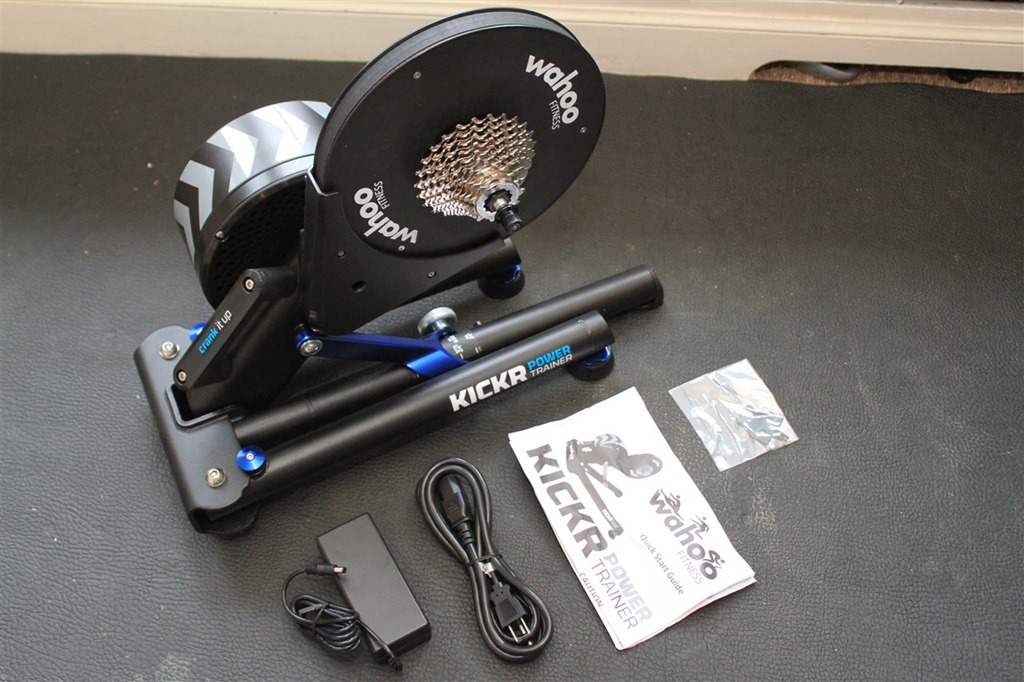
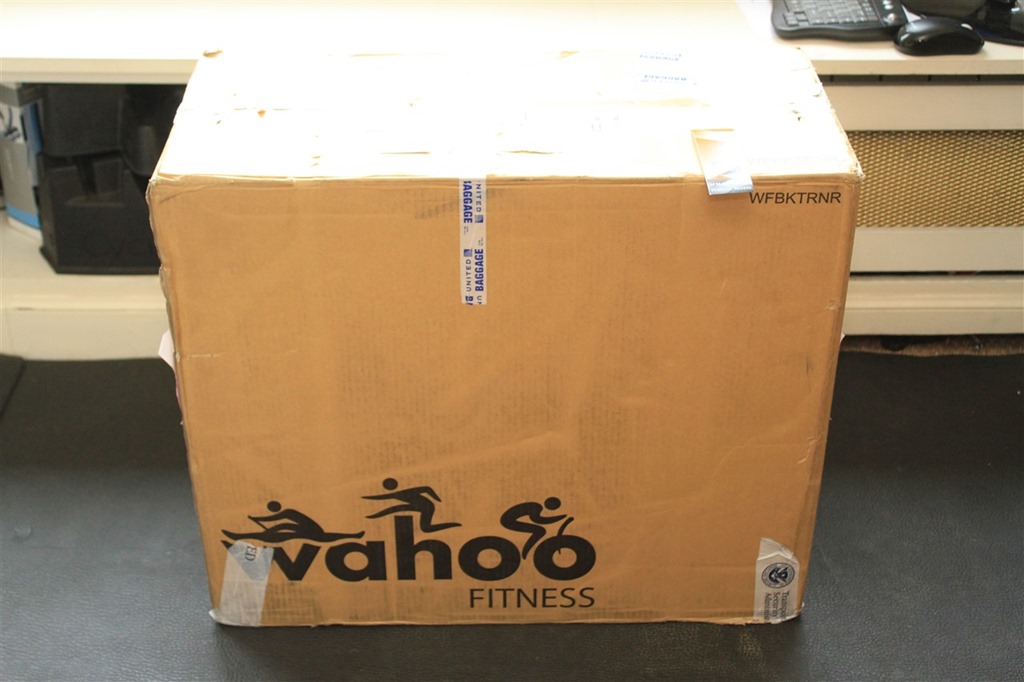
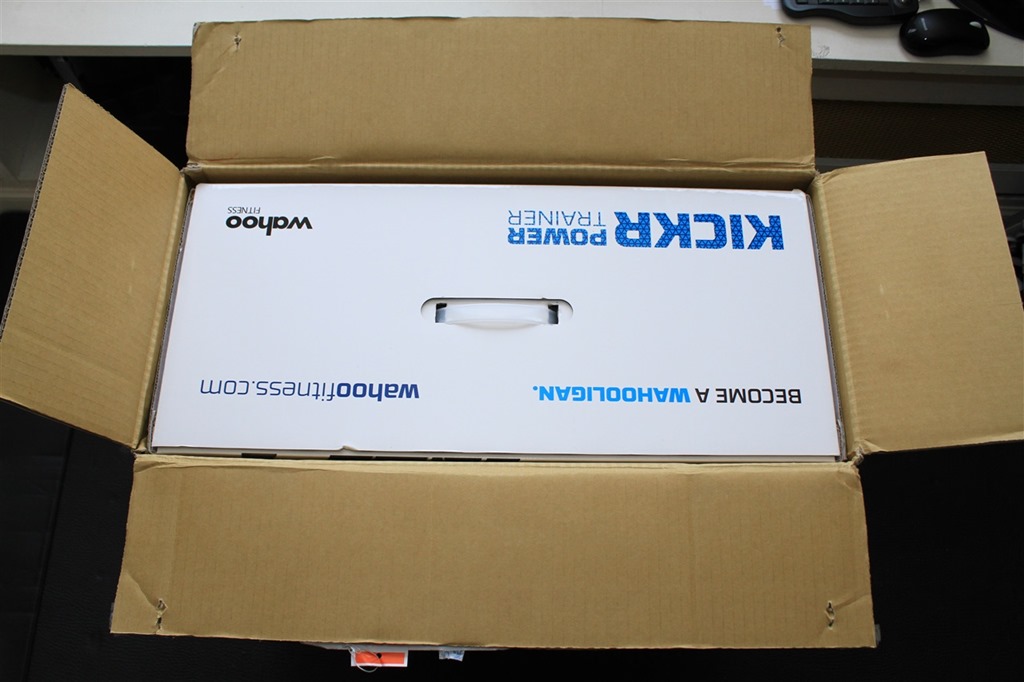
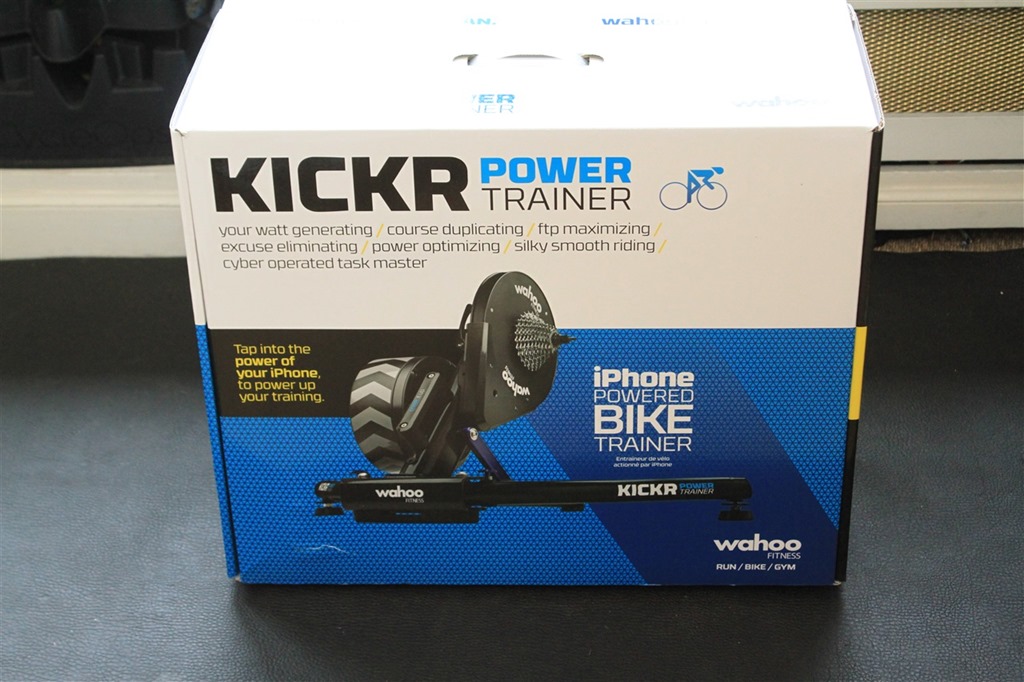
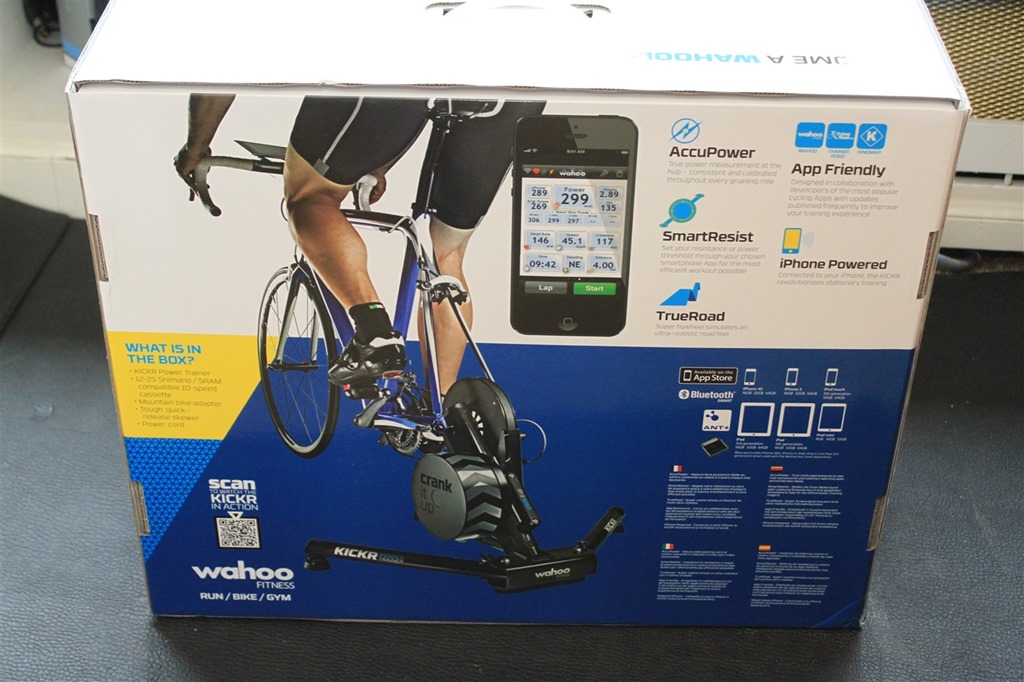
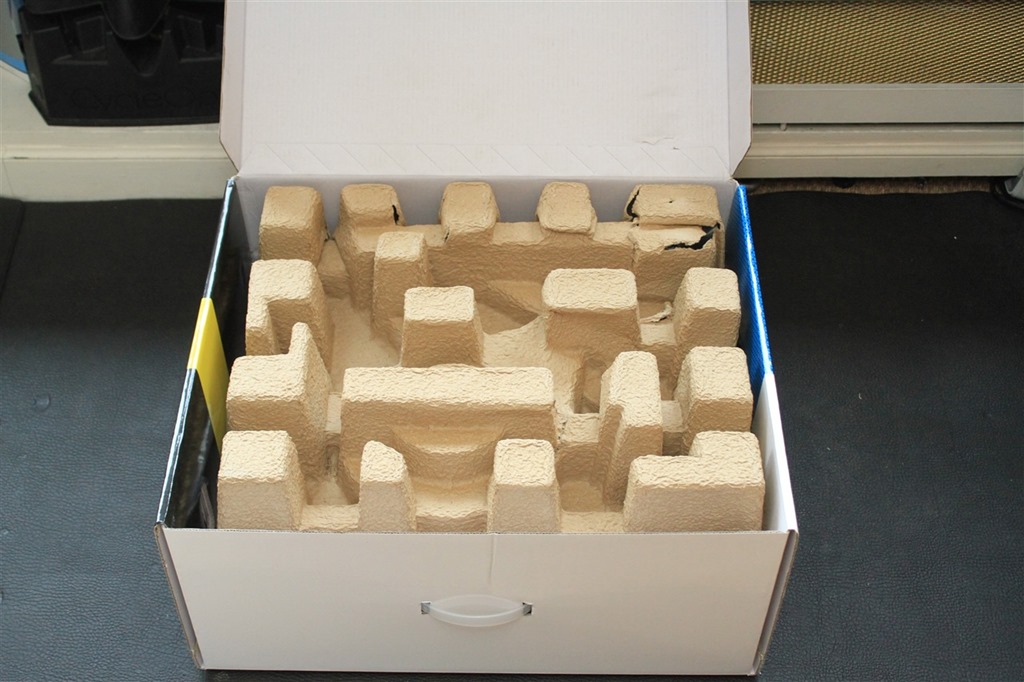
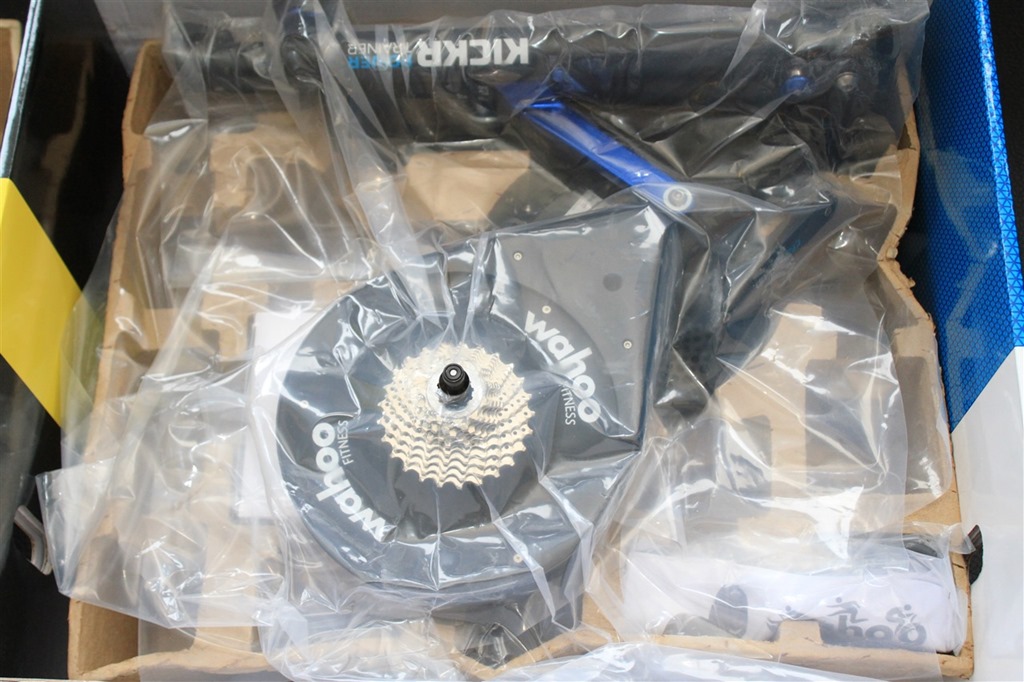

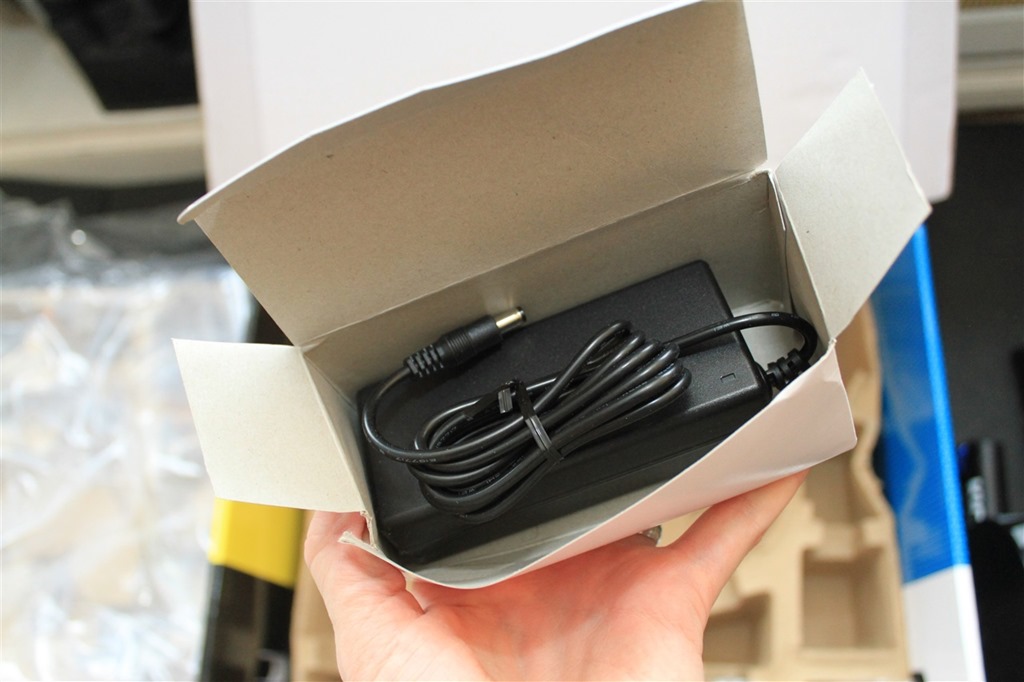


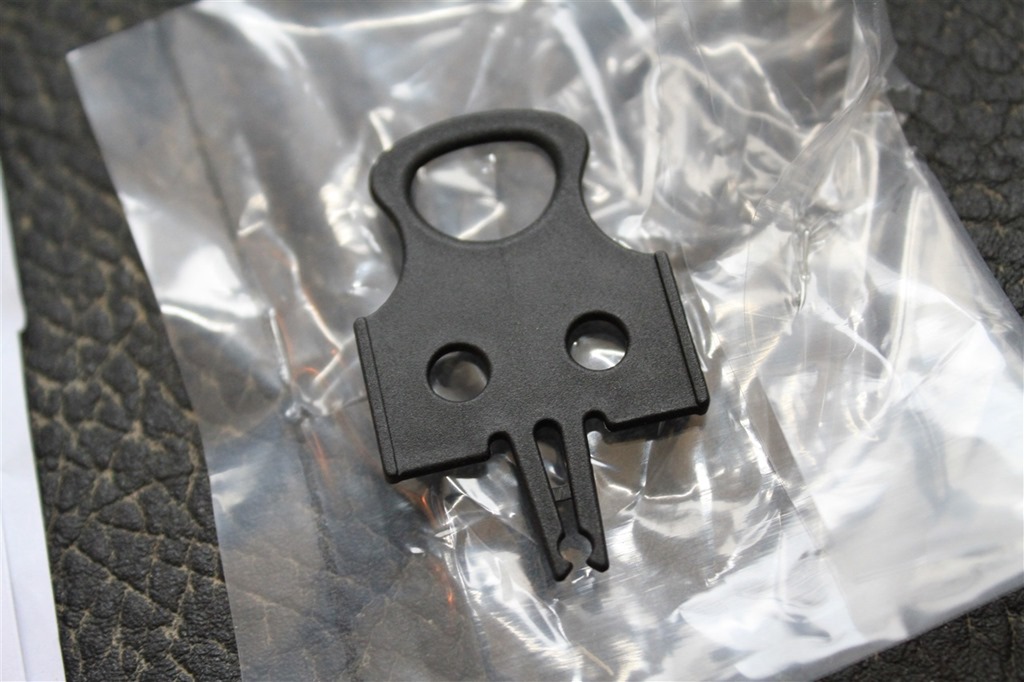
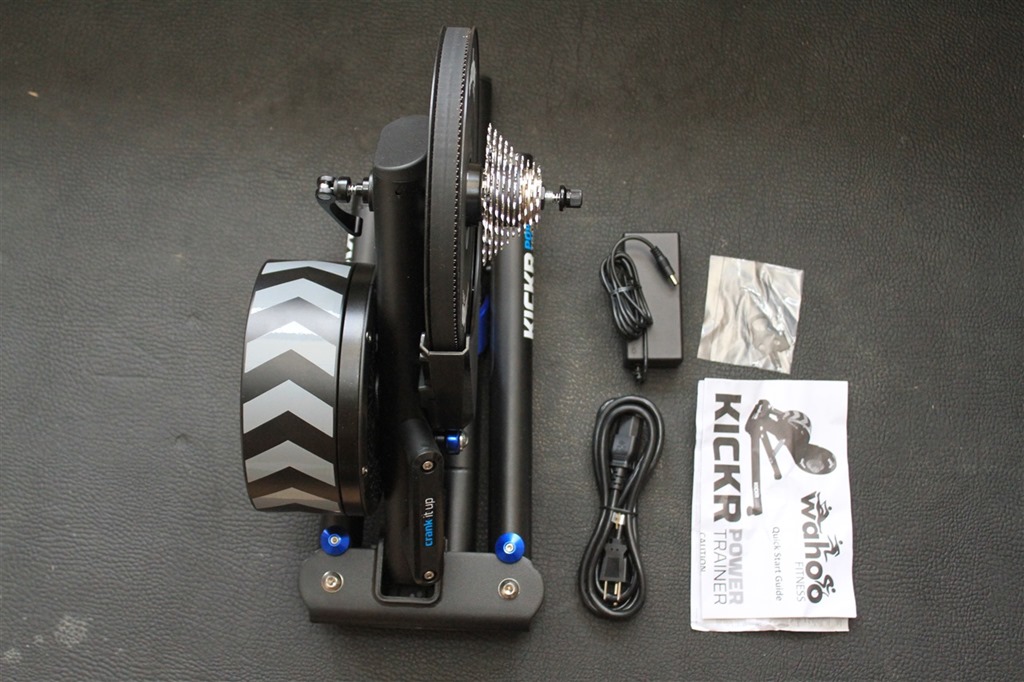

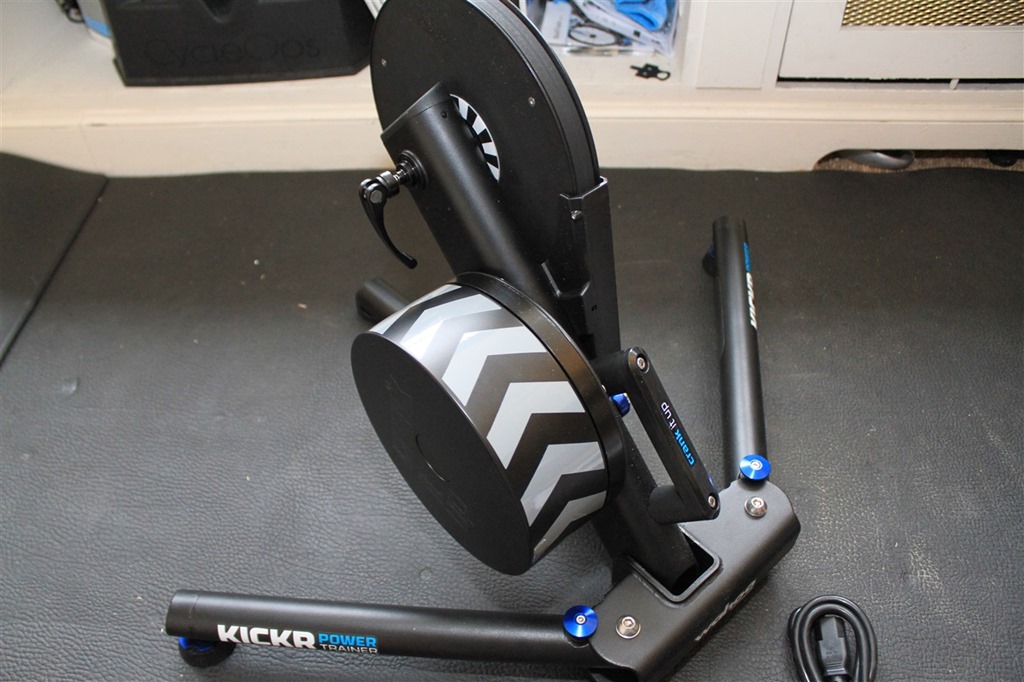
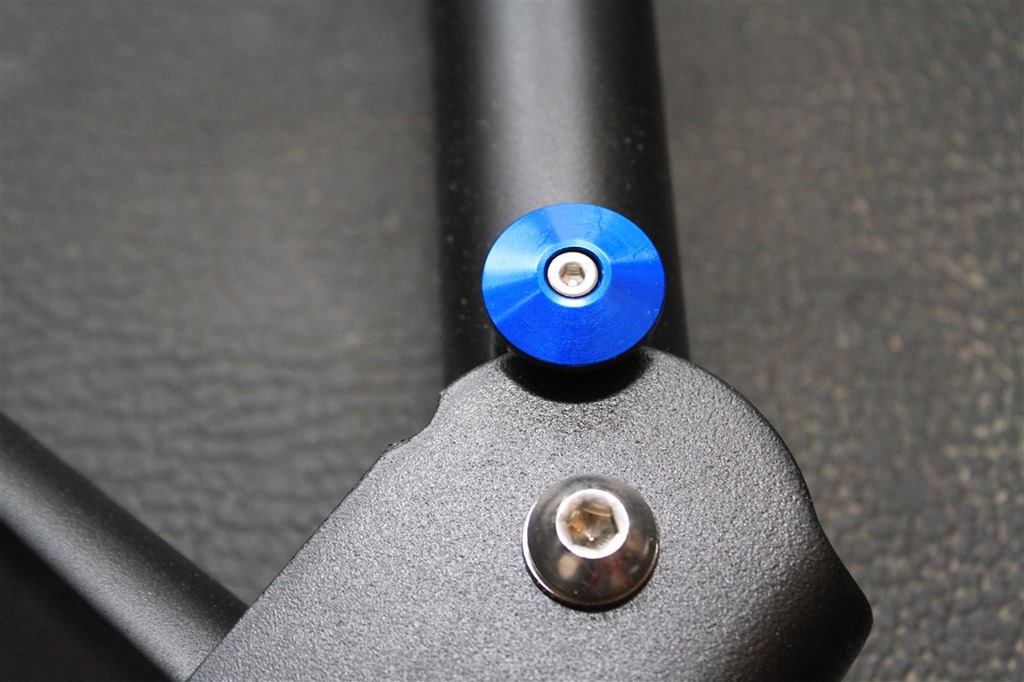
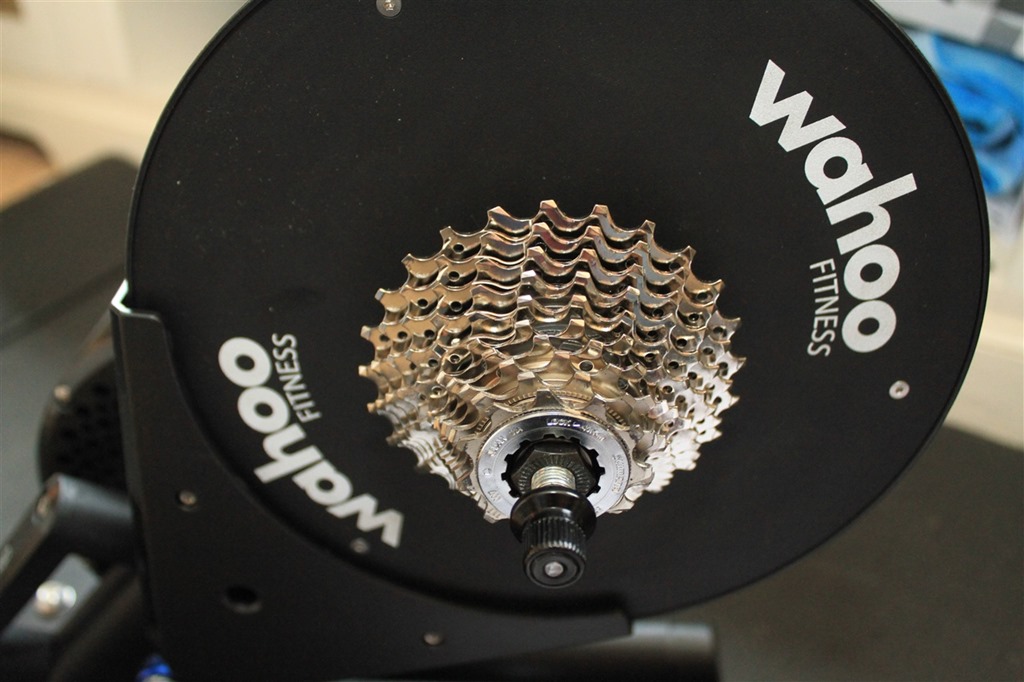
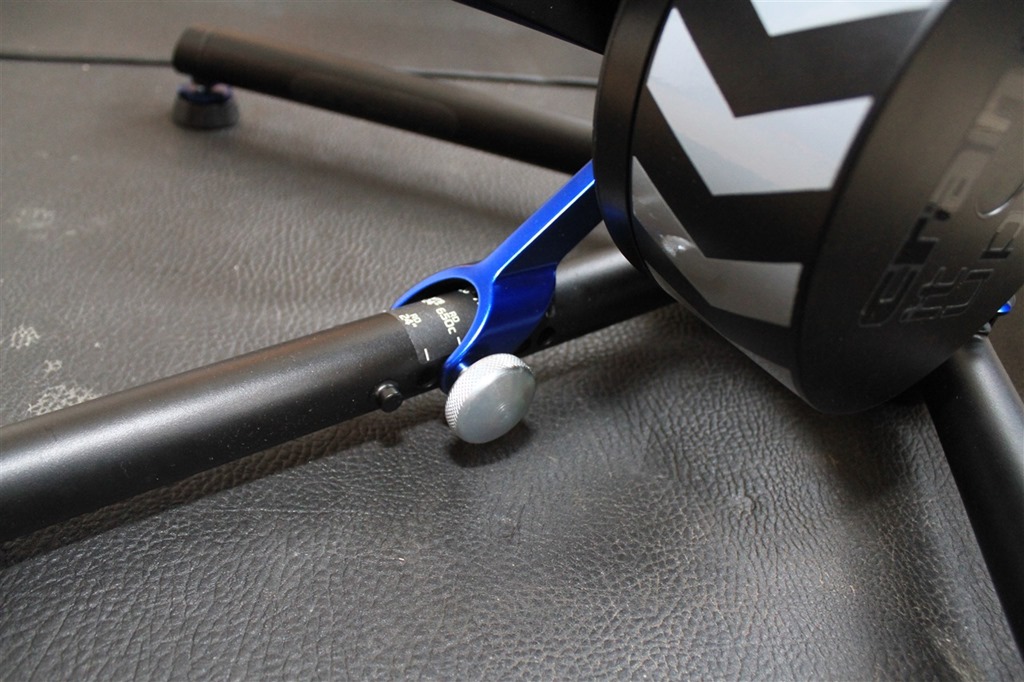
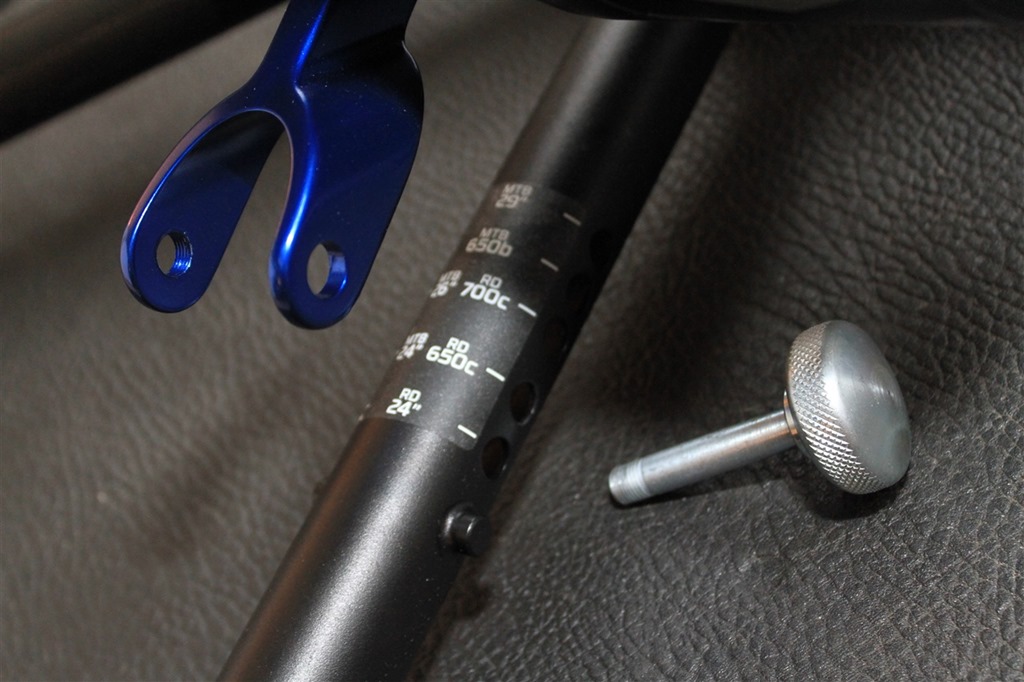
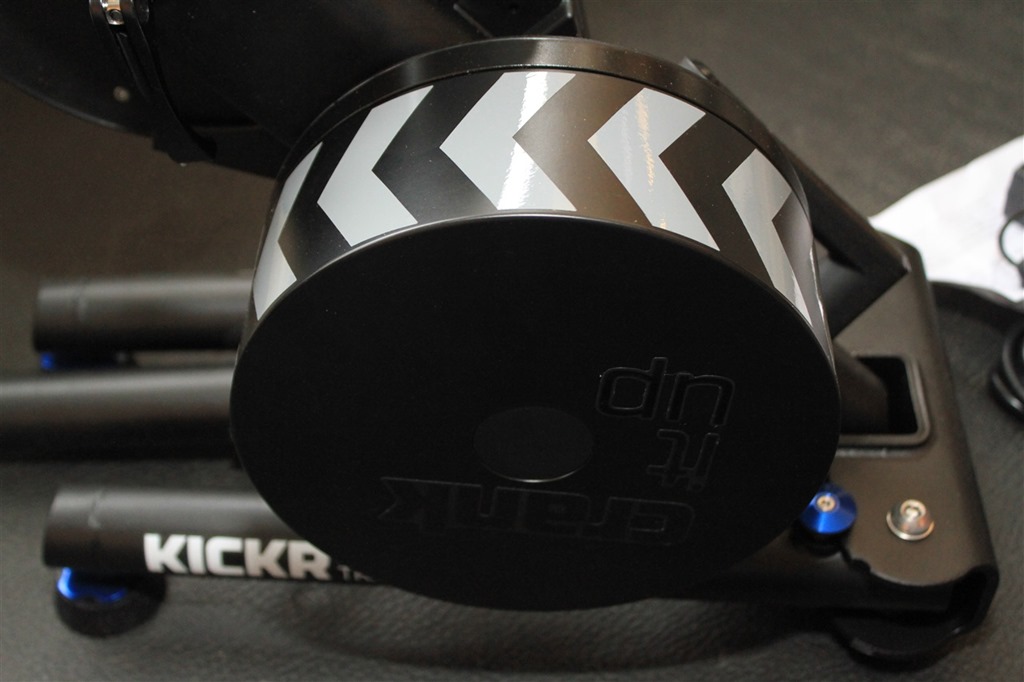
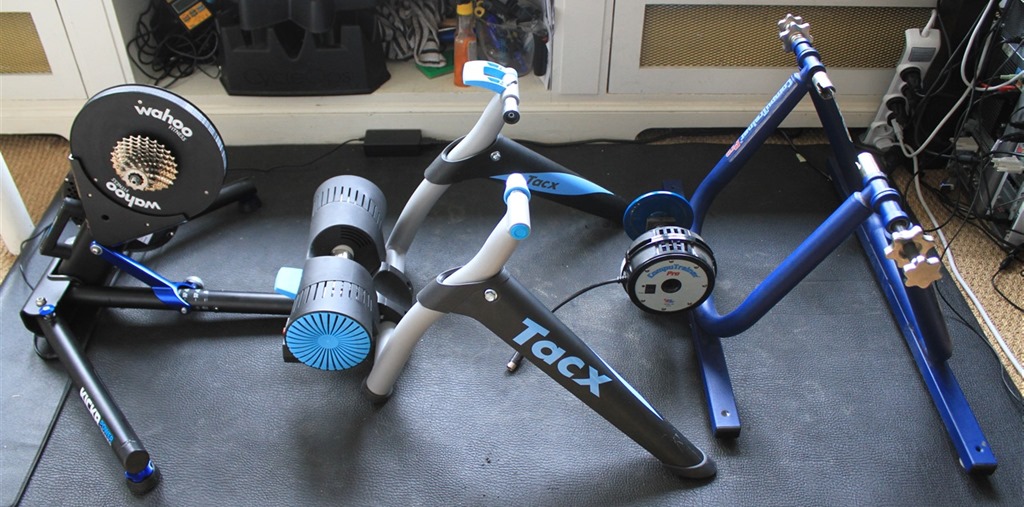
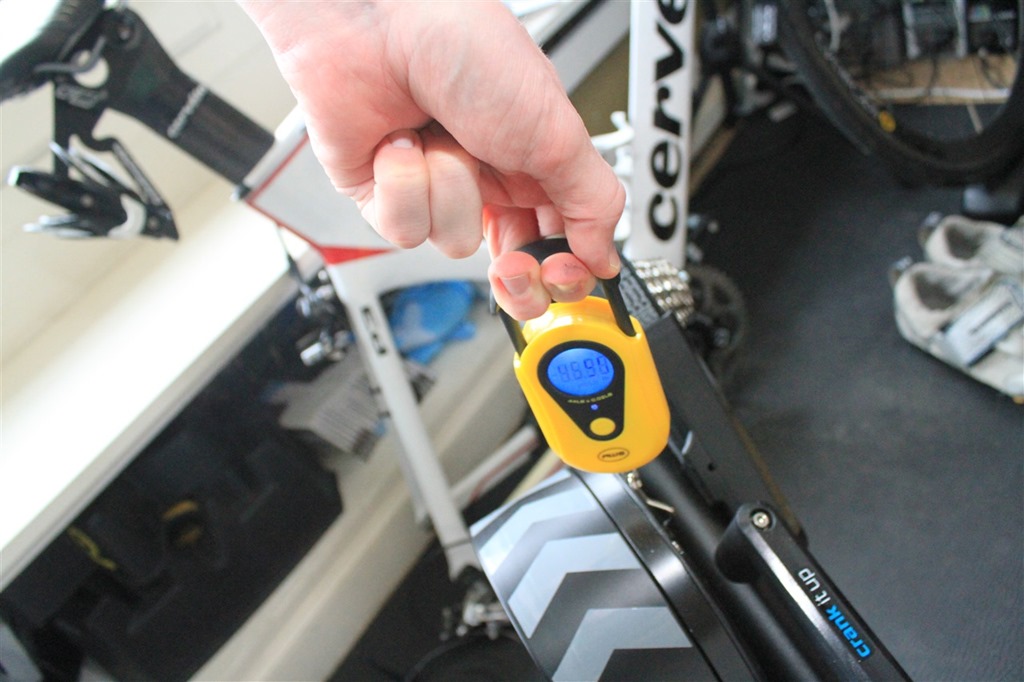

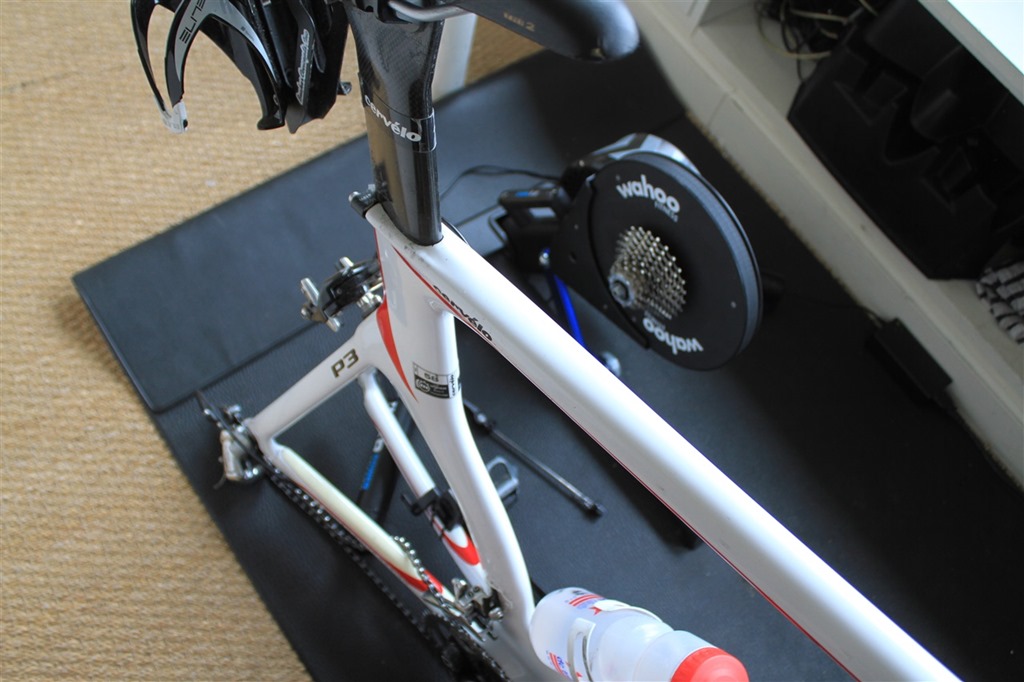
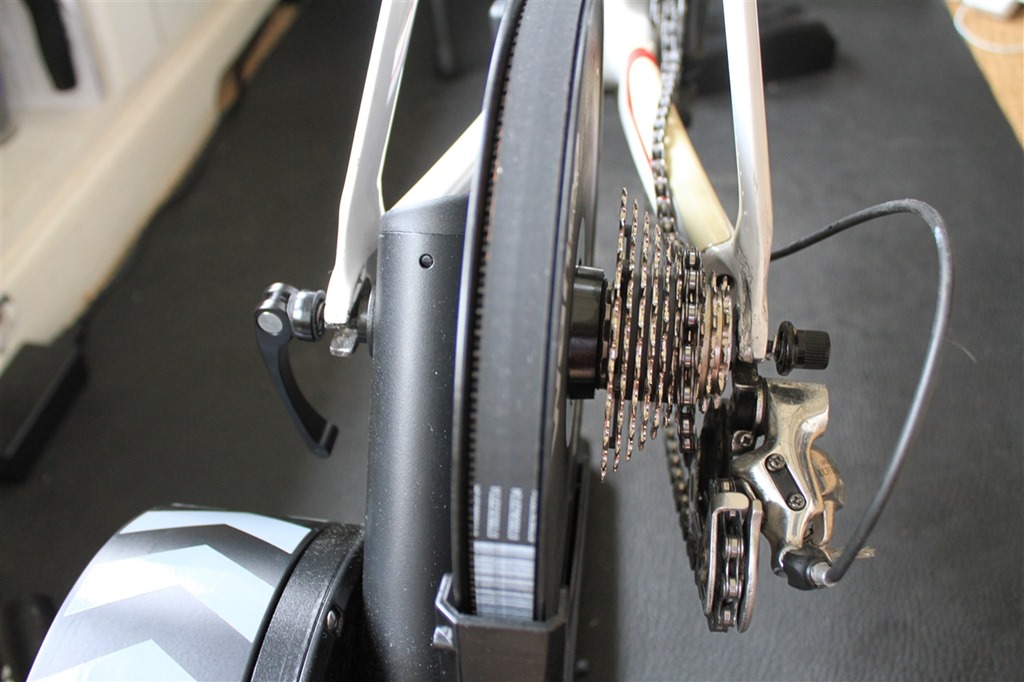


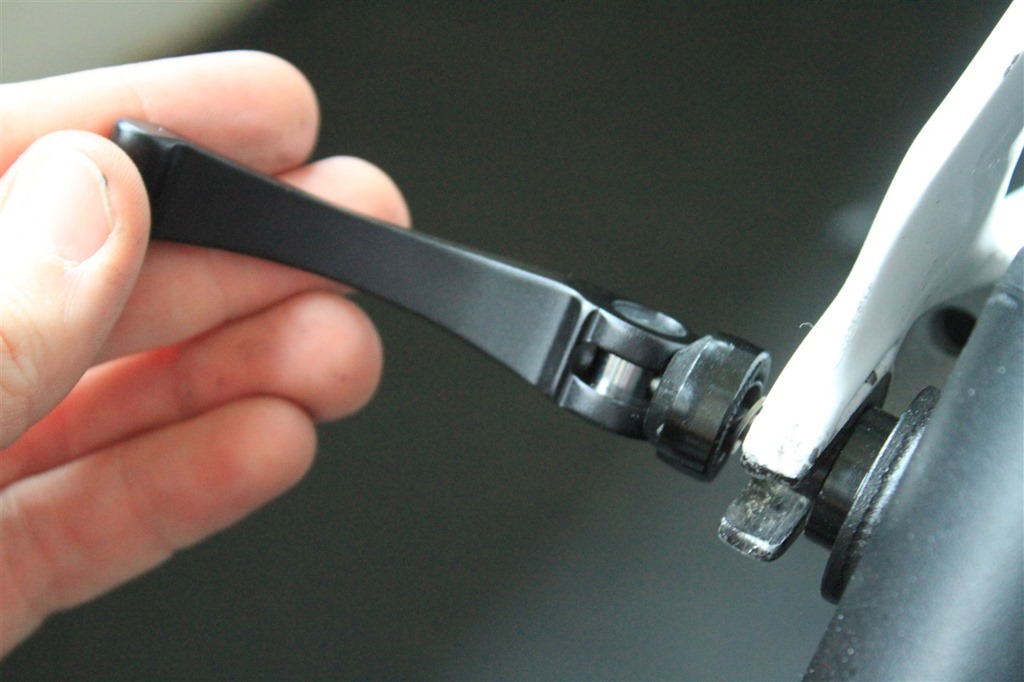


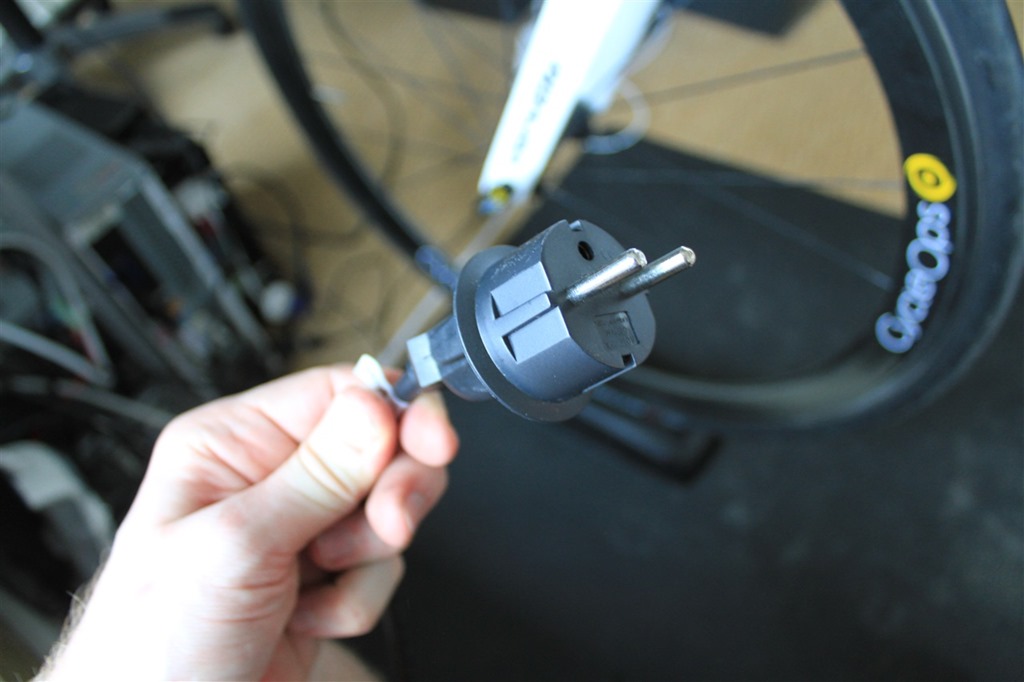
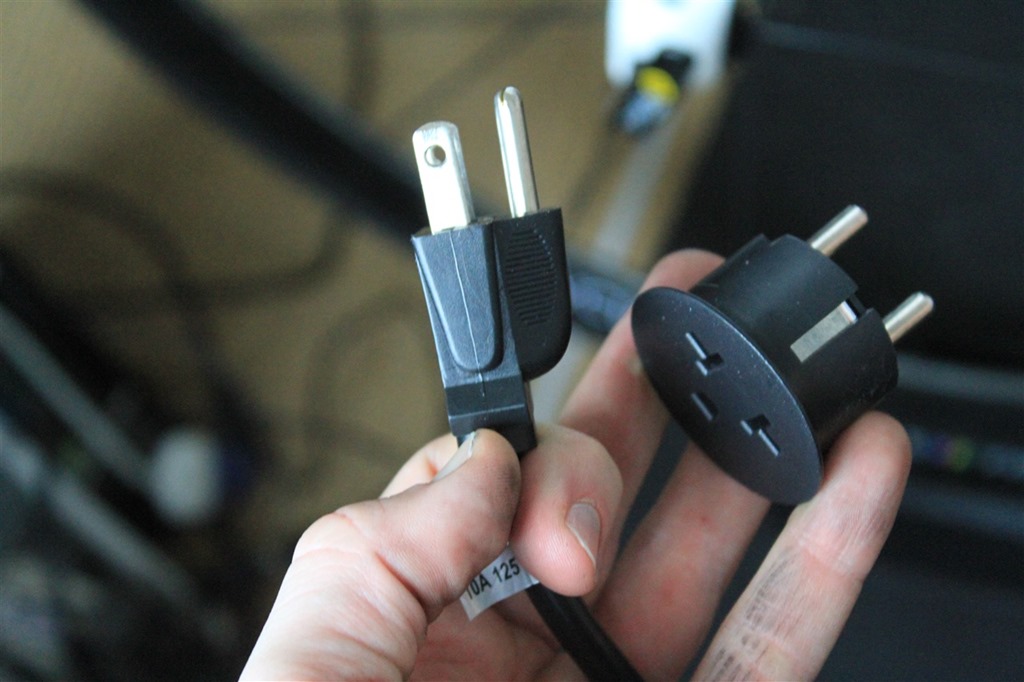
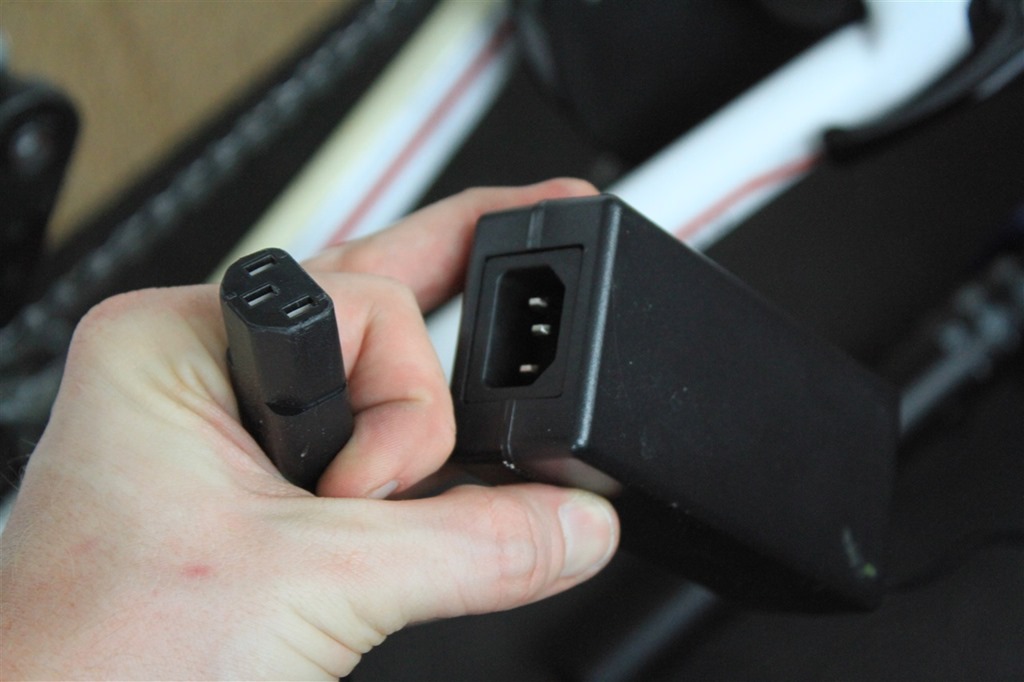

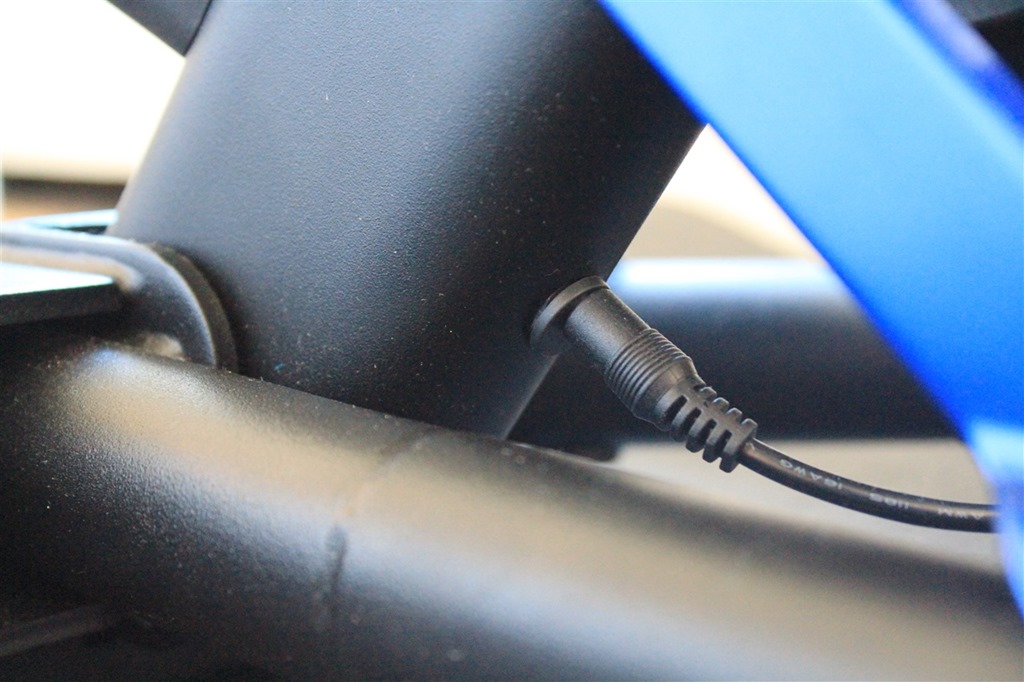

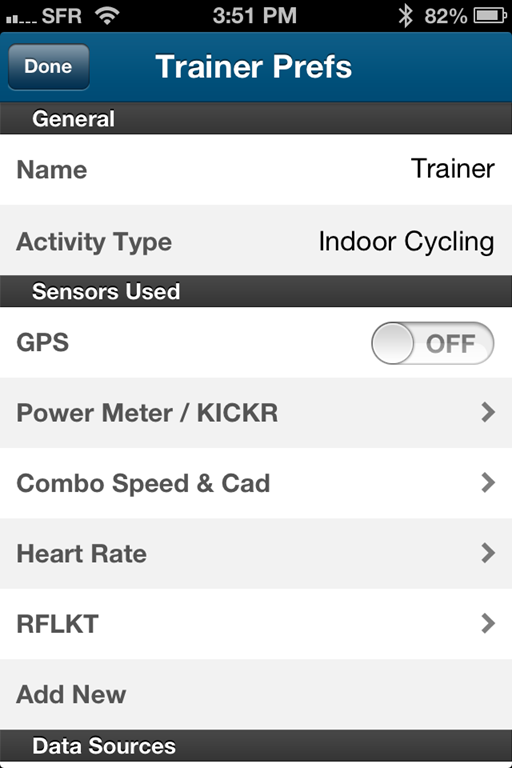

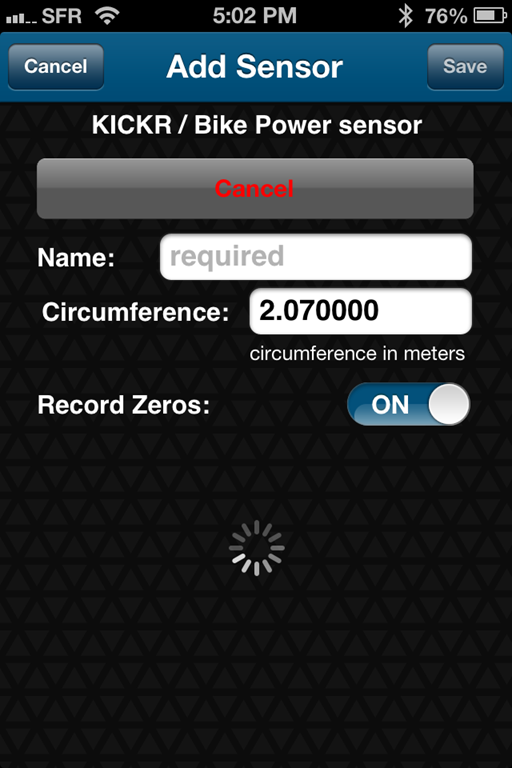
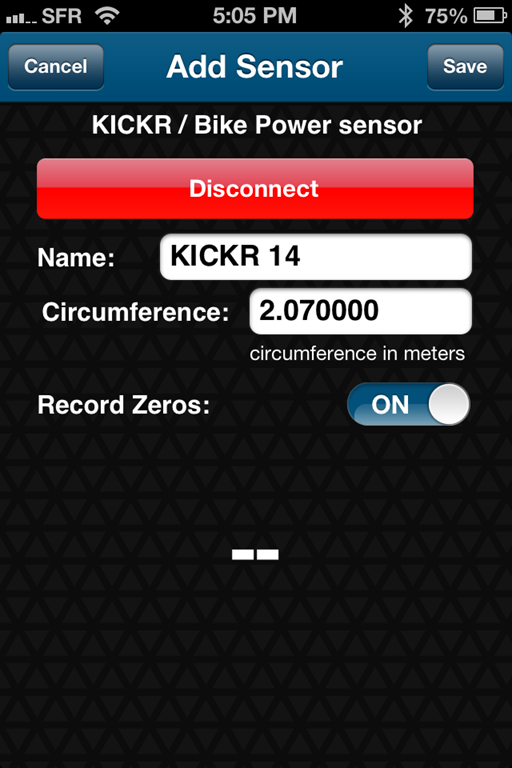
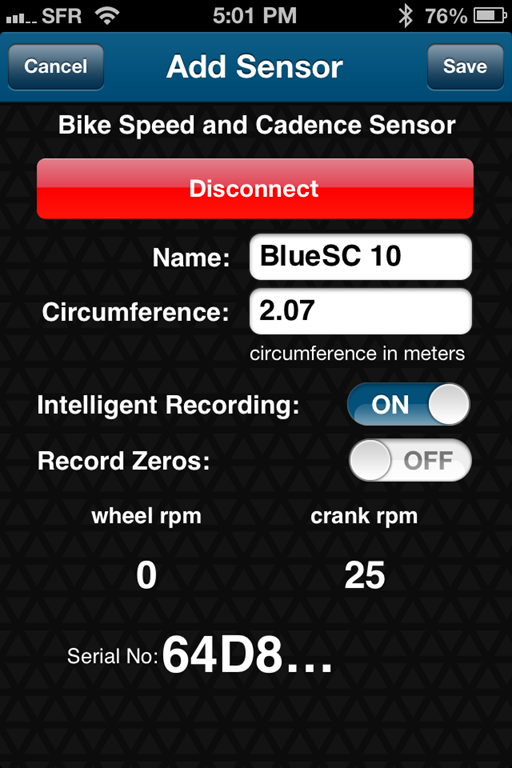
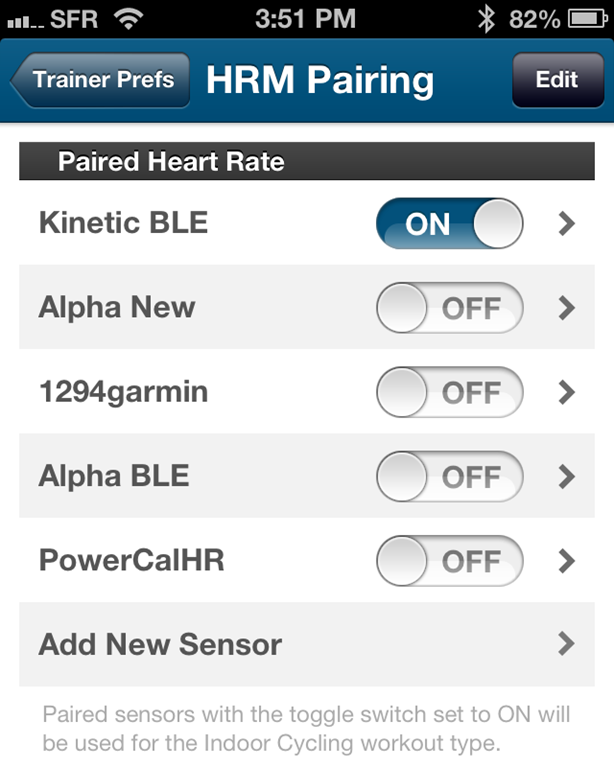
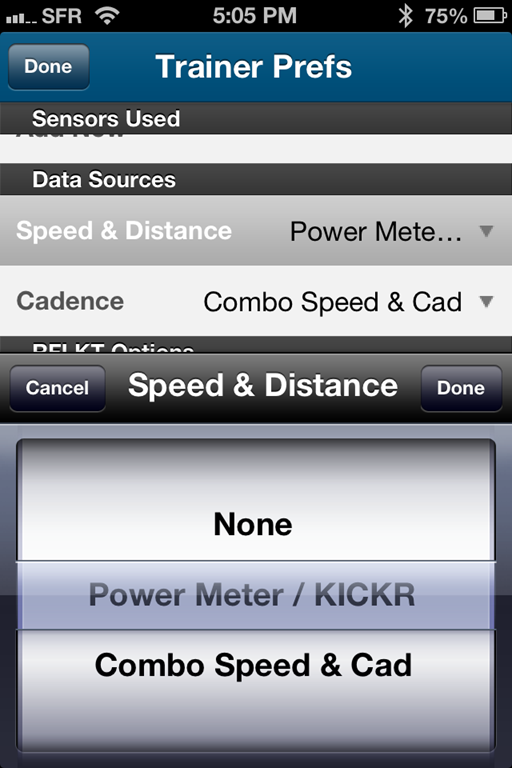

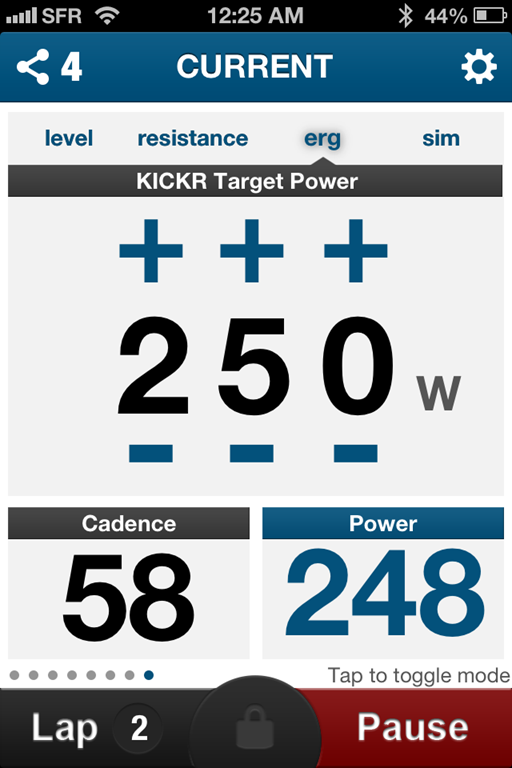
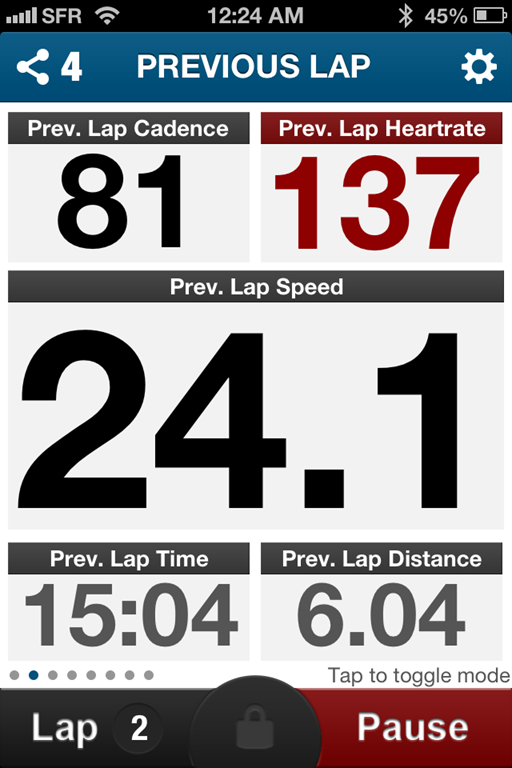
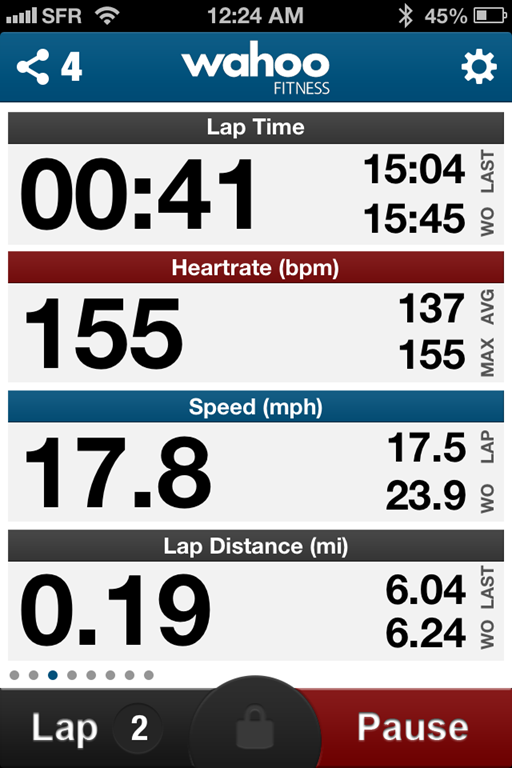
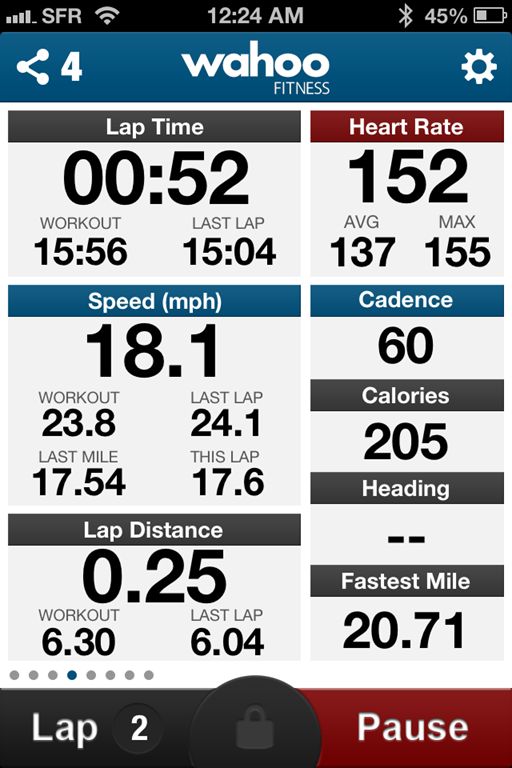
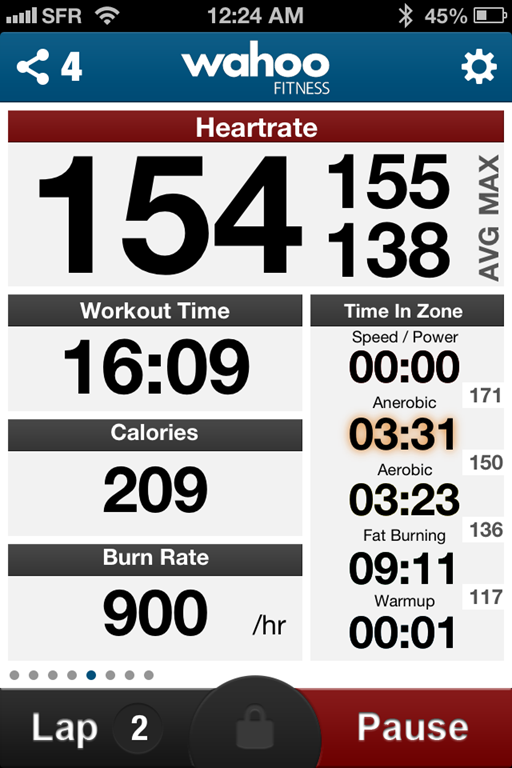
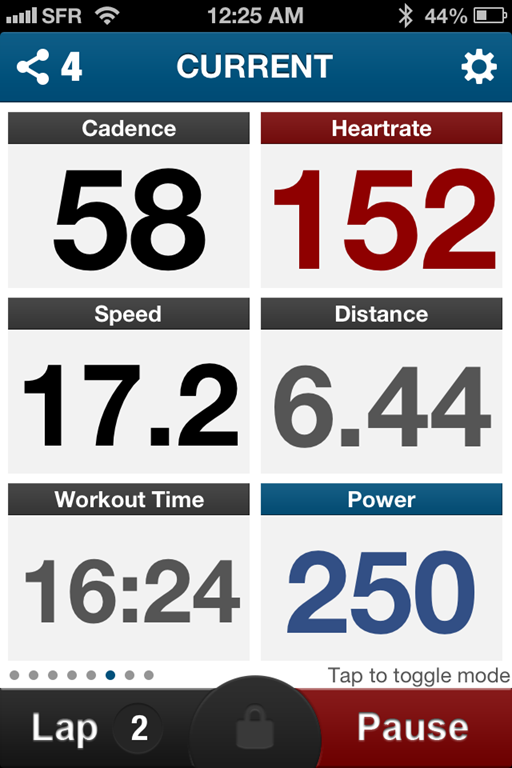
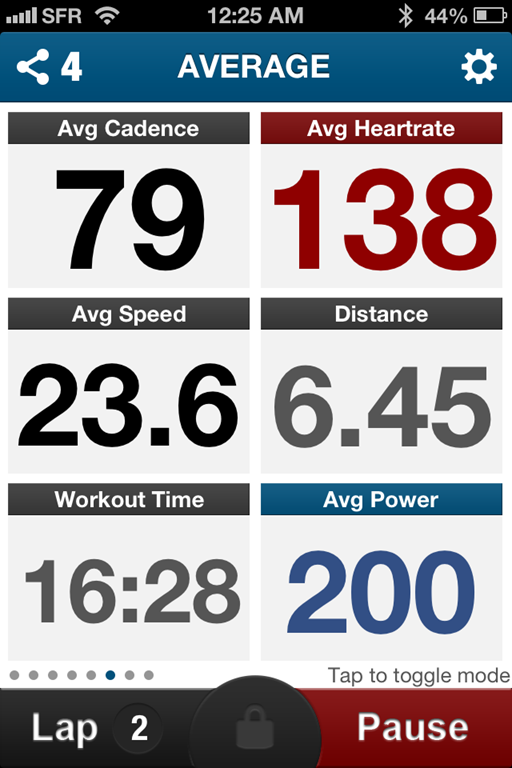
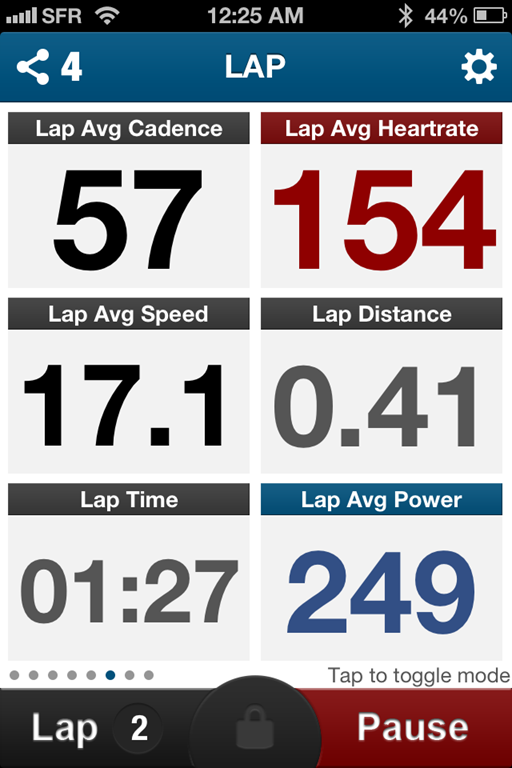
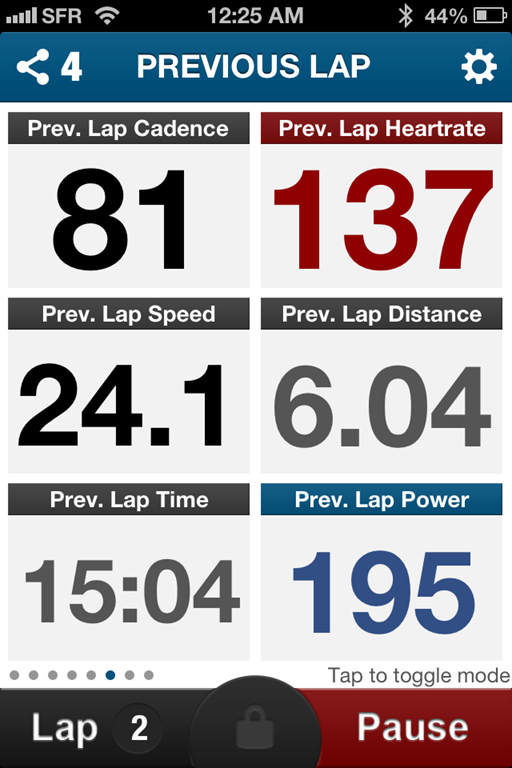
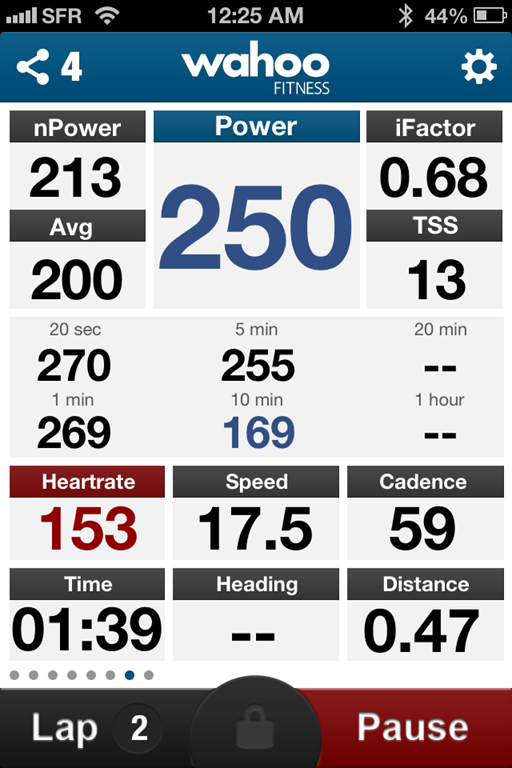

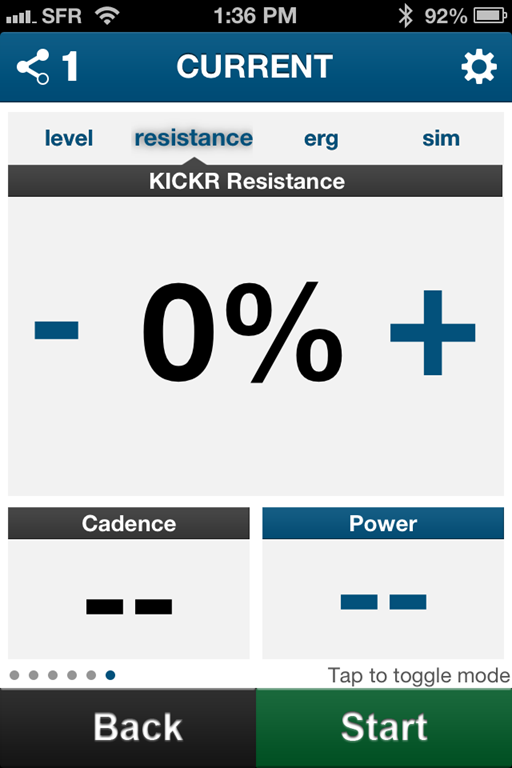

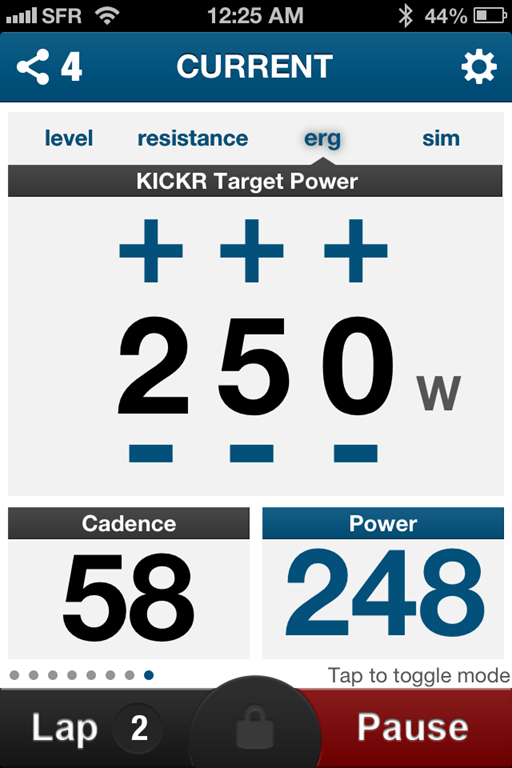
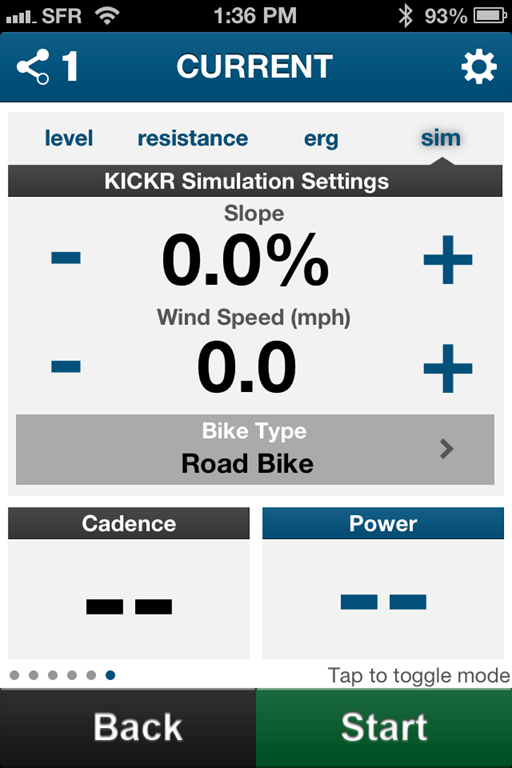
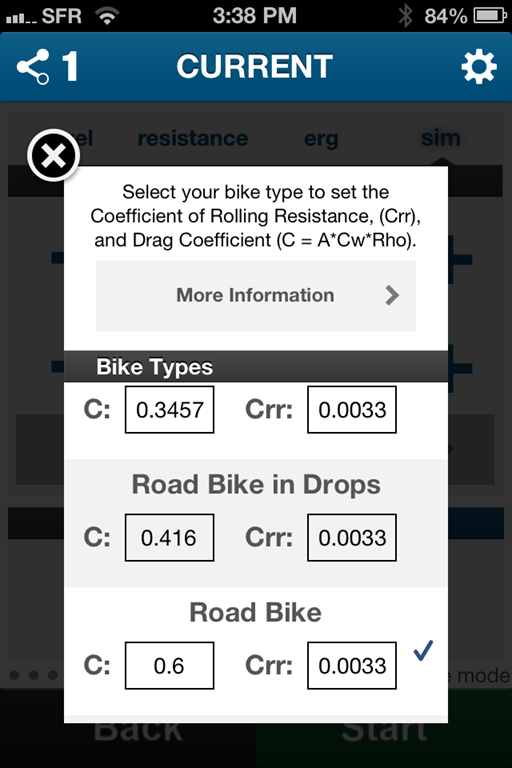
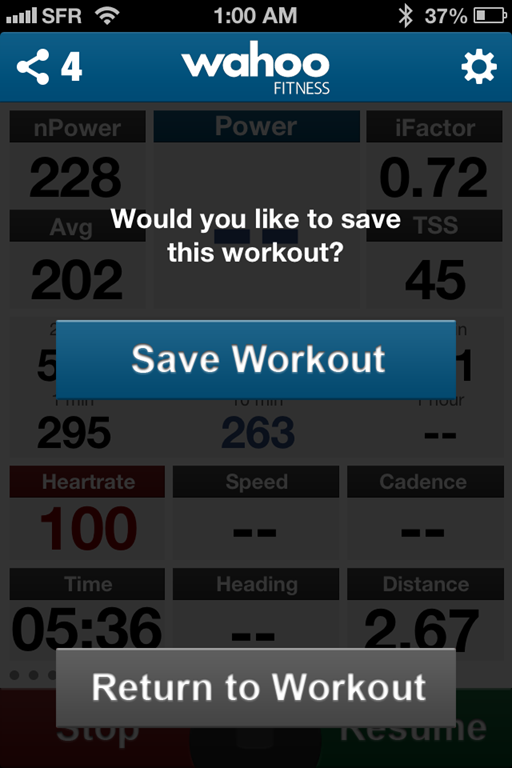
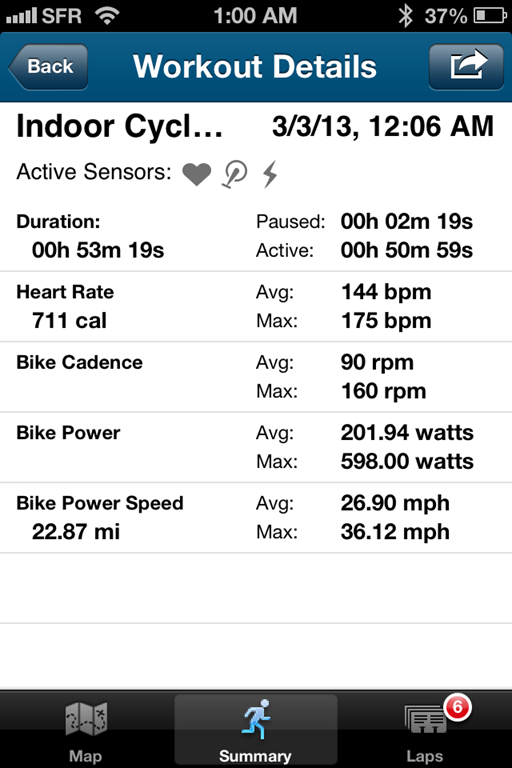
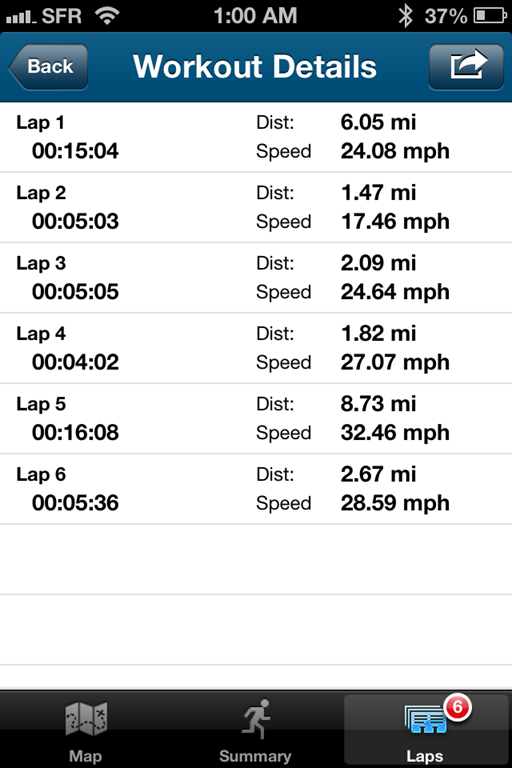
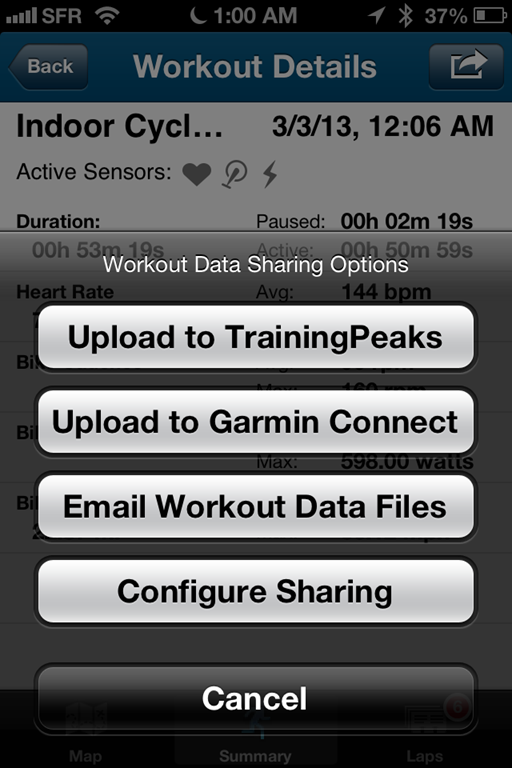

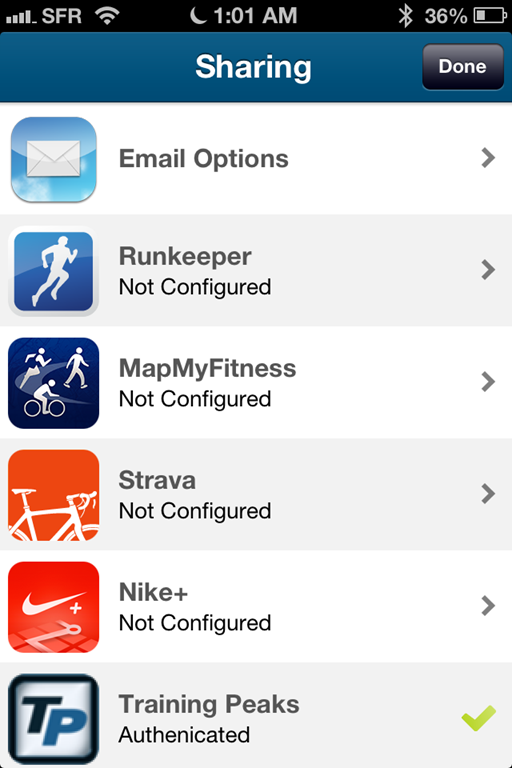


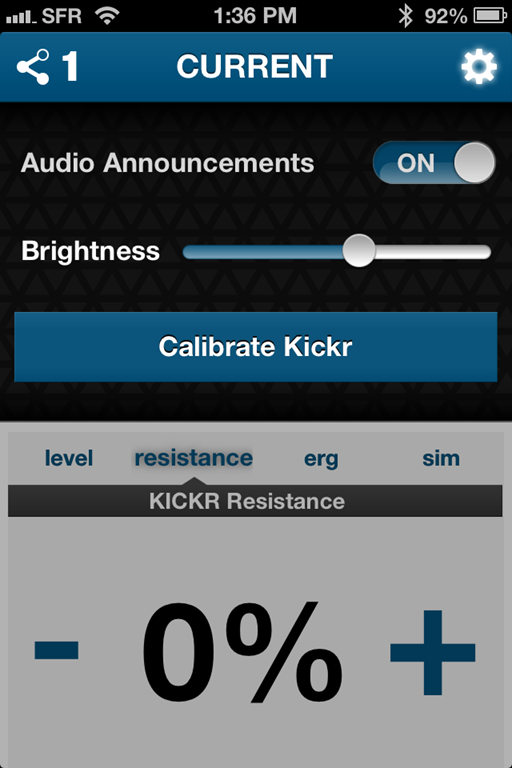
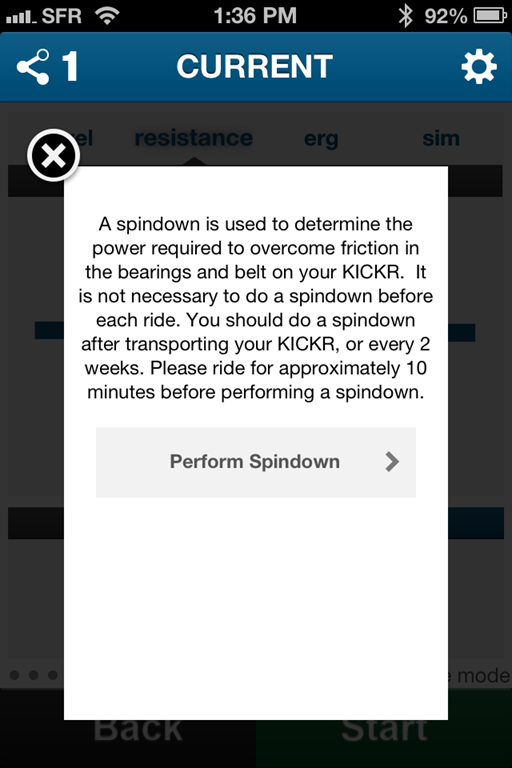
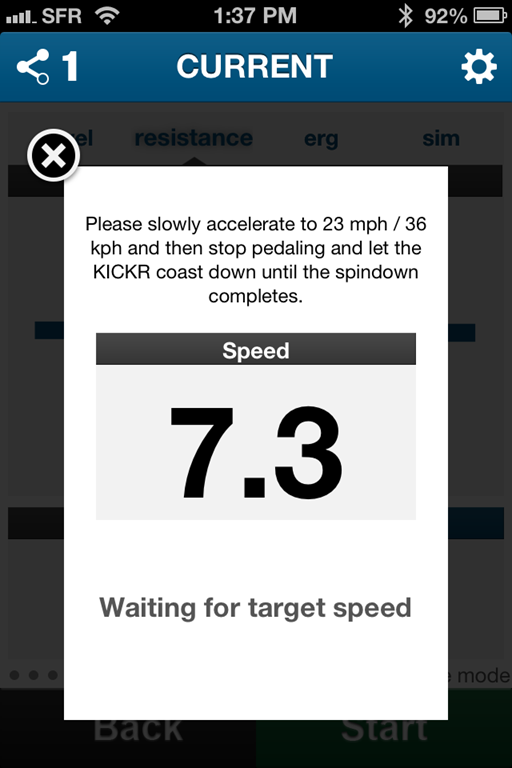
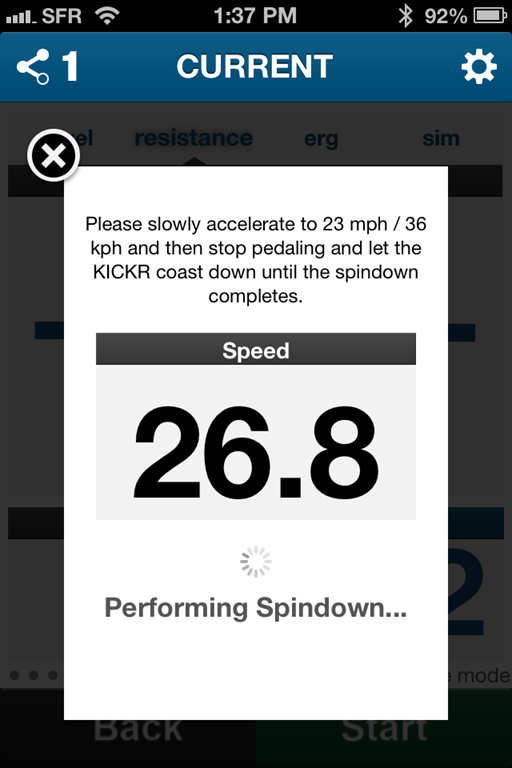

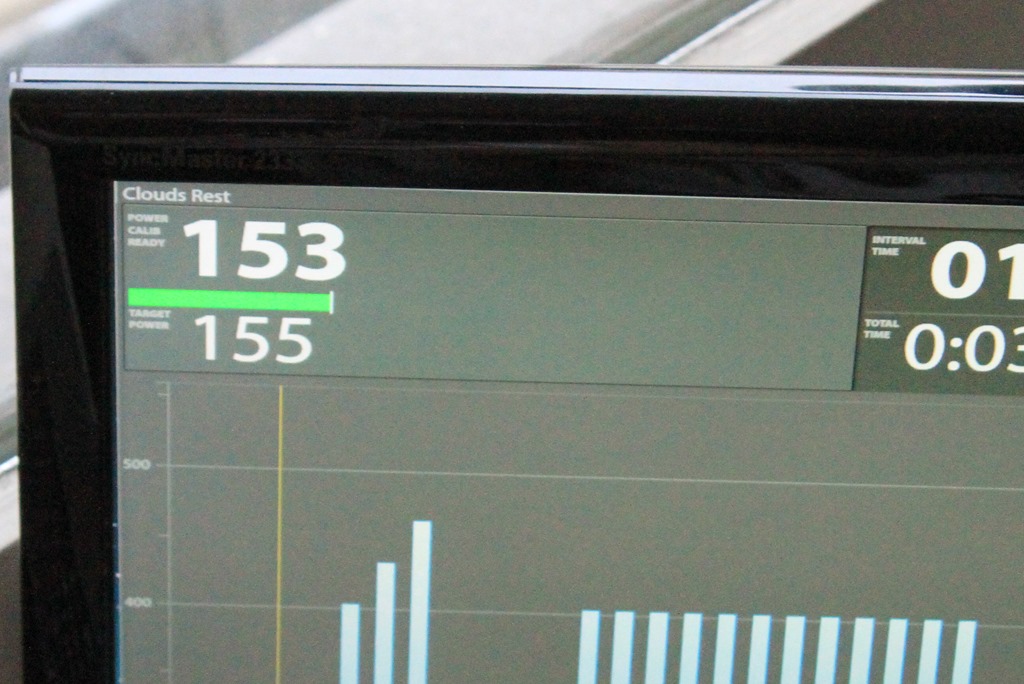
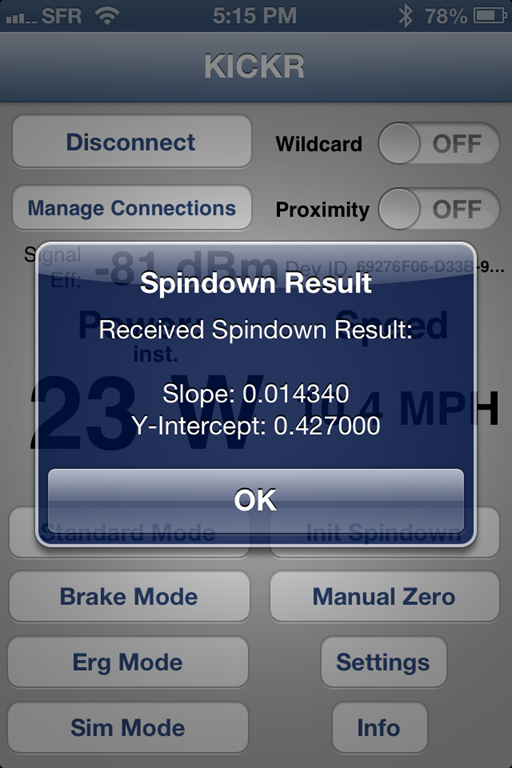
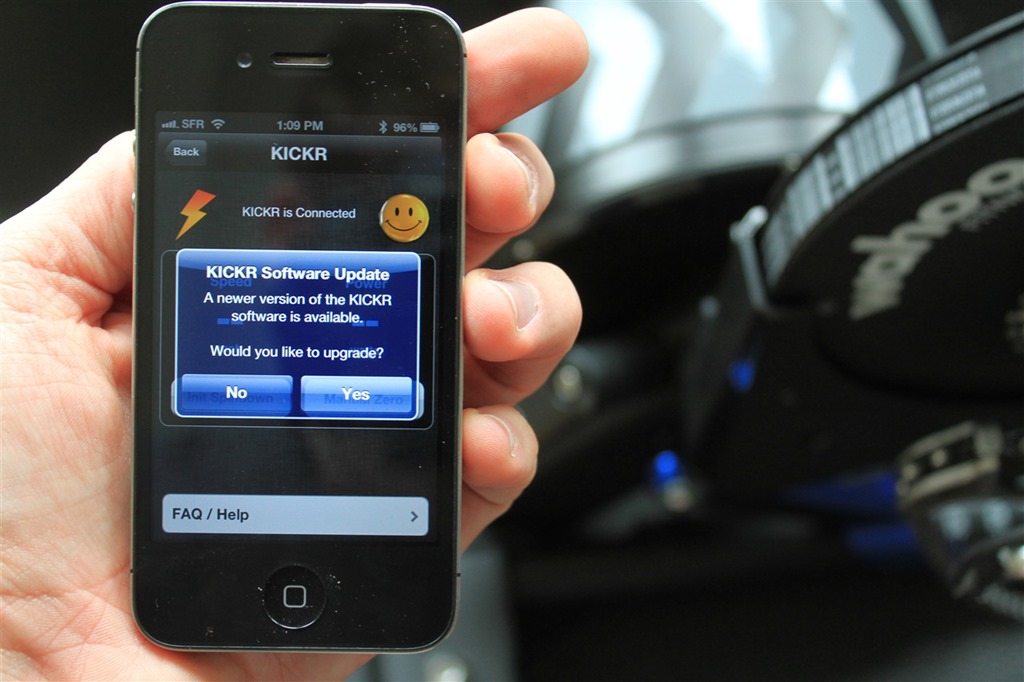
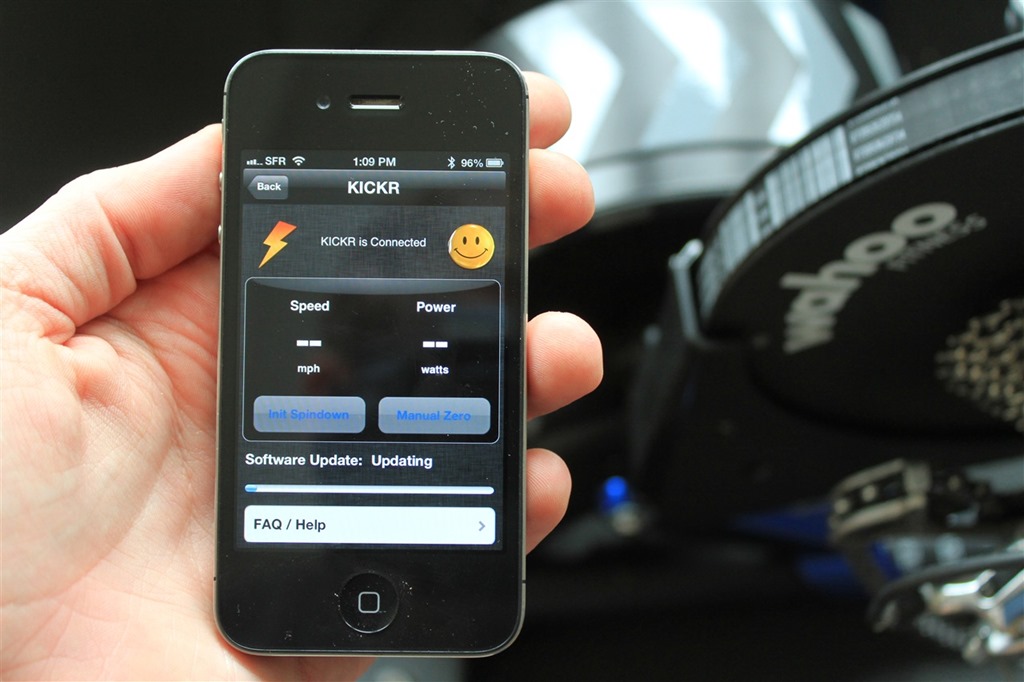
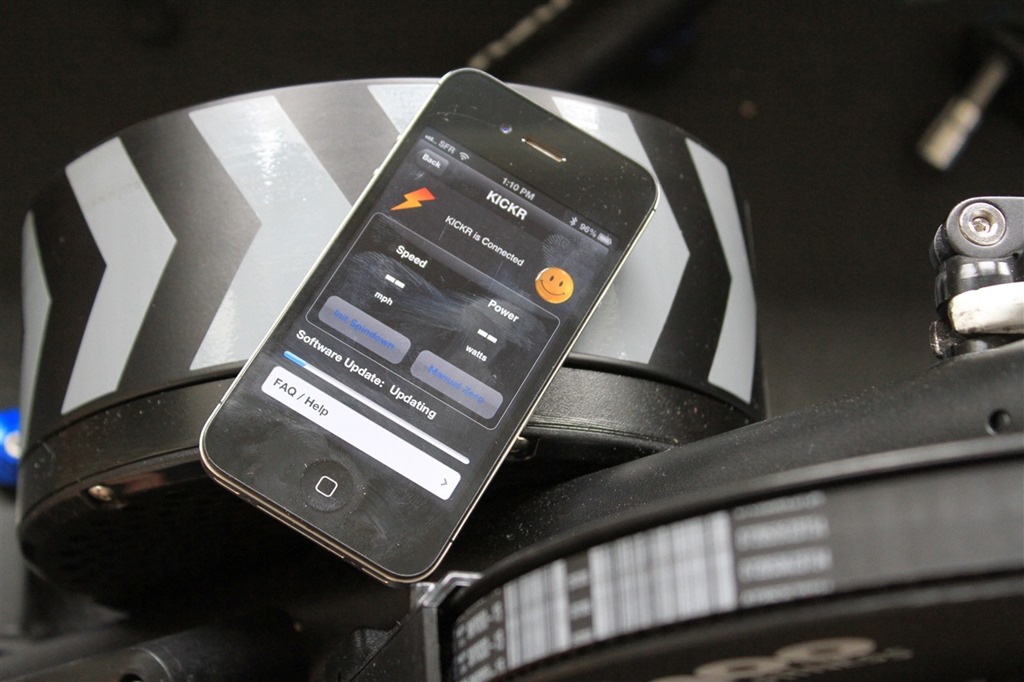
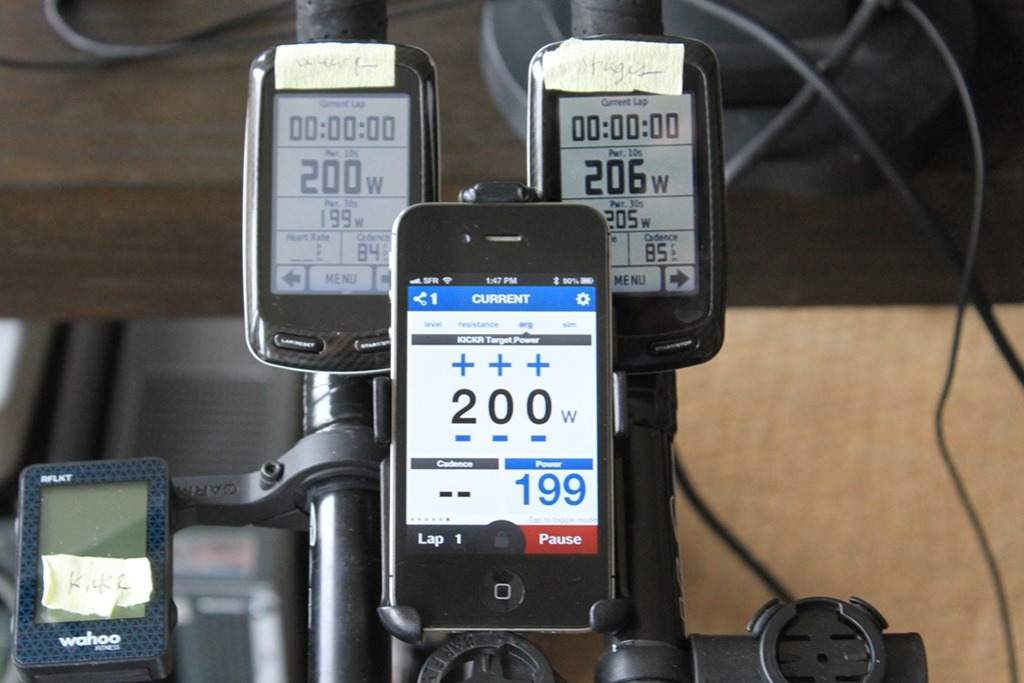
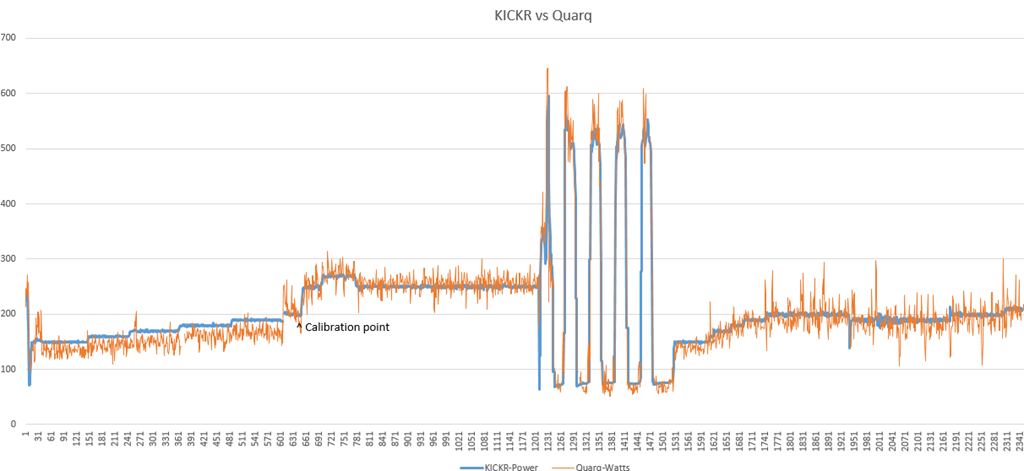
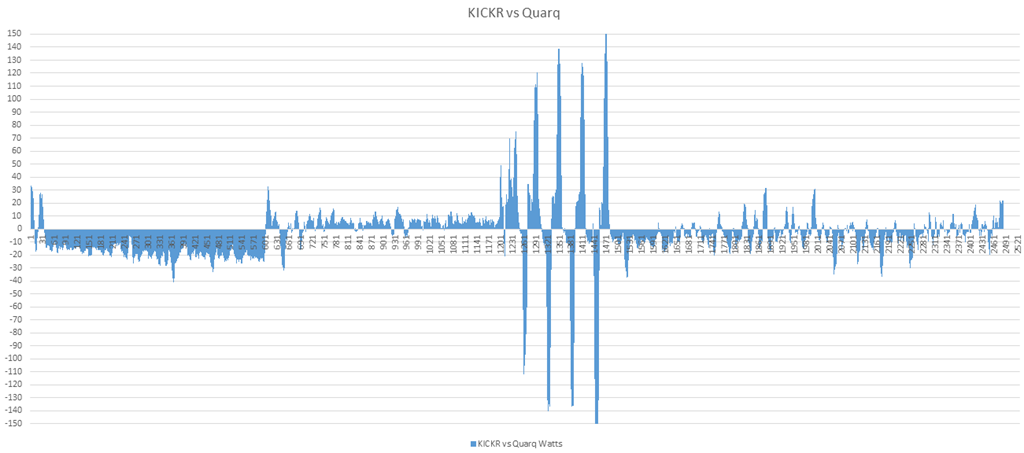
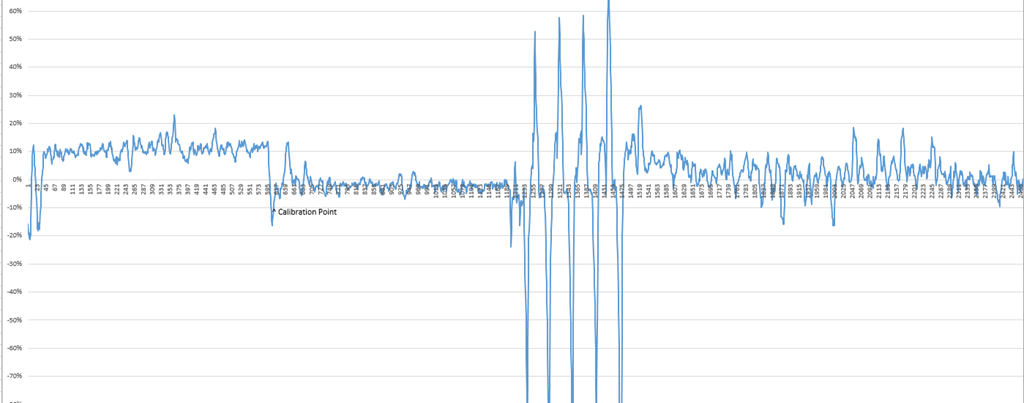
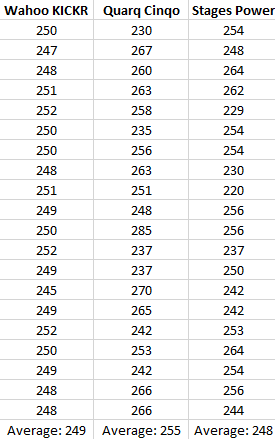
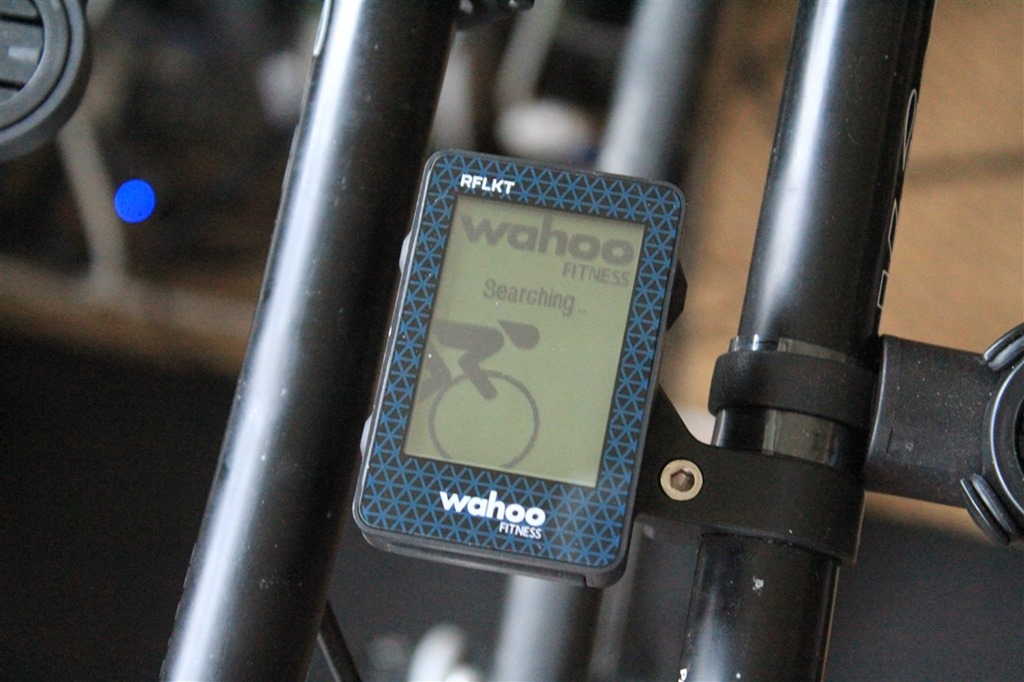
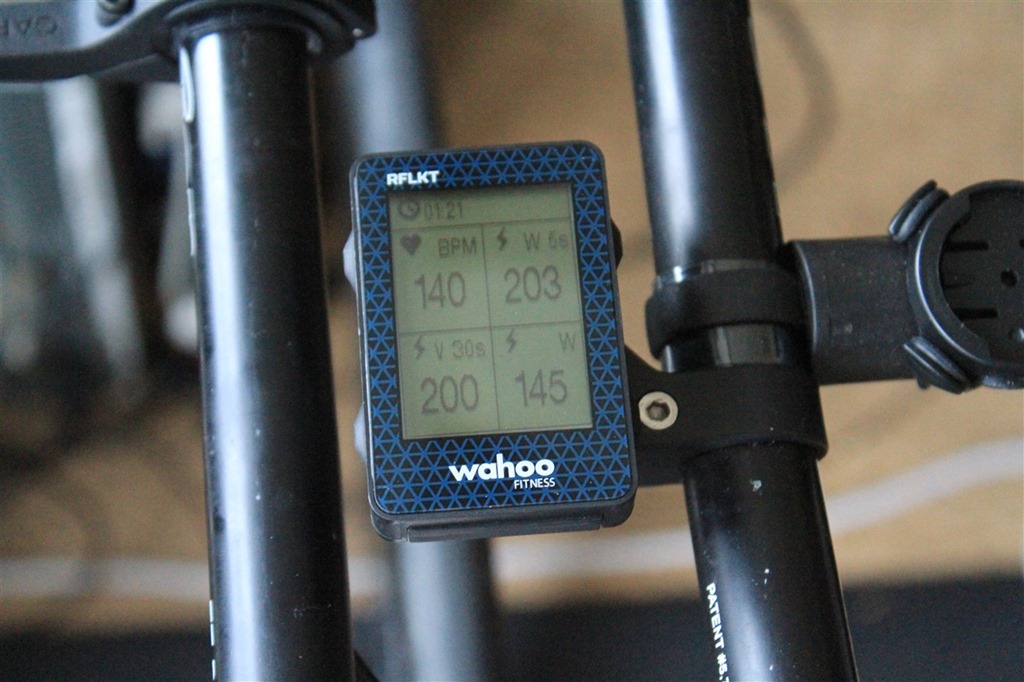

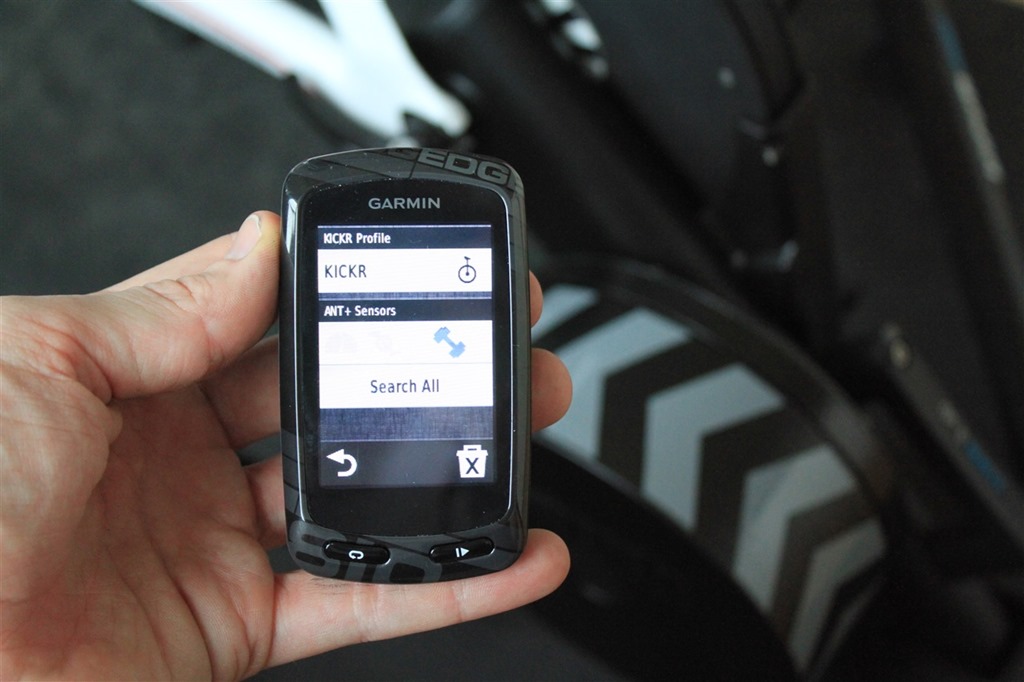
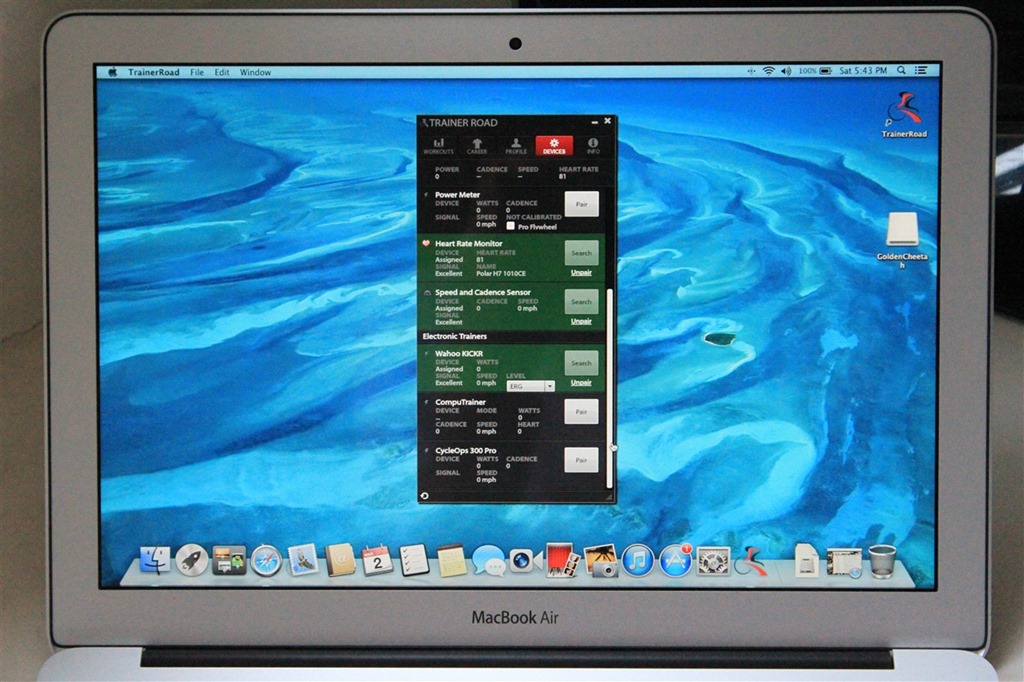
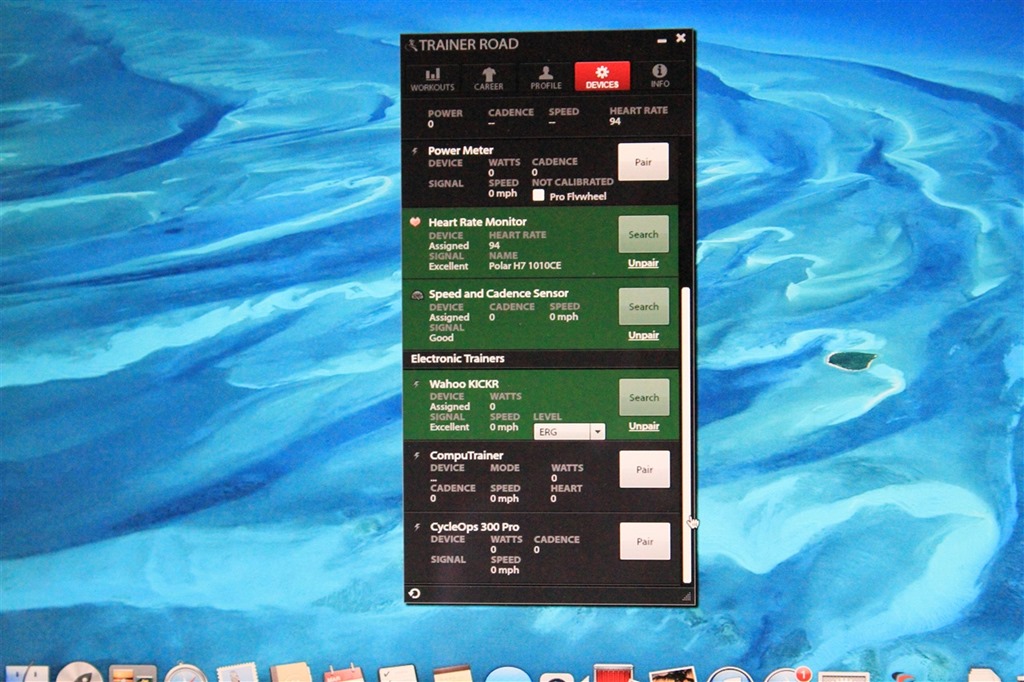
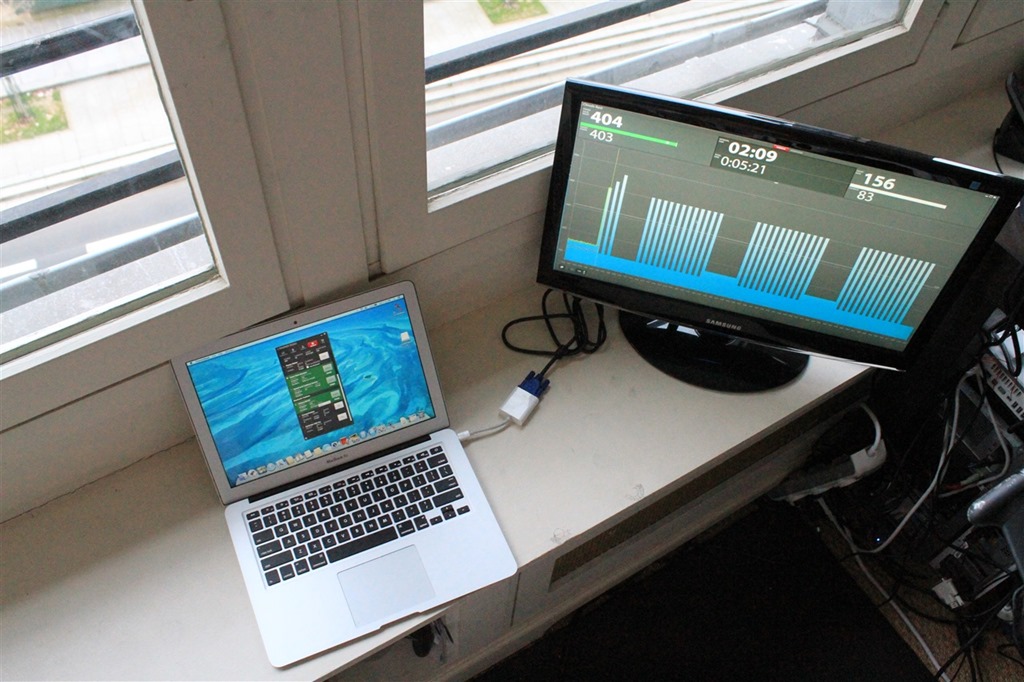
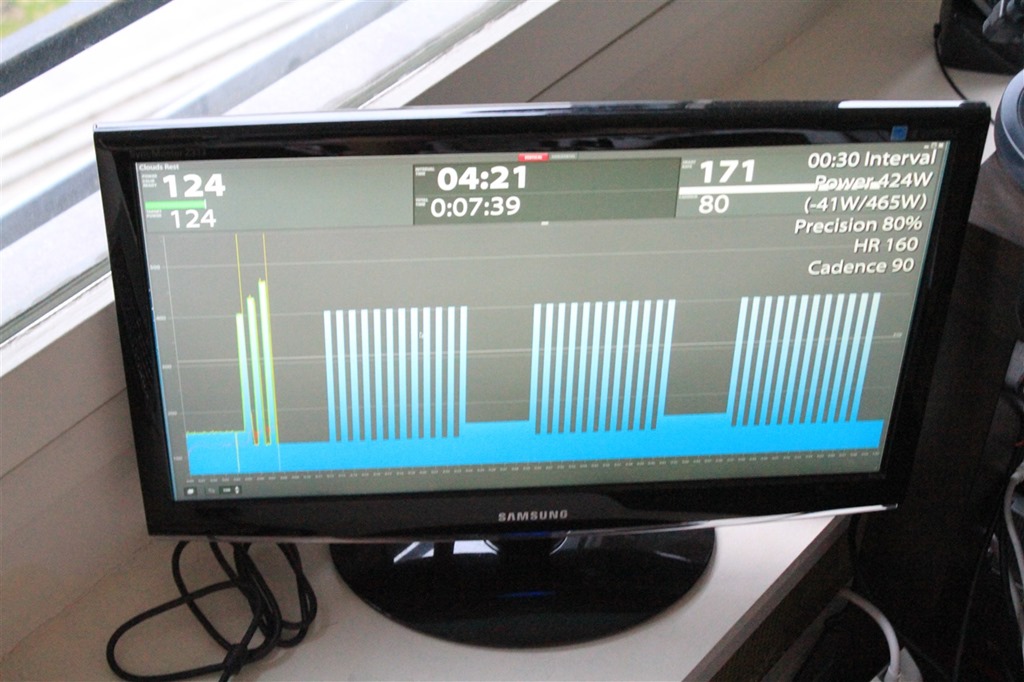
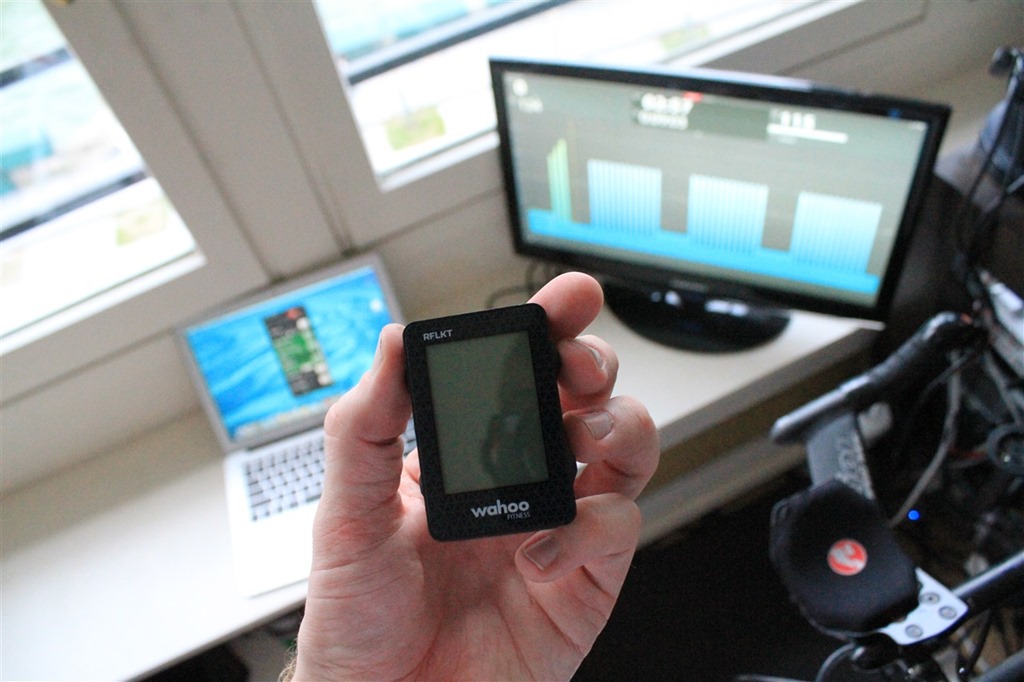
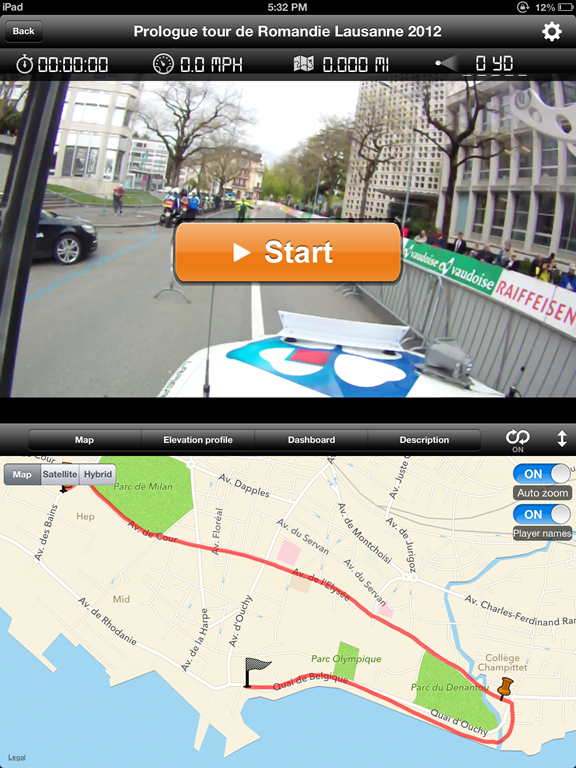
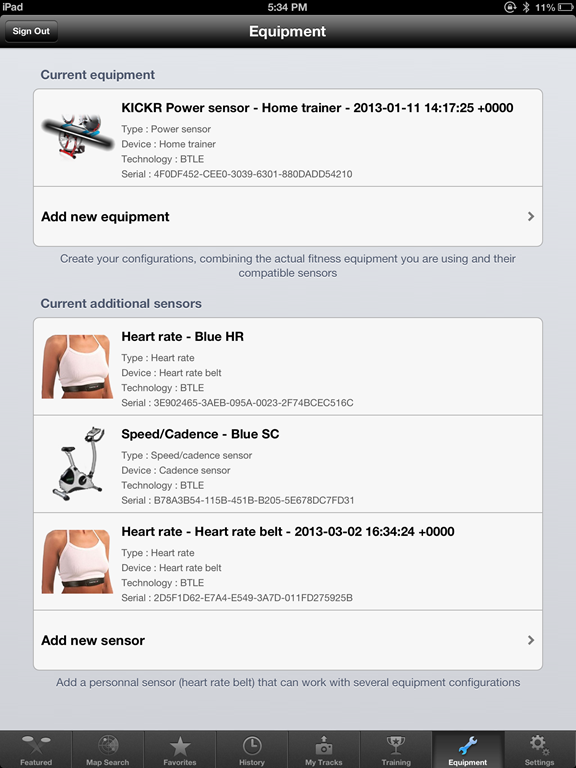
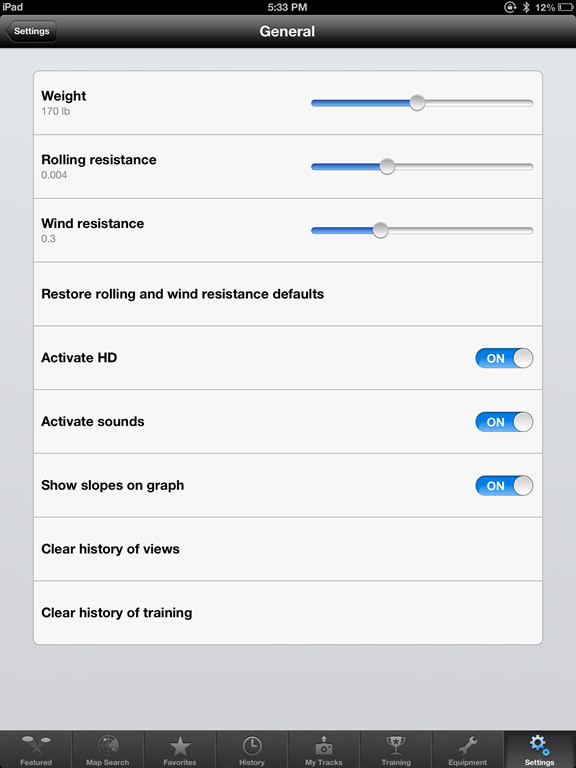
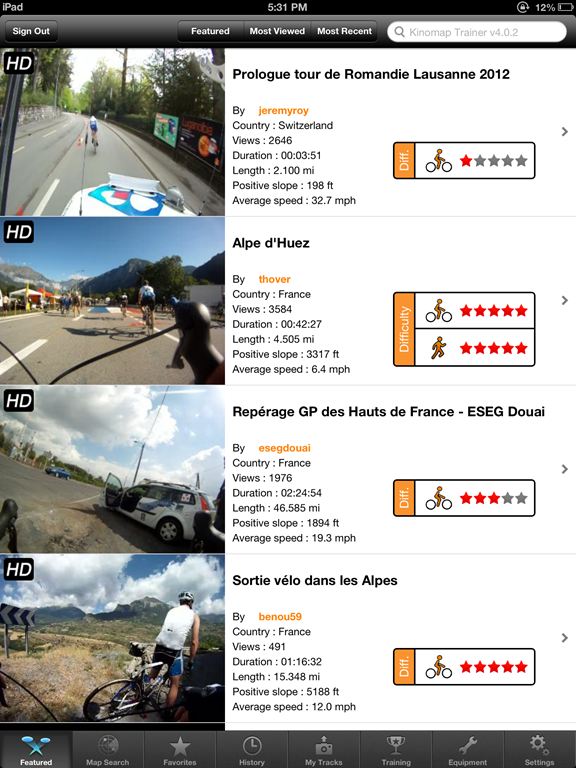
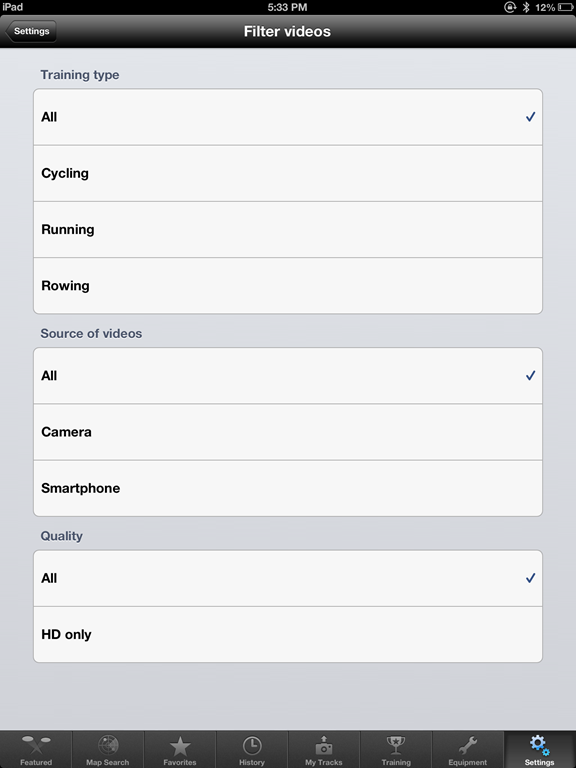
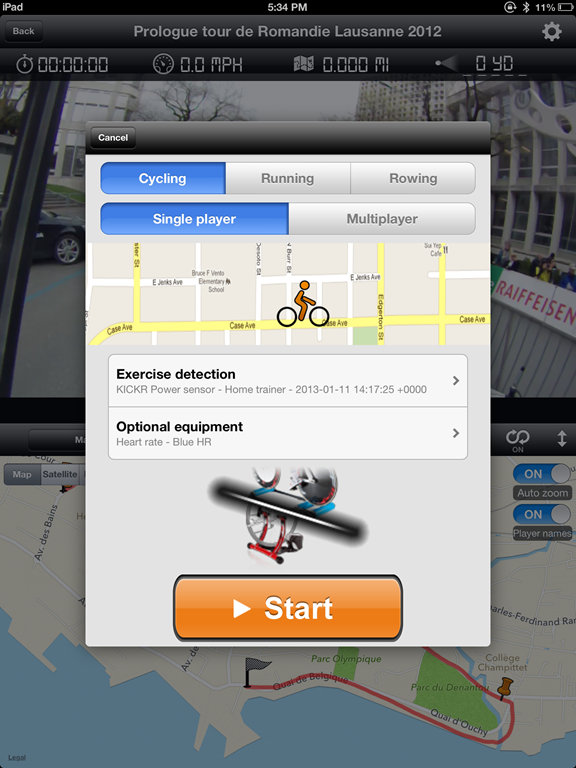
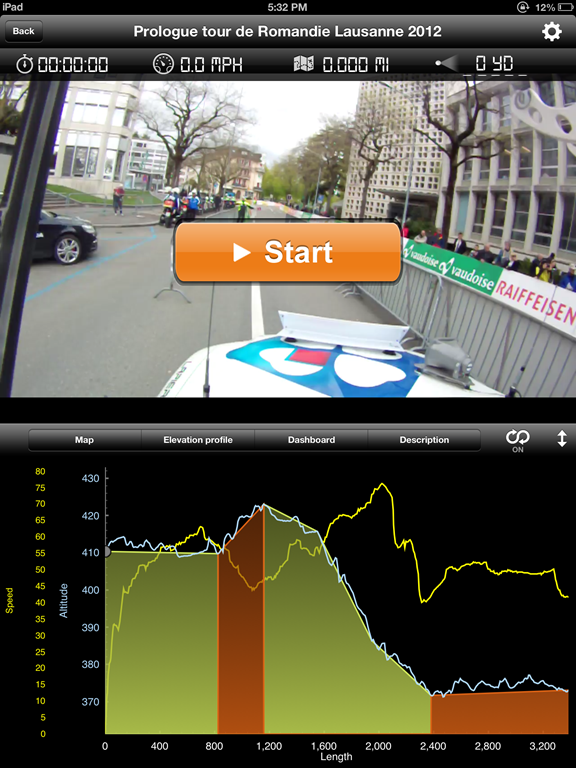
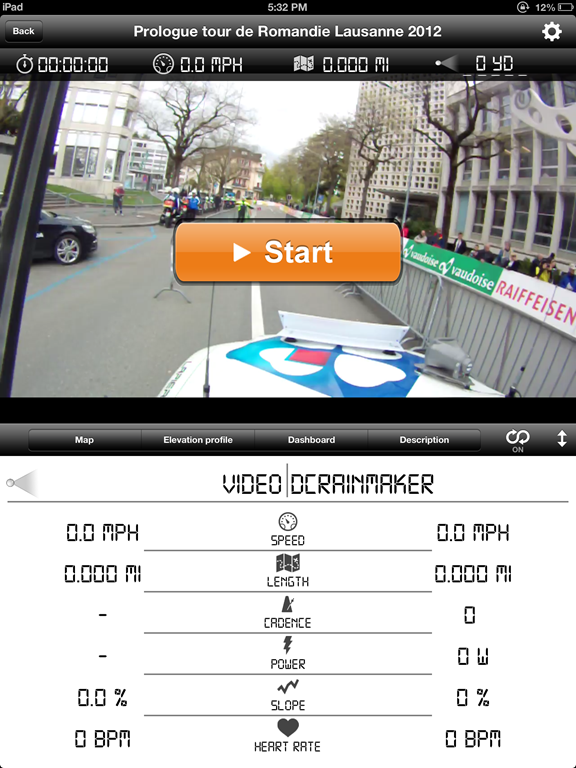

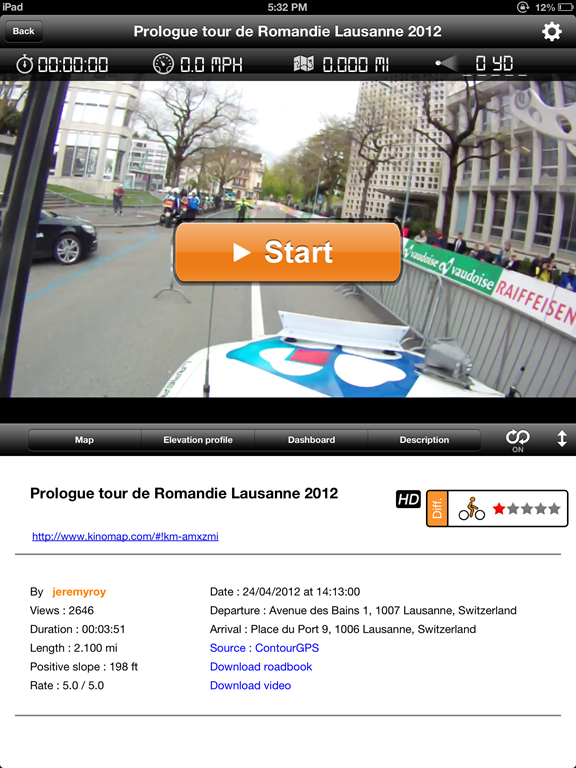
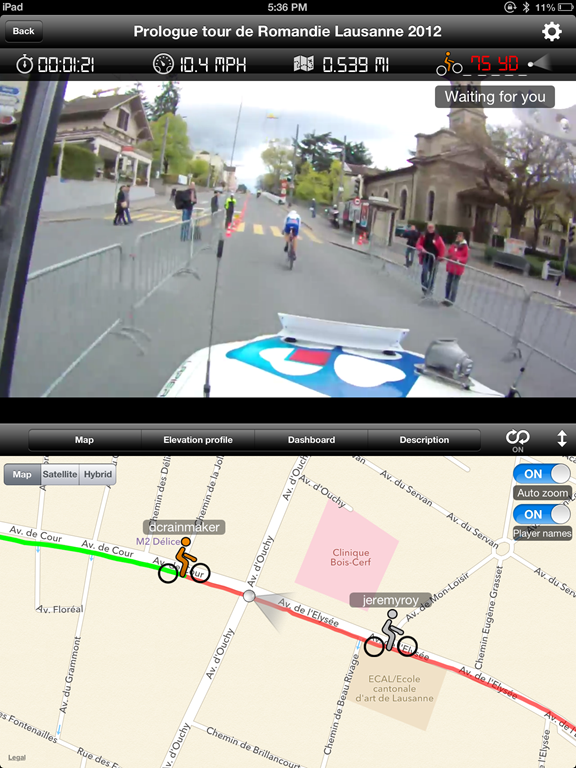


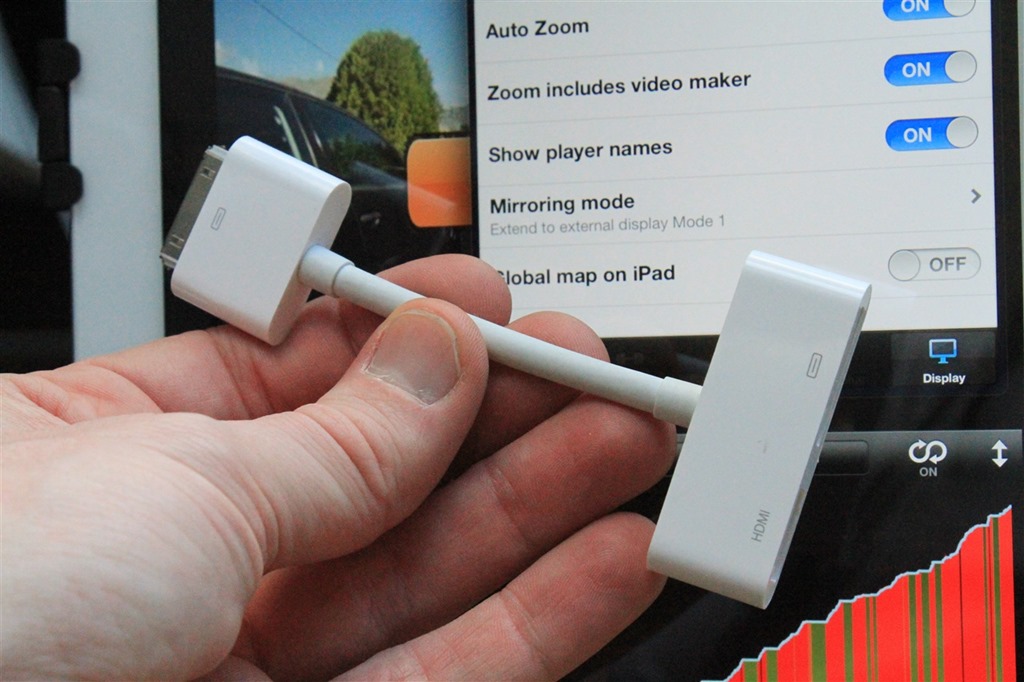
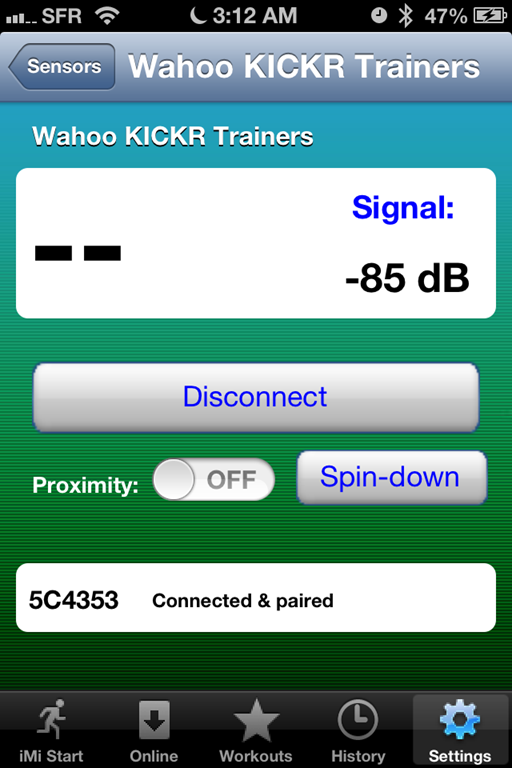

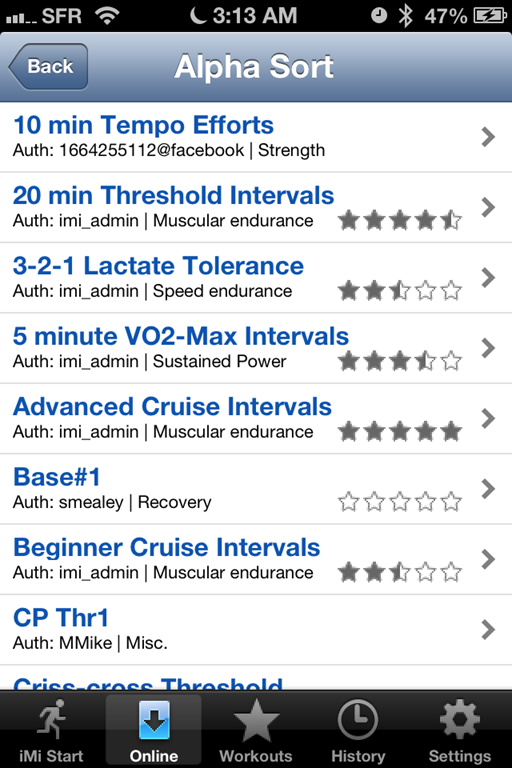
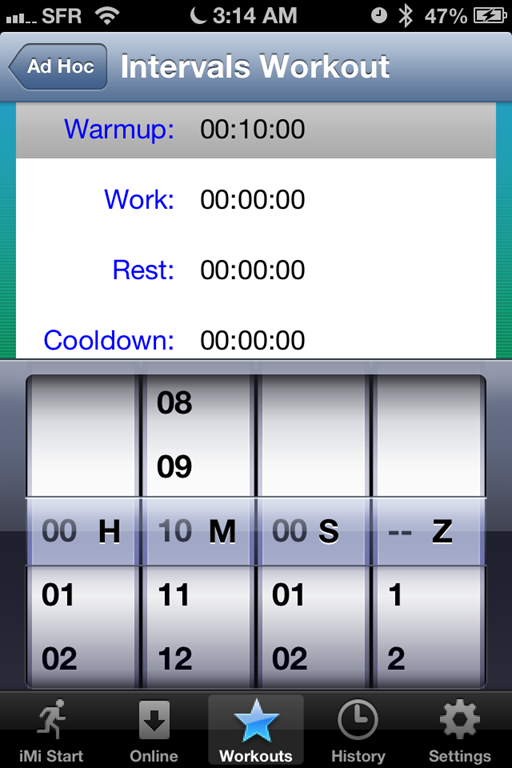

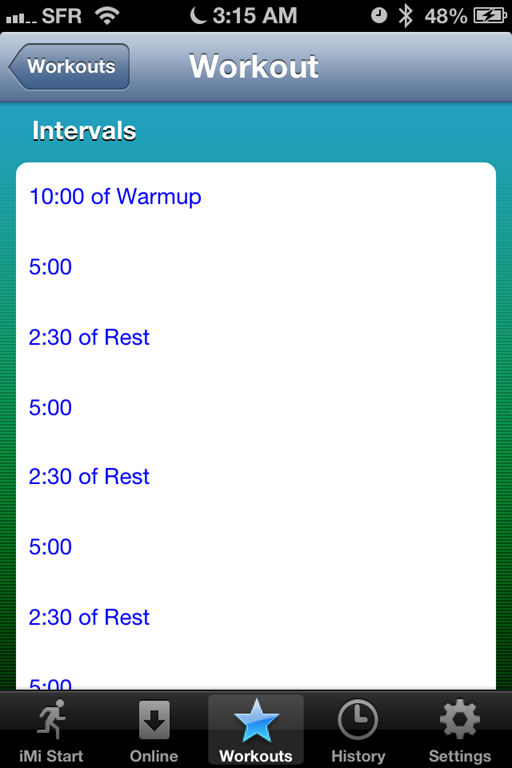

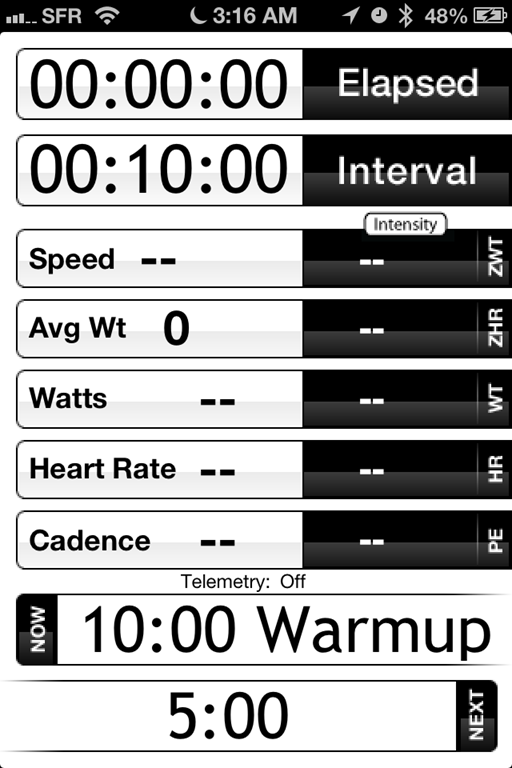
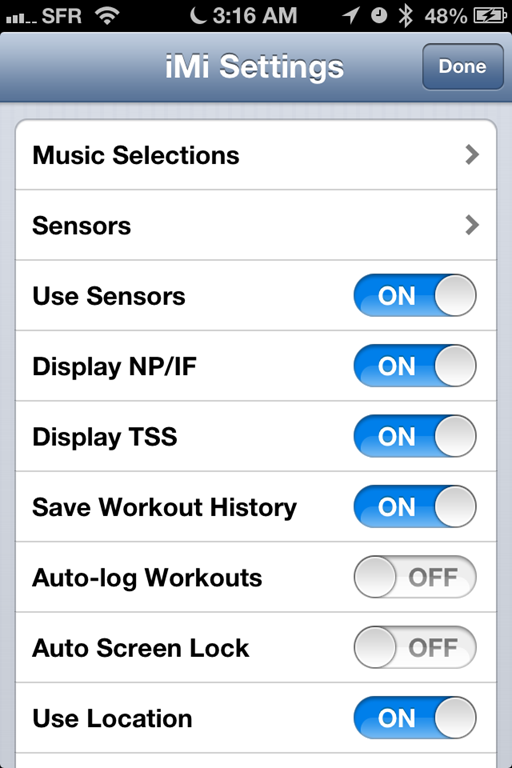
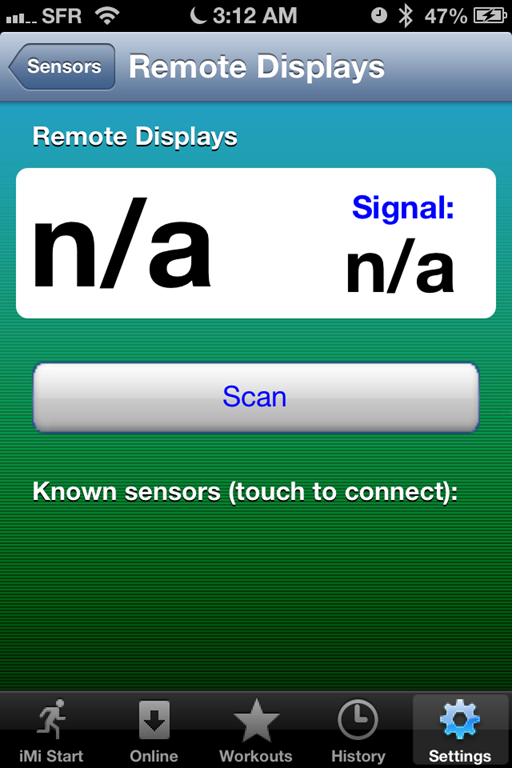
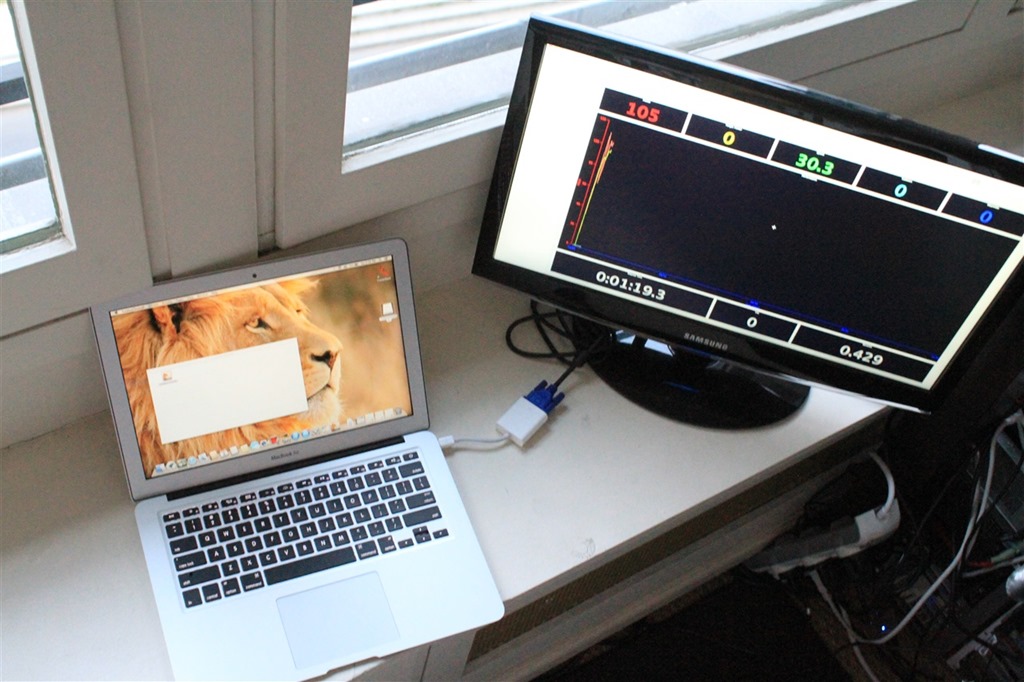
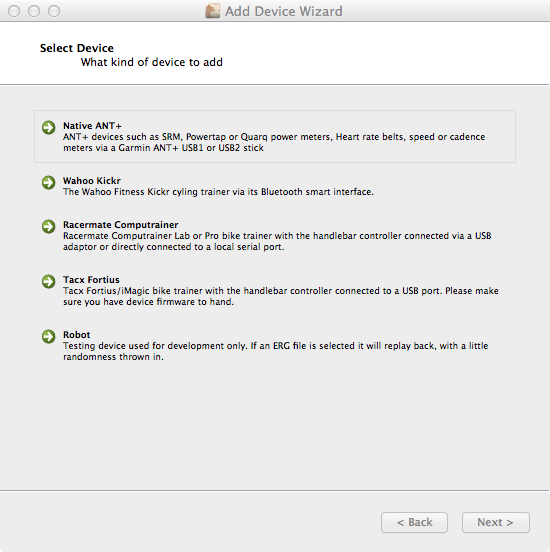
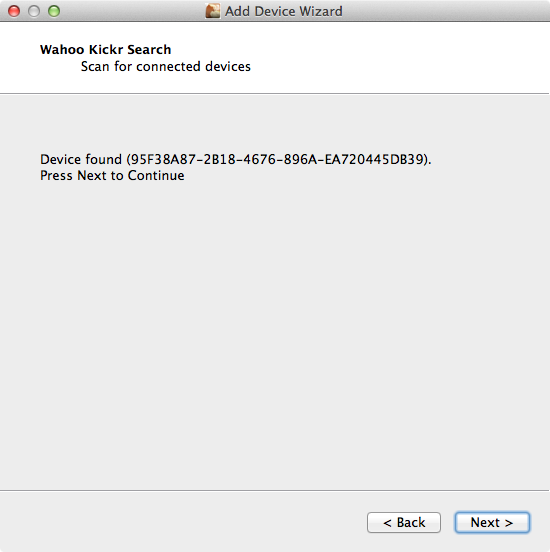
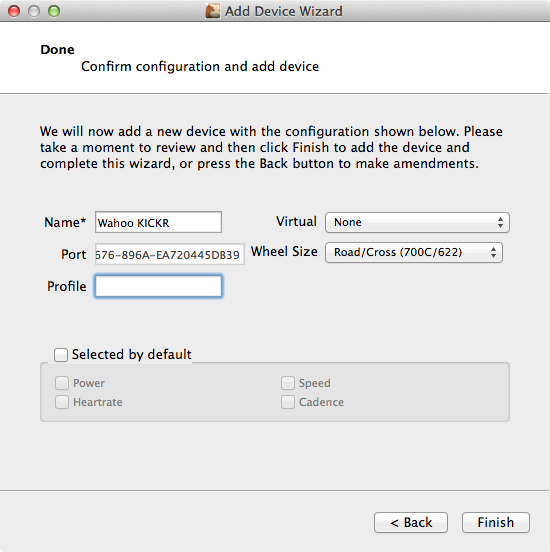
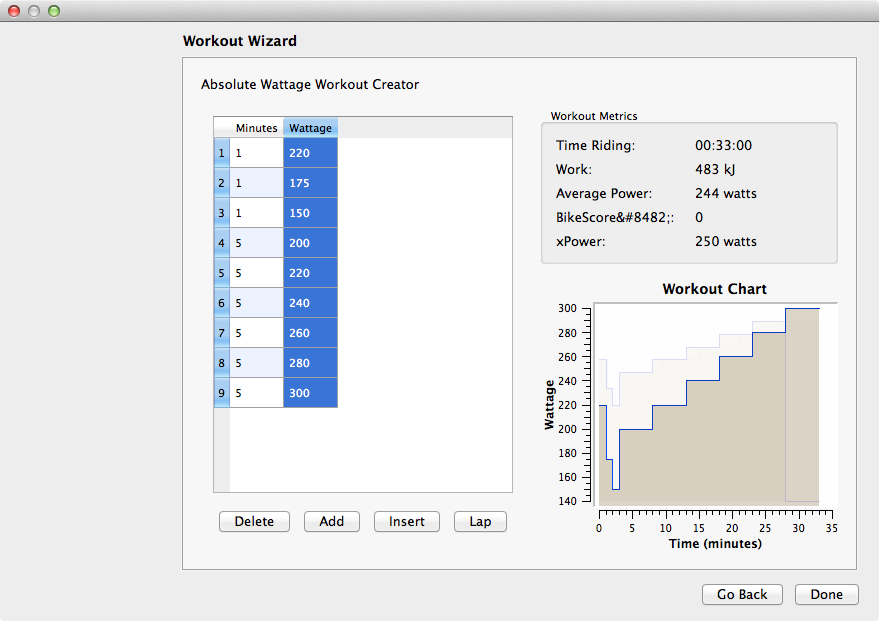
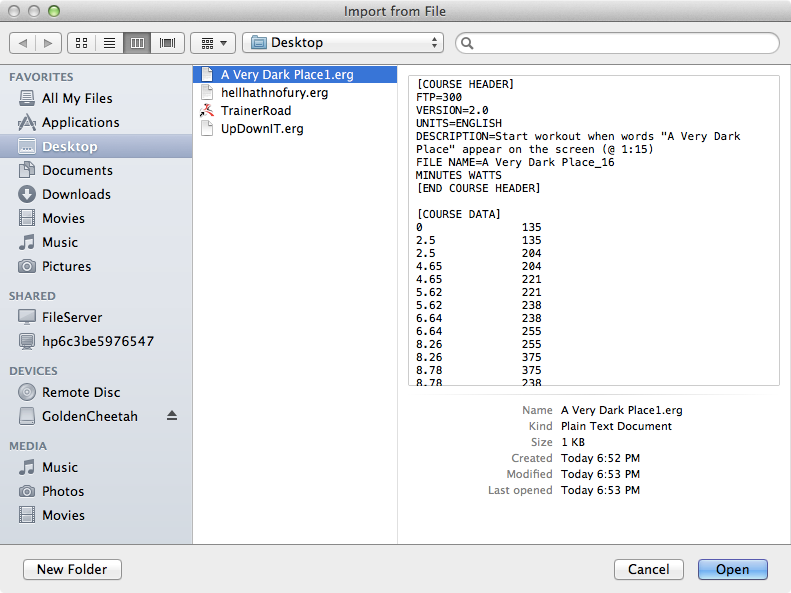
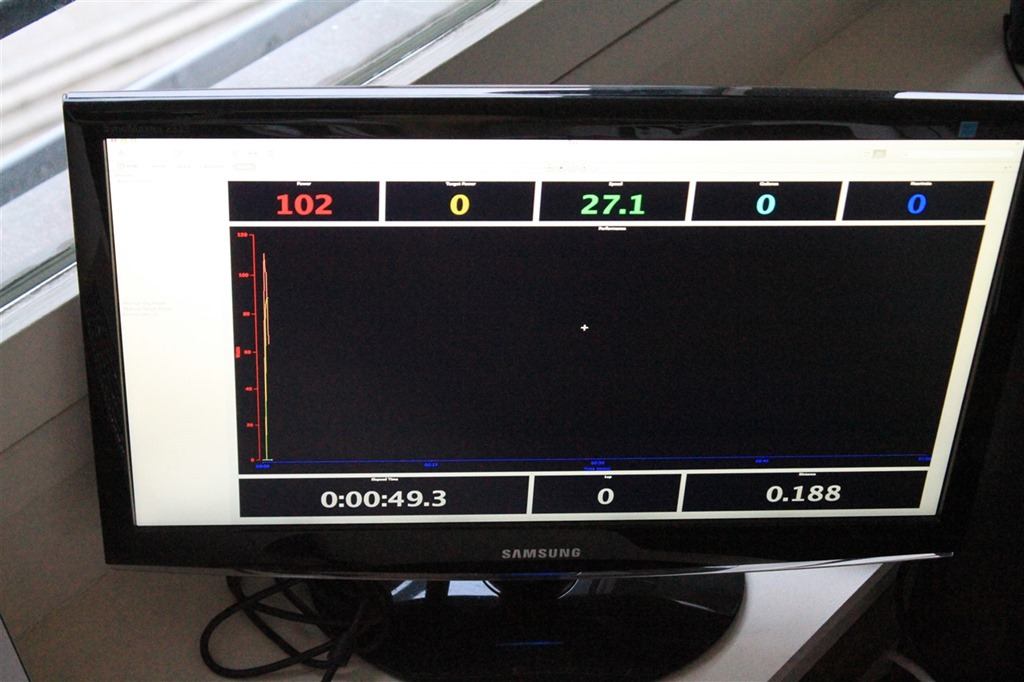
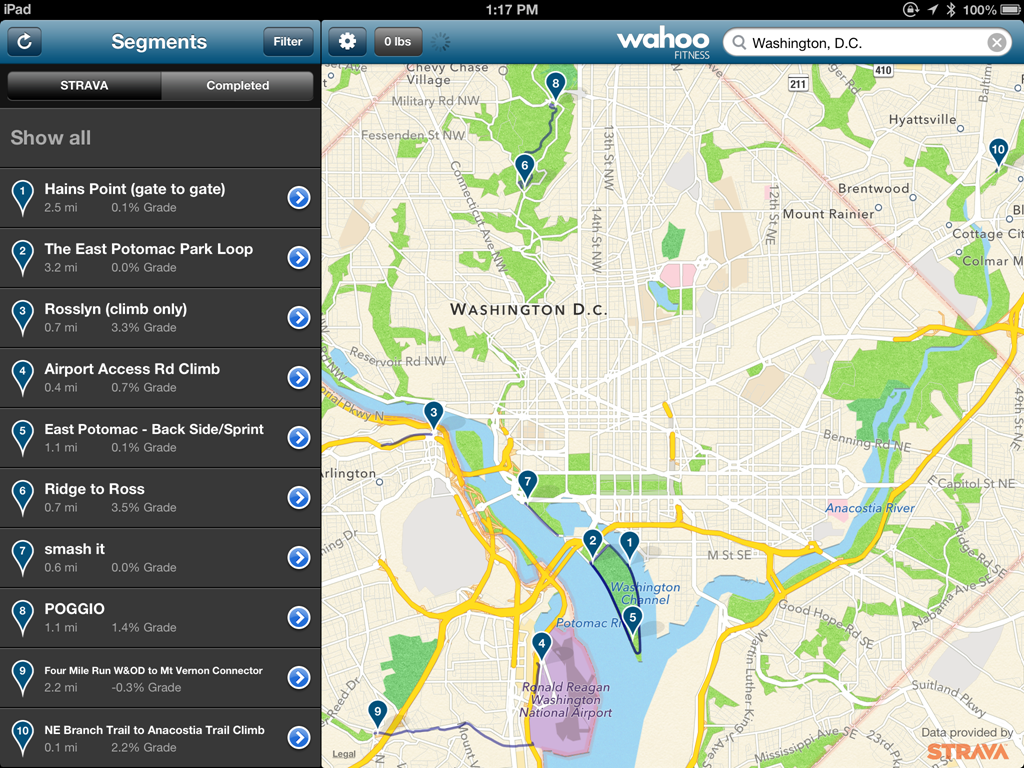
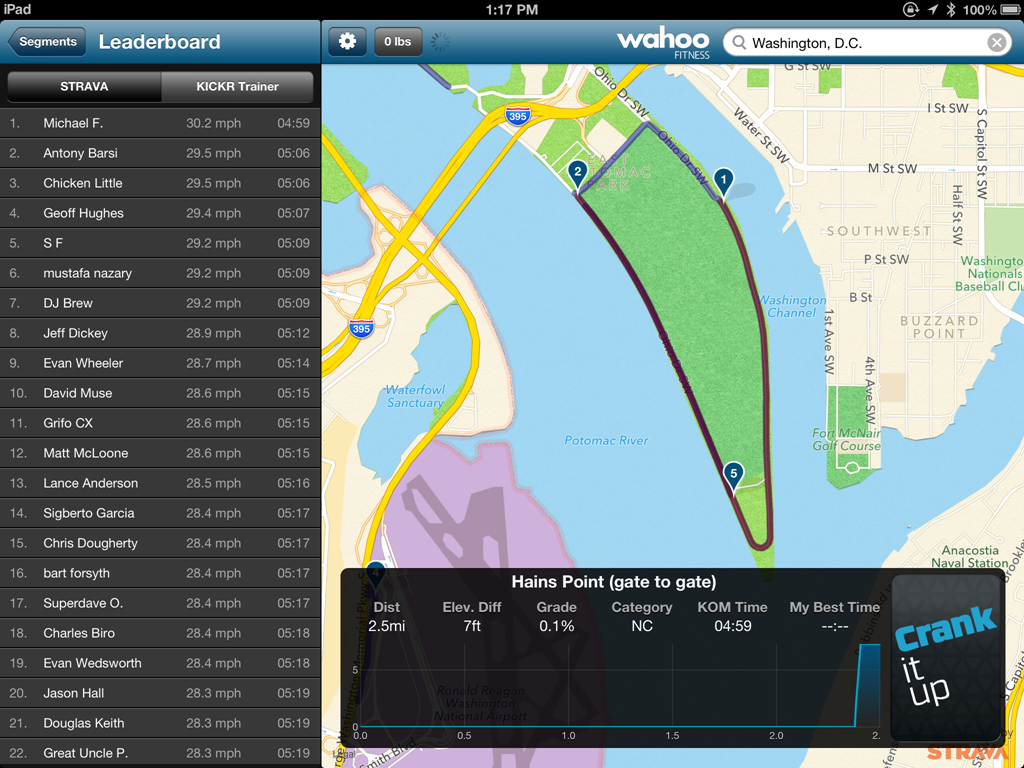
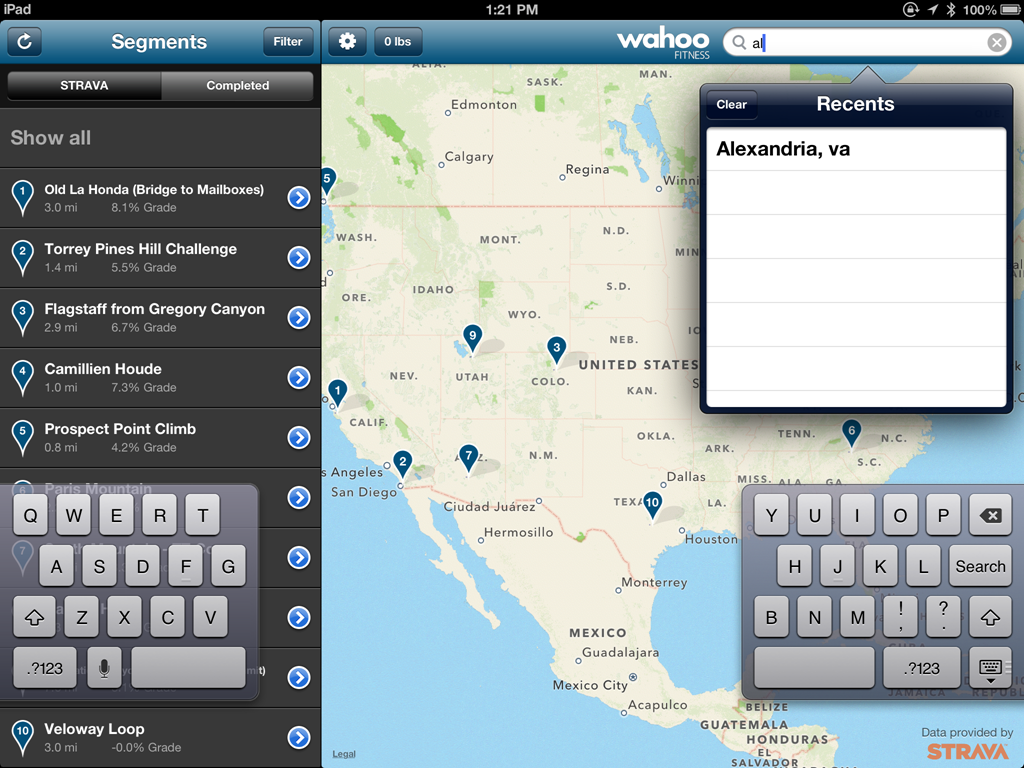
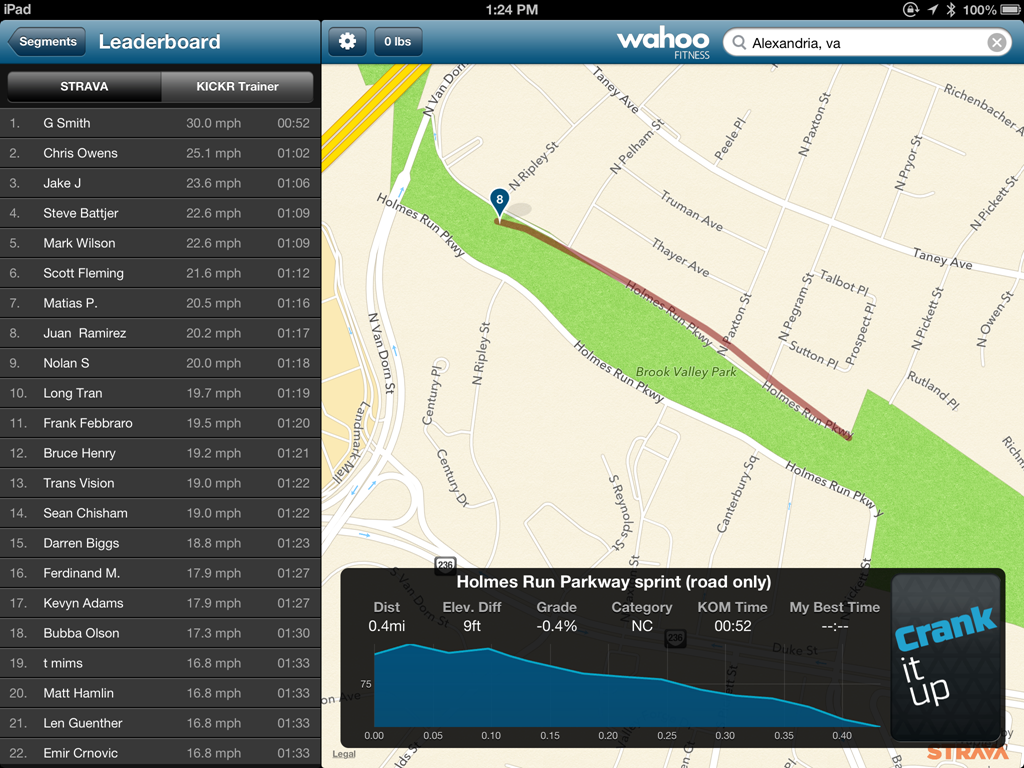
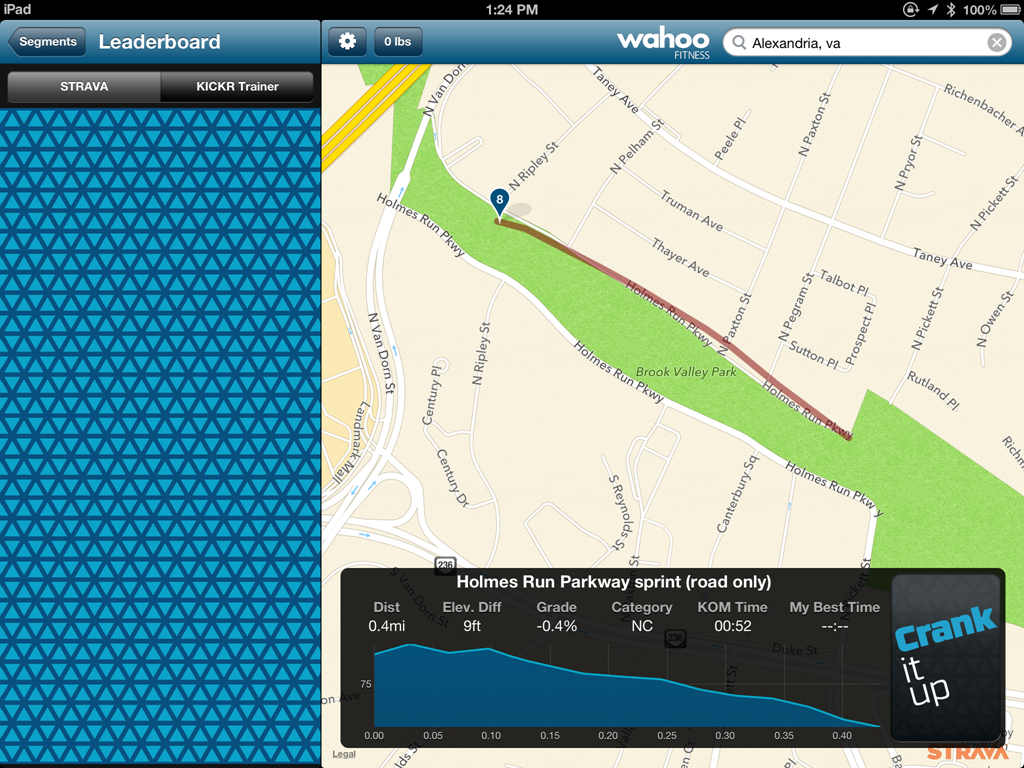
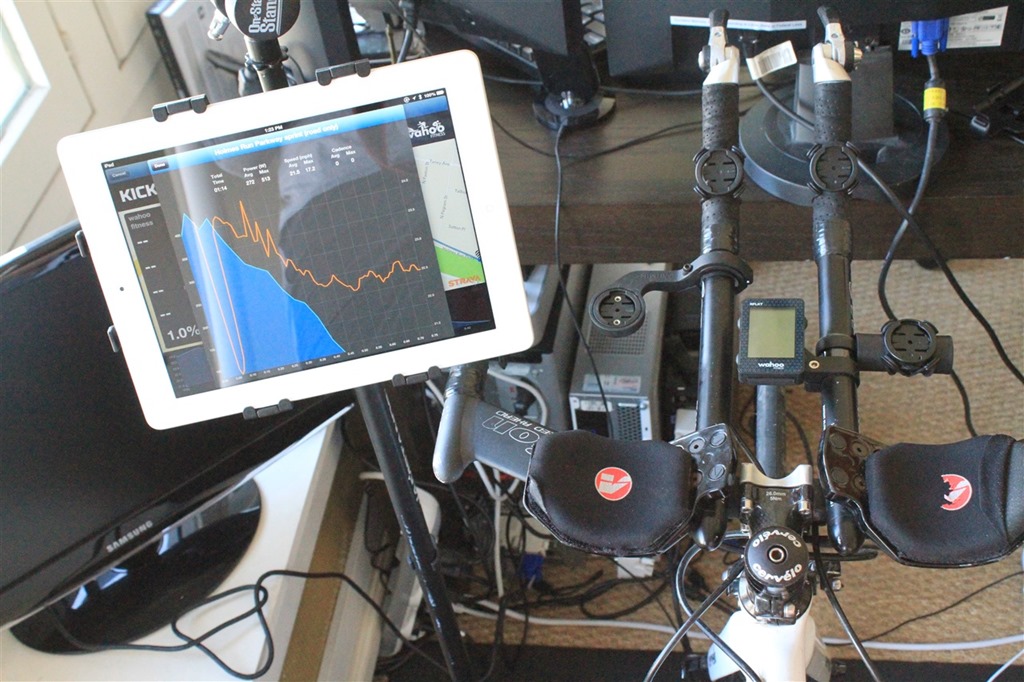
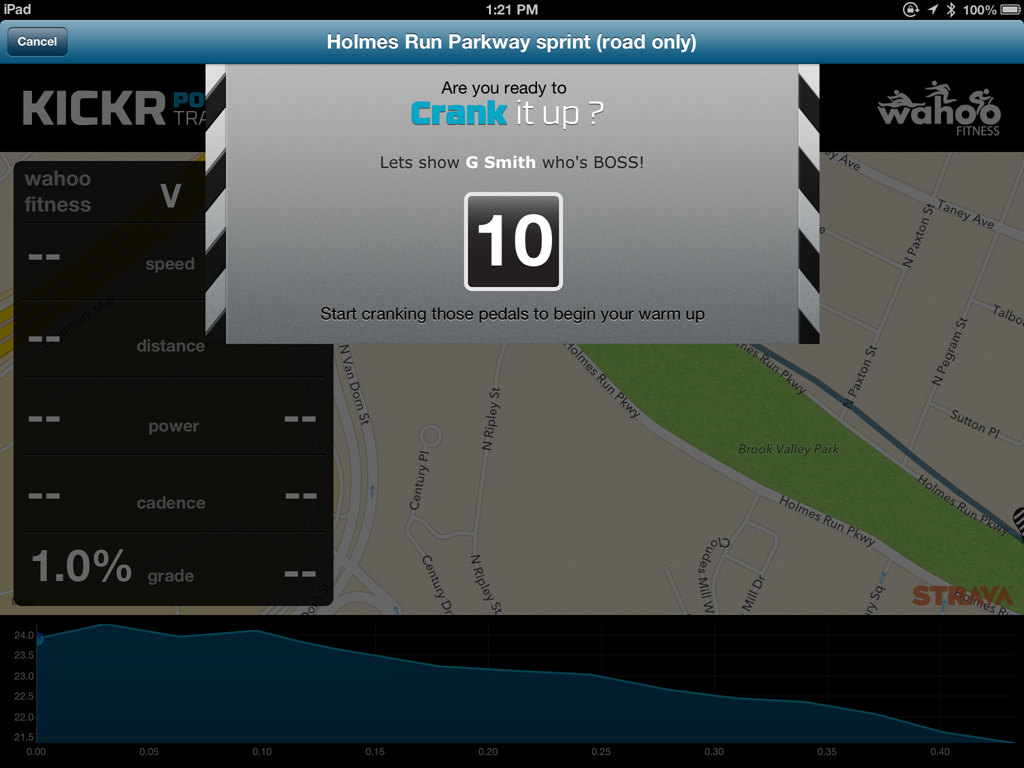

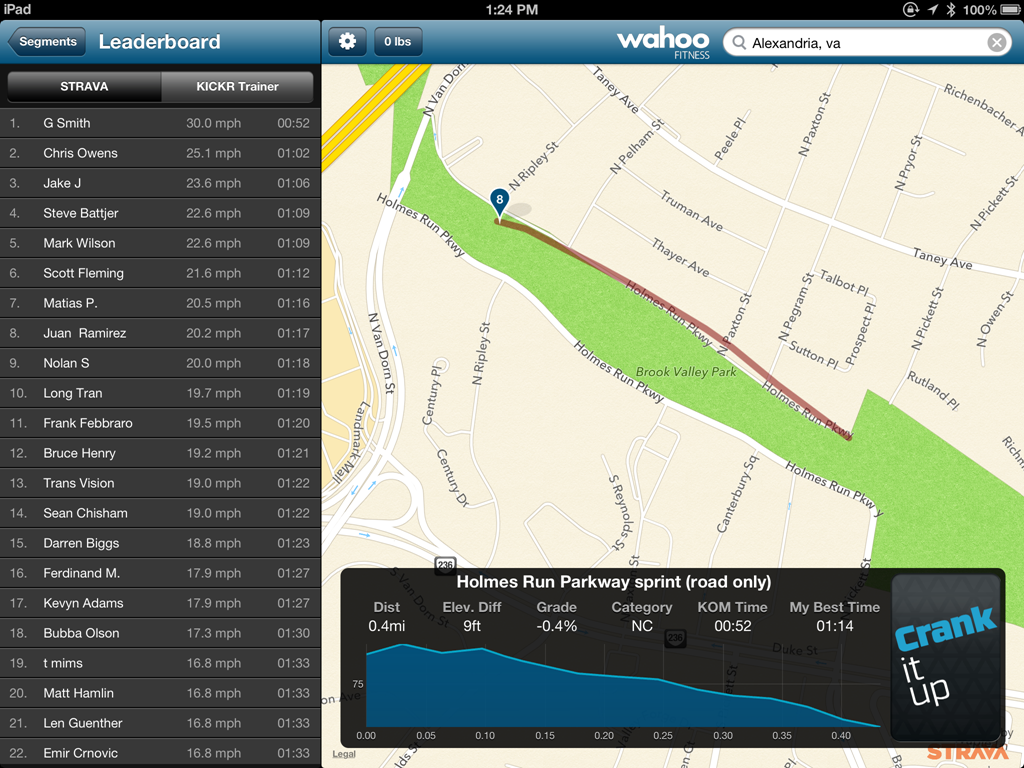

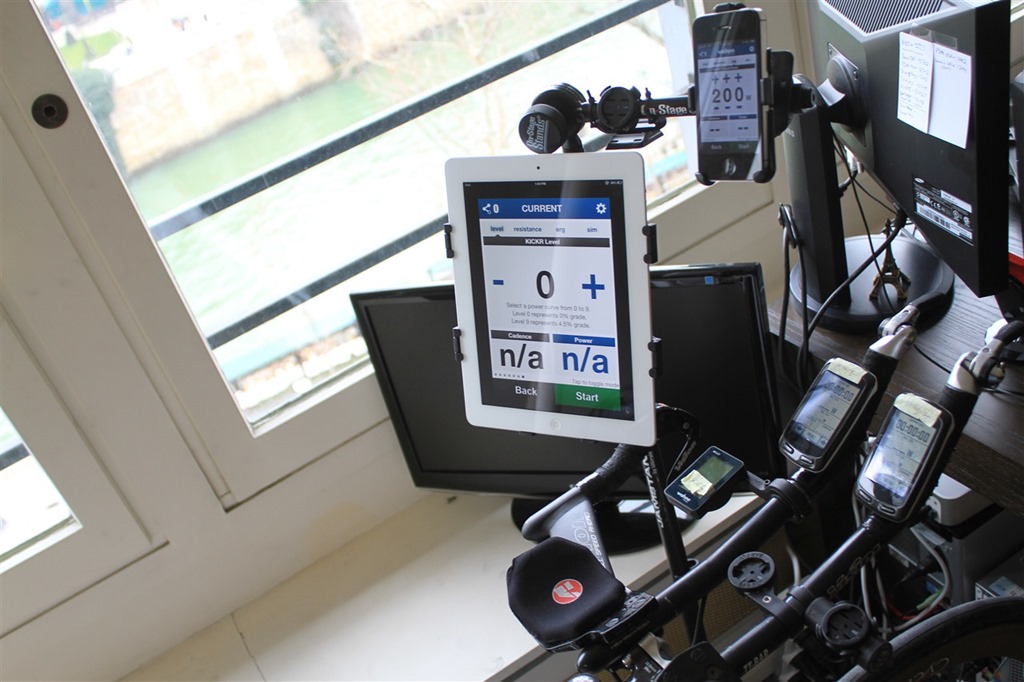
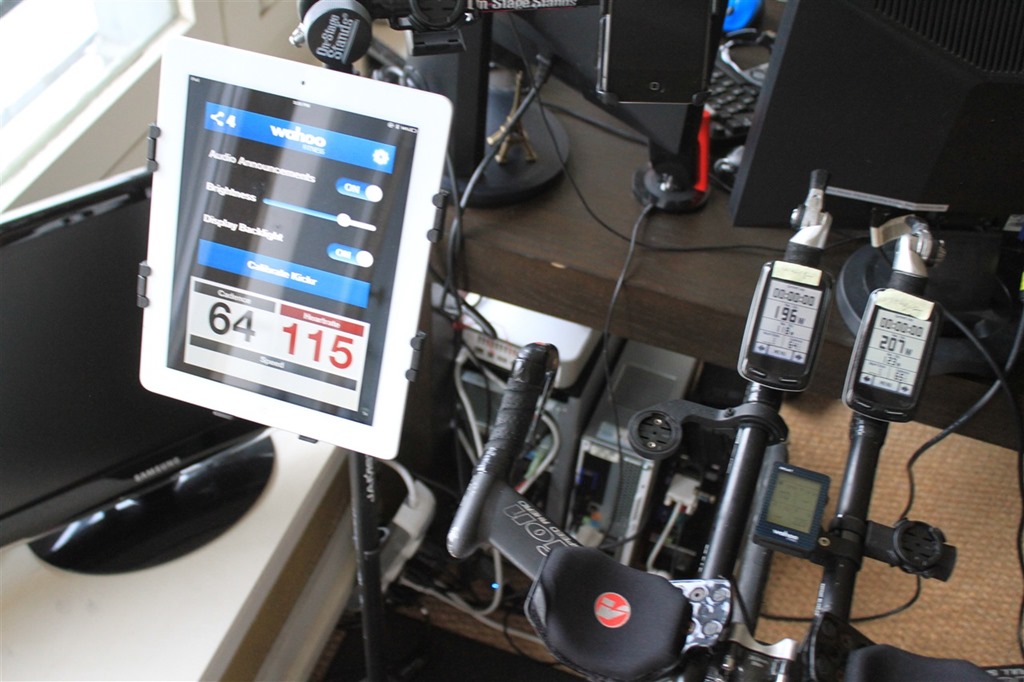
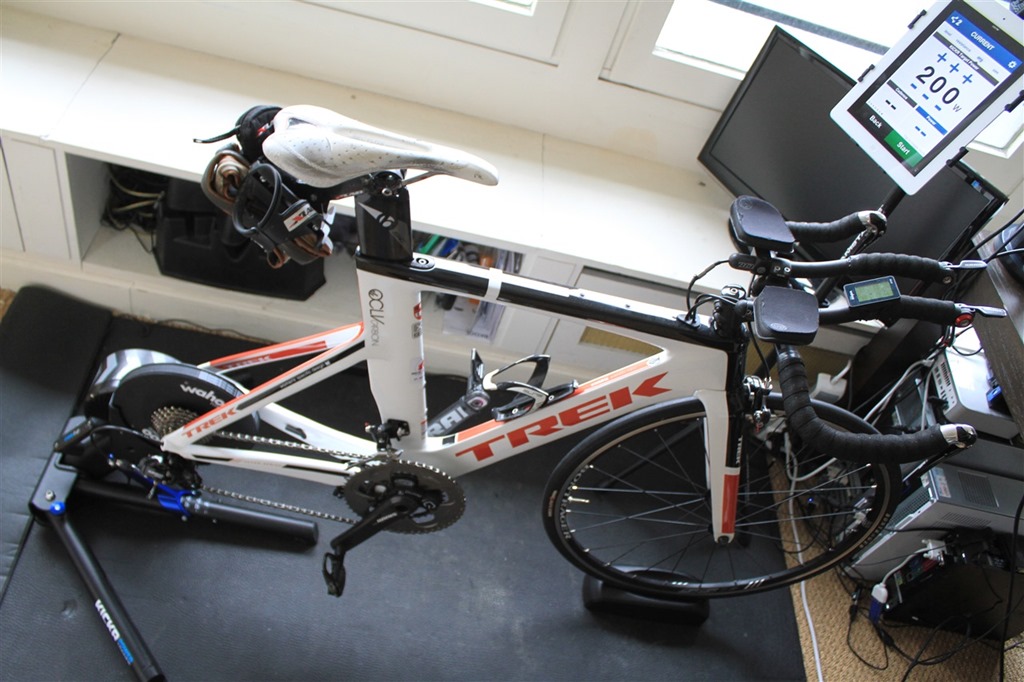
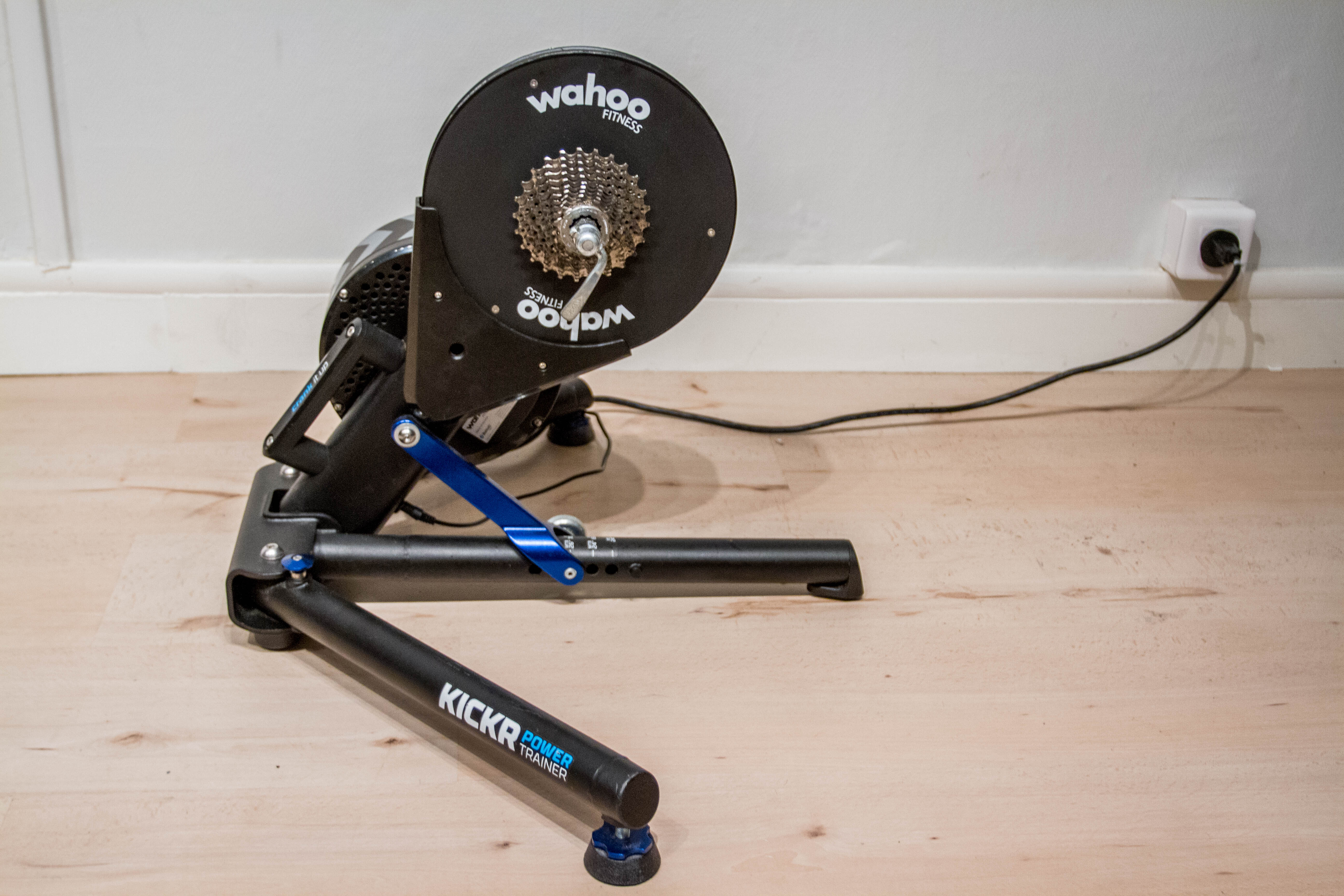
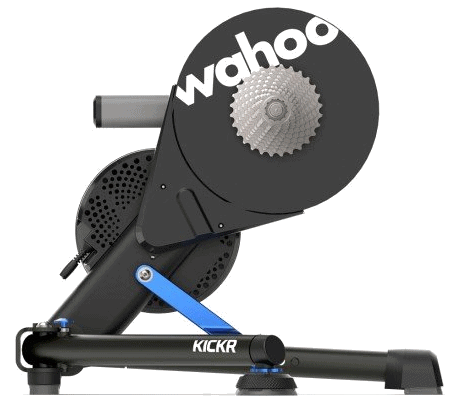


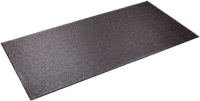
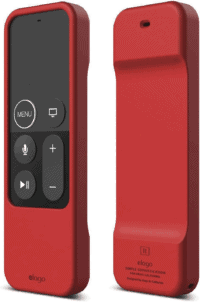
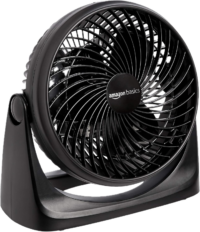
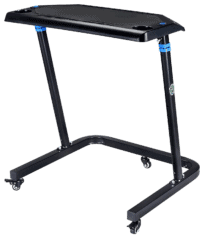
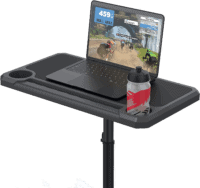
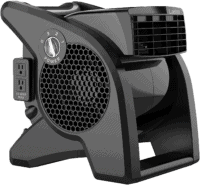
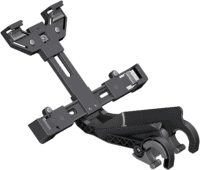










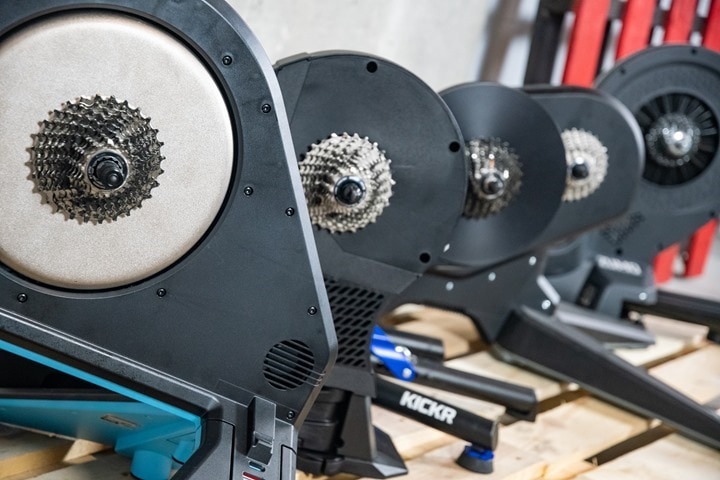



So far, I’ve used my Kickr mostly in ERG mode and I really like it.
If I wanted to simply simulate a 20 mile time trial ride on a flat road with no wind, (Yeah, I know, not terribly realistic), what mode and settings are the best to use?
Thanks,
MikeE
I like the erg mode too but I find it to be more useful (along with the cadence sensor) as a school ‘marm to make sure I’m hitting the numbers.
For what you describe, I’ve been playing around with the resistance setting. It appears as if 20 or 25% seems to be the spot where the “feel” (as well as the speed and power indication) mimics a flat ride. A spindown calc once a week or so is a good idea to keep things equal for future comparisons.
The positive with this method is that I can work off heart rate, which matches a little better with my objectives during this “base period” time of the year.
Check out Sim (simulation) mode. It will allow you to set the grade, wind speed, and bike type.
Yep, I tried that before I saw your post. It works great. Love it!
We have a kickr but experience issues adding a second user. Instead of connecting automatically, the wahoo fitness app asks for a wahoo key (which was not needed or the first bike/user). How did you add the second user?
Received my Kickr from Wahoo last week. So far I’m very happy with it. After setting it up with my bike, it did make some intermittent grinding noise from the flywheel but that quickly disappeared after the calibration and with continued use. Now it is very quiet, within the limits of its mechanical nature. Have the fork of my bike attached to a Kreitler Dyno-Myte forkstand, with the wheel adjustment set to 29″, which gives great solidity of support. Am using Kinomap Trainer, Virtual Training, as well as the Wahoo Fitness app through my iPad mini with good results. Will be setting up my PC/Windows to run Veloreality videos soon. Very addictive and enjoyable.
Using kicker since November no issues until my ride this morning. Stopped showing power and the resistance is 0. Unit still shows connected to apps but no power.
What Can I try to fix it?
See comment from Brian from the 16. January.
I Think it is the same problem.
Kind ragards
Kenni
Thanks.
I just popped mine off blew on the senor to remove some dust and on the white and black disk. After I put the sensor back on It is working. Hopefully thats all it was was a little dust build up.
Thanks again
Exactly same situation as Kenny’s !!!! Riding 2 months and suddenly power goes up and down , then to 0 , then oscillate. Open Service Request with Wahoo Support but waiting days for response.
If there is anybody from Wahoo monitoring this site please help me , my request# is 79114 .
Thanks,
Alex
Check out Brian’s post from the 16. I watched the video from the link that was posted. I didn’t install a new speed sensor but I did pop mine off and blow some dust build up off and on the white and black disk.
Popped it back on and it is now reading speed and power. Hopefully that’s all it was. We’ll see how things go when I ride in the morning.
Good Luck
Kenny
Very similar issue to the last couple (#898, #910 etc.) only mid intervals on Traineroad the app was on a rest interval and detailing 92 watts however the resistance on the Kickr was still recording (and was still set to) 231 watts. Paused the session, blew off any dust on the optical sensor (per 898 above) and recalibrated – all was well for the rest of the session.
My question is this, has anyone else had this issue – I performed a spindown only last week. Its not too inconvenient to perform a spindown before starting each training session as it only takes a minute or two, but would obviously prefer not to. I’ll monitor this and see how I get on, and if it happens again I’ll raise a ticket with Wahoo – as it worked after the above I don’t feel the need to open a ticket as yet. Just looking for any feedback from other users who may have experienced the same thing.
Its an amazing piece of kit and hopefully this is just a quick glitch!
Third call and still no response from Wahoo. I finally emailed them. No one told me that I’m being forced to email Wahoo in case my product doesn’t work. Makes sense though, this way the responsible people can hide and let the support guys take the heat.
I’m wondering why no one of the Wahoo tech guys, who obviously monitor this site, have responded?
Hi Markus,
As per my response on the 15th January, I instructed you to submit a support ticket, this allows our support team to track and have the correct person respond. While I and a few of the other engineers do monitor this site we are not always the best people to help. Wahoo has a specialist support team trained to assist with KICKR support, while I consider myself a power user, I personally don’t know how to diagnose all KICKR hardware issues.
When you first posted here our team tried to find information on your issue but you have not given any details of your problem so no one has been able to help. Please submit a support ticket with details of your issue and someone will contact you. Once you have a ticket number, feel free to post it here or quote it when leaving a voice mail message, we do not have full-time phone support but someone will get back to you.
Regards
Murray
btw, this is a big flaw of most product reviews…unboxing, setting up, testing..all good. But customer service is a huge part of how good a product performs (or not), and it’s rarely getting tested by reviews.
Hi Wahoo Murray,
almost a week on a support ticket 79114 , I have received only one advice , to clean dust like some helpful people here are suggesting, but this is not working for me. Can you “push” work on this ticket ?
Regards,
Alex
I just bought the Wahoo on the 23rd, logged a support ticket (#79151) with them on the 25th and got a response that they wanted video of my issue. The issue being a loud scraping noise from the spin drum when in use. I provided a link to a YouTube video (link to youtube.com) that I took of the issue on the 27th and have yet to hear a response. Just tried calling the phone support number and it says that no voice mailbox has been set up so I couldn’t even leave a voicemail.
While I applaud them for responding to me on a Sunday to get more information on my issue, going 3 days with no response is more than a little troubling for a product I paid $1000 for.
I look forward to a resolution to my issue, if anyone else has experienced similar let me know if you found a solution that worked.
JT
First let me comment on your noise, I had a similar noise in one Kickr I’ve had and it was similar although not identical to yours. It required a return of the unit.
Second the way I understand support, use the Wahoo web pages and get a ticket number. Don’t email again until they contact you. Support will contact you be patient. I had similar frustrations as yours.
HTH
Jerry
My replacement KICKR is on the way! Thanks Wahoo for the support! I look forward to setting up the unit when it arrives!
Hey Everyone,
Wahoo Megan here! I just wanted to quickly apologize for the recent delay in responding to customer service issues. Wahoo Fitness is located in Atlanta, GA and if you’ve been following the news you’ve probably seen that the entire city is shut down. We’re running on a skeleton crew today (mostly from home) but hopefully we’ll be back full force tomorrow. We still have a few Wahooligans on the road trying to make it home from yesterday, so please be patient with us for the next day or so. We’ll be working overtime to make sure everyone gets taken care of!
Cheers,
Megan
Thanks for the update, at least I know why it’s taking so long now. :) Coming from a city that is used to snow and ice (Ottawa, Ontario, Canada) I’m used to the conditions down there, but I know they don’t get that kind of weather often. I hope everyone is OK.
JT
Finally after much procrastination, I got the kickr, and is setup. I love it!! It’s an amazing tool. I want to start using other apps such as Kinomap or TR (these are just onese that i have learned about on this site).
I want to upload rides that i have stored in Garmin Connect into any app that is free. Does one exist or is that wishful thinking?
My preference would be to not have to pay for anything else since i just spent $1100. If the only way is to pony up more $$ i guess i’ll happily spend more.
Greg
When you say you’re looking to upload GC rides into any app that is free – do you mean to ride? Or to store for analysis?
To ride is still a bit tricky. For analysis, you can use these to pull from GC to other sites: link to dcrainmaker.com
I’ve had some good luck with Virtual Training when it comes up uploading GC rides. It’s a pretty simple uploader and allows you to adjust the elevation smoothing a bit. Only used it a couple times but seemed to work smooth for me!
Greg – Consider trying Veloreality. Run from a Windows computer via an ANT+ connection to the Kickr, the software has superb videos, the best available.
Rainmaker and Brad – Thanks for the reply. Yes, I should have explained myself better. I am looking to get an app that will allow me to ride previous rides. I looked at the Cyclops Trainer Road app, but was a bit confusing in that it appeared that I needed the $10 workstation app along with the $5 app on my ipad. It looked like I had to use the workstation to download from Garmin Connect, then upload into my account. Then from there I could use the Ipad app from there. Does that sound right?
Ideally it would be a free app, but if I have to pay a small monthly fee, then I guess i’ll have to do it.
By the way I think the kickr is amazing! I purchased it based on your review and the remarks of the followers on this post. I’ve never had a power meter before so this is an amazing tool which I hope will help better my overall bike times.
You should look at the strava segment app.
Greg,
I’ve been using Virtual Training on a PC so I can’t attest to the capabilities of the app itself. The PC software is a small monthly charge but it gives me everything I need to ride existing courses or upload my own Garmin Connect files (I have to export them first but it’s a relatively easy process). I would imagine that you could upload the files on a PC and then save them for later use on the iPad but I am not 100% about this. Even though the app costs a few bucks, it’s only a one-time fee and you will get all future updates for free so it’s kind of a no-brainer! If I get some spare time, I’ll try downloading the app and examining the features a little closer but I can’t promise that’s going to happen any time soon, we’re pretty swamped here and the weather hasn’t helped things!
As Kenni mentioned, Strava Segments could also work but you’d have to create a “segment” out of the entire ride and then search for that segment each time.
Cheers,
Brad
Brad from Wahoo called me yesterday. I think it was even after hours. Very nice and helpful. Unit worked with Wahoo’s app, not with the Virtual apps and he’s looking into it.
Hello folks,
I got my Kickr recently and so far everything works flawlessly. I didn’t ride any other trainer before, but I am very satisfied how the Kickr feels like. As a pure outdoor rider so far, the main feature which convinced me to get the Kickr was the possibility to control its resistance by importing GPX files or any other GPS data into a program. Doing so, I am able to ride my favorite outdoor courses or ambitious future courses directly at home. I got PerfPro Studio and a Suunto Movestick (ANT+ USB dongle) to control the Kickr. With this combination, you could also use your heart rate or cadence sensor from you bike computer, if these are also ANT+ compatible. PerfPro can detect them and display the data. Then you just import any GPX file or other GPS data into PerfPro and you are directly able to ride the corresponding height profile.
I know that GPS data is often poor in precision (which has been discussed in this thread quiet frequently), but I found in my opinion a good way to correct GPS data for the usage with the Kickr. There is a free program called GPS-track-analyse, which you can download from
link to gps-track-analyse.de
Unfortunately it seems like German is the only interface language, but it has a quiet intuitive user interface. This tool allows you to open a GPX file for ex. and to manually edit it. It will give you an overview of total meters of climbing and all other infos you could get. This number is often far of from values I got for rides I recorded with my bike computer (barometrical). To correct the values and to get a realistic road feeling for the Kickr, the program allows you to flatten the height profile by applying some sort of polynomial function to fit the overall profile. You can only chose a few factors for the fitting (number of interpolation intervals, number of repeated calculations and to approximate the height values to full numbers), but you can repeat it several times till you get a value for the total meters climbing, which corresponds closely to the correct value. You also have the possibility to show you the distribution of all values of incline and decline, where you can directly delete unrealistic values (when the gradient would be for example 30% even though you know that the maximum for your ride is only 12% for example). I kick out all extreme and unrealistic values beforehand and the do the smoothing, like this I get very nice GPX files to ride with the Kickr. Like this, you don’t get into trouble that you suddenly have extreme values of gradients when you climb or a surprising descent in a mountain stage where normally there is none.
To ride a stage where I don’t have personal informations about the profile from my bike computer, you can nicely design your own route for free on
link to bikemap.net
It’s very easy to use and you have a very good database for rides (at least in Europe). I like it much more than the Strava website (most segments are just way to short). You can export from bikemap your own designed route or an already predefined course as GPX file and load it into PerfPro (after editing it with the GPS analysis tool) and then enjoy your ride. Bikemap.net gives very good values for the total meters climbing when you design your own profile and also for the preexisting routes. Remember this number when you open the exported GPX file into the analysis tool, the value there will be totally different. Do the described editing steps to get a smooth profile and the realistic amount of meters you have to climb. I don’t use the Strava app for the iPad, but I guess you could also upload you edited GPX file to the Strava website and then ride it by controlling the Kickr with the iPad instead of controlling it via ANT+, but I am not sure if Strava will reedit the course when you upload your file. Maybe someone with the iPad app could try…
Overall I really love the Kickr, it seems very well built and it works exactly the way I imagined and out of the box. Nevertheless I would like to point out as well some things for improvement.
I noticed a week spot in the overall good quality of material, because one of the blue bolts to keep the stands in place came off while I was riding. Here are the links to pictures I took.
link to dropbox.com
The problem is, that the bolt is only held in its place by a tiny horseshoe shaped metal ring, which is very thin and doesn’t correspond to the solidness of the rest of the machine. For 1000$ I would expect a better mechanism to keep the bolts in place. Fortunately I was able to reattach it with a nipper and I hope it is going to stay where it should be and I don’t need to contact the support for it.
The other thing I think should be improved is the manual and the general knowledgebase for the Kickr. The manual which is delivered with the machine itself doesn’t give any information other than a quick setup tutorial and important things how to troubleshoot the Kickr are widespread over the internet. You should really gather all these helpful informations you find in this forum and also some of the infos from the Wahoo website and write a proper pdf manual, which should be then updated from time to time. Furthermore, I can’t find anywhere informations on how to maintain the Kickr (how to keep it clean, which products can be used to keep it clean, is there anything to lube or to retighten after a certain amount of riding, which parts of the Kickr should never be opened or modified by oneself, etc.). It would be very good to get this kind of input to enjoy the Kickr as long as possible.
Anyway, in total I am very happy with the machine and I definitely can recommend it to others who are looking out for a good home trainer. Enjoy your ride!
Subject: Watts on kickr are > 20W too high
I purchased a Kickr a week ago.
I quite the like the unit. It took less than 30 minutes to unpack, download a few apps and mount the bike. I really recommend the TACX ipad handlebar mount.
Note: I have calibrated the unit several times (tried at the start of the ride, ten minutes into the ride, etc).
The watts reported by the Kickr (in both the Wahoo and the Virtual Training apps) is 20-30W more than the watts shown on my Quark SRAM Red Power Meter. For example, when Kickr reports 180W actual watts are less than 160, when Kickr reports 250W actual watts are around 220W.
I have tested the quark power meter against my computrainer and they are within 2-5W apart.
In addition, I can see that my heart rate is too low for the kickr reported watts. For example, on the computrainer my pulse is about 165 at 300W but on the kickr I required 330W to get to 165HR.
I have found several similar complaints on the web of the same issue. In some cases, it appears that a new Kickr is required???
Has anyone been able to resolve this issue?
Thanks,
David
I have noticed the same discrepancy in power between my Quarq and the Wahoo Kickr (Quarq = 20 Watts lower). Both are new to me (as is training with power) so I’m at a loss to know which is correct. I found this blog post link to slowroadie.com in which the author had a similar difference in power between his Quarq and PowerTap. His eventual solution was to re-torque the chainring bolts on the Quarq which appeared to drastically reduce the difference between the Quarq and PT.
I have the Quarq on my new road bike and use an older bike on my Kickr. I just re-torqued my chainring bolts on the Quarq equipped bike and after the weekend (riding outside with temps finally over 30°F), I’ll put it on the Kickr to compare them again. I wish I had a third power meter available to me to see one provides the most accurate results.
No matter if its the Quarq or the KICKR that is most accurate, its important that you have consistency across your indoor and outdoor workouts. If you are using the iMobileIntervals app you can offset the KICKR by the difference to align it with your power meter. I believe no other app offers this feature.
Jeff (or others) – After you’ve re-torqued the bolts on the Quarq, ensure you do a handful (3-4) hard standing starts/sprints to ‘set’ the unit. On the KICKR, simply do some all-out 20″ sprints. Outdoors, basically do the same thing. Then re-calibrate. Having done a lot of testing, there’s a substantial difference on units post-sprints than pre-sprints after installation (both on Quarq, but also other PM’s).
Now, the good news is that if you went out for a ride post-torque, you probably took care of that along the way.
Jeff et al –
I don’t believe the issue is the Quark power meter but rather the Kickr watts are 20-30W too high. I have done multiple calibrations on the Kickr.
D
I’ve checked KICKR against my Powertap few times and it stays within +/- 5W during steady site at 200W average and can deviate +/- 15-20W during hard sprints. Frankly I consider it quite normal. Too many factors are involved during measuring power. The companies whose business is making power meters of course put enough resources to perfect their contraptions. Companies making trainers on the other hands probably can not afford it. However the average power on KICKR is VERY consistent between the rides once calibrated. So if I was that much concerned about “perfect” watts I’d just simply rescale whatever workout you are people using to match whatever is needed.
Now. Computrainer in my measurements was not not any better. I tested it extensively (Pro model) and it behaves exactly the same. Very accurate/consistent during steady riding and not that much during hard sprints.
Kostya –
I would be *very* happy +/- 5W during a steady ride at 240W however, I am seeing deviations of 30W at that level. I am not concerned about hard sprints or bursts.
I didn’t see this variation on the computrainer or cycleops i400. Btw, only reason for switching was that the CT continually ate tubes and tires. Kickr solves that nicely.
D
Cyclops i400 has buit in Powertap. It’s got to be good ;) But I agree if yure going that much off during steady ride on KICKR something is wrong.
Update: The watts difference problem seems to have solved itself. On my last two rides, the Quark power meter and Kickr watt readings have been withing 1-3 Watts.
Items I did do – not sure if any or all helped solved the issue:
1. I used the Wahoo Utility to calibrate the Kickr (rather than the Cycelops Virtual Training)
2. Before each ride, I calibrated the Quark power meter using my Garmin 810 (as recommended by quark)
Or Perhaps – it takes time for the kickr to get “worked-in?”
Either way – the Kickr appears to be giving me consistent readings to the Quark power meter.
However, one item for the Wahoo software team It looks like the algorithm used to control the brake is lopsided. If I set the power to 250W – the pattern is 245, 247, 249, 251… 243, 246, 248, 252 .. 245, … it seems that there are always 2-3X as many under numbers and as soon as there is one over number the brake immediately cuts the resistance (and then builds up to the set point and then cuts immediately.) As such, the average will always be a few watts under the set amount. So – when I set watts to 250 I land up with an average always under the 250 (usually by 2-3W). Suggest they equalize the algorithm so that their is a set point overage differential equal to the amount resistance cut-amount.
Regards,
David
Thanks for the follow-up. I’ll try calibrating the Kickr with the Wahoo app rather than using the TrainerRoad in-app calibration and see if that changes my results. I have logged about 110 hours on my Kickr so I’m not sure it’s an issue of needing to be “worked-in”.
Hi David.
“The watts difference problem seems to have solved itself”
You got me curious. In case you have PC is there any chance you can try calibration with our software and see if there are any difference? http://veloreality.com
Hi! So far I love my Wahoo Kickr and have been using TrainerRoad. My questions is how you used your Garmin 810 to pick up your Quarq power meter. With the bike being on the Kickr, I have no speed pick-up, and can’t seem to get my Garmin to pick-up power from the Quarq. Just wanted to compare the power readings if possible.
Thanks, Jen
You can switch back and forth between bikes on the 810, so you setup a ‘bike’ for the KICKR, and a ‘bike’ for the Quarq.
If you use the Quarq, you won’t get speed from the KICKR. This is because today in the ANT+ stream the speed channel comes from the power meter device profile (KICKR). And you can’t concurrently pair two power meters on the Edge.
Wahoo has stated they’re looking to do some work in that area so that folks could use their own PM + the KICKR speed. And variations thereof with repeating. They haven’t identified a timeline for that though.
Hi Kostya –
I do have a pc w/ant+ (use it w/cycleops virtual training and a cycleops 400) i will download veloreality (I think you are in Toronto as well?) and give it a try this weekend. I looked at some of your quick start guides and screen shots and your software definitely looks best in class. Do you have any plans to port to iPad (much easier form factor for riding than booting up windows and hoping everything connects.)
D.
Hi David. Are you in Toronto? If yes then any chance you give me a call (416) 888-4314. I would want to take an opportunity and arrange a training session on Lynx for you. Try it and see what you say ;)
As for iPad:
1) At some point we definitely will do something about mobile market but straight port is not possible. Our desktop software relies on high performance hardware. iPad simply does not have enough juice to do what we do now. Our software is evolving fast and we have some very exciting interactive and augmented 3D features coming which in combination with large very high quality videos will easily choke any mobile device. Well over the time the power of those devices will grow so we’ll se what happens. One of our customers reported that the software ran fine his Window Surface Pro tablet.
2). Hope that everything connects. Well frankly this is not the experience we have. It is the easiest to use software on a market that is portable and requires no installation and unless you have hardware problem you can be up and running mere seconds after downloading our software and hooking it up to KICKR.
3) Form factor. I think that you’re right and you are wrong at the same time, If you consider iPhone/iPad as a glorified bike computer that shows you some real time numbers and graphs then you are 100% correct. And because of that everyone and a dog now makes some sport/cycling software that shows some numbers for mobiles. Is there any point for us to make another app like that? We are targeting premium market instead. People who appreciate quality. Look at our video offerings and the Lynx trainer. But playing VERY high quality panoramic videos soon with 3D content on tiny screen makes very little sense.
Thanks, I’ll do that a today. Makes sense in that it (810) didn’t know which power meter to read.
Hi Kostya –
Yes – in toronto. I will reach out to you via your website (I registered earlier). Not sure that I need another trainer (have three at the moment – computrainer, cycleops 400, and a kickr).
1. Yes – I too am in software and understand well the differences between a PC and a iPad. However, the market is shifting very quickly towards tablets. Most users are prepared for a lighter experience and the iPad’s 64 bit A7 is quite a powerful chip and the device has been designed for HD media. Obviously, you have to design the UX differently and have to less on the screen.
2. Connectivity – I haven’t tried the ant+ key for the ipad yet but the iPad’s bluetooth connectivity w/the kickr is 100X better than my notebook’s ant+ connectivity to the my cycleops. I suspect that BT is a more reliable and richer protocol.
3. Form factor / target market … i train w/a bunch of buddies. All in your target market (three of us just got kickrs) – and we all only use iPads. Reality is if you are doing a hill climb after a few minutes the only thing you focus on is the elevation profile particularly the next few hundred meters. The videos are nice but I would encourage you to do a control test of observing users are a survey monkey poll. Me personally – i would forgo the video and be happy w/a google map course w/gradients that don’t fluctuate widely (4% to 18% in five meters.)
4. iPad vs PC – the advantages again to me are (1) time to get going, (2) ability to interact w/the application easily (using a mouse or a keyboard while pushing 300W is somewhat of a challenge), (3) setup – don’t need a screen, table, etc – just a tacx tablet mount for your bars, etc.
5. Software market in general. Apps are becoming somewhat commodity. Too easy to create/clone ideas. However, I see real value in your video content and quality of your rides. Your catalogue seems to be ahead of the cycleops, kinomaps, etc. I would gladly pay a subscription for quality rides.
Happy to chat – you can also do a quick web search on me. I have been in the s/w industry for a long time ..
D.
1) As I said I am watching it closely (mobile market) and will do something about it when the time is right. But for now even with that “wonderful” 64bit chip and ability to play HD video it still does not cut what I want to do. There is a big difference between simply playing HD video and doing what I do/want to do in a nearest future but I do not want to bore readers with low level techie stuff.
3) There is no market for me in Google Earth. As I said everyone and my dog makes apps for that. We will offer it as an option in our software though.
4) Try riding our videos not just to waste some joules but with the big TV or projector. In combination with Lynx, good fan and music blasting you’re just there. You’ve god beautiful panoramic view and Lynx does proper physics of cycling down to a fraction of pedal stroke. As I said I am not really pushing you to buy it but I definitely want you to try it. That 15% hill feels exactly like 15% hill in real life on Lynx and on KICKR it is totally different feeling. There is no trainer on the market that can accurately model all forces the way Lynx does. So basically I do in my cave what I do in a summer and have lots of fun.
5) It depends on one’s setup. Time to get going on PC for me personally is zero. I have trainer behind my work chair and big 30″ monitor, fan and speakers right in front of me. All I have to do is push that chair away put on my cycling clothes on and off I go. link to exsotron.com
6) I somewhat agree to this statement but I will definitely try to make our offerings a bit above commodity. See I do not want to serve burgers but will try to make nice meal instead. May be we will succeed may be not but at least we are doing what we love. We have barely started and with no real advertising but already have good deal of customers (the majority are being KICKR owners ;) ).
I like the cave – but you need a better chair. I will give your s/w a try this weekend.
Kostya – I have to agree with you. Working out on an indoor trainer (Kickr for me) is so much better watching your fantastic Veloreality videos on a wide screen monitor. Much more enjoyable than just watching numbers on a small iPad screen. The Veloreality videos are the best available, hands down. Consistently beautiful weather in famous locations makes the riding breathtaking and the time fly by. Very addictive. Thank you!
Hey you all.
I have now had my Kickr for two month and I love it. I have been using it with my iPad and kinomap. At first I had some problems with the Kickr not changing the resistance when the kinomap route changed the slope. After talking to wahoo I updated my dongle and turned my iPad upside down in my tacx holder (so the dongle is pointing up) for better reception, and so far it seems to work.
One thing that annoys me though, is the upload from kinomap. I have direct upload to runkeeper but then the distance gets all wrong. Then I have tried to email my self and upload the gpx to RK. Still no success.
Now I email my self and upload to Strava, either the gpx or the tcx file and then sync via tapirik to RK. Then the distance is ok but the elevations getting way to high. Finally I have to make my route private on Strava, so the segments dossent interfear with those who did their ride in real life.
Now please tell me. Do I upload my activity all wrong or do I just need another setup?
On the close I can tell that I have plans on trying the Virtualtraining next.
Kind regards
Kenni, DK
As I posted here before , I had problems with constant drop of power and also fluctuation of power readings. I have received new Kickr and issue is not present any more.
Many thanks to Jonathan Vejjajiva (Wahoo Fitness Support) and also Megan Powers (Customer Service Manager).
So , this post is to give big PLUS to Wahoo support.
I’ve probably had more KICKRs than most!
I was lucky enough to get one of the original batch back in March 2013 through Clever Training. Unfortunately after months of solid use it developed a bearing issue manifested as a loud graunching noise whenever it was used. Wahoo very quickly sent me a replacement part and a link to a very helpful video and I was back up and running in a few days. A few months later and the noise was back but Wahoo had no hesitation in swapping the KICKR for a brand new machine. Problem solved and it has worked perfectly ever since.
The KICKR is so good my wife bought hers from Apple in the UK but her first unit was DOA – impossible to calibrate as the resistance was so high. Again within a couple of days this had been replaced and this time all appeared well. She controlled her device through Wahoo Fitness app (Bluetooth) but I noticed her power data was very noisy when viewed on Trainerroad.com or Garmin (i.e. looking at data through ANT+). Jonathan at Wahoo very quickly sent out a replacement part but this didn’t sort out the ‘spiky’ data. We’ve just received the replacement KICKR and it works perfectly.
So, we’ve had a few problems with our units but I would still, wholeheartedly and without hesitation, recommend this device. The KICKR is absolutely brilliant to use especially with trainerroad.com and The Sufferfest videos – it turns what could be a potentially boring session into a fun-filled sweat-fest!
The service has been exemplary. Sure, we’ve had issues but the team at Wahoo (Jonathan Vejjajiva and Brad – top guys!) have been brilliant. Sometimes s**t happens but Wahoo have dealt with this very professionally and sorted us out as quickly as they could.
If you are still pondering the purchase of a KICKR and are a little concerned, I would honestly say just do it – the unit is so good you can forgive any teething problems you may encounter and I have rarely dealt with a company who has such good customer service – they are obviously passionate about their products and it shows.
Many thanks to all those at Wahoo and to DC Rainmaker for an absolutely amazing site!
drgav2005 – What was the part you had to replace in your Kickr? How did the defective part make noise? I am curious to know what is considered a normal amount of noise for the Kickr and what is considered abnormal. Thanks for your comments.
RG
Hi Ron,
Here is a video highlighting the noise the bearings were making: link to youtube.com
Wahoo sent me a new bearing and a link to a video for the repair. Once swapped over, the KICKR was pretty much silky smooth and very quiet – none of the cracking noises you hear on my video! I think this was an issue with the daly batch of KICKRs – I haven’t experienced any noise issues on any of the replacement devices.
Hope this helps!
Hi Ron,
Here is a video highlighting the noise the bearings were making: link to youtube.com
Wahoo very quickly sent me a new bearing (i.e. the big black disc with Wahoo on it) and a link to a video for the repair. Once swapped over, the KICKR was pretty much silky smooth and very quiet – none of the cracking noises you hear on my video! I think this was an issue with the early batch of KICKRs – I haven’t experienced any noise issues on any of the replacement devices… well, apart from me when I’m suffering!
Hope this helps!
If the Kickr is set up on mats where there is some give (I’m imagining getting out of the saddle and the base sinking slightly into the mat) will the power readings be off?
Thanks, and sorry for the odd question!
Steve
Hi Steve,
Power readings will be just fine!
Best regards,
Brad
Bought the Kickr some months ago, and love it so far. But yesterday after a while, the wahoo Fitness app stoped reciving siganls from the Garmin Cadence and the Garmin HR. The batteries in both Devices are New. Do somebody have an solution?
Check to make sure your Wahoo Key is inserted correctly and that your 30-pin port is not dirty (use canned air to remove any dust).
Is this product made in the USA? if not, where?
Designed in Atlanta, GA and manufactured in Taiwan.
Hi Ray,
Purchased the Kickr based on your recommendation!
Couple of things I noticed:
– The flywheel seems to make a high pitched hum while spinning – not sure if this is normal?
– My Blue SC does not pick up using trainerroad, so it doesnt register cadence- have you seen any issues like this?
Thanks Ray – always look forward to your reviews!
Rgds,
Michael
You’ll have a slightly higher pitched noise with the KICKR, that’s a bit normal. You can lower your speed by changing gears, which will reduce the high-pitch a bit (of course, that’s in ERG mode, it depends on what mode you’re in).
For the Blue SC, assuming the lights are flashing, TR should pick it up depending on the operating system and whether or not it supports Bluetooth Smart.
Hi Michael,
If you think it sounds abnormal, record a short video/audio of the noise and send it over to our support team and they can help you out.
Thanks
So which trainer is recommended if what i need is the following:
1. Be able to mark a route on google earth and see the movement on the marked route on a big TV screen while I train.
2. Realistic feel while training especially on downhills.
3. Reliable with ability to use iPhone or android devices to monitor training data.
Dear Ziad
Start reading THE post you are looking for:
link to dcrainmaker.com
then read the whole thread above this post and you will find many answers.
1: A trainer that can use e.g. CylceOps Virtual Training software – think ahaed and get one using an open ANT+ profile
2: …downhill on a trainer is saving legs/wasting time/watching a movie like Google Earth. Fast forward!
3: TrainingPeaks.com/GarminConnect data can be seen on Iphone and Android after training data has been uploaded. Maybe you are asking for a trainer that has controling software that runs on both platforms…
I am using Wahoo/TrainerRoad/GoldenCheeta for my purpose.
Good luck hunting :-)
Welcome to DCRainmaker.com
I apologize if this was already answered, but did we ever receive any confirmation of what 12v cigarette plugs work with the Kickr?
This one was suggested above, but never confirmed: link to amazon.com
Hey Corey,
The plug would ideally have a 5a fuse. The majority of plugs we’ve found are rated at 1a. Here’s one of the few that we have found rated for the proper amperage: link to grainger.com
I started making my own actually…
I found out the plug is 5.5mm OD x 2.5mm ID. Found one at Radio Shack. Now just need to solder it to about 20′ of 16awg 2 conductor wire and then solder the other end to a cigarette lighter adapter.
I meant to add that I got into that and realized a battery might be a much cleaner solution. Did I see correctly that Team Sky is using a 12v battery?
Corey,
Just check that the adapter doesn’t have its own fuse. You also need to check the cars fuse box and make sure it is fitted with a 5A fuse for the cigarette lighter.
Alternatively, a small SLA battery can work well. I build a few of these setups for Team Sky.
link to amazon.com
Corey,
Here is a couple photos of some batteries I made (in a rush) for Team Sky at the Tour Down Under.
link to dropbox.com
link to dropbox.com
Murray,
How long can I expect the battery you linked from Amazon to last?
I bought the Kickr for myself with a Black Friday discount (thank you DC for the heads up) and love it. “It just works”. I use it with trainer road/sufferfest workouts and couldn’t be happier. The erg mode takes all the thinking out of the equation and allows me to dial in my cadence and suffer. I also use the virtual trainer software for zone 2/3 rides and long climbs. The strava app needs some work in my opinion so I haven’t used it that much even though I payed the $30 for the app. DC’s review was spot on and I’m glad I went with the Kickr versus the cyclops.
I purchased my Kickr in August 2013 and it’s been terrific out of the box, not a single issue. Currently I use Trainer Road and Virtual Training and couldn’t be happier with both. Recently I tried using Veloreality, but had issues with varying power and cutting out. I would assume it was the software since there were no issues with either TR or Virtual Training.
At times I wish the accuracy and repeatability could be verified. I calibrate once every 2 weeks using a 10 minute warmup cycle followed by the spin down using Wahoo Utility app. Just curious if these calibration numbers fall into the same spec as other users.
Kicker Calibration
Spindown time: 26.261
Temperature: 27.87
Offset: 450
Overall I highly recommend the Kickr. So far I’ve used KK Road Machine, Cycle Ops Powerbeam, and currently still use Emotion rollers. Kickr is by far the one that gets the most usage.
2 possible reasons for that:
1) We reduced rate of transmissions from ANT+ stick to KICKR following recommendation from Wahoo since it was interfering with reception of signals from sensors. You can try latest version and see if it works for you.
2) We had another customer with the same problem (signal drops on KICKR). There is acknowledged bug in KICKR’s firmware which might show up when another ANT+ receiver (Garmin Edge for example) is running in parallel with ANT+ stick. The advice from Wahoo was not to turn on any extra ANT+ receivers. Personally I do not have this problem even though I run Edge 705 in parallel.
Also between 2 sticks ANT+ USB2 and ANT USB-m stick the last one handles transmission/reception way better. Basically the customer turned off his Garmin 800 he was running in parallel and replaced ANT USB2 stick with ANT USB-m. Now he says there are no more problems.
1. If the download you have on your site is the most recent update, that’s the one I have.
2.Currently I don’t run my Garmin when using TR. I have both the Garmin and Suunto USB sticks, and neither one will work. Maybe I’ll look into the USB-m and see if that resolved any of my issues.
Veloreality has some of the most scenic HD videos. Hopefully I could resolve the issues and purchase the videos. BTW, I used both Demo 1 and 2 videos.
Regarding spindown offset in TrainerRoad, what values do you have, if somebody want to share please ?
On my first malfunctioned Kickr , I had around 500 (only sporadically I can execute spindown due to problems fluctuating power) and now on my new one I constantly receive value around 1300 and Kickr is working fine.
Thanks.
The offset isn’t worth comparing between units, it doesn’t mean anything when comparing units.
The fluctuating power would have been caused by a miss-aligned optical sensor.
Thanks Wahoo Murray, now I am more confident that my FTP is correct !!!!
Perhaps a silly question, but what are the chances I can mount a bike on the KICKR that uses a 12mmX142mm through axle?
We have a full list of supported bikes here:
link to support.wahoofitness.com
Sorry, We do not currently support through Axle.
This is definately not a silly question, for now it is just a wish for the future.
12X142mm has become THE standard for mountain bikes, so I also wish the KICKR hub could have replaceable end caps. Replaceable end caps are seen on most hub manufactors now, and in this way all types of bikes would be supported.
So Wahoo Murray: To the lab! :-)
Hey Joe,
Actually, we have just released an adapter kit that allows most 12x142mm bikes to be mounted on the KICKR! You can find the kit here: http://www.wahoofitness.com/devices/kickr-142×12-mountain-bike-adapter.html
I’ll make sure to update the link Wahoo Murray provided!
Best regards,
Brad
…. and Update Wahoo Murray with new information, This is what happens when I go away snowboarding for 3 weeks. :-)
Hey Brad
Link to 12×142 adapter does not work from eu.wahoo site – can you please update?
/Lars
Hi Lars,
Thanks for pointing this out. I believe the adapters are in stock in Europe but they must not be live on the website yet. I will work with our IT team to get this resolved ASAP. Once available, you will be able to find the kit on the “Accessories” page: link to eu.wahoofitness.com
Best regards,
Brad
Quick update: The 12×142 Adapters should now be available on your EU webpage!
Had my first KICKR sent back to Wahoo because it never measured speed and power correctly even after I made a tricky “repair” with parts sent by Wahoo…
Now I have a new device. Same thing: No speed measurement with any App. I’m frustrated. Did anybody experience the same?
Not exactly the same but my first unit was a dud, tried everything to get it displaying speed and power correctly but nothing worked. Sounds like you have a second bad unit because once you get a good one they just work out of the box. (My replacement unit was a good one). Get yourself another unit, it’s worth the wait.
Unless it’s a shipping issue, it surprises me that these units are not quality tested at the factory as reading around the web dud units ‘seem’ quite common. I guess that ratio depends on how many units they actually ship though so it could just be a very small percentage.
Thanks mate. I’ll give them another chance. But – it really sucks…
I am having trouble getting speed data as well. My kickr shows it’s paired but when pedaling no speed data shown. Just got my kickr a few weeks ago and was trying it out for the first time today and very disappointed that it didn’t work out after following step by step instructions how to properly install and pair up devices.
Hi Ivy-
Have you tried contacting Wahoo support?
Hello Ivy,
I have contacted the Wahoo support several times. The guys at Wahoo are very friendly, competent and the response times are fast. Actually I tried everything they suggested – but it’s of no use. There seem to be some units with misplaced / misaligned sensors.
This is what the Wahoo support told me:
»We have identified a manufacturing issue with the spacing of the KICKR’s optical speed sensor that affects speed/power readings. We have developed a fairly simple fix. We will express ship the kit to you.«
I installed the kit. But it did not solve the problem. The speed measurement was still not accurate enough for even do a spin down…
WAHOO sent me a replacement of the sensors.
The following link provides instructions on how to replace the sensor on the KICKR.
link to dropbox.com
Works just fine now. Thanks!
Would it be a reasonable assumption to make that the power data from the Kickr would most resemble a Powertap, because they are both read at the same point (versus a crank or pedal based reading)?
Yup, reasonable assumption.
Wahoo Brad or Murray – Could you please explain the meaning of the spindown time and the offset. These numbers seem to vary, especially the offset. Is a higher or lower value better? Do these numbers change over time with more use of the Kickr? Thanks.
Hi Ron,
The offset is just a factory setting, its basically a mid-point. Any value is fine.
The spin down is the time it takes for the flywheel to slow down from one speed to another without any additional input. In other words its the natural resistance on the KICKR with the electric break turned off. Things like bearing, bolts and tension on the belt can alter this value. Its normally around 25 seconds, but neither higher or lower is better.
Your time might change over time, we normally recommend a spin down every 2 weeks or if you move the KICKR.
Just wanted to add a little to what Murray said about the offset. When we get an offset value we’re essentially “zeroing” the KICKR strain gauge. Just like you would do on a scale or set of calipers. The specific number you get is irrelevant.
Would anyone be able to share what the current Firmware version is for the Kickr?
Hey BlinkyPete,
The current KICKR firmware is v.1.2.2.
I used a trainer many years ago and couldn’t stand it for all kinds of reasons, but come December in England I knew if I wanted to ride La Marmotte well I would have to train through the winter months and remain motivated. Came on here and I read the reviews and the comments. The Wahoo Kickr seemed to be what I always wanted, but I was nervous at the expense, and also the problems people had with it. In the end I decided that it was what I needed and surely I wouldn’t get one that didn’t work. Unfortunately I was; couldn’t get it to work at all, couldn’t get any power measurements, etc. Contacted Wahoo who were were very good and made a few suggestions and sent me some new parts. Unfortunately they didn’t solve the problem, so sent it back to Apple for a replacement. Fast forward two and a half months and its been perfect, seen the leap in fitness, remain highly motivated, and enjoyed Trainerroad, Sufferfest, etc. Its a great product and despite the hefty price I think worth every penny.
Hi everyone. Can anyone guide me to the correct/optimal setup. Currently I am running: 1. Garmin vector pedals, 2. Trainerroad, 3. Garmin 510 head unit, 4. Garmin HR monitor and 5. KICKR. I have the KICKR being paired to trainer road via BT, power from ‘use power from electronic trainer’, HR monitor ANT+, Cadence ANT+ (i.e. comes from my vector pedals), and speed comes from KICKR (although I don’t place much stock in the value given I am training with power. So far the trainer road workouts (on ERG) have been smooth and without problems (after swapping in a new sensor) however, my Edge 510 is turned of as is the WAHOO app as they were mixing each other up previously. Because I am not using my vector pedals as the power source I am also not get the left right balance data or total pedal strokes during a workout when I upload my data to garmin connect (from trainer road). Does KICKR operate in ERG mode best when using its own power versus using pedal and can anyone recommend a better/optimal setup? Thanks
The Kickr cannot be controlled by external power meters at this time, but they’ve told me they are working on adding this functionality in a future firmware update. If you deselect “use power from electronic trainer” you should be able to pair your Vectors to Trainer Road using ANT+ (I’m able to do this with my SRM meter). The power displayed and recorded in TrainerRoad will then be from your Vectors and not the Kickr. The Kickr, however, will still “follow” its own internal power measurements. If TrainerRoad is set at 250 watts in erg mode, the Kickr will make you produce 250 watts based on what the Kickr says is 250 watts, not what your Vectors consider 250 watts to be. If you’re lucky, those two measurements won’t be too far off. In my case, my Kickr reads 15-30 watts higher than my SRM or Stages power meters after calibration.
I’m not certain if TrainerRoad will the record left/right balance from your Vectors. My guess is no, but I could be wrong. In that case, you would want to also enable your Garmin to record that data via ANT+. I’ve been able to use my Garmin in a similar setup without any interference problems (keep the Wahoo App off and don’t have any other devices trying to connect to the Kickr). I haven’t been able to get the Kickr to broadcast its speed to the Garmin this way, though, which makes the ride data from the Garmin unsuitable for uploading to Strava. This may because Wahoo are still working on getting the newest ANT+ specification into the firmware that would allow this. If anyone has any further insight about all this, I’d also like to hear from them here.
Thanks for this. I have been using my Trainerroad data to upload to strava and garmin connect. The speed is still useless as I am spinning in the granny gear (to keep the noise level to a minimum)…i.e. I did a Z2 ride on Sunday at 160 watts which translated into only 20km/h.
No problem. Also, if you’re in erg mode, you can change your gearing to get a more accurate speed. The lower the gear, the slower the speed. The higher, the faster. Since you don’t need to shift in erg mode, pick a gear that seems right speed-wise and keep it there throughout the workout. The Kickr will keep the wattage at the correct level regardless of your cadence/speed. Sounds like you may need to go to a higher gear which will also give the Kickr a more realistic and smoother feel as the flywheel will spin faster.
Yeah, I could do that however, with a family usually sleeping when I do my workouts (either pm during week or early-am on weekends), keeping it in the granny gears really cuts down on the noise (I was able to almost hear 100% a movie completely on my laptop with weak speakers).
Hey Derek,
We’re working on adding a “virtual speed” which will back-calculate your speed for a given power output. This will allow you to better track your erg workouts and compare to real world rides.
Regards,
Brad
That would be awesome and a great way to record approximate kms. Key when living in Montreal as we have yet been able to get on the road yet due to late spring.
I assume it would take cadence into account (i.e. slower cadence/same power = hill climb?)?
Hey Derek,
Virtual speed will be an estimate of your speed, given your power output, on a flat course. It will not take cadence into account.
It would be quite simple to use TrainerRaod and still have the ability to analyze the L/R from your Vector pedals. Just pair your Vectors to your Edge 510. Then have TrainerRoad pair with HR and KICKR only. That’s it.
I run a similar set up:
Power2Max power meter paired to Garmin 500 via ANT +. Then have Garmin HR, GSC-10, and KICKR paired to TrainerRoad via ANT + on laptop via Suunto Movestick Mini…technically both the GSC-10 and HR are paired to both the Edge 500 and TrainerRoad with no interference issues.
KICKR displays power in TrainerRoad and controls the entire workout in ERG mode. The Edge 500 displays power from Power2Max and can upload to Garmin Connect for L/R balance viewing etc.
The best part is this setup allows you to compare your power meter to the KICKR….after the 10 minute warm-up and re-calibration during any given workout.…my 2 devices are within 1-2 watts for the remainder of the workout.
I think key in this instance is keeping the WAHOO app off which seems to run interference with my setup. Over the weekend I was setting up for a ride on my KICKR and TR. I had my head unit paired to my vector pedals and HRM and KIKCR paired to TR via Ant+. I was in ERG mode, everything working great…until I turned on the wahoo app (to record the ride as well)…I know I know there are too many recording devices (but TR is good for only indoor rides and I like my Garmin to so that I can analyze my pedal stroke metrics etc which I cannot do via the KICKR etc.). Once the wahoo app turned on…it’s like the KICKR went from ERG mode to Level 0. From now on it looks like the wahoo app will remain off, not sure of its benefits yet (very simple data, can’t save rides on cloud so if delete app you loose all your info)
Any update on this Brad?
Hi Rainmaker,
Would love to see a power comparison between the KICKR and Garmin Vector power pedals.
Derek, you can do this now with the equipment you have. Set up TrainerRoad to connect to the Kickr, but to read the power from your Vectors as I explained above. Create or find a workout in TrainerRoad that keeps the power consistent over several minutes and your final graph from TrainerRoad will show the difference between your target power and actual power. Target power will represent the Kickr power and actual power will represent the Vectors. I would do a 10-15 minute warmup, calibrate the Kickr and Vector and then do a workout similar to the following for the test: 5 minutes @ 125 watts, 5 minutes @ 150 watts, 5 minutes @ 200 watts and continue that way until you reach a power you can’t hold.
Just to briefly comment on the original question about doing Vector vs KICKR power tests….
I have a ton of tests with comparison data, and I’m guessing somewhere in the Garmin Vector test data set I published (about 15-20 rides worth) there might be a KICKR one in there.
That said, I generally don’t use the KICKR for power meter testing. Not because there’s anything wrong with it, rather, simply a logistical item. With the KICKR I effectively lose a rear wheel hub, which is where I have a PowerTap. Thus, the number of concurrent power meters I can test with is minimized. I always try and have at least three power meters when doing comparison tests, in hopes that at least 2 out of 3 agree.
So, a typical test would be:
CompuTrainer with TrainerRoad for ANT+ broadcasting of power
Quarq Elsa spider-based power meter
Garmin Vector pedal-based power meter
Stages crank-arm based power meter
PowerTap rear wheel based power meter
Right now, one of my bikes is:
CompuTrainer with TrainerRoad for ANT+ broadcasting of power
ROTOR Power crank-arm based power meter
Garmin Vector pedal-based power meter
PowerTap rear wheel based power meter
Just to give a bit of insight on why I do what I do…
Thanks Rainmaker, what I was getting at was I was wondering how accurate the KICKR power output is relative to my Garmin Vector. I just wanted to make sure that I was 1. Training at the right FTP and 2. Hopefully when springs arrives (there’s still snow on the ground here in Montreal) my power #’s I am getting on my KICKR will be relatively close to the ones I get once I am on the road.
I got the Vector 2 weeks ago and have had the Kickr since last summer. Taking me a little time to nail down the calibration, but I think I finally got it after I bought a torque wrench and the crowbar adaptor. I did a 30 min ERG only workout going from 120, 140, 160, 180, 200 watts. My Vector measured 5 watts or less in all cases. However, I forgot to do a spindown on the Kickr so not a perfect test. I’ll try again next week.
Is there a recommendation regarding the use of a Bluetooth heart monitor versus Ant+?
I have a garmin with a HR monitor but I would need to buy an Ant+ adaptor and a 30 pin to light speed adapters for my IPad Air. I don’t see enough upside given the added cost for the 2 adapters. I am interested in any advice on this issue.
Check out the new Wahoo Fitness TICKR. It broadcasts in both Bluetooth 4.0 and ANT+ so you can use it with your iPad Air or your GPS head unit!
link to wahoofitness.com
When will the TICKR X be available?
Hey Derek,
We’re aiming for end of 2nd quarter.
Best regards,
Brad
Hi, what is exactly the TICKR X?
is it a new trainer model??
Here ya go, this should help explain it: link to dcrainmaker.com
Any data on battery life for the tickr
Hey Paul,
TICKR has an estimated 1200 hour “active” run time (connected to an app and broadcasting heart rate). The sleep current for the TICKR is insanely low. It’s likely the battery will naturally degrade faster than the TICKR can drain it while the TICKR is “asleep”.
Best regards,
Brad
Ray – thanks so much for this. I got a KICKR, and basically knew just what to do thanks to all the work you put into this. I am settling on TrainerRoad.com, and so far am really happy with it. Just need to get used to the whole erg approach, which I totally get your point on about being a great (if not the best) way to train.
One thing to share – I have a 2013 Madone 4.5, and the skewer that came with the KICKR just wouldn’t work for me. I don’t know if I’m just a moron, but I couldn’t get the bike to stay locked in. I used the skewer from my bike, and it works fine on the first try. Just curious if you or others had any issues with the Wahoo-supplied skewer, and if you have any tips.
I think I’ll go buy a second skewer rather than risk my only one unless there’s some trick to the Wahoo skewer.
Thanks Bryan, glad I could help!
I’ll defer to the Wahoo guys, who usually drop by every day or so (even earlier this morning), as I’m sure they have some common suggestions.
Hey Bryan,
I’m definitely curious to learn more about your issues with the quick release. Would you mind shooting our support team an email? I’d like to get your QR skewer back to the office so we can make sure there are no issues and also offer to send a replacement if you’d like.
Thanks so much,
Brad
Ray
Can you comment on this excerpt form a review you did? Wahoo has said there is no such capability. Is it on the near term horizon? I can’t get a response,,
As an interesting aside, on the Wahoo KICKR front, they will be releasing a firmware update to the KICKR that will enable it to act like a ANT+ to BLE bridge (like the RFLKT+). This will allow you to use existing ANT+ cadence sensors (or even ANT+ HR straps) with Bluetooth Smart devices (such as iPads or iPhones) without a separate adapter. Wahoo doesn’t yet have a timeframe for when this update will occur, but it sounded like the target was by summer at the latest.
Thanks
Last I checked a month ago, it was still being worked on, but a specific time-frame wasn’t yet decided.
Hey Paul,
Sorry about the confusion. There may have been a little disconnect between our customer service team and our development team. Ray usually talks with Murray or Chip and sometimes hears things before the rest of our crew knows about it! While the KICKR may not act exactly the same as the RFLKT+ ANT Bridge, we do hope to have it rebroadcast your ANT+ cadence data.
No hard date on that firmware release. Still a bit of testing and refining to do but we are shooting for a summer release date.
Best regards,
Brad
Ray does has the Kickr firmware being updated yet so it can be used as a ant+ BLE bridge. I can’t find any detailed info anywhere about what is included in the firmware updates. I expect a prompt reply now you’re doing this full-time ;-). Keep up the good work.
No, it doesn’t yet. I’ve kinda given up on it for now.
I guess it’s not in there interest to do so, now need to buy the RPM they do ipad use. Thanks for the reply.
I assume there is still no information on this feature?
I think it’s safe to say it’s dead.
Wahoo Brad, when can we expect a firmware update to add the ability for the Kickr to be controlled by an external power meter? Or, how about a simple trim adjustment to increase or decrease the Kickr’s power response? I’ve actually figured out a way to do this now, but it takes a bit of fussing to get just right.
Here’s what I do. My Kickr always reads about 25 watts higher than my SRM or Stages meters. I figured that if I could manipulate the spindown, I could fix the discrepancy. So, when the Kickr is spinning down I pedal a bit to increase the spindown time to about 33 seconds (from its usual 20 or so seconds). The result is a Kickr that matches my power meters very closely. I’ve used the Kickr for a few rides this way and it works great. Wish I had figured this out sooner.
Naturally, though, my preference would be to have the Kickr just use the external power meter. Or, at least, a simpler, more direct way to increase or decrease the Kickr’s power response. I hear the former is in the works, but when will it be available to us?
Chris are you still using the KICKR in ERG mode after doing the spindown? I may give this a try as it would solve my issues with not getting all the power data/spin analysis (i.e. L/R balance etc.) available to me through my vector pedals (which is the reason i bought them in the first place). Loving the KICKR beside that when paired to TR
Derek, I’m using the Kickr in erg mode for TrainerRoad workouts. I also use it in slope mode when using VirtualTrainer for less structured VR rides. Either way, once I do the spindown this way, the Kickr will hold the adjusted spindown number until I do another one, regardless of what software or mode I use.
My plan is to leave it as is and not do another spindown w/pedaling unless the Kickr starts to drift from my SRM. Right now, I’m getting average power numbers that are only -2 from the target power in TrainerRoad when reading from the SRM meter. So the Kickr is tracking the SRM very well with the manipulated spindown and now my indoor and outdoor power numbers are “apples to apples.”
Also Derek, have you established through testing that your Vectors and Kickr don’t closely match power-wise? If not, I wouldn’t suggest you do the manipulated spindown or try to match my numbers. That’s something I had to do for my setup, but it’s unlikely the same will work for yours. Every Kickr’s spindown numbers are likely to be different for one, and secondly, some Kickr’s seem to be very accurate. DC’s tests, for example, show that his Kickr matches his power meters very well using the standard spindown.
Not yet…I can feel it though. I will try to find some time on the weekend to test (in between workouts). For now just using the KICKRs stated power.
After last night’s ride, I am pretty convinced however that the power issue does not lie with the KICKR but with the Vector Pedals. I am beginning to think my mechanic didn’t torque them sufficiently after bring my bike in for its yearly stripdown.
Fwiw…the vast majority of shops don’t do it correctly. The number of times folks e-mail and their shop said “We tightened them enough and didn’t need a torque wrench”, I want to take the torque and use it for something else…
Chris –
I had the same issue w/Kickr reading 20W higher than my Quark. I was able to solve by doing the calibration using the Wahoo App instead of using VirtualTraining spin down. My watts are now within 2-3 of the powermeter. I suspect something might be off in either the API for calibration or the software vendors implementation of the API.
D.
David, I get the same results whether I calibrate it with the Wahoo app or Trainer Road.
Hi,
Trying to use my KICKR via Golden Cheetah and it isn’t showing on the Add device wizard (has add ANT+, computrainer and tacx). I thought that with Bluetooth 4.0 on my near new iMac (<1 year old) this would be the right form of bluetooth. Is that not the case and if so do I need to buy the dongle as per above? (don't want to buy to only find it is some setting I haven't configured.
Cheers.
Your iMac should have BTLE but as Shion mentioned below, Golden Cheeta is not currently supporting BTLE. An ANT+ USB stick should do the trick!
Hey Emlyn,
I thought the same (that it should work out of the box) but as it turns out, the Golden Cheetah developers had some issues with Bluetooth 4.1 support, canceled it and are now focusing to release versions with ANT+ support in the next months:
link to groups.google.com|sort:date|spell:false/golden-cheetah-users/CoTfMGqQIIk/AzKa714FqCoJ
So in short: no, there is no Kickr support on OS X with Bluetooth only. There are some links of old developer versions with built-in Kickr support floating around the internet, but so far all I found are dead links. I use Trainerroad now for training, Golden Cheetah for analysis only.
hello ray , i jave a quick question do you have a good contact a wahho i orderd yesterday a wahoo kickr with 24 h shipping, because i live in brazil and have someone in the us this week and he is willing to bring it with him. so bought payed the extra 150 us for shipmemt, and guess what today i got an email saying they will ship in about 4 weeks , no message at all on the website when i bought it, i realy would like to have it but i need it by friday at the expected adress…if not its to late, and even if they decide to refound me it stIl wil cost me 6% of the total value , this is what brazilian goverment charge you if you pay outside of brazil something with your credit crad..
so thanks for your help
marc@steingrand.com
Hi Marc,
You should be able to reply to the email from Wahoo. This will put you in touch with Cris who can help get you sorted out!
Best regards,
Brad
Hi
There is something I don’t get about the robustness of the KICKR: most people say that it is a sturdy device, however when I look at it I see that the whole weight is supported by that thin blue “arm” used to adapt the trainer to the size of the bike/wheel. Is that blue thingy that robust ?
Thanks and regards,
Mihai
The blue thing is a giant hunk of steel (or, some other heavy metal), definitely not going to easily break/bend.
Good luck trying to brake it ;)
I’ve noticed strange “speed” data from my Kickr. TrainerRoad controls my Kickr beautifully via ANT+. And I capture power, cadence, HR on my Garmin 910XT and via TrainerRoad.
On an easy recovery ride on my new Kickr (calibrated just before), I was at 150 watts at 90rpm. And it was reporting 28mph. This is too fast. Is there a CdA or other setting that would adjust speed at a given power?
Then, just for fun, I slowed to 80rpm, staying at 150W. The reported speed fell to about 25mph. Why would that be? Same wattage.
Then for the last 10 mins, I was at a silly wattage of just 102 watts, at 85 rpm. And the speed was reported to be 32 mph! What the heck.
I’m a new Kickr user, so I must have something misconfigured.
Hi Dave,
You should not be looking at speed as the KICKR is applying the same resistance no matter what your gearing. For example, I always put it on the granny gear (makes the KICKR extremely quiet) and even when I am pushing out 300 watts/95-100 rpms my speed registers no higher than 23-25km/h. I believe wahoo said they are working on a firmware update that will give you a better approximate speed. For now I would suggest that you put it on a gear that best represents your speed/wattage. But again, for example I was riding outside on the weekend extremely windy conditions, at times I was pushing 250ish watts and traveling 25 km/h, but then with a little tail wind, wattage drops way down and I was going 40km/h. So the power is only there to tell you how hard you are working, not how fast you are going. Hope this helps. I am a newbies (2 years) to the sport so if anyone notices some inaccuracies, please correct me so I also know in the future.
Is it possible to perform a RAMP test using this system? So… for the unit to automatically increase the required wattage by 10w each min for a given cadence? Looking at the info posted here it would seem that in theory this would be done using the ‘erg’ mode.
Yes, you can do it in ERG mode.
Hi
Anyone got any experiences using a stages power meter and Garmin Edge 510 to measure heart, speed, cadence and power as opposed to using anything from the Kickr itself?
I’d rather have my usual setup for recording this data so it’s consistent when on the road.
Is this possible?
At present, the KICKR doesn’t broadcast the speed independently as an ANT+ speed source. So while you can definitely pair to the Stages PM and use it indoors, you won’t get any speed from the trainer (which, honestly, doesn’t much matter from a training standpoint indoors).
Is there anything new to know about the kickr, any new updates coming down the pipeline I should wait for before I buy one? I broke my fluid 2 this morning after 8 years, so sad.
Nothing new noted. I would expect that like other Wahoo products, you’ll see software updates to add new functionality (such as the long talked about ‘bridge’ mode, like the RFLKT+).
Very helpful article Ray thanks. Any new apps released where you can load a gpx file, for example an IM course and ride it on the Kickr whilst it adjusts to the course profile. Just ordered one.
I believe with Kinomap, you can create a blank video with just the GPX file that will do the trick. Don’t have it handy at the moment though.
Has anyone sourced a suitable lead to use from a car cigarette lighter to power the unit? I’ve seen references to them but cannot find them on wahoo site and i’m not sure of the exact size of the piece that plugs into the trainer.
Hi Scott,
Wahoo Fitness recommends the adapter have an in-line fuse of at least 3 amperes. The Bell Automotive 22-1-39063-8 Universal Radar Detector Power Cord Adapter Kit has the correct plug and a 5 ampere in-line fuse.
Best regards,
Kyle
Stoked that my wife bought me this for my birthday!
Set it up and ready to go…. ALAS it does not connect to any of my devices using any software. Wahoo Fitness app – nothing. Wahoo Utility – nothing. Trainerroad – nothing.
Neither ANT+ or Bluetooth seems to connect.
Have emailed support and company purchased off, but considering the potential time for a response, ANYONE have any suggestions?
Cheers…
Hi Dave,
Plugged in to power? Make sure the green light is on the power brick.
What device are you trying?
Wahoo Support should get back to you today, or you could try calling the phone support if you want it sorted ASAP.
Hi Murray
Thanks for the speedy reply.
The green light is on. The power cord is correctly inserted.
I’ve tried iPhone 5. iPad Air. MacBook Air. The MacBook with ant and Bluetooth.
Nothing coming up for any of them.
Pretty disappointed at present but no doubt we can work it out!
Cheers.
Hi Dave,
Have you resolved this problem? I’m experiencing the same thing. My KICKR was working just the other day and now it cannot be detected at all by any of my devices.
Regards
Hi guys
Please can you help us. We are a couple of friends who bought this trainer. We also bought new I-pads and also the sufferfest vids and the cadence and HR monitors. This project has cost us a lot of money.
The problem now is that we do not have a working app for the I-pads in which we can combine the ERG files and the sufferfest vids. We have to adjust manually which kind of sucks and defies the whole point of spending so much money.
Is there any existing I-pad application that I can import the sufferfest ERG files into that will allow me to ride and also plan training like trainerroad does for android?
We have limited bandwidth so kinomaps etc is out. We live in South Africa.
Thx
Ray – Now that you have a Wahoo Kickr, do you still use your Lemond Revolution?
No, though, I rarely did anyway.
Hi
I noticed a small angular play at the Kickr’s disk (the disk which contains many holes in it) – please see the following video
I wonder if other Kickr owners have noticed this angular play on their trainer.
Thanks and regards,
Mihai
Totally normal, its designed like that.
Hi
I have a question. Is it safe to use a carbon bike on the trainer. Does it cause fatigue/harm the bike. What is your advise based in your experience.
Thanks
Cheers
Hugo
I was using very heavily this particular carbon Specialized Tarmac on Lynx trainer for more than 3 years. No problems so far. Of course during summer bike rides outside ;) Granted the mount type is different than the one used for KICKR. Here is the pic:
link to s3.amazonaws.com
No issues. There’s some comments far above about it as well, and I’ve confirmed it with a handful of major frame manufacturers as well.
Finally, keep in mind that every Pro Team is riding trainers outside their RV’s at every race. Given the bike companies are sponsors, if this was an issue it would have been stopped long ago…
Hi Ray
You confirmed with these manufacturers about Carbon frames only, or did you confirm that also the Aluminium frames are not endangered when ridden on trainers ? Because for instance there is Felt who says something about this (although they mention Carbon seatstays with Alu dropouts, not 100% Alu frames. Also, the Lynx trainer picture that Kostya posted above shows a type of trainer which does not seem to put stress on the seatstays (where most of the bodyweight falls because of push on the pedals), but on the fork, and even there a large part of the stress seems diminished because the body of the frame can “flap” sideways (the seatstays not being held by the trainer).
Best regards,
Mihai
I recently purchased the Wahoo Kickr trainer and I have a question about how the ERG mode works (especially with TrainerRoad). It seems when a certain power level is set I have to pedal at a very high cadence to keep it. The issue I am seeing is that once I hit a certain speed and cadence there is no pressure being applied to the chain since its moving too fast. Is it correct to then slow down a little so more pressure can be applied to the chain? I would figure that the Kickr would adjust the resistance of the trainer so it would be harder for me to pedal therefore keeping pressure on the chain. It may be that I need to get used to how the trainer works, im just trying to better understand how its supposed to work.
Thank you,
Jon
How high an RPM are you talking?
I am not exactly sure, my cadence usually comes from my PowerTap. I know its the highest cadence I have ever done, I start to shift from side to side to keep up to pedaling. I have a cadence sensor on its way so I can measure it. The bike is in the hardest gear and the Wahoo Kickr is reporting that I am going 35 MPH, that seems like a really high speed, but since I am new to the Kickr that could be a normal speed.
Jon
It depends a bit on how high a cadence we’re talking. i.e. if we’re looking at 150RPM or higher, sometimes the slight surges in power you’ll see trainers ‘slack’ for a sub-second or so.
Hi Jonathan,
It sounds to me it might just need a spin down. When in ERG Mode it will hold the same power output at and cadence/speed, you just pedal and the KICKR does all the work. If you find your are needing to spin faster to keep the power up then its not working correctly. Try a spin down and if not please email our support and one of our team will help you sort it out.
I have done alot of research regarding bike trainers and I came to a conclusion that the Wahoo Kickr is what I want most.
HOWEVER, it is still NOT available outside US/EU. I live in Hong Kong and see that Wahoo has a warehouse here also but I cannot find a dealer or anywhere that I can buy one.
Summer is here and I really need a trainer. Can you please tell me where I can buy one with the Campy Kit also? Otherwise I may have to revert to bkool which looks second best to me.
Hi,
I bought mine on the apple store. I don’t know if the apple store is available in HK but you can try.
link to tinyurl.com
Olivier
The HK apple store does not carry this item unfortunately. I checked :(
Hi, reference the cadence
Do I need to buy a wahoo blue SC to be able to see my cadence whilst using wahoo kickr?
I’m no techo geek but as there will be wheel on the back therefore no magnet will it still show cadence?
As I have also seen the CADENCE ONLY sensor with no magnets, when will this be back in stock?
Thanks
Mike
Yes, you still need the Blue SC. The magnet on the wheel was/is for speed (not cadence), whereas the magnet on your crank arm is for cadence. :)
I ended up buying the BKOOL Trainer from a local dealer. So Far I am loving it. Great Package for the Great Price! Easy to Setup and Cadence/Speed Sensor all Included.
Good Luck Wahoo. Great work on global distribution like we never existed. *thumbs down*
As a newy to Kickr having changed from 10 years with CompuTrainer, two disappointments have registered straight away. I’m using it with PerfPro studio and have found that short interval sessions of 15 thru 30 seconds are now pretty ineffective as the load application is too slow and not instantaneous like the CT. The Kickr load is still on the way up when the interval has finished. So it seems to me it has training limitations unless there is a setting that can change this that I haven’t found yet..
Secondly the noise is very much louder than a CT and akin to a police siren in the not too far distance. Most unpleasant.
You may want to try the default Wahoo App and see how quickly it changes the resistance, as it shouldn’t take quite that long.
Do you use the small chainring or the big chainring ? I noticed if I use the big one I have more noise than of the small one and more vibration too. Otherwise on the small chainring, the noise is very low. I also put my kickr on EVA mat like this one :
link to amazon.com
Olivier
Thank you both for that. The noise issue is on both chain rings but I have it mounted on an ex CT base board and wonder if it’s resonance from the vibes in that causing amplification. I will try it on concrete and see if that works.
Re the short internal matter tech support have told me that they are addressing the issue and it could be fixed in the next FW upgrade. So will have to make do until then.
I’m not too familiar with PerfPro, but in trainerroad you can choose the level of power smoothing you want (none, 3 sec, 5 sec, and 7 sec). I keep mine set to 3 seconds to smooth out a lot of the noise. What I’m not sure of is if this has some effect on how long it takes the trainer to react to intervals. With power smoothing set to 3 sec, my trainer takes 3 to 5 seconds to ramp up power. It’s not a problem, however, as you get the same lag on the back end of the interval, so it’s not like the interval is any shorter. I do 15 to 30 second micro-burst workouts all the time and it’s not a problem.
Just noticed that Wahoo now provides an option to calibrate the Kickr ($100) by using a precision weight and mounting bar. Has anyone used this accessory? Included is an iPad calibration instruction video to walk you through the process.
If the spin down test is a valid way of calibrating the Kickr, would this additional piece of hardware need to be added for increased accuracy? Since I use a Powertap G3 wheel set outside, I have no way of comparing the two. Some have suggested using 2 FTP numbers, or purchasing a Stages or SRM crank. I’m not in favor of either option.
Alan
I am curious about the calibration kit as well.
I just received my kickr and paired it with trainer road in erg mode in hopes of some accurate interval workouts. I immediately felt my cadence too high and my efforts too easy despite the power numbers. I ran spin down tests several times including when the kikr was well warmed up.
So I ran it against my srm (which had been recently calibrated) and indeed my kickr watts were reading 50-60 watts above my srm.
Wahoo support suggested I buy a calibration kit to “validate” my calibration. grrrrr!
If I do calibrate it using the bar and weight can I be certain that I will get accurate numbers? Any help?
Thinking this trainer is not for me
Alan
I am curious about the calibration kit as well.
I just received my kickr and paired it with trainer road in erg mode in hopes of some accurate interval workouts. I immediately felt my cadence too high and my efforts too easy despite the power numbers. I ran spin down tests several times including when the kikr was well warmed up.
So I ran it against my srm (which had been recently calibrated) and indeed my kickr watts were reading 50-60 watts above my srm.
Wahoo support suggested I buy a calibration kit to “validate” my calibration. grrrrr!
If I do calibrate it using the bar and weight can I be certain that I will get accurate numbers? Any help?
Thinking this trainer is not for me
I am using two bikes .One bike is on my kick r permantly .My other road bike has a stages power meter with a garmin edge. I m finding now my garmin is not picking up power data when I m out on a ride. I checked it when using the kick r and the garmin is reflecting power data from that. How do I get my garmin paired to the stages and not the kick r.
Have you created a separate bike profile for the KICKR?
You should create one bike profile for the KICKR, and one for your other bike, with sensors paired to each individually.
Thanks Ray. I had not done that. The bike shop I got it from just set it up for the wahoo . I ll try and do that
Ray – thanks so much for your helpful reviews and the integrity with which you do them.
Having had a few trainers over the years I have found the kickr to be the kick ass best of them.
Just thought I might share what I found the best / least cost way of getting the most out of it, including the motivation to use it regularly, which is where it pays real dividends for increasing both strength and endurance out on the road.
Here is what worked well for me –
1. Fix a small action video camera (GoPro or similar) the the handle bars of your bike and get used to recording clips of parts of rides that are memorable – major climbs, descents, times that you managed to chase down or catch a single rider or a bunch that needed some effort. If you are travelling overseas it is a great way to remember great rides.
2. Use a simple video editing software (in the apple world, iMovie comes free with new macs and there are heaps of free learn to use videos on iMovie on YouTube – because you can insert / edit clips and add and remove sound so easily I found that video program best for me but YMMV. When you have finished editing the more memorable clips you will use one or more clip sequences to match the intervals you want to do on the kickr trainer – I found long descents great to get me spinning on warm ups and you choose your poison / climbs for the effort interval you want to replicate / get better on.
4. Save the video to iTunes – before you close the video editing software make a note of the duration of each of the clips – you will need these times to get the video to synch with your interval times – or cut the video clips to be exactly the time you want each interval to be.
5. From Strava or whatever you use to record the power or heart rate levels on your ride, look at the relevant levels of either power or heart rate you are putting in on the road, as a guide to where you want to set your effort levels on the Kickr.
6. You will need to use an app to control the effort levels and duration for the session on the Kickr – I agree with Ray that probably the best app for starting with that is IMobileIntervals which he reviews above – for an inexpensive one off purchase price for that app you get a lot of bang for your buck and a very good insight into how future apps will work with the Kickr. You can write your own interval workouts on the desktop associated with the app here –
link to imobileintervals.com
and if you need ideas or examples of workouts you can use as is or edit to suit you, then download some from the public database here –
link to 73summits.com
7. Use the excellent interval builder iMobileIntervals to write a sequence you think you want to do, and save it to their website (as a public or private workout depending on your taste) – you will want the times for the intervals to correspond to the sequence of video clips you created and saved to iTunes or whatever you use to play your videos, with the best resolution that is practical.
8. Set up a stand like Ray suggests on which you can attach the smart phone you are using to control the kickr with an iPad or other screen that can play video, within easy reach and sight of your bike / kickr.
9. If you put a title block in the video of about 5 secs duration, you can start the video and then have time to hit the start button in iMobileIntervals – that app controls your kickr – and how – and the video of familiar scenes is much more meaningful than buying videos of places you have never ridden. Use video of a rider you really would like to catch and/or drop one day – you will find the video gets the juices flowing as well as the sweat.
10. Appreciate its a bit clumsy to have 2 devices running side by side and when iMobileIntervals is released on the iPad then it will be easier/simpler – but I just thought your readers might like a taste of what I suspect will happen with the kickr.
Hope that helps make you sessions with the kickr more fun and realistic than paying $ for video of not much relevance to you.
best, Andrew
Just a postscript after a few weeks of use.
My suggestions above were based on the lowest cost / highest benefit of using the Kickr assuming you already have the iThings that work well with it.
After having bitten the (fairly small) bullet and paid for a Trainer Road annual subscription at $99 plus also re-arranged my garage to accommodate an old iMac as the only display I would change my recommendation from iMobile to Trainer Road as my principal source of workouts and display – reasons for the change –
1. The least number of devices you have to worry about is best – not all of us have Ray’s extraordinary ability to remember how to run multiple devices – with Trainer Road you can lose all the iThings during the work out (although they have an iPad app in beta as at Sept 2014).
2. Trainer Road is really really good at a few things you need – I would number among them the quick and easy ability to create your own specific workouts and then modify them, or use theirs or modify theirs
3. its ability to play synchronised video while keeping the key data you need to see and train to is very good – and you can BYO or buy video as you choose. Continuing motivation is key to continuing use of indoor trainers and TR is great for that. Search for Trainer Roads instructional videos esp those on customizing work outs on YouTube (seems to be their preferred method of product training) for some demos on how to build and then modify their work outs – in practice it really is as easy and reliable as they say in their videos.
4. Its user friendly – once you load a session you start it by peddling, and you pause it by stopping peddling – it saves the work out data and then displays on their web site with no fuss, and exporting is easy and fuss free.
5. I could not find anything else out there nearly as good – check out list of the apps that work with a Kickr as at Sept 2014 (on the Wahoo website under the heading Apps) and there may be better / cheaper down the track but for the moment they are the go to guys.
One caution – I am using a legacy iMac close to 7 years old (don’t need Panavision and Technicolor in the garage!) and the Bluetooth v4 dongles gave trouble and were not reliable in the old Mac – I use the Suunto ANT+ dongle in the iMac and it in my experience it has been 100% reliable as reported by Ray. I think experience will demonstrate the wisdom of Wahoo supporting both BT and ANT+ in all their products – unless of course Apple do something to upset that with the next models of their iThings and their implementation of the Health Kit concept – guess we will know that when we see the next iPhone.
Just a few further observations after some months with the kickr –
1. When starting a session, particularly if you leave the kickr in Erg mode, from cold get used to putting in the watts to spin up the kickr’s free wheels as soon as you can in a session, then relax. I pretty much leave my bike in a 53×11 gear (good for power) and once you are spinning the fly wheel effect will mean you can maintain that gearing as the kickr supplies the resistance that creates the power – choose easy watts = easy spin. But on start up, get those fly wheels spinning asap as the inherent rolling resistance gets manageable much more quickly.
2. Ray mentions in his review the “feel” of a kickr – I appreciate this is subjective but the feel of a kickr when the fly wheels are really rolling is as close as I have felt to riding rollers – I appreciate there is virtually no resistance when on rollers, but if you choose a gear that you can get a high cadence on the kickr (say 90 + rpm) and again get those flywheels spinning and get a bit obsessed keeping +/- 3% to your chosen power setting, the kickr rewards you if your pedalling action is smooth and efforts controlled, like on rollers. Because you are bolted in, no loss of energy in keeping yourself centered, which is what happens on rollers.
3 When using Trainer Road, the trend in the yellow instant power line becomes your friend – the closer you can keep it to the set profile of the blue intervals you have programmed the more rewarding the session seems. To keep the yellow on the blue you need to pedal smoothly and with consistent power – good habits for the road those. I confess I had to use the setup menu in Trainer Road to do a poer average over 3 seconds (there are other alternatives) to be able to ride to the power number reasonably consistently but when you get that consistency right its a good feeling and importantly makes you like / want to do more sessions.
4. There is no getting away from the sweat you are going to lose in a hard session on a kickr – even with a humungous fan on full speed, aimed strait at your head. Its the first time you will have ever considered a head wind to be your friend.
5. It follows from the previous point that using a bike you do not care about corrosion on is a good move for a kickr – use stainless or non corrosive bolts on your stem and bottle cage and use a roll of easy wipe down vinyl flooring under the kickr and keep an old towel around for wipe downs. It will get messy, in a good cause. If you have a second bike with an old (8, 9 or 10 speed rear cluster on) you will have a candidate for regular use on the kickr.
6. You can also remove the front wheel and support the forks on a timber block to save space and use the front wheel for its intended purpose on the road. Use a Thule front fork holder (like they bolt onto the trays of pickups) on the top of a block of wood that does not mind sweat and save the front wheel for better things.
7. Having tried both a big screen video on Trainer Road driven by a mac as compared to an iPad with another app, the big screen wins hands down in terms of motivation. I think Trainer Road are close to releasing their iPhone app to make their app easy to use – but if you have a spare flat screen around some where (can be any brand with a video adapter) and some place to put it you will like that much more.
8. Leaving some fuel in the tank at the end of a kickr session seems to make it much easier to do some much needed stretching afterwards.I plead guilty to ignoring stretching pretty much after every road ride. Not cooking your muscles on the kickr also seems to keep you motivated for more sessions, more often, which is also really desirable.
I appreciate YMMV – best, Andrew
Quick one. I live in a brownstone NYC apartment, and anyone familiar with that will know that noise and space are always the main considerations. I was looking at the tacx igenius and the cycleops fluid trainers but the kickr seems a better bet. Concern is noise levels. I’ve read the review and comments and want to understand from peoples experience what the best trainer for noise level is or if they are all so similar, with correct setup, mat etc., then whether this is the right option. Budget is around $1000 with ant+ connection or Bluetooth so I can use third or first party VR apps etc.
Cheers!
Nick
I just recently purchased the Wahoo Kickr due to this review. (I wish clevertraining had it on their website for the discount). I do have a GSC-10 and a Garmin Edge 500 but I am having difficulties to get the cadence to show up. I did purchase a the Garming Ant+ usb thing. But, Im debating of ditching the whole Garmin portion and just running on Strava/Wahoo apps. For my regular rides and my Kickr rides. But, what else would I need?
1. Kickr. (I have)
2. Tickr HRM. (I have)
3. Debating between the Wahoo RPM cadence sensor or just getting the combo Blue SC one. Any recommendations or differences? Im guessing that Wahoo will eventually come out with a solo Speed sensor matching its cadence sensor? Maybe?
4. I do have a Kurt Kinetic riser. Im noticing a lot of videos using the one that Ray has… what is that called? Is it worth it to purchase that one versus the KK riser?
5. Plan to sign up for Trainerroad and Sufferfest. But, I am a beginner. Is this a good route for beginners?
Am I missing anything?
My main goal is to lose weight and get healthy. Im a big dude and Im hoping cycling indoors or out will shed some of these pounds! Plus, if I get to my goal weight… Im giving myself an allowance to buy a new bike. So, there is a carrot out there! =)
I use the 500 with my Kickr and get the cadence from the GSC-10. That should work for you and not related to the Kickr at all. The KIckr supplies the speed/distance. However, in ERG mode, speed/distance really doesn’t matter. You don’t need a riser since you can adjust the Kickr height.
I think you should save your money for now and use link to imobileintervals.com that DC recommended. I set up all my workouts online and download them to my iPhone or iPad to control my Kickr. Not sure about Android devices.
If you’re looking at getting cadence into the apps, then going with Wahoo’s new RPM (2nd edition) that does dual ANT+/BLE makes a fair bit of sense because it’d work with both the Edge 500 and the BLE devices.
Hi Ray.
I can’t seem to find the Wahoo RPM V2 anywhere In Europe.
Do you have a link?
It’s currently not showing on the EU store. Perhaps Wahoo can chime in as to when it might be available.
I will try and find a date, but it shouldn’t be long.
Looks like they should be available in a little over 3 weeks.
Hi All,
I recently published an iPhone/iPad app through the App Store for running the KICKR through intervals. Hurts Ergo is pretty basic, likely never have the features many of the other Apps have, but it is free. It’s able to pull workouts from ErgDB, and scales them based on your FTP. More details on the Hurts Development website, or jump straight into the app itself.
Rather enjoying the KICKR so far, erg mode makes for some great training. I’d love to see an app that provides a little more interactivity with it though, race simulator/game that’s more than just a pre-recorded video. Not sure of the training benefit, but it’d certainly be a more enjoyable way of getting in some Winter kms on the bike. I’d love to do something like this, but the day job kind of gets in the way.
Cheers,
Lock
We have PC based free software which works with KICKR. Right now you can race against yourself on segments. Racing against others coming soon. look at http://veloreality.com
Cool, it’s the “Racing against others” I’m interested in. Would really like to see some realistic bike physics built in; climbing/drafting, along with some really good AI for NPCs (Non-Player Characters). Proper multiplayer would be great too.
There’s Tour de Giro, which is more along the lines of what I was thinking. Unfortunately it looks like it’d treat the KICKR as a standard power meter without varying its resistance.
Lachlan,
Been trying your app. All I can say is its pretty awesome if you like intervals.
I was using Motivo which I really like but it doesnt yet fully support the KICKR so no erg mode therefore have to use my expensive KICKR as a reg turbo!
Think I will go TrainerRoad if and when they finally release the IOS app but for now good work from you..
Love it
Hi,
Interesting review! My buddy adviced me to get the KickR but I’m still hesitating to go for a tacx because it seems that the virtual reality / game possibilities look like a lot more fun. Am I correct or how do others feel about this?
Kind regards
Ray and all,
Could you please help me understanding how could I take the bike profile for example of Ironman 70.3 Vegas and replicate it with the wahoo trainer? Thank you for a great resource!
Hi guys,
After your amazingly thorough review, I decided to pull the trigger and finally buy my first trainer and chose the Wahoo KICKR.
I have never trained on a trainer and had the luxury to ride outside. Now with 1 month old twins, the trainer seems to be a good option!
I am all Garmined out in terms of gadget and would prefer to limit any new addition. I have the Edge 810, the Forerunner and the Vector pedals.
Here a few questions from a real novice:
Can I use my Garmin HR strap to get my hr data on the Wahoo app display?
Can I use the Vector pedals cadence and have it displayed through the Wahoo app on the iPhone also?
Thank you very much
FC
Thanks.
1) From the Garmin Strap you’ll need the Wahoo ANT+ adapter for your iDevice.
2) The same here as well, needing the adapter to get it on your iOS device.
Cheers.
Ray and all,
Could you please help me understanding how could I take the bike profile for example of Ironman 70.3 Vegas and replicate it with the wahoo trainer? I forgot to clarify that I only have a PDF of it. Thank you for a great resource! I appreciate help with this
I just got wahoo kickr but am on Android, Samsung galaxy S3. I downloaded wahoo fitness app. The ap sees the kickr in available devices but when I go to save the device it asks (twice) if I want to use it for workouts – which I say yes to, then it goes back to devices screen and has not saved my device.
I then go into the settings and selected user – thats when it crashes – sends a message saying that fitness has stopped working.
Anyone got any ideas on what to do????
Pete
Hi Pete,
As long as your S3 is running Android v4.3 and above it should work just fine. If you do have the correct version then I suggest you drop our support team a message and they can help you out.
YUP – I’m running Android 4.3. I have emailed wahoo support. Lets hope that I get some help. Would hate to have a big unusable white elephant at home!!!
I want to know – when you set a specific power level to ride at, does the wahoo maintain that power no matter what your cadence is? so if cadence is 80 the resistance is higher, than if cadence is 100…
and if so – does this mean that having different gears makes no difference? meaning one could set it up with a single speed bike? {with appropriate hardware}
Hi Alex,
The KICKR has a few modes:
1. ERG Mode – In this mode you tell the KICKR to maintain a given power value not matter the cadence or speed. In this case it doesn’t matter what gears you have, a person using this mode would normally put the bike into the lowest gear and never touch it.
2. Sim Mode – In this mode the KICKR simulates the conditions you would experience on the road, in this mode you will need gears.
3. Level Mode – In this mode the KICKR increases the resistance as you get faster, kinda like how fluid trainers work. Again this mode you would maybe want gears, but not required.
4. Resistance Mode – In this mode the KICKR is setting the break at a constant strength.
Thanks,,,
this means one could set the kickr up as a single speed. and just use the erg mode..
Hi
Just a question recarding cadence. I have a Wahoo SC and was planing on using Trainerroad with my upcoming Kickr. I already have a USB ANT+ dongle but do I need a Bluetooth Smart USB dongle for my windows PC to get the cadence from the Wahoo SC ? Or will the Kickr pickup the cadence from the Wahoo SC and broadcast the the Cadence in ANT+ to the computer ?
Thanks
Great review thanks very much. Any chance you’d be willing to post a photo of the power supply converter specs? I recently moved and lost mine and need to replace it but don’t want to risk giving it too much juice with the wrong power supply. Would be greatly appreciated. Thanks!
Hello Todd,
The power supply for the KICKR has a universal AC input (100-240v and 50/60hz) with a DC output of 12V, 5A. The barrel connector size that plugs into the KICKR is 5.5mm x 2.5mm.
Best regards,
Brad
Hi Brad,
I’m in a similar boat, but with an electrician friend. Is the inside or outside of the barrel connector the positive?
Thanks!
–tim
Hi. I am a track sprinter. I can’t get to the track as much as I’d like and need something so I can do some sprint intervals, cadence work, and motor pacing work at home. I can’t really get outside to ride as much as I would like (I have to train in the evenings) so I would be doing alot of training indoors when I’m not at the velodrome.
I am considering getting a Kickr and buying a cheap steel frame road bike so I can leave it set up in my garage.
Would this work? If I want to do short 10sec sprints and put as much power (peak 1400w etc) would this setup be ok, or would I be better off getting a powermeter on my bike and running a cheaper magnetic trainer?
Also, have the issues with the resistance delays being addressed?
Alternatively should I just get an Indoor trainer like a watt bike? (though ideally not that pricey)
I just received my Kickr from the Apple store this evening and I can’t believe I am having the same problems people experienced in this comment section almost a year ago…
My iPhone 4s can connect to the trainer via bluetooth, but that is all. It does not show speed nor watt, and nothing happens if I adjust the resistance.
Sent them an email a couple of hours ago, and hopefully they will resolve it. Nevertheless this is rather vexing after spending an amount you could buy a decent racing bike for, plus waiting all day for the UPS man like a child on Christmas waiting for santa…
I suspect the little speed sensor inside just got knocked out of place during shipping*. I’m sure they’re support team will get you all hooked up pretty quickly.
*I think if you wade through the 1,135 other comments there was a tip/fix on how to get it all back in place above – if you have time (likely search for comments from “Wahoo Murray” or other members of the Wahoo team who frequently post here).
Thanks. That is what the support team thought. They have FedEx’d a new optical sensor to me now.
We are setting up a studio in South Africa with Computrainers and Kickrs. I have been testing the trainers with perf pro studio and I seem to have what I think are signal issues…I was training on a Kickr at home using the software and I had no issues, but recently I changed the Kickr that I am using at home and now my resistance drops randomly during a workout. If I keep going it eventually catches up to the set resistance. I have calibrated the Kickr and I have tried to see if the firmware needs to be updated, but all seems in order. Any ideas on why this is possibly happening with one Kickr and not the others?
Hi! I bought my Kickr Trainer based on the review and absolutely love it! Erg mode is a monster… attempts to freewheel kill you LOL
I have one question though… the trainer on its own is very stable but when I mount the bike on it, the central portion (the portion where the cassette and handle are connected to) tends to wobble slightly when I move the bike side to side. This leads to me feeling very insecure whilst standing. I have made sure that the trainer is fully and properly secured to the bike dropouts. It’s not the bike that wobbles, it’s the entire central portion.
There is a nut attached to the base of the central part but have not tried to tighten that cos I wanted to make sure. Is there a give when the bike is attached to the trainer? Thanks
When I purchased my Kickr I had the same question. Wahoo support sent me the following link showing how to tighten it up. I did that a year ago and haven’t had it recur.
link to dropbox.com
Sweet stuff! That was exactly what I thought I had to do but decided to make sure before I do something I was not meant to.
Much appreciated!
This link is dead now :( … can anyone reload or dropbox it again ?
First, thanks to your reviews I’m facing a tough decision; I was almost set to go out and buy a tacx i-vortex or bushido, but now I’m considering the KICKR, even though it blows my budget…
Anyways, before buying I want to make sure that one of the KICKR-modes lets me run my planned training programme. I’m doing what is called the 4×4 intervals which consists of 4 sets of 4 minutes with a heart rate of 85%-95% of HRM, with 3 minutes recovery at 70%.
Are you aware of any apps that will support this kind of intervals? I believe the ERG mode will be an option by varying the gears, but it would be nice if the resistance was altered according to the schedule and my heart rate.
Hi! Thought this might help you out…
link to mtbcoach.com
It’s a Zone Calculator with both Power Values AND HR. You will probably have to do both tests at separate times though. The link I provided details how to do each test if you have not already done so.
You enter your LTHR and your 20min Watts. From there, the calculator will tabulate the corresponding zones.
Use that chart to regulate Erg mode wattage to the HR zone you need to be at (85-95% and 70%) in your case.
I do not use a HRM as I use solely Power for my training so I think this might work for you. Hope this helps with your question! :)
Thanks Darren.
The zone-calculator may come in handy, though upon rereading the review I discovered that the Sim-mode is probably what I need. It’s recommended to do the intervals in a slope of about 5%, and then I realized it’s just a matter of gearing – which also makes the excercise more a replica of doing it outdoors.
I’ve also realised that I’m still stuck in the HR-era, and haven’t really thougt about power-controlled workouts.
Awesome review, pretty much the reason I purchased the trainer. But the power numbers between my SRM/Stages and the Kicker are so off. Like 30 – 40 watts.
The stages and SRM are within 3-4 watts but the kickers is 40 watts lower. Any tips or tricks I should know besides the doing the spin down and reclabrating the SRM or Stages?
Assuming everything is calibrated properly on all devices, you could also try the KICKR calibration kit, or contacting Wahoo Support, which may have some ideas as well in terms of double-checking/troubleshooting items.
Just a quick followup question regarding Alex’s post on July 24, 2014. My CompuTrainer has great difficulty holding steady watts when cadence shifts from a real low level (say 50 rpm) to a much high one and then back again. Can you tell me how the KICKR handles large swings in cadence while in erg mode?
I have the same training routine in some of my sessions.
In Erg mode, you should feel the resistance change in about 2s. Pretty instantaneous. So far, the Erg mode deals with the changes in cadence pretty well and the wattage holds quite well.
I’ve done 55-65 rpm and jumped to 130+rpm with not much loss in wattage. Obviously the wattage does fluctuate in those 2sec or so while it is adjusting to the cadence change but all in all, no problems so far.
Enjoy! Hope this helps!
I’ve posted a support request for Wahoo, but if anyone has experienced something like this please comment. My Kickr was working perfect. I went to use it the other day and couldnt communcate with Wahoo Fitness over Bluetooth which has worked fine for the past several months. I checked it with Wahoo Utility. Still nothing. This is running on an iPad. I also have my Kickr paired with my Windows 8 laptop. Powered that up and couldnt communicate via Bluetooth. I unplugged the Kickr and the Wahoo Utility was able to communicate. When i tried clicking on any of the links within the Utility resulted in dropped Bluetooth commnication. I repeated by unplugging and replugged back in and the same result. It would communicate for about 30 seconds then drop Bluetooth.
I used my ANT+ dongle and connected that to my Windows 8 machine where my Trainerroad sits and does connect over ANT+.
I upgraded the firmware last month and has worked fine until the other day. It worked for about 3 weeks after the update.
Not sure what is wrong with the Bluetooth. Anythoughts?
Thanks
I’ve had a couple Bluetooth connection issues when connecting my Kickr and HRM to my MacBook/TrainerRoad application that were the result of another device connecting to them before the TrainerRoad app could connect. In my case, it was my iPhone in another room. After I turned off BT on it, my connections came right back on TrainerRoad. My issue was a bit different than yours but I’d suggest killing the BT connections on other devices in your home as a first step to debugging the issue.
I’ll have to try that. Thanks for the help.
How precise and smooth is the elevation profile in the latest Strava Segments app? I would like to know before borrowing a friends iPad and potentially throwing away more money on my quest for simulating real world climbs…
So far I’ve tried VeloReality, BKOOL and VirtualTraining to basically no avail. Not only does the software appear to be written by a 15-year old in BASIC, but finding accurate real-world elevation data proved to be near impossible.
I have tried to map one specific route with maybe 10 different GPS websites, then tried smoothing the elevation data with maybe 10 more methods and they all yield different results that are far from the real world.
In summation, the “real world simulated routes” hype that has been popping up everywhere is nothing but marketing buzz.
If one wants a real-world, smooth and perfect elevation profile to simulate, my conclusion is that you need a military grade gps/altitude device, and physically record your route at a snail’s pace.
So far the only sensible thing to use the Kickr for appears to be the basic old boring watts training with the bundled app or TrainerRoad. Everything else will be a guaranteed massive disappointment. At least that was my experience.
“How precise and smooth is the elevation profile in the latest Strava Segments app?”
Since Strava records data from thousands of cyclists and the data from multiple riders on the same route is averaged they definitely have the potential to get accurate profiles. Whether the profile data accessible to the applications is different question.
“In summation, the “real world simulated routes” hype that has been popping up everywhere is nothing but marketing buzz.”
Even if you’re given perfect real world data: precise elevation profile with say 1 m of spatial resolution and 1 cm of height resolution) your”real” simulation would fall far short of your expectations.
Do you really expect trainer like KICKR to precisely reproduce all the inertia and resistance effects of real ride?
And somebody would give you the same “precise” data of rolling resistance for this particular road with the same resolution?
And the air resistance would of courre be corrected in real time for air resistance accordingly to current conditions?
And you will be given the same “precise” aero data for you current combination of bike, wheels, clothes, helmet etc. etc?
“So far the only sensible thing to use the Kickr for appears to be the basic old boring watts training with the bundled app or TrainerRoad. Everything else will be a guaranteed massive disappointment. At least that was my experience.”
I think you have very unrealistic expectations. I think that trainer which can simulate road profile that while not perfect but is still rough approximation of real profile is way better then targeting pure watts.
I agree with your last sentiment. I had too high expectations. With great expectations comes great disappointment.
In my hometown I could literally go out my living room door and embark on a 1000 m climb. I spend the main part of the year in grad school in another country with nothing but flat roads, so after spending a couple a grands on the Kickr + Software I naturally had great expectations of replicating the feeling I get when I’m home in the mountains…
I bought KICKR for $900. Verloreality software is free (videos cost money but they’re cheap and you do not have to buy many) so where does that “couple of grand” come from? And if you are looking for the best road feel (climbs included) you’d be far better off with Lynx trainer. In terms of feel nothing comes close to it but of course at $3000 the thing is expensive
Hi DC – hope you´re doing well!
Following your comments several months ago I bought a Kickr and have to say am really happy with this trainer. Under a specific indoor training plan I have seen my progress outdoor and of course in Strava….
So far I have been using for out and indoor my iPhone 5s paired with Wahoo Fitness App with Blue SC and Tickr sensors which in general are a good combo but iPhone battery consumption is still problem due to bluetooth connection mainly for routes above 3 or 4 hours. Because of this am considering to purchase a GPS device dedicated.
Could you please let me know if I can use a Garmin Edge with HR & SC sensors with Kickr? Can I control the trainer vía Garmin Edge (ie 510 or 810)? Which should be the best model to acquire to ensure fully compatibility? Can I use Garmin Connect to créate indoor training sessions?
Additionally, in a medium term am looking for a Quarq power meter so I would like to ensure I will use a GPS device able to support all uses.
Thanks in advance!
Maybe use the Polar V650. I comes out in august and uses Bluetooth. So you can use your Wahoo SC and the Wahoo Tickr.
Thanks for your comment. Problem is that Polar V650 does not work with Quarq as it is ANT+.
And, on top of that, these Bluetooth Smart accessories and/or devices don’t support multiple connects to the sensors. Thus, only the V650 or the Wahoo App could talk to it at once – not both. :(
Unless the rebroadcast of the V650 worked on all sensors ? But that remains to be seen
I don’t expect that to happen at this point.
DC – nice discussion but still looking for your support which is really important for me:
Please let me know if I can use a Garmin Edge with HR & SC sensors with Kickr? Is it possible to control the trainer vía Garmin Edge (ie 510 or 810)? Which should be the best model to acquire to ensure fully compatibility? Can I use Garmin Connect to craate indoor training sessions?
As usual thanks for your support!
Hi Javier,
No Problem in getting Power from the kickr to your Edge since the kick is transmitting via Ant+. You would also need an Cadence sensor like garmin gcs 10 on your bike.
You can’t control the Kickr via your Edge.
Mark is correct. There’s no method today to have Garmin control the KICKR. And on the flip side, there’s no method today to have your Garmin read the Blue HR or Blue SC sensors, since they are Bluetooth only.
If however, you get the Wahoo RPM2, then that will be read by both the Wahoo app as well as the Garmin device, since it’s dual ANT+/Bluetooth Smart.
Dc & Mark – thanks for your replies!
So there are a lot of comments here…please forgive me if this has been answered previously.
I setup my new Kickr and on my iPhone it reads the Bluetooth. However, on my Mac in TrainerRoad I can’t get it to go through the bluetooth. I have to have the +ant usb in. I have the Tickr HR monitor and just purchased the Wahoo bluetooth speed/cadence sensor. Is there a reason that the bluetooth signal from the kickr is not working in TrainerRoad? I know that it cannot connect to my iPhone and my Mac at the same time so I turned off bluetooth on my iphone to see if that was the issue. This did not solve the problem.
Thanks,
Angela
How old is your Mac ? Some Mac dont have Bluetooth LE until late:
The Mac mini and MacBook Air were both updated with Bluetooth 4.0 support in 2011.
The MacBook Pro and iMac added it a year later in 2012.
The Mac Pro languished without it until the new black model debuted in December 2013.
Source:
link to imore.com
I had a similar problem with trainer road on my mac, windows machine, and idevices.
In order to fix I had to purchase the USB smart bluetooth device from the trainerroad website. All is good now. I have other USB ant+ devices that will work with trainerroad but wahoo devices such as my sc cadence sensor will not work. You have to purchase 1 of the 2 devices listed.
I have had it about a year. It is a MacBook Pro.
My bluetooth software version says: 4.2.6F1 14216
Firmware Version v131 c5492
How would it be best to confirm that I have what I need?
Thanks for your response!
I can’t connect my KICKR to Golden Cheetah version 3.0.2.
When I try to add the device the KICKR just won’t appear.
I have only 3 choises Native ANT+ / Computrainer / Tacx.
My Mac has BT 4 (4.2.6f1 14216)
What am I doing wrong?
The KICKR connects to my iPhone without any problem.
The developers have temporarily removed KICKR support from GC as there were communication issues with ANT. It’s planned to be put back by release 3.11 which should be coming out in e few months… check the Golden Cheetah Google group for more info:
groups.google.com/forum/#!forum/golden-cheetah-users
Does Clever Training not carry the Wahoo KICKR anymore? Sad day!
No, not since last fall unfortunately.
Ray, do you know if there is the tech present in the KICKR for someone to develop a pedalling efficiency/mechanics function as with the Computrainer? It would be great if there was the ability to identify and remove dead spots in a pedal stroke using the KICKR. Thanks.
The CompuTrainer does it with a separate wired cadence sensor. I don’t know if Wahoo could do the same, and I haven’t heard of any talk there to be honest.
Hi,
Avid follower of your blog and in particular this review and comments and after reading this decided to swap my tacx genius for a wahoo. Just wanted to raise some issues I have had in case anyone can help. i have also raised them with Wahoo just a few moments ago so not a moan at them. Just reaching out to see if anyone else has the seen similar. In essence I am seeing significant power differences between my quarq riken (offset -88 varies by about 2-3 units between start and end of rides recently upgraded firmware which activated the accelerometer and removed magnet) and wahoo but only in the last 4-5 rides. When i initially got the wahoo I did a few rides and one using trainerroad of a bout an hour the avg watts from both my quarq and wahoo were within 2-3 watts for the few rides i did. I thought excellent that will do me even though it was the wahoo that was the higher of the two (should have been the other way round).
Anyway went on vacation and came back and started to do some rides using trainerroad I am now seeing a difference of between 8-10% higher on wahoo than my quarq and on a couple of five minute tests the file from the wahoo has shown massive power spikes of 2,251 and 11,459w (i wish). I have done a number of spin downs after warming up for 10 mins and also calibrated the quarq after the same time. Those power spikes came when I was using the wahoo fitness app in erg mode from galaxy s5 I did notice that the green bar connection status seemed to go up and down and sometime disappear altogether but always says connected.
Any thoughts when i cycle it’s smooth and way better than the tacx genius but I need it to be closer to the mark than 10% for the amount of money laid out.
Follow up detail for previous post if it helps
29/07/14 – Quarq measured avg power 212w against wahoo of 214w using trainer road to control wahoo. Quarq should read higher as its crank rather than hub. calibration spin down was performed before ride. (Could live with that difference) 60 minute ride
18/08/14 – Quarq avg power 154w wahoo kikcr avg power 163w time 43 minutes again calibration prior to ride after warming up for 10 minutes. Controlled via trainer road.
21/08/14 – Quarq avg power 162w wahoo kickr avg watts 176w 38 minutes ride time calibration spin down performed after warming up for 10 mins as well as quarq calibration at beginning and before main ride quarq offset only changed by 2 points. trainer road controlled
21/08/14 – Quarq 148w average wahoo kickr showed a max spike of 11,449 w and average of 171w over 5 minute test using wahoo fitness app from samsung galaxy s5 phone erg mode 166w.
21/08/14 – Quarq 150w average wahoo kickr showed a max spike of 2,251 w and average of 172w over 6minute test using wahoo fitness app from samsung galaxy s5 phone erg mode 166w. Spin down calibration was done before this test.
On further analysis I am not seeing any accuracy with my wahoo given the differences above.
29/07/14 – Difference +1% (within stated 2-3%)
18/08/14 – Difference +6% (outwith stated 2-3% by 3.5%)
21/08/14 – Difference +8.7% (outwith stated 2-3% by 5.7%)
21/08/14 – Difference +44.5% (outwith stated 2-3% by 41%) (actual avg wattage for kickr on that day was 214w probably skewed by that massive spike)
21/08/14 – Difference +14.7% (outwith stated 2-3% by 11%)
Really appreciate thoughts the effort doesn’t feel right and I am leaning towards my quarq being accurate as I have had that for nearly two years and no what the resistance feels like at the wattages it’s putting out.
I’d like to see what Wahoo support says.
That said, 6% is actually very reasonable given situation. 44% is obviously not, and 14% is in wishy-washy territory.
Why is 6% reasonable? Well, if both units have accuracy of 1-3%, then 3% + 3% could mean a 6% range.
Next, you’re looking at differences in measuring points. In your case, you’re inverted on where you would be – so that’s odd. But, for others benefits, the crank/pedal locale will always measure higher than a hub/trainer location because you lose wattage due to the drivetrain. Usually a few percent is what I see.
What calibration procedures have you done on your Quarq – and at what intervals? Just trying to understand the whole picture.
Ray appreciate you coming back you must get lots re your site.
Quarq is always calibrated before each ride via garmin then for these tests 10 mins into ride back pedal to auto calibrate the smaller rides were done after the long interivals as I just wasn’t getting the effort expected. The quarq offset hasn’t varied much over the summer and only by a couple of points on these tests.
I was surprised as I expected the quarq to be higher as you point out given transmission losses. If it was steady I could manipulate the ftp in traonerroad to give me the required resistance but given most seem to align to their power meters from what I can gleem from the internet it worries me.
No reply yet from wahoo.
Hope I get it sorted as it’s a great concept for training.
Hi,
Does anyone know the normal tunraround time by wahoo to even acknowledge a raised ticket it’s been 3 days and I haven’t had a response to say yup got looking into it?
Based in the Uk so don’t know if there are any US holidays?
Cheers
It’s usually about 12-18 hours on a weekday. I suspect if you filed it Friday after hours and/or over the weekend, it might be delayed a bit going into Monday. There’s no US holidays over the past few days.
Ok thanks filed on thursday UK time so hope they pick up today.
Ok still no initial response from wahoo on my issue not impressed now.it is showing as allocated to an engineer. Any ideas how else to get this moving luckily I am going to get my hands on another kickr this week so will see what the power outputs are on that.
I would simply call them.
I can’t seem to find a phone number on their contact page on the UK site. I can’t get the us details up as my browser keeps defaulting to the UK version?
Maybe missing something obvious?
Here ya go:
1(877) 978-1112
Phone Hours: M-F:
10am – 5pm EST
Hey Graeme,
Whats your ticket number I can have a look. If its been marked as allocated to engineer then I assume its already been escalated to a specialist KICKR support engineer.
Thanks ray will give them a buzz.
Ticket number is #99284. I am going to borrow another new kickr today hopefully and see what that produces. I am confident in my quarq as the offset is stable and the effort feels to easy when looking at the wahoo numbers.
Hey g smith, did this ever get resolved? What was your results on the borrowed kicker. I’m having basically the exact same trouble you are. Had the kickr for 2 weeks. On the waiting list for a calibration kit but just curious what your experience was. Thanks!!
Hey, I only have an iPad 2nd generation so the Bluetooth connection will not work. I am however able to use the Kickr with my iPhone 5. Is it possible to pair my garmin heart rate monitor strap whilst using the Kickr so as I can still use my iPhone?
The Garmin heart rate monitor uses ANT+ and the Iphone uses Bluetooth.
But you can you the Kickr with Iphone for power and speed. And then use most (any?) Garmin headunit and get power and speed also from the Kickr. And then use the heart rate monitor with the the Garmin headunit.
All at the same time.
Hi Ray,
With tons of bad weather for the time of the year (it’s pretty much fall while it is supposed to still be the summer) and an upcoming birthday, I am considering to seriously invest in a new trainer.
I love your trainer recommendations and in-depth reviews.
Since I am probably way too early for your 2014 recommendations I was wondering if you still recommend buying the Wahoo Kickr. I absolutely loved your review about it and it seems to be the perfect fit for me.
Or would you advise against it due to stuff you already know but we don’t :-) ?
Thanks for your thoughts.
I’d say my thinking should be reasonably clear in two weeks and two days. Though, my full range of trainer recommendations post won’t be for another week or two.
That said, at the high end you won’t have any issues or likely changes with respect to the KICKR remaining my recommendation.
Two weeks and two days is perfect. My birthday is in two weeks and three days and I won’t be making my order prior to this date. Where can I expect an update on your website? Will you be posting a new thread? Just on the Kickr?
Sorry for my enthusiasm/impatience but this is what saving up for a brand new high-end trainer does to an avid cyclist!
I’ll post updates all this week (Eurobike) and then that week (Interbike) for any new trainer products. In general, any major announcements are posted on Wednesday, and minor announcements on Thursday (of each of those weeks).
Hi Ray, do you think rollers (ie e-motion) will be part of your review? I already have the KICKR and would be interested in comparison between it and the rollers as well. Any thoughts?
I will probably include some general thoughts, but undecided on details thoughts there on e-rollers.
Hi Ray,
now that you already wrote a first post on the new Tacx Smart trainers, I’m unsure if a Vortex smart, Bushido smart or KICKR is the right choice for me. Any recommendations? I really can’t wait to read you review on the new Tacx smart stuff. It would be also damn interesting how those trainers compete with Kickr in noise level.
Rock on!
I’ll be putting together all my recommendations once we get past Interbike (about 10 days away), as I expect some more announcements there.
Hi
Ive looked every where for an answer to this question so I’m hoping you can help (i have a feeling its a dumb one..)
What gearing does the cassette on the kickr come with?
With the kicker connected to the kinomap app & a video like Mt Ventoux, how do i “spin” at a higher cadence if I’m already in my lowest gear?! The resistance seems disproportionately high when i compare to similar grades I’ve ridden locally and the only difference i can think of is that my road bike has a compact crank (I’ve got the triathlon bike on the kicker since my road bike has campagnolo).
thank you in advance!
Hi All
I have a KICKR since one week and I’m very satisfied at this moment.
However I have an issue that I would appreciate your advise.
My current setup is as follows
1. Polar V800 GPS watch
2. Wahoo Kickr trainer
3. New garmin cadence sensor
The first issue is that the Polar cannot vinculate with the Kickr. It can detect but fails when pairing.
I tried another approach tha works with my other bikes through a Viiiiva strap
The viiiiva configuration tool seems to discover the kickr sensor and the garmin without no problem. Kickr is being shown as power sensor and garmin as a cadence sensor.
I select both sensors to be activated for the viiiiva.
However in the polar v800 speed, distance, hrm are shown without problems, but cadence is not being shown and instead cadence is shown as blank (–)
I checked Wahoo forums and FAQs and discover this link link to support.wahoofitness.com
where it states for the same problem
In this link it says litterally:
“— mail from 4iii —
First, we suspect there is a bug in the Wahoo implementation of the ANT+ Bicycle Power profile. When you contact Wahoo support, you can reference Table 7-1 on page 24 and Section 7.3 on page 25 where the ANT+ Bicycle Power profile specification states that the cadence field should be set to 0xFF when the power sensor is not capable of measuring pedaling cadence. While we cannot be certain, we suspect that the KICKR is actually sending a cadence of zero, which is what you see in the 4iiii app. Had the KICKR been sending 0xFF, you would see “–” in the 4iiii app.
The second bug is one we have filed against the 4iiii app, as it should allow the Cadence sensor’s reading to show instead of “–” when the bike power meter is not transmitting cadence.”
Can you help me to configure it properly so I can use all data from all sensors?
any official response from Wahoo or plan to confirm it an therefore to solve it?
Thanks in advance
Regards
Juan
I think you’re running into a confluence of issues, stemming from:
1) The Polar V800 doesn’t support power yet (another 3-4 weeks)
2) The Polar V800 doesn’t really support Viiiiva yet (also another 3-4 weeks).
Though, you may be running into other issues with the other items you raised.
It’s probably worthwhile raising a case to Wahoo, though realistically until the V800 supports everything, you’re kinda in a pickle there.
I’m tempted by the Kickrr but I also keep getting drawn to the wattbike. Any future plans for a review of the Wattbike Ray?
Hi Neil-
At the moment I don’t have any plans to do a review there. The main reason is that it’s so pricey, and I don’t feel that it really nails what I think most athletes should be doing at home – which is being on their bike (on any trainer). I think the Wattbox is interesting in certain settings, but even then, it’s really hard to justify the price given what trainer+bike combinations offer.
Cheers.
Hi there. I just got my wahoo kickr connected, and I am a bit confused..
I have an Ipad Air, Garmin Edge 800 and Garmin HRM heart rate strap.
Wahoo fitness connected fine – but no pulse was displayed. Strava elements – did not work, could not connect sensors or something. Garmin Edge 800 – does only display heart rate. I was under the impression that the edge would show speed, watt, distance and everything?
Am I missing something? Any input would be very welcome.
Br, Thomas
The iPad will not be able to see your Garmin HR strap, since it’s ANT+ and Apple devices can’t see ANT+.
Meanwhile, the iPad will see the KICKR because it transmits on both ANT+ and Bluetooth Smart.
As for the Edge 800, if you paired the Wahoo KICKR as a power meter (within the bike profiles), then you’ll get speed, distance and power (you’ll need to add those display fields of course).
Another new Kickr user here, bit disappointed to see the Kickr consistently reading 20~25W higher than my power2max at all levels once it’s warmed up. I see there are several people who had a similar issue. It looks to me like the spin down calibration is just wrong, the Kickr must think there is a lot more mechanical resistance than there really is. I’m guessing there is a component in the Kickr drivetrain that is overly tight putting my spindown time outside of the usual range. It takes 20 seconds to spin down which seems at the shorter end of what other people see. last night I tried “assisting it” during the spin down which has reduced the offset a bit. I will try and assist it even more on the next spindown tonight.
I would accept the two power readings being a consistent % apart, but a constant offset is frustrating to deal with.
I also notice a minor vibration at high speed. I’m assuming the flywheel is a bit out of balance, has anyone else experienced this?
I, too, have vibrations once I get some speed.
Sam I am still having issues with mine and a quarq. The kickr still reads higher but it varies between 6-20. I am getting a calibration kit which I should get soon so will use that and see if it helps. Wahoo were sending me the kit for free to do the calibration. Interested in how you assist spin down?
I also own a KICKR and a Quarq power meter. I see the same 5-20 W higher power readings from the KICKR when in Erg mode, but in Level mode it is pretty much spot on with the Quarq. I think the Quarq is confused by the “micro freewheeling” which occur when the flywheel tries to catch up with changes in cadence and resistance in Erg mode. Have either of you tried comparing power reading with different KICKR modes and if so what are your results?
No I haven’t just focused on erg as that was why I bought it. Will do some runs and see. What I am seeing is that for the first few couple of segment on a trainerroad workout it tracks fairly accurately then it starts to diverge as the workout progresses. I have sent a few data files to wahoo who have looked at them and are sending em calibration kit. I also noticed that when I reset trainneroad as I gad reduced % of ftp previously it looked like it was aligning again but no it seems to have gone back to that gap which grows as the workout progresses. Other times the ride can be within 2-3w it seems to be random or could be related to trainerroad changing teh wattage?
The other night I just pedalled enough to stop the freewheel ratchet from making any noise as it span down; using TrainerRoad if the speed increased during the spindown it cancelled the calibration, so you can’t pedal too hard. Haven’t used it again since last week so I need to do some more tests to see what effect this has on the overall correlation with my other power meter.
Haven’t really tried the other modes yet, just erg, I’ll try level mode next :)
Ok guys finally got the calibration kit through from UK customs. So today I performed the calibration and it changed my wahoo’s offset from 630 to 410. Anyway that has resulted in a greater increase in the difference between my quarq and the wahoo. Which is now around 25w greater than my quarq. I also tried in all the different modes and it’s consistent across all modes around 20-25w higher. My offset on my quarq is consistent and hasn’t changed but I am going to bite the bullet and send it back to get calibrated so i can finally nail this. My only nagging doubt is my HR for the quarq wattage just seems too high I know i am in the offseason but my HR seems to high for the wattage the quarq is showing.
Sensei Rainmaker, any chance of reviewing apps that work with Kickr? One of the coolest things about the Kickr is that it is open and many pontential apps could work with it, but I still see the same usuall suspects: Trainerroad, Kinomaps,.. is there anything new? cheaper? better?
Thanks
To some degree it’s the usual suspect. I think we’ll see another one or two in the coming weeks, but ultimately the core ones have continued to build in features and functionality.
Andres,
Best to download Kinomap trainer for free and get access to couple of free videos for testing.
Later on, when having a Kinomap Trainer subscription or even being a Strava premium member, you also get access to 2 iOS Apps for free : Skuga (to train on your Strava activities) and Intervals (for structured workout.
Philippe
What’s the best way to set-up the wahoo kickr in combination with the stages PM?
Would like to see in trainerroad the stages as Power Meter but TR should still say to the kickr the watt output.
Thanks
You could turn off the KICKR power in TR, however of course that’d reduce your data/control. Is the reason you want to do that so that results are consistent inside and outside?
Yes, that would be the idea, so the data in all my rides (in and outdoor) would come from the stages and not a mix from the wahoo and stages meter.
No possibility to still control the wahoo kickr via your Iphone then?
You could definitely still control it with the iPhone. Basically just remove the KICKR from TR altogether.
Alternatively, do the opposite – have TR control/run the KICKR, but then have the Wahoo App take data from Stages (since it can easily upload to any 3rd party platform).
hi all,
based on the review on this site last week i bought a wahoo kickr, wahoo rpm and garmin 810.
anything is fine and works perfect out of the box – only problem i have is connecting rpm-sensor and kickr-speed-sensor via ant+ to my edge 810.
does anybody have an idea …
thanx in advance
tom – munich/germany
p.s. this is by far the best sports-technology-source i ever saw – i spent dozens of hours over the last weeks reading … thank you so much ray for all your outstanding hard work in doing this!
… problem with wahoo rpm sensor is resolved – the reseller sent accidently the old model without ant+ – so of course i had a hard time trying to connect to garmin edge 810 :)
what i found regarding the kickr speed sensor to display on the edge 810 is that the kickr sends an combined signal power/speed that the garmin can’t read – am i right?
The Garmin can read the combined KICKR speed/power signal just fine. With the Wahoo RPM, you’re good because that’s a pure cadence sensor (versus a combo sensor which would transmit a zero-value speed).
That my exact setup…RPM v2 for cadence and Kickr for Power/Speed….works just fine.
Although the speed really is useless in this case since it will be artificilly high. Power is your primary metric.
… ah – one different thing – i read here some comments regarding which power should match the speed.
here is a very simple online calculator that i love: link to kreuzotter.de
maybe ray could estimate better than i how realistic the results are …
thank you for reply ray and miro,
ok i tested again – and you are right – the edge really displays speed.
all the time i was looking for the found sensors – and there is still no speed-sensor found. the kickr shows just the found power-sensor on garmin but gets speed obviously over the power-sensor too.
is this the same behavior you both have?
Correct, it won’t show as a seperate speed sensor. Rather, it gets transmitted inside the power meter signal. Technically the power meter signal can also transmit cadence (as well as speed and power). For example, the PowerTap hub transmits speed/power/cadence. In the case of the KICKR, it’s just power/speed.
perfect – now i got it in my head.
thanx again – and also for this outstanding blog. saved me about 1000 euro – because i wanted to replace my 8 year old daum ergometer with the newest model premium 8i which is much more money than the kickr was and has less cool functions and feels much less realistic when pedaling.
have a nice weekend (hopefully with a little sunshine after this rainy/gray summer)
tomas
Just ordered a kickr, will a ant+ cadence sensor pause Trainerroad workouts?
hello joe,
yup i use the wahoo rpm v2 (bluetooth + ant+) – trainerroad stops when cadence goes to zero and starts again when pedaling starts …
reading all the comments on power data from the kicker.
first of all. I love it. I liked the trainer road integration with my workouts and the modulation of resistance in ergo mode to keep you honest.
I performed a spin down test initially with only 1-2 minutes warm up when I first got my kickr. it then consistently averaged 15% higher power figures on my first 1.5 hour workout which didn’t work too well with my FTP as set in trainer road (taken on a 20minute test on my bike with a quark elsa)
I now realise this was not the best length of warm up for the spin down test. I then did one at the end of the first 1.5 hour trainer session. then I got good peer meter readings!
I had read that doing the spin down at the end of 10 minutes would be most accurate so I did that. now my readings are back to being about 10% too high.
have down a lot of reading and sent through my data and lengthy explanation to wahoo support (haven’t heard back yet but only 3-4 days after posting).
still not sure what the best procedure to get the most congruent results is?
to stop mucking around anymore than I already have what is the latest recommendation from people exactly how to do the spin down test?
btw all my testing was done with the quarq elsa synced to my garmin 800 and the kicker synced via the iPhone wahoo app.
thanks Mark
SOFTWARE WANTED
as i wrote above since some days i have the wahoo kickr – and love it.
what really really disappointing is to me – the software i found until now:
– cycleops virtualtraining app (ipad): very nice app but to create own routes based on own gps and video you have to use their crude and outdated win-xp like windows desktop software.
– wahoo segments app (ipad): hmmmmm – a bit boring – just short strava segments …
– trainerroad (mac): works well beaming video and data from notebook to tv screen. problem here – no app for ipad, no way to create private gps/video trainings …
i wouldn’t have a problem to pay something between 30-200$ one time for something that does this all. what i do not like is to pay monthly fees for apps/software that only works in parts or brings me back to win-xp times or comes just with some hobbymade videos …
whats your experience with the software thing?
kind regards
tom
I’m not sure I understand what you mean on Virtual Training. Their iPad app (and Android app), do video just fine.
Also, there’s plenty of other apps now to choose from, like BKOOL’s software for videos, or PerfPro for training/courses, or Kinomap for videos as well.
As for TrainerRoad, you can see my other posts on it, but they’re just about to open up their iOS app (iPad/iPhone) to beta users.
As for one-time fee vs subscription, honestly, I don’t expect that too change much. Virtually the entire software industry is going that way. It brings stability to software companies.
… ok – finally tried kinomap …
result: works – but most of the videos seem to be nonsense and the ios app coders/designers appear to be a little confused making such an interface …
for me the only straight forward piece of software (and best usable because on ipad) is virtualtraining but unfortunately lacks a reasonable desptop (best case osx) base to create own gps/video trainings …
But Virtual Training does have a desktop app for creating videos: link to virtualtraining.cycleops.com – It actually works fairly well. And if I remember right you can even use it in trial/demo mode for video creation without having to pay the extra subscription fee beyond what the tablet costs.
hello ray – thanx for reply,
regarding virtual training the only problem i have is to make MY videos/gps tracks an use them in their app.
ok – i will look into bkool and perfpro … kinomap was disappointing …
trainerroad … would be nice … but again the MY video/gps track problem
the thing with the ‘stability for software companies’ – sorry but this is for me way too industry-friendly.
if they were enough innovative they would sell their software without problems.
but as lots of them have no new ideas they had the idea selling old things and let customers pay on a monthly basis – eg. adobe …
ray what do you think – my baker and my butcher maybe also would be pleased to have this kind of ‘stability’.
Again, Virtual Training supports you using YOUR videos/GPS files. As does Kinomap. Both have changed quite a bit since what I posted above over 18 months ago.
As for stability for software companies, perhaps it is too friendly, but it’s also the reality. You’re more than welcome to read around the internet about it. Also, your baker and butcher sell to you daily/weekly, whereas with software they previously sold a product that was bought once and used for years. It’s fine to discuss the pros and cons of it (as there are obviously cons), but that doesn’t change the reason companies do it.
again ‘dankeschoen’ for the link :)
but this was the software i tried – and it works lala – but feels like sitting in a time machine way back to win-xp times …
best (from munich to paris)
tomas
My understanding is that you’re looking at full screen video or full screen Google Earth view. So the video or Google Earth look obsolete? And as you mentioned it does work. What’s your problem? It is a training tool. Are you really going to dwell on how does this “Start” button look?
For very good quality video you can try http://veloreality.com but the software is Windows based. What a bummer.
I notice many people getting annoyed with these monthly subscription fees. Imagine every piece of software you are using frequently would start charging a €10 monthly fee. One would easily pay a rent’s worth on software fees. It also has software prices tripled, compared to 1-time payments (depending on the length of use – of course), for programs that are not even that complex, in my opinion. Nothing substantial changed over the past 2 years to justify that sudden price increase. The only thing that could justify a monthly fee are continuous and substantial improvements in the software. I don’t believe this to be the case for the majority of the programs mentioned. But correct me if i’m wrong.
The reasons companies do this, is cause by the fact that these payment schemes abuse people’s inability to value at present, such a series of payments over time, an irrationality well documented in the dedicated literature. Say you pay a €10 a month, you use a program for 2,3 and 4 years respectively (discounted at a 5%/12 per month rate – very careful estimate), you pay €229, €335 and €436, respectively. Even at a €7 a month fee (ie, $10), the eventual price you pay would still be exorbitantly high (160 – 235 and 305 respectively). Imagine how much they would sell if they would advertise it as follows: “you can use trainerroad for two years, for a small fee of €235.”. Nobody would pay this. Nevertheless, it is exactly what people are paying now. All of this assuming that in two years, they will not have increased their monthly fees.
If there is a demand, there will be a supply. It is the sole reason I chose Peripedal, which, despite it being a tad too simple, and having some small annoyances in the user interface, does the job just perfect.
dear veloreality,
my problem is of course not the look of a single start button. but why shouldn’t a training tool app not be designed in an up to date way … anyway – you are right at all – windows is a bummer here because using a tablet is far more convenient while sitting on a bike-trainer.
“but why shouldn’t a training tool app not be designed in an up to date way”
Define up to date way. Are you talking light grey text on white background and pale colors one can hardly decipher?
“because using a tablet is far more convenient while sitting on a bike-trainer”
That depends on personal preference. I have setup where PC sits behind big nice looking screen controlled by wireless remote. To me it is way more cool then dropping sweat on iPad that can’t hold my video library anyways.
… never mind … have a good one
p.s. an ‘ to date designed app’ – here the app would simply have the video library on the home-server via wifi (best on a mac-mini) – no rocket-sience but up to date.
This of course will work but as I said it is a matter of personal preference. Has nothing to do with being “up to date”. I personally do not trust this “up to date” term at all. How about adequate for someone’s needs instead? And speaking of iPad/mac-mini/whatever else Apple, is anything wrong with Android based systems?
exactly – and since i’m tired going to the fitness room in our house – i today enjoy having my trainer in the flat and would love to use a tablet …
i’m not an apple fanboy – but for me the advantage of their platform is homogeneity in all aspects (software/hardware/infrastructure). this way it is most of the time an absolute no-brainer and i do not want to have hassles with computers/gedgets in my free time.
so – bedtime over here in germany
again have a good one
tomas
Just as a minor point of clarification, with Virtual Trainer while you create the video/GPS stuffs from the desktop, it actually gets uploaded to their web platform for storage, so you can then pull it back down to the tablet from there. Same for Kinomap.
yes ray – thats what i learned today afternoon when testing the pc desktop version – while it’s ok for me i would prefer saving to home server as default and just uploading the rides i explicit want to. as i said the app is really nice and hopefully they do a similar good job on the desktop osx version they have in their pipeline. with kinomap i have a (maybe my own) problem with the interface, website etc. – find this all really confusing and the videos mostly boring and low quality. my favorites so far – virtualtraining on tablet and trainerroad on mac.
p.s. i will never never never buy an apple iwatch – a touch to sissy – i stay with swiss ones :)
A lot of postings, maybe I overread whats interessting for me or the question was not asked:
When I put my racingbike with Garmin GSC10 onto the Kickr, does I get Cadence, Speed and Power (Heartrate vom my Garmin belt ought to work allways I think) on my Edge800 or is it necessary to buy a Cadence-only sensor for the Kickr, because the GSC10 delivers a combi of speed and cadence?
2. question: I’m using only Android. Is it menwhile possible to configure and update the Kickr via Android?
3. question: Does all Kickr software work under Win8 64Bit with all features like on Apple products, when I attach a ANT+ USB-stick?
Thanks in advance for your hints!
Henry
hello henry,
1) i’m not shure – but i think with the combi-sensor the problem would be that it will deliver zero-values for speed …thats why i bought the wahoo rpm v2 which is cadence only and transmits (like builtin kickr speed and power sensor) via bluetooth and ant+. this way you have all data on germin AND smartphone/tablet.
2) using kicker via android yes – firmware update no
3) as fare as i know all wahoo software is only for phones or tablets (ios and adroid). 3rd party software you can use with kickr is availible for osx and windows – some only mac others only pc and few of them both platforms. i use the new (tiny) garmin usb/ant+ dongle which works well.
regards
tom
Hi Tom!
Thanks for this Information.
Seems, that I everything understood right, but ist absolutely disapointing, that there is no possibility to update the Fw by Android!
Purchasing a new Edge 1K bundle with the now separated sensors may solve my GSC10 problem.
As a solution for Windows I’m just reading in GoldenCheetah, newly supporting the Kickr.
regards
henry
p.s. software i try for win: http://www.trainerroad.com, http://virtualtraining.eu and see posts a little above from ray …
Hi Henry,
The KICKR’s firmware can be updated using the Android version of the Wahoo Utility.
Kind regards,
Kyle
hello henry,
i sold my edge 705 because i wanted to use the new magnetless sensors with my outdoor mountainbikes – and bought the edge 810 without any accessories plus the wahoo rpm v2 (for an old bike that is fix mounted on the kickr). if you don’t care about having cadence via bluetooth AND ant+ you could give a try to the gsc10 (as i didn’t) before spending all this money on a new edge. maybe ray (who is the author of this blog) has tried whether it will work with the old sensor or not.
about updating – never mind – the firmware on my kickr was up to date when delivered and was released more than halt a year before. so i believe they update only 1 or 2 times a year and its easy to find a friend who has a 2-3 year old ipad or iphone to do the update within 10 minutes.
i’m just an amateur athlete – and never tried golden cheetah because i guess for my performance totally over the top.
best
tomas
Thanks for your hints. I’m just gathering informations before I order the Kickr.
One more question please: Calibrating the Kickr via Android works?
On 10th September Wahoo updated the apps for Android, but there are up to now no more informations about new (an realy working) features to become equal to iPad/iPhone.
regards
henry
sorry i can’t confirm – i use it only with my iphone/ipad/macbook and – where i have to – via vmware/win7.
but all i’ve heard is that just firmware update is missing – calibration is not only in the wahoo apps also some of the 3rd party software/apps have this implemented …
Was wondering if there was any update on the Reflect and the KICKR for control. Would like to use the reflect and keep the iPhone in the back pocket.
Hi Jim,
There is not currently an update for RFLKT to control the KICKR, but we are interested in hearing your feedback as to what type of control features you want.
Best regards,
Kyle
oooh I can answer this! My husband and I are in a fully apple driven household and both competitive amateur racers (mostly MTB/cross). It’s difficult to impossible to recreate truly gnarly interval sets on singletrack especially with multi use, and we just got rid of our road bikes as they’d not been used in months. The indoor trainer is for doing very structured things for us.
The best functionality I can think of for the RFLKT interface would be as the prior poster said – to be able to leave the phone in the back pocket. I don’t want to be handling my new 6+ with sweaty hands. So for me, the following things would help:
– Start / stop / pause / resume
– Increase / decrease wattage ( / slope)
– Start / stop / resume interval timer
– display current watts, peak watts (lap/interval)
– a countdown timer so I know how long I have to keep suffering on this z5b mess I’m in.
The ability to pair this device with my existing Garmin head, not to mention use it with appleTV / airplay displays is very, very compelling. As it is for days I don’t have enough daylight or flexibility to get an outdoor workout done, I’m currently using a KK Road Machine with sporza.be videos (flemish announcing muted) with music through my headphones.
An even more beautiful thing would be (this may have been discussed above) the ability to go ride a lap or 2 of a local course (including pavement / dirt / tech sections and cornering, etc.) and then accurately recreate the various resistance peaks and dips. Cornering in ‘cross and the accelerations after corners (and the resistance drain up hills and through sand or mud) is one of the biggest things that’s difficult to impossible to accurately recreate in any workout. But that’s truly living in the future.
best TRAININGSAPP for KICKR – just MY PERSONAL view
the last 7 days i spent lots of time (about 50h) testing some software for use with my kickr – trainerroad, wahoo segments, kinomap, virtualtraining, bkool.
what my needs were/are:
– quick to create own ergometer like workouts (mostly based on power and time
– creating workouts based on video/gps files from my garmin virb
– kickr controlled via ipad while on saddle -> screen mirrored to large tv-screen
– application stability
as the kickr/wahoo cadence sensor/wahoo heart-rate sensor transmit via bluetooth and ant+ data recording is not important for me – i do this (as outdoors) with my edge 810. all my training-data is only kept in two places – cloud(strava) and notebook(rubitrack).
RESULT: by far my winner is virtualtraining from cycleops (virtualTraining s.r.o.)
their app is really a well done piece of software – nice interface meets consistent structure
the desktop (windows) software (where you create video/gps trainings) – works stable (but looks/feels very outdated)
i hope this helps others a little on their way through the ‚trainer-software-jungle‘
best
tomas
p.s. for very quick and simple workouts – wahoo fitness app is a really good solution with great data export options.
p.p.s. if timeline allows i will do a little video ride along river isar (about 40 miles) in munich for those who missed octoberfest…
p.p.p.s. maybe in the near future ray will do one of his outstanding in debth reviews on this trainer software subject – but this would be real horror for him and take weeks of hard work …
Hi,
In your post you said: “- kickr controlled via ipad while on saddle -> screen mirrored to large tv-screen”
I tried the iPad version of virtualtraining, but finded that the I couldn’t use an external screen in addition to the iPad one (were you able to do it?), and that the videos where not played smoothly.
But agree so far it is one of the best.. next week I will be testing Kinomaps to see what makes sense at the end.
hello andres,
when mirroring from ipad via airplay – you have to use the apple slider that you can pull up from the screen-bottom -> there set the hook for appletv AND SLIDE THE SWITCH TO SCREENSYNC. then i works perfect.
regarding the video: on the second screen (after selecting the route) you must switch the VIDEO SOURCE SLIDER to download (instead of stream). this downloads the full movie to your ipad before training starts. then anything should be fine.
of course your wifi network at home has to be fast enough. i have a small/short testvideo posted on virtualtraining that runs flawless on my setup. search for kirchdorf (a 10 minute crop from a tour in austria)
best
tomas
p.s. on the third sceen (the one the training runs) there is a little gearwheel for settings – there you maybe adjust the grade adjustment slider a little lower than 100% as nearly the whole track was about 12% gradient …
hello ray,
i have one question: i’m on the way creating my own video trainings for winter workouts with the kickr.
the routes that i want to use – i record a video – are the routes i road since years and have multiple gps tracks from (edge 705). i was wondering if you know tools where i can level/smooth the altitude-data based on my own multiple gps-tracks?this results would be much better than the smoothing in virtualtrainer desktop app i guess.
thanks in advance
tom
Hi Tom,
That’s a bright idea. We’re actively working on the subject as we know it’s a weakness of real lfe videos: GPS lack of accuracy… If you’re okay to share a few example files with us (support@kinomap.com) we’d be happy to let you know more about what we have done already and what we plan.
Also, read your earlier comments: have you tried Kinomap Trainer since last Friday? Version 7.0.0 introduce a notion of channels, on top of a major graphic design update, which makes it easier to pick the best rides.
Thanks.
hello laurent,
sent an email to you – but it fails saying ‘domain has no valid mail exchangers’ …
i had a look on kinomap – but i think it was the older version – i get back and try the new one – thanx for the info.
best regards
tomas
Oh, that was strange. Probably you’re using Gmx which is strict on Rfc rules (actually, which is respecting the rules whereas most mail servers/clients don’t!). We’ve fixed the issue in our DNS configuration. If it does not work yet, you can send to support@kinomap.zendesk.com in the meantime. Sorry about that…
yup – it is a problem with the non rfc like mx forwarding on your mail server …
anyway – just sent it to the new address :)
best
tomas
hello laurent,
as you mentioned i took a second ride (1 month abo) with KINOMAP APP 7.0 – here is MY PERSONAL VIEW
WEBSITE
likes:
– easy preview of tracks/videos, option for video-quality, display of elevation profile
– very nice not to force customers to the next redundant and unwanted cloud/portal bullshit
– all information about track/video at one look (total ascent missing?)
– very fast video search function
dislikes:
– where to select between mountain- and roadbike browsing videos on website
– lots of really obsolte videos
– where to filter for region/country browsing videos on website?
– where to filter for best rated videos on website?
– upload website kills technical perfect proper video / found no way to prevent
– support button brings a blank website ???
– not really professional layout
WINDOWS UPLOAD TOOL
likes:
– seems to run stable
dislikes:
– nearly zero functions beside uploading two files
– senselessly recodes technical perfect proper video / found no way to prevent
– no function to smooth gps data (e.g. altitude)
– no function to set video/gps sync points along the track
APP / IPAD
likes:
– seems to run stable
– has lots of options
– very fast video search function
– good idea with different mirror modes (but unstable)
dislikes:
– app intro with video tiles and request to register
– very confusing where to find what setting etc.
– not really professional structure/layout
– support app-overview brings a blank site ???
– did not found a way to create additional simple power/time based workouts
MY CONCLUSION
i see much potential in kinomap and together with virtual training it is the only app that comes near to what i want to have. what i’m looking for i posted above – what i’m not looking for are video games in virtual worlds, apps where i can only ride expensive additional videos with partly strange motivation blahblah.
but for now virtual training clearly stays my favorite app for trainers.
best regards
tom
Thanks a lot Tom for the feedback.
We’ve made sure all your dislikes have an answer/a solution soon… Please note that our PC uploader is being deprecated and we’ll add more features to the full web one. And we solved the “blank screen” bug of the support website…
hi laurent,
… and thank you for your very fast response to ‘a single customer’ – very appreciated!
while reading my post above it sounds a little too negative – but i just wanted point out what is not perfect at the moment in my opinion – and this maybe helps more to improve kinomap than praising all the already fine things there …
again – i don’t want to ride in virtual worlds (too childish) and don’t want expensive ‘wannabe motivation videos’ with training-plans i can easily build myself.
looked at that way – there are only two serious competitors – kinomap and virtualtraining.
i look forward to upcoming kinomap versions.
kind regards
tom
p.s. i don’t want to mess up the kickr thread with all this software questions – but i searched the blog for better places to post and found not really one. writing direct emails keeps others back from helpful answers. so – if you want that i ask my software/gps/video questions in an other tread – please advice …
btw – while i love my new kickr – did anybody of you ever see the coolest bike-tainer (ergometer) ever:
http://www.ciclotte.com
about 10.000$ it is not really a take away product
I’m ready to pull the trigger on a KICKR. Any reason why I should wait?
I know Rainmaker is planning an update but the days are getting shorter here and I need to bring my training inside. I’ve not seen anything on the Net that suggest a change in trainer selection.
Louis
No reason.
Thanks!
@DC Rainmaker
As a Windows and Android user: Will there be relevant informations about Kickr in an updated review?
And if so, when will the updated review available?
Regards
henry
I don’t plan to write an updated KICKR review at the moment.
However, I will probably put together a ‘training software’ type post in the coming weeks, and I’ll link this post to that point. Off the top of my head…For Windows, today you have PerfPro, TrainerRoad, Peripedal and Veloreality. For Android, you’ve got Virtual Training, the default Wahoo App these days, and the BKOOL app.
It appears that Clever Training no longer sells the KICKR? Is that correct? i was hoping to take advantage of the 10% discount.
That’s correct, at this time. Sorry!
Any chance that will change in the next 30 days or should I just forget about buying the KICKR through CT?
Not likely in the next 30 days unfortunately.
Okay, I’ve gone ahead and ordered directly from Wahoo. No price advantage going with anyone else that I could find. Sorry I wasn’t able to help you out with the support.
Additional decision …
On my bike I’m running a Shimano Ultegra 6800 11 Speed Road Cassette 11-32T. The 32T helps with the “hilly” terrain here in Connecticut but it required a larger rear cage derailleur.
I’d like to put an 11-28T 11 speed on the Wahoo so that it can accommodate smaller derailleur cages on other bikes in my household. Both my wife and son’s bikes are all 10 speed.
Of course, those are 10 speed so I don’t know if that would be a problem. I may be stuck with having to switch our the cassette if I’m putting another bike on the trainer.
What do you think? Should I get a cassette that matches my current bike (11 speed 11-32T) and just switch out to a 10 speed 11-28T for other bikes, or could I get by with an 11 speed 11-28T?
Thanks!
Louis
Unfortunately, when it comes to bike gearing, I’ll have to defer to someone else there. Sorry!
louis,
always changing the cassette is not really a funny option …
proper shifting is only possible with the matching cassette.
but training in ergometer mode for example there is no need to shift while training.
best
tom
Tom,
If I have an 11 speed cassette on the Wahoo, and I put a bike on with a 10 speed derailleur, what will happen? Will it just not be able to ‘reach’ the largest cog?
… with 10 or 11 speed chain there shouldn’t be a problem.
the 10 speed derailleur ALONG WITH A 10 SPEED SHIFTER will only work with SOME sprockets of the 11 speed cassette. so – shifting while training is not really recommended.
as i said above for only ergometer trainings on kickr shifting is not necessary because kickr automatically sets the right resistance for a given power. riding virtual tours – you need to shift …
p.s. my solution was to simply use an old bike dedicated for trainer and changing the kickr cassette to that standard one time
p.p.s. for use with lots of different bike – other trainers (where you keep the rear wheel in your bike) fit better. but i wanted just the wahoo kickr and nothing else …
Would that little HDMI/charger splitters also function with a simultaneously connected HDMI / WAHOO ANT+ unit ?
Tried it and it doesn’t work.
Hi,
i’m also thinking about purchasing a Kickr, but i don’t want to buy an extra iPad/iPhone. So my question is: can i run the Kickr with Android/Windows and have all options that i would have with iPad/iPhone like Firmware upgrades, calibrating, riding different training programs… ? I’m also interested in the problem with the temperature drift. Will there be a firmware upgrade in the future or ist this a problem that i have to live with?
Regards
Steff
No firmware update, but everything else yes. For the firmware update, you’ll just need to find a friend. But, it’s fairly rare (it’s been many months since the last firmware update).
hello ray … but didn’t wahoo kyle said now it works with android …
link to dcrainmaker.com
best
tom
Sorry, I misunderstood the person above that he didn’t have a Android/IOS device (just desktop computers and a Palm Pilot), I see now that he said he did have an Android device. Yup, good to go then.
Hi,
thanks for the info! So i can do everything with Android that i can do with iPad/iPhone, including calibration? I think for calibrating you need a separate app for iPad/iPhone. I don’t believe that this app exists for Android also. Ok, calibrating isn’t that important to me.
But what about the temperature drift? Is this problem already solved by a new firmware or does it still exist or are there plans for the future to correct his?
Compared to the Tacx Bushido Smart do you think it’s worth to pay the extra charge for the Kickr?
Regards
my race bike has shimano cassette 11s. It supports Kickr 10v?
… you have to buy a simple 11 speed cassette and replace the kickr original 10 speed – no big deal – 20$
No big deal but more like $80.00 on sale.
npoe … i bought last week a new one on ebay for 18 euro … similar to this:
link to bike-discount.de
costs new 33 euro …
best
tom
Hmmm, I didn’t see that one. :-(
come on … yours then of course is a better one … and they give smoother ‘clickclickclick’ …
but you can now sell the 10 speed that came with the kickr and get some dollars back :)
Hi just got my kickr and will be using with virtual training and bkool ,just to help people out cost wise if you have a platinum discount at Wiggle you can get ite Kickr at £788 right now !!
The Kickr has been unavailable from wiggle for quite some time, no?
No mate its available now mine came yesterday
link to wiggle.co.uk
well, that’s weird. If I follow your link (from spain, but also from Belgium), I get:
Sorry – this product is no longer available
This Wahoo KICKR Power Trainer is no longer available although you may find similar or newer versions below:
The “similar” product that is referred to is a tacx.
That is odd maybe get in touch with customer services cause in the UK they have 10+ in stock
Steve
Similar product is never a Tacs, it’s a Elite Real Turbo Muin!
Unfortunately the Elite does not work with ANT+, but functionality and Features are like Kickr!
henry
Fwiw, the Elite Real Turbo Muin will actually be the first full trainer to support the ANT+ Trainer Profile. Elite is saying by the end of the year (less than 60 days).
Hi,
interesting what u are writing about the Elite Trainer with ANT+
I stood in contact with Elite some days ago an got the following answer about ANT+:
“Good Morning,
Please, Kickr is compatible with Garmin because it used ANT+ Power and Speed and Cadence protocol,
We used our ANT protocol, so it is not compatible.
For the moment we made this choice, but in the future, we don’t excluded that we will be compatible with external device.
I am at disposal and available for any information.
Best regards.
Strader”
This mail is from tuesday and doesn’t sound like ANT+ this year for the Elite Real Trainer!
regards
henry
Unfortunately will support Elite Real Turbo Muin, which is much more expensive than Elite Turbo Muin, would be better to work with Ant + Muin and Kinomap, Zwift, Bkook or similar.
Mine came the day before yesterday at 17% off BOOM!!!
Right i rode the Stelvio today and boy am i knackered 2hrs 8 mins!!! im 46 by the way
Anyway the trainer lost connection about 12 times im on windows 7 ant+ cadence came and went too
Aswell as that the Kickr is almost too hot too touch after completing the ride
Steve
What software did you use?
VirtualTraining
Did you have any problems/signal drops when you tried veloreality software with your KICKR?
Not tried it just yet ill need some recovery time after the Stelvio lol
Hey guys,
I love my new Kickr. I see that there a MB adapter. Is there by chance a track bike adapter?
Thx
Just got mine yesterday & will breaking it in this weekend as winter is getting closer & closer here in Canada.
Ray – After watching your speech at the ANT+ conference I’m wondering how the heck you find time to do such detailed reviews?
Nights, weekends…and really long plane flights to Australia help.
Hi, I am looking at these now and currently use a Kinetic RR with Sufferfest and the like. My question is how comfortable is the Kickr compared with the Kinetic as I have found it to be very good, anything up to 3hrs last winter. I know the Kickr will be brilliant when paired with TR but the comfort issue is niggling as I can’t get to try one anywhere. If anyone has ridden both I’d love to hear your opinions.
Thanks.
Not sure what you mean by “comfortable”. The flywheel on the kickr is alot heavier then the standard RR so it does have a more natural spindown feel, which is nice if you ease off for abit on a long ride. But I assume that the RR with the add-on heavy fly wheel might have that same improved spin down.
I used to have a RR (without the heavy flywheel) and the kickr feels more natural (aka more road like).
Thanks for your reply. I guess what I am worried about is if losing the flex’ that I have in the Kinetic will be less ‘comfortable’. I still have the std flywheel FWIW but if I keep it will be switching. I guess you have answered my question.
Hi Ray…Looking for your recommendation on when / how often I should perform the spindown for the Kickr.
I am looking to connect Kickr, Stages PM, and Trainer Road and primarly will use erg mode. Should I perform the spindown every workout in both TR and the Wahoo app after a 10 min warm-up
Currently kickr will ready 30-50w higher than stages, and I am looking to get the two closer.
With that in mind, i calibrate stages before every ride….but should I wait 10 min before calibrating?
Thanks,
Mike
Wahoo says to do the spindown once every 2 weeks or whenever the unit is moved.
The guys at TrainerRoad said this.
How often should I calibrate?
That’s going to depend on how accurate you want your numbers. For the most anal of you, you’ll want to do it every ride.
I’m using a Wahoo Kickr right now and I calibrate once every week or so. I’ve found that the Kickr stays very consistent. My calibration numbers are always around 419. That’s telling me that my Kickr is staying calibrated day in and day out. Wahoo Fitness tells us that you only really need to calibrate your Kickr the first time you get it, then again if there is a large temperature change or you let it sit for a long time.
I’m one of the anal ones. And TrainerRoad make it super simple as they have a spindown button right where you pair the unit.
Just got my Kickr. Not too happy that there is such a discrepancy between my Kickf power reading (which read 10% high) and my Garmin Vector numbers. I am working on this will Wahoo support at the moment though. Also, my spin down calibration numbers seem so much higher than everyone’s else. My offset reads in the 1035 neighborhood, but has been consistent. Not sure if that means anything.
My Wahoo reports 10% higher values as well. I think they all do, but it is consistent, no power drift, Wahoo suggested to buy 100$ calibration kit from them: : link to wahoofitness.com I think I will pass,I did my FTP test and will train based on that number, All I have to remember at the beginning of my season that my power is 10% less outside :)
First 5 mi nit will show exactly the same due to how Garmin 1000/810 units are reading 3s. and 30s AVG. but at the end after you import data to Golden Cheetah it looks always 10% lower.
My wahoo reads higher than my quarq between 10-13% I have went through using the calibration kit bit the difference was the same. I have sent my quarq off to be calibrated to see if that is the issue. I don’t think you can say they all do as a lot of people seem to have a good match.
I’m looking forward to hearing if the Quarq calibration was off. I too see a discrepancy of approximately 10% (or more) between my Quarq (Cannondale version) and my Kickr. I have tried repeated torquing of the chainrings to the Quarq specification and numerous spindowns at various time intervals and temperatures with both TrainerRoad UI and the Wahoo Fitness App.
O wonder if people look at their data in apps like WKO+/GC or compare it on 2 Computers. Like I said: when comparing live data between Garmin 1000 (wahoo) and Garmin 810 (Vector) for first 15 min wattage 3s and 30s matches +-1W. Then slowly starts to drift, at the end of 60 min difference will be 20W. BUT when looking at the same data on GC or WKO+ data never drifts and is off by 20W from very begging. Seems like issue with Garmin units not kicker, but that still doesn’t explain the fact that there is 20W difference.I wonder how many of people that this worked for, just checked on 2 Garmin units for 5 min and said wow close enough, where in reality it is only visible after harder longer workout. my spin down test was 23s only then data was close, before it was off by 50W. Bottom line Kickr is super consistent so it doesn’t really matter if it is off from Vectors or Stages, who says those are correct?
I’m sure your Quark is fine, I have tried Stages and Garmin Vectors, same for both: kicker is off by 20W, what is interesting it is off by 20W when I’m spinning 100W (20%) and it is also off by 20W when I do my VO2MAX at 360W (6%)
I hope not LOL or my fitness has dropped through the floor!! Seriously though mine fluctuates between 20-25w and agree I see the same drift at the start it seems accurate then drifts. When I first bought it was within 2-3w then I upgraded the quarq firmware which shouldn’t have effected it but since then it has read high. Looking back over past workouts comparing wattages and hr (i know not the most accurate) but if I go by my quarq output then I am unfitter by a lot 10-20bpm than I was two years ago which just doesn’t feel right. Anyway will post when I get my quarq back next week.
Ok all I finally have the answer to the differences in watts between my quarq and the wahoo kickr so I will post my experience so everyone can see what happened with me and hopefully use it to achieve the result they want.
First off a big thank you to the guys at wahoo who worked this through with me.
So I calibrated the wahoo using the kit which wahoo sent which significantly changed the calibration number from 600+ to 433.
No joy numerous spin downs and still a difference of 20-25w. But this didn’t tally to my HR readings so I had my quarq re calibrated. The result was the slop was off they estimated power increase of 5.7%. Loaded bike up on wahoo did a full 90 minute workout and bang at last avg power was within 8-10w thought thats better.
What I notice though as I stared at the garmin for the full workout was that the wahoo drifts upwards over time in terms of power readings and what started out with the quarq reading slightly higher ended with the quarq reading 12-14w higher. So I did a spindown at the end of the 90 minutes and that changed my number for the wahoo.
Did another ride tonight for 60 minutes and the same thing happened quarq started reading higher and then slowly the quarq reading showed a lower value but this time only a difference of 4-5w.
So i am happy with that now.
I hope this helps everyone else get a closer match as I think it’s the best trainer I have had.
Sorry that should have read quarq was reading 12-14w lower than the wahoo
I’m also seeing around a 20 watt difference to a pair of Garmin Vectors which is a bit annoying. Obviously one or both are wrong which is frustrating, especially as Wahoo dont have any calibration sets to send out in Europe so I cant even check if it was calibrated properly at the factory. Has anyone been able to resolve this properly? Or has anyone had any problems with the vectors power? One of the reasons I bought this trainer over the competition is because in Rays review it was shown to track the vectors well. Obviously consistency is the most important thing but even then it seems to drift as it heats up even quite late in a workout. The trainer seems really susceptible to temperature changes, and it seems to run quite hot. During the spindown tests its showing mid to high 30’s, what kind of temperatures is everyone else seeing?
James
I am based in the uk wahoo sent me a kit ended up having to pay import duty but nothing else. Re the drift I think i noticed that as well hence why I did avspindown after 90 minutes tonight’s ride was within .4-5w. Also check your vector installation.
I’ve just noticed a post on FB there is available an 11-speed version of Kickr since early September. Do you know if this will happen in Europe in near future? Thanks!
I wonder if there is any difference other then packaging it with an 11 speed cassette instead of the 10 speed.
You can change the cassette for an 11-speed. I did it and it works.
I have a lot of ant+ signal drop problems, I use Suunto stick and extension USB cable, so the stick is about 1 meter from the Kickr. This problem is really annoying if I’m doing step test protocol. Is there any recommendations?
You can try replacing Suunto with ANT USB-m mini dongle from Gramin. We’ve had quite a few reports when doing this eliminated signal drops (no guarantee though since you might have other problems). Some other common cases and recipes, you can read on our forums (we have many KICKR customers so we collected some common info).
i use the mini-garmin usb dongle dirctly attached to my macbook without any problem. how long is the usb cable? i would test to plug the dongle into computer – placed within 3-6 feet from kickr. sometimes bad or too long usb cables can cause problems …
Hi, I have V800, polar BTLE cadence sensor and H7 for HR. I’d like to collect data to V800, which should be fine since kickr sends power and speed over BTLE. But would kickr rebroadcast BTLE cadence and HR to my laptop PC (ant+ stick and trainerroad)?
The KICKR will concurrently transmit both ANT+ and Bluetooth Smart. It will only send one copy of the BLE signal though, so if you use the V800 to pick that up, then other BLE devices can’t access/control it.
If you’re using TrainerRoad with the ANT+ stick though, that’s not a problem however since ANT+ is on a separate channel from BLE.
Finally, note that despite all that – as best I can see, the V800 still isn’t working properly with pretty much any power meters except Polar’s. In my test a few weeks ago it didn’t really work with the KICKR yet.
Also, the V800 post is probably a better discussion area for this at this point. Cheers!
Thanks for a reply Ray!
One more message to this thread, since I think my question is actually more kickr related: In Tickr hands-on post, there is a mention about possible ANT-BLE bridge feature to be added for Kickr;
“As an interesting aside, on the Wahoo KICKR front, they will be releasing a firmware update to the KICKR that will enable it to act like a ANT+ to BLE bridge (like the RFLKT+). This will allow you to use existing ANT+ cadence sensors (or even ANT+ HR straps) with Bluetooth Smart devices (such as iPads or iPhones) without a separate adapter. Wahoo doesn’t yet have a timeframe for when this update will occur, but it sounded like the target was by summer at the latest.”
1)Is this feature already there in the latest FW?
2)Are the bridges always working only ANT+ -> BLE, not vice versa? My point still being, is there any way to collect BLE HR + cadence also to Trainerroad using above setup. It would require kickr to read BLE sensors and then rebroadcast them in both ANT+ and BLE, but I’m not sure what it’s actually capable to do.
BTW, this is a great site, I’m spending way too much time here reading through the discussions :)
1) No, not yet. There continues to be talk of it being planned, but it has yet to actually show up.
2) Correct, all ANT+ to BLE. Why not just have TrainerRoad directly talk to the BLE sensor? It can talk to both ANT+ and BLE sensors, assuming you have the right little $30 USB adapter.
Cheers.
Well, simple reason is non-existing file import to polar flow, and at the moment that’s my databank :/
But probably I’ll start by catching all data to V800 over BLE, and let Trainerroad just control kickr over ANT. You’ve got excellent points in your ant+ symposium presentation about the platforms and the problems users are facing due to incompatible formats…
Is the Gickr able to connect with my Garmin edge 500/810?
yup … can READ power and speed … but controlling kickr via edge is not possible.
Looking at pulling the trigger on one of these. One of the reasons is Strava segments connectivity. Does it work with all ipads that can do iOS7.0 or higher, or is it only the Air and up?
PS. What are you guys all using for mats underneath your trainers? Don’t fancy spending $60 on a piece of plastic/rubber if i can avoid it
For trainer mats just go with a cheap one, tons of different ones here: link to amazon.com
But, do go with something – the reason trainer mats are good is that they keep water/sweat from getting below. That’s somewhat import because if it does get down there and festers, it’ll eventually mold. Not so ideal.
I went there already because of Strava Segments app and I won’t do that again, as this app needs a lot of polishing, there are other similar apps which offer equivalent workouts (though they won’t offer Strava connectivity/uploading).
For mats, I started with nothing else but towels tied to the seatpost and handlebars and some cheap linoleum on the floor. To reduce the noise I put some cheap old carpets under the linoleum. After 1-2 years I am bored of these and feel like going a bit more fancier but that is just psychological stuff in my mind, not a real need. The towels and linoleum are cheap, you can buy new ones of them a million times with very low cost.
However I will go with the Wahoo mat just to spice up my life.
Just about to pull the trigger on a Kickr but before I do I’ll be using a Mac (non BT 4.0) Garmin HRM, GSC10, Edge 800 and the Ant+ stick that came with my 310. I plan using TrainerRoad do I have everything required to pull HR and Cadence information? If not what else do I need. Am I also right in thinking that if I use the Kickr with Wahoos software it wont pull info from my Garmin Cadence Sensor and HRM because it’s not BT 4.0.
Thanks.
Regarding using your Mac, what you have listed is everything you need. Your good to go.
Regarding your statement “Am I also right in thinking that if I use the Kickr with Wahoos software it wont pull info from my Garmin Cadence Sensor and HRM because it’s not BT 4.0.” Your leaving out some key info. Is this an IOS or Andriod devices you will be using. Some Andriod devices have Ant. On IOS you would either need to use Bluetooth Sensors, or pickup the Wahoo Ant Key (its apple 30 pin so you might also need a ligthning adaptor).
IOS Miro, I live in Apples world. Thanks for your reply.
Has anybody else encountered difficulties loosening the pre-installed cassette? Even with an insane amount of force, I get no movement whatsoever in that damn thing. It must be tightened waaaay beyond 40nm…
yup – mine was also tightened way too hard. best you lean over the kickr left hand the chain/cassette holder and (in the same line 180 degree) a long ratchet with the cassette lock ring tool in the right hand. pressing both hands downwards then will open …
I don’t recall mine being much of an issue to get off. Seemed pretty normal. What tools are you using?
Louis
Tom, Louis, thanks for the suggestions. I managed to loosen it with some force. I’m using a standard 9-10-11 speed chaintool.
… opening direction is the same the cassette spins free
I purchased the Wahoo Kickr in the summer and am now getting ready to use it. I have an iPhone 5 with ANT+ HRM and cadence and speed sensors (all PowerTap). How do I get an iPhone 5 to connect with the ANT+ devices? The Wahoo key seems to only work with the 30-pin iPhone 4 or earlier, and the lightening to 30-pin adaptors do not have good reviews so I don’t really want to go down that route. Because I already have these sensors, I don’t want to pay for the Wahoo HRM, speed an cadence sensors. Any advice would be greatly appreciated.
Thanks, Julius
You’ll need the connector, there’s honestly no way around that other than the Viiiiva unit, which gets some mixed reviews for the Wahoo App itself (it works fine otherwise).
That said, the mixed reviews you see on the Lightening connector are honestly when people buy knockoffs. If you buy a non-genuine one the quality is all over the map. Normally I’m a fan of buying the cheaper ones (cables and the like), but this is a scenario where Wahoo’s done a fair bit of testing and found the non-Apple ones just produce crappy results.
Thanks. It is a pity that Wahoo have not been able to update their key with current smart phone technology considering their reputation is based on connectivity to smart phones and a wide variety of apps. The iPhone 5 was released in 2012 and so it has been 2 years since the lightening connectors have been industry standard for iPhones, yet there is still no alternative to this slightly complicated, and more expensive, roundabout fix. Anyway, enough said … thanks for the information.
The problem was that until rather recently, the licensing fee for the new adapter was incredibly high. They reduced those fees back this past February. Wahoo says they are now looking at potentially making an updated adapter.
Ultimately though, the expectation was that Wahoo would simply build a small footpod sized device as a pass through, via Bluetooth Smart – so it could effectively skirt any licensing issues. Just like the 4iiii’s Viiiiva.
Bit the bullet and grabbed one today. Really impressed so far.
I paired it up with trainerroad immediately and did the 8min FTP test. Is it just me, or is it normal for the kickr even when in ERG mode to need to push 130+ rpm just to keep up with the suggested power output (120) during the VO2max portion of the test before the 8min blocks?
As i understand it, in ERG mode you dont need to change gears to hit the desired power output. But i was bouncing i was spinning so hard.
i can’t tell if its a kickr issue, or a trainerroad issue. Any suggestions?
In ERG mode, your cadence can be anything you want to hit the programmed power. Doesn’t matter what gear you are in.
Not sure what you are using for your FTP test, but if you are using Trainerroad and are using another power meter (besides Kickr), make sure that Trainerroad is using the Kickr to control the power readings and not your other power meter. There is a check box, under “Devices” that says use electronic trainer for power (in Trainerroad).
Thanks guys I will take a look and ensure everything is set up correctly.
I understood in ERG mode you could do whatever cadence you wanted and it would hold power as well.
I would have been interested to know what the power accuracy was like at higher power ranges, 250w is not a good test, my mag trainer isnt that far out at low watts in terms of power curve, but go 400w and you see a huge difference so I would have been interested to see the numbers for those power levels
At higher levels is the same as lover levels. Consistency is the same. Eg. at 250W Kickr, my Garmin Vectors will show 240W at 400W Kickr, Garmin Vectors will show 390W. Kinda strange since % wise should be different but I guess they are more accurate % wise as power increases.
My last 30 rides were done with both Vectors and kicker or Stages, and I get the same consistent numbers. Having said that those numbers are not the same, Stages is lowest, then Vector then Kickr, but they are all very consistent. Biggest difference was average, 10W with median 7W. Pretty lose to me. I have test my FTP on Kickr and set zones based on that FTP for winter training.
I cna jsut tell you it is the best erg trainer on the market, at list at the momenan.
This may have already been answered but are there any plans to show and record watts more than 999? This is one limitation for sprinting and sprint power development with the KICKR that I have come across so far. Recording max power for 5, 10, 20, and 30 seconds for anaerobic and speed power testing is limited unless there is a workaround I am unaware of?
@Lars – you can record numbers more than 999 Watt on your head unit (e.g. Garmin) or software (e.g. TrainerRoad).
Put the KICKR in Resistance or Simulation mode and step on it!
Or create a program with the intervals you need in fx. TrainerRoad og ImobileIntervals and ride them in ERG mode
You can not go beyond 999 Watts (3 digits) with the Wahoo Fitness app in ERG mode (but you propably would need an assistant for 5sec intervals if this was possible! )
Hope this is usefull!
/Lars Storm, DK
Thanks @Lars Storm
Good to know it will record in other apps at least. I have been using my iPhone 5 and the wahoo app. I had downloaded imobileintervals but haven’t tried it out yet. I actually liked the simplicity of the wahoo app and it integrates with my other apps like Myfitnesspal etc. I will have to explore a bit I guess now that I know it will work in other apps. Not sure why Wahoo wouldn’t have it in its own app since they advertise 2000watts capability?
Yes I realize that an assistant would be needed for doing a wingate style test or a peak power test of 5 seconds but was hoping it was at least possible for fatigue profiling.
Thanks again for you help.
Cheers
Lars
Many thanks for this excellent (as always) review.
I am now totally fed up with Tacx and the problems with its TTS4.12 software (please see threads on Tacx Forum, regarding release 4.11 and 4.12 ot Tacx Training Software, TTS) and have decided to move over from my i-Genius to the Wahoo Kickr trainer you reviewed.
I need your counsel on what provider of applications/software to choose and subscribe to.
I am looking essentially for a provider/service that allows me to download videos (“real life videos” in the Tacx world) that replicate on the trainer the slope I see on the screen. Access to specific workouts (intervals and the like is less of a priority).
Which would be the two best, in your opinion, among those in the following list?
BKool/Connect Sports
Cycle Ops
KinoMap
PerfPro
Peripedal
Sufferfest
Trainer Road
VeloReality
Zwift
I use a computer ((PC) and not the applications (iPhone or iPad). My initial analysis would favour VeloReality, Kinomap and TrainerRoad.
Since I have less experience than you do and do not want to subscribe to multiple different services (and load/run multiple different pieces of software), I would really appreciate your input. Can you please tell me which will best fit the Kickr and ensure best rendition of what I see on the screen with what I feel through the pedals?
Many thanks in advance.
If you are in to videos: best so far is: link to virtualtraining.eu best because it offers the most: Videos, Online racing, and interval creation so it is very similar to trainerroad.com in that respect. Video selection is the biggest on the net now all videso are free. Best bang for the buck.
VeloReality charges for each video, I think service is way overpriced. Technology moves very quickly and services like VeloReality will have hard time to stay competitive. They are created by users and video library grows each day.
I have to agree, ive got one video with VeloReality and a subscription with virtualtraining and while the quality is above excellent with the VeloReallity vids the monthly subscription is favorable over paying for each video ,i know its cheaper if you buy in bulk but not everyone can afford that
That’s like everything in life. You either pay and get quality or you pay less and get junk. The choice is pretty much yours.
I know yours are excellent but virtualtraining isnt junk ,maybe charge monthly for a streaming service and let those who want to download and pay per video do so ,just a friendly suggestion
The cost of streaming content at the quality we offer would be astronomical. At the low quality there is more then enough choice already on the market. Why would we want to go there? We have quite healthy business with customers who appreciate and are willing to pay for what we offer. Also nobody is prohibiting you from signing up to streaming service for your regular needs and buying couple of videos from us.
I know and ill probably buy a couple more in time its nice to have choice,ps do you have a share to social media after doing a ride with your software ?,and do you have any plans for the future?
Your rides are saved as TCX files that is understood by virtually any online and offline software.
Yes I have plans for the future. I am buying new house, just kidding ;) We are releasing Internet racing soon, then workouts over the video. These are immediate plans. What comes next will be decided later
I tried both tacx and veloreality and veloreality is simple and very stable.
it is the best so far for me for the real live videos.
Turns out I had a problem with my KICKR power and speed readings. The readings were jumping around and I couldn’t get it to the required 22 mph for calibration. It did work out of the box but within a couple of weeks this occurred while trying to use it with different applications. I reported the problem to Wahoo and provided them a video that clearly illustrated the problem. They immediately agreed that it was defective. I shipped mine back and they cross shipped a new one that I set up last night and the problem is gone. While I obviously would prefer that this not have occurred, there is no disputing that this is great customer service! I was without the KICKR for only a week. kudos to Wahoo!
Louis
I’ve been trying to get a cadence reading off of my Stages PM to work along side the KICKR power and speed but it doesn’t want to take. I can get it to connect but as long both PMs are connected to the Wahoo Fitness app, it won’t give me a cadence reading. Is it just not possible to get this to work together?
I’ve also tried to use a TICKR X for the cadence and that isn’t picking up either. Am I missing something fundamental here?
Louis
Louis
Hey Louis,
It sounds like the data sources might be set in correctly. Try this:
1- Open the Wahoo Fitness app
2- Click on Settings
3- Click on Cycling(or the profile you’re using)
4- Click on Data Sources
What do you have set for cadence?
Thanks,
Tyler
Tyler,
I did try this yesterday and it would never show both the Stages PM and KICKR both as choices for cadence. Right now, it shows KICKR and TICKR X as choices with the TICKR X selected. But I never saw a cadence reading from the TICKR X.
Louis
I am having a similar issue to Louis. I have paired my PT cadence sensor using the Wahoo app. Prior to starting a workout, the cadence sensor is paired and reading; but after starting the workout there is no cadence reading.
Any ideas?
Thanks,
Julius
bring crank magnet closer, I had the same, Kickr is quite stiff and different from eg kinetickurt, magnet has to be much closer.
The magnet is as close as it can get to the sensor and there is no difference. The sensor has a new battery. The cadence sensor has successfully paired using the Wahoo Utility app. The cadence sensor has successfully been saved in the Wahoo Fitness app. After pressing “Workout” in the Wahoo Fitness app, there is confirmation that the Speed & Cadence sensor is linked. However, when you press “Start” to start the workout, cadence reads 0. This is despite the cadence sensor being linked and saved, and a cadence reading being present in both Wahoo Utility and Fitness apps at all stages prior to the actual workout. No problems with linking my HRM in the same way and getting a reading during the workout.
Wahoo replied to my email. The problem lay in the default setting in Wahoo Fitness. The fix was: Settings –> Activity in Workout Profile–> Data Sources. In Data Sources, the default setting is KICKR and so changing Cadence to ANT+ solved the problem.
Ray, great review (as always) thanks so much for all your time and effort.
My Kickr arrived this week, so far very impressed. As with many others I’ve noticed it runs around 10% high vs a Stages but I think I’ll just use an “Indoor FTP” as others have suggested above. My only wish is that they’d enable it to transmit an ANT+ speed only stream but that’s not a huge issue.
Could other users please let me know if this behaviour is normal for a Kickr – If the trainer is not connected to any device (Wahoo app, TR etc) and I just hop on and start riding the resistance ramps up to crazy high after about five seconds. Not usually a problem as I suspect I’ll always be riding with either TR or some other app active but I just wondered if this was normal behaviour?
Thanks
Jon
If you haven’t done the calibration yet, definitely do so.
Unfortunately comparing to Stages is tough, due to the left-only aspect of Stages and being hard to know how balanced you are.
Ray,
I take your point regaring the difficulties of comparing against the Stages. However, I’ve run the Stages against other PMs and found it to be pretty close (allowing for the expected variation due to position of power measurement etc). I’ve also trained/raced with power for quite a few years so have a reasonable “feel” for what a given wattage is like.
I’m beginning to wonder if there was some issue with the way the Kickr was factory calibrated. When I start riding (cold Kickr) the two PMs report the same power and track identically for about a minute. After around a minute the power values starts to drift apart and continue to drift for around 15 minutes before finally stabilising.
Last night this settled at:
Kickr = 235W
Stages = 185W
I’ve done numerous spindowns with the Kickr to zero offset it (getting numbers in the region of 850 each time). I’m starting to wonder whether this is an issue with factory calibration of the Kickr. Does anyone know if these units are calibrated in the factory after being “warmed up”? Would that make a difference? The drift I’m seeing seems to occur as the unit warms. I’m contemplating getting the calibration kit and seeing if a calibration while fully warmed up makes a difference.
Anyone have any suggestions regarding this?
Thanks
Jon
Hello to all!
I am considering buying a Wahoo Kickr for “serious training” during the winter (to replace my i-Genius and its horribly buggy TTS4.12 software).
I have read reports that the Kickr cannot replicate slopes/grades of more than 10% (ten percent).
Is this true? And, given my low power (FTP around 175-200; maximum 1 minute power around 260 watts), is it likely to be a nuisance?
Finally, what power can the Kickr deliver for long stable state periods?
And what have you heard (good or bad) about the Elite RealPower and Elite Real Turbo Muin trainers (and their applications / software suite)?
Ray, is there a way to make Trainerroad use the cadence from my Quarq to run the ERG mode on the kickr? I don’t want to add a cadence only sensor since the Quarq already has cadence. It seems if I pair the Quarq to TR the erg mode doesn’t work.
My new Kickr is reading on average 20-30 watts higher than my quarq and friends SRM. The quarq and SRM average watts are the same using a 20 min ftp test. I used the calibration tool that wahoo sells for $100 and did fix the problem at low watts(under 200 watts for 200 are spot on). When I do 350 watts for 10 minutes the watts are 30 watts difference. I just don’t get how a SRM, Quarq and my garmin vector pedals give 3-5% difference in watts but kickr is so off on average???? I used PerfPro and wahoo utility to compare watts.
Mine is also reporting 25-35 watts higher than my quarq which is in line with my powertap. Hoping there is something that can be done.
Looks like the Tacx Trainer Software 4.12 bug is contagious and is now contaminating the Wahoo Kickr Trainers, not just the Tacx brand trainers!
By the way, does anyone know what share of Wahoo stock/shares Tacx owns/controls?
If you’re having some sort of calibration/alignment issue, then calling up Wahoo to get their take is really your best bet. Assuming you’ve done proper calibration of both your power meter and KICKR, then that’s a good place to go.
Joan – Tacx has 0% control of Wahoo Fitness. The company started out from the Wahoo Docks company (link to wahoodocks.com) before Chip split off to make small iPhone to ANT+ adapters.
Right i have a problem with set up,i have a rear cassette 11 speed 11/28 and when in 1st gear the jocky wheel cage is pressed against the side of the kickr throwing it out of gear so its not smooth ,what am i doing wrong?
Steve
I tried for 2 hours to get an 11 speed sram cassette on and concluded it wouldn’t go on so I’m stuck with 10 speed with 11 speed shifters. I had the Sam issue of cage on kickr but also it wouldn’t index reliably in the top and bottom gears no matter how much tweaking I did. Very disappointed with this aspect as well as power being ridiculously high.
… did you remove the spacer-ring (originally installed with the 10 speed cassette) when installing the 11 speed?
i must have cause theres nothing on the hub ive just took the cassette off too check
??? is the spacer still there or not …
no its not
Can you locate the spacer ring? On or off you should have it. It is either with the cassette you removed or still on the hub. It is easy to miss although it is not easy to get the 11s cog cassette on the hub if the spacer is still there. May not be possible at all.
ok – then you installed the 11 speed cassette the right way. but of course the largest cog then sits about 1-2mm closer to the kickr wheel/housing. maybe your derailleur cage is too wide or accidently set to move too far in this direction. the upper wheel should be just in line with the biggest cog.
if this does not help – maybe make a picture and post it …
p.s. searched google for a description in english how to set up rear derailleur … maybe this will help you a little …
link to artscyclery.com
Right ive solved this problem ,on the cassette side before you put the bike in place ive put a 1 mm washer then tightened up ,now i have no touching kickr problems ,not perfect but it works
Has anyone had success with using a Shimano 11 speed cassette with a Campy kitted bike?
I’ve just switched road bike from one with Shimano 10 speed to a Campagnolo kitted bike and it would be neat to avoid having to switch body on the Kickr.
Using wheels with Shimano/SRAM 11 speed cassettes supposedly works OK with Campagnolo drivetrains.
HI
does anyone know why when using kikcr + trainerroad on ipad it starts to get more and more resistance until you cant even move the pedals??
You’d probably want to contact Trainerroad support there. They usually respond quite quickly.
Wahoo is sending me a calibration kit since my Kickr is now running about 40 watts high compared to my Quarq (which runs higher than my powertap which is a different issue). One thing I noticed tonight while doing a spin down calibration on trainerroad is that while coasting, the kickr is reporting 40-50 watts. This is happening consistently during the 20 or so seconds of spindown. Am I wrong in thinking that it should show zero power since I’m not pedaling? Could this be the issue?
I have the same problem, and also problem with the accuracy. During spin down some watt values are reporting even if I’m not on the bike. The values are 25-30 watt lower, than on the power2max.
I asked before, that is it good for a ramp test: now I know, not good, because the Kickr can’t hold 100 watt with high speed -or in big gear-, which is essential, if you start a regular test from 100 watt.
I don’t know if high RRC values – usually 2490 – means something?
Where can I buy calibration kit?
On Wahoo’s site, though, sometimes it doesn’t seem to show on the EU site. That said, I’d really recommend contacting Wahoo support first.
why dont you try using wahoo utility app for android
there is a spindown option that works wells for recalibrate the kickr
I’ve used it, believe me I tried everything. But if it shows watt values during spin down, it’s not normal.
The support told to me, that at high speed and low watt values, kickr can’t hold 80 or 100 watt accurately.
About the calibration, I’m still waiting for an answer from the support…
… i think they should at least provide exact information about the range (watt/speed) where the kickr can keep proper power values. others like daum ergometer do this – but unfortunately the wahoo support sometimes isn’t very helpful.
Has anyone had an issue with abnormally high resistance once plugged in? I’m simply trying to adjust my detailer and can barely spin the pedals w my hand. Is that just normal?
Make spin down calibration, and than will be normal.
… best way: connect to wahoo utility (ALL OTHER APPS CLOSED NOT JUST IN BACKGROUND)
-> choose ‘test bluetooth 4.0 sensors’
-> chose ‘kickr’
-> now spinning should be a little easier
-> ‘init spinndown’
=> now anything should be fine :)
Using my Wahoo Kicr, can I pair my Garmin ANT+ HR straps with my Bluetooth enabled iPhone ? If so, how ?? If not, are buying a Bluetooth HR strap or equipping my iPhone with ANT+ the only alternatives ?
You can buy an ant+ adaptor for your phone Koen
Well since calibrating didn’t seem to work and I haven’t actually seen a way to fix the trainer from reading high I think I’ll be returning it today. Very disappointing as I think it has great potential. My powertap and Quarq are within 1-5 watts of each other, I really wish this was at least remotely accurate.
I’m disappointed also. You always have to wait a couple of days, to get answer from the support. They sad, I can loan the calibration kit, but there is a waiting list. So, I can not trust in this trainer’s values any more.
It looks like there is no temperature compensation, and the watt values are not reliable.
The only way I would think about buying this again is if they come out with a way to use an outside powermeter to control the braking mechanism. That way my quarq is the “brain” and the kickr just reacts to that.
… sorry – but complaining so much about kickr power values is a little childish.
the feeling on the kickr is so much better than on other trainers or ergometers. where is the problem to take a known and mostlty proportional offset into training settings until they fix this with a firmware upgrade. even very expensive ergometers (> 2000$) aren’t 100% exact. a direct control circuit between powermeter and kickr via ant+ or bluetooth is probably too slow – maybe an option to manually set an offset between kickr and powermeter – and internal temperature drift compensation would work better.
Childish? If you use training peaks, and all the charts, + or – 25 watt false value in 20 min it’s really matters, maybe not for you. I have different kind of powermeters, and +- 2-3% accuracy is ok, but this is too much. I accept the feeling is great!
Maybe not childlish, but reading your comments makes me think you do not understand fully how to use/train with it. Test you FTP on Kicker, big deal it will be: 350W where on quark it would be 300W (just an example), most trainings erg files are referring to % of FTP get trainerroad or PerfProStudio and create or migrate absolute W intervals to % of FTP and you will be fine. I’m using my Kicker for over a month now and yes, I can see difference between my absolute power numbers on Garmin Vectors and Stages, but as long as Wahoo is consistent it works great.
If you ask me if $1300 trainer should be more exact, YES I think it should, since it is very simple piece of hardware, much simpler\smaller then eg tradmill. It should be designed with higher accuracy in mind. But this is opportunity for other business minded people to get in to the market with other/better product. For now Kicker is one of the best. I can easily see way more precise unit for less then half of the price coming in few years in to the market.
Steven I had same issues a 20-30 watt difference I used the calibration kit which signition try changed the calibration number I also got my quarq calibrated it was out by 6%. Now it runs withn 2-3w for an avg over a ride. What I have noticed is it my quarq reads higher for the first 30 minutes then it will read lower as the work out progresses but never more than 8w. So the wahoo I think is affected more by temp. I did a spin down after 1 hour which seems to give me the most stable results. Hope this helps it took 2-3 months to get it sorted you have to look at all variables.
You don’t understand it: OK make an FTP test on Kickr. Did it! Bu the values not the same at the beginning of the training, and at the end. Also at ramp test it’s impossible to stop calibrate, because it’s a test. It’s really affected by temp. so even within one training the values are false. So it’s not consistent! You can not really compare two trainings made with Kickr. I understand it’s “only” 1300 but they should fix this problem.
Thanks graeme, I wil try this. Maybe with hot trainer the spin down result is more stable.
… 2-3% accuracy is ok for you … really generous – no problem … here is what you are looking for: link to cyclus2.com
Really humorous, but the problem is still exists. Maybe these are to big expectations from a trainer…
Within your ramp test, you should still have about a 10 minute or so warm-up period, you can simply do it directly after that.
That calibration is really the same on all the top trainers I’ve tested. A 25w swing on a CompuTrainer for example is completely normal, hence calibration about 10-15 minutes in (I see much better results at 15 minutes in).
Thanks Ray! In a ramp test (start from 100 watt, each step is 3 minutes, and +20 watt higher until exhaustion ) when you measure lactate also, you can not stop to calibrate again.
But in a single training if I ride 20 min SST the watt at the start (after 15 min warm up, and calibration) is not the same at the end. Maybe because of the trainers temperature change.
Sorry for the previous tonality, but it’s hard to argue with incompetent people.
Steven can you shoot link to quark and Kickr data from the same training for comparison? Strava uploads or Garmin connect. Are you analyzing data in software or looking at Garmin computers averages? I had similar drifting issues and was able to resolve them.
Great! I use power2max and wko+ right now, but I will try to send it somehow.
How do you record data ? Do you have 2 Garmin units?
I use Power2max with garmin Edge, and also the Kickr with Perfpro. To analyze I use wko+.
Wondering if anyone else is having this problem. After a month of use where everything was running fine, today my kickr keeps locking up after about ten seconds. It feels like trying to pedal theough mud. I have tried the calibration tool about ten times and it keeps saying the offset is zero. It doesnt lock up while I am performing the spindown. Also, I have checked and there are no firmware updates
… haven’t had this problem – but i think some others had – and i remember it was a problem with the kickr optical sensor that measures the speed. maybe try to clean the black and white segmented circle or the sensor or the sensor distance …
Gonna ask what is probably a real dumb question as this is all new to me but here goes.
Just bought the Kickr and fitted my TT bike after swapping the cassette over to a 11-28T to match my rear wheel. So far so good.
Now the possible dumb bit. When normally out riding on the road or using a trainer to which the wheel attaches, if I coast (or rest briefly on trainer), I have no issues whatsoever. In fact, If I reverse pedal the chain still moves freely without issue. However, if I rest or if the pedal moves the slightest in reverse then I experience the chain going slack and dropping onto the chainstay.
Is this normal? If not, how do I overcome the issue?
Thanks in advance.
I agree with Tom that it is not normal. However, I have experienced possibly a similar issue with new wheelsets (not on the Kickr) having stiff ratchet pawls or viscous grease (especially in cold temperatures) in the cassette body. The issue cleared itself after running it in (riding/coasting/backpedaling). Maybe even warming it up SLIGHTLY with a heat gun or hair dryer then seeing if the you still get resistance/chain lash when backpedaling would help determine if it’s a thick grease/viscosity related issue.
not normal – all gears or just specific one(s) – post a picture
Not sure I can post pictures on here but I’d say all gears.
you did replace the kickr cassette? 10 speed to 11 speed?
if you sit on the floor beside your bike (mounted on the kickr) and reverse the crank with your hand it should be easy to see what happens and WHERE the chain starts to fall …
… i would guess the cassette is stiff in reverse direction – where it should normally spin very easy. when upgrading from 10 speed to 11 speed you must eliminate the spacer used for 8, 9 and 10 speed cassette. i’d suggest test if cassette spins very very easy reverse – if not remove the cassette again and search for what went wrong and whether the original cassette spins free reverse when installed …
Yep, changed the cassette to a 11 speed.
Cheers for the advice on the cassette. I will give that a go.
The one thing I would question though, is the Kickr design as such that it would not allow the cassette to freely move in reverse?
graham – no – the cassette should spin very easy reverse (the same way as on your regular rear wheel). again unmount the bike and check if the cassette on kickr without chain spins as easy as on the wheel of your bike. if not – you have to look whether the kickr free-hub is faulty or you made a mistake with install …
here a two links about kickr cassette – the second is about installing a campa freehub – this is not what you have to do but if your kickr freehub is faulty you can see how to mount/unmount:
link to support.wahoofitness.com
link to youtube.com
p.s. if you don’t love to screw on your bike/kickr … maybe the easiest way for you could be to bring the kickr to your next bikeshop. they should see within a minute whats going wrong at the cassette/freehub …
Sorted now Tom.
Removed the bike from the Kickr and the cassette was able to spin freely in reverse. Re-fitted my bike and now it’s all fine.
Must have been an issued with the way I first fitted my bike to Kickr.
Thanks for all your help, very much appreciated. :-)
hi graham,
perfect! and always be careful when locking your bike to the kickr. prove that the drop-outs on both sides sit fully on the axle and the quick release is really tight fastened. often it helps to lift the front wheel 3-4 inches from the floor before closing the quick release.
have a nice winter training on the new kickr.
tom
Cheers Tom, appreciate the input.
… no big deal – and my funny german-english is on top for free.
check the above mentioned things out – we’ll see …
What am I missing. I have a kickr getting shipped to me and want to be sure that I have everything I need when it arrives.
I have a Garmin Edge 500, a Garmin cadence CSG sensor, Garmin heartrate monitor, MacBook Pro Retina (Bluetooth 4)…and an iphone 5
Do I need an ANT stick for my computer to use the garmin/wahoo? I would prefer to use the kickr with my garmin to display data and my computer and not my phone. but if I did want to use my phone what do I need to buy?
The KICKR is dual-transmitting on both ANT+ and Bluetooth Smart.
Garmin Edge 500: This will use the KICKR’s ANT+ data stream for power/speed, and then you’ll combine that with the ANT+ cadence data from your existing Garmin sensor
Macbook: For this, it’ll use Bluetooth Smart for the KICKR power/speed, but if you wanted cadence you’d need the ANT+ stick. And of course, you’ll need to select an application (TrainerRoad is really about your only option here on Mac natively).
iPhone: For this it’s the same as the Mac.
Thanks Ray. I’m ordering an ANT stick now as I do want cadence recorded and showing on the mac.
* Didn’t end up buying the Cycleops – just couldn’t get past the fact that I have always wanted the Kickr, so planning to go to a bike shop a couple hrs away and pick one up next week.
Anyway, my question is…. I have a Macbook Pro, does this mean that TrainerRoad is the only software I can use with the Macbook Pro? I do have an iPad but my wife works night shifts and takes it to work, exactly when I plan to use the Kickr. I also have an iPhone 6 but I don’t really feel like watching videos on my phone.
It’s not that I don’t want to use TrainerRoad but the main reason I’m willing to pay the $ for the Kickr is to be able to watch videos from VeloReality or VirtualTraining. Is this not possible on the Macbook?
If you’re willing to buy an Apple TV ($99) you can stream trainer road or kinomap right from your iPhone to any HDMI input on your tv. Better than any iPad!
… because i’m lazy i bought an additional ipad (ipad mini wifi 16 gb) dedicated for the kickr and a taxc tablet holder – together under 300$. using the newest apple tv i mirror the ipad/virtualtraining screen via airplay (wifi-direct mode) to my sony tv.