
As much as I’d like to get to every product in-depth review before Christmas, I’m very realistic that isn’t going to happen. I’m trying, but the backlog is real, and the onslaught of new products this past fall has been huge. Especially with overlapping products, and only so many wrists to work with. Add to that the fact that, in general, I overdo the testing bit, spending arguably too much time with the product (months) when a slightly shorter review cycle would have netted the same results.
As an almost universal rule, I will prioritize products that I already have, ahead of an embargo, to ensure the review hits on product announcement day. If I receive a product after that point, then I do my best, based mostly on your demand. Most popular products tend to get done first, though, as you’ll see below, definitely not always (because again, other companies/products that get stuff to me earlier will push those other reviews down the queue). Rinse, repeat.
Which doesn’t mean the products in the queue are bad. In fact, they’re arguably some of the best products released this year. But someone recently noted I hadn’t reviewed a number of products and asked whether that meant they were bad, which triggered this post. But again, there’s only so many wrists/rides/etc… Thus, here are my consolidated thoughts on each one, basically my elevator-pitch-review if you will. I could obviously write volumes on each.
Here’s the list of things in the backlog still, and then my roughly one-paragraph thought on each one. Feel free to ask questions in the comments below; I’m happy to try and give more nuanced answers.
Apple Watch Series 11
Elite Rivo
DJI Mavic 4 Pro
DJI Mini 5 Pro
DJI NEO 2
DJI OSMO NANO
Garmin Bounce 2
Garmin Edge 550
Garmin Fenix 8 Pro
Garmin Forerunner 570
Garmin Rally x210
Garmin Venu 4
Garmin Venu X1
GoPro Hero 4K Lit
Insta360/Antigravity A1
Polar Loop
Wahoo KICKR Bike Pro
Whoop 5.0
Whoop 5.0 MG
Finally, again, this doesn’t mean a review isn’t coming. In fact, one might drop tomorrow, or Friday, or next week. But, in case you need to make price/sale/holiday/gifting decisions, here ya go!
Apple Watch Series 11:
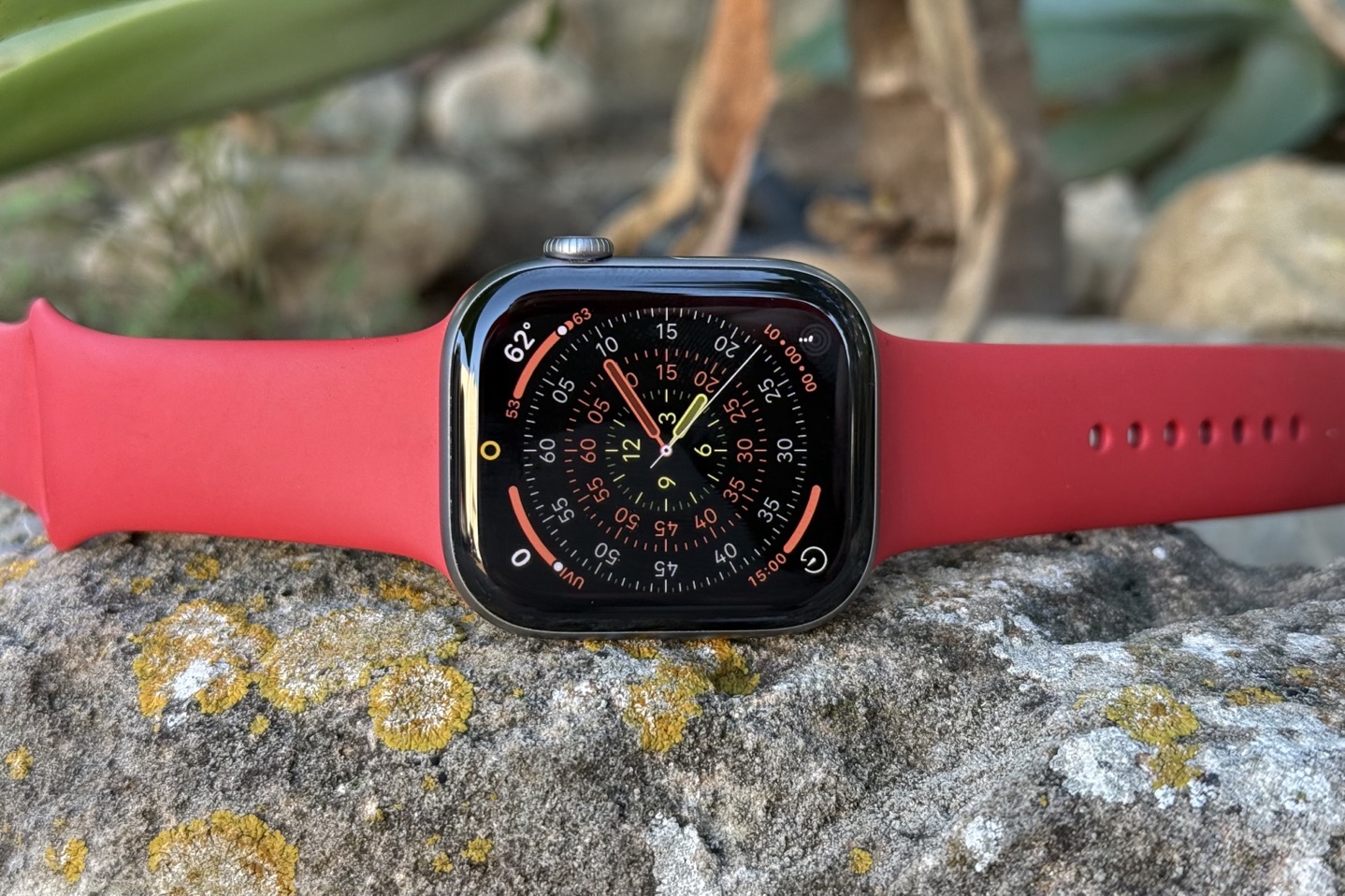
My wife has actually put the most time on this over the last few months, though I’ve also put in the miles, too. As with most Apple releases, this is more incremental than monumental. Its goal isn’t to get Series 10 owners to upgrade, but to get Series 5 owners to upgrade. And I think it does that. I don’t have any real issues with it; it just works as it has in the past. It’s predictable hardware tweaks, but more critically, notable WatchOS 26 software tweaks as I’ve previously outlined.
Elite Rivo:
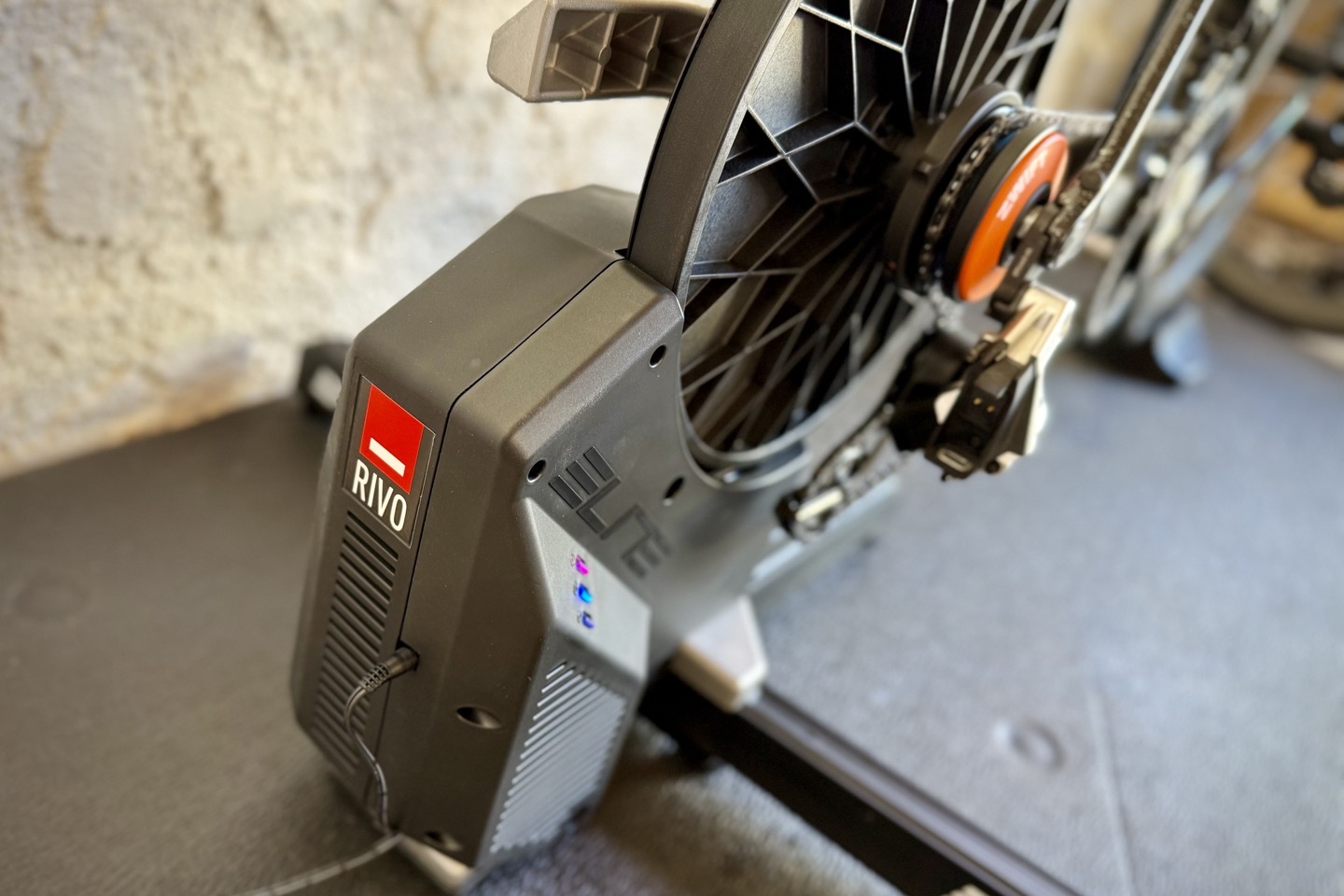
So far, so good here. Both my wife and I have been riding this trainer on and off for the last month or two (including me just last night). It’s a great option that’s priced quite reasonably. Accuracy has been spot-on perfect here in all our rides. In terms of features versus the Wahoo KICKR CORE 2, it’s got a slightly lower flywheel weight (and thus slightly less inertia feeling), but it’s also cheaper at retail prices (though the CORE 2 is cheaper when on sale).
DJI Mavic 4 Pro:
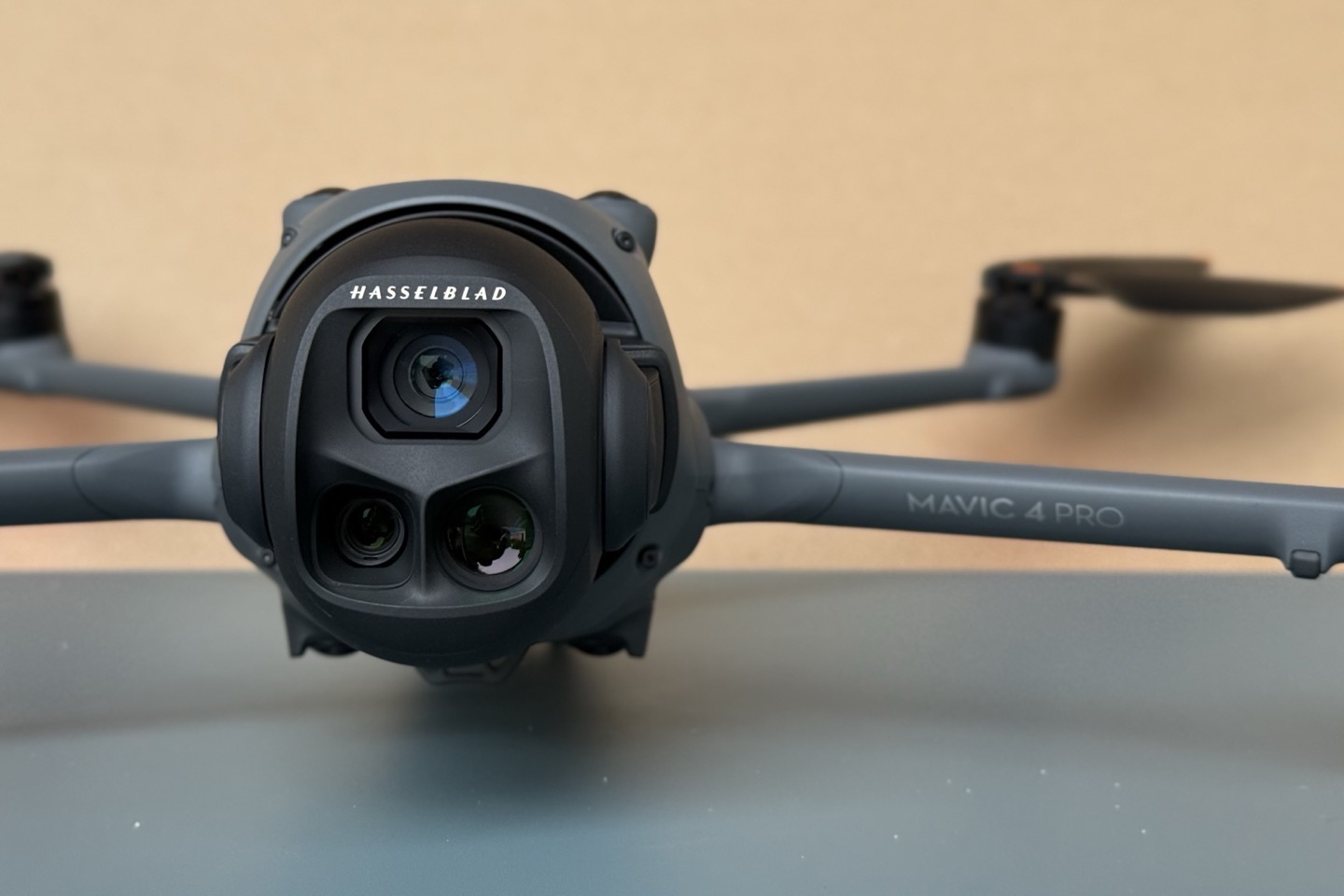
I bought this back in May to eventually review, and put up my full ActiveTrack gauntlet test and more. It’s a cinematic powerhouse, though, so was the Mavic 3 Pro. I don’t think the upgrade is as clear-cut from a Mavic 3 Pro, and frankly, the entire new gimbal setup is just downright dumb. The entire point of making this crazy ever-rotating gimbal was ostensibly to deliver vertical video, except, you can’t point the gimbal downwards, defeating the entire point of vertical video (since most vertical video shot from the air is going to require downwards pitch of the gimbal). Sigh. Other than failing on the ‘you had one job’ aspect, it’s great.
DJI Mini 5 Pro:
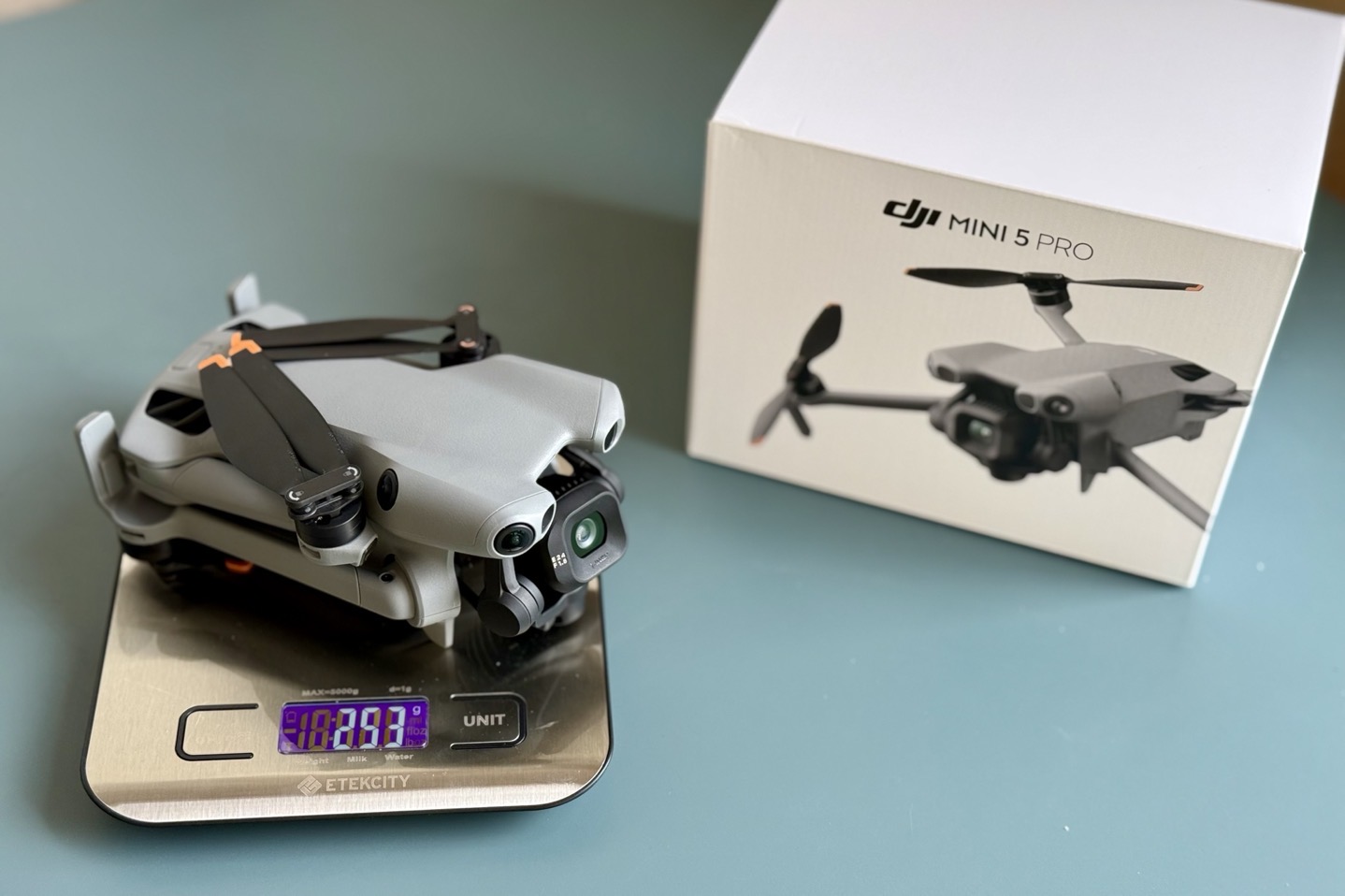
In most years, this would have been DJI’s most popular drone. But between the US ban, the screwed-up weight issue, and the NEO series, it doesn’t really feel as though it delivered on that popularity. Don’t get me wrong, it’s a great drone, but being overweight has real-world implications in many countries from a legal flying standpoint. And with the NEO 2 being so good quality-wise (more on that in a second), I struggle to reach for the Mini 5 Pro, instead defaulting to either my Mavic 4 Pro for super-scenic pretty things, or the NEO 2 for everything else.
DJI NEO 2:
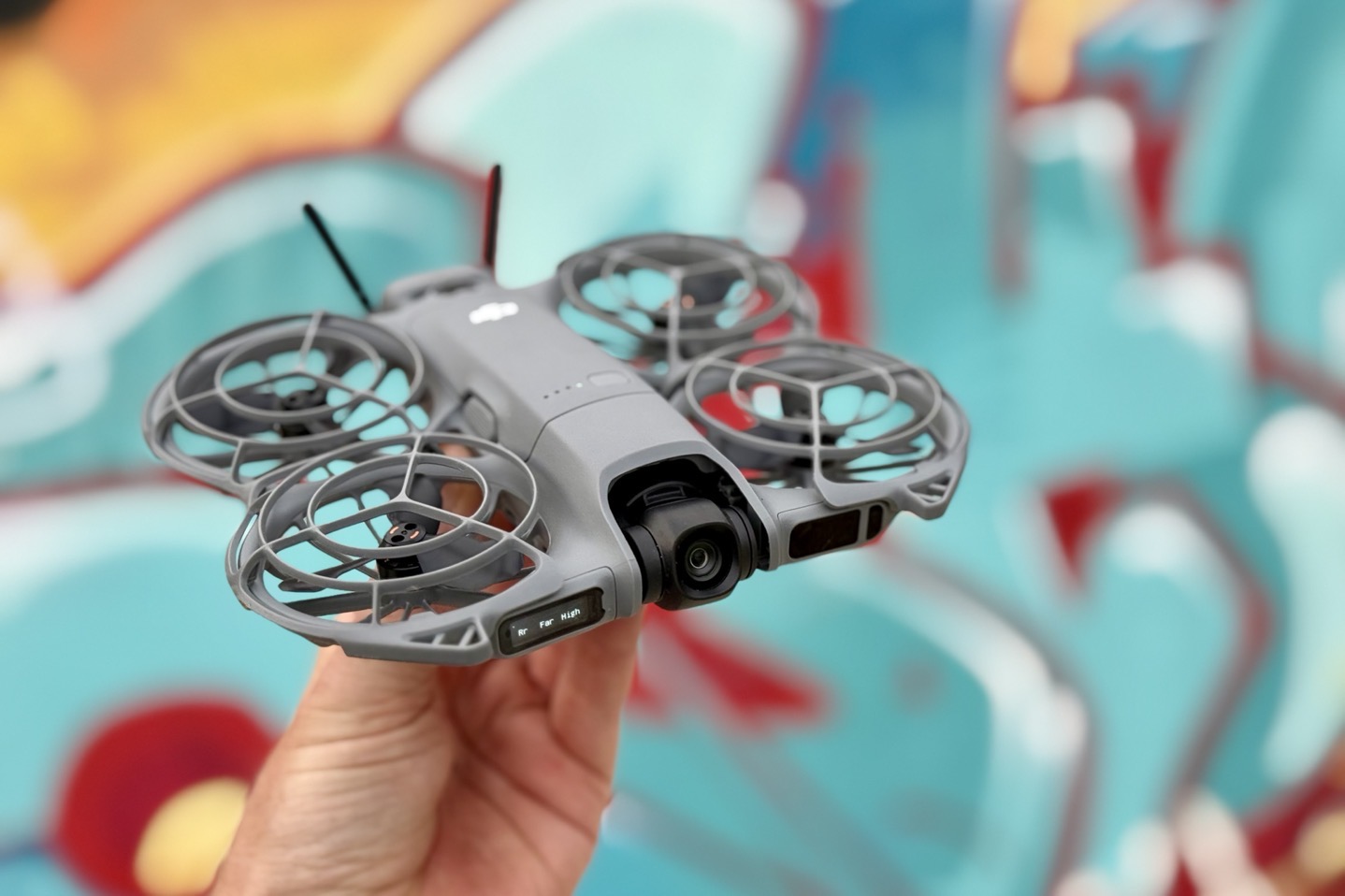
I love this thing. This is unquestionably the drone of the year, and arguably one of the best drones that DJI has made in years (looking at it from a features-to-price standpoint). The quality is a massive jump up over the NEO 1 (not even in the same ballpark), and the gesture-based features are incredibly useful, especially if running/hiking/pedestrian. When paired with a remote, it basically does almost everything most people would do with the DJI Mini 4/Mini 5 series. If you’re into sports tracking, this is the drone to get. While the HoverAir X1 Pro/Pro-Max delivers slightly better video quality and some other handy features (beacon control), it’s also roughly 3-4x the price.
DJI OSMO Action 6:
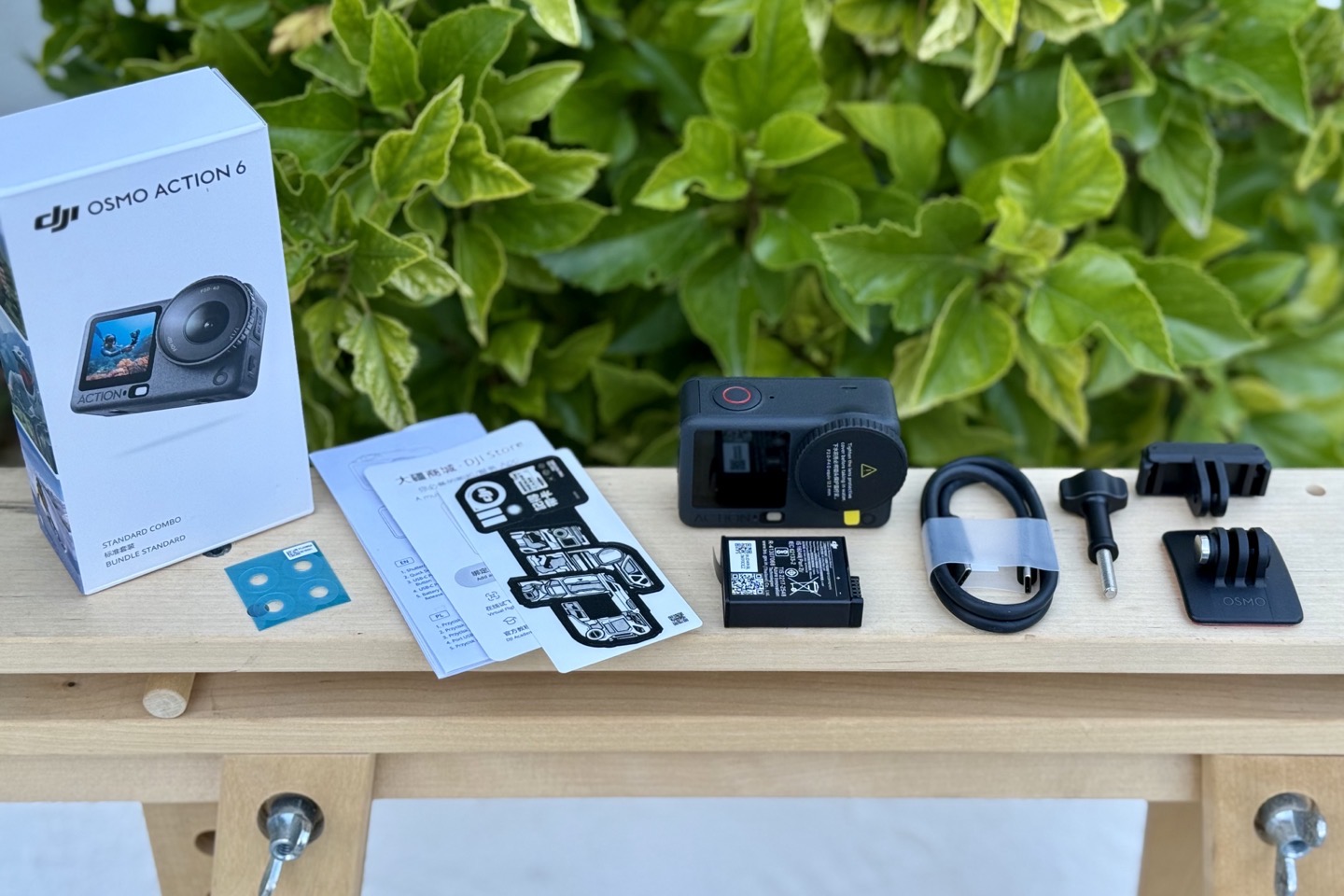
DJI has a long history of putting in place very incremental upgrades to their action cameras, and this continues that tradition. Honestly, it doesn’t seem to look better than the Action 5 in my testing, and the whole open-gate square recording thing is laughable considering how many influencers fell for the marketing (their competitors have been doing this for years). None of which means it’s not a great little camera; it’s just not all that much better than the Action 5, but costs a bunch more. I really thought we’d get higher resolutions this year, as DJI has notably fallen behind in that department. For me, I defer to either the GoPro Hero 13 Black (for daytime footage), or the Insta360 Ace Pro 2 instead (for nighttime footage).
DJI OSMO Nano:
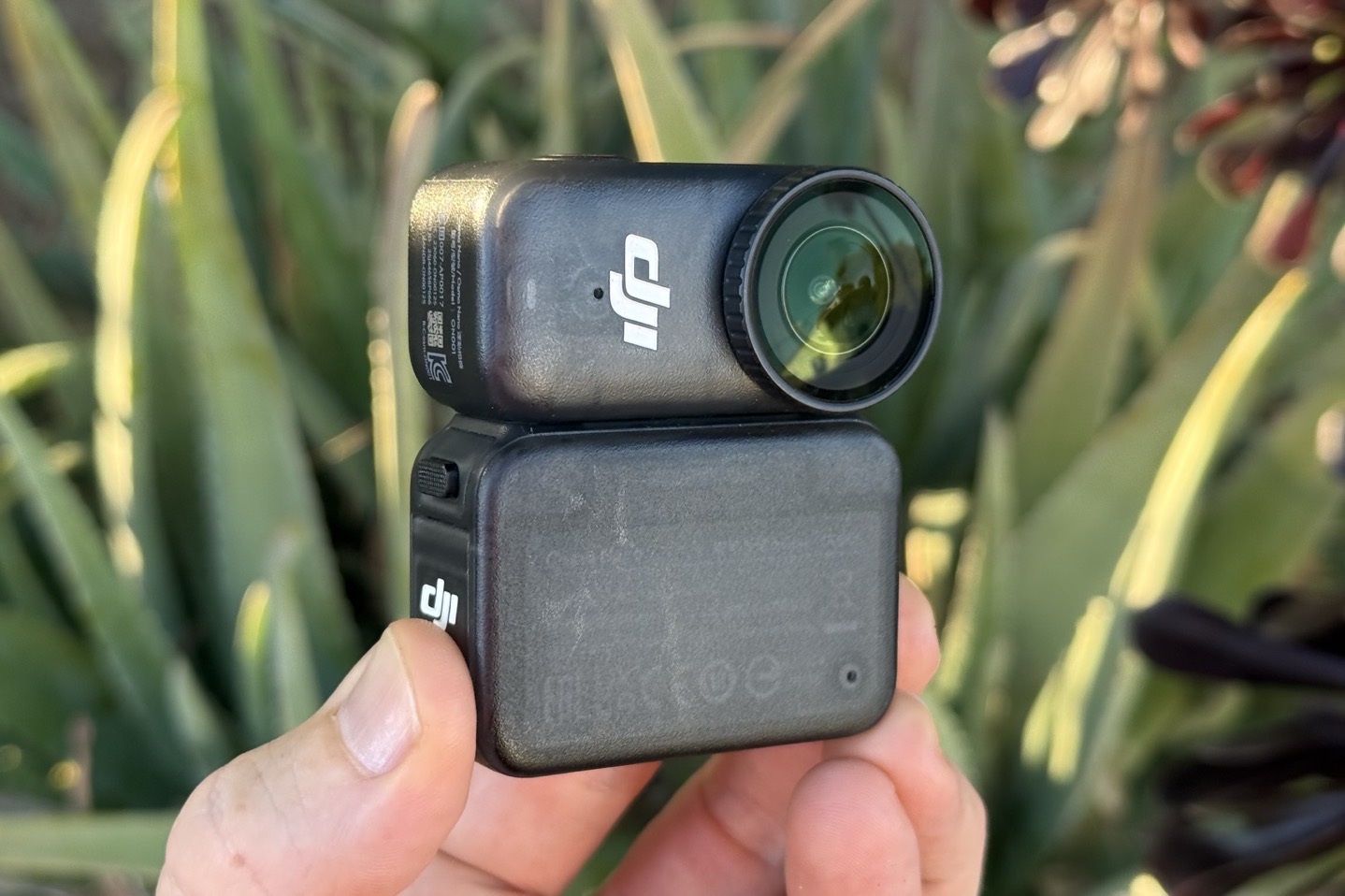
This camera was meant to compete with the Insta360 Go series, and it does a good job of that. Though I find it kind of a quirky camera to use in real life (preferring the Insta360 Go series instead). For one, it suffers the same waterproofing issue as the Insta360 Go series, in that while the camera portion is waterproof, the main case is not (making it super easy to eventually kill). When it comes to quality, it’s definitely a step up over the base Insta360 Go 3 series, though it seems to fall a bit short of the Ultra series. Of course, DJI killed it on price here, at least compared to Ultra. I also really wish it had an SD card within the pod option (like the Ultra).
Garmin Bounce 2:
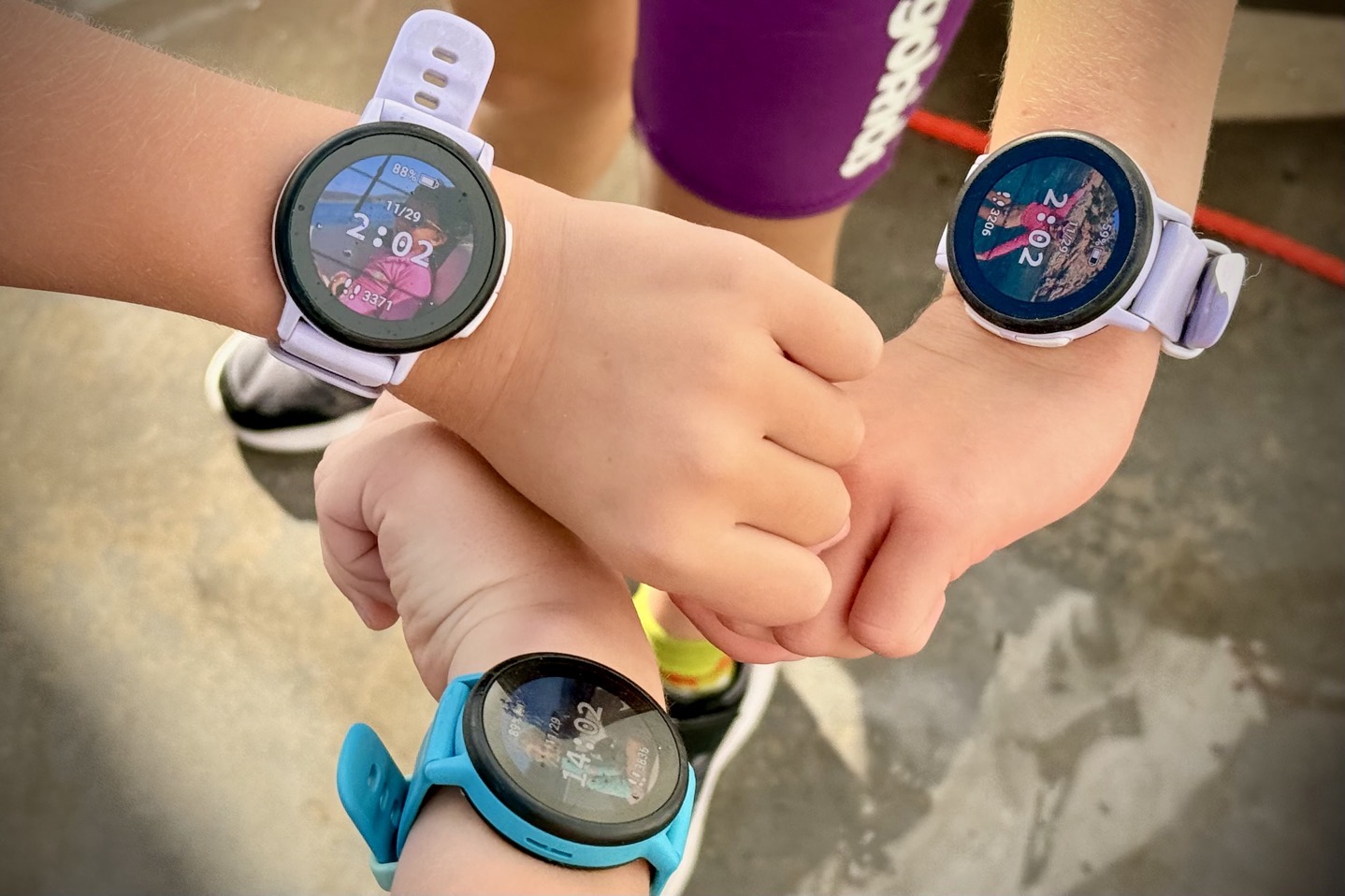
This might be one of the best Garmin watches they released this year. At least, if you have kids. Yes, it’s a huge leap in price compared to the past, though, I think it is now priced appropriately to the retail prices of both Apple & Google, in terms of their kid offerings. Like those, it requires a subscription. But as someone whose kids used the Bounce 1 watches extensively for years and are now on Bounce 2, the battery is far better, the features (including actual voice calling) are much better, and the watch is basically a cut-down Vivoactive 6. So things like sport modes, features (flashlight), and more are very similar to the adult watches, except just simplified in some cases. My advice is that if you’re trying to decide between a Bounce 1 and a Bounce 2, definitely go Bounce 2.
Garmin Edge 550:
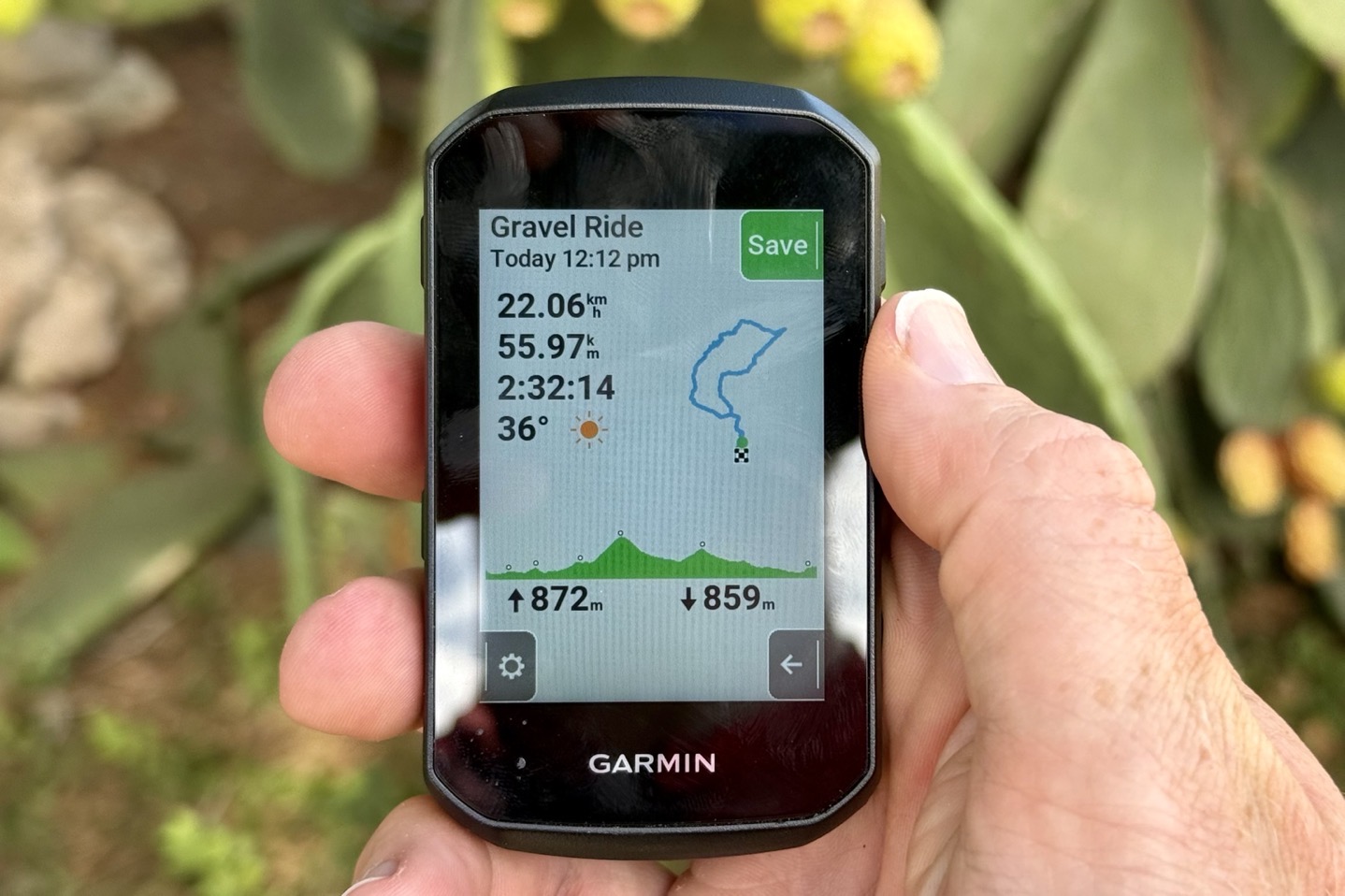
The Edge 550 is essentially the button-only version of the Edge 850 I reviewed back in September. There are a handful of differences from the Edge 850 aside from the lack of a touchscreen; most notably, it doesn’t include the Edge 850 bike bell, or round-trip route creation. But here’s the thing: I’ve been riding virtually every ride since early September with just the Edge 550 (and usually a Wahoo ROAM V3), and haven’t actually missed anything on the Edge 850. And with lack of touch, unlike the Edge 540 being a hot mess when it launched with what was basically touchscreen software and no touchscreen, the Edge 550 has been no problem to use without touch. Sure, it’s faster/handier to have the touchscreen, but it wasn’t the dealbreaker I thought it would be. And from a stability standpoint, it’s been rock-solid from launch, a theme amongst the cycling products this year, but not shared by most of the wearables (excluding Bounce 2, which has been good).
Garmin Fenix 8 Pro:
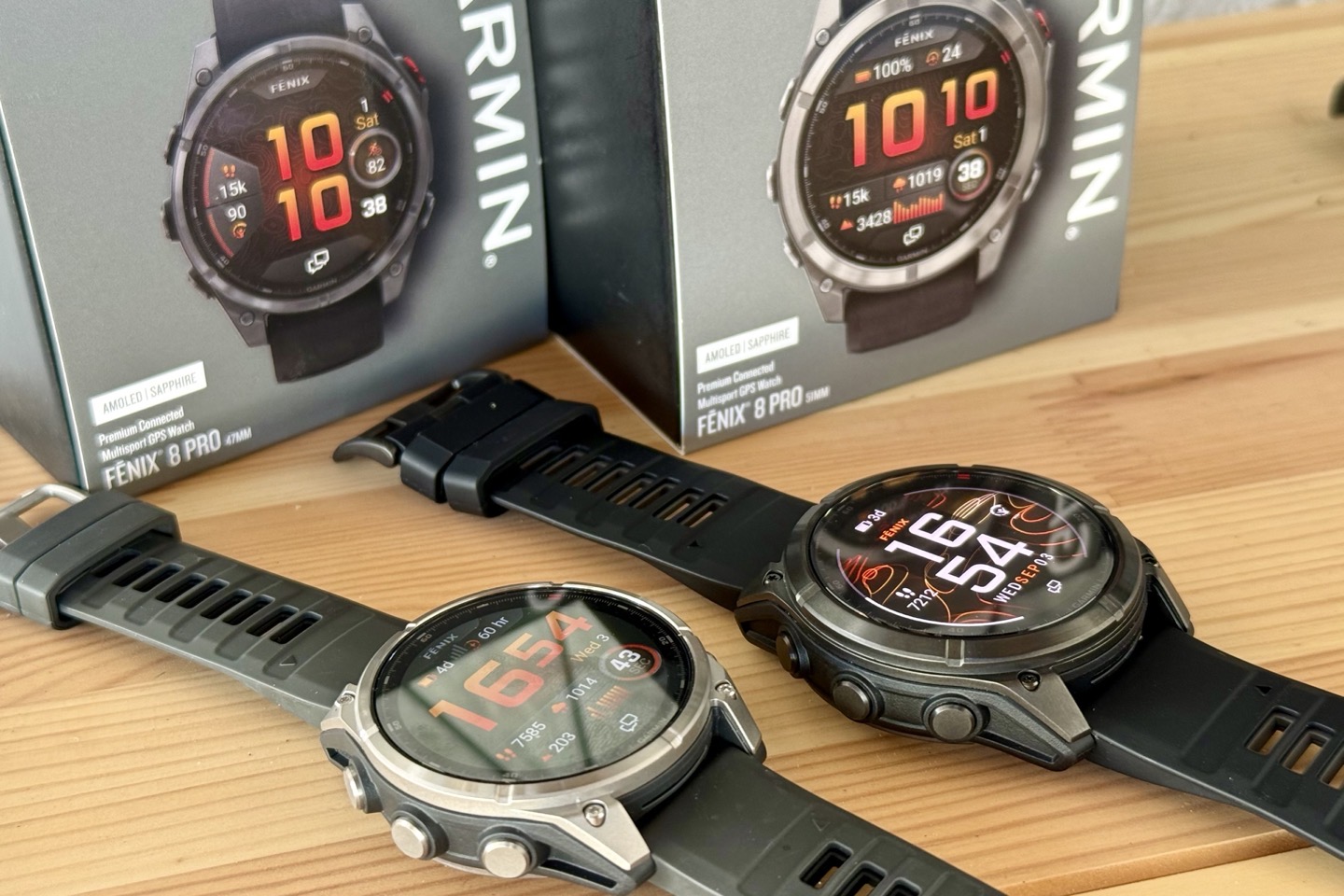
I’ve now put far more miles and big testing adventures on this than I expected over the last 3+ months. And somehow still haven’t finished my full in-depth review. Sigh. On the whole, this felt like the launch that the Fenix 8 should have been, except Garmin went all girls-gone-wild with the pricing here (and arguably, why they missed earnings). Like many 2025 Garmin products, it suffered from early bugs, though it seems mostly pretty solid now. I appreciate the satellite messaging features as a backup when I’m out of cellular range, running or riding (which is often), though it does feel like a V1 implementation in many ways. If you’re looking at Fenix 8 vs Fenix 8 Pro, my general advice would be that if you can get the Fenix 8 (non-Pro) on a good sale, I’d probably go that way, but if there are no sales, I’d go Fenix 8 Pro. Either way, skip MicroLED.
Garmin Forerunner 570:
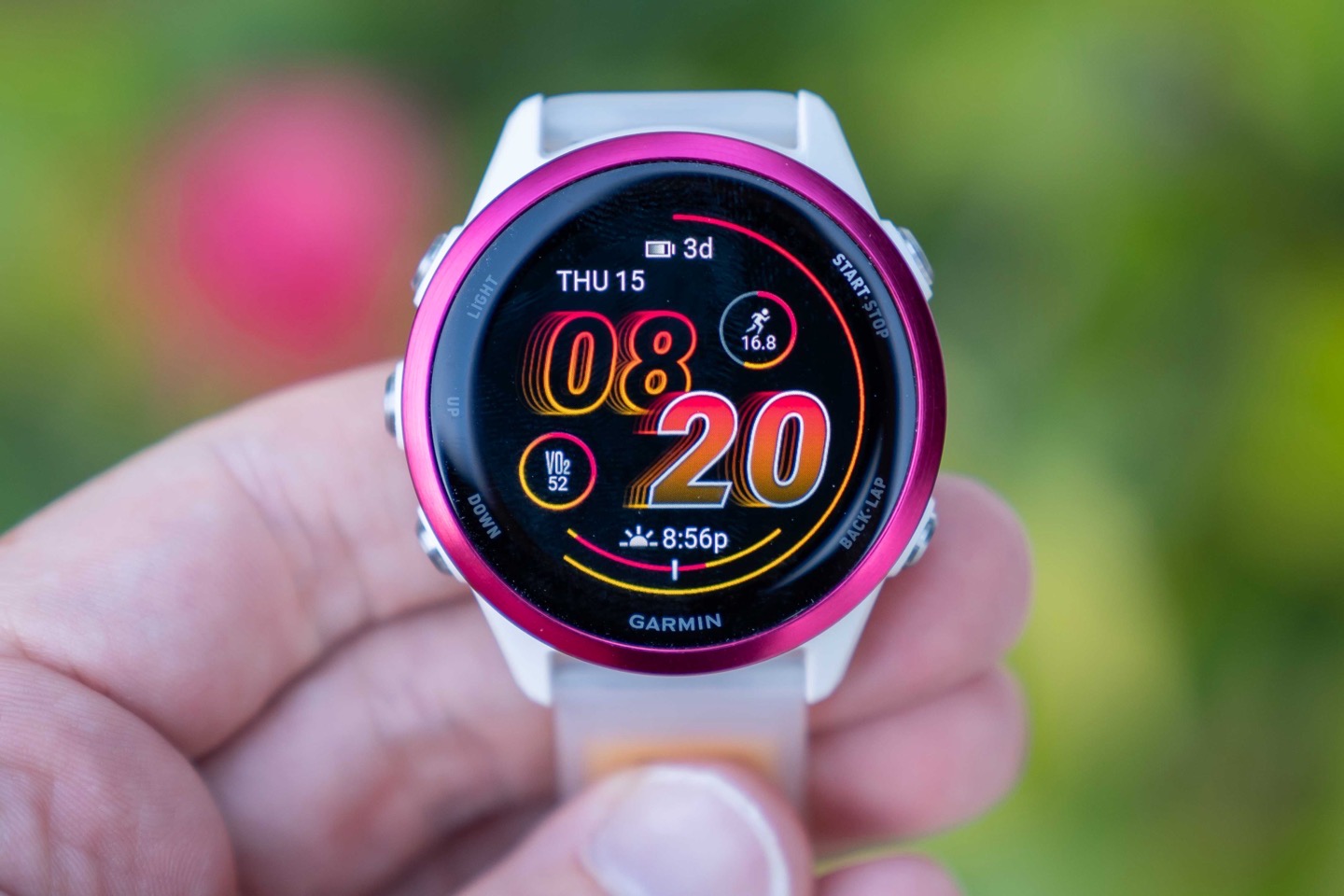
While I reviewed the Forerunner 970, I never quite got around to finishing my Forerunner 570 review. The two units are very similar, except for the fact that the Forerunner 970 has maps, and the Forerunner 570 somehow doesn’t (even though watches half its price do). I feel like the Forerunner 570 will someday be used as an example of an otherwise excellent watch that totally missed its target audience and pricing. It was supposed to be a Forerunner 270, but Garmin felt the extra external case materials were ‘too nice’ for the Forerunner 270, so they increased the price and name. Had it been kept a Forerunner 270 at roughly the existing pricing, I’d have been fine with it, but at this price, I struggle to see its place in life.
Garmin HRM-600 Heart Rate Strap:
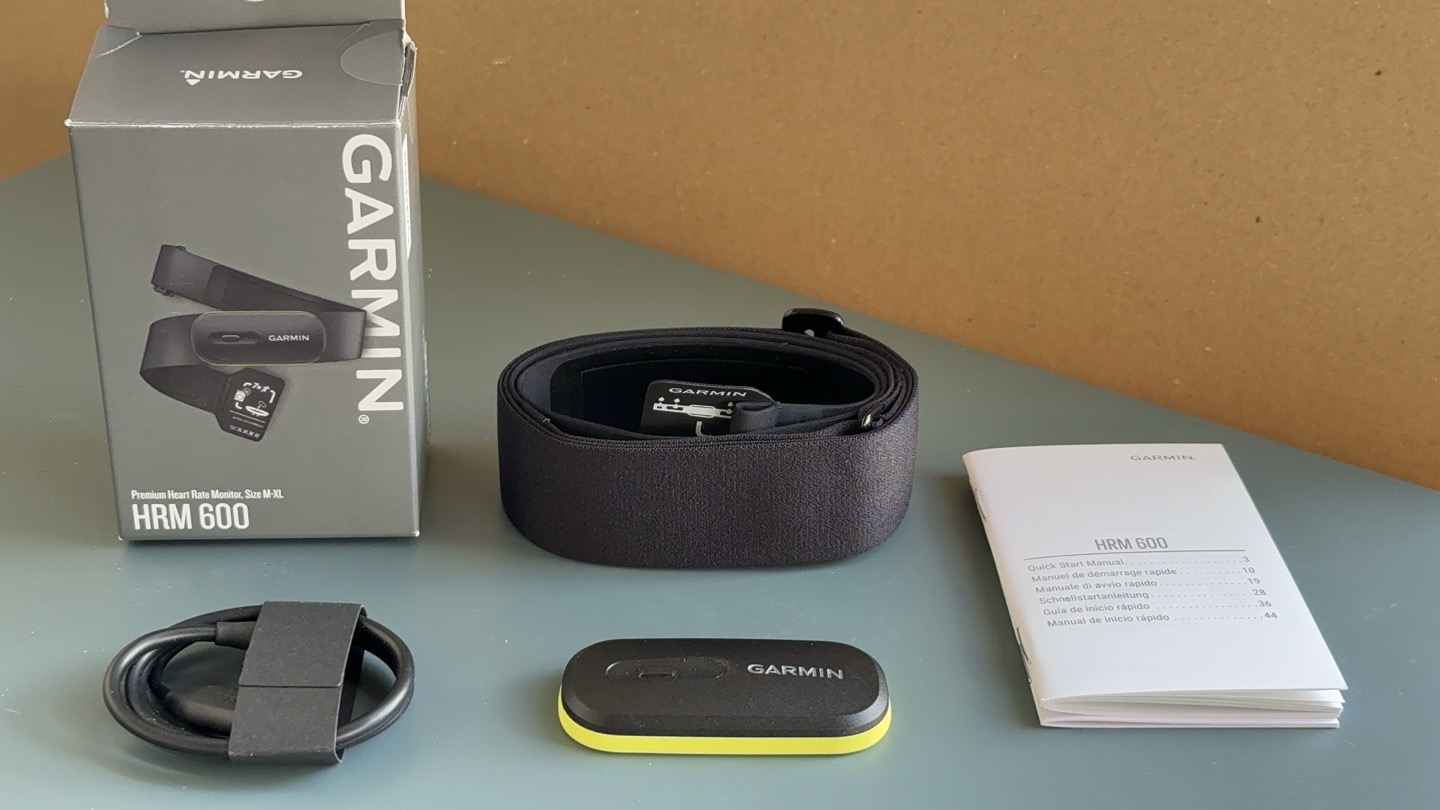
This has been great. I’ve been using it constantly since May, and it has been near-perfect. I say ‘near-perfect’, because about the only slight frustration is sometimes pairing with new watches/devices and having to go into pairing mode and such. That’s mostly due to EU regulations requiring user awareness of transmitting data, so I can’t entirely blame Garmin there. But otherwise, the strap works great, and battery life is perfectly fine (and I appreciate that it uses the normal Garmin charging port). My only complaint here is the price. At 2x that of the Polar H10, unless you have other Garmin gear (notably, watches), and actually care about some of the extra metrics, then just get the Garmin HRM-200 or Polar H9/H10 instead.
Garmin inReach Mini 3 Series:
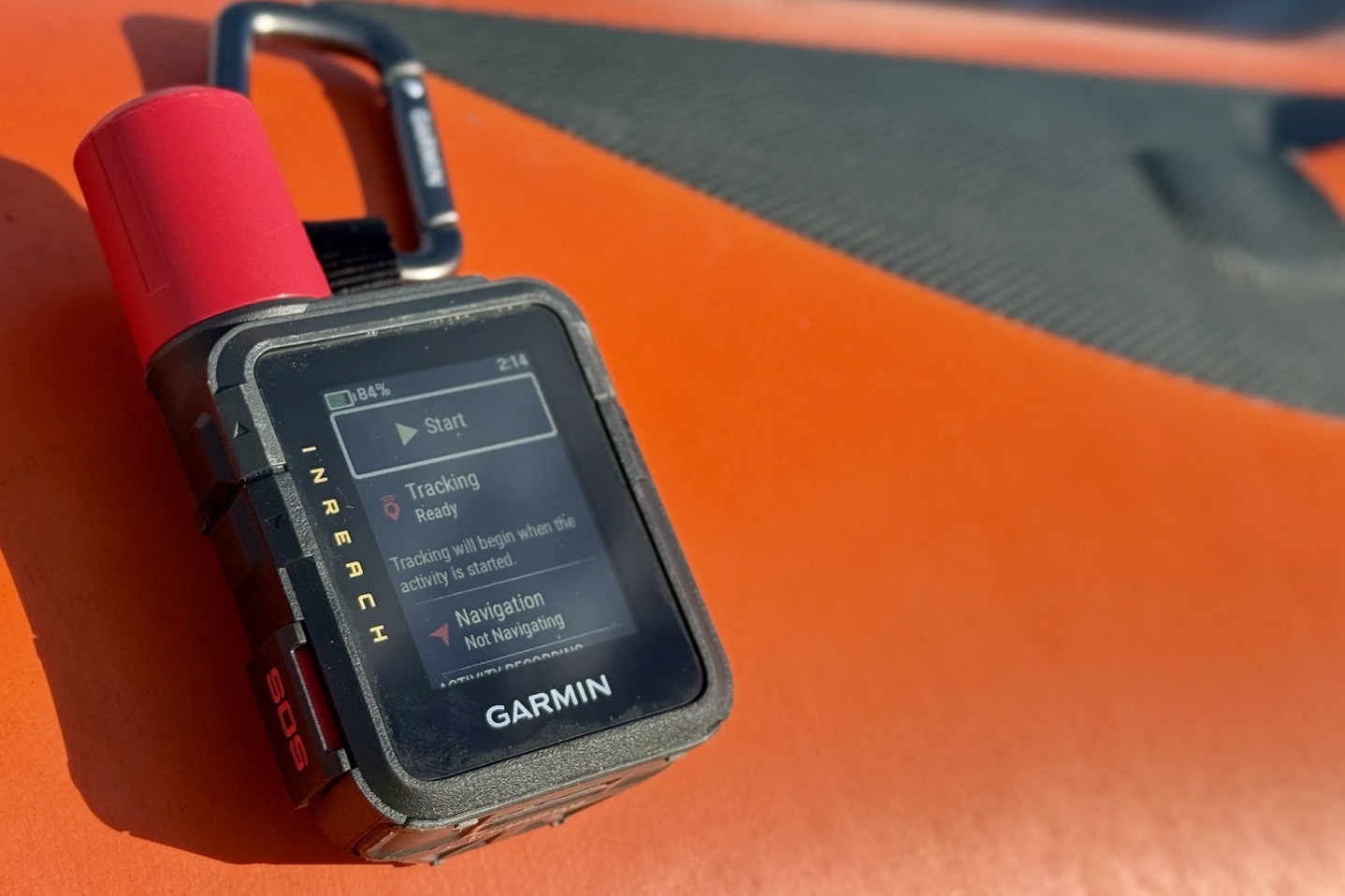
This is a substantial upgrade over the inReach Mini 2 series, though specifically the inReach Mini 3 Plus. I don’t at all understand the Mini 3 base unit, being just $50 cheaper, but lacking all the new features you care about. Especially when the inReach Mini 2 is $249 right now, making it $200 cheaper than the Mini 3, and having almost identical real-world features (sure, there’s new UI and things, but the core product is basically the same on the base 3). As for the Mini 3 Plus, the ability to send voices/photos outside of cellar coverage has been great, and the new siren is handy too. Now that said, I’ll have my review out tomorrow on this, and I will note I’ve had some concerning issues on the Mini 3 Plus, so…stay tuned there.
Garmin Rally x10 Series:
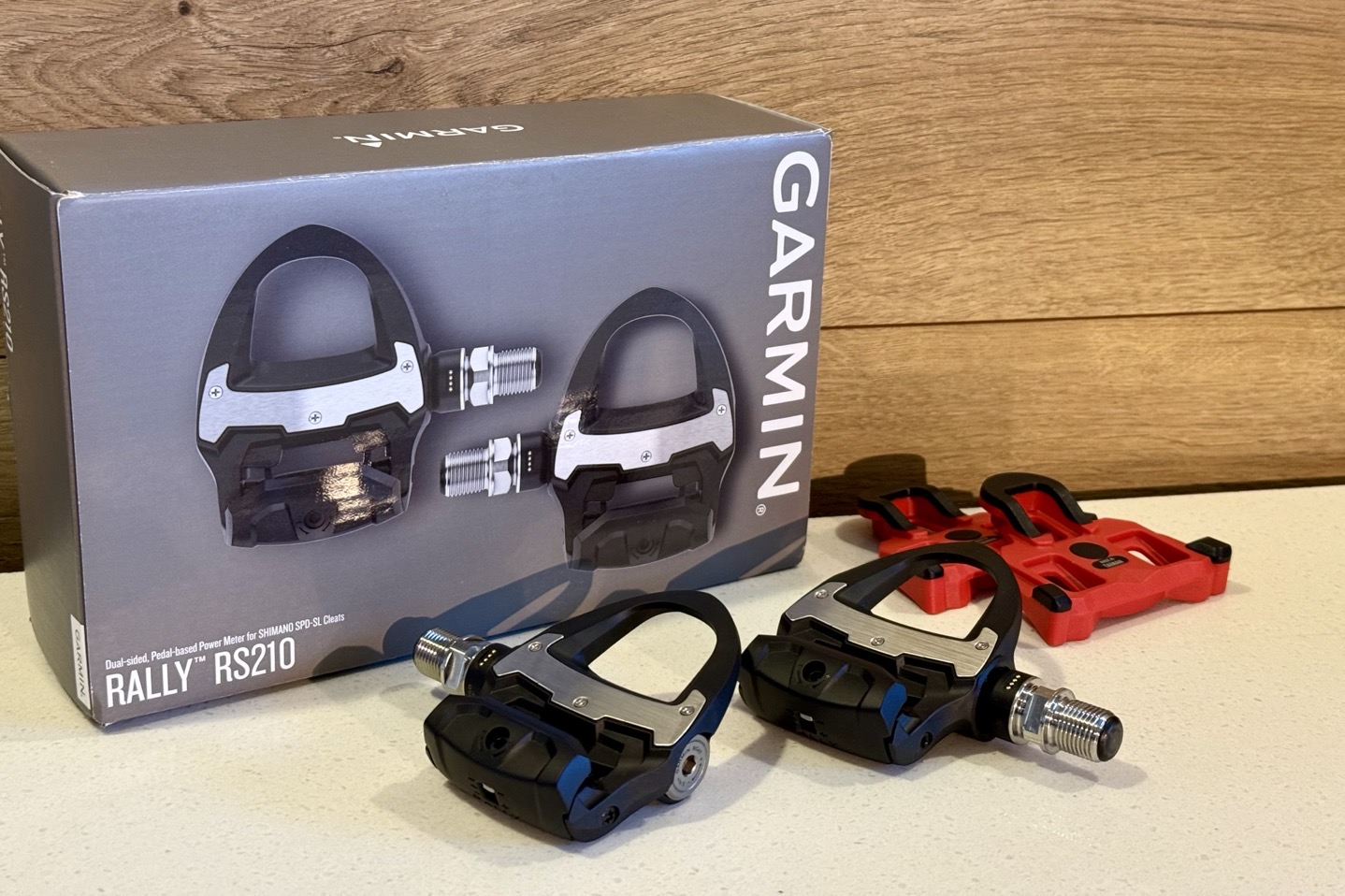
I’ve been riding these since August sometimes, plus some earlier tidbits, on road, gravel, and MTB. They’ve been rock-solid for all of these, and a bunch of trainer time as well. Most of the enhancements over the existing Rally units are pretty minor in the grand scheme of life, but are appreciated. For example, my wife loves the improved square interface on the pedals for better removal when traveling. And battery life hasn’t been an issue for me either, lasting longer than the competitors. Accuracy has been spot-on, too, and there have been no early teething bugs. Finally, while it has the same new pairing security gates as the HRM-600, for most people, you aren’t randomly pairing new devices every week, so it’s not an issue. Ultimately, the singular issue here is the price. At this price point, you can basically get two sets of Favero Pro series pedals (dual-sided). That’s a no-brainer, and is why I’ve bought more Favero Pro RS and Pro MX pedal sets this year for my wife and my extra bikes. It’s not that they are better, it’s just a more logical purchasing choice.
Garmin Venu 4:
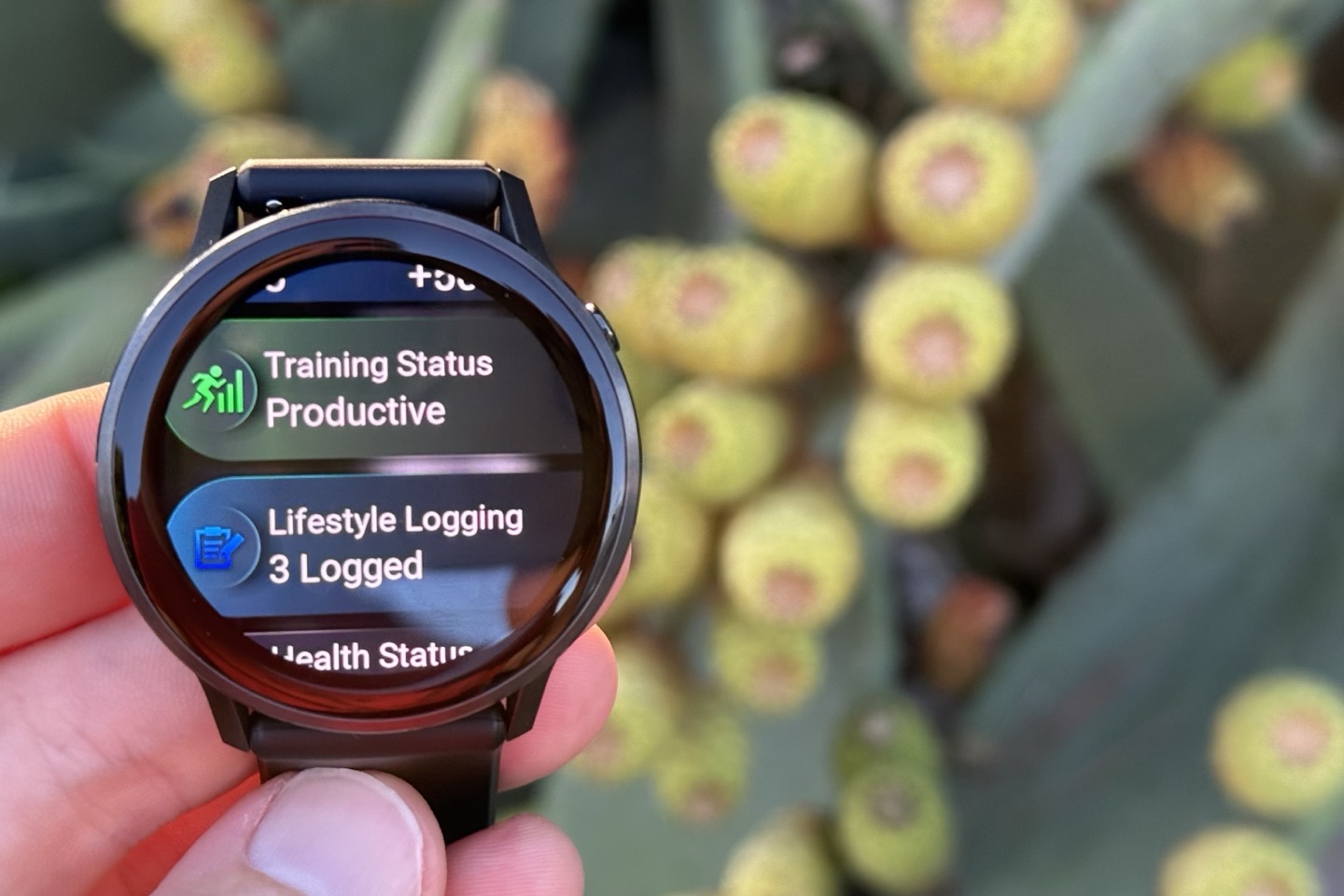
The Venu 4 is Garmin’s main competitor to the Apple/Samsung/Google watches, though this year it saw a pretty massive price hike over previous years. On the flip side, Garmin added in a substantial amount of new features, effectively making it a Forerunner 570 as well. There’s just so much newness here, including Training Readiness and all the training load type features. This mostly came as a result of the newly consolidated Garmin codebase for these watches, and Garmin likely looking at Apple adding in these features and saying ‘sure’. It’ll be interesting to see how this shifts sales downwards to the cheaper Vivoactive 6 though, and if that product will effectively take the place of the Venu 4 as the more popular option. It was always a strong seller, but the pricing shifts (and the Vivoactive 6 being incredibly well priced) will make things interesting.
Garmin Venu X1:
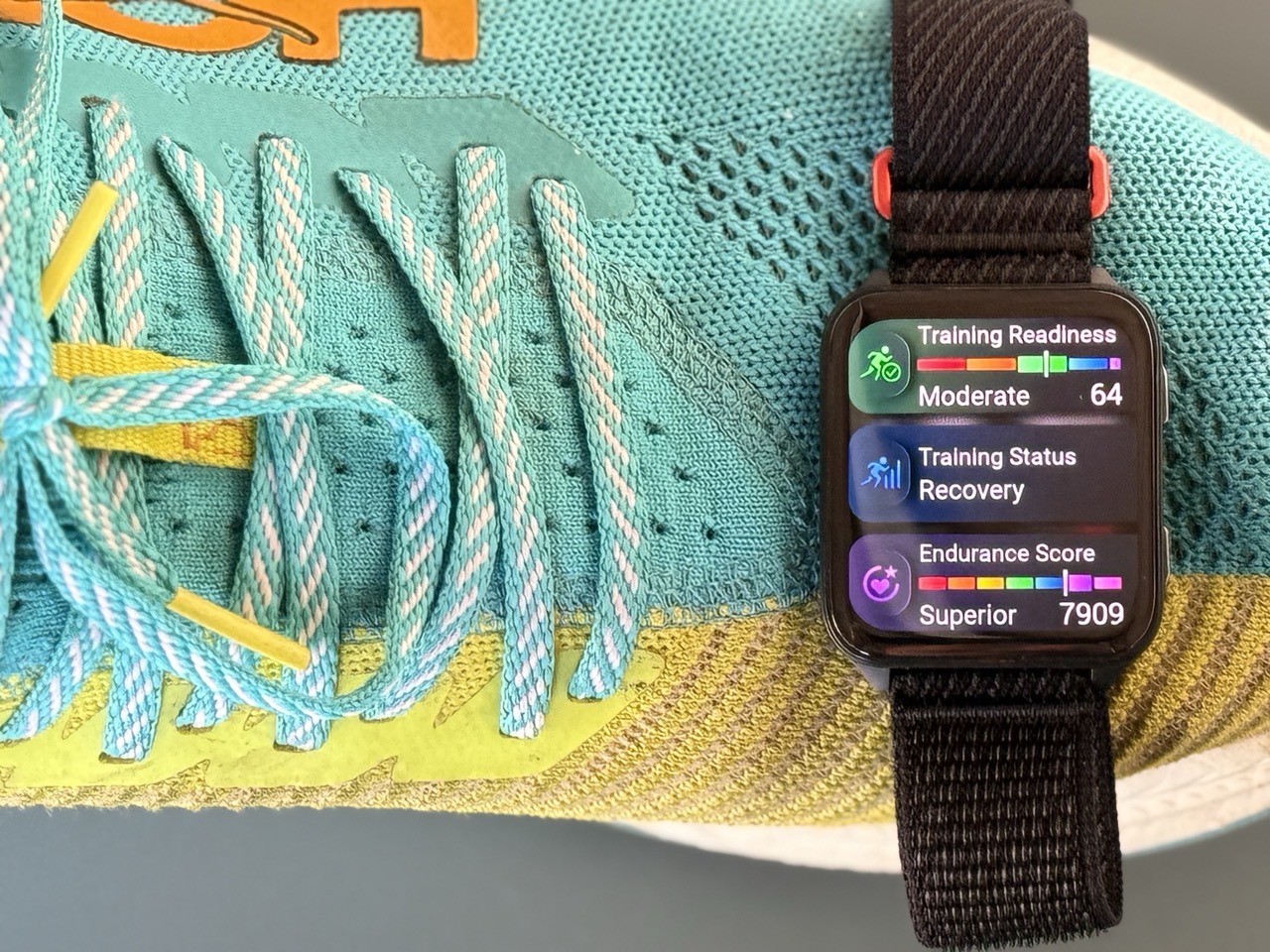
I actually spent almost my entire summer on this watch, including some solid hikes. But of course, I got distracted with other new watches and never finished this review, though you can find my full beginners’ guide, which frankly covers my thoughts pretty well. This was Garmin’s blend of a Fenix/Forerunner/Venu all in one. And I think they successfully achieved what, arguably, nobody was asking for. The problem, as recent pricing changes indicate, is that the market doesn’t understand it. Ironically, this is actually the one watch I think *was* priced correctly this year, relative to Garmin’s other pricing. Being Garmin’s slimmest GPS watch means less battery life, but for me the real limiter was just wanting more buttons. Otherwise, I loved it (and the current sale pricing makes it a steal).
GoPro Hero 4K Lit:
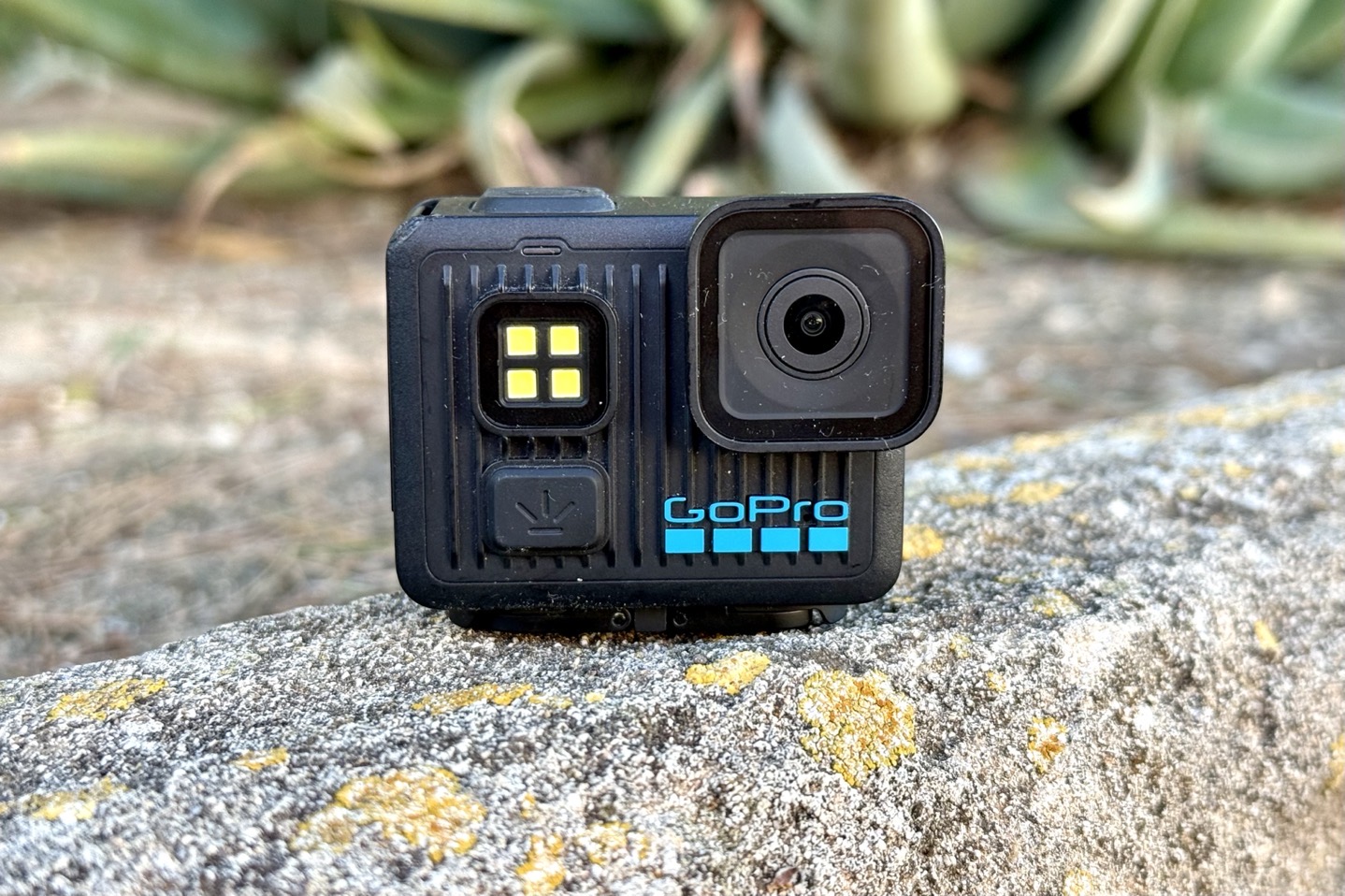
The big advantage of the GoPro Hero 4K (and now 4K Lit) series over the Insta360 & DJI competitors is the fact that the entire thing (screen included) is fully waterproof. The main disadvantage? Everything else. Yes, it’s smaller than those as a whole package, but the quality is severely lacking compared to either of those competitors. And while I think the Lit (LED) concept is actually an incredibly useful idea on an action cam (think night trail runs and such), GoPro putting it on a camera with the worst low-light quality in the industry did them no favors. I do hope they continue this idea, though ideally on a future GoPro Hero 14 with amazing low-light quality. I mean, just asking for a friend.
Insta360/Antigravity A1:
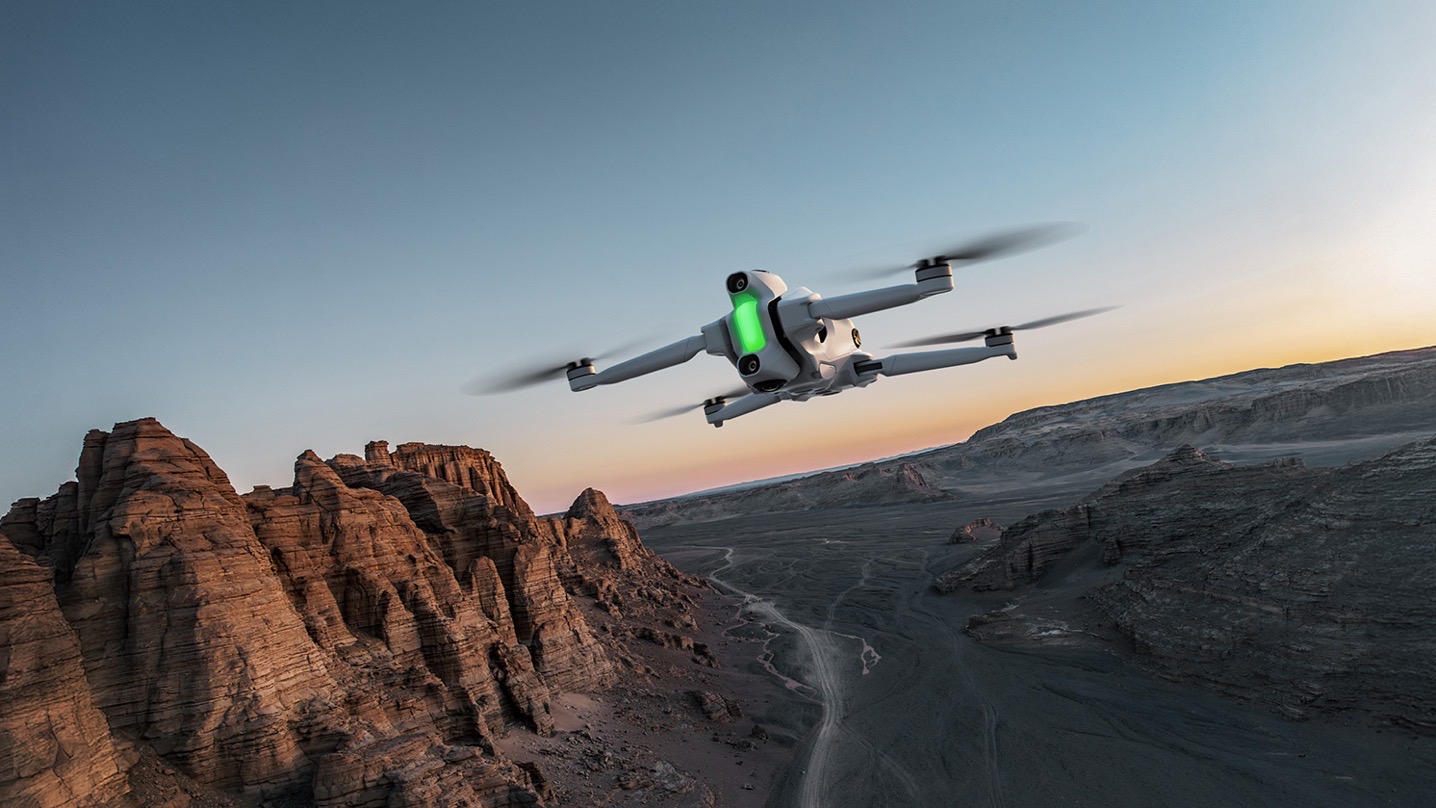
I flew this a bit earlier this year and have a full-production unit arriving this week to dig into it more closely. When I flew it back in the spring, it was still solidly half-baked. However, it’s clear things have dramatically improved based on the reviews I’ve seen. Obviously, when you’re launching your first drone product, it’s not going to rival DJI’s. Like, factually, it’s not (I can count a huge pile of features that are missing). But given the fact that DJI products won’t be available in the US in two weeks, Insta360 has an opportunity. And everything I’ve seen on the final product thus far is looking promising. Most critically, I’ll be looking to see how quickly Insta360 iterates on new features. That fact alone will drive whether or not they can have a successful future. In my mind, we need to see monthly feature drops. The good news is that no company in the action cam space has as good a track record of never-ending new feature updates as Insta360. So, here’s hoping!
Polar Loop:
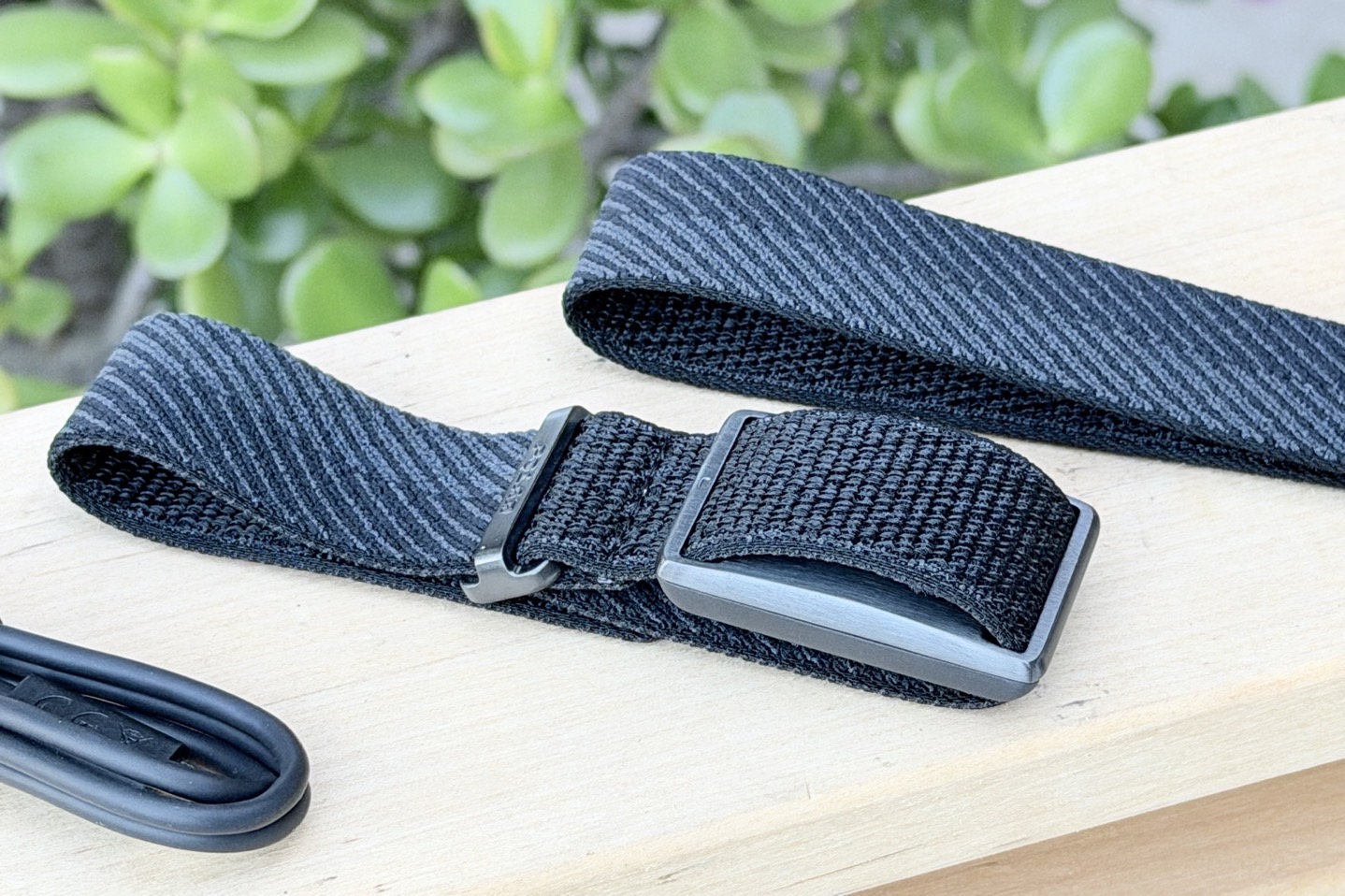
You know the ‘most improved’ award that they give kids on sports teams? It’s the underhanded way of giving out an award while concurrently saying ‘you were the worst’. The Loop basically gets that award. As virtually every review has outlined (and my early first-look post), the degree of dumpster fire here rivals that of Strava’s legal team. This was designed as the Whoop competitor, but failed to understand the most important part about Whoop: It just does it all in the background, automatically. Whereas the Polar Loop requires constant care and feeding to get accurate results. That said, I will give them credit for the fact that, in the November timeframe, firmware updates have significantly improved things compared to September. But it’s still far away from being a Whoop competitor.
Wahoo KICKR Bike Pro
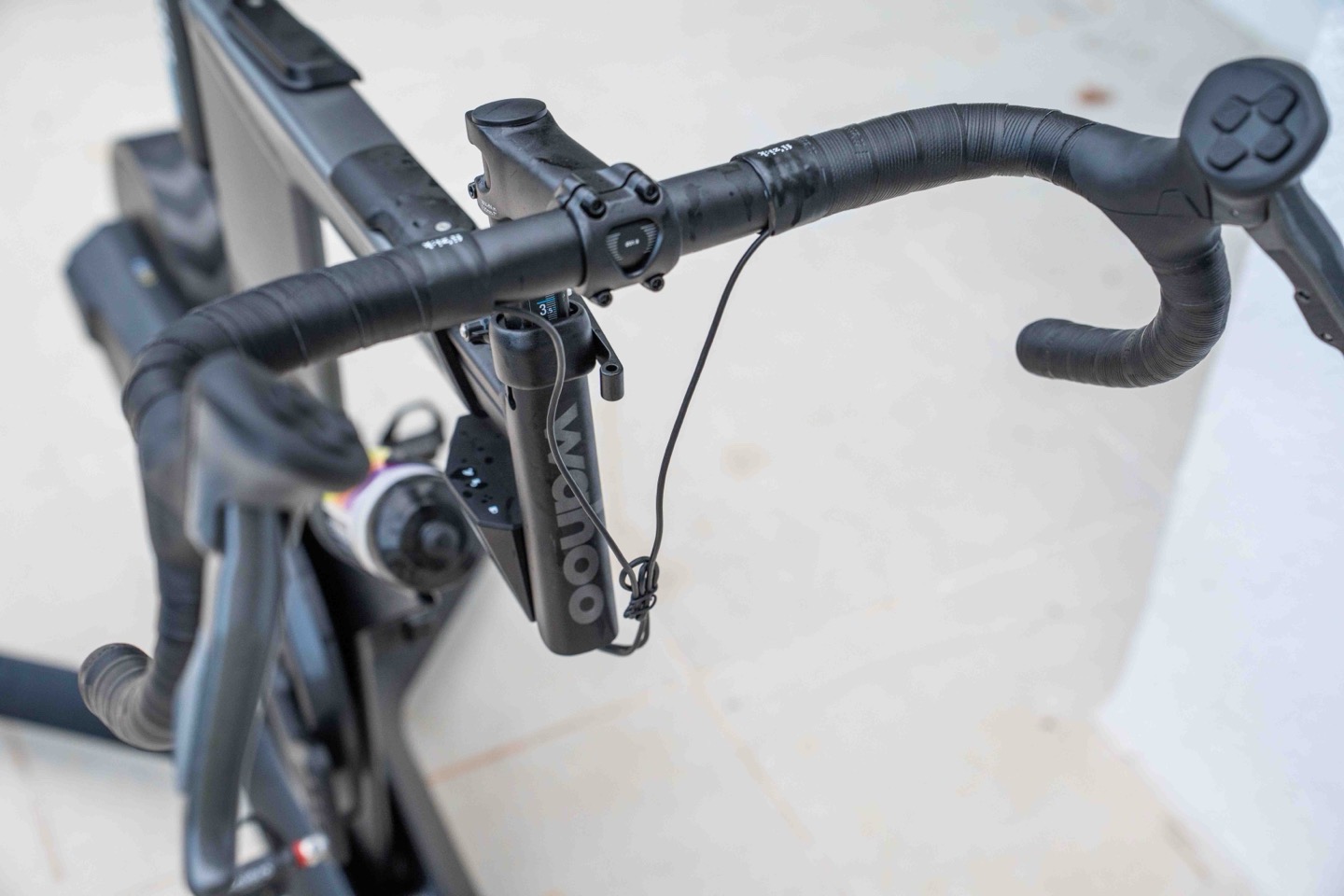
The KICKR Bike Pro is basically just a KICKR Bike V2 with a new handlebar. And, there’s nothing wrong with that – it works just as well as before. I did a short preview post, and at some point, I’ll wrap up a final review, though there won’t be too much more than I’ve already said previously. As I’ve noted in the past, unless you really want the up/down functionality of the KICKR Bike series, then either the KICKR Bike SHIFT or Zwift Ride are going to be far better values. But, to each their own.
Wahoo ROAM/BOLT V3:
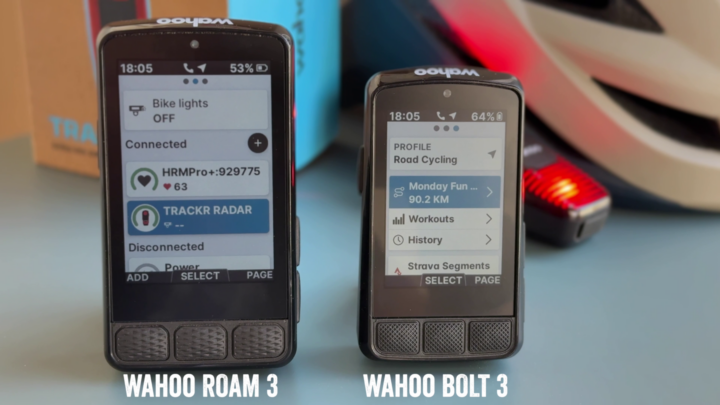
If there’s any product where I’m semi-speechless, it’s these two. They got off to a heck of a rocky start, but overall, the biggest issue is really the screens. They just aren’t good, with certain angles being entirely invisible depending on where the sun/etc is. And then battery life is basically 10-12 hours real-world, so it’s not like you’re trading battery life for an amazing display (akin to the Edge 550/850). I wrote all about ROAM V3 battery life fiascos and fake numbers in my Edge 850 review.
Ultimately, I just don’t really know what to say here, which is probably why, despite my continued testing with it, I haven’t gotten a review out. Wahoo spent all this time developing a model that doesn’t really seem to be any better than the previous one, and in some ways, is worse.
Wahoo TRACKR Radar:
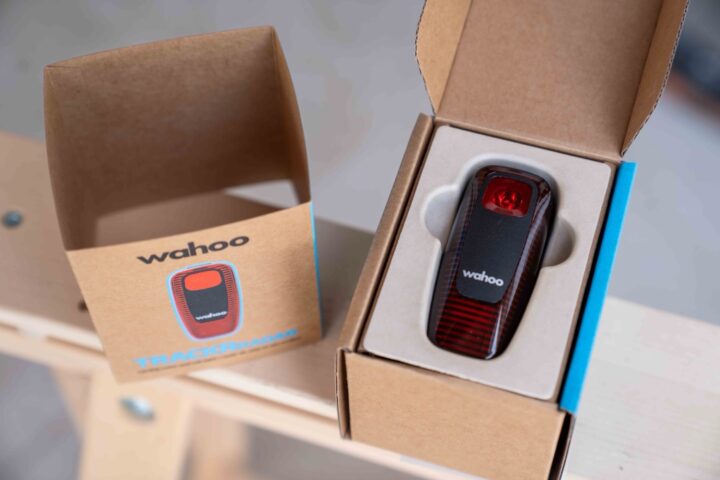
Like the ROAM/BOLT V3, I’ve put more miles on this than I can count. My wife, too. In fact, it might have the most miles out of anything on this entire list. On one hand, I love the USB-C, and like the style/design of it. The real-world battery life is fine, but basically a wash compared to Garmin’s battery life. On the downside, it false-positives like it’s going out of style – by far one of the worst out there. I’ve also had some false-negatives, though admittedly, not since late summer. It’s tough; it’s the default one that my wife and I reach for, merely because of USB-C. But the actual running joke on our rides is still “Is it actually clear/a car, or just Wahoo?” I’m not sure how to reconcile those thoughts.
Whoop 5.0 & 5.0 MG
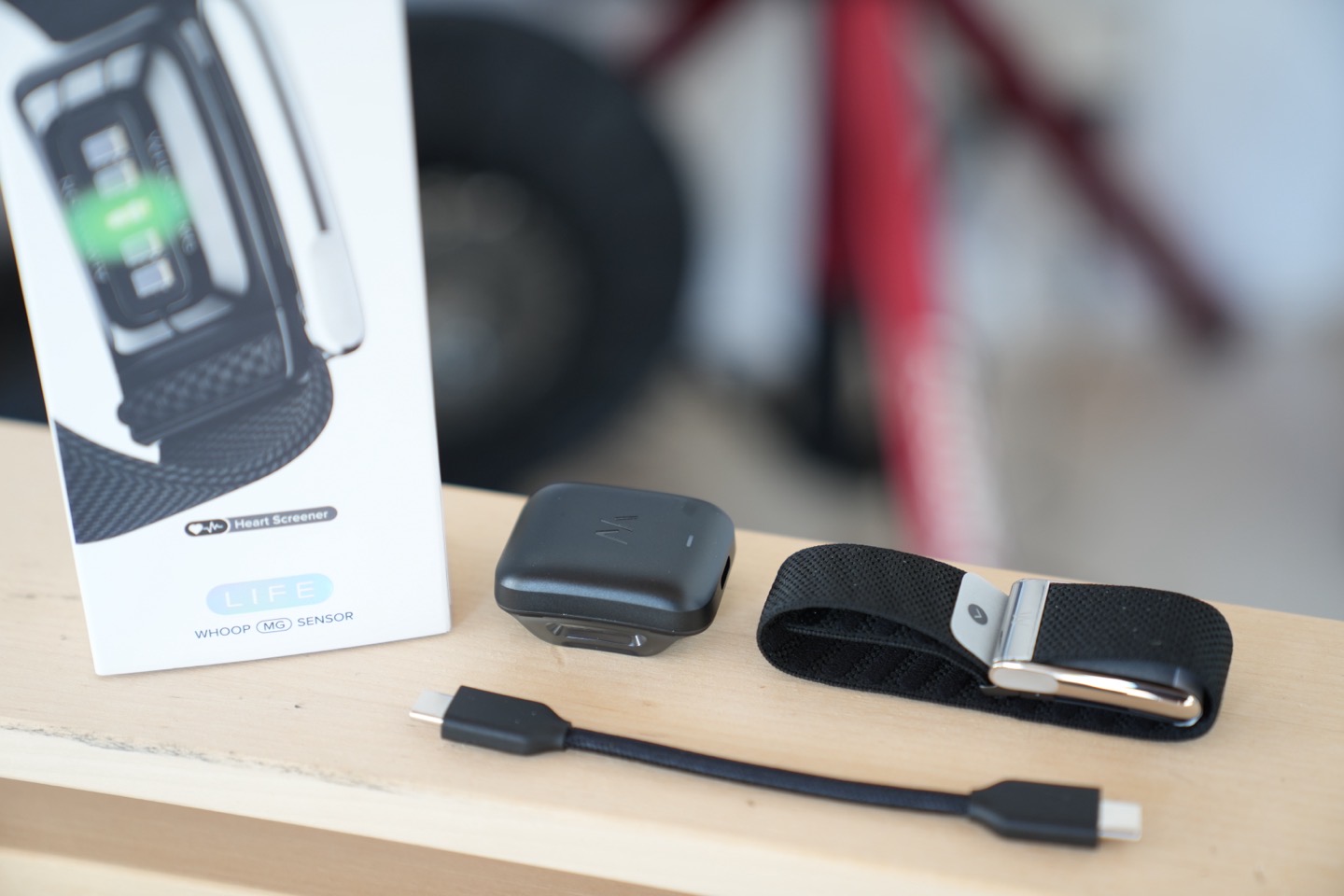
I’ve been wearing the Whoop 5.0 MG since May (and Whoop bands for 5 years prior), and my wife has been wearing the Whoop 5.0 (base) on and off, too. Overall, they work well, and most critically, the 14-day battery actually holds up in my testing. Really happy with that. From a hardware standpoint, these don’t really feel all that different than previous ones, with the exception of the MG features on the MG edition that most frankly won’t use. Sure, some will get value out of the medically certified ECG feature, but the Blood Pressure feature isn’t actually medically certified (the center of a big fight with the FDA). And it requires you to calibrate it occasionally with a blood pressure monitor anyway (which only costs about $30-$50 for a medically certified one). As always with Whoop, you’re buying a subscription product, not so much the hardware. Whoop has seen a number of potentially serious competitors enter this year (Polar, AmazFit), though none have really eaten into how good Whoop is. Whether or not Garmin can make a swing at it next year remains to be seen.
Wrap-Up

Ok, phew, there ya go! Again, being in this post/list doesn’t mean a review isn’t coming. It just means it hasn’t been finished yet. One of these days, I’ll figure out how to deal with the massive onslaught of products.
With that – thanks for reading, and feel free to drop any questions down below!
FOUND THIS POST USEFUL? SUPPORT THE SITE!
Hopefully, you found this post useful. The website is really a labor of love, so please consider becoming a DC RAINMAKER Supporter. This gets you an ad-free experience, and access to our (mostly) bi-monthly behind-the-scenes video series of “Shed Talkin’”.
Support DCRainMaker - Shop on Amazon
Otherwise, perhaps consider using the below link if shopping on Amazon. As an Amazon Associate, I earn from qualifying purchases. It doesn’t cost you anything extra, but your purchases help support this website a lot. It could simply be buying toilet paper, or this pizza oven we use and love.









Thank you for the list. I’m mainly interested in your view on the Forerunner 570 and Venu 4. These watches are so close to each other! As a runner, I would prefer the 570, but the flashlight on the Venu 4 is so tempting, and the pricing of the 570 is problematic. I hope Garmin has plans for the 570 to receive a major update – like a new Garmin Swim Coach or something similar. It’s a shame that they didn’t include Running Economy or the new metrics in the 570, especially since it comes with the already expensive HRM-600. In my view, there’s no reason to reserve its capabilities exclusively for top-tier watches.
Agree, it’s confusing and muddled. And things like the Running Economy make no sense on so many levels. At the technical level, I find it questionable. But even setting that aside, why on earth would they limit that to the FR970/etc, when it requires a $170 HRM purchase anyway. Totally agree with your take there.
To me, Garmin’s mid-tier offerings just got so confusing, that I think a lot of people are either giving up and buying something old (FR965, which is awesome), or saying hello to COROS/Suunto/Polar and/or Apple/Samsung/Google.
After the 970 came out I got a brand new 965 for £380 which is around half the price of a 970
Couldn’t be happier,
Wahoo Roam 3? Did I miss your full review?
Good catch, just added in the ROAM3/BOLT3 thoughts.
What about your final In Depth reviews of the Wahoo Trackr radar and Roam 3 computer? Did I miss them somewhere along the way?
I second the Wahoo Trackr in-depth review request.
Or a new Garmin USB-C Varia product.
Whichever comes first.
Doh. I guess my brain tried to remove products before May. I’ll add those in.
What about the Stryd 5.0. May be a bit more niche product but it is the standard for running with power.
It does the same as previous version, however interested in the improvements and whether is reason to upgrade.
I don’t have any plans there at this point. I’m honestly not sure where it fits in anymore as a product/category. The number of people interested in running power in terms of using it seriously has dropped off hugely, and then concurrently, all the major watches deliver native running power that in all my tests virtually matched Stryd anyway.
And of course, that sets aside the variability challenges with running power.
Just curious – where are you getting your data from to make a statement like “The number of people interested in running power in terms of using it seriously has dropped off hugely”?
Thanks!
Simple comment/question volume. It’s mostly evaported over the last year or so. The above was only the 2nd request about a Stryd power meter review I’ve had all year (out of probably 100K comments/questions).
If I look at all comments on the site (easiest to filter), and look at running power or stryd questions, there was literally not a single actual discussion about it this year, save a handful of threads on new devices asking if it supported Stryd or had native running power (4 threads in total). This is coming from a time back in the 2015-2019 era that had tons of interest.
If we look at Google trends, it’s flat-line to slightly decreasing. If you look at the term “running power” specifically, do note that from June till November there was an odd spike, but there’s no correlation of that to any tech product, meaning that’s more likely unrelated to sports tech (e.g. major power outages in Spain that drove search volume starting then), since it doesn’t correlate with Google trends spikes for Stryd, or any other sports tech company.
Next, we look at interest from companies in the space, there’s been virtually no innovation in a few years. We typically see innovation in areas where companies think is worthwhile consumer demand.
But again, ultimately to me, the easiest gauge is simply people asking about it. There’s more people asking about an Elite Square review in this single post, than there has been running power all year long. :-/ Which is bad, because the Elite Square is a pretty niche product with hyper-limited availability.
Thanks for your quick reply.
It is interesting that you see a drop-off in questions about power/Stryd, while I see a continuing increase in the number of people who are members of ‘Stryd Community’ and ‘Palladino Power Project’ on Facebook.
Perhaps those interested in power have moved their questions to those groups instead of posting here?
Yeah, it’s always hard to tell on growth. On that FB group, it shows 39 new people in the last week. Whether or not those are replacing now dorment people, or expanding the active base is obviously unclear.
Perhaps those questions are migrating elsewhere, but in general the pattern holds up pretty well across most categories I cover (between here and YouTube). And that also sets aside industry chatter about running power, which has basically evaporated.
I agree on running power, but I still use Stryd for pace/distance (particularly in cities where even max GPS remains unreliable). No doubt you will never have time, but it would be great to get best gps watch v Garmin chest monitor or other pod v Stryd v actual measurement in terms of total distance covered. The Stryd seems to me to be within 1% of the distance of (say) an F8 in sat select mode over 10k in moderate gps conditions – but there is only one winner in significant downtown areas (say Canary Wharf in London) where the Garmin is still all over the place….
FWIW, I’m also interested in your thoughts on the latest Stryd, but as far as I could tell I don’t think you’ve reviewed the last couple versions which I took to mean you’re no longer reviewing Stryds which is why I didn’t bother asking. Maybe there are other people with the same mindset as me? I remember searching your site when the Next Gen Stryd and the dual shoe versions both came out a little while back and didn’t see anything. Also, in case you see this and respond, as an aside do you have any when/if Apple/Garmin/Google will introduce satellite features on their watches in the Brazil? That’s my biggest case point for upgrading but I can’t tell if it’s actyallt happening and if so, when.
Ray, people don’t ask because they know how you feel about running power!!
Even with modern OH watches, power is much less variable that HR (which still suffer from cadence lock and dry weather artifacts in my experience).
stryd is the biggest ripoff in the industry. They use their customers as guinea pigs and they use to pay people to hype their products and encourage them to not disclose it.
Their product isn’t unique and not really used in running. Almost no pros care about that metric.
Maybe there are many people like me that have a Stryd (and upgraded to the wind) since years ago and use it day in and day out. Find it useful and absolutely don’t talk about it :)
But I must say imho the biggest advantage is in trailrunning. Running uphill is where it’s so useful. Faster and more accurate then effort pace of my new Coros. And well they promise to make it even more responsive on the hills. Here’s hoping to that…
Stryd might be the greatest running device ever created.
If you want to be a serious sub-elite or top age-group runner, Stryd is absolutely fantastic.
Running with power for training (specifically Stryd power) makes SO much more sense than heart rate or GPS pace. Much more versatile and convenient too.
I can go out and do a hard interval workout on the road and have dialed in effort (running power) regardless of hills or wind.
I’m a former data scientist / long time runner so I’m a big time data nerd, and understanding the science of running and applying it to a running with power training plan is phenomenal.
I’d love to walk you through my experience if you are ever interested (35 years old, 6′ 2″, 190 lbs, recently ran a lifetime PR 17 min 5k).
I bought my Stryd (the original version) when I switched watches from Suunto to Garmin Fenix 5. As it turned out, Fenix had very bad “current pace” metric, which was all over the place. At that time, I had a personal running coach, who prescribed exact intervals for me… and if I had to run, let’s say 4:30/km, and I was running with a constant speed, the watch nevertheless was showing anywhere between 4:20 and 4:40 every few seconds. That really pi**ed me off. I still remember – I bought the watch for 400 EUR, and it didn’t even show the correct current pace, which was a significant change for the worse compared with previous Suunto watch.
It was at that time that I learned about Stryd, which supposedly had much better distance measurement and therefore current pace metric. Running power was an additional benefit, of course, which I was happy to try out.
Nowadays, I use Stryd for two things really: as a better distance/current pace measurement, and as an overall measure of effort – the TSS metric is calculated from the running power. And TSS is important as a base metric for everything else if one is using a season-long training platform like TrainingPeaks.
So, while useful to this day, I never updated the hardware to newer versions (so, no wind sensor or some “advanced metrics”), I also never paid for their subscription or training plans. I paid initial 200 EUR for the product that serves a particular purpose but I don’t ever intend to pay any more than that.
As an aside, all Stryd training plans are free (always have been)
The Wind Stryd was more responsive and the wind metric sometimes were a little bit overestimating but when running into a headwind I could definately agree with the added power vs RPE. Here’s hoping that the new one is even more responsive especially on rolling hills.
I 100% do not agree with you. I visit your site less and less since Apple Watch, drones etc do not interest me at all, while Stryd, Plattforms like Trainingpeaks interest me a lot. Nothing you post on that. Ultimately, the only reason to come here lately is Garmin watches.
That is very surprising answer about interest in Stryd.
As per my personal experience, there isn’t any similar device out there that could provide similar ease of use and pretty precise indoor running data on the treadmill, combined with a smart watch and virtual running (Zwift).
I’m always surprised, when talking about Stryd most of the discussions goes about Power training vs not power training.
anyway, I couldn’t find anything better for indoor and Zwift running than Stryd.
…yes, its expensive.
Agree, Stryd and running power seems to have jumped the shark/faded quite a bit over the last 2-3 years. Good concept, but other metrics offer almost the same insights with less faff and less variability.
I use a Stryd pod for my treadmill exercise. I cancelled my subscription this year as they hiked the monthly cost by +60% (here in Australia) so that killed my enthusiasm for the new model. But at least the new model is related to training. I don’t use drones or dash cams to complete any training.
I think you’re right as it relates to power, but i think hobby joggers look to these foot pods for faster and more accurate pace data (particularly for use in races that may have sketchy GPS coverage) and impact data ( so as to be able to diagnose stride imbalances). That and it makes getting paces on a treadmill possible without calibration and results in cleaner data.
The company seems to have gone off a cliff too. I’ve been a user and having issues with my power lately I’m now waiting on support for over 2 months. I reached out since it’s a recurring issue stating that I’d have to contact the better business bureau if I didn’t hear back (customary for consumer complaints and advocacy for consumer protection laws) and immediately I finally got a response from Gus Nelson. “Go ahead we will delay your support by weeks” He has prematurely closed tickets. I plan on publishing his extremely unprofessional emails. Bottom line, they don’t stand behind their product and will be vindictive with who they choose to provide support to.
Be careful, I got blacklisted for criticizing their subscription cost. Banned from their facebook group and they refuse to provide support when the product malfunctions.
Anything on the Elite Square maybe?
Yes! Wondering if this means Elite Square review is already ready to publish, or if it’s been cancelled for some reason….
…or it is never going to happen?
I guess the issue with Square is, that there is no support for it in Zwift. You can use it instead of the bike, but the buttons are simply not working natively.
I’m literally trying to figure out if I should buy it right now (should be available next week)…
there have been many comments from users on the elite square in a post ray did earlier in the year., myself included… I cannot speak for Ray but maybe he’s dropped it as Elite has (for now) dropped the claim that it works with any trainer on any app. I had to acquire an elite trainer to replace my neo 2T to get virtual shifting to work. In erg mode it was great, but if you want working virtual shifting…
Can you comment on your experience with an elite trainer on the square? I use a Neo 3m and think about switching to a Justo 2 for that reason. In my view the virtual shifting works so strange, that I’m seriously unable to figure out which button does what.
This thought is further amplified by the delayed and softened response of the Elite Rizer in this setup…
Dirk, i switched to an elite avanti and virtual shifting works much better. Tip have the square app open on your phone so you can see what gear you are in and choose which shift protocol you want Campagnolo Shimano SRAM or sequential. Good luck
Okey doke – for those asking for the Elite Square review, I was successfully squirreled:
Here ya go: link to dcrainmaker.com
Just a quick thank you for sharing this list, I can’t imagine having all those reviews in a backlog as Christmas approaches :-)
I’ve been fiercely clinging to my Forerunner 935, as it’s “still plenty good enough” for my triathlon training needs. Yet I’ve also been desiring something that does all the sports yet looks more stylish and has more of the latest features. However, I’ve been overwhelmed by the sheer number of options not only from Garmin alone, but also from other brands, and I’d pretty much resigned myself to putting off any decision until my 935 dies (which may outlive me).
Your concise description of the Venu X1 ranks it as the one to beat for my needs and wishes, so I’ll be tracking the Holiday sales. Thanks!
I’m still clinging onto my 935 too. The HR sensor is inconsistent and the elevation sensor has broken so I really want to upgrade. I’m leaning towards the Fenix 8 or the Coros Pace Pro. The X1 also looks good. I also have a Bolt v1 which despite the screen bleeding it refuses to die. To replace the Bolt the Coros Dura could be a good option.
It really is a shame the Venu X1 doesn’t have more buttons. I had to return it because I couldn’t stand having to use the touch screen during workouts. If it had 5 buttons, it would’ve been hands down my favorite running watch of all time.
Do you use a HR strap? That’s would be more accurate even with a working optical sensor.
I’m surprised you don’t bring on someone you can trust and manage and start with the tier 2 product reviews while you keep Tier 1. I’m sure you’ve crunched the numbers.
Yeah, it’s always a struggle to find someone that has enough depth in understanding historical products to make it all work. :-/
It’s probably something more strategic with Desfit, as you have a great rapport and could scale better by removing much of the redundancy of running both of your endeavors personally. (No, this isn’t a Desfit burner account!)
I’ve used somewhere around 30% of all Garmin running, cycling, tri watches, computers, trainers, HR monitors, cameras, lights, footpods, and now 2x InReach components, dating back to the 301 Forerunner (I bought within a month of launch). But certainly don’t use anywhere close to the full breadth of features on each.
Have read your site at least weekly since your Forerunner 305 review (still one of my favorite products ever, along with the 310XT; that little training partner appears in my subconscious on endurance rides).
Am an engineer, but don’t hold that against me, lol.
Think I’m a good writer.
Have very little experience running or building web pages, outside of some simple internal wiki sites at work, but been thinking about starting my own site recently.
Near zero drone experience.
Hit me up if you want an audition, lol.
The possibility of a DCR acquisition/partnership is interesting, now that you mention it. I could definitely see how there’s some possibility for synergy with Desfit (and also GPLama) … but I can also see how maybe Des or Shane wouldn’t want to merge into DCR and make product review content their full time job.
That said, I would subscribe to a YouTube channel of Bobbi sabotaging Shane to retain her “DCR Employee of the Year” title 😂
Do you need an apprentice? I need to justify the constant buying and selling of watched to the wife so it could be a win-win!
Was this on purpose shared via the feed but not on the website or is my browser still loading a cached version?
Thank you for your reviews and please take your time off over the colleagues and take the kids skiing, like every good Dutch person would do 😉
Speaking of traditions, will you go get a Christmas tree via the cargo bike, as always?
Odd, it shows on the main page/etc, so perhaps there’s a caching issue there. :-/
As for the Christmas Tree by bike, yup! In fact, we went out tonight, got there and all, but had a…ummm…technical issue, that we’ll have to do a do-over tomorrow night.
Is the Avelo smart running shoe on you list for a future review?
I also wanted to say thanks for all your reviews so far, and how in depth they are. Yours is always the first source I go to for an informed perspective on triathlon gear.
Nothing planned at the moment.
The graveyard of running form/efficiency shoe and shoe insole products is vast. Almost none of these companies make it to their 2nd gen product before going out of business.
The problem all of these companies have always had is acutally super straightforward: It’s misunderstanding customer overlap.
Put more simply: They generally fail to prioritize Garmin/etc integration, and instead have a fully isolated ecosystem with an app that often requires you take it with you on runs. The problem is, the very people who care about these metrics all have Garmin/etc watches, and want that information on their wrist during a run. Being forced into a so-so app is a non-starter.
So then they say you don’t need to run with your phone if you want to see your metrics afterwards only. Of course, that defeats the point of being able to train with these metrics, because it’s near impossible to make changes to running form without a constant feedback loop. Which, takes you back to needing a phone on the run.
After that they try and pivot the message and say they’re focused on people getting into running instead, that aren’t advanced runners. Except, no person getting into running is going to spend $300 for a disposable running shoe, to focus on running metrics that can’t really understand.
At some point they’ll try the membership only route, to lower product entry costs, but these days consumers mostly see through that.
Rinse…repeat.
Obviously, this isn’t targetted at you, but it’s kinda amazing how many companies will journey through those 3-4 phases of running efficency metric product stages, before finally going out of business.
A major wart with the Garmin HRM-600. It does not support Nordic Skiing Power – Only HRM-Fit™, HRM-Pro™, or HRM-Pro™ Plus.
Cross-Country (XC) Ski Power on Garmin Watches link to support.garmin.com
The HRM-600 is my daily HRM – I wear it for hours while doing yard work. Along with Core body temperature and a Frontier-X.
The HRM-600 battery life leaves something to be desired – only a few days, probably 30 hours of activities recorded. Where as the HRM-Pro would give me at least a month, say 120 to 150 hours.
Woah, only 30 hours?!?
That’s crazy. I’m much closer to their specs in that 50-60 realm. I did a bunch of testing and such this past summer around that. I wrote it down somewhere and will dig it back up. But that’s super low.
Equally, your HRM-PRO battery life is also super low, you should be consideraly higher than that. :-/
Hi Ray,
How long can the DJI Neo 2 fly on a charge? Would you recommend it over the Hover X1? I’m interested I having a drone follow me on runs, hikes, etc.
I’m seeing it consistently in that 14-16 minute marker, depending on winds/recording rates/etc…
At teh moment, I’d recommend it over the Hover X1. It just works so effing well. Whereas the X1 while very durable, has always seemed to be a bit finicky to me (specifically the app connection, and clock sync). Yes, I’ve use the crap out of it, and never managed to break it. But I wouldn’t hesitate a second to get the NEO 2 over the base X1.
Hi Ray,
any thoughts on the Instinct E? IIRC you rocked that one for some time in summer?
Yeah, I wore it for quite a bit in the Feb/March timeframe, including much (all?) of my Morocco gravel trip.
My problem is that the Instinct 2S is just a better watch in most categories, and cost less. It’s honestly as simple as that. Heck, I think even Garmin agrees there. Probably why like only 7 people bought them, 6 of which were accidental purchases by spouses.
Ahahah gotta love a good burn.
What about Elite Square? Waiting for a year for the review…
Me too. It’s available in my country now so I’m wondering whether it’s worth getting one but I’ve been waiting for a review by anyone first before pulling the trigger.
there have been a few posts from users on Ray’s original post, including me. Long story short, since elite dropped the ‘works with any trainer’, you need an elite trainer to get virtual shifting to work properly. If your indoor usage would be wholly and only on Zwift, save yourself a lot of grief and get the Zwift Ride. If you use other apps (I also use rouvy and fulgaz) then the sqaure with an elite trainer works well. It’s a solid piece of kit, it’s just the integration with other non-elite stuff where it has some issues.
Yeah, I’ll go grab it from the office/warehouse and over the next few days see where things stand with all the latest updates on some rides. Maybe a quick update post of sorts.
Thanks Ray, your opinion or where elite are at with the square will be most enlightening. It’s beyond disappointing that they (for now…???) have rowed back square on working with anything. My Neo 2T is gathering dust as I had to switch to an Elite Avanti to get working virtual shifting – it was very sh1t with the Neo. Excellent in erg mind you ;) Keep up the good work and Merry Christmas to you and yours!
How does your Fenix 8 Pro perform on LTE (without phone), music, activity and trying navigation at the same time? Because I got one and it was barely usable, the thing lagged so much and constantly froze that the experience was subpar. I ended up returning it, but if I hear that it has been fixed with updates I could consider it again.
I haven’t had any sluggishness problems with Fenix 8 Pro on LTEwith navigation/etc at same time. That said, I don’t tend to play music on it very often. I’ll give that a whirl and see if something is up while also navigating. But no issues on any other of the combinations.
Can we expect a full review of the Wahoo Bolt V3/Roam V3 series? According to your hands-on, they will be published once?
I don’t have a current timeline at the moment there. But yes, eventually.
You say GoPro Hero 13 Black is better than Action 6. Even if that were true, after so many disappointments, my trust in GoPro is gone. I prefer DJI.
On paper, there are only two areas the Action 6 beats the Hero 13 Black:
1) Night/low-light stuff obviously
2) Battery things (especially charging times, which are really bad on GoPro)
We can get into F-stop bits, but that’s covered by low-light, and has no meaning elsewhere. But in virtually all other moderate to major categories, the Hero 13 Black beats the Action 6. Especially the most important: Daytime quality.
That said, I get it on GoPro. People have lost trust for various reasons over the years. Some for sins done a decade ago, some newer. I think 2026 will be a make or break year for GoPro. I suspect some of DJI’s USD pricing on the OSMO NANO isn’t actually real/sustainable. It’s effectively a departing knife to GoPro, knowing they weren’t really selling in the US anyway, and could look at that unsustainable USD price as a marketing expensive to be able to have US-based DJI influencers cover it with USD pricing that makes it look like a killer deal. It’s a smart move, business-wise.
Thanks, also very useful as a general state of play.
One recurrent theme: Garmin’s pricing hike
Thanks for the list and especially the summary comments.
Did I miss the HoverAir X1 Pro review or has that just fallen off the to-do list since the NEO 2 looks like a much better overall (value) option?
Yeah, I did the earlier Gauntlet bits, but never quite a full review. I might tackle it again in the new year.
They’ve done a lot of good updates though.
Thanks, I’d missed that (original) gauntlet video. Very impressive!
I hadn’t even noticed the lack of Fenix 8 pro review. After your original post I just wasn’t interested compared to F8. Weirdly I’d waited years for diving and don’t care about LTE or satellite. I’d be interested in satellite if it were cheaper or more flexible but yet another sub is just a no from me, especially as I have a proper PLB and full EPIRB for emergency use and would never give those up for a proprietary system. The screen felt like a gimmick too and I’d still be happy with MIPS and great battery although F8 is nice.
Interesting that Bobby has been on the Apple watch. I feel like you said she was a Fenix person recently, did the change in range etc. impact that? My partner loved the older Fenix S colours and bands and somehow now the S has very few nice colours, the body doesn’t suit any bands and to add insult to injury they no longer even sell metal bands so she feels like a second class citizen compared to me with all of my options. Or perhaps Bobby just fancied a change :)
She doesn’t single-wrist the Apple Watch, just using it here and there on the extra wrist. Her other wrist is the Fenix 8 small. She’s tried the Pro a few times, but the larger size drives her crazy. Hard no for her, save for when I make her wear it to gather some data.
She loves the LTE concept though of the F8 Pro (and Apple Watch), but is super annoyed about lack of smaller F8 Pro.
Hi
I’ve read all DJi Neo2 and Hooverair X1 posts/reviews/movies but could not find a clue if and which of them allows to use bigger battery so it can fly longer. Possible? How long? Great movies with gauntlet tests :)
For the NEO 2, I’m getting pretty consistently 14-15 mins on the battery. HoverAir Pro/ProMax is a bit less than that for me, in the like 10-12 minute range. If you’re talking base X1, I think that was like 10 minutes or so real-world for me last time I flew it.
Neither have secondary/larger battery options (though, X1 Pro/Max has the Thermo battery option for colder weather performance).
Thx. Pitty the times are that short. I am pretty sure I’m not the only one seeking for improvement in that area.
Thanks Ray, I know I won’t be the only one who found this useful to see the backlog!
Two questions on the Venu X1
1) You mentioned in the hand-on that there may be scope to improve battery life if Garmin gave users more freedom on screen settings, especially re brightness, and that they were open to this idea. Do you know if this happened / helped?
2) Price seems to have dropped in many areas but not others – in the UK I haven’t seen a meaningful sale. Any insights on how well it is selling?
Cheers
I need to re-test with the most recent quartely updates, to see what battery life looks like. I’m seeing some increases on the Fenix 8 Pro MicroLED side for example, so it looks like Garmin is making progress here.
On the price side, I am seeing some pretty solid drops on Amazon UK. It was down to 602GBP for Black Friday only (from 799), and is currently in the 680GBP realm. I assume those are mostly Amazon UK driven sales, rather than Garmin-driven ones though.
Are you doing a review on the antigravity drone?
I will, but probably not till early January and I get some solid time on it.
BTW: THANK YOU for all your hard work! We all rely on you!
What about JetBlack rocker plate alternative? I hope indoor cycling season won’t be over before it’s available…
Nothing at the current moment. :-/
Darn! I was really hoping for a Bounce 2 review (since I’ve found so few) but I doubt it takes precedent over a number of those other products.
The thing I can’t find out is how the communication works… i.e. do I need the specific Messenger Kids app on a cell phone to call/message a Bounce 2, or can I directly do that through e.g. a Fenix 8 Pro?
Its actually reasonably high up the list. Current order:
1) inReach 3
2) Whoop 5
3) Garmin Fenix 8 Pro
4) Bounce
The 2/3 above may get mixed around. Undecided. Also a chance of a Yolo Elite Rivo in there first because…well…that’s super easy.
Either way, to your question…
Yes, you need the Garmin Jr app on there. Like most of the kid watches, things are super heavily gate-kept to ensure they can’t get random people calling it. So all calling/messaging happens through that app. The Fenix 8 Pro (or InReach) cannot message it directly, only the phone apps, or, another Garmin Bounce device (Bounce 1 or Bounce 2).
If you check out my Bounce 1 review, almost all the software pieces are identical to before. Only difference now is you can tap on a kid and choose to live call them, at which point it looks like a normal phone call from your phone (sorta like a WhatsApp call).
I would suspect at some point they’ll allow Garmin LTE devices to call Bounce devices, since you have to have a Garmin account anyways, so all that authentication is done already. Of course, I’m guessing there’s some solidly messy backend pieces there. I could see a scenario where those two watches are basically entirely different backend systems.
Another reason I use the Wahoo radar instead of Varia (besides USB-C) is that you can update firmware via the app. For Varia you need Garmin Express on a computer. Unfortunately, my only computer is my work computer and IT won’t install Garmin Express on it. So, no updating firmware on Varia. Seems really stupid since all the watches and bike computers update via Garmin Connect.
Im pretty sure I updated the Varia RTL 510 with an Edge device.
It took forever to submit the FW over ANT, this is why I did the RTL515 via cable. The German instruction is a bit unclear, it states to update the firmware the Edge must not come closer to the Varia than 3m. I think they did confuse it with must stay closer.
I wish DJI would just give Trump a solid gold Mavic and some over the top praise. Seems to have worked for just about every other company / country.
I see your notes on the Wahoo Trackr Radar. I picked one up after my Garmin 515’s battery started having issues (5 years old). Yes – the USB C was the enticing factor :) I have also found false positives to be an issue. I also noticed when riding in groups where other riders had Garmin’s the Trackr would consistently trigger 2-3 seconds slower (by my internal 1-mississippi count). I contacted Wahoo – they had me mount it several different ways and concluded there were no issues. I went back to Garmin as trusting the radar is a key reason to have one.
I agree. From a consumer point of view, the InReach Mini 3 is really pointless
But for Garmin, the reason the for the base mini 3 is manufacturing and step-ladder pricing like Apple. They will or have stopped making the min 2 and now will only make the mini 3 and mini 3 plus. Even ordering a mini 2 from Garmin site has a delay of 5-6 weeks. They’ve pushed out all available stock to retail. The base mini 3 doesn’t come with a carabiner and loop (extra $14.99), for a real total of $464 plus taxes. So if you’re gonna buy a mini 3, then might as well get the mini 3 plus.
I meant to say the BASE mini 3 is pointless for the consumer, but not Garmin
I’m upgrading from an OG mini. I’m fine with the functionality of the OG, but am tempted by the more modern GPS chipset in the 2 (or 3). Right now the $250 Mini2 seems like the right choice for a refresh of the basics. But I’m looking forward to the mini3 review.
Yeah, I’d agree for $249 the Mini 2 is nearly impossible to beat, especially coming from a Mini 1 the battery gains are huge.
I’m just waiting on Garmin to finalize their debug efforts into the failure I had. Hoping today, then will publish review (including their findings, if any).
TLDR though will be that the Mini 3 Plus is great if you want sending voice/photo (and the voice commands are efficient), but beyond that, most people won’t find it any different than the Mini 2.
Thanks much for the advice!
Xmas this year, a great deal on the Fenix 8 Pro Solar and Inreach mini2 for me. An upgrade to the edge 840 for my girl.
I got the mini 3 Plus. Not sure it’s worth the price increase though. If price is important then the mini 2 can’t be beat right now.
I’m not really into photos on the device and I don’t use the in reach as a navigation device, but there are some other tangible benefits.
– The mini 3 has up to 4% better battery life with 10 minute tracking, GPS only mode, with standard detail activity recording. Not much. However, when switching to HIGH detail activity recording, the mini 3 gets up to 41% better battery life. That’s a substantial increase. Would be interesting to know what they changed to make HIGH detail perform so much better, but not Standard detail. Must be some efficiency tweaks.
– It’s multi-band when needed (dense tree cover, bad weather, canyon treks).
– It is IP67 (added dust protection) and more ruggedly built.
– It connects to my Macbook (Garmin Express) MUCH faster. Something in the USB C connection has changed.
– It has variable charging rates depending on temperature (some battery protection tech?). Although I don’t think it has fast charging. I haven’t tested yet.
Also, the 12/3 firmware update contains a ton of fixes. This update changes a lot of the behavior that should have been in the OOBE in my opinion. People who buy later will at least get a proper OOBE.
the support page doesn’t list the fixes, but the Garmin express update does.
System Software Bundle, inReach Mini 3 Plus
Version: 4.03
File Size: 24.3 MB
Installation Time: 1 minute
* Added confirmation prompt for power off
* Added long touch to react to messages
* Added a tone to indicate voice command timeout
* Added unread count to Messenger glance
* Added options to attached photos in forwarded messages
* Added Save/Resume/Discard on boot if powered down during an activity
* Added swipe controls to volume and brightness sliders
* Added glanceable data to service plan glance
* Added remaining bytes counter to qwerty and touch keyboards
* Added option to rename courses
* Added retrieving forecast Ul to weather app
* Added swipe up to exit “More Apps” menu
* Added sound notification when service activation is complete
* Added option to forward photo message
* Added map to voice note playback page
* Added setting for default keyboard type
* Added “record voice memo” voice command
* Added navigation alerts
* Added hold “OK” shortcut to voice command app
* Added keyboard support for double space inserting “”
* Added multi-line support to keyboard
* Added first time tips
* Added warning for invalid moving/resting interval
* Added arrows to glance menu reordering
* Added auto lock setting
* Added ability to create contact from message thread
* Added toggle for track points in map settings
* Added processing spinner to voice command page
* Added stop activity prompt for quick action menu
* Added toggle for waypoint labels in map settings
* Added compass orientation to Map page
* Added more language support to ribbon keyboard
* Added system setting for keyboard language
* Added support for activity types
* Added option to navigate to received message location
* Added full screen view for photo message
* Added auto-highlight to single button pages
* Added quick texts to keyboards
* Added message encryption to plus devices
* Added banner for pending weather
* Added animation for sending tracking points
* Added power menu long-hold options for phone and brightness
* Added back swipe to Map page
* Added emoji categories to qwerty keyboard
* Added “View on Map” option for messages
* Updated delete waypoint flow to return to map page
* Updated stop tracking to end session on device and app
* Updated Mark Waypoint page to highlight save option
* Updated voice commands app to be a home page option
* Updated data in activity review page
* Updated weather glance
* Updated landing page after backing out of activity page
* Updated north arrow on Map
* Updated cold temperature alert to happen at -10 degrees C
* Updated weather request flow
* Updated flow for adding text to a voice message
* Updated navigation stop flow
* Updated More Apps to be loopable with main page
* Updated voice command help access to use “What can I say”
* Updated inReach Address field in Contacts app to auto-populate
* Updated compose message menu’s button layout
* Updated “More Apps” to be tappable
* Updated canceled message icon color
* Updated voice recording page to highlight record option
* Updated SOS thread to show cancel button
* Updated backlight behavior when closing the lock screen
* Updated the activiation test flow
* Updated the external power lost page
* Updated service plan alance to hide data
* Updated default position format to degrees
* Updated weather glance to show data for the active location
* Updated tracking page to indicate SOS Tracking when appropriate
* Updated graphics for the battery in the indicator bar
* Updated brightness slider to update brightness dynamically during swipe
* Updated weather lists to use “Today” when appropriate
* Updated hourly forecast page list to be more clear by showing one day at a time
* Updated navigation coordinate entry to ensure the default is the current location
* Improved keyboard performance using multi-glyph emojis
* Improved keyboard performance for right to left languages
* Improved display performance during animations
* Improved power key responsiveness for power-down
* Fixed crash when navigating to TracBack location from map widget
* Fixed unexpected red ribbon on dynamic compass
* Fixed crash on change/edit weather location
* Fixed distance and time remaining on navigation page t
* Fixed device volume setting with Messenger app
* Fixed issue with deleting waypoints
* Fixed voice message record time
* Fixed mail check time
* Fixed disabled course point icon sync with Explore
* Fixed back button on Map page
* Fixed point selection for TracBack
* Fixed north heading direction on compass
* Fixed edit button on change weather locations page
* Fixed auto-zoom setting for Map page
* Fixed missing ascent/distance data after saving activity
* Fixed ascent data units on preview page
* Fixed service plan activation prompt on base units
* Fixed location icon for photo/voice messages
* Fixed wave split time from being cutoff
* Fixed volume playback of volume settings on base unit
* Fixed compass glance layout
* Fixed first saved item not being selected with buttons
* Fixed missing scale bar on Map page
* Fixed renaming voice note
* Fixed missing weather location
* Fixed voice command to set volume
* Fixed air quality always reporting hazardous
* Fixed tracking toggle present during SOS
* Fixed issues with sending quick text messages
* Fixed buttons for selecting waypoint for custom weather
* Fixed crash when discarding new weather location
* Fixed nautical unit setting to display on map
* Fixed start/stop tracking voice command
* Fixed lock screen activity icon to match activity
* Fixed issue with discarding voice memo attachments
* Fixed distance reported in weather app for “my location”
* Fixed boot animation reporting so it can be downloaded if it’s missing
* Fixed issues handling updates to waypoint data in the saved app
* Fixed behavior of ‘View Marine’ weather option
* Fixed missing map scale during navigation
* Fixed possible issues with Garmin Share when paired to an app
* Fixed possible shutdown in voice notes app
* Fixed incorrect pressure values in weather forecasts
* Fixed missing passcode check when entering MTP
* Fixed crash when viewing photo full screen
* Fixed crash with low battery software updates
* Fixed possible invalid high/low temperatures in weather app
* Fixed possible passcode bypass entering MP mode
* Fixed possible shutdown exiting voice message playback
* Fixed possible duplicate messages when scrolling threads
* Fixed GPS sometimes not enabled on the activity loop map
* Fixed possible passcode bypass scenarios
* Fixed active line sync with Garmin Explore
* Fixed incorrect creation time for synced courses
* Fixed possible shutdown when editing the glance list
* Fixed ability to swipe left to right to back out of the activity loop map
* Fixed issues where pages would indicate active navigation outside of an activity
* Fixed issues where activity or course review maps would not display correctly
* Fixed several issues that could result in device access without passcode entry
* Fixed issue with the Show Waypoints setting not matching map behavior in some cases
* Fixed possibly incorrect visibility data in the weather application
* Fixed possibly incorrect accumulation totals in weather hourly details
* Fixed elevation in new voice notes with location
* Fixed possible shutdown exiting voice message playback
* Fixed possible duplicate messages when scrolling threads
* Fixed GPS sometimes not enabled on the activity loop map
* Fixed possible passcode bypass scenarios
* Fixed active line sync with Garmin Explore
* Fixed incorrect creation time for synced courses
* Fixed possible shutdown when editing the glance list
* Fixed ability to swipe left to right to back out of the activity loop map
* Fixed issues where pages would indicate active navigation outside of an activity
* Fixed issues where activity or course review maps would not display correctly
* Fixed several issues that could result in device access without passcode entry
* Fixed issue with the Show Waypoints setting not matching map behavior in some cases
* Fixed possibly incorrect visibility data in the weather application
* Fixed possibly incorrect accumulation totals in weather hourly details
* Fixed elevation in new voice notes with location
* Fixed issues with map zoom not persisting
* Fixed issue where ‘mute’ voice command could unmute the device
* Fixed several layout issues in the weather application
* Fixed possible shutdown playing back voice notes
* Removed resend option for SOS messages outside of SOS
* Removed access to power menu with locked device
* Removed duplicate voice message transcription
* Removed media usage from service plan details on base units
Yeah, have that updated included for any of my review content, and do agree, it’s massive. I’d also note the entire upgrade process failed for me repeatedly.
In doing a few units unit, for those getting a unit, the best thing to do after setting it up, is to open up the Garmin Messenger app, and just wait an hour or two for the firmware update to send over. It’ll show status of it sending. Then, after it pretends to be done, wait another hour, and at some point it’ll just randomly install/reboot without asking. Being on FW4.x is important.
Yep. I had similar issue installing update. After setting up and activating with the Messenger app, the app told me the InReach had an update and to reboot the device to complete. When I checked for update on the device itself it says there was none.
I plugged into the computer and Garmin Express showed the update immediately. However, I actually ended up installing the update from the Garmin Explore app. Which worked well, but a little slow.
I kinda hate that the InReach management is spread over two apps that have so much overlap (three if you count Express). If I was a brand new InReach user I’d be quite frustrated. Since this is my fourth InReach, I’m accustomed to the peculiarities.
Yeah, it’s something I talk about a lot in my review (draft anyway).
The whole “how many apps do we need” is wonky. And that sets aside simple things like: How do you get a route from Garmin Connect to Garmin Explore? How do you get a route from Komoot or Strava to Explore?
(Note: Answers like ‘export to GPX’ in 2025 are incorrect). :)
On more reason to buy the Mini 3+ instead of a Mini 3. The price difference is only $/€50 and the carabiner loop is inclouded (so price difference is even less). As an aside: 3 out of 4 consumer plans already include a number of photos/voice messages (10/25/50 per month), which you can’t use on a Mini 3 non plus.
GCM: I think they just want you to use Explore for creating a course or they have simply forgotten to add the transfer of courses from GCM to Explore yet. Workaround: transfer it to your F8 pro device and via “Share” to your M3+. Komoot: chooes a course>download gpx file>offers you for example to add it to the Explore app (Iphone). I don´t use Strava, so no idea about that…
And yet… here we are with the GPX
I received my Mini 3 Plus yesterday and the same update issue happened here.
I used Garmin Express on the computer as well and was able to get the update installed after a couple of Mini 3 reboots.
Now I will look to see if I can get a startup.txt file to display my info on the boot screen.
Also, I have an 67i and when I tried to add an additional subscription, I received an error (invalid phone number).
Garmin support had me transfer my service but it’s weird that they didn’t want 2 subscriptions…
What does the Mini 3 (non +) have that the Mini 2 doesn’t?
Larger screen,
touchscreen (can be disabled, also operable via buttons only),
color display,
base map,
text input via touch possible,
various keyboards for text input,
satellite setting for “all + multiband”,
Garmin Share
IPX 67
What does the Mini 3+ have that the Mini 3 doesn’t?
send (via mess app)/receive photos/forward received pics via M3+
voice messages
voice notes
siren
text messages up to 1600 characters (Mini 3 only up to 160)
more free memory
As an aside: 3 out of 4 consumer plans already include a number of photos/voice messages (10/25/50 per month), which you can’t use on a Mini 3 non plus (or a Mini 2).
Of course the current Mini 2 sale price is a really good offer. But for a more up to date device, I would go for a Mini 3+.
Of all devices, im most interested in the NEO 2. But to be honest: I will buy it. I was eyeing the Hover X1 Pro Max but I don’t need the better video quality and the price difference is almost half of a mid tear Garmin watch :-D
The HRM-600: I would like to know if its a good second device to my HRM Pro plus. I really hate to the cold, wet HRM the next day and use it in German winter for an hour. A second device would at least make half of my life a bit less miserable.
Garmin InReach Mini 3: lets wait how long it takes that can use it with a Maps subscription. And it will be a second subscription to the one on your watch (like for InReach. I believe in Corporate Greed far more than in nonenforceable marketing department mails).
How about Elite Square?
Thanks Ray, love the sound bites. Re Neo 2 on remote, is it.usable drone to do some scenic type things? And any thoughts on wind performance?
Totally. It’s identical to having a Mini 4/5 series type drone once you have a remote, save the vertical gimbal flipping there (there are some video format differences of course, but most poepel won’t ever notice those).
Here’s my NEO 2 wind test: link to dcrainmaker.com
I actually really appreciate this post. I know sometimes you get slammed by products, and I know most of the time they’re fine, but they aren’t different enough from a previous generation to give you enough to write up a full review. So for a lot of these one or two paragraphs is enough.
I’m still curious if the Elite Square review will ever come out, but it’s been so long, they still don’t have much availability in the U.S., and the Kickr Bike Shift was $1900 for Black Friday. So now I’m a Wahooligan, I guess? My wife is happy because the dirty bikes aren’t coming into the house for Zwifting anymore, and that’s what counts most.
I kinda like this format. Maybe it becomes a more regular thing?
Hi Ray, thanks for sharing this summary: great format.
Any plans to cover the new Suunto watches?
Cheers, keep pushing
Hi Raul, thanks for being a DCR supporter!
All my new Suunto watch reviews for 2025 are knocked out already:
Suunto Run: link to dcrainmaker.com
Suunto Race 2: link to dcrainmaker.com
Suunto Vertical 2: link to dcrainmaker.com
Cheers!
Hello Ray, I know it is missing on the list but did you look into the Wahoo Kickr Run after your first article / video last year? There you spoke about getting a review unit bit since then, it wasn‘t mentioned anymore. Is that still on your list?
Thanks for your work, much appreciated
I think the Bounce 2 is overpriced depending on the need. I got the b1 for our kids a year ago when they were 5 & 7. They can’t wear them daily at school which is fine. But they’re super useful on trips or when we go biking in the park. At this age, $100 is perfect.
Also as Polar Flow owner, that’s a pretty good assessment. It’s MUCH less finicky than at launch and it’s, in fact, pretty solid. But as a Garmin and Training Peaks user, the lack of integration is a bit rough.
I wonder how long it will be before devices start doing morning hrv to get better data to base metrics on (tracking recovery, body battery, etc)
Visible does that with the polar 360. Seems like an easy win to enable gathering this data for those who want it and use sleeping hrv as the fallback for people who don’t want to use it
Any plans for a long term review or an update on the T-Rex Pro 3? I’m curious if they have improved the software since your scathing video review.
Hello Sir,
What about Samsung Galaxy Watch 8 in the backlog?
Much appreciated!
I’ve been using Stryd for several years now and it has been really helpful in fine tuning my training load and intensity. In the big picture I know there are not so many others who use it but it is still valuable. Expecting that one day Garmin will either buy them out or come up with their own footpod based solution.
My reasoning to buy a Forerunner 570: I want Triathlon Mode and a 43mm watch. So my options were the Fenix 8 (43mm) or the Forerunner 570 (42mm). Although overpriced, the Forerunner was cheaper, that’s why I bought it. As a small wristed person the options are limited – not that many watches, no (new) MIPS at all. Sigh.
You do quality work, Ray. The reality is that there will always be a flow of new products, and some spin more variants than others—looking at you, Garmin. What matters most isn’t keeping up with a list, but understanding the overall picture: which products genuinely benefit training and performance, and how meaningfully they affect outcomes. That’s why I’m a supporter and continue to enjoy your work!
You write – If there’s any product where I’m semi-speechless, it’s these two. They got off to a heck of a rocky start, but overall, the biggest issue is really the screens. They just aren’t good.
When it comes to sports tech I am increasingly finding your opinions to be irrelevant. I have over 7,000 miles this year on a bike and have used the Roam 3 for almost of that. I was in the Alps in bright sun in August, rode several weekends of pouring rain in the spring in the Northeast US, did 10+ MTB and gravel races including the VT50 and VT Overland, rode 150+ miles from MA to ME, been out at dusk and dawn and yesterday did a 3 hour MTB ride in the snow. Not once have I had an issue seeing the screen on the Roam.
At the end of the day, I’ve shown countless examples of how poor the screen is compared to every other unit on the market at that price point. A complaint shared by many people on my ROAM 3 post. This isn’t just me. This is especially true in certain sun angles, where the screen will fully disappear, due to the coating they decided to apply atop it.
Perhaps you’re choosing the Max brightness setting to mitigate some of that, in which case you’re then trading away the majority of the battery life. Or, perhaps you never use the map pages. That said, your photo above (neat snow route!), actually exemplifies just how not-good it is compared to competitors from 2024/2025. The screen is dull in those lighting conditions, a ROAM 2 would actually have more contrast and pop better.
Nonetheless, setting that aside, it’s still buggy. Here’s a shot from just Friday, where it crashed mid-ride. Sure, it recovered a few mins later, though took another minute or two after that to start showing grade/elevation data again. This is on the latest firmware, ELEMNT ROAM WH49-301861.
What do you think Wahoo is going to do about these new elemnt units? Usually they launch with poor software and they work out the issues to make it a decent product eventually. But if the screens are this bad then, what do they do? A short refresh cycle and try to forget this mistake? A 0.1 hardware revision?
Put me in the lousy sreen camp, regardless of the max bright setting. Even in optimal conditions, the contrast is inferior to Roam 2. It’s a good thing Wahoo’s audible warning is loud, because the passing vehicle icon using Radar is often imperceivable on screen. Six months in and I’m still experiencing crashing, power meter drops, failure to connect to Strava and intermittent live tracking success.
Personally love my Roam 3. I find the screen brightness great (yes I do have it on max). In dull conditions it is fantastic and I’ve had no issues with visibility in the sun. Mind you I live in the UK so bright conditions won’t be a problem most of the time 😋. I haven’t had any mid ride crashes and all senses have worked great ( I connect heart strap, speed sensor, di2 and dual sided powermeter to it). Quick question on battery life does the real time battery levels only kicking in after 52 minutes apply to just the new units or old ones to ? I’ve come from a Bolt v2 and after a 30/35 mile ride (2 to 2.5 hours) the Bolt would be on around 75% whilst the new roam is around 90%.
I was thinking about this over the weekend and I’d put an argument in that the Polar Loop really should be on your list of devices to finish. It seems like it would be an easier device to review and there’s very few products in its category. Whoop & Amazfit are the only direct competitors. And then you could argue for Oura and Samsung rings in there too.
How long does it take for you to go from shoes on, to out the door? I’m guessing quite a while to get satellites, set up each watch you are testing, maybe pair headphones, flip a few settings on each device. How many questions can you realistically answer in one run? All of that to say I’m impressed with the number of questions in the comments that you are answering by doing the manual testing of the products.
Wow – how did Wahoo lose their way so fast? Founder and original team leaves. So called professional management staff who care more about profits than consumers. Mass lay offs. Complete dumpster fire. From disruptor to wanna-be.
The founder bought it back (and made a pretty penny in the whole process).
Where’s that inreach mini 3+ review?
Yes. please! I am very curious to compare Ray´s your experiences with mine.
I’m waiting for Garmin’s investigation into a satellite failure I had (kinda a big deal). It sounds like they’re close to having clarity on the issue (and some sort of details that I can include in the review, whatever they may be).
Otherwise, the whole thing is fully written/done.
Satellite failure? Are you talking about gps/etc. or iridium (or about both)?
Hello, would you consider reviewing the SRAM powermeter? Especially the spindle based one for which I am quite happy (for a Rival Dub wide one). Keep wondering if it is really precise as announced since it is quite cheaper than any other one I saw.
Hi,
I am undecided between the Rivo for 390 Euros or the Wahoo Kickr Core v2 for 470. I have scraped the web to find reviews of the Rivo and found quite a lot of footage of people riding it. It seems pretty wobbly? I would prefer to buy the Rivo though, since I have heard a lot of bad things about Wahoos customer service. Does anyone here own the Rivo and Kickr Core and can compare them?
I’m looking at a Whoop – I think the recommendation is the Peak rather than the MG.
For someone considering the Whoop 5.0, do you think whatever Garmin has in store would be worth waiting for instead of getting the Whoop? I know they both have different strengths, but if Garmin takes a swing this year, do you think it would focus more on performance or shift toward recovery?
I hope I’ll not to late. Stay away from whoop at all costs. Really poor hardware and software
Is that just your opinion? I am just wondering why you have think that.