This product has been discontinued by the manufacturer. It's been replaced by the Garmin Forerunner 245, you may want to check out that review instead.
Update! I’ve just published my FR225 In-Depth Review, which can instead be found at this link. It’s got all the detail you’d expect after months of use. Enjoy!
Today Garmin has released their first device with an optical heart rate sensor built into it, the new Forerunner 225. In the simplest possible terms, the FR225 is basically a FR220 running watch with an optical HR sensor stuffed inside and then the Garmin Vivo lineup of activity tracking functionality (i.e. steps) added to it as well.
In doing so though, Garmin focuses on what is likely the widest possible segment of the market. The mid-range GPS running watch is incredibly popular, and it also gives Garmin a bit of an easier proving ground than the higher end watches like a Fenix3 or FR920XT, which would expect optical HR across not just running, but other sports as well such as swimming.
Still, being the first of the three majors (Garmin, Suunto, and Polar), it’ll no doubt kick off a bit of an arms race over the next 6-12 months for the three brands to incorporate what is now becoming commonplace in many other devices. In the meantime, let’s dive into the FR225.
New Features:
When it comes to new features, Garmin kept things pretty ‘focused’ on the FR225. The entirety of these new features are three things:
1) Inclusion of an optical heart rate sensor (ok, that’s a really big new thing)
2) Inclusion of activity tracking (steps/goal/etc…)
3) Addition of a heart rate ‘gauge’ page
And there ya have it…the FR225 in three easy steps.
Now, there are some minor other tweaks; for example – they had to change up the back of the unit thus resulting in a change to the charger. Similarly, it got a bit more plump due to onboarding the optical sensor (see next section). However, at its core, the FR225 is still the FR220.
Those however that were disappointed with the lack of activity tracking in the FR220 will no doubt be happy to see it included in the FR225. However, at the same time it’s a bit of a surprise that Garmin skipped smartphone notifications given that Polar has it in the M400 (for $120 less), and Garmin itself has it in the Vivoactive for $50 less.
To give you a bit of a walk-through of the unit I’ve put together this short video. Note, I’ve got a second video later on in the post where I take it for a short run.
As you can see, the menus and functions are all virtually identical to the FR220 (plus activity tracking). Whereas the size is where you see some slight changes.
Size & Weight Comparisons:
First, let’s start off with how it compares to the FR220 directly. Here’s a full front shot, with the FR225 on the left:
Next, the side profile shot:
If you line it up next to a slew of different optical sensor capable GPS watches though, it’s actually one of the smallest out there (look, I don’t know why the purple GPS-enabled FR15 photo bombed the optical sensor party, it lacks optical HR):
Next, looking at the weight, the optical sensor (and perhaps any extra battery added to assist with the additional drain), prompted a weight gain of 13g over the FR220, coming in at 54g.
For comparison, here’s a few other units per the same scale:
Finally, how does it look on one’s wrist? Well, we’ll start with The Girl, since she’s prettier:
Since I know many will ask, she’s 5’2” tall and has a wrist size of 14cm (or 5.5 inches).
And then, here’s me (6’2” tall) with a wrist size of 17cm (or about 6.5 inches):
Of course, you’ll see my wrists throughout the post and videos, so you’ll likely get bored of them.
The Heart Rate Sensor:
Without question the most important new feature (out of two new features) in the FR225 is the optical heart rate (HR) sensor. This sensor works by shining an LED light into the blood capillaries at your wrist, which it then reads optically using the infrared sensor.
While inclusion of optical sensors in watches is all the rage these days, the inclusion of accurate optical sensors is much less prevalent. One can point at a myriad of smart watch options that have garbage HR data from them when it comes to working out.
There are basically two major players in the sport-specific accurate-data realm: Mio and Valencell. Mio’s sensors come from a partnership with Philips, while Valencell’s are developed in-house. In addition, Epson also develops a highly accurate sport-specific sensor within their lineup of products. However, that sensor is not in any other 3rd party products at the time.
Whereas with Mio and Valencell they have a host of companies that have been using their sensors for years:
Mio: Mio’s own Link/Fuse/Velo/Alpha units, TomTom’s Cardio Runner/Multisport, and Adidas’s Smart Run GPS & Fit Smart products. Valencell: Scosche Rhythm+, Jabra Sport Pulse headphones, and the iRiver On.
Now, we can add Garmin to the list as well with the FR225. Garmin went with the Mio sensor, which is definitely good news (versus developing their own).
That’s promising since the Mio sensor is a pretty well established ‘known’. The sensor used in the FR225 is a slightly newer iteration than those found in existing Mio products, with some minor electronic component changes. You can see below the Mio sensor in other products, such as the Mio Link (grey) and the TomTom Cardio GPS (red)
If we look at Mio’s history with sensors (both in their own products and 3rd party ones), I’d say that on the optical HR portion it’s relatively accurate. Where Mio made one stumble with a product was in their Mio Link/Velo units in using an inferior ANT+ transmitter antenna design, which caused dropouts in connectivity for some users over longer distances. Thankfully, that’s not applicable here.
Now the one caveat to using an optical HR sensor can be that some folks may see issues with weight-lifting related workouts. Or basically workouts where you tighten the wrist muscles enough that it causes the optical sensor to stumble. It doesn’t impact everyone, but it’s something to be aware of. And while tattoos and darker skin can be challenging for some sensors, I haven’t seen too many folks with issues there in Mio’s sensors either (but again, that’ll vary person to person).
Garmin has added one provision to the FR225 in an attempt to minimize issues – which is to supplement the bottom of the watch with a rubber seal of sorts. This little flexible seal reduces the amount of external light getting under the watch (external light is the arch-enemy of optical HR sensors). Think of this like a window-shade:
Interestingly, it’s actually removable, which his kinda smart. In the event this wears over time, replacing it would be trivial. Looking at the materials, it looks durable enough to me – but it’s hard to say how it’d stand up to daily pounding for 2-3 years. Replacement seals are just $5.
Next, Garmin also added a new data page to the unit, which has a graphical heart rate gauge.
This gauge is tied to the heart rate zones that you setup within the watch (you can configure the ranges of five zones).
The gauge will also tell you your exact HR in BPM as well of course (it’d be silly to not include the exact BPM in a watch these days, yet some companies have tried it rather unsuccessfully).
In addition, you also have the existing HR page showing your exact HR as well as your HR zone:
Finally, you’ll maintain the same FR220 data page options that were previously available. Which are:
Data Page 1: Three metrics of your choice Data Page 2: Three metrics of your choice HR Page: Exact BPM, Current Zone HR Gauge: Exact BPM, Colorful Zone Gauge (New) Clock Page: Shows the time and Vivofit related metrics
When it comes to which metrics you can select for the two data pages, your options are:
Metrics to select: Timer, Lap Time, Distance, Lap Distance, Pace, Average Pace, Lap Pace, Speed, Cadence, Calories, Heart Rate, Average Heart Rate, HR Zone, Elevation
These metrics all display just like on any other Garmin GPS watch:
Note that there are no additional sports to configure – only the single running mode. Like the previous FR220, you do get functions such as Auto Lap, Auto Pause, and Auto Scroll, as well as Run/Walk Mode and various alerts that you can configure. Best I can tell, no features were removed from the FR220 – only added (and really only related to the HR piece and activity tracking).
Activity Tracking:
Moving along to new feature #2, Garmin has added activity tracking to the FR225. Activity tracking on the FR225 includes the ability to track your steps throughout the day, and in doing so your progress towards a goal. Additionally, it’ll track your distance walked and calories.
You can see this data below the time on the face of the watch. By pressing the up/down buttons you can iterate through the different metrics (steps, calories, distance, steps to goal):
Additionally, you can also check your resting heart rate via the optical sensor at any time by pressing the up/down buttons on the front, which activates the optical sensor and displays it below the time of day:
A couple seconds later, it’ll show your current heart rate:
When it comes to your progress towards the goal for the day, that’s displayed around the inside of the unit, you can see below it’s all green, indicating that I’ve completed my goal:
Next, like other Garmin activity trackers it has the inactivity bar, which will increase the longer you sit around watching YouTube videos. Eventually it’ll beep/buzz at you to stop watching the 12th consecutive showing of cat fan.
All of this data is uploaded wirelessly via your smart phone to the Garmin Connect Mobile app (iOS/Android) and then onwards to Garmin Connect, the web platform for your daily activity and workout data.
Finally, in the event none of this activity tracker business is of interest to you – you can go ahead and disable that within the options as well.
Accuracy Test Run:
I got to very briefly steal a unit for a few hours so I decided to head out for a short run. During the run, in order to compare HR accuracy I took along its sibling – the FR220 – paired to a traditional Garmin chest strap (HRM3). Thus on the run I had:
A) Garmin FR220 with HR chest strap
B) Garmin FR225 with its internal optical HR sensor
The run was just a meandering flat course around some of the local parks here in Paris, nothing terribly complex. The focus of it was mostly just on heart rate accuracy. So I did a few surges and whatnot as I went along. In order to explain things, I shot this short little video showing before/during/after the run, along with some analysis:
I thought it was both somewhat fitting and ironic that the traditional chest strap seemed to stumble briefly twice. Go figure.
If we dive a bit deeper into heart rate side on some charts here, you’ll see that things largely mirror each other for the majority of the run. You do see a 1-2BPM discrepancy in some cases. Either via just a second or two of lag, or just differences in smoothing. None of which would have made a difference in a workout however (coming from one that trains heavily with HR data).
The one scenario that you see a difference though is around the 20-minute marker. It’s when I stopped at a crosswalk and the traditional HR strap just…well…crapped the bed. No idea why. You can see that when I started running again it was just sitting there at 130BPM pondering life. Whereas the Mio sensor within the FR225 instantly picked up and kept chugging.
You also see an interesting few second gap in the HR strap again a few minutes later for a few seconds. I noticed this on the screen as well. Perhaps the battery is going in the strap – I just picked one at random out of the bin of straps (I’ve mostly stopped using chest straps and instead use the Scosche optical HR band unless I have to test something else).
Of course, this is just a single test on a single relatively short run. So while I’d view the optical HR accuracy as quite acceptable/good here, it’s possible that if I were to test the device for the next 2 months every other run could be bad. Though, given Mio’s history I suspect that’s not terribly likely.
And for those that want to download the raw .FIT files themselves, they’re available here. Note again, the watch I was using is a beta watch, thus things are subject to change.
Frequently Asked Questions:
In an effort to stem the tide of questions, here’s a list of what I suspect will be common questions. Or, areas that I didn’t otherwise touch on in the course of the review:
What are the colors, price and availability?
The FR225 is available only in black/red, and for $299USD. Availability is set for “Q2 2015”, so basically it’ll be out by the end of June 2015.
What is the battery life?
Garmin states 7-10 hours of GPS-on & HR-on. Additionally, it has 4 weeks in watch-on mode (i.e. time of day/activity tracking).
Does the FR225 have Garmin Connect IQ?
No, it does not.
Does the FR225 track steps?
Yes, it does. Along with sleep as well (automatically).
Will the FR225 capture heart rate while underwater?
I wasn’t able to test that yet, however many readers have been using the Mio Link successfully to transmit optical HR data underwater to another watch adjacent to it on their wrist (it has to be directly next to it due to water transmission limitations). Outside of a few very short tests I did with that setup (which generally worked with the Mio Link for me), I haven’t spent significant time testing that configuration.
As for the FR225, since it uses the same sensor family as the Mio Link, I suspect it probably would work. Just keep in mind that you wouldn’t get any stroke/distance type data in the pool since the FR225 lacks a swimming mode. Still, it’s something I’ll dig into in my in-depth review.
Does the FR225 have smartphone notifications?
No, it does not. My guess is that they used 95% the same hardware from the FR220, which didn’t quite have the right internals to do a low-power Bluetooth Smart mode needed for the smartphone notifications.
Does the FR225 continually monitor your HR 24×7?
No, only in workout mode. You can however quickly check your HR by pressing up/down, which enables the HR sensor temporarily to show you your current pulse. But it doesn’t store this in any sort of 24×7 monitoring mode like the Fitbit Charge HR/Surge, or the Basis units.
Would you recommend the FR225 or an Apple Watch?
Well, one is a fair bit cheaper than the other. I’m still working on my Apple Watch review. At first glance, I’d say that the FR225 appears to have a more accurate HR sensor than the Apple Watch. Meanwhile, the Apple Watch is far more versatile as a day to day smart watch, however it lacks GPS by itself (it needs a phone with it). It’ll likely come down to what you’re looking for.
How do you compare the FR225 to the TomTom Cardio lineup?
They’re very similar – so much so that they use the same optical HR sensor. However, they differ a bit under the covers. For example, the FR225 has daily activity tracking, whereas the TomTom Cardio doesn’t. Inversely, the TomTom Cardio Multisport edition can be used for cycling and has a swimming mode – whereas the FR225 doesn’t.
Garmin’s site and app are significantly better than TomTom’s website, however the TomTom Cardio is also $40 cheaper (and semi-frequently goes on sale).
How would you rate the Fitbit Surge to the Garmin FR225?
In general Fitbit makes better daily activity trackers than Garmin (from a web platform standpoint), however, when it comes to GPS watches right now the nod is definitely more towards Garmin. If I look at the optical sensor though, the FR225 can’t do continuous/all day long HR tracking like the Fitbit Surge can. On the flip side, the Fitbit Surge isn’t terribly accurate when it comes to HR while cycling (and is so-so accurate during running).
Would you buy the FR225 or the Polar M400+Scosche optical band?
Now that’s a tricky one. The FR225 would still be more expensive than the Polar/Scosche combo (about $50 more), but it would make for two things to deal with charging wise. However, the M400 has multiple sport modes (the FR225 only has one), and it also has smartphone notifications coming up soon too via a firmware update. Thus, it’s a bit of a tricky question.
Is the FR225 waterproof?
Yes, to 50-meters. And no, I didn’t put it in the waterproof chamber yet, simply because it was a beta unit and I didn’t really want to kill it on them in the few hours I had with it. Don’t worry, as part of my in-depth review I will.
Can the FR225 pair to an existing HR strap?
Yes, it can pair to any ANT+ heart rate strap.
Can the FR225 pair to a running footpod?
Yes, it can pair to an ANT+ running footpod.
Does the FR225 re-transmit your heart rate over ANT+ to other devices?
No, super-disappointingly it does not. This would have been an ideal way for Garmin to potentially lure in Garmin Edge unit owners who might be casual runners, by giving them something they could use with their bike computer as well. I wouldn’t be surprised however if the lack of re-broadcasting/re-transmitting is due to some terms of the licensing agreement with Mio.
Additionally, it does not re-broadcast/re-transmit your HR over standard Bluetooth Smart to any device (i.e. a 3rd party phone app).
Just to be clear through, re-broadcasting does not meant that you can’t view your HR on your phone after the activity is completed using Garmin Connect Mobile. Additionally, you can also view the heart rate on the website in realtime when using Live Tracking with the FR225. But you can’t pair another device to this HR signal.
When will Garmin add optical HR into their FR620, FR920XT, or Fenix3 watchs?
I don’t know, Garmin hasn’t announced any product plans beyond the FR225. However, it would seem pretty obvious to me that eventually all Garmin GPS watches will have optical HR within them. That’s pretty much the technology trend these days. Just like it was to include activity tracking. Nowadays, launching GPS watch without activity tracking would be akin to trying to sell sand in the desert. Similarly, we’ll see that same transition for optical HR over the next 6-12 months (it’s already happening at the low-mid range, but will slowly creep up to higher end units).
Product Comparison Tool:
I’ve added the Garmin FR225 into the product comparison database. This means you can mix and match it against any other product I’ve reviewed. For the purposes of below, I’ve shown just the FR220, FR225, TomTom Cardio Runner, Epson Runsense SF-810, and Fitbit Surge – which seem to be to be the most applicable GPS-enabled competitors.
Remember again that you can mix and match any products you’d like within the product comparison tool.
My Initial Thoughts:
I’d first start out by noting that my time with the FR225 was extremely limited – just a few hours really. And, it’s also a pre-production device (both hardware and software). So while it performed well, I’d caveat that this isn’t an in-depth review (or really any review at all).
In the case of the FR225, by going with the generally proven Mio sensor and combining it with the also generally proven FR220, Garmin is likely able to minimize potential issues and get an optical unit quickly into the marketplace with the least risky device (compared to say trying to stuff it into the Fenix3 or FR920XT). During my test run, I saw just that – it simply worked. It acquired both GPS and heart rate quickly, and displayed/recorded that data accurately too. Easy as pie.
I see the FR225 as really the starting point for what will likely be an influx of optical heart rate sensing watches by the three major GPS sport watch makers (Garmin/Suunto/Polar). No doubt other companies have released very capable products in this space (TomTom, Epson, Adidas), but the volume of shipped units by those organizations just pales in comparison to what Garmin/Suunto/Polar do. For example, in talking with Polar about optical HR earlier in the year – they were keenly aware of where the market is heading and noted that they weren’t ignoring that trend (but also noted they had nothing to share publically at the time).
Regarding the FR225 specifically, overall it’s a good mid-market offering. The only challenge I think Garmin has is the pricing of the unit at $299. That’s $50 more than the Fitbit Surge, which also has GPS and activity tracking (plus phone/text notifications), along with a cycling mode and some indoor modes (i.e. for yoga). On the flip side, the Garmin device has far more running workout capability functions – be it interval & custom workouts, or customization of the data screens. Additionally, based on my history with the Mio sensors, I suspect that the FR225 will work for cycling, whereas even with Fitbit’s latest cycling update – I have approximately zero HR accuracy with the Fitbit Surge (GPS is fine). Of course, I’d still have to validate that on the FR225 as part of my review process.
Speaking of that in-depth review – expect that likely in June sometime, once I’ve got a final production unit in my hands.
Thanks for reading!
Found This Post Useful? Support The Site!
Hopefully you found this review/post useful. At the end of the day, I’m an athlete just like you looking for the most detail possible on a new purchase – so my review is written from the standpoint of how I used the device. The reviews generally take a lot of hours to put together, so it’s a fair bit of work (and labor of love). As you probably noticed by looking below, I also take time to answer all the questions posted in the comments – and there’s quite a bit of detail in there as well.
If you're shopping for the Garmin Forerunner 225 or any other accessory items, please consider using the affiliate links below! As an Amazon Associate I earn from qualifying purchases. It doesn’t cost you anything extra, but your purchases help support this website a lot.
Since the Garmin Forerunner 225 is no longer sold, I recommend looking at Garmin Forerunner 245:
And finally, here’s a handy list of accessories that work well with this unit (and some that I showed in the review). Given the unit pairs with ANT+ & Bluetooth Smart sensors, you can use just about anything though.
This wifi-connected scale will track your weight and related metrics both on the scale display and in Garmin Connect (plus 3rd party apps like TrainingPeaks). It'll also then sync your weight to your watch/bike computer, to ensure accurate calorie data.
This is a dual ANT+/Bluetooth Smart cycling cadence sensor that you strap to your crank arm, but also does dual Bluetooth Smart, so you can pair it both to Zwift and another Bluetooth Smart app at once if you want.
Seriously, this will change your life. $9 for a two-pack of these puck Garmin chargers that stay put and stay connected. One for the office, one for your bedside, another for your bag, and one for your dog's house. Just in case.
These are one of my favorite power meters, due to both cost and accuracy. These have mostly become my defacto gravel pedals, and also get used on a lot of other comparison testing.
The Garmin Rally series is effectively 3 power meters in one, for three pedal types. I use these often in accuracy testing. While they're a bit more expensive than the Favero pedals, they offer the ability to swap pedal types easily.
The HRM-PRO Plus is Garmin's top-end chest strap. It transmits dual ANT+/Bluetooth Smart, but also transmits Running Dynamics & Running Pace/Distance metrics, stores HR data during a swim, and can be used without a watch for other sports. Also, it can transmit XC Skiing Dynamics as well.
And of course – you can always sign-up to be a DCR Supporter! That gets you an ad-free DCR, access to the DCR Shed Talkin' video series packed with behind the scenes tidbits...and it also makes you awesome. And being awesome is what it’s all about!
Thanks for reading! And as always, feel free to post comments or questions in the comments section below, I’ll be happy to try and answer them as quickly as possible. And lastly, if you felt this review was useful – I always appreciate feedback in the comments below. Thanks!
I’m looking forward to this. I have the Garmin chest strap heart rate monitor and I barely use it because it feels constricting. When I do my long runs, I don’t even strap it on. I can’t wait to get my hands on FR 225.
I don’t need the other bells and whistles ie phone notifications. When I run, I just want to switch off from THAT.
Would you wait for this watch to come out or get the 620? Main purpose for either is running & being able to track my HR & calories burned is a definitive plus! Thanks!
For me I am definitely waiting for this one to come out. It has a wrist based heart rate sensor AND GPS AND tracks my steps. I was going to get the vivoactive as a GPS upgrade to my original vivofit but I LOVE that this watch has a wrist based HRM.
As for the 620, I can’t see spending that much money for something that I’m only going to be using on my runs outside. Just a thought of my own.
Does this count calories for the whole day or just during the workout? Does it matter that it doesn’t have a cycling option? Will the calories burnt from cycling still be included thru the increased heart rate?
The tattoo reference was actually reassuing. I’m African American and was wondering what sort of accuracy issues were encountered with “darker skin.”. Penetrating tattoos is a good proxy.
Just wanted to say thanks! Very thorough and answered all of my questions including some I didn’t know I had. Especially like the knowledgeable comparisons to similar products with facts and not emotion or veiled favoritism.
Nice, but the lack of re-broadcasting of the HR is a definite deal-breaker for me.
Too bad, because my old trusty 310XT is slowly dying and would be really cool to replace that (I don’t really need the multisport aspect) and get rid of the HR-belt at the same time. My bike to run ratio is something like 5 to 1, so I would be the ideal candidate to buy this. Hopefully this will be fixed in a later version.
What does “lack of re-broadcasting of the HR” mean? Does your heart rate level over the course of the run get recorded an later uploaded to Garmin Connect?
It means that you can’t pair another device – such as an Edge bike computer, or even your phone – to the FR225 and have it pickup your heart rate from the optical sensor.
Would be great to know battery life. I have a Mio Alpha hr wrist strap that lives in the drawer as the battery goes after two hours. It goes on the ocassional off-season run, but that’s it.
And the battery life with HR off? For most training runs, HR is nice, but for long runs, 12-14 hours would be much better, and I’d happily give up HR data to get it.
My wife has been waiting for ages for Garmin to come up with something like this.. currently using a combo of Mio strap + 310 watch. Do you have any info on Battery Life and what do you think about them possibly releasing one of the higher up Triathlon watches with this sort of feature?
Thanks for the great preview, looking forward to seeing how it performs in a full test :D
bummer that there’s no “all black” version… as a daily activity tracker the red/black doesn’t really fit the business attire which many of us have to work with.
I couldn’t agree more! I frankly don’t understand the need to put any colors on a watch such as this. I currently use the FR 610. While a con is that an accidential brushing of the face with activiate it, a big PRO is that its all back and fits in. GARMIN if you’re listening BLACK should be the default, if you want add colors offer them as an option! At least it looks better than the 220, that thing is downright garish as a daily watch.
I totally agree with the default color being black. Not sure who is designing these watches but they have no sense of the customer preferences. The main reason I didn’t get the 220 was that the colors are horrid. When will they get that many folks want a watch that can be worn all day in a professional setting??
I agree your complaint about the Garmin color scheme. I have always thought that Garmin gave the watches funky colors so that other runners notice the colorful watch and about it.
Personally, I was going to buy a 920, but opted for the Fenix 3, just so I can wear it all of the time and not look like a 12-year old at the office.
The only thing that’s kept me from upgrading from my Mio Alpha to a watch combo, honestly – are the colors. I LOVE the suunto look – the all black thing they have, it’s awesome. But I look at the 225 and it looks like a toy. I wish Suunto had some optical tech, and had better backend software, and were less proprietary. Those things are against Sunnto, and colors/toy like appearance are against Garmin. The best LOOKING one out there is the Adidas SmartRun, but it’s lack-luster in many other ways.
Give the 225 an all black look – with a reveresed white text/black background and I’ll never mention suunto again….but until then, I’ll sit with my 3rd party phone app (icardio) and my Mio Alpha..
I think it might be the fact that this is a sports watch, not a dress watch. If they made it in black it would still look like a sport watch. It is a watch targeted to runners who tend to wear bright colors while running. Have you ever taken a look at running shoes? I am sure you would not wear those in the office either. As for me, I have a collection of dress watches and would not be wearing any sport watch with a suit on.
Long term do you think there will be a 620 (625) or 920xt (925?) version? But can they do they whole v02 max, race predictor and recovery stuff over optical? Thought i’d read it those were chest strap only metrics?
For someone like me, already owning a 620, I think i’d be just a well sourcing a Scosche RHYTHM+
That is, unless they add Connect IQ to a potential 625?
Long term, I’d be surprised if it’s not in every new GPS running watch they release.
As for requirements for HRV, the technology is very close – we’ll see optical HRV-capable (and accurate) units shipping before the end of the yera at the latest.
I don’t think so that Garmin is going to release FR625.
FR225 seems to be a proof of concept for HR lines. We’ll see new forerunners in September or so. It should be FR230, FR235 and FR630. All of them with ConnectIQ. I also suppose a new price tag, so for those who want to save money, FR225 can be a good choice.
Some time ago you mentioned working on an in-depth report about the optical sensor industry and what is to be expected in the next months.
Are you still working on this report? It sounded amazing and I would be extremely interested in getting a deeper look into the industry and the developement.
I think lots of people would be interested in this… There are loads of questions / answers on your main Mio Link preview, and mine works great (that I know of – I’ve not actively compared it to a chest strap, so it could be miles off!). However, your full review and comparison to other options is suspiciously absent. The fact you don’t take marketing/sales $$ from the companies means I don’t worry about bias, but an overall round up would be a very well received post I think.
(as an aside – are you getting tempted by the message board approach yet ? These comments sections are becoming a little crazy!)
RB10 replied
June 6, 2015 at 11:22 pm #5
Would you wait for this watch to come out or get the 620? Main purpose for either is running & being able to track my HR & calories burned is a definitive plus! Thanks!
Reply
DC I recall you saying something along the lines of the optical HRM not being accurate for Garmin especially given their scale of distribution. Has this changed?
Yes, I think Garmin has simply decided that they’ll have to take the hit of optical inaccuracy issues with X% of people (perhaps a few percent at most). Simply because everyone else is doing it (i.e. Apple and Fitbit).
I recalled you mentioning that before and that chest strap HRM is the way to go for accuracy. If that was and still is the case, why have you ditched chest strap HRM for the Scosche Rhythm+ Optical HR band?
I don’t believe I’ve ever said that. I’ve noted that certain sensors are inaccurate, but not all sensors are created equally.
For example, I’d never ditch a HR strap for the Fitbit Surge’s optical sensor, or Apple’s. But I would (and have) for Scosche’s, and Mio’s is perfectly fine too.
I’m guessing the optical HR will show up on the next FR62x with and FR92x models, which already have bike mode/ANT+ support (and swim mode in the case of the 920).
The big thing with 620 over 220 is the HRM-strap, unless they’re able to put that into the watch (not very likely) people buying 62X will still use the HRM-strap.
Oddly enough for many people it tends to be a wash (GPS). It depends a bit on your running style. For me, my wrists are more vertical when I run, so it doesn’t much matter whether it’s inside or outside (since it would be effectively no different than being on the opposite wrist facing the other way).
Of course, individual may vary depending on their body makeup/positioning/etc…
Do you have any info if they’ll update FR220 to match FR225 in software features? I mean, I don’t expect activity tracking as it might be hardware thing but ex. this HR Gauge page is just software.
In such case people would have a choice of basically same watch but with different HRM.
Very cool, I look forward to this trickling over to whatever comes after the 920xt. I may have missed it, but with the HR, does it track throughout the day, and does that data get displayed anywhere on Garmin Connect?
Any word on whether there will be an update to the FR220 to add activity tracking?
On the one hand, I would imagine the coding would be trivial since the FR220 and FR225 use the same base. However, they also might want to leave differentiation to encourage people to upgrade to the FR225.
My understanding is that the FR220/FR620 lacked the low-level power mode required for activity tracking. I suspect if Garmin could have added it in a year ago, they would have (since it would have positioned them far better against competitive units from Polar and Fitbit).
This might have been asked (and answered) before, but do these optical HR sensors work underwater, i.e. would such a watch be suitable for swimmers.
On the 910/920 successors, this would be great…
A number of folks have had fairly good luck using the Mio Link underwater (same sensor family). I’ll certainly test the FR225 in the pool as part of my review process.
I’d love to hear more about the potential rebroadcasting of the HR numbers for cycling use especially.
As a 310xt user, I have been biding my time with optical HR being the one thing that might make me go out and buy a new watch before my current one bites the dust. To be able to replace the 310xt with a 225/625 and an edge where I keep the watch on my wrist during the bike and view its HR data on the EDGE is intriguing.
A “925xt” with HR for the run is intriguing too, but then there is the issue of what to do during the bike.
Thanks again for a very detailed review! When the MIO Link was first released, I pre-ordered and had nothing but trouble with it. I have small wrists and no matter where I wore the Link, light leaked out and the heart rate data was always inaccurate. MIO swapped out my Link with one that had an updated firmware, but that did not solve the problem for me. I have been using a Garmin Forerunner 620 paired with a Scosche Rhythm+ that works great! My only complaint about the Scosche Rhythm+ is that I wear it high up on my forearm and it tends to slide down my arm after an hour or so, but a quick adjustment and it is back in place working fine.
Exciting product! I can see that you’ve had some pretty good HR data so far but I have to wonder how well the FR225 will perform for those who have bony / concave wrists, given that you can’t really move it around to get a reading like you can with the Link/ fuse.
I’m surprised the sensor doesn’t protrude from the device a little more to create a ‘seal’ against the skin like they did with the later versions of the Link. Perhaps the overall size of the watch itself will help prevent light loss?
Rubber seal will obviously help with this but I still have to wonder if it will completely solve the issue for boney people (who form quite a big proportion of the traget market!)
$299 for a running watch. I’d rather spend $99 TomTom runner plus scosche for $70. It doesn’t even do phone notifications. No surprise garmin overpriced their product.
Ray, do you see them doing something with the 620 and doing a 625 version with optical? The 620 has a bit more versatility (to include cycling) and basically would be a tri watch without the swim mode. This kind of setup would be IDEAL for my wife.
Will this watch and optical setup give you the VO2 max and cadence data like the HRM Plus strap does with the 620, 920, and Fenix 2 or 3?
I am not so sure about that.
There are still some issues about adding optical HR to the device itself:
1) multisport watches (ok rebroadcasting + edge unit on bike could fix this)
2) battery life influence
3) unit size (from sensor itself, from extra sealing and from larger battery)
4) what about winter runners? still about 1/3 of runners for about 1/3 of a year cannot wear the watch directly on exposed skin.
so, I am just not sure if build-in optical HR is the future. I think the future is within sthg “more comfortable than a strap”, some kind of wearable HR sensors (that would also cover edge/cycling units)
Re #4. I think are issues with finding HR and cold but it’s a bit silly to say you can’t wear it on the skin. I’ve been a “winter” runner for 25 years both in the midwest and East Coast and have always worm my watch next to my skin.
1) For multisport watches, outside of the FR920XT series, the Fenix3, V800, and Ambit series all are worn on the wrist. So it’s definitely not a show-stopper.
2) Battery life actually isn’t as big of a hit as one might think.
3) Indeed, though in something like the FR920XT or Fenix3, there’s more real estate to work with. I’ve got a few pics showing how it compares there that I can look at getting added in.
4) Yup indeed, that’s a challenge. Though plenty of other watches do that today, so it’s really more of a personal choice. Since you can connect to an external HR strap anyway, it’s really all any company is going to be able to do.
I think it’s more about having to look at the watch while running in the winter. I wear mine OVER my jacket / shirt sleeve in the cold weather so I don’t expose any skin to the cold elements. If I wear a HRM watch, then I have to constantly move my jacket sleeve / glove to see the watch face or keep my wrist exposed to -25-30C winter windy weather.
yes Ray, I do understand the trend as of today is to include optical HR within the device. But I just dont think it’s the real future, the best way to go. I still think that some kind of wearable is better (even like rhytm+).
1) no problem with accuracy
2) no problem with bike computers
3) no problem with winter running
of course it’s still concept of two devices, both needed to be charged separately and so on. But I think I prefer it.
There’s never going to be a single, perfect solution that everyone should adopt. Built-in optical HR will suit some people and won’t suit others. There’s a lot of people out there who want a simple all-in-one device and this fits the bill very neatly.
It definitely looks like Garmin is dabbling with on-board HRM. It doesn’t look like a full-fledged embrace, which makes sense for their perspective. Test the market it with the middle-endish model before deploying in future products.
Personally, I prefer wearing an off-board HRM like the Scosche Rhythm+ as I like wearing my watch somewhat loose on my wrist and also external HRM’s can be used with any watch or device that received BT or ANT+ data.
No connect IQ tells me the hardware guts are identical to the 220 and perhaps that hardware isn’t optimized for it.
There’s some weird formatting thing in the last section, “My Initial Thoughts” wherein the text is appearing inside an “editable” textbox, like the one I am writing in now.
Thanks for the first look! I’m starting to realize I have a bit of a gadget problem- I don’t think I could resist an FR920xt/Fenix3 equivalent with built in HR monitoring!
Yes, I am indeed! On both chrome and IE. It only becomes obvious if you click on the text, and actually, the first paragraph of that section is not in the box. It doesn’t really affect anything, but figured you’d want to know!
I see it in Firefox as well. Didn’t notice it at first, but if I click on that portion of the text, a bunch of red squiggly spellcheck lines appear under certain words. Doesn’t happen elsewhere in the article.
Do you think this acceptance of optical HR from Garmin will mean we are likely to get an update to the current watches (Fenix 3 for example) to allow HR capture in Pool Swim and OWS App modes? And the corresponding updates to Garmin Connect (and fit files I guess) to support it?
I guess that is more likely if they are going to release their own Garmin branded Optical HR strap to use with older watches though…
Pretty bummed out that it has no Connect IQ, as I was holding off my next upgrade more for that than for an integrated optical HR solution from Garmin. I’d have been fine with using a Scosche Rhythm+ and a Garmin FR230. Ray, can you comment on how big a deal Connect IQ is/has become/will become? I feel like it’s a much bigger opportunity than most things lately.
I’m mixed on Connect IQ. I don’t think Garmin is taking the right steps, or doing do fast enough in order to make it a success. Which doesn’t mean they can’t alter direction – but realistically outside of a handful of so-so watch faces, we’re not seeing a ton of mind-altering things coming out of it.
I just went back and read your initial review of the platform and already felt like the answer being something along those lines. Sad, but I guess I’ll go for the FR225 then. I love my TomTom, but I want more flexible Intervals than it offers. I’m tired of manually checking my pace during an interval. Being a programmer/hacker myself, I’d have loved to have had the possibility to create some shenanigans for the watch, but I guess that will have to wait until another upgrade then.
You would think that if Garmin was actually serious about ConnectIQ, they would’ve launched with some viable apps. Maybe set aside a team of internal developers to build out some legitimate apps. Instead? A handful of mediocre watchfaces and an app/watchface that appears to dispense Chuck Norris jokes. Neat?
I don’t know how Garmin expects to keep people from purchasing a competing ‘smart watch’ with such a lackluster collection of ‘apps’ for their own watches. The entire thing seems like an afterthought.
Maybe not mind-altering, but I have a couple of data fields I find very useful: colorized pace and heart rate fields. The background color changes depending on speed and HR. Much easier to spot color changes than small numbers when racing.
It’s a small thing, but I really like the ability to tweak the functionality with Connect IQ.
It’s funny, one Garmin engineer in their free time made the Stargazing app – which is incredibly well made. It looks just as good as any Apple Watch app (actually, better than any I’ve tried thus far).
Wish they’d set him/her aside and just have them create cool apps.
agreed. There is no reason why Garmin doesnt have a small team of developers making apps and widgets. If it stays at its current pace Connect IQ will be useless within a year. I honestly dont know how Garmin can avoid not adopting some form of android platform to run the android wear apps to compete with apple a few years down the road. Its really the only option.
*sigh* I suppose sooner or later someone will come out with a watch that actually does everything and fits a small wrist like mine. Until then it’s pretty frustrating seeing all these “almost-there” options!
I noticed just how large it looked on the girl and wonder how many women won’t be purchasing this just because of the size of it.
What was the girl’s opinion of this device?
She liked it quite a bit up until the point I told her it only came in red/black, and that it had three data fields and not four (per page). She’s a four-data field kinda gal.
But she was good with the size (she uses the FR620 now, but previously used the FR310XT and FR305).
Ray – as The Girl prefers 4 data fields on her watch Garmin needs to devise a data screen which includes the new heart rate zone border graph and in the middle allow 3 other custom data fields. In my opinion this would be a killer screen layout.
i was hoping for an 24×7 heart rate tracking.
but no yet ,so i will stick to my Fitbit Charge HR till garmin creates something similar and hopefully better.
I own an edge 510 for cycling and im happy with it.
i love their quality of hardware but the software still needs improvement…
maybe next year….
How tight do you have to have the strap to keep the HR data accurate, have you found that you have to keep optical devices tighter than non-optical devices?
Can the watch be worn with the unit on the underside of the wrist?
I’m having trouble following Garmin’s plan. They seem all over the map. They haven’t upgraded the foreunner running watches in forever (until this one) they have updated the fenix twice in that time frame. They just introduce a whole series if new watches within 6 months – 920xt, fenix3, vivoactive and Epix. Of course none have wrist HR. Then they drop this.
I don’t know if they are continually segmenting their market but as a mostly runner I find it makes me look at other companies. Not to mention their numbering system
Seems complety random. (Unless you or someone can explain)
Polar seems to stick with what they have and add features -the M400 comes to mind.
Regarding your comments that “Nowadays, launching GPS watch without activity tracking would be akin to trying to sell sand in the desert”:
Looking at the devices being released activity tracking indeed seems like a must-have feature but I honestly couldn’t care less and I know several other runners who feel the same. This (highly inaccurate) step counting business might be of interest for couch potatoes but if you run 5-6 times a week you don’t need to count your steps – it’s pretty obvious that you move enough. There are tons of other feature which I think would be of more value in a running watch and looking at the Garmin forums I’m not alone. So what I’m trying to say is that I think there’s a market for a running watch (for serious runners) without activity tracking, smart notifications and the like. Garmin should rather include some of the feature requests (foot pod pace) by users on their forums. My two cents – you obviously have a better understanding of the market than I have Ray….
+1
I don’t care about activity tracking etc, but would love to see accurate pace from a footpod, alongside gps tracking. Seems like Garmin are really against that now tho… :(
I have to disagree here. I have a deskjob, study when I don’t work, and I run. Which basically means that if I am not out running, I am a couch potato. I’m not a big fan of activity trackers, but I can very well imagine it being useful if you like that kind of thing.
You would be surprised at how many real athletes, Ironmen included, turn steps into a fun game. I would agree it is more beneficial to the couch potato but still is motivating to get a couple extra miles in even when biking or running 6 days a week.
If the watch already has the accelerometer hardware, the activity tracker is basically a zero-cost option. A benefit to those who are looking for it, and also tick-box feature so it compares well with competitive devices, on paper.
I like that heart rate gauge and would love to see it as an option to all the data pages, as in HR ring around the standard 1, 2, and 3 data field pages options. Maybe it could only fit around the 1 and 2 item layouts, but even that would be great.
Time / pace / distance with an HR ring would be a great single data page view!
I used the Mio Link…no worky with my dark skin…..I would have to test it before I believe the optical HR will work for me…I highly doubt it based on my own experience though.
I couldn’t get the Mio to work consistently for any activity. Inside the wrist, outside, further up the arm. nothing. It would give accurate readings for maybe half an activity. Maybe it’s my hairy arms or bad circulation to my hands. I’m a white guy so it wasn’t my skin color.
I had similar problems with the Mio Link, which I ordered when it first became available in the UK. I tried tighter, looser, inside, outside, higher, lower, diy gaskets, and whilst the ANT+ connection was fine on the same arm as the watch, it just could not be relied upon to give accurate data for the full duration activities, worst during any kind of sprint or uphill effort where arms are more likely to be pumping. For ref I have relatively skinny and non-hairy forearms+wrists for a man and am somewhere around medium/olive on the skin colour spectrum, depending upon whether we’ve been lucky enough to see any sunshine over here.
I gave up and my Mio Link has been an expensive paperweight for several months.
Did you speak to Mio? I had similar with my Link. They swapped it for a slightly changed version where the case around the sensor has been altered for improved reliability. It’s been fine since
I get on really well with my 220+mio. I understand why they are adding the sensor into the package to create the 225, but it’s not for me. Cold/rain/wind = wearing a jacket or long sleeves. This makes it essential to be able to wear the 220 on top of clothes, and therefore the mio under and against the skin. This is impossible with the 225, therefore, for me, making it useless for 6 months of the year!
I would love to see the hr gauge page on the 220 though – much nicer to look at than the simple hr zone metrics.
One question… I assume Garmin haven’t added the ability to customize lap screen? This was ‘promised’ in the past, but hasn’t appeared on the 220/620
I’ve enjoyed using the Mio Link under the jacket + FR620 over the jacket last winter. That’s said, I’d upgrade to built-in optical HR if only to avoid wearing double straps for half the year, while continuing with the Mio during the winter.
If true, then that’s pretty disappointing. I don’t see GLONASS mentioned anywhere on Garmin’s website. Maybe Ray can get a definitive response from Garmin?
I was on the cusp of ordering the $80 Scosche HR band for my Edge 500, and based on the fact that the FR225 doesn’t (a) support bike mode which is >90% of my workouts or (b) broadcast the HR over ANT+, I think that’s still going to be the right choice.
That said, I’m excited to see Garmin going down this route, and I’m hoping the optical HR wristbands will either make it to the higher-end Fenix/Forerunner units or that they’ll add ANT+/Bluetooth broadcasting to the Edge bike computers.
I sweat a lot when I run and the TOMTOM Cario Runner stopped displaying the HR after about 8-9 miles because of the sweat. I know you said that you have had very little time with it.
But do you think that the rubber band will prevent the sweat from going on the sensor or is it not “tight” enough?
What other Optical HR sensors would you recommend for people who sweat a lot. I want to get rid of the chest strap ;-) !!
btw, thanks for all the hard work that you put through !
I have intermittent problems with the Garmin chest strap and have tried all the suggested solutions but still find it frustrating.
I have a LifeBeam running cap witch has an optical sensor built in. It broadcasts Ant + Bluetooth and works really well. Having said that, I find wearing a cap gets annoying after a while. Looking at the way the cap is made it shouldn’t be a problem to knock up a DIY Scosche style armband using an iPod shuffle armband / Velcro, and switch between the cap / armband as the fancy takes you.
I saw a post with Ray wearing the Lifebeam cap but I don’t know what his conclusions were.
I have never been a hat guy, but the Florida sun and my Dermatologist and 3 facial skin cancer surgeries have finally got me wearing the LifeBEAM hat. I like it, and it works. I don’t miss the HR strap.
Do you have problems with their “older / thicker rubbery” one? I initially had the soft strap but had a lot of issues but when I switched to the other one, it works every time.
same for me here! I went back to my old HRM1 (thick rubber one) strap.
I got existed when 310xt came with fancy new HRM2 premium strap, but then during winter months it just went completely off. It needed more than 10min to start recording correct HR (once being way below, other time way above). Then it could drop HR during exersice as well for more than 5min or even until end of activity. Also, it was very difficult to make it record proper HR on road bike! I guess it was because of low possition of my body on the bike and strap kind of getting of the body…
None of these happens with good old thick plastic strap! I just replaced elastic back strap for $10 and I enjoy it again. Working perfect during winter and on bike and with minimal drops during the run (none above 2-3s).
Ray…curious to know how the wrist band compared in size to previous 220. I have large wrists and on the 220 I have three holes left only. With the enlarged dial and “gasket”, did they make a slightly larger band to accommodate it?
It seemed pretty similar to me, but there might be some slight difference there technically. Though, the color is really only used to any benefit within the gauge page.
I just ordered a Vivoactive to replace my FR210. Not sure what’s better for me now. I have Edge800 for cycling and like th running functionality of the FR210. Wanting reliable optical HR. Since my FR210 still works (although no Bluetooth upload connectivity is annoying), should I wait for the Vivoactive/opticalHR combo that’s inevitable? Sigh.
Nope, not in this release. See the FAQ section above:
Does the FR225 re-transmit your heart rate over ANT+ to other devices?
No, super-disappointingly it does not. This would have been an ideal way for Garmin to potentially lure in Garmin Edge unit owners who might be casual runners, by giving them something they could use with their Edge device. I wouldn’t be surprised however if the lack of re-broadcasting is due to some terms of the licensing agreement with Mio.
I have noticed the mio Alpha and TomTom MultiSport Cardio both have impacted HR results when your arms and hands drop in temperature. I have been riding with HR 130 and then it drops suddenly to 60-70. The only time I have noticed this is when the temperature is low.
Hopefully Garmin has studied this one, otherwise you are back to chest strap.
Once again, an interesting read. I see you mention that outside light affects the accuracy of the optical sensor. How drastic is this effect? I prefer to wear a fairly loose watch and as a result, I’d be a little hesitant to use a device that requires a snug fit in order to ensure accuracy.
How would one work around this ‘constraint’?
I also have some freckles on my arm. Would this affect the accuracy at all?
I made this comment previously, but it seems like all the manufacturers are differentiating by adding features and trying to keep prices levels about the same (200-300 for low end units, 500 for high). I would really like to see a nice looking, relatively small, low cost, durable unit with a really long battery life. Basically an FR110 but with updated battery technology. The few 100$ units have very short battery life.
Is there no demand for this? Is not not profitable given manufacturing costs? I’m wondering what’s stopping someone from putting this on the market. I hate paying for new features that I don’t really need.
Unfortunately most of the inexpensive GPS unit demand is really centered on non-ultra runners, so people from 10K to perhaps marathon distance. Basically a 6hr battery covers 95% of those folks, so an 8-10hr battery covers 100% of their demands.
The ultra-running crowd is tough because the market demand simply isn’t there. That’s in large part why you see Garmin pushing from the Fenix1 being really an ultra running watch, to it being a combo Ultra/Triathlon watch by the Fenix3.
I know you said the battery life is 7-10 hours with GPS and optical HR enabled, but I was just wondering if I used a heart rate strap (ANT+) with GPS running–any idea what kind of battery life I could expect?
Problem being I love the Fenix3’s features (even though not a multisport athlete at this time) and battery life, but value the simplicity of the 225’s not requiring a HR strap for most training. However for ultras just wondering if I could use a HR strap and extend battery life? Any idea?
Obviously this would be for a later version of the 920xt, but does this open the window to one day being able to track swim HR? Since the biggest obstacle has been HR chest straps not being able to transmit through water, could Garmin eventually open up their swim profiles to recording HR? Are there issues using optical HR monitors under water?
Isn’t it fair to say that once the Apple watch gets a GPS chip it will render Garmin, Polar, FitBit, etc. obsolete given the massive app development that will allow for every minor feature DCR readers ask for? Sorry you’ve probably answered this already Ray.
I think the Apple watch is cute. And I’m sure every night before it goes to bed it wonders what it will become when it grows up, but…it’s just not a sports watch. Not only would it need a *good* GPS, it would also require a *good* optical HR sensor, as I hear the current one really isn’t good enough. It would also need decent water proofing, swim statistics, a decent website for your activities, of course linking to ANT+ as well as bluetooth, and a case that can resist the average or not so average trailrun, ultrarun & mudrun, including being dropped, stepped on and accidentally hit against a tree. So that’s either the Apple watch 15, or the average high end Garmin/Polar/sSuunto. But that’s just my opinion ;)
As I understand it, the Apple Watch requires constant connectivity to your iPhone for 90% of the functionality to work. Unless WTC & other race bodies eliminate the prohibition of phones on the course, I think Garmin is safe. Plus, are you going to go open water swimming with your Apple Watch & iPhone?
I am very cynical about the Apple Watch as it is now, although it is quite nice to look at compared to the Garmins.
There is no point in even attempting to GPS track a run with an iPhone where I live in a city as it will be garbage. I use a Forerunner 920.
Where Garmin will have a problem is when Apple sort out quality GPS and improve battery life, HRM reliability etc. And I think they will in due course. Garmin’s poor software side ( Connect ) will then come home to roost. IMO.
which watch would you recommend, given that:
– it’ll be used for running, cycling (indoor and outdoor)
– it should be compatiblewith speed & cadence sensor and footpod
– it should come with optical HRM
Can we add Local Music Playback to the Ideal Watch too.
If I still have to carry my phone with me for music, then why pay the extra money for a GPS watch, when the phone already has it.
Until The Perfect Watch Comes ( I am hoping Polar comes out with V810 Which Includes Optical 24/7 HR & Local Music), I am using a Polar H7 Strap with Polar Beat or Wahoo Fitness App while wearing the Fitbit Charge HR for 24/7 Activity & HR Tracking
The TT will also not do cycling indoors. Cycling mode requires GPS and even if you can get GPS to start it, it ignores the sensor for distance (uses GPS which is zero since you are on a trainer) so you only get cadence data.
There would be no hardware limitation I could imagine (the ANT+ chipset would support 8 channels, more than enough), and the on-unit storage is well beyond sufficient.
Given the Vivoactive supports it at $50 cheaper, it is a bit of an oddity.
hold on,
before everyone gets excited about the forerunner 925 and fenix 3.5, the main problem with optical HR has been the HRV thingie recording no? For vo2max and recovery estimates?
Since garmin just bolted the sensor Tomtom has been using for a year onto a 220, doesn’t that mean they haven’t gotten any closer to figuring out the HRV thing?
Yes and no. Current generation has that issue, but next generation doesn’t Valencell did some cool demo’s at CES demonstrating HRV-capable functionality.
One thing that’d be great to see in the final review is just how accurate the resting heart rate is, especially for those of us with low resting heart rates. I ultimately went back to a chest strap from the scosche because it could not register my resting hear rate which is generally 31-34bpm. I wonder if this unit will be able to measure that?
Yes! I’m loving my runscribe… I’d love to see them broadcasting various metrics live to a Garmin. Pace to start with, but then maybe foot strike, or pronation data. Having this live thro connect iq integration would be awesome.
Ray – have you got a runscribe to test?
Very interesting to see how this does against the Tom Tom line. Bought my oldest a Tom Tom Cardio Runner for her birthday – go an excellent deal on Ebay for her. Very impressed with the function of the watch for running. I am a huge Garmin guy but this was impressive
Very happy with my 910xt paied with footpod and wrist mounted rhythm+, however when the 910 does ventually kick the bucket a Garmin like this will be on the shopping list.
Dang it! So many options! Bloody confusing…
I just got me a Garmin VivoActive + Scosche Rhythm+ (just been a few days now) and now the FR225 has been announced!
The way I see it, VA scores over the FR225 since it is a bit cheaper, it has ConnectIQ and has multi-sport modes (mainly cycling, which is important for me). FR225 scores over the VA in the following areas – it does away with the chest-strap/armband (atleast in theory) and can do custom workouts. Are there any other major differences?
Garmin Vivoactive has sleep tracking (glorified motion tracking). Since FR225 has a heart rate monitor, does this track your sleep better, like REM sleep, light sleep, awake periods etc? Did you manage to test that feature?
If not, do you think Garmin could enable this in the future with a firmware update?
I was wondering if you have (or will plan) to make a section for for devices with all-day long “continuous” heart rate trackers? I think they are becoming popular would like to see some analysis and comparisons. Thanks.
I smell a new Garmin Swim 2 on the horizon! They often re-use cases and this would be a perfect next step for the swim as it would add bluetooth upload and HR. It looks pretty big though to replace the Swim?
On another note, I kind of hope they don’t add this to the higher end watches for a while. These watches are already about as large as you’d want them and this clearly would make them even larger. I’d be happy with the sensor but to be honest I’d be happier with a Fenix 3 with half the battery at half the thickness.
Nice “not a review” Ray. More detail than Garmin would actually have on their own website about the watch. I am also impressed by the intelligence of your followers too. However, my favorite part was the FR15 Photobomb I laughed out loud at that one Thanks as always for your work
Ray, one thing that annoys me about the 220 is the inability to turn off the cadence sensor. I end up having to run a script to remove the pace parts of the tcx file in order to properly log gym workouts. This is a bit of a bodge, and it would be much better to just have a setting that allows only hr and time to be recorded. Could you raise this with Garmin? It would seem a sensible addition to the 225/220
Yep – I guess that would give the same result. They seem to be resistant to providing any ‘proper’ modes other than running – maybe using this as a marketing thing to push other devices that are multimode. They may be more open to suggesting a setting rather than a new mode….
Interesting that mio/Phillips keeps getting the tie ups with these companies when they had an epic fail with their own pulsemeter. still, garmin, tomtom and Adidas must all be happy with the product.
My main problem is I had just started looking for s cheap tomtom cardio and now I want the 225. Damn you garmin! ;)
Which device are you referring to here ? The Mio Link ? I’ve had pretty much zero problems with mine. It can take a minute or two to pick up my HR, but I don’t get any dropouts.
For me the combination V800 plus Scosche Rhythm+ is the only way it’s gonna be – period:
In the Summer I can put my V800 on my bike and wear my Scosche on the lower arm. Perfect.
In the Winter I can put my V800 on my jacket sleeve and wear my Scosche under the jacket sleeve. Also perfect.
While the FR225 and other optical HR watches might work for many people, it simply doesn’t for me.
Any chance that there will be a “during training” one button HR zone block function on the device ? Unfortunately I cannot lock one single zone, than lock another one, or unlock on any garmin devices. That means that If i wnated to do for instance 50min on 140 to 150HR , the watch would beep during 30min as I warm up. Or have to stop and set the device as I start the important part of the session or have to create a training session in connect.
Do you think this heart rate zone one button lock could be programable for connect IQ devices ?
(explaination; if you had a polar device and 5 preset heart rate zones, you can actually lock in and out from zones during the run. 110 t 120 for warmin up then unlock it and go for a 155 to 165 tempo run. then when finished just unlock with the hold of the red button or heart touch function)
Not during the run itself, but you could use a custom workout, built on Garmin Connect and sent to the watch, to do this.
‘Laps’ can be based on pace/HR/time etc, for particular distances or durations.
Garmin’s product lineup is pretty ridiculous. I had mixed up the 220 with the 620 and wondered why you didn’t mention cycling in the 225. The 220/620 were both announced Sep 16, 2013, and the cycle is usually two years, right? So this announcement, and not having a 625 to accompany it, feels a few months early and a reaction to Fitbit Surge and Apple Watch. Not having Connect IQ makes it seem like they just came up with this quickly.
Looking at Garmin’s site, if you want a watch for running, they have 15 different models to show you. Really? The 310XT is a nice watch I’ll admit, but the 610 is still on there? Do we need both the 10 and 15? Admittedly, going into the pages show some sold by Garmin and others to “find a dealer” so I hope all those models aren’t all currently in production, but it makes for a bit of confusion to someone new to this.
While it’s often been 2+ years, Garmin’s also done shorter cycles such as the 405/405cx/410 progression at substantially less than two year intervals. Then the 610 arrived six months after the 410. 201/205/210/220/225 sequence varied from just under 20 months (220/225) to over 57 months (205/210). See link to en.wikipedia.org
I actually wonder at the future of the 620 and whether there’s a place for it in the lineup. To my eye it’s tough to justify the price point with the 920xt only a little more and being far more feature-rich. The 610 had the advantage over the 910xt of being wearable as a day-to-day watch due to the size differences; the 920xt is small enough to be an everyday watch (if you can get over its ugly factor).
I agree that Garmin’s active product mix is rather confusing due to the overabundance of not terribly well differentiated options.
Garmin chases ‘variation’ not ‘innovation’. “If 1 watch sells 1x then 10 watches will sell 10x!”
They’re chasing the easy money. Same thing happened when their automotive devices become popular 8+ years ago. “If 1 nuvi sells 1x then 10 nuvis will sell 10x!”
They currently make/sell 40+ different kind of in-car navigators and that *excludes* specific models for large trucks, motorcycles, and RVs.
Do you think the average consumer knows (or cares to know) the difference between a nuvi 2598LMTHD and a nuvi 2797LMT? “I just want to know how to get to Philly from Boston”
And now that ‘wearables’ are all the rage, I’d imagine you’ll start seeing infinitely more (vs. less) running watch options from Garmin.
Thanks, great post that answered all the questions I had about this!
I was planning to buy a Fenix 3 Saphire as soon as it became available in Germany (currently it says “June”).
Now I am not so sure anymore. I might wait another year for the Fenix 4 that hopefully has both optical HR and 24/7 HR tracking. I don’t care about the accuracy while working out (I can wear a chest strap for that), but buying a Fenix 3 AND a Fitbit Charge HR seems like a bad idea if those two might be combined into one device. This might have quite some impact on people like me who were considering to buy the new Fenix…
For the FR225, along with a handful of other newer Garmin products, Garmin requires use of the DCR/CT VIP program. Still save 10% though, and still supports the site.
I was once in a bicycle maximal direct measurement VO2 test, where they also measured blood pressure from hand and lactates and so on. A minute or so before exhaustion, the non invasive blood pressure measured from my hand started to drop. The clinician told me afterwards when I asked why it happened that it is because the blood is directed to the working muscles and peripheral circulation that is not doing work declines and that it is normal.
It would be nice to see what happens to optical hear rate measurement in bicycling and running near max HR, ie can you measure max HR with optical sensor from wrist and if not how early before the max issues start to arise.
Ray, just consideration, also when testing optical pulse sensors, please go to max HR zone in running and bicycling :)
This question may have been asked or answered before but the list is long. So, related with the optical HR… I have a fenix 3 and a scosche rhythm-plus, and as you mention this will mess up your calorie calculation in garmin connect. Now that garmin came with an optical HR themselves, do you think they will came up with firmware or an update to their software to fix that problem in the near feature? Or is this not relate to the software, and more like a hardware thing?
Calorie calc tended to be pretty good (occasionally you see issues, but on the whole that wasn’t too bad). Where some folks saw issues was around recovery times/VO2Max/etc… due to HRV.
My guess is that they’ll tune the algorithms a bit to compensate for the noisier signal.
Do you think you could incorporate a field in the comparison chart that states what the underlying HRM technology is (Mio/in house/etc) its easy to track while there are relatively few products on the market, but will become increasingly important to readers i think
Also have you considered looking at the Microsoft band? It might have a smaller audience that the Apple Watch, but in terms of aim, its far closer to home. It might not be the most comfortable device, but Ive been really impressed by it, and the desktop dashboard (a must view area of any review) is very good afaiac, Would love to know what you think about it.
As for the Microsoft Band, I might do some sort of short piece on it. Overall I’m not impressed though, most notably the display is completely and totally useless with even the slightest bit of sweat or rain. As in, unusable. For example on one rainy run I got some sort of message that I couldn’t dismiss because of the wetness.
Do you think Garmin will enable some form of continuous / automatic HR tracking on this? That seems like a software thing rather than a hardware limitation. But maybe the battery would not last long enough?
I don’t think initially. There’s a bit of a solid battery hit there with the Mio sensors the way they are designed. They could however do something like what Apple does – which is do 10min polling. But they’d also need to establish the backend for that.
I have no doubt that in time, Garmin will have the ability to do that. Just don’t think it’ll be a ‘this summer’ sort of thing.
Perhaps, but I have been using a Charge HR ever since it was released, and I think continuous HR is a killer feature. I don’t care if I need to charge it more frequently. All these guys – e.g. Apple, Garmin, Jawbone – that are crippling their devices by disabling it, are making a big mistake. I least give your customers the option.
Yeah, but different sensors with different battery drain profile. And more importantly – different accuracy levels (the Charge HR is generally quite a bit less accurate and responsive than the Mio sensor based items).
Don’t get me wrong – I completely agree they should and likely will go in this direction, but just explaining why it’s not there today from a technical standpoint.
Should I wait for the 630 or just buy the fenix 3? Right now I’m still using the 210 but want to upgrade. I really need one early June, but I’m hesitant to buy cause I want to see what is on the 630.
I’m in the same boat as you, and I think I’m going to purchase the fenix 3. I’m assuming the next iteration of the FR 6xx will have the following: everything the FR 225 has, running dynamics, activity tracking, and MAYBE (not probably not) Connect IQ. Few reasons for my choice are:
1) fenix 3 can track other actives like hiking, snowboarding, ocean swimming (simple open water, I’m not a tri-athlete), etc.
2) Double as an nice everyday watch worn for any occasion
3) Smartphone notifications
4) Connect IQ
With these additions, I think the watch will stay relevant for sometime, and even if the fenix 4 has optical HR, it wouldn’t make me want it over the fenix 3 to be honest.
This may be a dumb question, but I’m debating between this and the FitBit Surge. The biggest difference looks to be the 24/7 HR monitoring. What would be the advantage of monitoring HR all day? I use HR during my runs but that’s about it. I’ve never used an activity tracker though and have only used HR monitor stop watches. Does the Surge’s constant monitoring somehow give more accuracy to the activity portion of the watch? Or is is just another data point?
Just a quick follow up to this. I’ve been using the surge (and 220) since January. The resting heart rate as turned out to be very valuable to me. It tracks very closely with my baseline fitness; while simultaneously giving me a strong indication of recover, rest, and health. I particularly noticed an increase in my heart rate when I travel and don’t get as much sleep. I’ve only been sick once in the time period so the illness correlation I haven’t been able to track well yet. Finally if/when I over train I’ve seen it manifest in my resting heart rate.
I read the review and at least half of the posts, but could not find anything (maybe I just overlooked it) about what happens if I pair an ANT+ belt/strap to FR225.
a) is there two HR data metrics? One optical sensor and and one strap related?
b) if there is only one, do data from ANT+ strap override those from oprical sensor?
Thanks.
And if I pair a strap, but the strap fails to broadcast to the watch, does FR225 automatically switch back to the HR stream from the optical sensor for the period? Or do I have to unpair the strap to “activate” the optical sensor?
I suspect the reason why is that most 3rd party apps (well, every one actually), only expects one stream. So if they sent two streams, it’d likely cause confusion for at least some apps (even if they did it properly as juts an ‘extra’ data stream in the .FIT file format.
if I would pair external HR strap, does it mean that optical one would not be used (that would allow to save some battery, correct?) ?
and in general: is it possible to switch off optical HR?
Don’t forget that using an external HR strap also drains battery! I have no idea though wich one drains more Optical HR or Ant+ radio transmission unit …
The use of the ANT+ chipset has a negligible battery impact (it’s usually no more than a percent or two). The use of the optical sensor has a substantial impact.
When it comes to the optical sensor on the 620/920, i got a response out of Garmin – a very direct NO. Reason actually makes a lot of sense too:
The high-end watches offer more information than just HR. The further from the heart the data is measured the less information can be determined, no matter how good the sensor is.
It not only makes a lot of sense but is also the the consistent reply from Garmin, Polar and Suunto to my question Furthermore it explains why Garmin did not use the optical sensor on the 620 (which is overdue for a remake) … The 225 does not offer either vo2_max or recovery advice – both advanced functions that use more than just pure HR as input. Them missing on a 630 would loose them customers.
So it seems that you have the choice – either keep it simple (optical) or get as much information as possible (belt)
I still think there is value in optical HR on the high end watches. That way you get to chose. do you want vo2 or recovery data from a workout – put on a chest strap. Do you just want some casual tracking, forgot your chest strap, want to take resting HR reading or care about multi-sport but not on such an in-depth analytical level – the optical is fine enough. And you can go back and forth whenever you chose. All they need to do is make clear that in order to use those advanced features, you need a chest strap.
I’d put it in a different way. Imagine 925XT. You always use HR strap except for swimming. So optical sensor is a value added, VO2 max is not available while underwater anyway.
Great info – thanks for that. Still, the last few days I’ve been thinking how convenient a strapless HRM would be. This coming from a guy who isn’t bothered in the least by the strap. I really like the idea of quickly taking my resting HR in the morning before getting out of bed, without having to put on my strap and raising my HR by a dozen points.
imho it does make quite some sense – at least i find it comprehensible that smallest deviations between heartbeats will not arrive at the wrist with the same precision they have an inch from their origination – and thus loose some of the information they carry. (not the heart rate itself, mind – but afaik the vo2max f.ex. is derived partly from deviations between heart beats)
So can you tell my why that response should be silly?
(btw, I for one am willing to loose the last bit of information in favour of convenience.)
1) No company would respond that they’re not looking at it for other units/levels. To say they aren’t shows that person isn’t in the loop. Because the proper external answer would always be “We are always looking at future products and services, blah, blah, blah.” So, given they didn’t say that, tells me that person is likely so far down the food chain as to not really know their plans.
2) Everything in the market is going towards optical. Everything. It’s going to be really hard to buy a standalone GPS watch 2 years from now that’s not optical.
3) HRV is coming to optical, that’s already been shown and demonstrated publicly – with seemingly impressive accuracy. So to say that the technology isn’t there, again, shows lack of awareness of the products being developed. HRV is used for VO2Max/Recovery/etc…
4) Lack of optical on FR620: The reason here is simple: It was introduced 18 months ago. Following a typical Garmin 2yr cycle, it’d likely be up for refresh this fall. The FR225 is likely seen as a ‘proving’ ground for optical in Garmin products.
My understanding was that the FR220 platform lacked the necessary low-power mode for BT smart notifications. Given the FR225 is simply the FR220 with a new sensor stuffed in it, I suspect that carries forward.
I had asked on Monday, but I hadn’t heard back on that one yet.
That was also my question about the 225 and the only thing keeping me from buying it ASAP. Also, if it has the low power to do constant activity tracking, wouldn’t that allow for the smart notification abilities? Or is that a totally separate animal? I’d be very interested to hear the answer for this! Thanks much!
I’m looking for the best workout tracker. My weekly workout routine consists of 1-2 runs, outdoor cycling, indoor cycling, yoga, and boot camp workouts. I don’t mind using a chest strap, I just want something that’s accurate for my high intensity workouts.
What’s the best watch for me to track all of my workouts and track my HR zones, calories burned, etc. I had the Garmin Vivoactive but the heart rate tracking is lacking.
So far I’m looking at the Polar m400 w/ chest strap, Garmin Forerunner 220 w/ chest strap, or the Garmin 225. But I’m skeptical of the HR accuracy with the Garmin 225 when I do boot camp workouts and am doing pushups, burpees, box jumps, etc.
Hi Ray,
Thanks for all your allways superb reviews! :)
Today I use my fr220, and have 2 questions:
1. I sync my garminaccount-data to Endomondo (because i think Endomondo got a better GUI and app/website). Will sync of fr225 also sync the HR-data?
2. Will i be able to use the hr-functionality on my workouts inside the gym?
Hope for your reply, and thanks again :)
Yours /Ronny
Like all GPS watches today on the market, the battery is not user replaceable. I don’t know how many cycles, but in most cases you’re looking at 4-5 years before it starts to fade.
Using my 610 every day, say an hour a day, the battery life definitely declines significantly after a year, and after 18 months has lost at least 30% capacity.
I like to complain, and would certainly like better battery life, but this is actually not terrible.
I own the Garmin Forerunner 220. I am very happy with it, but are you aware of any trade-up program that Garmin may have to give one a discount percentage off the price if a used Garmin FR (Garmin FR 220) is traded in for the purchase of the 225?
No, unfortunately Garmin has never (to my memory) done a trade-in program. They have occasionally done a deal where you’ll get something like a $25 credit (I think once $50) for giving your watch to Girls On The Run.
In fact, there is a Garmin trade-in program. The Garmin store in Chicago offers $40 for any working Garmin gps watch. You can try calling Garmin Product Support, as I believe their trade-in value is higher for newer Garmin watches.
I don’t know, but at the same time, I’ve never really had that issue either with the Mio products and cycling. It’s one of those weird statements they’ve had previously (I don’t know if it’s still the case).
I used the Mio link for the JFK 50 miler this past November. While I was excited to go away with the HR strap, I was not happy that it’s battery only held for about 8 hours.
Worse was that I develop a pretty decent burn with the two contacts on my wrist. One went much deeper into the skin than the other and left a fairly decent indentation while it healed. I followed up with the company (with photos of the burns), they really didn’t have any explanation, only assured me that this was rare. Unfortunately I had already returned it back to REI so that particular Mio Link did not get back to their team to investigate. I can still see the scars on my wrist so I am going to stick with the HR strap. Still I am curious as to how many have also had this reaction as my first attempt to get more details came up flat with Mio Link and burns.
Wow! After only 5 months my Fuse battery life is down to 3hrs 53 mins. Mio support won’t help because I bought it new on EBay and can’t prove the vendor was “authorised ” whatever that means. They are extremely obstructive and I believe dishonest. They say each Fuse is tested inhouse to between 10 and 20hrs battery duration. There is no mention anywhere whether or not the Garmin 225 can have the battery changed. If not then avoid it.
I am looking for a new watch and I know that the TOMTOM has a “freestyle” mode but it requires you to be in a GPS mode. I am looking for something to track my HR, GPS, mileage, and pace as well as my HR and calories burned while doing a standard workout in the gym. Any suggestions?
You can use the FR225 for that, just turn off the GPS, it’ll use the HR for determining calories. It won’t separate that out on Garmin Connect as a ‘gym’ workout however.
Ray, I found a good deal on a 620 as the price dropped $50 plus there is a $50 rebate. My tracks, instant pace, everything was just spot on during my initial run today. It was good to be back with the watch model I sold several months ago in hopes of chasing the newest and the best (F3) which turned out to be much less accurate. I do have a 225 on order because Im looking VERY forward to not having to wear a chest strap regularly. Can you make the argument for keeping both watches? Or, better yet, maybe I will just hang on tight in hopes you’ll be posting a 625 update rather soon which will be the best of all worlds, accuracy and no chest strap.
So, based on your comments you would choose Polar M400 instead of Garmin 220/225?
I’m looking to buy a GPS Watch and I’m in doubt about one of these models. I liked polar m400, but I’v seen too many comments about troubles with that, even the plataform polar flow. Will polar m400 receive vibrate alerts update?
Can you share with me your toughts? Finally, your expectations in terms of updates for both watches.
If money isn’t a concern and smartphone alerts aren’t a concern the Garmin is a no brainer. Just personal experience from trying out the polar ever so briefly. And to be able to ditch the chest strap…
Josh, thanks!
I have some friends that say the same, while the others says that gamin has the problems.
Which garmin model you have? And which polar you had?
Rodrigo, for me I first and foremost like the way the 620 hinges where the body of the watch meets the band. It is very comfortable to wear. I am also a big fan of the 4 data field per page option, and one reason I’m hopeful a 625 is announced rather soon, that’d be my ideal watch. I find that the pace and tracks that my 620 produce are the most accurate I’ve had in a watch since my 305 pulled full time duty years ago, and the current 3.30 software seems to have made this a very reliable device. I like Garmin Connect for giving me the basic info I need, and I like that I can use a foot pod indoors that is of reasonable size. I would love to have smart phone notifications but I can certainly run without them. Like any watch, everyone is going to have their opinion of what is best, for me it’s the forerunner series.
I know that the FR225 has a run/walk mode. Is it worth the price to purchase this product if I only do a brisk walking routine on a treadmill for 30-45 mins/day, 5-6 days/week? I am really interested in a quality HRM while walking at a brisk pace 6.0-7.5KM/H. Any recommendations?
This depends if you intend to progress to doing more, ie running or walking outdoors where gps would be useful. If not, I’d buy a mio link hrm and pair it to a smartphone for heart rate logging.
Any ideas of supported device languages? Manual is very light on information, stating how you can change languages, but no info about what languages are supported.
Thanks!
Will answer my own question with help of Garmin support. Supported languages for on-screen display:
Croatian, Czech, Danish, Dutch, English, Finnish, French, German, Greek, Hungarian, Italian, Norwegian, Polish, Portuguese, Russian, Slovak, Slovenian, Spanish, and Swedish.
IMHO it seems like Garmin missed the mark with the 225 by not including basic phone notifications while including activity tracking. If you are tracking your daily steps, the idea is that you would be wearing the watch ALL day, not just when you’re running/exercising, to meet a daily goal. If you are using it as an everyday, all day watch, I would think that most people (including myself) would like to have the phone notifications (as already incorporated into the cheaper Vivoactive) and as mentioned in previous posts, a basic black color choice. I would bet that Garmin would sell this watch like crazy if they included the notifications to compliment the daily tracking. I’m hoping that the 225 (instead of 230) is maybe an interim Forerunner model to test the optical HR waters and will be coming out with a 230 including notifications this fall. That would be the ideal mid-level GPS watch for me as I don’t need all the other higher end specs.
After about 4 years of use, my Nike+ Sportswatch crapped out (probably a dead, inaccessible battery), so I’m hesitant to buy the TomTom Multisport HRM.
After reading this article, I tried pre-ordering the watch from Clever with the discount code, DCR10LFW, but the site replied with invalid coupon code. By happenstance, is this one of the few products that won’t work with the code? Thanks.
Indeed, the FR225 is one of those products. But, the VIP program (link to dcrainmaker.com) does cover it, so you’ll still save 10% and support the site. And it only takes a moment to sign-up.
It took about 10 minutes for the VIP membership order to go through, but once it did, I got my code and was able to take a 10% discount on the Garmin 225.
So for others out there, make sure you do it in a two-step process (don’t put it all into one shopping cart – get the VIP first so you can get your discount code for the Garmin 225).
Minor nibble.
Shallow DOF of the side by side profile compare photo makes for tough compare.
Maybe place them face to face on same plane. looking forward to in depth review.
This may be my 210 replacement since band is deteriorating.
-Ted
Ray, in general did users from your blog tend to find that the 620 and 220 were equally as accurate? I ask because I am questioning my real need for the 225, versus holding out with my 620 until a 625 or 630 comes out.
Crossing my fingers for this on a Fenix 4 or 930xt. Seriously looking at the 3G offering from Timex, but man is it ugly (software looks pretty ugly too).
I chatted with them about 3G back this fall. In short, they basically said it was a nightmare. Mainly for certification reasons (we saw this play out with their GTU-10 years ago).
The challenge they have is certification requirements & carrier agreements in numerous countries. It’s super-simple to just say US/Canada & done. It’s a nightmare to even try and add Europe since each country on the carrier side is house to house fighting (thankfully for certification that’s just one in Europe).
This is partially why Bia had such troubles – they couldn’t legally sell in resellers outside the US, because they weren’t certified there. They sorta ‘let it slide’ for Kickstarter and direct sales. Same goes for Timex and the One GPS+. While it works outside the US thorugh carrier agreements, you technically need an AT&T account (so a US address).
The question is: Would folks be happy if Garmin basically just said: Here’s a Fenix-XYZ with 3G that’s only US/Canada?
Which isn’t to say they won’t get back there, I just don’t see them doing it any time soon.
Thanks for the insights, their POV makes some sense. Still, with my iPhone slowly evolving into an iPad mini I’d appreciate a way to leave my ever bulkier phone at home while running. On the other hand if I’m using a Fenix-XYZ chances are I’m not just out for a normal run and would likely have my phone with me so no need for the 3G. Which is probably the kind of internal dialogue that goes on within Garmin :)
You said there would need to be a different charger design to accommodate the optical sensor. Would you be able to wear the watch and charge at the same with the new design, while in use? Also, would it be possible/likely to upgrade to 1 second recording in a firmware update for the 225?
This isn’t a very good show of support by Garmin of their ConnectIQ platform. I can see continuing to release FR10/15 type entry level watches without ConnectIQ support, but from the midrange up it’s startling to see any new hardware arrive without it.
That’s exactly what I meant. I like the way vivoactive does activities in the gym – wondered if I could do xt, start activity on the vivosmart, and use the 225 as my hrm for that activity.
I just finished watching your “Garmin FR225 First Run Look (Pre/During/Post)” video on youtube. I noticed that the older FR220 screen seems to have better contrast than the FR225 in the video. Do you notice any differences in the screen legibility between the two? or was it just the glare from different camera angles? Thank you for the review.
Garmin Forerunner 225 or Fitbit surge ?
Help me choose !
My requirements are GPS, heart rate without ties , slept info , alarm clock with vibrator , kilometers and as much information as possible in my daily exercise . I go and run the most, bikes sometimes . Which should I choose? Vilen is best or most worth the money and the easiest ? Grateful for answers. / Linda
No. In the past they’ve noted that the FR220/FR620 lack the low-power accelerometer mode needed for that. I’m sure Garmin would have loved to enable that a year when they started losing sales to competing products.
Gutted they have not implemented transmission of the heartrate over ANT+. I’m an edge user for cycling and enjoy a long run once a week. Keen to find an alternative to a heart strap which tells the time. Either a watch with both ANT+ and Bluetooth so my phone can GPS my runs or a GPS watch that trasmits ANT+ when I’m cycling. *sigh* the wait contimues
I just wanted to ask whether the Garmin FR225 can be used just only as a HRM paired with a phone through BT, without tracking on the watch itself (so that I can use the sensors & tracking possibilities of the phnoe as well, when I have it with me) … More specifically: I have Endomondo installed on my Android phone (Sony Xperia Z3 compact), can this app use this watch as a paired HRM through BT or do I have to use the Garmin Web to sync with Endomondo after the run … ?
Thank you for your absolutely immediate reply… My next question however than would be : Does the watch export well to .gpx and .tcx, including recorded heart rate values ? I assume it will be similar to Forerunner 220 … ? Thanks and with this last question I end :-) …
Yes, it exports GPX/TCX/FIT – all with HR. Additionally, with Endomondo you can setup Garmin to automatically sync to them as soon as you complete the activity.
Do you think the 225 could be used for football (soccer)? All I’m interested in is HR and distance tracking while I play football, but just wondering if there is a better device or if this one would accurately track that? Keeping in mind some movements are only a few metres at a time.
They had one at Rock ‘n’ Roll Portland. I tried it on. Very cool. But the Garmin rep was either very honest or deliberately critical of the optical sensor. He said they don’t believe optical sensors are as accurate as heart rate straps. He said that it starts fluctuating when you start running hard and you might see numbers that are up to 10% inaccurate. But, he said, people are demanding an optical unit because of the convenience. So either it’s not as good or they are trying to come up with a reason for everyone to continue buying all of existing strap models. This might also persuade some runners to stick with Garmin and a strap instead of buying an Apple Watch.
What range of wrist sizes does it accommodate? Mine’s about 205mm.
How far up your wrist do you have to wear it? I know with the Mio Alpha, you have to wear it one to three inches up from the wrist bone for the HRM to be accurate. I couldn’t fit that watch for that reason.
I’m not sure if this has already been said or asked about, but is there any sort of basic stopwatch feature included in the watch mode?
Anyway, I’ve been waiting this sort of watch to come up for quite some time. Before fr 225 showed up, my best option in a similar range was to buy a tom-tom cardio (I really don’t like chest straps), but after seeing it on people’s wrists it just didn’t felt appealing enough, more like the looks of a cheap plastic toy (I know, it is a subjective appreciation, but still)… The 225 appearance fells more subtle than the 220 or the 620, etc. Besides the features, when you pay such amount of money for a watch, generally you may want to be able to use all day in every occasion. For me Fenix 3 was the one delivering it better, and I don’t doubt it will sooner or later have a hrm included (unfortunately, I guess it will continue to be prohibitively expensive for me), which comparing with what is available now on the market would simply be the top benchmark. Personally I like watches that look and feel like watches, and I am pretty skeptical of those that look that mini-tablets, doubling the functions of a phone you still have to carry, and so forth…
Finally, thanks for your reviews, great job!
I apologize in advance if you captured this somewhere in your review, but I couldn’t find the info: Does the watch display elevation stats real time or does it only show up in the run summary on garmin connect? Thanks!
Ive notice some difference between your run with the fr220 and the fr225. And Im not sure if you had some explanation on that. Distance 3.63mi vs 3.58mi Pace 7.38 vs 7.44 elevation 114ft vs 77ft and both have 27:43. Do you know if there is one more or less accurate using the gps? or is it the normal differences gps watches could have?
And I saw the data fields option you can chose and I want to be sure that my understanding is good, is it possible to have HR and running pace on the same screen?
Thanks for this review- I found it very useful. A question that your FAQs didn’t anticipate: how would you compare the FR225 to the Nike+GPS SportWatch? This is what I currently have -it’s my first running watch and I have used it for almost 2 years. I want to buy the FR225 and I consider it an upgrade because of the HR monitor. But I’d really appreciate reading your comparison of the 2.
With my first running watch, I based my purchase decision on price (the Nike watch was $169) and the fact that it was Nike as opposed to some random brand name gave me confidence. But now I’m looking for a built-in HR monitor, primarily. I can’t say price is not a factor, but my base is now capability and features.
My wife and I use the same GPS-device for our runs (we now have the Garmin FR220). If we want to use the same Garmin FR225, do we have to change the maximum heart rate on the device every time one of us uses it? Is there a way to overcome this problem (besides buying a second FR225)?
Garmin has increased the thickness by 4mm! The 220 is 12mm, this is 16mm thick! No innovation from Garmin on the actual watch, they just slapped on Mio’s module, included the binaries for their activity tracking and UI for heart rate. I wish they had put in effort to slim down the watch further to accommodate the heart rate monitor.
They added an optical HR sensor, added activity tracking, and added a data page….but then didn’t add anything?
Seriously, the watch is incredibly thin – thinner than any other accurate optical HR GPS watch on the market by a large margin. It’s easy to put one of the many inaccurate sensors out there on the market into a smartwatch, it’s a different thing to actually put an accurate sensor with GPS and a 8-10 hour battery life.
I’m pretty sure that the FR220/225 has the ‘Extended’ option though, which bumps that up to 20 minutes (don’t have one in front of me at the moment as I’m travelling).
Just purchased a FitBit Surge and not happy with the HR accuracy function. Wish I had read your review before buying it ;( as I’m not too fussed on the daily activity tracker. My focus is on working outs, cycling or running.
I work out frequently in the gym a lot and run weekly hence the focus on the HR. I have used the HR chest straps but find them restrictive that’s why an optical HR function was intriguing.
Taking this in mind, this I am still within my return period. Taking into account what you’ve said about the Mio manufactured sensors, which would you recommend – wait for…the FR225 or go for the Tom Tom Cardio?
Other than giving slightly less precise tracks, what are the negatives to smart recording? Also it would seem logical that instant pace would be slightly smoother since a reading is only taken every 5 seconds or so, yes?
Your comparison mentions none of the watches are suitable for underwater HR recording.
Do you have any recommendation for just that? Does such a watch exist? Any news of anything like that upcoming?
Not really, it’s a bit of a messy aspect right now. Though, with both Suunto and Polar offering HR-strap based offerings, hopefully that’ll kick others into gear.
I had a Fitbit surge but returned it after the heart rate looked wonky and the gps data was just wrong. It said I was running in a river about 300 feet from the trail at one point. I was going to get the Tomtom either runner or multisport, but do you think I should wait and get this one? I’m trying to get back and shape and eventually do a tri, but I mostly run.
Hi Ray
I’m a simple runner. No “multisport” and while running I just need 4 data: time, distance, pace and HR.
I tried several sport watches. Hi-end ones like the V800 and simpler ones like TomTom Runner.
Actually I’m using an Apple watch with an Iphone and the Runtastic-App.
But I’m not happy at all withi it! On one side the Runtastic-Watch-App doesn’t include Apple’s HR-data (Apple doesn’t allow it) and on the other side Apple’s own fitness-app is not really perfect to run because it shows only one data per page and you have to scroll all the time and another thing I don’t like is the fact that you have to wait 1-2 seconds till the screen turns and the watch gets the actual values from the Iphone.
So I’m looking for a new running watch with optical HR.
If you exclude activity tracking an prize would you buy the new fr 225 or TomTom’s Runner Cardio?
I have an old GPS Forerunner which eventually became useless due to the non-replaceable rechargeable battery. My Mio Fuse with optical HRM is down to under 4 hours already. Can you clarify if the FR225 can have a battery change – or if there is any way to attach an external power booster battery while in use?
Mio’s Fuse does not “pair” with Bluetooth but instead connects directly through “compatible” apps. If ANT+ is used it has some sort of protocol that allows other signals to step in – such as a nearby chest strap – and so you get somebody else’s heart data! Does the FR225 have any of those particular issues?
A) No, there are no mainstream GPS watches on the market today that have user-replaceable batteries.
B) Unfortunately, the FR225 doesn’t allow you to charge it during use. However, I would note that Garmin did the design work for the battery there, whereas with the Mio Fuse, that’d be more of a Fuse item. Meaning, the FR225 is a Garmin watch that just happens to have a Mio optical sensor. The majority of the design is Garmin.
C) The Mio Fuse is dual ANT+/Bluetooth Smart, so it can pair to any app/device that support those two protocols (which is 99.999% of apps out there). With the FR225, it doesn’t re-broadcast your HR though, so other apps/devices cannot connect to it.
Thanks for the battery clarification. Note that I mention I already have a Garmin Forerunner that became useless due to the rechargeable battery wearing down. The FR225 however seems to be way too expensive for being a “disposable” watch!
Wow! I’m shocked that the FR225 doesn’t transmit – I hadn’t spotted that even though it’s a biggie!
Regarding the Mio – there is a problem with the Mio ANT+ because when I use it with my Sony Z1 the app picks up any nearby chest strap and ditches the Mio signal. Even worse – when using Bluetooth you can’t “pair” with a telephone – you can only connect directly through selected “compatible” apps – which does not include Runtastic – my favourite!
Apparently not. I have a Forerunner 305 and it just became a piece of scrap. I didn’t mind that so much because it wasn’t overly expensive. I’m however now having the same problem with a Mio Fuse in under 5 months – but fortunately they have agreed to take it back to the factory – at my shipping expense ! Non replaceable batteries are a major issue and should really be at the forefront of any review. In addition Mio says their battery is good for 300 charges ! I train almost every day so that means the device won’t last me a year without the battery becoming a problem (didn’t even last 6 months). I’d imagine any device with both this same HR tech and GPS is going to be even heavier on the batteries. What I don’t get is my Garmin chest strap battery lasts two years, it’s replaceable and the device is waterproof. What are those people doing now turning premium products into disposable junk?
I did find on the internet people showing a DIY battery change for the forerunner 305 – using a type of battery from some sort of phone. Thats the only solution I came across but I never contacted Garmin so I can’t honestly say whether or not they will factory change batteries. It would be nice to know if they do deal with this constructively.
I could start a business collecting dead Garmins and Mios.
Thanks, Ian. I’ll probably only be training three or four times a week, and, I suspect, for much shorter times than you, so if Garmin is comparable to Mio (300 charges), that might be OK for me (obviously not for you!).
It would be good if, at the very least, Garmin could take watches back and replace the lithium ion batteries. Even if it cost say $50, it would be better than buying a whole new watch!
Maybe DC can shed some light on this, as he has direct contact with Garmin?
Garmin used to swap out your 305 for a refurbed one with a new battery for $75. I did this a couple years ago after getting mine wet in the Florida Keys. Please stay away from saltwater with your old 305. It will kill it DEAD! Eats through the solvent holding the case together and get inside it extremely quickly. Call Garmin and see what your options are. You should get several years out of a lithium ion battery. Longer than most people will use a device before upgrading. Your 305 could be at least ten years old so I can’t imagine what you are complaining of. Can you imagine what you would have spent on lithium cells with enough juice to run that thing all these years?
“If a new battery is needed, it can be replaced by utilizing the Garmin RMA process or contacting your local Garmin support office at link to garmin.com”
It sounds like you might actually be able to get the battery replaced.
I abandoned the 305 about 5 years ago though I still have a friend (UK Women’s Triathlon gold medalist) who still uses hers with the duff battery! Not everyone has the money to be a star consumer and to upgrade constantly to new technology. And not everybody wants to throw away perfectly good equipment due to a commercially planned obsolescence. A replaceable rechargeable battery is not expensive – just difficult when you are forced into being an electronics technician. The 305 isn’t waterproof – as you have noticed – so why the great problem about making the battery accessible and replaceable with a new one? I have my grandfather’s pocket watch from World War One and it still works! Are Garmin products designed to be in the bin in after only a few years or at worst a few months – like my Mio? If they only cost $20 I could go along with that but not when it’s over $200. In Europe they sell these products with the same price tag but in Euros – which is almost twice as expensive. Incidentally, on Sunday’s race I had to use the chest strap from my old 305 because the Mio wasn’t reliable for longer that 4 hours. I used that ANT+ chest strap constantly up until I bought the Mio – and now I’m back to it already. That part of the Garmin is well designed and so would the 305 be if the battery could be changed out. The 225 sounds pretty scary to me. If Garmin come out with a promise to replace batteries and keep the devices going then that changes everything. Keeping silent about this problem appears to me to be dishonest and misleading on their part.
That’s interesting! I think they will probably charge more than the device is worth though. It’s a bit like taking your car to a garage today. They tell you a sensor is faulty – charge €500 to replace it and then you realise you could have found one on the internet for €10 and replaced it with a single spanner in 3 minutes!
Good news however on the Mio Fuse front. Instead of just returning the device I decided to test it with all the screen LEDs off and with the most basic settings. When it’s all switched on the device lasts 3h: 53m:. With it all switched off the Optical HRM kept on working until I stopped it 18 hours later! Mio just never made it clear that their tiny LEDs could have this effect. I logged data for 18 hours on my phone with the Endomondo app using Bluetooth. It was still working strong taking the pulse when I stopped it.
It’s just a shame that the Fuse doesn’t Bluetooth “pair” in a standard way with phones because that makes it incompatible with the best apps out there – unless ANT+ is used. I can use it but when surrounded by hundreds of others in a race it allows stronger signals from chest straps of other people to take over. They must be using a non standard ANT+ protocol too. I’ve not figured out though if the issue is with my Sony Z1 and Runtastic App. The trouble is that reviews NEVER go into the guts of things where details like this are fundamental. Is it that or is there a commercial bias in the reviewing process?
Hmm, I’m not sure I understand. The Mio Fuse transmits HR across standard Bluetooth Smart HR protocol, just like the standard ANT+ HR protocol they use. Any app that supports it can connect to it (via the app, not the control panel itself). There’s nothing special about it (either positive or negative).
I showed it in the review of the Mio Fuse actually, was there a consumer bias in one skipping over that section? ;)
I’ve been in contact with Mio tech support. They confirmed for me that the Bluetooth connection is app dependent. You cannot “pair” with your phone. I spent a few frustrating hours actually trying to pair but couldn’t. Then I did what Mio suggested and used a compatible app – Endomondo – and it was picked up without any pairing procedure.
Runtastic in contrast is not compatible – despite having an option for generic bluetooth. Actually I just discovered something this minute. Instead of using the generic option I used the specific “Runtastic Combo HR – Bluetooth smart” connection and it works with the Mio – but once again directly through the app and not by pairing.
That’s great because I’ll know (I hope) it’s properly locked onto my device. The problem with ANT+ is that when using it with Runtastic (Road Bike Pro) with my Sony Z1 Compact, any nearby signal would appear to just replace the Mio. For example I tested this with my own Garmin chest strap – there being a constant slight variation or lag between the Mio and Garmin readings. When using one app on Bluetooth Mio and another on ANT+ Garmin the readings constantly showed this difference. When I put both apps on ANT+ they both ended up following the Garmin chest strap – which could be seen due to the screen on the Mio not corresponding with the app. I had initiated the ANT+ app on the Mio to be sure.
I first noticed the problem using ANT+ when I was at a race with hundreds of others. I initiated the ANT+ when well away from everyone but when I went amongst them my heart readings changed to much higher readings as people arrived who had been warming up. My wrist reading was up to 50 bpm lower at times. This discrepancy continued until I was able to be isolated during the race. I listen to audio feedback every kilometre and had the wrist display on permanently (hence the battery problem issues) so was able to compare. There is definitely some sort of issue. When I asked Mio Tech Support they responded that it was probably to do with a different ANT+ protocol.
I will do more tests myself and get back to you if I make any progress. Just discovering a few minutes ago however that I can use either ANT+ or Bluetooth with Runtastic however has made my day.
The problem appears to be with Runtastic. I wouldn’t have noticed it before because with only having a chest strap I had no reason to question the data displayed by the app.
The main Running version of Runtastic is clear – it gives the option for “Bluetooth Smart Connection”. The Road Bike Pro version confuses this by calling it “Runtastic HR Combo”.
In both apps it does not show any ID for the device once connected – either for Bluetooth or ANT+. When connecting to Bluetooth 4 it does a scan and shows a device – which you then select – but after that it does not show any device ID. When connecting to ANT+ it gives no visible scan and no device ID at all.
Endomondo in contrast is fully clear about what devices are visible to the app and which is being used.
I suspect that this boils down to Runtastic being sloppy. The problem has probably only been made visible to me through the screen information from the Mio device.
There were so many issues hit me all at once – the ANT+, inability to “pair” to a device, batteries running out fast, screen control being sometimes unmanageable – that it all seemed to point to the Mio. There is however need for more practical information – beneath the surface.
When I contacted Mio they eventually told me that all their Fuse units are in-house tested before being sent out so that the battery lasts between 10 and 20 hours. The public get told that wearing it for a week should give 6 to 7 hours of accumulative HR use. They should give tables showing how screen and use settings affect all of this – my own experience varying from 3h: 53m to 18h (and still going strong) depending on settings.
Those companies should also provide clearly for battery replacement so that good technology is not binned – and they should be openly taken to task on this issue if they are not forthcoming. Publicity and reviews should engage this issue with maximum priority. I’d like to know that in 5 years my excellent optical HR can still be used. With the Garmin which will have GPS that’s probably even more important. Connection between the Mio and the sort of apps that it is used with (as that’s the only way to record anything useful) should be addressed where non standard. Perhaps it’s only me who thinks that those connections are non standard.
Just one final detail. I have not bee able to get the Runtastic Pro (running version) to show “Bluetooth Smart Connection” again. It now does the same as the Cycling version and shows “Runtastic HR Combo” as a connection choice. It works so I guess that’s what counts.
My other bone to grind with Mio was their initial reaction to refuse to honour my warranty because I’d bought from an Ebay shop. When I gave them photos of my product code (box) and the shop receipt and then said it was up to them to let me know if the shop was authorised or not they never answered whether is was or not. They eventually backed down more or less – offering me service if I paid for shipping to the UK (from France). Some accurate and relevant advice would have been enough anyway. You can tell it’s not an American company (It’s Canadian)! American’s know how to look after their clients. The experience with Mio has left a bit of a bad taste even if I’m now happy with the product. All that stress is just not wanted.
What if I recharge battery during the pause? (Probably need to switch off…? I have no experience with GPS watch yet.) What happen with tracking data?
Greetings from Prague (FR225 are new on the market in Czech republic right now.)
I’m sorry if this has been asked in a previous comment, but I was hoping to get your advice. My boyfriend has asked for a watch for his birthday. He’s newish to running, but so was I when I bought my first watch (the FR620) and it really helped me to be motivated and understand my runs.
If you had the choice between the FR225 or the FR620, which would you recommend now? Is the optical heart rate monitor worth the fewer features?
I sent a message a few days ago which reads below. Your advise would be much appreciated.
“Hi DC
Just purchased a FitBit Surge and not happy with the HR accuracy function. Wish I had read your review before buying it ;( as I’m not too fussed on the daily activity tracker. My focus is on working outs, cycling or running.
I work out frequently in the gym a lot and run weekly hence the focus on the HR. I have used the HR chest straps but find them restrictive that’s why an optical HR function was intriguing.
Taking this in mind, this I am still within my return period. Taking into account what you’ve said about the Mio manufactured sensors, which would you recommend – wait for…the FR225 or go for the Tom Tom Cardio?
My Polar FT60 watch has bit the dust. I want to replace it with a garmin that has GPS capabilities. I currently cycle and just purchased a Edge 810 with a HR strap and speed/cadence sensors prior to the death of the polar.
My wants are GPS watch so I do not have to use the phone to track runs. I also want the ability to track gym and fitness class workouts to get an accurate calorie and HR zones . Do not care about steps since I work out 5-6 days a weeks, and already know I do not sleep enough. Wearing a HR does not bother me.
Would you wait for this watch to come out or get the 620? Main purpose for either is running & being able to track my HR & calories burned is a definitive plus! Thanks!
First few impressions going from a 610 to a 225 is the few things I miss from the 610.
I note that these are actually just differences going from a 600 series to a 200 series so the same as a 220 rather than specific to the 225, plus they will have been discussed at length before I imagine.
(1). Only 3 metrics on the screen instead of 4, which one doesn’t make the cut?!
(2). You can’t have any “last” metrics, so no “last lap time” or “last lap pace”, that’s a shame when you’re doing intervals and you want to see what your last lap was.
(3). On the HR page you have your current HR and then your HR Zone which you cannot change to a more useful metric like %Max etc, annoying for people who don’t like zones.
Seems like all of those would be very simple to implement, but are being held back for the more premium models. I guess this will tide me over until they release an optical 600 series version.
thanks for your great review dcrainmaker. I currently own the garmin 620 and although I hate using the chest strap, I do not want to give up my touchscreen and running dynamics (ground contact time, vertical oscillation, vo2 max). I will wait for the 600 series to get updated but I have a question for you. if they update the 600 series will it still be able to give me the running dynamics? or are the running dynamics only reliably gotten from a chest strap? I just don’t know if they can do the running dynamics from a wrist accelerometer or if they would somehow update it on the 600 series so it can be calculated from the wrist? please reply, thank you.
At present you can only get the running dynamics from the HRM-Run module which you wear on your chest strap of course. I guess in theory you could just wear the module on your chest if you could securely attach it to something but that’s not going to help if you want those stats but only want to wear a watch.
thanks tim for your reply. I assume vo2 max is also calculated from the hrm-run strap? I used my garmin 620 for over a year and it definitely helped me become a better runner by improving my vertical oscillation and ground contact time as well as improving my cadence and vo2 max. I decided that its time to give up the running dynamics and that dreaded chest strap and go with the new garmin 225. just ordered it from clevertraining.com and ill still have the most important running info I need, which is my cadence. I just wonder if the cadence on the new 225 will be as effective as the chest strap is?
I ordered in a shop here in Switzerland.
Today they changed the delivery date from “soon” to “about 1 month”.
I hope I’ll get it before summer Holidays.
I was hoping to get it before summer too. Amazon now was the Tomtom Cardios on sale for 200 (runner) and 220 (multisport). Thinking about cancelling my preorder and getting one of those.
I have mine, got delivered yesterday. Used it for a few runs and a cycle already and really like it, Previously was using a FR110 with chest strap. Does bridge the gap for me to not have to buy a seperate activity tracker although i cant seem to get the steps to sync from the watch to garmin either via bluetooth or USB. Have raised a ticket to Garmin to this effect.
I am in the US and I am waiting for its release so I can buy it at my running store and support small, local businesses. I was thinking that there might be some issues with the watch and that they are re-testing, but I guess not as some people in Europe have already gotten theirs,
Apologies if I missed something. Am I correct in understanding that this “GPS watch” will/can/does NOT display your GPS coordinates ( should you choose to know your location at a given moment)?
If this is so, it is a disappointing misrepresentation versus the common application of the “GPS” identifier.
You can’t on the watch although that is true of many GPS running devices these days – especially the mid (as this is) and low end ones. With the 225 you have however the sort of workaround of Live Track so if you do that and include yourself you can see your location and indeed your route on a Google/Bing map overlay on the phone.
I still don’t know what to order from that (been comparing for days now). I’ve been torn appart between waiting for this watch or taking a 920xt.
Maybe you could be my savior here.
Here’s a few questions:
1) I’d like to know if the lack of GLONASS support could hurt and even you could live without it.
2) I’m attracted by activity tracking as well and you didn’t say much about the sleep tracking part of the watch. Is it really accurate ?
3) Can you set an alarm corresponding to the sleep you need ?
3) Considering that I run 3-4 times a week (preparing for semi and full marathon, maybe more in the future) and questions before, 920XT or FR225 ?
1. On GLONASS only the latest top of the range 920/Fenix 3 watches have a GLONASS option. I have a 920 and use it (as may as well) but my experience and that of other comments on Garmin forums is that it only has a marginal difference and in some cases actually makes things worse. So, in summary, you can live without it.
2. Again the 920 has this but afraid got limited experience as feel there is a limit to what I need to track!
3. Don’t believe so
4. Personal choice of course – part depends on budget (225 is somewhat cheaper) and also whether an optical HR is something you would rather have over all the other things the 920 can do. Other factor is whether you just like the look or one or the other given both are activity trackers that you would wear all day if that interests you.
Thanks for the correction. A quick check of some comments on it seems to suggest that it echoes my earlier comments – i.e. does not make a whole lot of difference.
Thanks for your reply. I think I need to try both on my arm. Just feel like the 920xt might be a bit big for me but we’ll see.
Also I was thinking about coupling a gps watch and an activity tracker for everyday use but I’m not sure the cost is worth it.
If cost is an issue, and you’re in the UK, then Handtec are selling the 920XT with the HRM-Run for only £272 which is a steal IMO, only £30 more than the 225 is.
OK so after a couple of runs, I’ve got a few real concerns over this watch that’s making me reconsider keeping it. This goes beyond just my initial impressions which were due to going from a 600 series to a 200 series and the downgrade in features that entailed.
I’ve posted some image links at the end, I hope they all work.
First of all, drop outs in pace. This may have been due to the tree cover in the park I was running in, but even so, I’ve never had this on my 610 and I’ve run that park loads of times with that watch. I understand that smart recording is different than 1s recording, but it’s not smart sampling so surely the dropouts can’t be due to that?
Now, the main reason this watch exists, Heart Rate! Very strange. If you look at the first example, then why on earth do I get the initial HR spike? All I did was do a very light warm up and my HR was showing as 180bpm! I thought spikes were due to not being sweaty enough to get good contacts on chest straps (amongst other things) so why isn’t an optical sensor accurate from the very start as that shouldn’t be an issue?
Note, please ignore the low HR readings period just after halfway, that is correct as I stopped whilst the group were doing some efforts so my HR did drop as I was walking around. BUT, when we jogged back from the session to the clubhouse my HR was showing at 195bpm for an extended period of time not just a spike, way over my actual HRmax at a slow jog?!!
The second HR example was a very easy jog, but it shows not only the inital spike, but also a very up and down recording, varying 20-30bpm when this was a consistent easy pace with no inclines.
All these have been done before installing the firmware update, but by looking at the changelog it doesn’t list anything that should affect this.
Just as a note, I was wearing the watch done up as tightly as I could handle. Way tighter than I would normally wear a watch so there shouldn’t be any light ingress affecting things as the gasket was snug against my wrist.
Ah wondered about that and asked that question on your review on the 225 section of the Garmin forums. My other comment there was where you are wearing it as a “bit up the arm” is supposedly recommended.
I could give it a go further up my arm but having to do things like that start to annoy me when I just want something to work in the normal way I want to use it.
I think with the compromises already made for its lack of features being a mid range watch, the uncertainty of its accuracy (which admittedly may be only specific only to me and my thin wrists) plus now having to wear it in a way that I don’t really want to and which causes annoyances with long sleeve tops etc I’m starting to think is this really all worth it to not wear a chest strap.
(Sorry to have the same discussion on both sites but I guess it’ll help readers on both).
@ Gaz
You own a 620 so you probably have a HR-strap.
Why don’t you pair it to the 225 and compare the HR-results with the optical ones? So you can find out it the problem is the optical HR or the watch itself.
Yeah good idea. I’d be surprised though as I imagine most of Garmin’s HR recording algorhythms are pretty universal across the devices when using a chest strap so I wouldn’t expect much difference between a 225 and any other Garmin watch.
Yeah – I have been out with one chest strap and several devices numerous times and the devices always record the same – good or bad. If you paired a chest strap to a 225 it would record/display that so you would not be able to tell how well the optical is doing.
I’ve used the same Mio sensor in my Mio Fuse – recording the Mio with Bluetooth and a Garmin chest strap with ANT+ simultaneously over a 4 hour road cycling race. The overall avearges agreed to one heart beat – but the chest strap readings showed spikes and dropouts – despite using electrode gel to enusre a good contact. It’s taken me some time to get used to the Optical device and learn how to use it well. It’s best (certainly in my case) to wear it in the normal watch position just above the wrist – sensor on the outside fo the wrist. It’s best not too tight – just snug. I shave a narrow band of wrist hair there to help but I don’t know it it makes any difference. One thing that does make a difference is using a spot of saliva on a finger to clean the optical sensor before turning it on. It’s as if oil or something from the skin can make the initial finding of the pulse difficult but this way of cleaning the lens always works. In winter I had to have the watch a bit tighter sometimes as in the cold there were a few dropouts – but it’s possible this initial cleaning just needed to be done for that too. In any case this technology is FAR better than the chest strap – far more reliable – far less dropouts and in my case never any erronious data spikes. It did however take me a while to learn how to use it and it seems that the less I interfere the better it works. I’m assuming that the Garmin has identical technology etc.
Sorry but I’m far too impulsive for that – I looked at the changelog for the firmware update, saw that there was nothing in there about fixes for anything that might be relevant so sent it back to the store whilst it was still eligible for a return.
I’ve now got a 920XT as I found an online store (UK based) selling them for £272 with the HRM-Run which seemed like a steal compared to near £400 elsewhere.
I still do want an optical garmin though, so I guess I’ll keep an eye on other users’ experiences as more of the units roll out and may revisit getting one again. Or maybe Garmin will use the 225 as a tester for the hardware and then unleash a 625 or 925 later this year with everything spot on – here’s hoping anyway.
Thanks for the updates Gaz. A shame. I’m in the UK too and was pretty close to pressing the “buy” button. Interestingly I was using a 610 for a couple of years but found it unreliable, so simplified to a 220 last autumn, and have been delighted in every respect – except having to strap up. I could find ways to justify the cost of a new watch if it was reliable, but it needs to do what it says on the tin.
That’s strange you found the 610 unreliable, I found it rock solid. Well, software wise anyway, the gps track, pace and HR were all spot on, but the hardware was awful. Had 3 of them in the end, first one had the metal back which corroded, last two had the plastic back but all of them had real trouble charging due to not connecting to the contacts properly and all showed the reverse charging bug. Quite a few corrupt files as well.
You know what, thinking about it I’m glad it’s gone ha ha!
My local running shop got the 225 in stock! Just picked it up (for $250!). Can’t wait to try it out. Coming from a Nike+ GPS Watch so the bells and whistles will be nice.
Hi Spencer,
Is the store in the US because from what I hear it is available in Europe now but I have not seen any store here in the US carrying it. Was it on sale or why was the price lower?
Just to confirm, this was the FR225, not the FR220? The 220 is that price and looks visually very similar. (It also wouldn’t be strange to hear that a store employee described it as the new watch, not realizing it was still the 220)
My great great great great great great grandfather didn’t rummage in bushes while laying waste to the Tories just for me to watch the UK get their 225s before me!
for those of you who have already received your units In the U.S., can you tell us which store, state and address you got it at? I would like to try to get one now too, thank you.
Anyone know of any online places that will be shipping soon? I took a quick look around, and couldn’t find anything, so I have one on pre-order at amazon, but that says “shipping in 1-3 months.”
Probably not many people here from New Zealand, but I just ordered one locally for a very good price at link to kiwivelo.co.nz. Meant to be shipping by 1 July (not far away). Note: The price excludes GST, and I’m not sure whether they ship internationally.
Looking forward to getting back into running again!
i have a question for everyone. I currently own the garmin 620 with the hrm heart rate strap. I dont like wearing the heart rate strap at all but i do like the extras the 620 has that the 225 doesn’t, like vertical oscillation, ground contact time, vo2 max, virtual runner and the touchscreen. but i really do hate wearing the chest strap. I know all i really need is heart rate and cadence and both watches do that. so ill ask, if you was me, is it worth switching to the garmin 225 and getting rid of the dreaded chest strap but also losing the extras the 620 offers or staying with the 620 and all its extra but still having to wear the dreaded chest strap? im curious to see what you guys have to say if money isn’t an issue.
thanks earl for your reply, but dropping the chest strap and adding this would be the equivalent of getting the garmin 225 because I would still lose the running dynamics of the garmin 620 since those are only calculated if you wear the chest strap.
I think if you re-read your post you’ll know the answer. With the 620 you get two data points that you like, vs. having to use a chest strap that you hate (if you had said “dreaded” one more time I would have thought the strap belonged to the Dread Pirate Roberts). I’d suggest going with the 225, since you still get cadence (most important running dynamic), and still get HR. And leave the chest straps to the Pirates. ;)
I’m a little confused. I’d read here (link to garminforerunner.com) that the 225 “Forerunner 225 does not come with running dynamics such as cadence”. Is that not correct?
If so, is it a built in sensor (i.e. you don’t need a strap or a footpod)?
Kermit, youre right. I do HATE the “dreaded” strap so I ordered the garmin 225 from clevertraining.com as they should have it in stock to ship later this month. and by ordering it from them I give dcrainmaker some credit as he works with that company. I used the garmin 620 for over a year and fine tuned my running dynamics as much as I could as they improved the first 6 months, but the last 6 months variables like vertical oscillation and ground contact time are pretty constant so I really don’t need them anymore. I will miss the touch screen and the virtual runner feature, but NOT wearing the strap outweighs what im losing. and i still have the 2 most important variables i need, heart rate and cadence. now I cant wait to receive the garmin 225.
Chris – yes the garmin 225 does measure cadence. it has a built in accelerometer so you will get cadence without a chest strap or foot pod. if it didn’t have cadence then I wouldn’t of even considered buying it and I would of stayed with my garmin 620. but ive decided to go with the new garmin 225 and finally get rid of the chest strap as I really hate using it.
and Chris, the accelerometer is extremely accurate in measuring cadence, just as the wrist heart rate technology is in measuring heart rate. if you look at dcrainmakers test where he used one watch with a chest strap and the new garmin 225 at the same time on a 3.5 mile run, heres his results: the watch and chest strap measured heart rate at 161 bpm and cadence at 165. the garmin 225 measured heart rate at 162 bpm and cadence at 164. basically they were identical, so im very confident in using the new garmin 225.
hey earl, with all the mixed reviews of the 225 I just bought a scosche rythym+ from another forum member and it should arrive later this week. im willing to try it with my garmin 620. even rhough ill lose the running dynamics, I figured wearing an arm heart rate monitor may be more comfortable than a chest strap. im still getting the garmin 225 to try and ill end up keeping whatever feels/works best, but like I said, with the mixed reviews of the 225 I want to keep all my options open so im trying the scosche too. thanks for the suggestion.
dcrainmaker or anyone else, I noticed that when you compared the 220 with chest strap vs the 225 the calories burned was way different?? the 220 says you burned 368 calories while the 225 was about 20% more at 440 calories. 20% more is a huge difference when everything else seemed very similar. why do you think the calories on the 225 was so much higher? thank you.
after some research ive read that calories calculated using a chest strap is much more accurate. so maybe that’s why the non-chest strap newer garmin 225 measured the calories at 20% more than the watch using the chest strap. but calculated calories isn’t really that important, so I guess I wont worry about it as ive decided to get the new garmin 225.
Yeah, I’d caution slightly that in my case it was a beta device – so things may or may not change. My production device (French customs willing anyway), arrives tomorrow morning.
Hi DC,
I am intrigued by your silence whenever someone asks you “what would you recommend- FR 225 or TomTom Cardio runner”! I saw at least a couple of folks asking this question but you’ve chosen not to answer. Wonder why?
By the way, I’m also looking for this answer and would appreciate if you could break your silence. Thank you.
It’s because I already answered it – within the ‘Frequently Asked Questions’ section of the post, where I have a Q&A titled just that: “How do you compare the FR225 to the TomTom Cardio lineup?”…
Yes there is a lap button.
After a week of use, im not convinced on the accuracy of the sleep tracker. Mine certainly seems to think i have slept longer than i have. I also noticed a strange drop on the heart rate during a half marathon yesterday. From mile 6 it dropped from 183 to 97 and then never rose again above 130, having been 170-190 for those first 6 miles. Surely that cannot be accurate? Can it? this could have coincided with a drinking station, so wasnt sure if water may have got between sensor and skin? it was a warm day though.
jaime, let us know if you go on anymore longer runs of 6 miles or more and if the heart rate drops again? what happened doesn’t seem to be accurate at all.
Hi, I can not decide if Suunto Ambit 3 run or Garmin Forerunner 225. Use: scooter, bike, walk, run. Which is better?
Thanks for your reply and sorry for my bad English :)
I received the Garmin Forerunner 225 a few days ago. Initially impressed by the performance. Any recommendations for proper wear under cold weather conditions? I am trying to figure out how to best receive/see the timely hrm data stream while running in the cold, bundled up and wearing the device a couple inches past my wrist? Sync to my phone for viewing? Thanks for your review and analysis :-)
hi randy. i see you already received your unit, who did you order it from and are you in the united states? as far as accuracy of the heart rate, is it about what you expected and were you using a heart rate strap before? thanks.
Lou – I picked up my Garmin FR225 on Monday (June 16) from Front Runner Sports (Columbus, OH). Just finished a 6 miler and am pleased with the performance. The hrm was accurate and I experienced no interruptions. Watch strap was snug and left a temporary indentation a couple of inches behind my wrist. I still have to figure out a strategy for cold weather running. I REALLY like the watch strap on the FR225 compared against the FR220/620.
dc rainmaker, im very picky where I wear my running watch. I basically wear it over the wrist bone and im wondering if this is going to cause a problem with the watch accurately reading my heart rate? I know you recommend wearing it behind the wrist bone and a bit further back, but that’s not where I like to wear my watch. do you think it will still read accurately? also, I live in new york city and run during the cold winter. my watch needs to be over my wrist bone so that my running gloves can go over it and keep me warm, yet allowing me to simply move the glove up a bit while running to view the watch display when I need to see it. if the watch is further up my arm, my running gloves would not cover it and then I would have the inconvenience of having to roll up my layers of running clothes to see the watch and that wouldn’t be comfortable because then I would have to individually roll down each layer over the watch again while running to cover it back up. thank you. ps – I wanted to post a picture of my wrist so you can see the tan outline of where I wear my watch, but I don’t know how to attach a picture here?
Thats where i wear mine. How to you upload pics? i will share two HRM graphs from my recent activities with the 225. I think HR may be getting skewed a bit.
to upload a pic, go to tinypic.com and upload it there. then they will give you a link that you can copy/paste here. and thanks for your willingness to upload them.
Here are two HRM reports from my activities.
One is from a half marathon, Pace drops a little over the course of the run.
7 min consistent for first 6, 10secs a mile slower for next 4 and then maybe 20 secs slower for next 3. 7.11 average. Just to give an idea of effort.
Second is for reps on the same route with each one getting faster, an out and back rep session
[IMG]http://i60.tinypic.com/24qiquo.png[/IMG]
[IMG]http://i62.tinypic.com/2ep7jx5.png[/IMG]
OK so that first one for the Swansea Half Marathon looks awful – near max HR for 50 mins then suddenly it drops down to what about 80bpm less for the remaining time?
I’m glad it wasn’t just me getting awful readings – well not glad actually as I had high hopes it would work.
that half marathon drop is absolutely not acceptable! makes me almost want to cancel my pre-order for the garmin 225 and stay with my garmin 620 with the chest strap until they work out the kinks?? not sure what to do now?? its not like there was a drop and then it caught right back up, it dropped and stayed all the way down the rest of the run.
i just got off the phone with garmin and asked them about these drops. many people have complained that after a few miles theres a permanent drop in the heart rate that isn’t actually true. garmin replied that sweat can interfere with the readings from the optical sensor and they are working on a firmware update to correct this. I don’t know how true that can be as I wonder if a firmware update would actually fix that type of problem??
It’s not just drops, don’t forget that my issue was the opposite, on the easy jog back at the end of my session my heart rate went to MAX and stayed there running at like 8 min miles.
As true with any optical wrist sensor on the market (be it Mio provided, Apple Watch, Fitbit, or some blah-brand), if the sensor is worn over the wrist bone it’s unlikely to get good/consistent results. No amount of firmware updates will make much difference there from any of the companies. Perhaps long-term there will be advances, but it’s a core reason why all optical sensor companies today note to wear it 1-3cm up from the wrist bone.
ive decided to leave in my order for the garmin 225 and I will test it on myself when it arrives. I will do various runs with it along with wearing my garmin 620 with the chest strap and ill see how it compares. some of these errors may be attributed to user error or even body type? im a fairly heavier runner at 190 lbs so it may read better on my arm than someone much thinner? im going to give it a shot and hope for the best.
the one issue that scares me though is that those runners who have had drop offs or even reverse faster heart rates when cooling down, why would the watch work for the first few miles and then fail mid run?? it should either work or not work, as I don’t think the way the watch is being worn is going to change mid run. also, almost every one here who has reported these issues should know to wear it tight and snug and up the arm as im sure they’ve been reading the comments here.
Kermit, heres a pic straight out of the garmin 225 manual. it appears that the ideal placement is about 1 inch past the wrist bone. link to i57.tinypic.com
Thanks Lou – very helpful. I wonder if the people reporting problems with HR readings are not wearing it as recomended? I wonder too if some of the HR problems that have been reported with the Apple Watch could be avoided by wearing it like Garmin suggests.
The suggested position is definitely more inconvenient than the traditional watch placement.
i agree kermit262, the suggested position is definitely inconvenient, especially when one has worn a watch over the wrist bone like I have all my life. when I get my 225 I will test it both over the wrist bone and further back on my arm vs my garmin 620 with the chest strap and ill post those results here.
The unit just arrived for me (final unit) last Monday, so it’s going to be at least a few more weeks to ensure I get adequate testing. That said, so far so good.
I know this comment could also go on the fr220 review, but is there anybody of you who did come serious test (I know Ray did it in the 220 review) to see if the accelerometer is measuring steps/minutes accurately?
(interested also to know if the cadence -steps/min- curves is displaying nicely on Strava, GarminC, Sporttracks or other web apps like those).
dcr, I know you said youre pretty confident that there will be a 600 series with the wrist heart rate sensor. my question to you is how would they calculate the running dynamics if the accelerometer in the watch is not in the correct position to measure running dynamics? and the running dynamics is really what differentiates the 600 series from the 200 series. could they possibly be coming out with some sort or a clip on piece that would go on your pants by the waistline? or is there something else that you may know of in the pipeline to solve this? thank you.
I wouldn’t be surprised if they used a clip or foot pod or something to solve this. Just look at all the data you can get from something like a RunScribe which clips to your shoe.
martin, I think tim is right. that’s auto lap. i believe its factory set for every 1 mile (but you can change this distance) and at each mile it will alert you with a tone or vibration depending on the sound setting you have chosen. and yes, that’s included in the 225 like it was in the 220. hope this info helps.
different thing is auto lap, different thing are alerts!
At least on my previous garmins (305 and 310) I had options to set alerts for distance, time, calories and some more maybe (dont remember all of them). They give You “bip” and vibration but they dont create lap, which is very cool if You want to get the info but dont want to create separate lap.
Saying that, I have no idea if 225 has it, sorry Martin :-/
I got a 225 at a LRS 8 days ago, and have run with it 8 times since. What I’ve learned is that (for me at least), it’s very finicky. 5 of the 8 runs have had HR tracking issues of one sort or another. The common error is ironically the most common error with the HR strap: silly high readings at the beginnings of runs. I’m wearing it above the wrist bone, so I’m pretty sure that’s not the issue.
It appears to work well IF you wear it VERY tight – for me, that means wearing it with the strap tight enough that I can see the sensor imprint on my arm when I take the watch off after running. I’m pretty slight (5’6″, 135lbs), so part of my problem may be that my wrist is small enough that the gasket/seal thing is not creating a seal unless I’m very careful to position the watch correctly.
Anyways, I’d suggest staying away for now unless you know that optical HR on your wrist will work (i.e., because you have previous experience with some other wrist-based HR sensor). I haven’t counted, but with my fenix 2 + HRM-RUN strap I’d guess I got a HR track with some kind of anomaly every ~20 runs or so. So far, the 225 seems so much more finicky than the strap that the convenience isn’t really worth it.
Hi Ray. Hi guys. Can someone tell me if the Forerunner 225 has a plastic or a glass protection for the display? thanks a lot. I look forward to reading the full review of this product.
Yes, i use it for my reps during training. I believe the sequence i am following is hitting the lap button and then imediately followed by the stop button at the end of each rep so not to include the recovery. Alternatively you could just press lap at the end of each rep and then at end of each recovery to show the divide.
It depends on what you want to use the watch for:
if you can do without cycling features, virtual partner/racer feature, back to start option, Ant+ weight and fitness Equipment,….
and instead get bluetooth data transfer, activity monitoring, optical heart rate sensor, live tracking, training calendar, …
then yes, it’s a good idea!
Hi–I’ve had the 225 for about a week now. I’m still not sold on it though. One question, do I have to turn off the GPS to get it to track on a treadmill? I ran on the treadmill this morning and it said .3 miles when I ran 2 miles. One other annoying issue I have is with the calories burned. I can go for a run and it will tell me I burned 400 calories. But in the Garmin Connect activity section, it will say I only had 10 active calories for the day. So it tells me BMR+active calories….but yet it doesn’t actually count the calories it told me from running that day?? Disappointed in the functionality of the Garmin Connect. I’m still deciding if I should return this and get the Vivoactive.
I swim, bike and run. Then, I come here and write about my adventures. It’s as simple as that. Most of the time. If you’re new around these parts, here’s the long version of my story.
You'll support the site, and get ad-free DCR! Plus, you'll be more awesome. Click above for all the details. Oh, and you can sign-up for the newsletter here!
Here’s how to save!
Wanna save some cash and support the site? These companies help support the site! With Backcountry.com or Competitive Cyclist with either the coupon code DCRAINMAKER for first time users saving 15% on applicable products.
You can also pick-up tons of gear at REI via these links, which is a long-time supporter as well:
Alternatively, for everything else on the planet, simply buy your goods from Amazon via the link below and I get a tiny bit back as an Amazon Associate. No cost to you, easy as pie!
You can use the above link for any Amazon country and it (should) automatically redirect to your local Amazon site.
While I don't partner with many companies, there's a few that I love, and support the site. Full details!
Want to compare the features of each product, down to the nitty-gritty? No problem, the product comparison data is constantly updated with new products and new features added to old products!
Wanna create comparison chart graphs just like I do for GPS, heart rate, power meters and more? No problem, here's the platform I use - you can too!
Think my written reviews are deep? You should check out my videos. I take things to a whole new level of interactive depth!
Smart Trainers Buyers Guide: Looking at a smart trainer this winter? I cover all the units to buy (and avoid) for indoor training. The good, the bad, and the ugly.
Check out
my weekly podcast - with DesFit, which is packed with both gadget and non-gadget goodness!
Get all your awesome DC Rainmaker gear here!
FAQ’s
I have built an extensive list of my most frequently asked questions. Below are the most popular.
You probably stumbled upon here looking for a review of a sports gadget. If you’re trying to decide which unit to buy – check out my in-depth reviews section. Some reviews are over 60 pages long when printed out, with hundreds of photos! I aim to leave no stone unturned.
I travel a fair bit, both for work and for fun. Here’s a bunch of random trip reports and daily trip-logs that I’ve put together and posted. I’ve sorted it all by world geography, in an attempt to make it easy to figure out where I’ve been.
The most common question I receive outside of the “what’s the best GPS watch for me” variant, are photography-esq based. So in efforts to combat the amount of emails I need to sort through on a daily basis, I’ve complied this “My Photography Gear” post for your curious minds (including drones & action cams!)! It’s a nice break from the day-to-day sports-tech talk, and I hope you get something out of it!
Many readers stumble into my website in search of information on the latest and greatest sports tech products. But at the end of the day, you might just be wondering “What does Ray use when not testing new products?”. So here is the most up to date list of products I like and fit the bill for me and my training needs best! DC Rainmaker 2024 swim, bike, run, and general gear list. But wait, are you a female and feel like these things might not apply to you? If that’s the case (but certainly not saying my choices aren’t good for women), and you just want to see a different gear junkies “picks”, check out The Girl’s Gear Guide too.


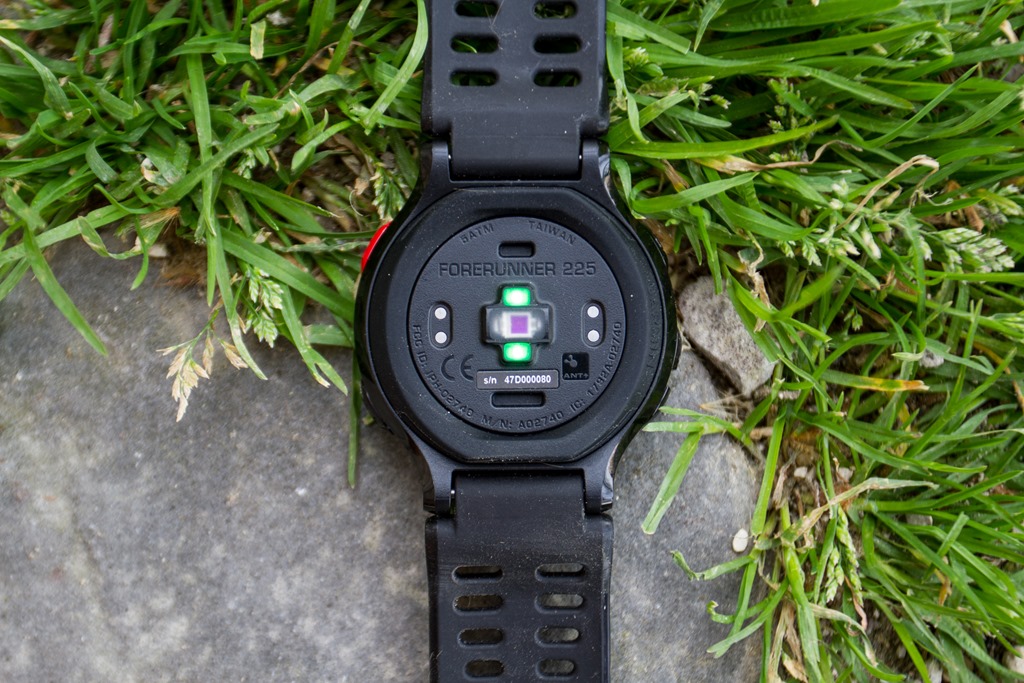
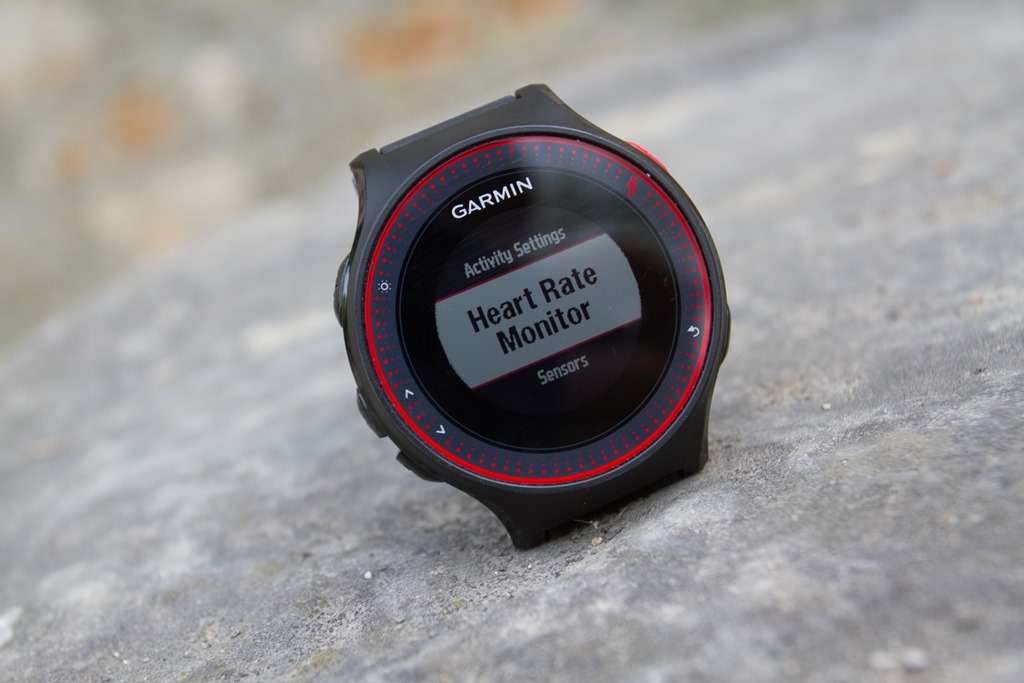
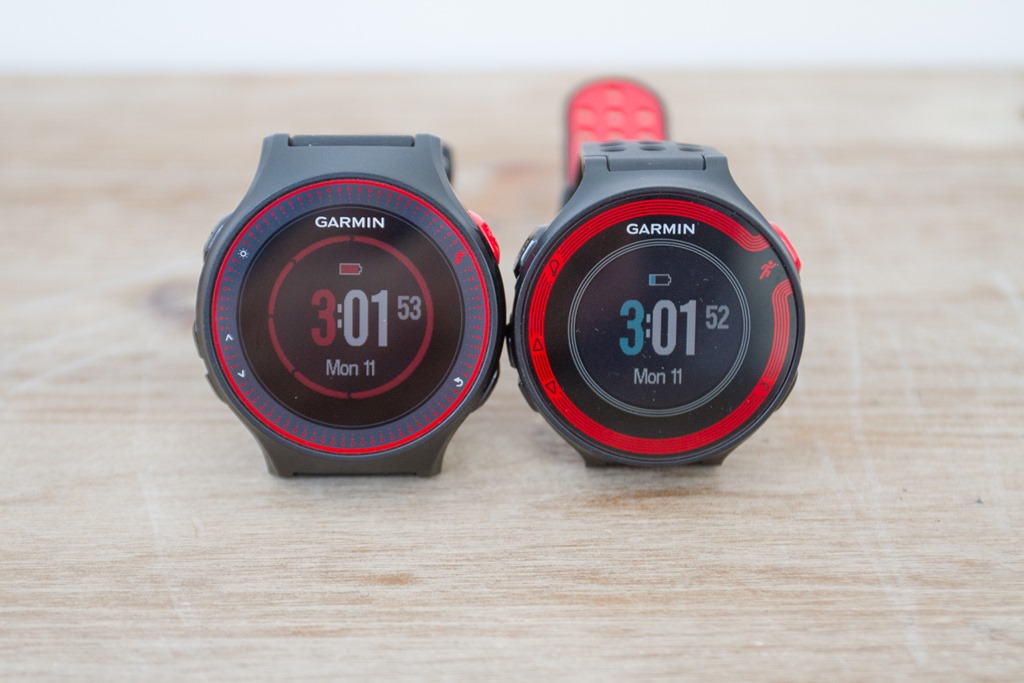

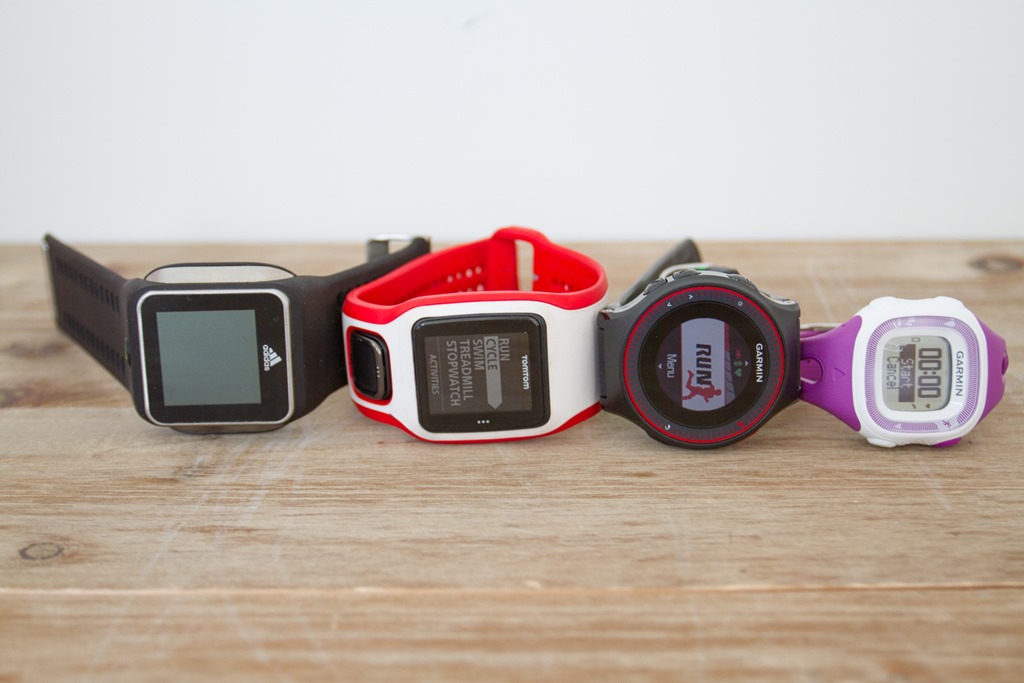

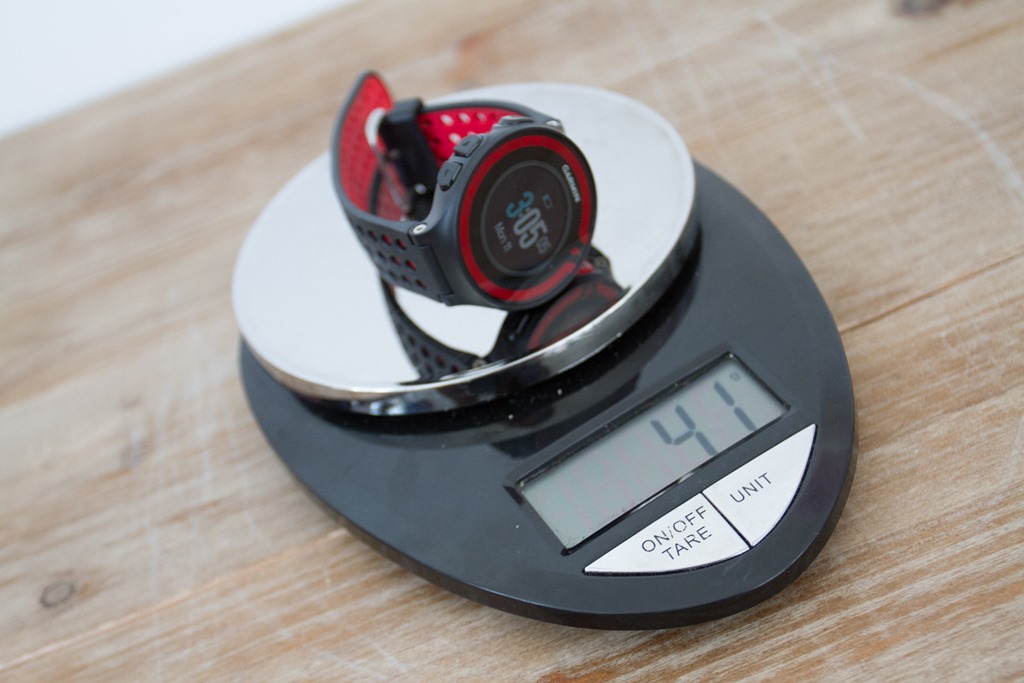

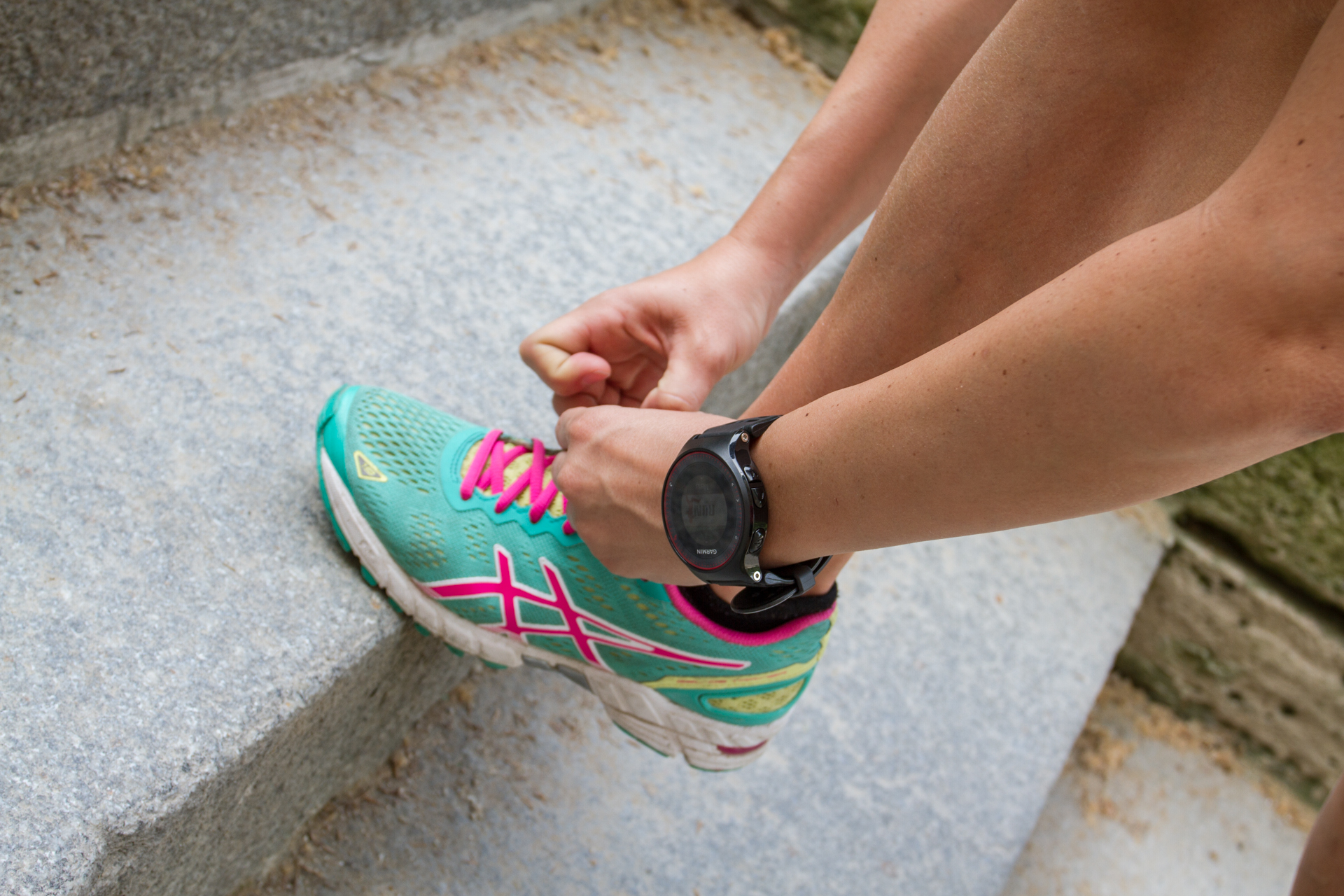

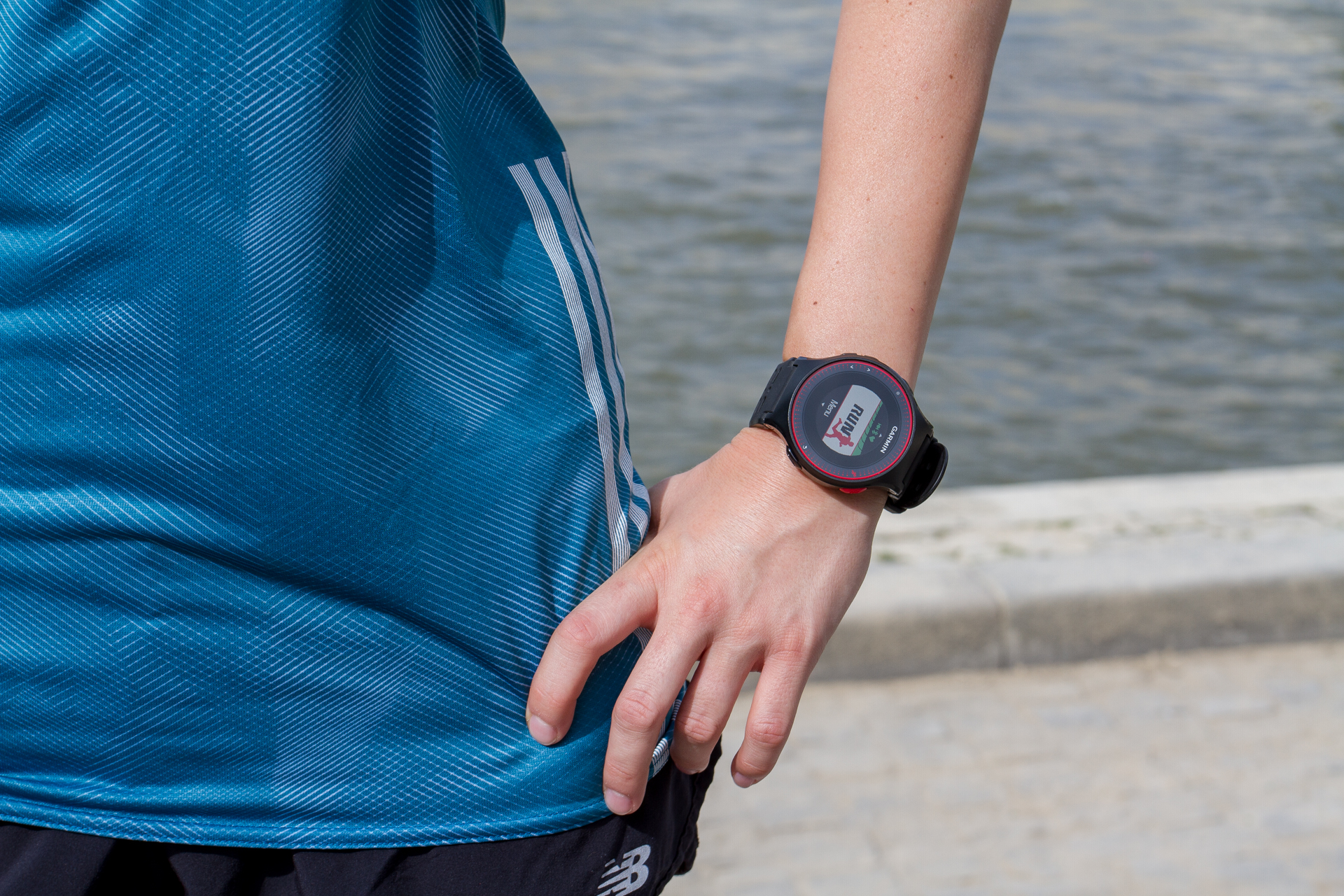
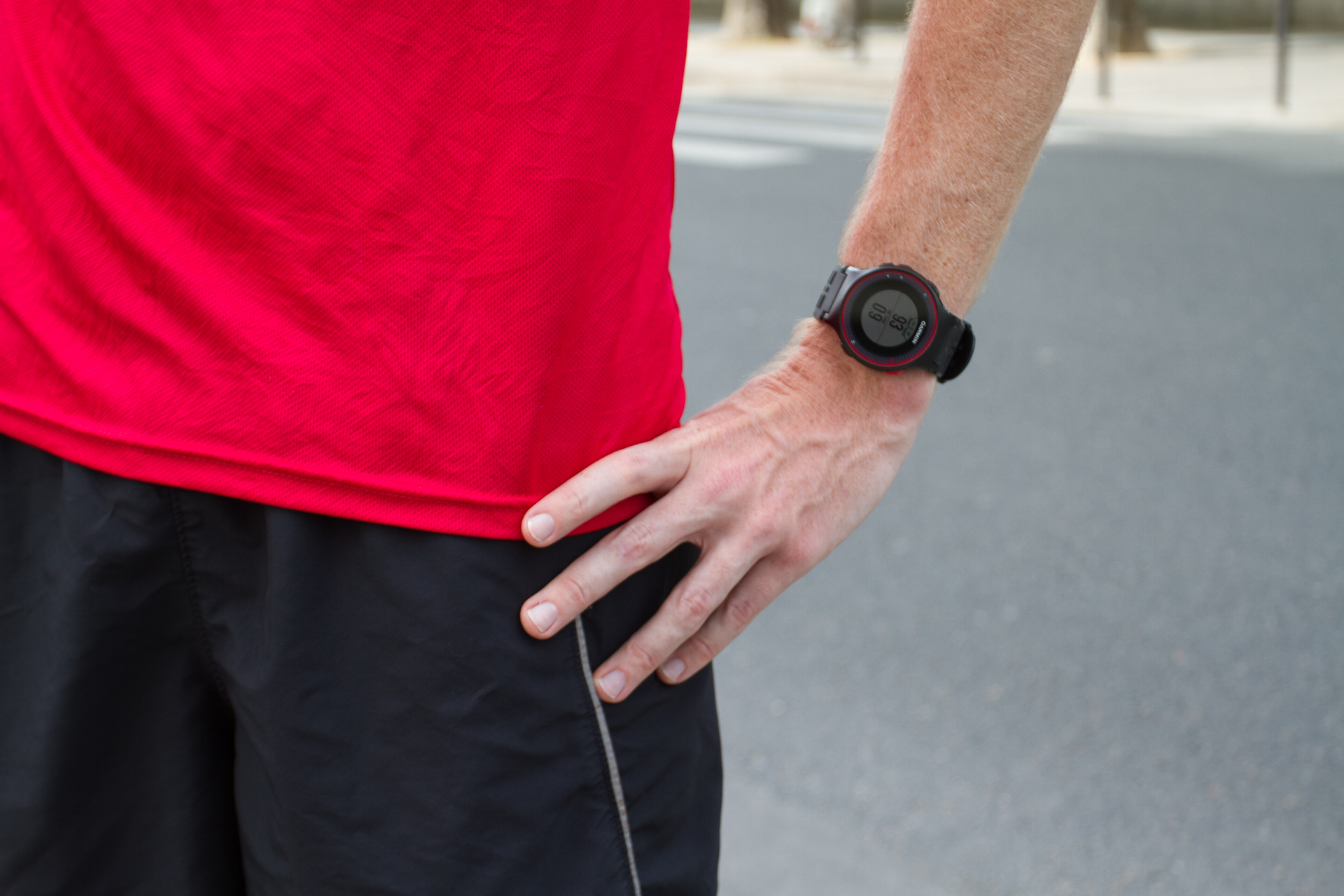

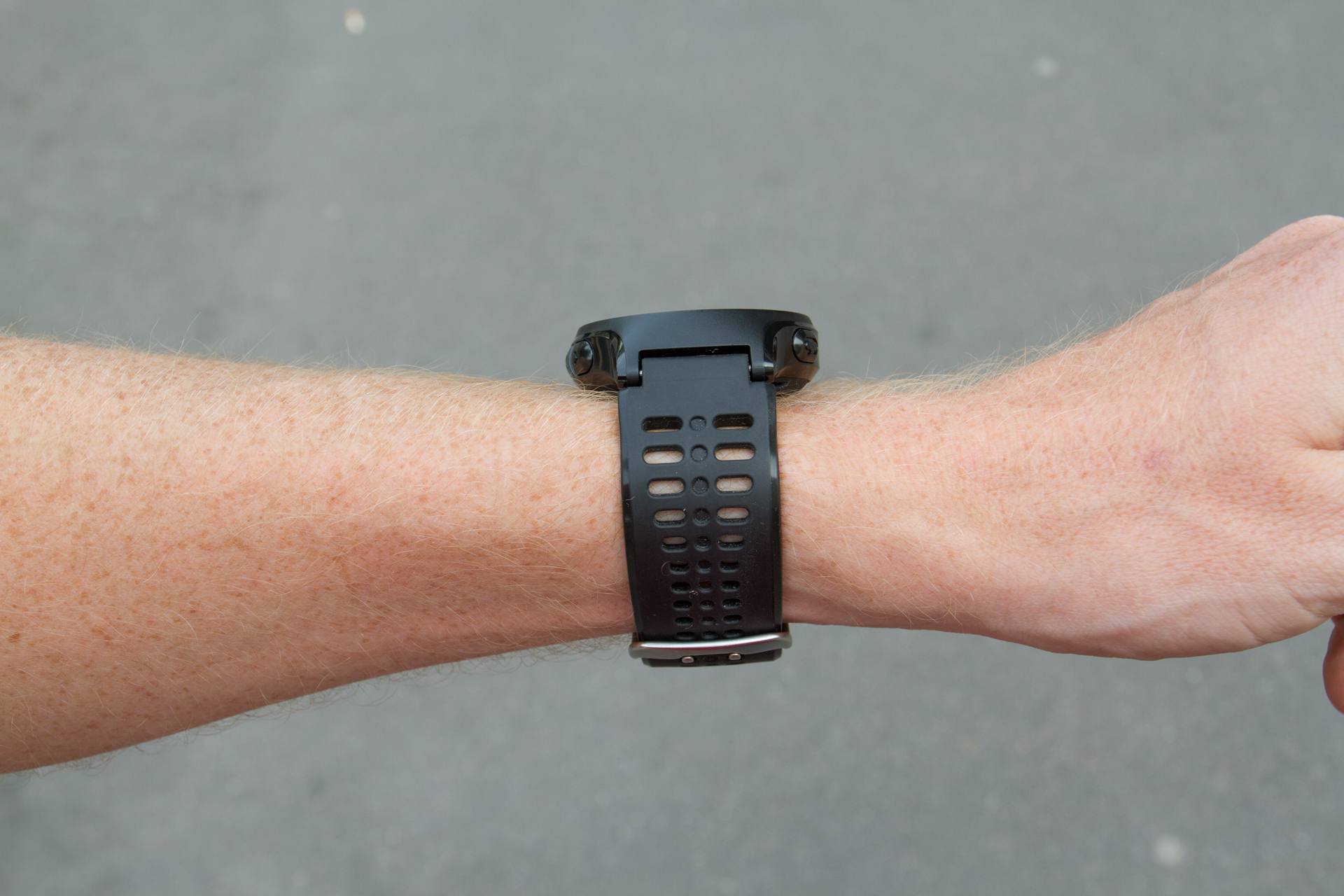
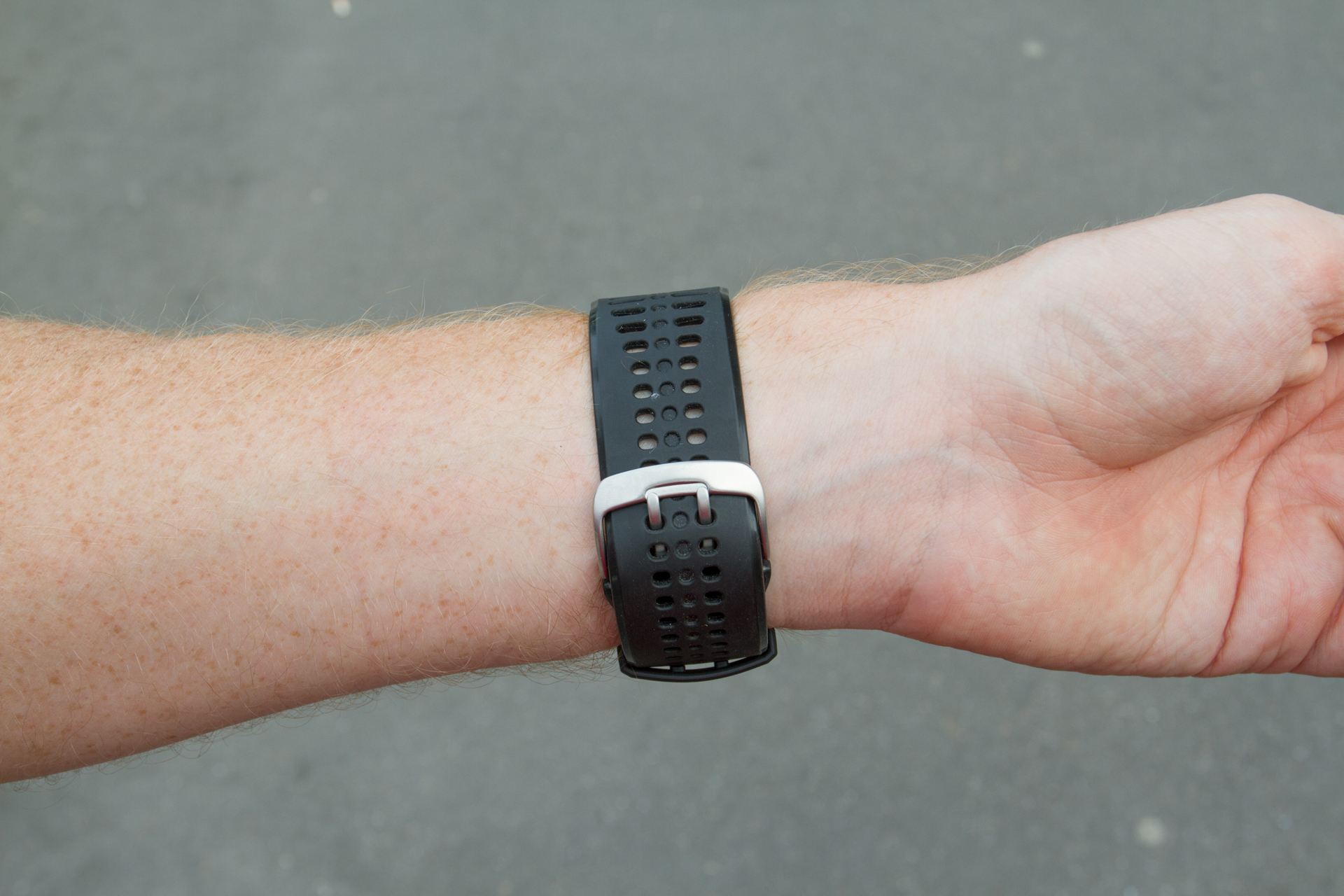
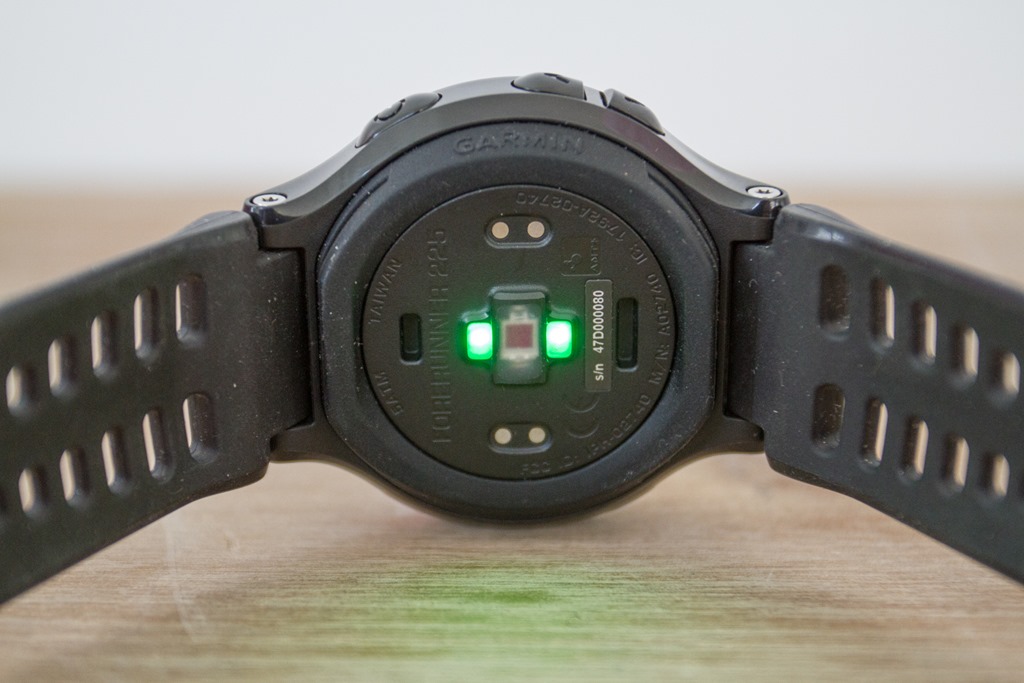
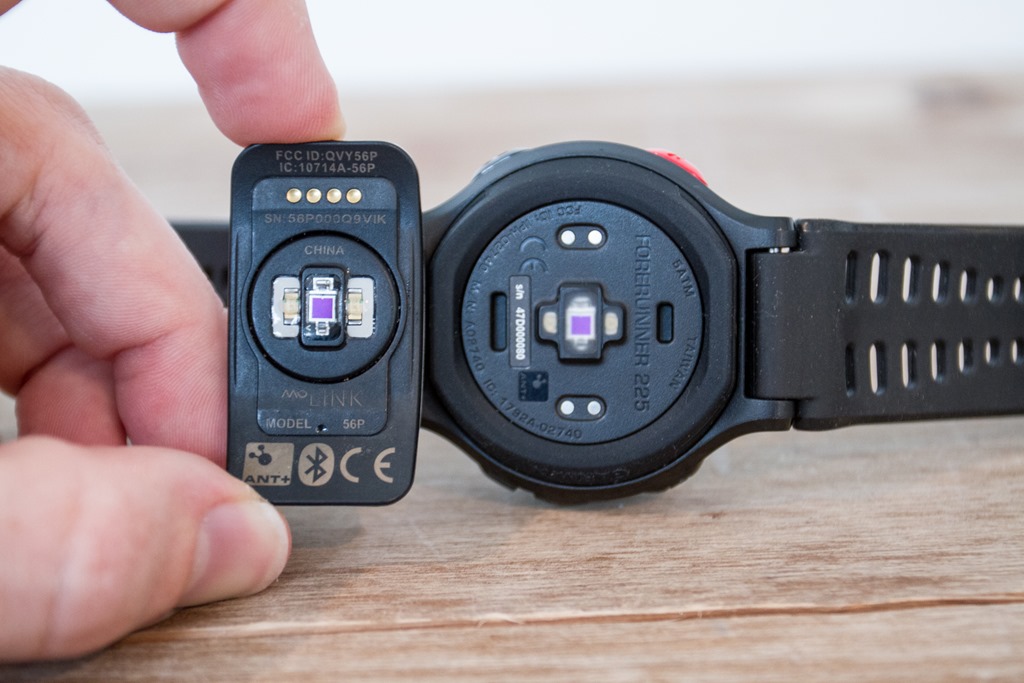
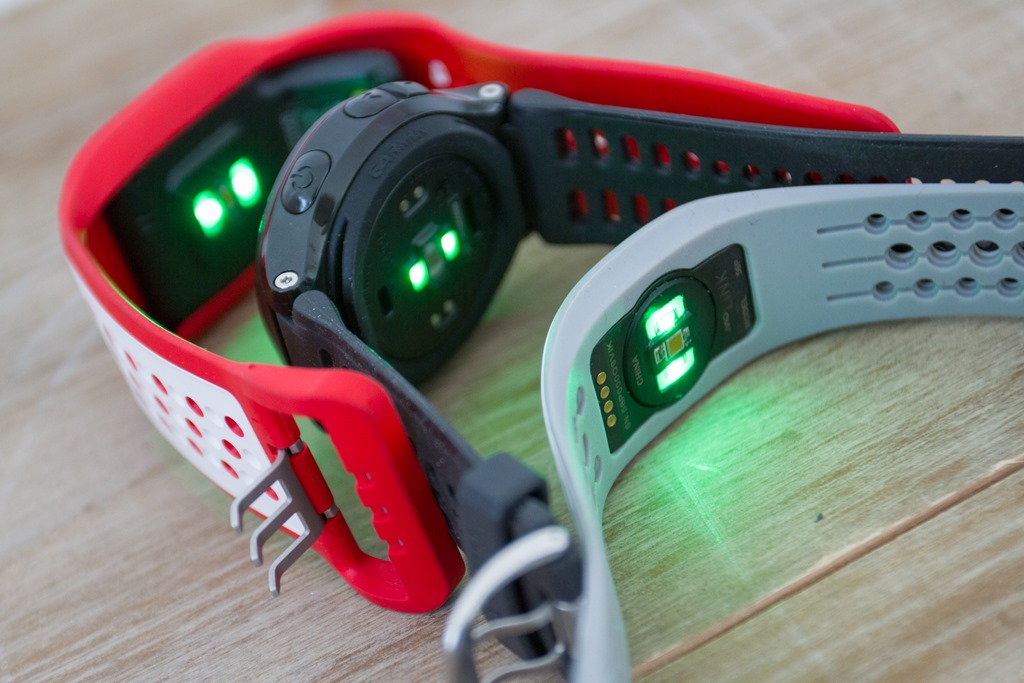
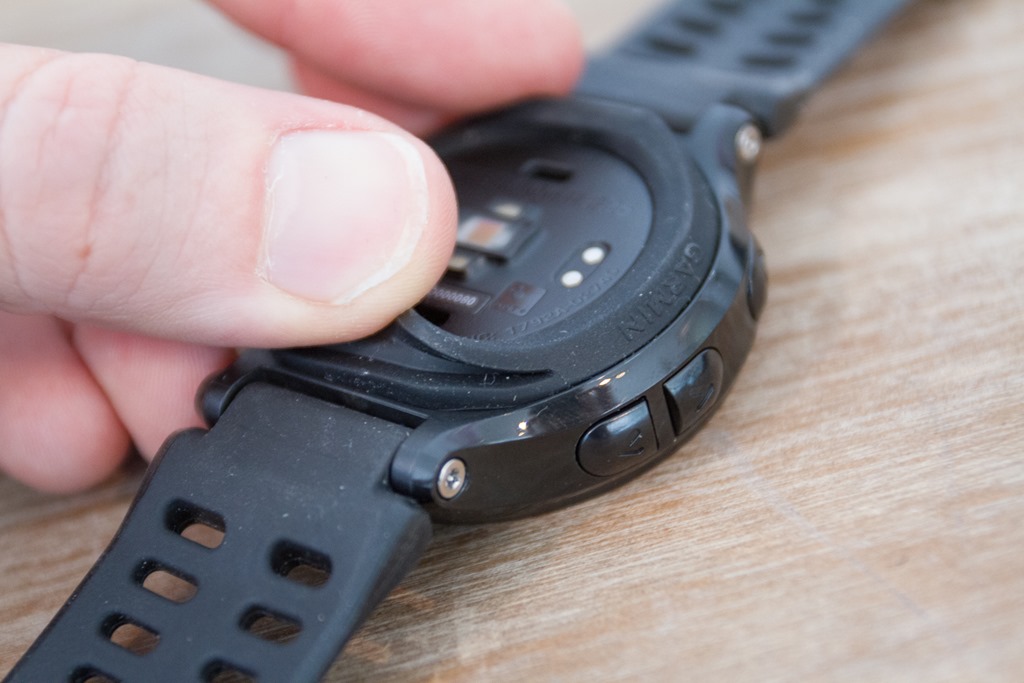
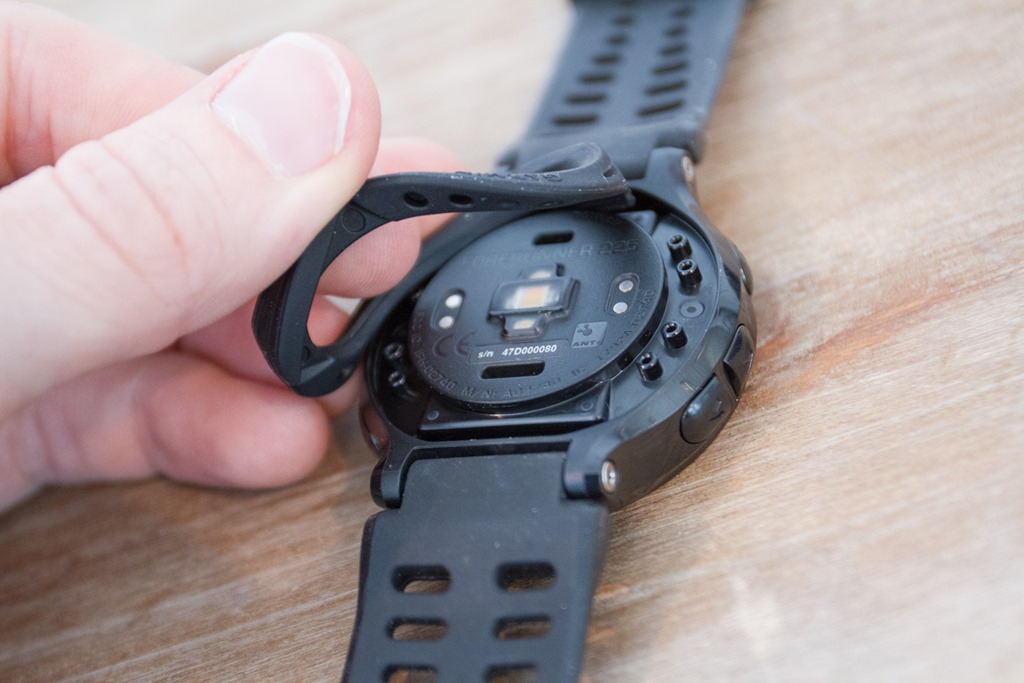
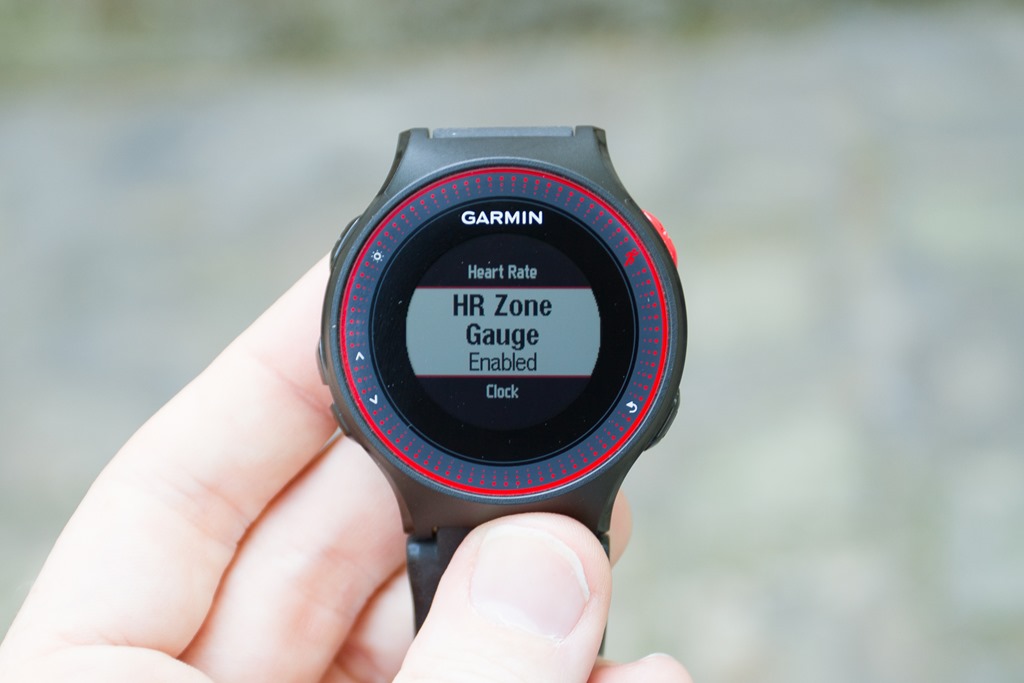

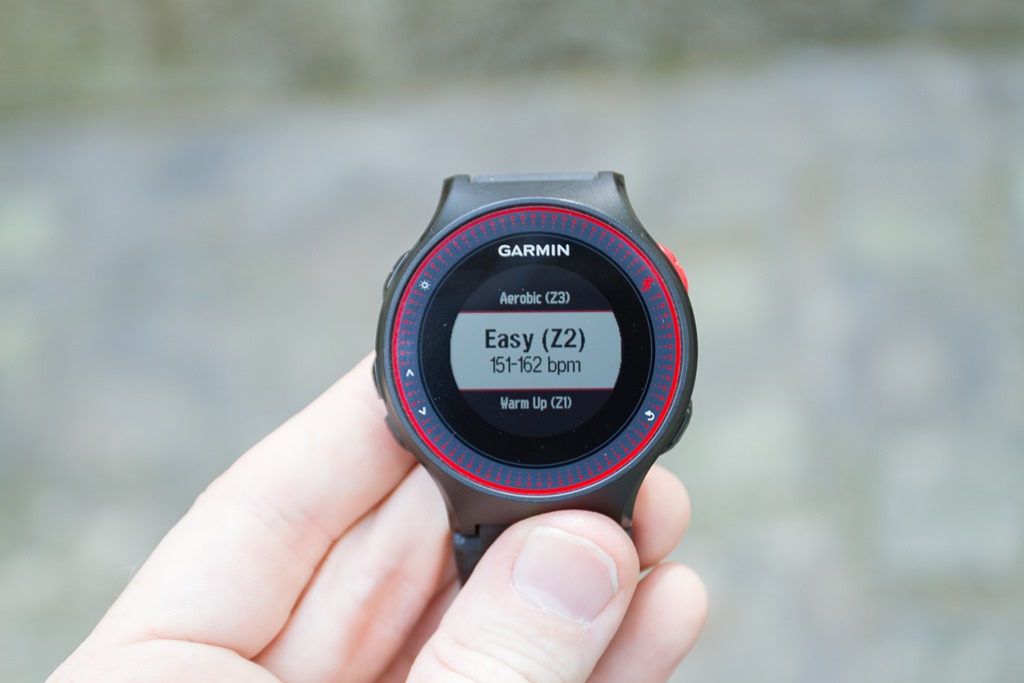
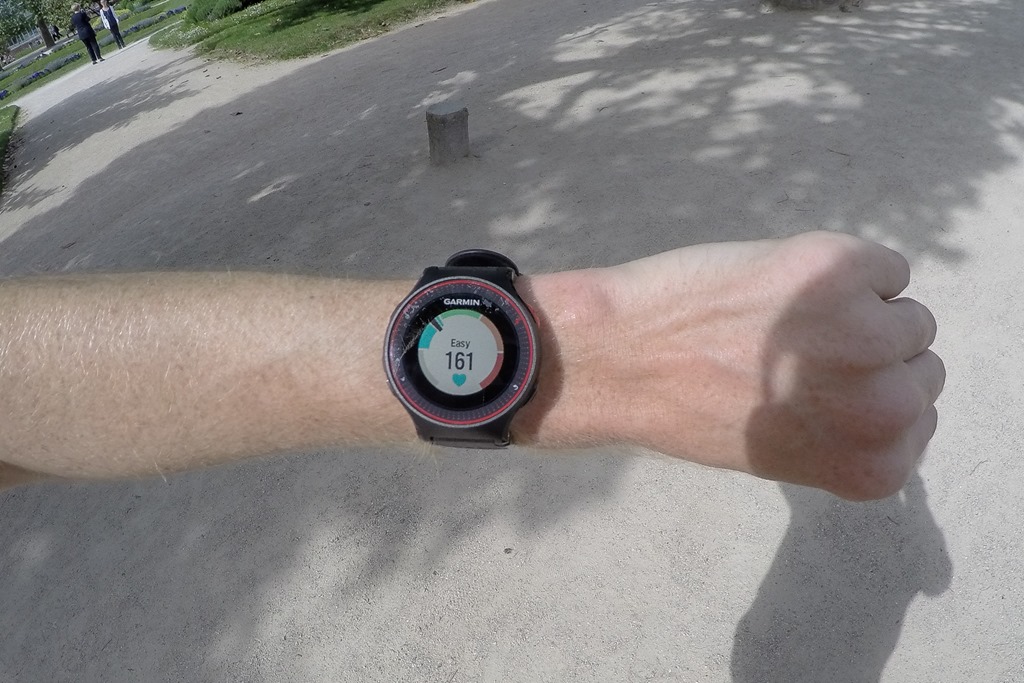
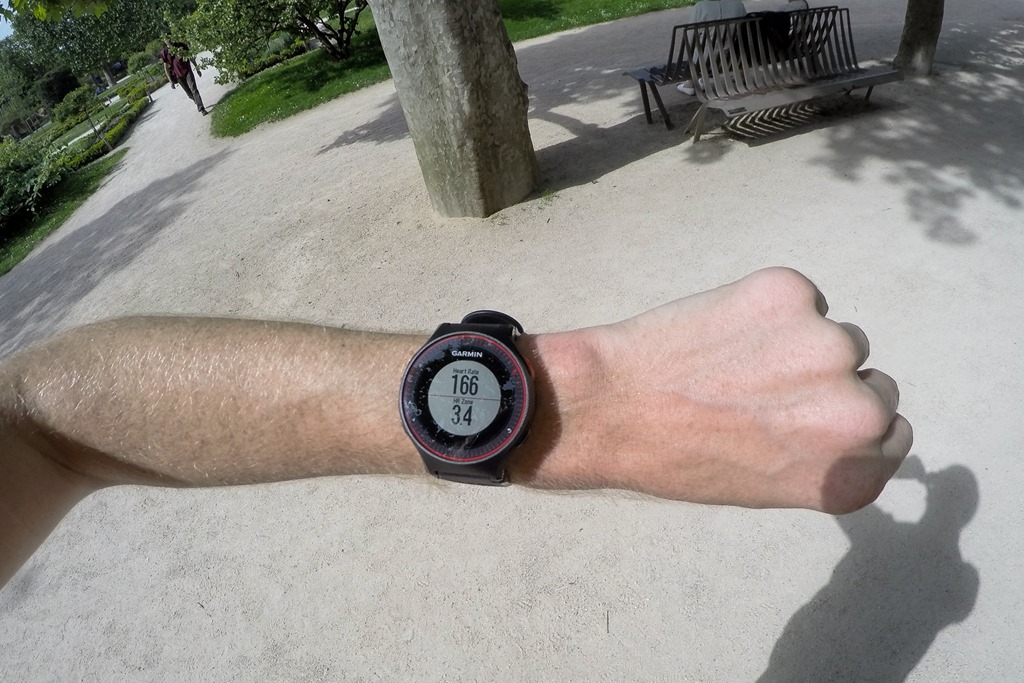

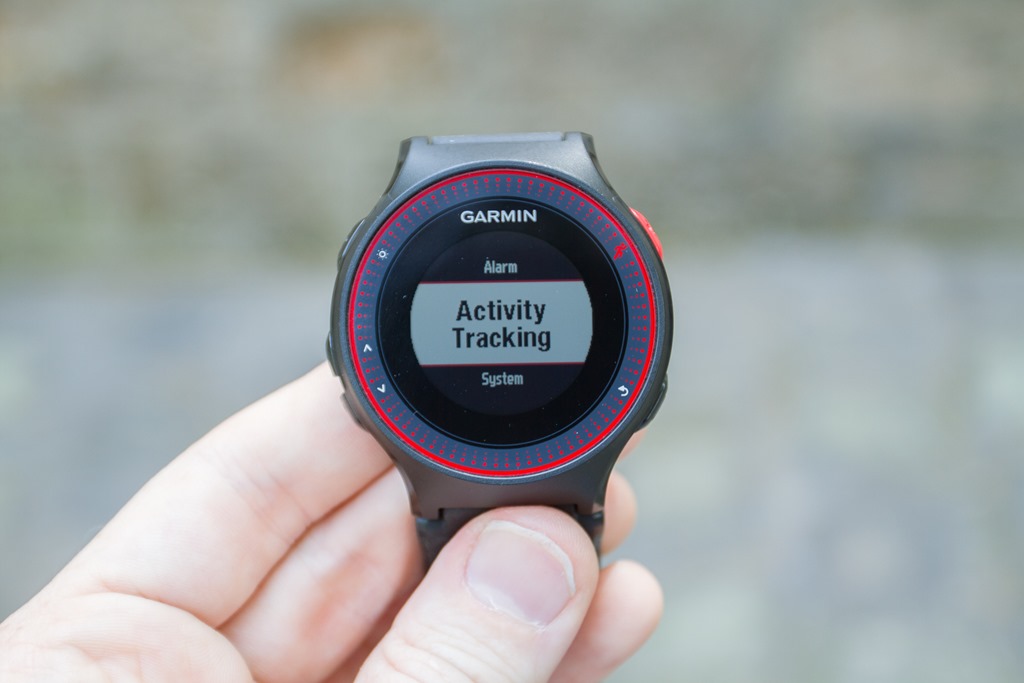
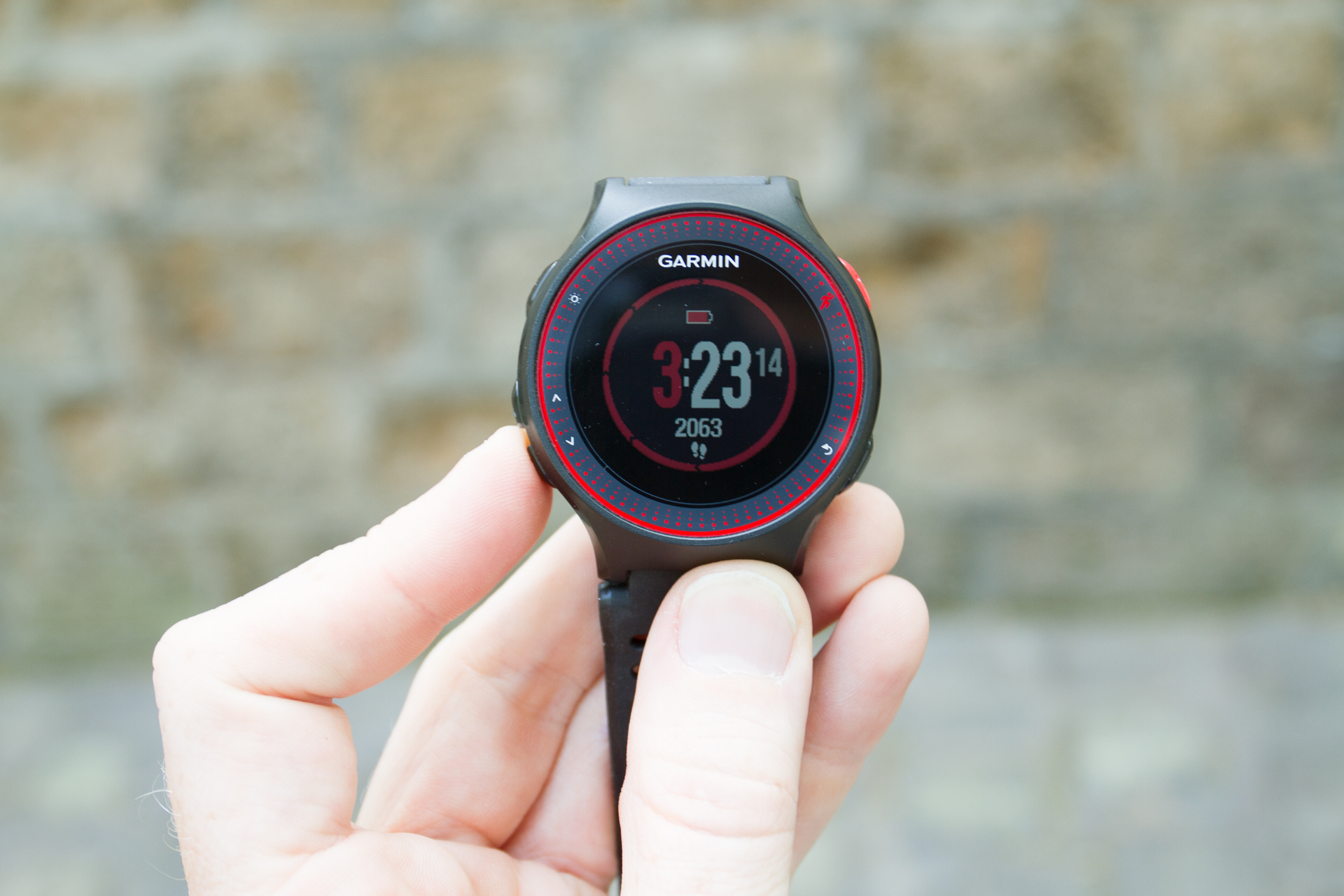
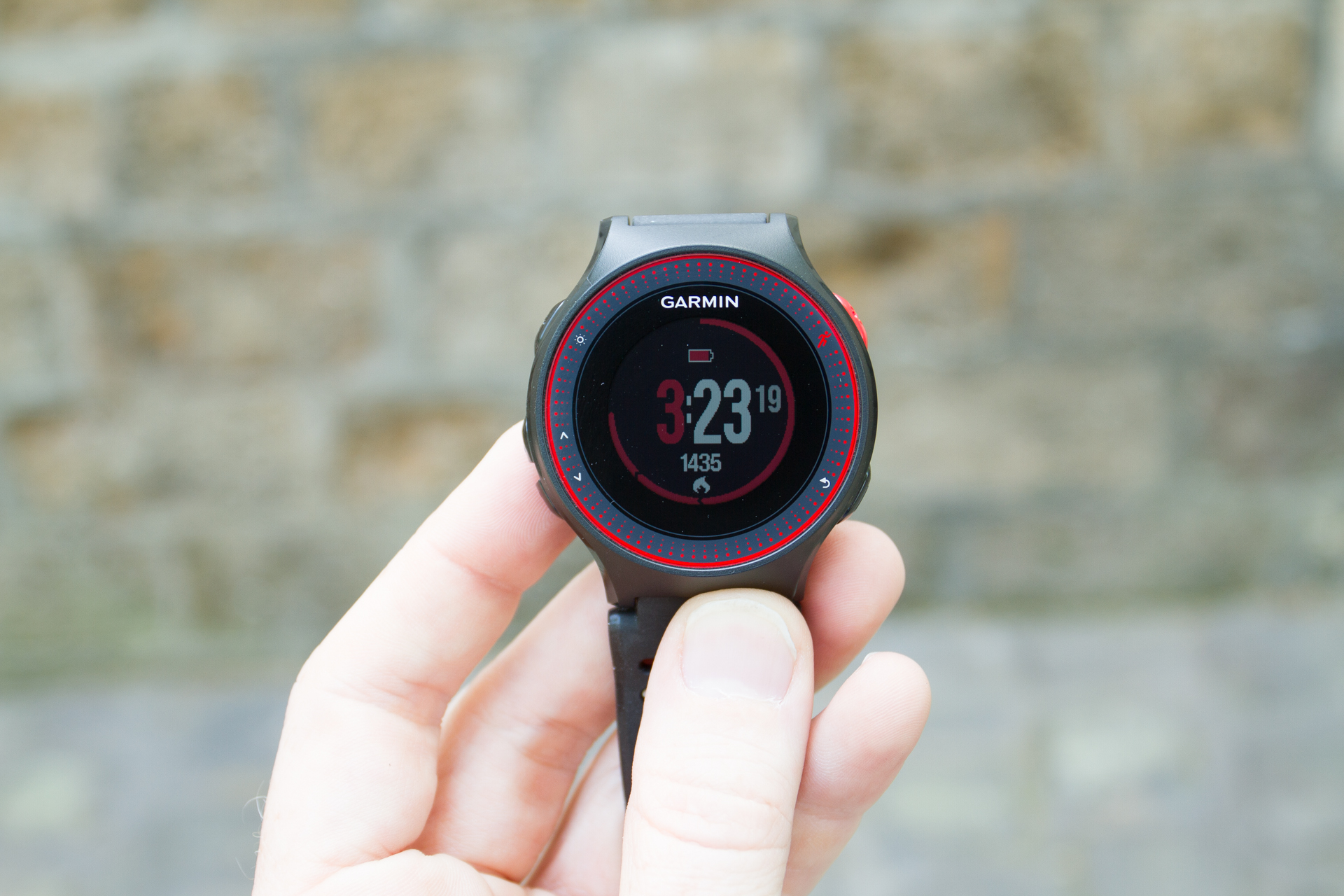
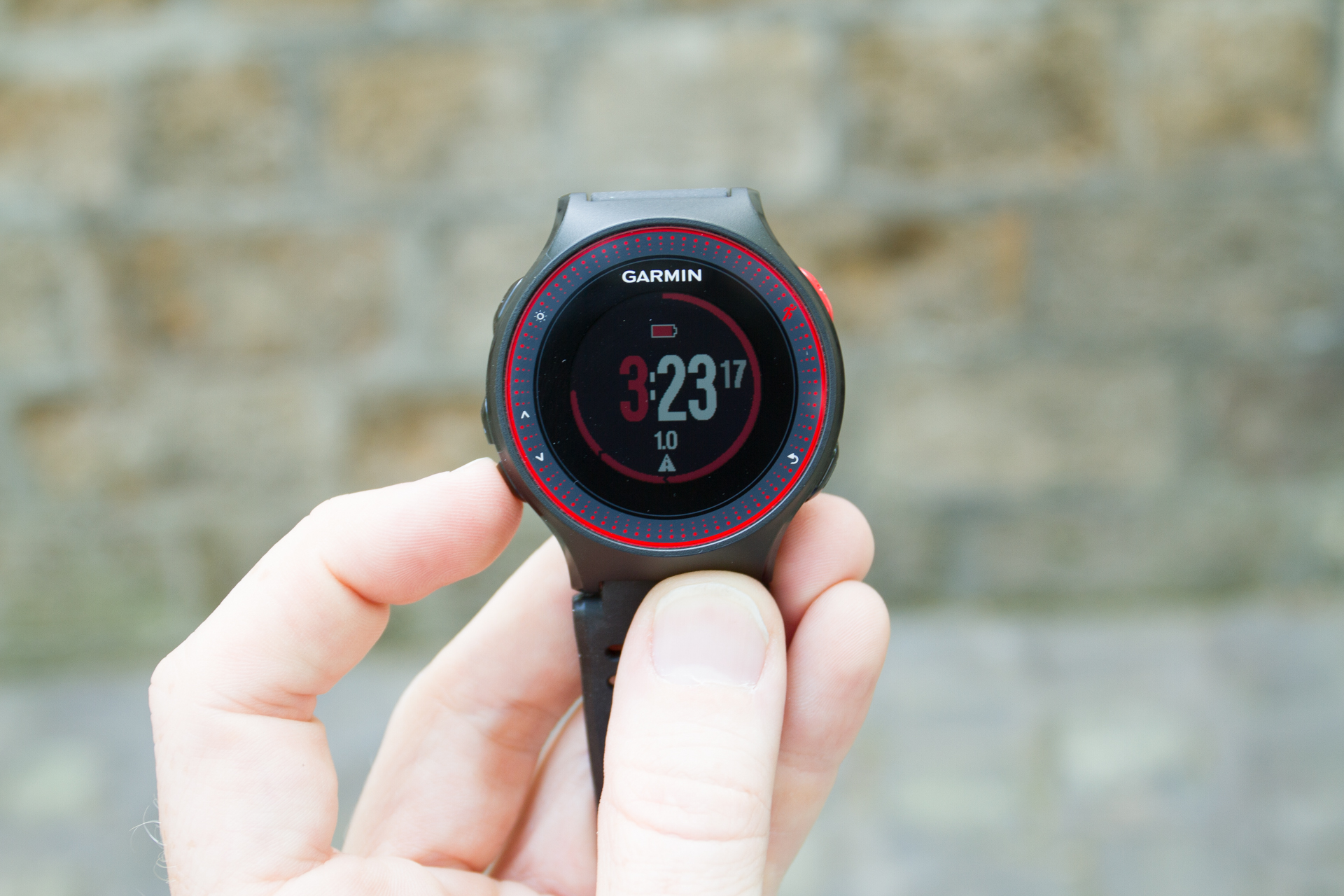

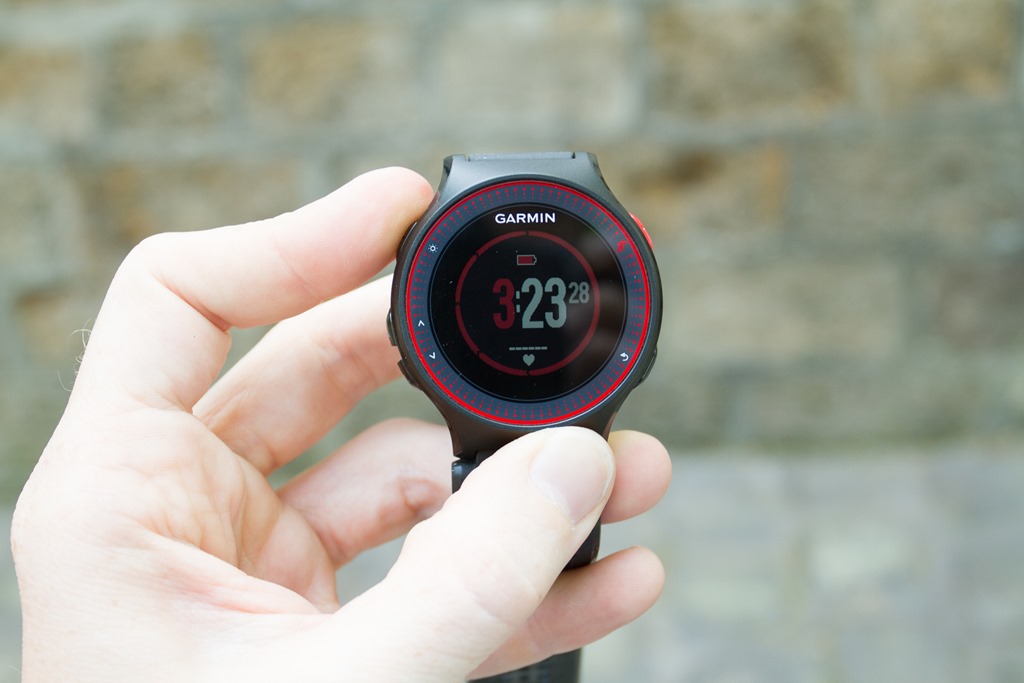
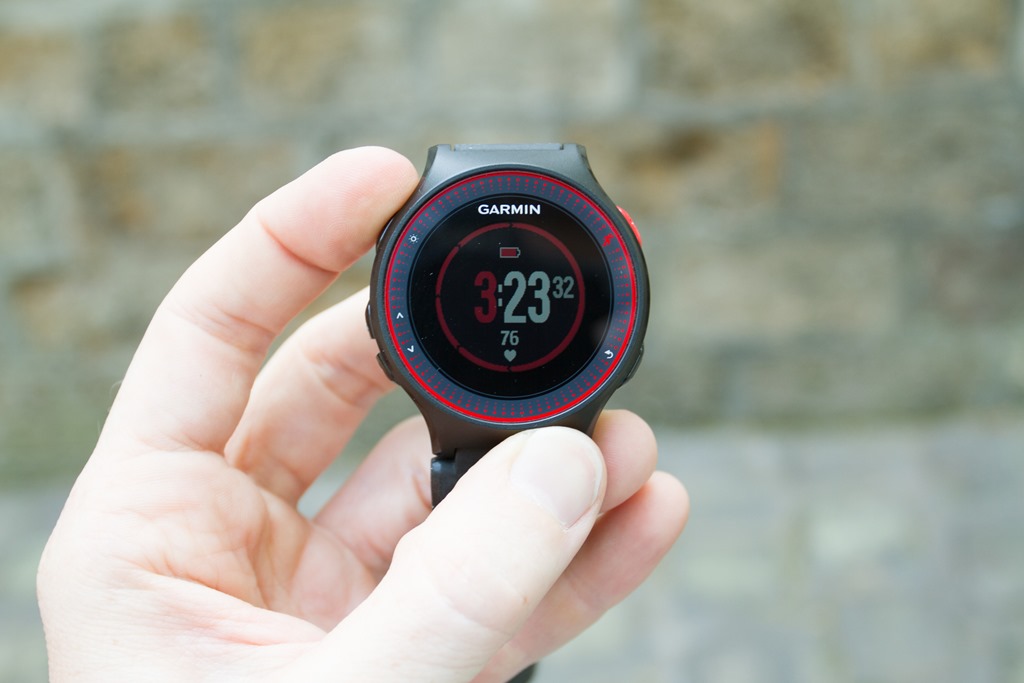

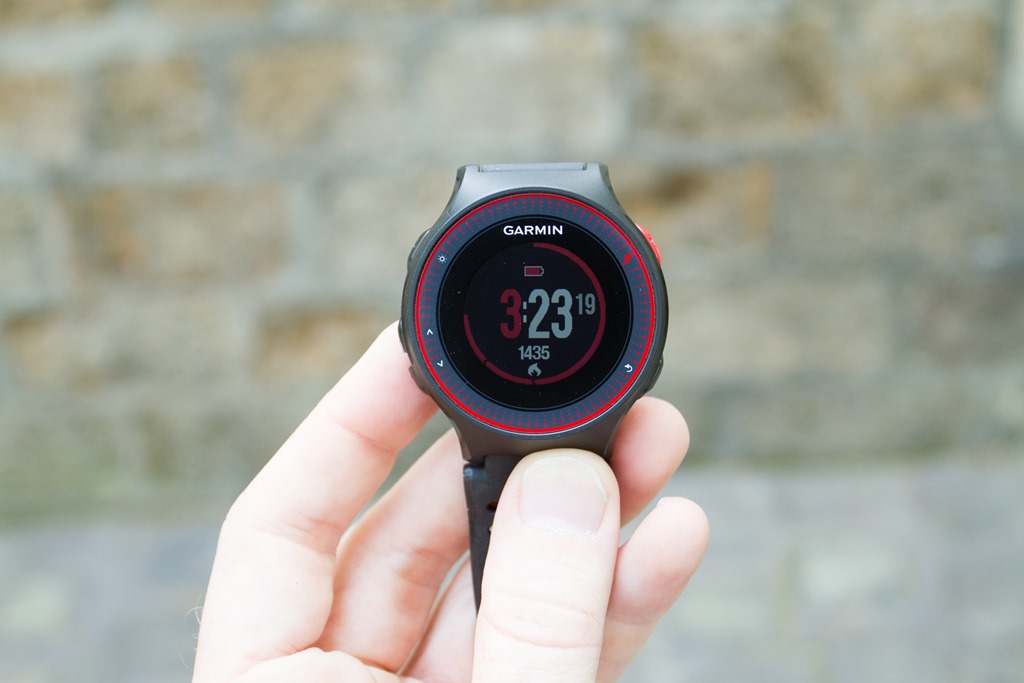
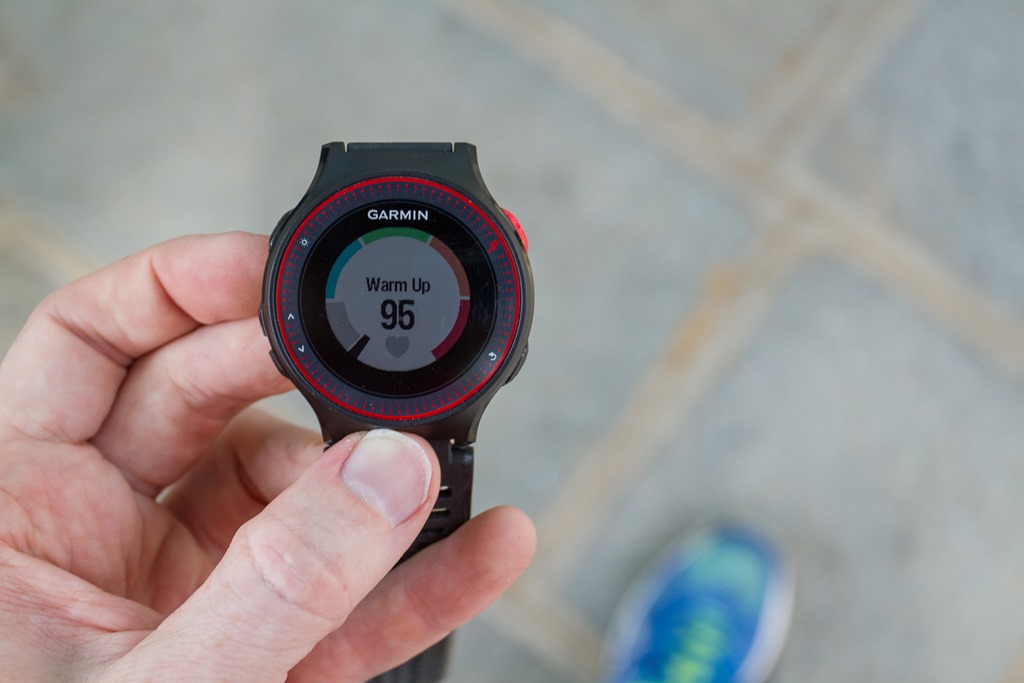

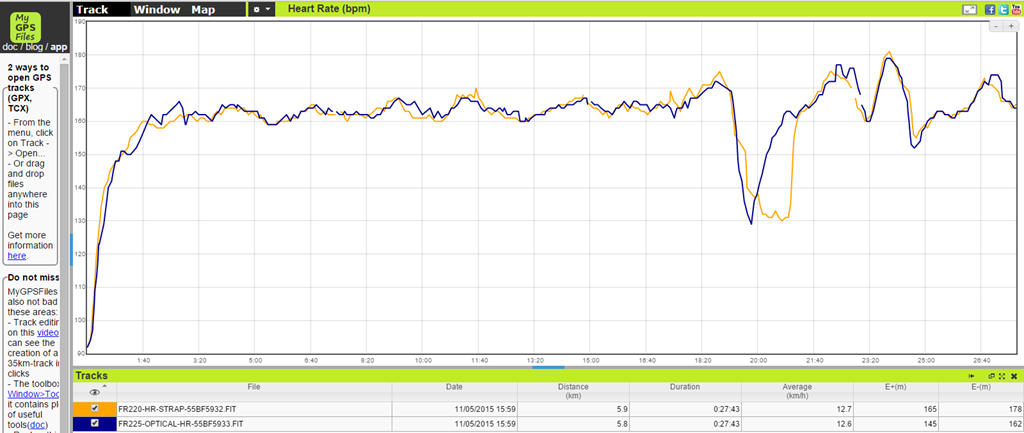

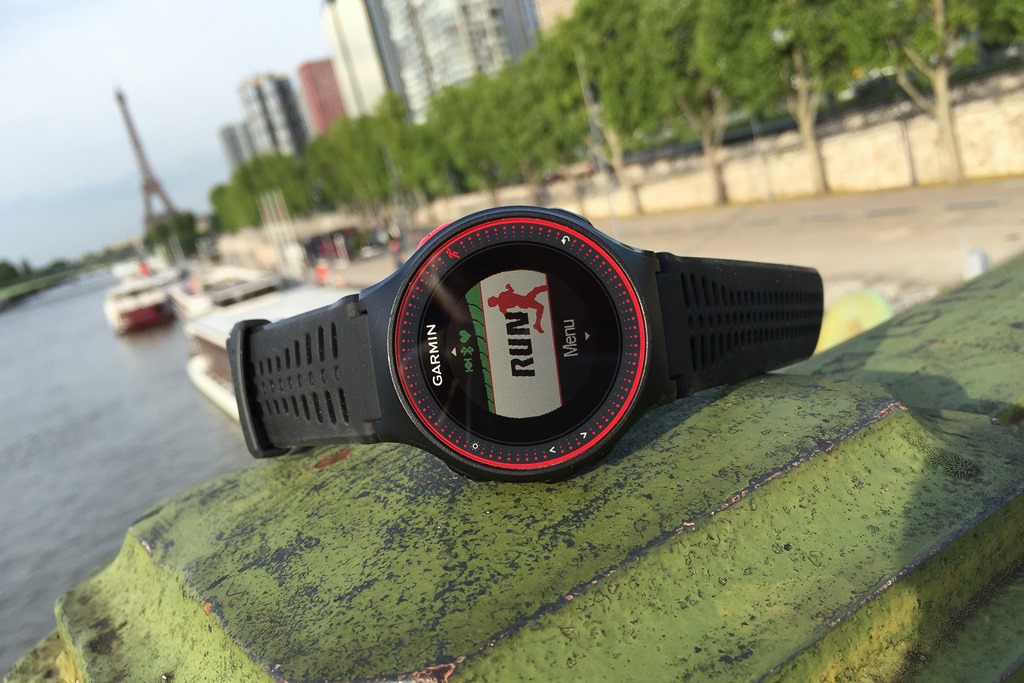












Just make sure you have no tattoos! ;-)
It traditionally hasn’t been as much of an issue with Mio sensors as with other companies sensors (i.e. Apple).
How many people have tattoos on their wrists…it’s an outlier and a non-factor.
I’m looking forward to this. I have the Garmin chest strap heart rate monitor and I barely use it because it feels constricting. When I do my long runs, I don’t even strap it on. I can’t wait to get my hands on FR 225.
I don’t need the other bells and whistles ie phone notifications. When I run, I just want to switch off from THAT.
Would you wait for this watch to come out or get the 620? Main purpose for either is running & being able to track my HR & calories burned is a definitive plus! Thanks!
Hi,
I was just wondering if the FR 225 still has the feature of distance-alerts, that was included in the 220 ?
Does anyone know ?
Thank you from Germany
Martin
Just got mine from REI. As a smartwatch not very good, as a running tool it’s very nice.
The watch in use and my review video:
link to youtu.be
For me I am definitely waiting for this one to come out. It has a wrist based heart rate sensor AND GPS AND tracks my steps. I was going to get the vivoactive as a GPS upgrade to my original vivofit but I LOVE that this watch has a wrist based HRM.
As for the 620, I can’t see spending that much money for something that I’m only going to be using on my runs outside. Just a thought of my own.
Does this count calories for the whole day or just during the workout? Does it matter that it doesn’t have a cycling option? Will the calories burnt from cycling still be included thru the increased heart rate?
Thank you:)
Hey Darwin!
The tattoo reference was actually reassuing. I’m African American and was wondering what sort of accuracy issues were encountered with “darker skin.”. Penetrating tattoos is a good proxy.
It shows the whole day total when not in a workout mode. When in a workout mode it’ll show you the calorie counts for that specific workout.
Thanks for this. Any news on the full review please?
Just wanted to say thanks! Very thorough and answered all of my questions including some I didn’t know I had. Especially like the knowledgeable comparisons to similar products with facts and not emotion or veiled favoritism.
Nice, but the lack of re-broadcasting of the HR is a definite deal-breaker for me.
Too bad, because my old trusty 310XT is slowly dying and would be really cool to replace that (I don’t really need the multisport aspect) and get rid of the HR-belt at the same time. My bike to run ratio is something like 5 to 1, so I would be the ideal candidate to buy this. Hopefully this will be fixed in a later version.
What does “lack of re-broadcasting of the HR” mean? Does your heart rate level over the course of the run get recorded an later uploaded to Garmin Connect?
It means that you can’t pair another device – such as an Edge bike computer, or even your phone – to the FR225 and have it pickup your heart rate from the optical sensor.
Thanks for the response! After rereading the review I see that this was explained in the FAQs section. So thanks for not calling me out!
Hi, how about the battery life?
7-10 hours with GPS-on/HR-on.
Would be great to know battery life. I have a Mio Alpha hr wrist strap that lives in the drawer as the battery goes after two hours. It goes on the ocassional off-season run, but that’s it.
7-10 hours with GPS-on/HR-on.
Ever get tired of writing the same response over and over again?
7-10 hours with GPS…oh wait, sorry, what’d you ask?
(To be fair, for some reason the code in my table didn’t show the chart for the first few minutes for some reason.)
And the battery life with HR off? For most training runs, HR is nice, but for long runs, 12-14 hours would be much better, and I’d happily give up HR data to get it.
My wife has been waiting for ages for Garmin to come up with something like this.. currently using a combo of Mio strap + 310 watch. Do you have any info on Battery Life and what do you think about them possibly releasing one of the higher up Triathlon watches with this sort of feature?
Thanks for the great preview, looking forward to seeing how it performs in a full test :D
7-10 hours with GPS-on/HR-on.
As for other units, I suspect we’ll eventually see them, but I wouldn’t expect anything short term.
Would it have been that hard to put smart notifications into this device and make the screen size slightly larger? That would have been a winner.
bummer that there’s no “all black” version… as a daily activity tracker the red/black doesn’t really fit the business attire which many of us have to work with.
I couldn’t agree more! I frankly don’t understand the need to put any colors on a watch such as this. I currently use the FR 610. While a con is that an accidential brushing of the face with activiate it, a big PRO is that its all back and fits in. GARMIN if you’re listening BLACK should be the default, if you want add colors offer them as an option! At least it looks better than the 220, that thing is downright garish as a daily watch.
I totally agree with the default color being black. Not sure who is designing these watches but they have no sense of the customer preferences. The main reason I didn’t get the 220 was that the colors are horrid. When will they get that many folks want a watch that can be worn all day in a professional setting??
I agree your complaint about the Garmin color scheme. I have always thought that Garmin gave the watches funky colors so that other runners notice the colorful watch and about it.
Personally, I was going to buy a 920, but opted for the Fenix 3, just so I can wear it all of the time and not look like a 12-year old at the office.
C’mon guys, there’s barely any red on the thing. It’s perfectly acceptable in a business setting
The only thing that’s kept me from upgrading from my Mio Alpha to a watch combo, honestly – are the colors. I LOVE the suunto look – the all black thing they have, it’s awesome. But I look at the 225 and it looks like a toy. I wish Suunto had some optical tech, and had better backend software, and were less proprietary. Those things are against Sunnto, and colors/toy like appearance are against Garmin. The best LOOKING one out there is the Adidas SmartRun, but it’s lack-luster in many other ways.
Give the 225 an all black look – with a reveresed white text/black background and I’ll never mention suunto again….but until then, I’ll sit with my 3rd party phone app (icardio) and my Mio Alpha..
I think it might be the fact that this is a sports watch, not a dress watch. If they made it in black it would still look like a sport watch. It is a watch targeted to runners who tend to wear bright colors while running. Have you ever taken a look at running shoes? I am sure you would not wear those in the office either. As for me, I have a collection of dress watches and would not be wearing any sport watch with a suit on.
Long term do you think there will be a 620 (625) or 920xt (925?) version? But can they do they whole v02 max, race predictor and recovery stuff over optical? Thought i’d read it those were chest strap only metrics?
For someone like me, already owning a 620, I think i’d be just a well sourcing a Scosche RHYTHM+
That is, unless they add Connect IQ to a potential 625?
Long term, I’d be surprised if it’s not in every new GPS running watch they release.
As for requirements for HRV, the technology is very close – we’ll see optical HRV-capable (and accurate) units shipping before the end of the yera at the latest.
Which means they will lose the running dynamics (although I know you think those aren’t of much use anyway).
The FR225 isn’t HRV-capable now and forever, because it would need new hardware?
Is that a hardware upgrade or firmware/software upgrade? And is that just the Mio products or also the Valencell line?
Right now Valencell is working on it, I don’t know where Mio stands on that.
I don’t think so that Garmin is going to release FR625.
FR225 seems to be a proof of concept for HR lines. We’ll see new forerunners in September or so. It should be FR230, FR235 and FR630. All of them with ConnectIQ. I also suppose a new price tag, so for those who want to save money, FR225 can be a good choice.
Some time ago you mentioned working on an in-depth report about the optical sensor industry and what is to be expected in the next months.
Are you still working on this report? It sounded amazing and I would be extremely interested in getting a deeper look into the industry and the developement.
It’s still on my plate. Might even find the light of day soon too!
I think lots of people would be interested in this… There are loads of questions / answers on your main Mio Link preview, and mine works great (that I know of – I’ve not actively compared it to a chest strap, so it could be miles off!). However, your full review and comparison to other options is suspiciously absent. The fact you don’t take marketing/sales $$ from the companies means I don’t worry about bias, but an overall round up would be a very well received post I think.
(as an aside – are you getting tempted by the message board approach yet ? These comments sections are becoming a little crazy!)
Yup, it’s something I’ve been wanting to do (the full post).
There’s nothing about a message board that’s appealing to me at the moment, simply because it’ll be one more place to have to ‘manage’.
RB10 replied
June 6, 2015 at 11:22 pm #5
Would you wait for this watch to come out or get the 620? Main purpose for either is running & being able to track my HR & calories burned is a definitive plus! Thanks!
Reply
Did Garmin jump the gun on the Vivoactive? onboard Optical HR will put the Vivoactive 2 on the top of my must have list.
I think they had to do the Vivoactive to try and compete with certain segments of potential Apple Watch purchasers.
Actually, the extreme thinness of the Vivoactive almost makes more sense in the context of later being able to add in an optical HRM.
This is a direct reaction to Apple Watch by Garmin.
Does it show up as a USB storage device when connected to a computer?
Yes, standard USB enumeration.
Hi,
DC I recall you saying something along the lines of the optical HRM not being accurate for Garmin especially given their scale of distribution. Has this changed?
Thanks!
Yes, I think Garmin has simply decided that they’ll have to take the hit of optical inaccuracy issues with X% of people (perhaps a few percent at most). Simply because everyone else is doing it (i.e. Apple and Fitbit).
I recalled you mentioning that before and that chest strap HRM is the way to go for accuracy. If that was and still is the case, why have you ditched chest strap HRM for the Scosche Rhythm+ Optical HR band?
I don’t believe I’ve ever said that. I’ve noted that certain sensors are inaccurate, but not all sensors are created equally.
For example, I’d never ditch a HR strap for the Fitbit Surge’s optical sensor, or Apple’s. But I would (and have) for Scosche’s, and Mio’s is perfectly fine too.
Will the new HR gauge screen(s) be made available to the rest of their devices for use with ANT+ HRMs?
I would like the HR Gauge screen to – maybe it can be made as a watch face depending on which model you have.
when is Garmin going to learn that people do more than just running? Why not include a lot of sports modes? At least include walking and cycling!
I’m guessing the optical HR will show up on the next FR62x with and FR92x models, which already have bike mode/ANT+ support (and swim mode in the case of the 920).
The big thing with 620 over 220 is the HRM-strap, unless they’re able to put that into the watch (not very likely) people buying 62X will still use the HRM-strap.
Although the rest of the running dynamics could be done from a pod that clips on your shorts, getting rid of the strap altogether…
Any idea if these optical HR monitors work when worn on the inside of the wrist? Thanks!
Generally speaking they do (in fact, generally speaking they work better actually).
Inside of the wrist might be a good idea for HR. But it’s a bad idea for GPS
Oddly enough for many people it tends to be a wash (GPS). It depends a bit on your running style. For me, my wrists are more vertical when I run, so it doesn’t much matter whether it’s inside or outside (since it would be effectively no different than being on the opposite wrist facing the other way).
Of course, individual may vary depending on their body makeup/positioning/etc…
Nope. I tried with Mio Fuse and it did not work on the inside of the wrist. Odd!! Maybe it was too tight
I wear my 910XT on the inside of my wrist, for ergonomic reasons, constantly without issue.
Do you have any info if they’ll update FR220 to match FR225 in software features? I mean, I don’t expect activity tracking as it might be hardware thing but ex. this HR Gauge page is just software.
In such case people would have a choice of basically same watch but with different HRM.
without 1 second recording GPS mode ! … Too bad for me.
Very cool, I look forward to this trickling over to whatever comes after the 920xt. I may have missed it, but with the HR, does it track throughout the day, and does that data get displayed anywhere on Garmin Connect?
As an early backer of the Stryd power meter I was hoping the FR225 would support use of third party power meters for running.
Do you think Garmin will add support for the power meter on the FR225 in the future?
To be honest, approximately zero chance.
Any word on whether there will be an update to the FR220 to add activity tracking?
On the one hand, I would imagine the coding would be trivial since the FR220 and FR225 use the same base. However, they also might want to leave differentiation to encourage people to upgrade to the FR225.
My understanding is that the FR220/FR620 lacked the low-level power mode required for activity tracking. I suspect if Garmin could have added it in a year ago, they would have (since it would have positioned them far better against competitive units from Polar and Fitbit).
Thanks for the response Ray!
This might have been asked (and answered) before, but do these optical HR sensors work underwater, i.e. would such a watch be suitable for swimmers.
On the 910/920 successors, this would be great…
A number of folks have had fairly good luck using the Mio Link underwater (same sensor family). I’ll certainly test the FR225 in the pool as part of my review process.
Ray,
I’d love to hear more about the potential rebroadcasting of the HR numbers for cycling use especially.
As a 310xt user, I have been biding my time with optical HR being the one thing that might make me go out and buy a new watch before my current one bites the dust. To be able to replace the 310xt with a 225/625 and an edge where I keep the watch on my wrist during the bike and view its HR data on the EDGE is intriguing.
A “925xt” with HR for the run is intriguing too, but then there is the issue of what to do during the bike.
Forerunner 625 next?
Thanks again for a very detailed review! When the MIO Link was first released, I pre-ordered and had nothing but trouble with it. I have small wrists and no matter where I wore the Link, light leaked out and the heart rate data was always inaccurate. MIO swapped out my Link with one that had an updated firmware, but that did not solve the problem for me. I have been using a Garmin Forerunner 620 paired with a Scosche Rhythm+ that works great! My only complaint about the Scosche Rhythm+ is that I wear it high up on my forearm and it tends to slide down my arm after an hour or so, but a quick adjustment and it is back in place working fine.
Does it work with Stryd ?
No.
Ray, nitpick – “tattoos” should not have an apostrophe.
Thanks, fixed!
Exciting product! I can see that you’ve had some pretty good HR data so far but I have to wonder how well the FR225 will perform for those who have bony / concave wrists, given that you can’t really move it around to get a reading like you can with the Link/ fuse.
I’m surprised the sensor doesn’t protrude from the device a little more to create a ‘seal’ against the skin like they did with the later versions of the Link. Perhaps the overall size of the watch itself will help prevent light loss?
Rubber seal will obviously help with this but I still have to wonder if it will completely solve the issue for boney people (who form quite a big proportion of the traget market!)
$299 for a running watch. I’d rather spend $99 TomTom runner plus scosche for $70. It doesn’t even do phone notifications. No surprise garmin overpriced their product.
Hello: How does the 225 connect? ANT+ only, or can it also be plugged to a computer and data downloaded as a file? Thanks.
The same as the FR220, so it can upload via Bluetooth Smart to an iOS/Android device – or you can simply plug it in via USB.
and I have been EXTREMELY happy with bluetooth smart uploads lately!
Ray, do you see them doing something with the 620 and doing a 625 version with optical? The 620 has a bit more versatility (to include cycling) and basically would be a tri watch without the swim mode. This kind of setup would be IDEAL for my wife.
Will this watch and optical setup give you the VO2 max and cadence data like the HRM Plus strap does with the 620, 920, and Fenix 2 or 3?
I’d be pretty surprised if medium/long term they don’t do it for all of their units.
I am not so sure about that.
There are still some issues about adding optical HR to the device itself:
1) multisport watches (ok rebroadcasting + edge unit on bike could fix this)
2) battery life influence
3) unit size (from sensor itself, from extra sealing and from larger battery)
4) what about winter runners? still about 1/3 of runners for about 1/3 of a year cannot wear the watch directly on exposed skin.
so, I am just not sure if build-in optical HR is the future. I think the future is within sthg “more comfortable than a strap”, some kind of wearable HR sensors (that would also cover edge/cycling units)
Re #4. I think are issues with finding HR and cold but it’s a bit silly to say you can’t wear it on the skin. I’ve been a “winter” runner for 25 years both in the midwest and East Coast and have always worm my watch next to my skin.
1) For multisport watches, outside of the FR920XT series, the Fenix3, V800, and Ambit series all are worn on the wrist. So it’s definitely not a show-stopper.
2) Battery life actually isn’t as big of a hit as one might think.
3) Indeed, though in something like the FR920XT or Fenix3, there’s more real estate to work with. I’ve got a few pics showing how it compares there that I can look at getting added in.
4) Yup indeed, that’s a challenge. Though plenty of other watches do that today, so it’s really more of a personal choice. Since you can connect to an external HR strap anyway, it’s really all any company is going to be able to do.
I think it’s more about having to look at the watch while running in the winter. I wear mine OVER my jacket / shirt sleeve in the cold weather so I don’t expose any skin to the cold elements. If I wear a HRM watch, then I have to constantly move my jacket sleeve / glove to see the watch face or keep my wrist exposed to -25-30C winter windy weather.
yes Ray, I do understand the trend as of today is to include optical HR within the device. But I just dont think it’s the real future, the best way to go. I still think that some kind of wearable is better (even like rhytm+).
1) no problem with accuracy
2) no problem with bike computers
3) no problem with winter running
of course it’s still concept of two devices, both needed to be charged separately and so on. But I think I prefer it.
I think you’re over-thinking it.
There’s never going to be a single, perfect solution that everyone should adopt. Built-in optical HR will suit some people and won’t suit others. There’s a lot of people out there who want a simple all-in-one device and this fits the bill very neatly.
You can still use your HRM Strap with this watch if optical is a no option
Isn’t it ironic that I just bought my wife a Scosche Rhytm+? It literally arrived in the mail yesterday. This would have been perfect for her.
I have a Basis Peak which actually tracks my HR during running better than my basic Garmin chest strap.
It definitely looks like Garmin is dabbling with on-board HRM. It doesn’t look like a full-fledged embrace, which makes sense for their perspective. Test the market it with the middle-endish model before deploying in future products.
Personally, I prefer wearing an off-board HRM like the Scosche Rhythm+ as I like wearing my watch somewhat loose on my wrist and also external HRM’s can be used with any watch or device that received BT or ANT+ data.
No connect IQ tells me the hardware guts are identical to the 220 and perhaps that hardware isn’t optimized for it.
There’s some weird formatting thing in the last section, “My Initial Thoughts” wherein the text is appearing inside an “editable” textbox, like the one I am writing in now.
Thanks for the first look! I’m starting to realize I have a bit of a gadget problem- I don’t think I could resist an FR920xt/Fenix3 equivalent with built in HR monitoring!
Odd, are you still seeing it?
Yes, I am indeed! On both chrome and IE. It only becomes obvious if you click on the text, and actually, the first paragraph of that section is not in the box. It doesn’t really affect anything, but figured you’d want to know!
I see it in Firefox as well. Didn’t notice it at first, but if I click on that portion of the text, a bunch of red squiggly spellcheck lines appear under certain words. Doesn’t happen elsewhere in the article.
Ahh, I think I see the issue. Fixed it (or I hope I did). Some odd non-closed tags in the HTML. Weird. Thanks!
PS, I’m assuming “Whiterock2” is the internal Garmin codename for the FR225? link to imgur.com
Hi Ray
Do you think this acceptance of optical HR from Garmin will mean we are likely to get an update to the current watches (Fenix 3 for example) to allow HR capture in Pool Swim and OWS App modes? And the corresponding updates to Garmin Connect (and fit files I guess) to support it?
I guess that is more likely if they are going to release their own Garmin branded Optical HR strap to use with older watches though…
Cheers
Ian
Pretty bummed out that it has no Connect IQ, as I was holding off my next upgrade more for that than for an integrated optical HR solution from Garmin. I’d have been fine with using a Scosche Rhythm+ and a Garmin FR230. Ray, can you comment on how big a deal Connect IQ is/has become/will become? I feel like it’s a much bigger opportunity than most things lately.
I’m mixed on Connect IQ. I don’t think Garmin is taking the right steps, or doing do fast enough in order to make it a success. Which doesn’t mean they can’t alter direction – but realistically outside of a handful of so-so watch faces, we’re not seeing a ton of mind-altering things coming out of it.
I just went back and read your initial review of the platform and already felt like the answer being something along those lines. Sad, but I guess I’ll go for the FR225 then. I love my TomTom, but I want more flexible Intervals than it offers. I’m tired of manually checking my pace during an interval. Being a programmer/hacker myself, I’d have loved to have had the possibility to create some shenanigans for the watch, but I guess that will have to wait until another upgrade then.
You would think that if Garmin was actually serious about ConnectIQ, they would’ve launched with some viable apps. Maybe set aside a team of internal developers to build out some legitimate apps. Instead? A handful of mediocre watchfaces and an app/watchface that appears to dispense Chuck Norris jokes. Neat?
I don’t know how Garmin expects to keep people from purchasing a competing ‘smart watch’ with such a lackluster collection of ‘apps’ for their own watches. The entire thing seems like an afterthought.
Maybe not mind-altering, but I have a couple of data fields I find very useful: colorized pace and heart rate fields. The background color changes depending on speed and HR. Much easier to spot color changes than small numbers when racing.
It’s a small thing, but I really like the ability to tweak the functionality with Connect IQ.
It’s funny, one Garmin engineer in their free time made the Stargazing app – which is incredibly well made. It looks just as good as any Apple Watch app (actually, better than any I’ve tried thus far).
Wish they’d set him/her aside and just have them create cool apps.
agreed. There is no reason why Garmin doesnt have a small team of developers making apps and widgets. If it stays at its current pace Connect IQ will be useless within a year. I honestly dont know how Garmin can avoid not adopting some form of android platform to run the android wear apps to compete with apple a few years down the road. Its really the only option.
*sigh* I suppose sooner or later someone will come out with a watch that actually does everything and fits a small wrist like mine. Until then it’s pretty frustrating seeing all these “almost-there” options!
I noticed just how large it looked on the girl and wonder how many women won’t be purchasing this just because of the size of it.
What was the girl’s opinion of this device?
She liked it quite a bit up until the point I told her it only came in red/black, and that it had three data fields and not four (per page). She’s a four-data field kinda gal.
But she was good with the size (she uses the FR620 now, but previously used the FR310XT and FR305).
Ray – as The Girl prefers 4 data fields on her watch Garmin needs to devise a data screen which includes the new heart rate zone border graph and in the middle allow 3 other custom data fields. In my opinion this would be a killer screen layout.
I’d guess she’d be pretty happy with that.
i was hoping for an 24×7 heart rate tracking.
but no yet ,so i will stick to my Fitbit Charge HR till garmin creates something similar and hopefully better.
I own an edge 510 for cycling and im happy with it.
i love their quality of hardware but the software still needs improvement…
maybe next year….
Thanks for the review. I have two questions.
How tight do you have to have the strap to keep the HR data accurate, have you found that you have to keep optical devices tighter than non-optical devices?
Can the watch be worn with the unit on the underside of the wrist?
Thanks,
Josh
Bettendorf, IA
In general you want optical ones a bit snugger (so it shouldn’t be bouncing around loose) – but noting dramatically so.
I’m having trouble following Garmin’s plan. They seem all over the map. They haven’t upgraded the foreunner running watches in forever (until this one) they have updated the fenix twice in that time frame. They just introduce a whole series if new watches within 6 months – 920xt, fenix3, vivoactive and Epix. Of course none have wrist HR. Then they drop this.
I don’t know if they are continually segmenting their market but as a mostly runner I find it makes me look at other companies. Not to mention their numbering system
Seems complety random. (Unless you or someone can explain)
Polar seems to stick with what they have and add features -the M400 comes to mind.
Hi, I have three questions:
1. Can this watch show running cadence without footpod? I understand Vivoactive can this.
2. Does it have silent, weekly alarms?
3. Does it track sleep?
Thanks for a good preview.
1) Yes
2) No, single alarm only.
3) Yes.
So, do you think a footpod will still be needed to get accurate results when running indoors?
Yes
Regarding your comments that “Nowadays, launching GPS watch without activity tracking would be akin to trying to sell sand in the desert”:
Looking at the devices being released activity tracking indeed seems like a must-have feature but I honestly couldn’t care less and I know several other runners who feel the same. This (highly inaccurate) step counting business might be of interest for couch potatoes but if you run 5-6 times a week you don’t need to count your steps – it’s pretty obvious that you move enough. There are tons of other feature which I think would be of more value in a running watch and looking at the Garmin forums I’m not alone. So what I’m trying to say is that I think there’s a market for a running watch (for serious runners) without activity tracking, smart notifications and the like. Garmin should rather include some of the feature requests (foot pod pace) by users on their forums. My two cents – you obviously have a better understanding of the market than I have Ray….
+1
I don’t care about activity tracking etc, but would love to see accurate pace from a footpod, alongside gps tracking. Seems like Garmin are really against that now tho… :(
I have to disagree here. I have a deskjob, study when I don’t work, and I run. Which basically means that if I am not out running, I am a couch potato. I’m not a big fan of activity trackers, but I can very well imagine it being useful if you like that kind of thing.
You would be surprised at how many real athletes, Ironmen included, turn steps into a fun game. I would agree it is more beneficial to the couch potato but still is motivating to get a couple extra miles in even when biking or running 6 days a week.
If the watch already has the accelerometer hardware, the activity tracker is basically a zero-cost option. A benefit to those who are looking for it, and also tick-box feature so it compares well with competitive devices, on paper.
Agreed.
i got my hands on an EPSON 810. i don’t really miss the activity tracker and when I do wear my 920xt I barely even look at the stats.
I was reading online where something like 1/2 of the people who purchase them stop using them within a year. That number is headed down though.
I can’t tell if it’s just a fad yet, but it certainly feels like it.
I like that heart rate gauge and would love to see it as an option to all the data pages, as in HR ring around the standard 1, 2, and 3 data field pages options. Maybe it could only fit around the 1 and 2 item layouts, but even that would be great.
Time / pace / distance with an HR ring would be a great single data page view!
I used the Mio Link…no worky with my dark skin…..I would have to test it before I believe the optical HR will work for me…I highly doubt it based on my own experience though.
I couldn’t get the Mio to work consistently for any activity. Inside the wrist, outside, further up the arm. nothing. It would give accurate readings for maybe half an activity. Maybe it’s my hairy arms or bad circulation to my hands. I’m a white guy so it wasn’t my skin color.
I had similar problems with the Mio Link, which I ordered when it first became available in the UK. I tried tighter, looser, inside, outside, higher, lower, diy gaskets, and whilst the ANT+ connection was fine on the same arm as the watch, it just could not be relied upon to give accurate data for the full duration activities, worst during any kind of sprint or uphill effort where arms are more likely to be pumping. For ref I have relatively skinny and non-hairy forearms+wrists for a man and am somewhere around medium/olive on the skin colour spectrum, depending upon whether we’ve been lucky enough to see any sunshine over here.
I gave up and my Mio Link has been an expensive paperweight for several months.
Did you speak to Mio? I had similar with my Link. They swapped it for a slightly changed version where the case around the sensor has been altered for improved reliability. It’s been fine since
I get on really well with my 220+mio. I understand why they are adding the sensor into the package to create the 225, but it’s not for me. Cold/rain/wind = wearing a jacket or long sleeves. This makes it essential to be able to wear the 220 on top of clothes, and therefore the mio under and against the skin. This is impossible with the 225, therefore, for me, making it useless for 6 months of the year!
I would love to see the hr gauge page on the 220 though – much nicer to look at than the simple hr zone metrics.
One question… I assume Garmin haven’t added the ability to customize lap screen? This was ‘promised’ in the past, but hasn’t appeared on the 220/620
I’ve enjoyed using the Mio Link under the jacket + FR620 over the jacket last winter. That’s said, I’d upgrade to built-in optical HR if only to avoid wearing double straps for half the year, while continuing with the Mio during the winter.
You are saying you wear a jacket 6 months out if the year??? I can’t believe that if so, you are clearly in the minority.
That depends where you live… But if you wear long sleeves even one month a year, it’s still a showstopper.
As a 210 owner who’s looking for an upgrade, I’m disappointed that this is just a bolt-on revision and not a completely new watch.
I suppose that means we shouldn’t be expecting a 230 in Q3/4.
Is it known which GPS chipset is it equipped with?
I would suspect the same as the FR220, though I don’t know.
Good question. The FR225 tech specs page only says “GPS-enabled”. I’m assuming if this also had GLONASS support, the tech specs would call that out.
If true, then that’s pretty disappointing. I don’t see GLONASS mentioned anywhere on Garmin’s website. Maybe Ray can get a definitive response from Garmin?
I’ll check, but I’m 99% sure it doesn’t.
I was on the cusp of ordering the $80 Scosche HR band for my Edge 500, and based on the fact that the FR225 doesn’t (a) support bike mode which is >90% of my workouts or (b) broadcast the HR over ANT+, I think that’s still going to be the right choice.
That said, I’m excited to see Garmin going down this route, and I’m hoping the optical HR wristbands will either make it to the higher-end Fenix/Forerunner units or that they’ll add ANT+/Bluetooth broadcasting to the Edge bike computers.
you can customize lap page in 620. you cannot however in 220.
I sweat a lot when I run and the TOMTOM Cario Runner stopped displaying the HR after about 8-9 miles because of the sweat. I know you said that you have had very little time with it.
But do you think that the rubber band will prevent the sweat from going on the sensor or is it not “tight” enough?
What other Optical HR sensors would you recommend for people who sweat a lot. I want to get rid of the chest strap ;-) !!
btw, thanks for all the hard work that you put through !
I have intermittent problems with the Garmin chest strap and have tried all the suggested solutions but still find it frustrating.
I have a LifeBeam running cap witch has an optical sensor built in. It broadcasts Ant + Bluetooth and works really well. Having said that, I find wearing a cap gets annoying after a while. Looking at the way the cap is made it shouldn’t be a problem to knock up a DIY Scosche style armband using an iPod shuffle armband / Velcro, and switch between the cap / armband as the fancy takes you.
I saw a post with Ray wearing the Lifebeam cap but I don’t know what his conclusions were.
I have never been a hat guy, but the Florida sun and my Dermatologist and 3 facial skin cancer surgeries have finally got me wearing the LifeBEAM hat. I like it, and it works. I don’t miss the HR strap.
Do you have problems with their “older / thicker rubbery” one? I initially had the soft strap but had a lot of issues but when I switched to the other one, it works every time.
same for me here! I went back to my old HRM1 (thick rubber one) strap.
I got existed when 310xt came with fancy new HRM2 premium strap, but then during winter months it just went completely off. It needed more than 10min to start recording correct HR (once being way below, other time way above). Then it could drop HR during exersice as well for more than 5min or even until end of activity. Also, it was very difficult to make it record proper HR on road bike! I guess it was because of low possition of my body on the bike and strap kind of getting of the body…
None of these happens with good old thick plastic strap! I just replaced elastic back strap for $10 and I enjoy it again. Working perfect during winter and on bike and with minimal drops during the run (none above 2-3s).
Ray…curious to know how the wrist band compared in size to previous 220. I have large wrists and on the 220 I have three holes left only. With the enlarged dial and “gasket”, did they make a slightly larger band to accommodate it?
I added a velcro strap to my 220. I assume this would work with the 225 also.
link to forums.garmin.com
Doesn’t that strap run right across the back of the watch?
I can’t help feeling that might compromise the optical HRM slightly.
Lol! Yes, good point! :)
Thanks for the nice preview. Does the 225 have the same color screen as the 220 or has it been improved?
It seemed pretty similar to me, but there might be some slight difference there technically. Though, the color is really only used to any benefit within the gauge page.
I just ordered a Vivoactive to replace my FR210. Not sure what’s better for me now. I have Edge800 for cycling and like th running functionality of the FR210. Wanting reliable optical HR. Since my FR210 still works (although no Bluetooth upload connectivity is annoying), should I wait for the Vivoactive/opticalHR combo that’s inevitable? Sigh.
Can this be used to do for example a gym workout and track heart rate, calories etc?
would one be able to pair this heart rate sensor to their garmin edge device?
i often wear both my watch and garmin but seeing how this is ‘the future’ what does garmin have planned for the Garmin Edge Crowd?
Nope, not in this release. See the FAQ section above:
I have noticed the mio Alpha and TomTom MultiSport Cardio both have impacted HR results when your arms and hands drop in temperature. I have been riding with HR 130 and then it drops suddenly to 60-70. The only time I have noticed this is when the temperature is low.
Hopefully Garmin has studied this one, otherwise you are back to chest strap.
Hi Ray,
Once again, an interesting read. I see you mention that outside light affects the accuracy of the optical sensor. How drastic is this effect? I prefer to wear a fairly loose watch and as a result, I’d be a little hesitant to use a device that requires a snug fit in order to ensure accuracy.
How would one work around this ‘constraint’?
I also have some freckles on my arm. Would this affect the accuracy at all?
It’s reasonably important/significant. There honestly isn’t much you can do other than try it a bit more snug going
I made this comment previously, but it seems like all the manufacturers are differentiating by adding features and trying to keep prices levels about the same (200-300 for low end units, 500 for high). I would really like to see a nice looking, relatively small, low cost, durable unit with a really long battery life. Basically an FR110 but with updated battery technology. The few 100$ units have very short battery life.
Is there no demand for this? Is not not profitable given manufacturing costs? I’m wondering what’s stopping someone from putting this on the market. I hate paying for new features that I don’t really need.
Unfortunately most of the inexpensive GPS unit demand is really centered on non-ultra runners, so people from 10K to perhaps marathon distance. Basically a 6hr battery covers 95% of those folks, so an 8-10hr battery covers 100% of their demands.
The ultra-running crowd is tough because the market demand simply isn’t there. That’s in large part why you see Garmin pushing from the Fenix1 being really an ultra running watch, to it being a combo Ultra/Triathlon watch by the Fenix3.
The Epson 810 has a wrist HR and Boasts 20 hrs of battery like
The Epson 710 has no wrist HR, but does claim a 30-hr battery life.
Both are straightforward running watches with no activity tracking, no smart notifications.
As Ray noted the websites and app is a little clunky.
I have a 810 and I think it looks nice and feels very nice on my wrist. it’s much more comfortable than my 920xt.
Other than the website, the Epson watches seem a little overpriced
Thanks, I did now know about those.
I know you said the battery life is 7-10 hours with GPS and optical HR enabled, but I was just wondering if I used a heart rate strap (ANT+) with GPS running–any idea what kind of battery life I could expect?
Problem being I love the Fenix3’s features (even though not a multisport athlete at this time) and battery life, but value the simplicity of the 225’s not requiring a HR strap for most training. However for ultras just wondering if I could use a HR strap and extend battery life? Any idea?
Obviously this would be for a later version of the 920xt, but does this open the window to one day being able to track swim HR? Since the biggest obstacle has been HR chest straps not being able to transmit through water, could Garmin eventually open up their swim profiles to recording HR? Are there issues using optical HR monitors under water?
Hey there. Thanks for the review. Have you reviewed the use of the Live Tracking available on the 220,620,920xt and now the 225?
Yes, you’ll find it within my FR220, FR620, FR920XT and other device reviews.
Is there a bundle with a kitchen sink?
Well played…I had a line-item in my FAQ for something like that…but at 4:30AM when I wrapped things up I wasn’t quite clever enough.
Isn’t it fair to say that once the Apple watch gets a GPS chip it will render Garmin, Polar, FitBit, etc. obsolete given the massive app development that will allow for every minor feature DCR readers ask for? Sorry you’ve probably answered this already Ray.
I think the Apple watch is cute. And I’m sure every night before it goes to bed it wonders what it will become when it grows up, but…it’s just not a sports watch. Not only would it need a *good* GPS, it would also require a *good* optical HR sensor, as I hear the current one really isn’t good enough. It would also need decent water proofing, swim statistics, a decent website for your activities, of course linking to ANT+ as well as bluetooth, and a case that can resist the average or not so average trailrun, ultrarun & mudrun, including being dropped, stepped on and accidentally hit against a tree. So that’s either the Apple watch 15, or the average high end Garmin/Polar/sSuunto. But that’s just my opinion ;)
Great points Marcel. It will be interesting to see how many of the features you mentioned will be released in the next Apple Watch sport edition.
As I understand it, the Apple Watch requires constant connectivity to your iPhone for 90% of the functionality to work. Unless WTC & other race bodies eliminate the prohibition of phones on the course, I think Garmin is safe. Plus, are you going to go open water swimming with your Apple Watch & iPhone?
I am very cynical about the Apple Watch as it is now, although it is quite nice to look at compared to the Garmins.
There is no point in even attempting to GPS track a run with an iPhone where I live in a city as it will be garbage. I use a Forerunner 920.
Where Garmin will have a problem is when Apple sort out quality GPS and improve battery life, HRM reliability etc. And I think they will in due course. Garmin’s poor software side ( Connect ) will then come home to roost. IMO.
On the contrary, the iPhone does seem to have a better GPS accuracy than most high-end GPS watches.
link to fellrnr.com
it doesn’t look like it’s possible to charge while still using the hr sensor during a long event. or am i missing something?
Nice Work, Ray!
which watch would you recommend, given that:
– it’ll be used for running, cycling (indoor and outdoor)
– it should be compatiblewith speed & cadence sensor and footpod
– it should come with optical HRM
Thanks!
There are currently no watches that meet that criteria. The closest would be the TomTom Cardio Multisport, but it doesn’t support the footpod.
Can we add Local Music Playback to the Ideal Watch too.
If I still have to carry my phone with me for music, then why pay the extra money for a GPS watch, when the phone already has it.
Until The Perfect Watch Comes ( I am hoping Polar comes out with V810 Which Includes Optical 24/7 HR & Local Music), I am using a Polar H7 Strap with Polar Beat or Wahoo Fitness App while wearing the Fitbit Charge HR for 24/7 Activity & HR Tracking
The TT will also not do cycling indoors. Cycling mode requires GPS and even if you can get GPS to start it, it ignores the sensor for distance (uses GPS which is zero since you are on a trainer) so you only get cadence data.
Hey Ray,
Do you think a bike mode/cadence sensor could be in the works as a firmware upgrade or does the 220 hardware make that impossible?
There would be no hardware limitation I could imagine (the ANT+ chipset would support 8 channels, more than enough), and the on-unit storage is well beyond sufficient.
Given the Vivoactive supports it at $50 cheaper, it is a bit of an oddity.
I wish they would have held off on the Fenix 3, fixed the GPS accuracy issues and included the optical HR.
hold on,
before everyone gets excited about the forerunner 925 and fenix 3.5, the main problem with optical HR has been the HRV thingie recording no? For vo2max and recovery estimates?
Since garmin just bolted the sensor Tomtom has been using for a year onto a 220, doesn’t that mean they haven’t gotten any closer to figuring out the HRV thing?
Yes and no. Current generation has that issue, but next generation doesn’t Valencell did some cool demo’s at CES demonstrating HRV-capable functionality.
The next generation would require a hardware upgrade, wouldn’t it? So FR226?
One thing that’d be great to see in the final review is just how accurate the resting heart rate is, especially for those of us with low resting heart rates. I ultimately went back to a chest strap from the scosche because it could not register my resting hear rate which is generally 31-34bpm. I wonder if this unit will be able to measure that?
Maybe Garmin can replace their running dynamics with http://www.runscribe.com.
Yes! I’m loving my runscribe… I’d love to see them broadcasting various metrics live to a Garmin. Pace to start with, but then maybe foot strike, or pronation data. Having this live thro connect iq integration would be awesome.
Ray – have you got a runscribe to test?
I haven’t. I need to poke them again, will dig through my e-mail…
Very interesting to see how this does against the Tom Tom line. Bought my oldest a Tom Tom Cardio Runner for her birthday – go an excellent deal on Ebay for her. Very impressed with the function of the watch for running. I am a huge Garmin guy but this was impressive
Very happy with my 910xt paied with footpod and wrist mounted rhythm+, however when the 910 does ventually kick the bucket a Garmin like this will be on the shopping list.
Does it have internal storage? And how much?
You can actually see your heartrate plummet as you’re having a seizure – in realtime.
Dang it! So many options! Bloody confusing…
I just got me a Garmin VivoActive + Scosche Rhythm+ (just been a few days now) and now the FR225 has been announced!
The way I see it, VA scores over the FR225 since it is a bit cheaper, it has ConnectIQ and has multi-sport modes (mainly cycling, which is important for me). FR225 scores over the VA in the following areas – it does away with the chest-strap/armband (atleast in theory) and can do custom workouts. Are there any other major differences?
Garmin Vivoactive has sleep tracking (glorified motion tracking). Since FR225 has a heart rate monitor, does this track your sleep better, like REM sleep, light sleep, awake periods etc? Did you manage to test that feature?
If not, do you think Garmin could enable this in the future with a firmware update?
Pity it doesn’t display HR in % of max
I was wondering if you have (or will plan) to make a section for for devices with all-day long “continuous” heart rate trackers? I think they are becoming popular would like to see some analysis and comparisons. Thanks.
Hmm, perhaps. I might add a line-item to the database to cover that entry.
Hi Ray, has the watch done away with all the firstbeat algorithms? And what about instant pace from the footpod?
Hmm, I’ll ask about that on Firstbeat – good question.
As for instant pace, same as FR220, so only indoors with GPS off.
I smell a new Garmin Swim 2 on the horizon! They often re-use cases and this would be a perfect next step for the swim as it would add bluetooth upload and HR. It looks pretty big though to replace the Swim?
On another note, I kind of hope they don’t add this to the higher end watches for a while. These watches are already about as large as you’d want them and this clearly would make them even larger. I’d be happy with the sensor but to be honest I’d be happier with a Fenix 3 with half the battery at half the thickness.
A potential Swim 2 could do with a bigger case/screen. Can be a pain to check at the moment when doing a turn if your goggles are a bit foggy.
Some way of overlaying the data from the FR225 with a Swim would be very cool. Might get one and try it out.
Look forward to the full review.
Nice “not a review” Ray. More detail than Garmin would actually have on their own website about the watch. I am also impressed by the intelligence of your followers too. However, my favorite part was the FR15 Photobomb I laughed out loud at that one Thanks as always for your work
The FR15 had to make up for being shunned in the automatic sleep photo
link to dcrainmaker.com
link to dcrainmaker.com
Ray, one thing that annoys me about the 220 is the inability to turn off the cadence sensor. I end up having to run a script to remove the pace parts of the tcx file in order to properly log gym workouts. This is a bit of a bodge, and it would be much better to just have a setting that allows only hr and time to be recorded. Could you raise this with Garmin? It would seem a sensible addition to the 225/220
Would a better option simply to have a ‘gym’ mode, whereby no pace/cadence is shown when doing weights/etc…?
(That’s what I’ve been pushing for)
Yep – I guess that would give the same result. They seem to be resistant to providing any ‘proper’ modes other than running – maybe using this as a marketing thing to push other devices that are multimode. They may be more open to suggesting a setting rather than a new mode….
Ray hi, can you wear these watches on the inside of your wrist? Will OS work? Cheers
Peter
Yes, you can. It seems to work for most people.
Interesting that mio/Phillips keeps getting the tie ups with these companies when they had an epic fail with their own pulsemeter. still, garmin, tomtom and Adidas must all be happy with the product.
My main problem is I had just started looking for s cheap tomtom cardio and now I want the 225. Damn you garmin! ;)
Which device are you referring to here ? The Mio Link ? I’ve had pretty much zero problems with mine. It can take a minute or two to pick up my HR, but I don’t get any dropouts.
For me the combination V800 plus Scosche Rhythm+ is the only way it’s gonna be – period:
In the Summer I can put my V800 on my bike and wear my Scosche on the lower arm. Perfect.
In the Winter I can put my V800 on my jacket sleeve and wear my Scosche under the jacket sleeve. Also perfect.
While the FR225 and other optical HR watches might work for many people, it simply doesn’t for me.
Hi There,
Any chance that there will be a “during training” one button HR zone block function on the device ? Unfortunately I cannot lock one single zone, than lock another one, or unlock on any garmin devices. That means that If i wnated to do for instance 50min on 140 to 150HR , the watch would beep during 30min as I warm up. Or have to stop and set the device as I start the important part of the session or have to create a training session in connect.
Do you think this heart rate zone one button lock could be programable for connect IQ devices ?
(explaination; if you had a polar device and 5 preset heart rate zones, you can actually lock in and out from zones during the run. 110 t 120 for warmin up then unlock it and go for a 155 to 165 tempo run. then when finished just unlock with the hold of the red button or heart touch function)
Not during the run itself, but you could use a custom workout, built on Garmin Connect and sent to the watch, to do this.
‘Laps’ can be based on pace/HR/time etc, for particular distances or durations.
Garmin’s product lineup is pretty ridiculous. I had mixed up the 220 with the 620 and wondered why you didn’t mention cycling in the 225. The 220/620 were both announced Sep 16, 2013, and the cycle is usually two years, right? So this announcement, and not having a 625 to accompany it, feels a few months early and a reaction to Fitbit Surge and Apple Watch. Not having Connect IQ makes it seem like they just came up with this quickly.
Looking at Garmin’s site, if you want a watch for running, they have 15 different models to show you. Really? The 310XT is a nice watch I’ll admit, but the 610 is still on there? Do we need both the 10 and 15? Admittedly, going into the pages show some sold by Garmin and others to “find a dealer” so I hope all those models aren’t all currently in production, but it makes for a bit of confusion to someone new to this.
While it’s often been 2+ years, Garmin’s also done shorter cycles such as the 405/405cx/410 progression at substantially less than two year intervals. Then the 610 arrived six months after the 410. 201/205/210/220/225 sequence varied from just under 20 months (220/225) to over 57 months (205/210). See link to en.wikipedia.org
I actually wonder at the future of the 620 and whether there’s a place for it in the lineup. To my eye it’s tough to justify the price point with the 920xt only a little more and being far more feature-rich. The 610 had the advantage over the 910xt of being wearable as a day-to-day watch due to the size differences; the 920xt is small enough to be an everyday watch (if you can get over its ugly factor).
I agree that Garmin’s active product mix is rather confusing due to the overabundance of not terribly well differentiated options.
Garmin chases ‘variation’ not ‘innovation’. “If 1 watch sells 1x then 10 watches will sell 10x!”
They’re chasing the easy money. Same thing happened when their automotive devices become popular 8+ years ago. “If 1 nuvi sells 1x then 10 nuvis will sell 10x!”
They currently make/sell 40+ different kind of in-car navigators and that *excludes* specific models for large trucks, motorcycles, and RVs.
*Source*:
link to buy.garmin.com
Do you think the average consumer knows (or cares to know) the difference between a nuvi 2598LMTHD and a nuvi 2797LMT? “I just want to know how to get to Philly from Boston”
And now that ‘wearables’ are all the rage, I’d imagine you’ll start seeing infinitely more (vs. less) running watch options from Garmin.
“Forerunner 227xd” “Forerunner 655LMT” “Forerunner 875wd”
All with negligible differences from one another. “This one has a high-res display; This one has WiFi only; This one has Bluetooth only”
Price drop on 220 incoming or are they keeping it around like the fr10/fr15?
They already had a price drop, but there’s another starting Friday.
I don’t see any price drops in US amazon or other stores. Hopefully Friday, I would not mind picking up fr220 over the fr225 at a good price.
This is listed on Garmin’s website now at £240!
The FR 220 is listed at £190 on Garmin but £150 on amazon so I guess if we’re patient it might come down to £200 through retailers?
Thanks, great post that answered all the questions I had about this!
I was planning to buy a Fenix 3 Saphire as soon as it became available in Germany (currently it says “June”).
Now I am not so sure anymore. I might wait another year for the Fenix 4 that hopefully has both optical HR and 24/7 HR tracking. I don’t care about the accuracy while working out (I can wear a chest strap for that), but buying a Fenix 3 AND a Fitbit Charge HR seems like a bad idea if those two might be combined into one device. This might have quite some impact on people like me who were considering to buy the new Fenix…
Hi Ray, I appreciate all the work you put into these reviews. I’m new to your blog, just getting started on some of your articles.
About the coupon code listed at link to dcrainmaker.com, is it supposed to work? I get an error when I try to use it.
Thanks and keep up the good work!
Hi Bruno-
For the FR225, along with a handful of other newer Garmin products, Garmin requires use of the DCR/CT VIP program. Still save 10% though, and still supports the site.
Appreciate it!
I was once in a bicycle maximal direct measurement VO2 test, where they also measured blood pressure from hand and lactates and so on. A minute or so before exhaustion, the non invasive blood pressure measured from my hand started to drop. The clinician told me afterwards when I asked why it happened that it is because the blood is directed to the working muscles and peripheral circulation that is not doing work declines and that it is normal.
It would be nice to see what happens to optical hear rate measurement in bicycling and running near max HR, ie can you measure max HR with optical sensor from wrist and if not how early before the max issues start to arise.
Ray, just consideration, also when testing optical pulse sensors, please go to max HR zone in running and bicycling :)
All of my optical sensor product reviews to date have included VO2Max running (and sometimes cycling) tests.
So for pure running, no multisport, price aside, what is one to do for the most accurate device:
polar m400
garmin fr220/225/620/625???
Too soon to tell.
Very smooth answer to keep your readers tuned in!
Ray,
This question may have been asked or answered before but the list is long. So, related with the optical HR… I have a fenix 3 and a scosche rhythm-plus, and as you mention this will mess up your calorie calculation in garmin connect. Now that garmin came with an optical HR themselves, do you think they will came up with firmware or an update to their software to fix that problem in the near feature? Or is this not relate to the software, and more like a hardware thing?
Calorie calc tended to be pretty good (occasionally you see issues, but on the whole that wasn’t too bad). Where some folks saw issues was around recovery times/VO2Max/etc… due to HRV.
My guess is that they’ll tune the algorithms a bit to compensate for the noisier signal.
Another great review THANK YOU
I use Firstbeat Athlete for my, well “Keep Fit” training, would this product be compatible.?
No. It doesn’t record hrv/r-r data. Having read valencell website optical technology should be able to do this in the next year. Forerunner 625/630?
Thank You
Hello,
It`s any plans do review on Microsoft Band?
Best Regards Domas
+1
Hi Ray
Do you think you could incorporate a field in the comparison chart that states what the underlying HRM technology is (Mio/in house/etc) its easy to track while there are relatively few products on the market, but will become increasingly important to readers i think
Also have you considered looking at the Microsoft band? It might have a smaller audience that the Apple Watch, but in terms of aim, its far closer to home. It might not be the most comfortable device, but Ive been really impressed by it, and the desktop dashboard (a must view area of any review) is very good afaiac, Would love to know what you think about it.
Hmm, good idea, I’ll add it to my list.
As for the Microsoft Band, I might do some sort of short piece on it. Overall I’m not impressed though, most notably the display is completely and totally useless with even the slightest bit of sweat or rain. As in, unusable. For example on one rainy run I got some sort of message that I couldn’t dismiss because of the wetness.
Do you think Garmin will enable some form of continuous / automatic HR tracking on this? That seems like a software thing rather than a hardware limitation. But maybe the battery would not last long enough?
I don’t think initially. There’s a bit of a solid battery hit there with the Mio sensors the way they are designed. They could however do something like what Apple does – which is do 10min polling. But they’d also need to establish the backend for that.
I have no doubt that in time, Garmin will have the ability to do that. Just don’t think it’ll be a ‘this summer’ sort of thing.
Perhaps, but I have been using a Charge HR ever since it was released, and I think continuous HR is a killer feature. I don’t care if I need to charge it more frequently. All these guys – e.g. Apple, Garmin, Jawbone – that are crippling their devices by disabling it, are making a big mistake. I least give your customers the option.
Yeah, but different sensors with different battery drain profile. And more importantly – different accuracy levels (the Charge HR is generally quite a bit less accurate and responsive than the Mio sensor based items).
Don’t get me wrong – I completely agree they should and likely will go in this direction, but just explaining why it’s not there today from a technical standpoint.
Hi Ray, question around heart rate and % of max. Is the 225 able to show this or are you restricted to HR Zone or BPM?
Thanks
Should I wait for the 630 or just buy the fenix 3? Right now I’m still using the 210 but want to upgrade. I really need one early June, but I’m hesitant to buy cause I want to see what is on the 630.
I’m in the same boat as you, and I think I’m going to purchase the fenix 3. I’m assuming the next iteration of the FR 6xx will have the following: everything the FR 225 has, running dynamics, activity tracking, and MAYBE (not probably not) Connect IQ. Few reasons for my choice are:
1) fenix 3 can track other actives like hiking, snowboarding, ocean swimming (simple open water, I’m not a tri-athlete), etc.
2) Double as an nice everyday watch worn for any occasion
3) Smartphone notifications
4) Connect IQ
With these additions, I think the watch will stay relevant for sometime, and even if the fenix 4 has optical HR, it wouldn’t make me want it over the fenix 3 to be honest.
This may be a dumb question, but I’m debating between this and the FitBit Surge. The biggest difference looks to be the 24/7 HR monitoring. What would be the advantage of monitoring HR all day? I use HR during my runs but that’s about it. I’ve never used an activity tracker though and have only used HR monitor stop watches. Does the Surge’s constant monitoring somehow give more accuracy to the activity portion of the watch? Or is is just another data point?
The FR225 should be more accurate (following that the Mio sensors have consistently shown to be more accurate than Fitbit’s (for sport use).
As for 24×7 HR monitoring…right now it’s more geek-data than anything. It can be useful if you follow your resting HR enough to pickup trends though.
Just a quick follow up to this. I’ve been using the surge (and 220) since January. The resting heart rate as turned out to be very valuable to me. It tracks very closely with my baseline fitness; while simultaneously giving me a strong indication of recover, rest, and health. I particularly noticed an increase in my heart rate when I travel and don’t get as much sleep. I’ve only been sick once in the time period so the illness correlation I haven’t been able to track well yet. Finally if/when I over train I’ve seen it manifest in my resting heart rate.
Hi,
I read the review and at least half of the posts, but could not find anything (maybe I just overlooked it) about what happens if I pair an ANT+ belt/strap to FR225.
a) is there two HR data metrics? One optical sensor and and one strap related?
b) if there is only one, do data from ANT+ strap override those from oprical sensor?
It just replaces the HR stream.
Thanks.
And if I pair a strap, but the strap fails to broadcast to the watch, does FR225 automatically switch back to the HR stream from the optical sensor for the period? Or do I have to unpair the strap to “activate” the optical sensor?
I don’t know there, I’ll test with a final unit.
Great! Thx!
It would be nice that these watches with optical sensors recorded both HR streams. Not a big amount of additonal stored data they would be.
I suspect the reason why is that most 3rd party apps (well, every one actually), only expects one stream. So if they sent two streams, it’d likely cause confusion for at least some apps (even if they did it properly as juts an ‘extra’ data stream in the .FIT file format.
if I would pair external HR strap, does it mean that optical one would not be used (that would allow to save some battery, correct?) ?
and in general: is it possible to switch off optical HR?
Yes, you can switch it off and use the HR strap.
Don’t forget that using an external HR strap also drains battery! I have no idea though wich one drains more Optical HR or Ant+ radio transmission unit …
The use of the ANT+ chipset has a negligible battery impact (it’s usually no more than a percent or two). The use of the optical sensor has a substantial impact.
order placed thru CT.
Thanks for the support Josh!
Hi Rainmaker, ty for the review.
When it comes to the optical sensor on the 620/920, i got a response out of Garmin – a very direct NO. Reason actually makes a lot of sense too:
The high-end watches offer more information than just HR. The further from the heart the data is measured the less information can be determined, no matter how good the sensor is.
It not only makes a lot of sense but is also the the consistent reply from Garmin, Polar and Suunto to my question Furthermore it explains why Garmin did not use the optical sensor on the 620 (which is overdue for a remake) … The 225 does not offer either vo2_max or recovery advice – both advanced functions that use more than just pure HR as input. Them missing on a 630 would loose them customers.
So it seems that you have the choice – either keep it simple (optical) or get as much information as possible (belt)
I still think there is value in optical HR on the high end watches. That way you get to chose. do you want vo2 or recovery data from a workout – put on a chest strap. Do you just want some casual tracking, forgot your chest strap, want to take resting HR reading or care about multi-sport but not on such an in-depth analytical level – the optical is fine enough. And you can go back and forth whenever you chose. All they need to do is make clear that in order to use those advanced features, you need a chest strap.
I’d put it in a different way. Imagine 925XT. You always use HR strap except for swimming. So optical sensor is a value added, VO2 max is not available while underwater anyway.
Great info – thanks for that. Still, the last few days I’ve been thinking how convenient a strapless HRM would be. This coming from a guy who isn’t bothered in the least by the strap. I really like the idea of quickly taking my resting HR in the morning before getting out of bed, without having to put on my strap and raising my HR by a dozen points.
No offense to you, but that response from them is silly.
Hi Rainmaker,
imho it does make quite some sense – at least i find it comprehensible that smallest deviations between heartbeats will not arrive at the wrist with the same precision they have an inch from their origination – and thus loose some of the information they carry. (not the heart rate itself, mind – but afaik the vo2max f.ex. is derived partly from deviations between heart beats)
So can you tell my why that response should be silly?
(btw, I for one am willing to loose the last bit of information in favour of convenience.)
A couple reasons why their response is silly:
1) No company would respond that they’re not looking at it for other units/levels. To say they aren’t shows that person isn’t in the loop. Because the proper external answer would always be “We are always looking at future products and services, blah, blah, blah.” So, given they didn’t say that, tells me that person is likely so far down the food chain as to not really know their plans.
2) Everything in the market is going towards optical. Everything. It’s going to be really hard to buy a standalone GPS watch 2 years from now that’s not optical.
3) HRV is coming to optical, that’s already been shown and demonstrated publicly – with seemingly impressive accuracy. So to say that the technology isn’t there, again, shows lack of awareness of the products being developed. HRV is used for VO2Max/Recovery/etc…
4) Lack of optical on FR620: The reason here is simple: It was introduced 18 months ago. Following a typical Garmin 2yr cycle, it’d likely be up for refresh this fall. The FR225 is likely seen as a ‘proving’ ground for optical in Garmin products.
Has it been determined that smartphone notifications just simply cannot happen on this device or is it possible down the road?
?
My understanding was that the FR220 platform lacked the necessary low-power mode for BT smart notifications. Given the FR225 is simply the FR220 with a new sensor stuffed in it, I suspect that carries forward.
I had asked on Monday, but I hadn’t heard back on that one yet.
Tku for the reply. Perhaps that you haven’t heard back yet is a good thing and a sign it may be added?
That was also my question about the 225 and the only thing keeping me from buying it ASAP. Also, if it has the low power to do constant activity tracking, wouldn’t that allow for the smart notification abilities? Or is that a totally separate animal? I’d be very interested to hear the answer for this! Thanks much!
Two different chips. One would be the communications stack, while the other would be the accelerometer.
Great review.
I’m looking for the best workout tracker. My weekly workout routine consists of 1-2 runs, outdoor cycling, indoor cycling, yoga, and boot camp workouts. I don’t mind using a chest strap, I just want something that’s accurate for my high intensity workouts.
What’s the best watch for me to track all of my workouts and track my HR zones, calories burned, etc. I had the Garmin Vivoactive but the heart rate tracking is lacking.
So far I’m looking at the Polar m400 w/ chest strap, Garmin Forerunner 220 w/ chest strap, or the Garmin 225. But I’m skeptical of the HR accuracy with the Garmin 225 when I do boot camp workouts and am doing pushups, burpees, box jumps, etc.
Thanks for any advice!
Does the FR225 sync with third party apps like Cyclemeter?
Not directly, but via Garmin Connect I believe they have sync setup.
Hi Ray,
Thanks for all your allways superb reviews! :)
Today I use my fr220, and have 2 questions:
1. I sync my garminaccount-data to Endomondo (because i think Endomondo got a better GUI and app/website). Will sync of fr225 also sync the HR-data?
2. Will i be able to use the hr-functionality on my workouts inside the gym?
Hope for your reply, and thanks again :)
Yours /Ronny
1) Yes
2) Yes
Hi
Great preview. Is the battery user replaceable or does it have to be sent back to Garmin? Also how many cycles is it rated for?
Thanks!
Like all GPS watches today on the market, the battery is not user replaceable. I don’t know how many cycles, but in most cases you’re looking at 4-5 years before it starts to fade.
Using my 610 every day, say an hour a day, the battery life definitely declines significantly after a year, and after 18 months has lost at least 30% capacity.
I like to complain, and would certainly like better battery life, but this is actually not terrible.
It is possible to run the heart rate monitor in workout mode without the GPS turned on?
Glad I saw the review on the 225 I was just getting ready to go get the 220 but I will wait now and enjoy the optical HR.
Thanks
Dear DC Rainmaker:
I own the Garmin Forerunner 220. I am very happy with it, but are you aware of any trade-up program that Garmin may have to give one a discount percentage off the price if a used Garmin FR (Garmin FR 220) is traded in for the purchase of the 225?
All the best,
Felix
No, unfortunately Garmin has never (to my memory) done a trade-in program. They have occasionally done a deal where you’ll get something like a $25 credit (I think once $50) for giving your watch to Girls On The Run.
In fact, there is a Garmin trade-in program. The Garmin store in Chicago offers $40 for any working Garmin gps watch. You can try calling Garmin Product Support, as I believe their trade-in value is higher for newer Garmin watches.
Hi Rainmaker,
do you know if it has the usual limit of 20-22 km/h for HR accurancy? Can be used with a bike?
I don’t know, but at the same time, I’ve never really had that issue either with the Mio products and cycling. It’s one of those weird statements they’ve had previously (I don’t know if it’s still the case).
I used the Mio link for the JFK 50 miler this past November. While I was excited to go away with the HR strap, I was not happy that it’s battery only held for about 8 hours.
Worse was that I develop a pretty decent burn with the two contacts on my wrist. One went much deeper into the skin than the other and left a fairly decent indentation while it healed. I followed up with the company (with photos of the burns), they really didn’t have any explanation, only assured me that this was rare. Unfortunately I had already returned it back to REI so that particular Mio Link did not get back to their team to investigate. I can still see the scars on my wrist so I am going to stick with the HR strap. Still I am curious as to how many have also had this reaction as my first attempt to get more details came up flat with Mio Link and burns.
Great reviews as always!
P
Wow! After only 5 months my Fuse battery life is down to 3hrs 53 mins. Mio support won’t help because I bought it new on EBay and can’t prove the vendor was “authorised ” whatever that means. They are extremely obstructive and I believe dishonest. They say each Fuse is tested inhouse to between 10 and 20hrs battery duration. There is no mention anywhere whether or not the Garmin 225 can have the battery changed. If not then avoid it.
I am looking for a new watch and I know that the TOMTOM has a “freestyle” mode but it requires you to be in a GPS mode. I am looking for something to track my HR, GPS, mileage, and pace as well as my HR and calories burned while doing a standard workout in the gym. Any suggestions?
You can use the FR225 for that, just turn off the GPS, it’ll use the HR for determining calories. It won’t separate that out on Garmin Connect as a ‘gym’ workout however.
Would you recommend for the FR225 over the TOMTOM cardio?
For the freestyle/gym feature?
Ray, I found a good deal on a 620 as the price dropped $50 plus there is a $50 rebate. My tracks, instant pace, everything was just spot on during my initial run today. It was good to be back with the watch model I sold several months ago in hopes of chasing the newest and the best (F3) which turned out to be much less accurate. I do have a 225 on order because Im looking VERY forward to not having to wear a chest strap regularly. Can you make the argument for keeping both watches? Or, better yet, maybe I will just hang on tight in hopes you’ll be posting a 625 update rather soon which will be the best of all worlds, accuracy and no chest strap.
Pretty nice review!
So, based on your comments you would choose Polar M400 instead of Garmin 220/225?
I’m looking to buy a GPS Watch and I’m in doubt about one of these models. I liked polar m400, but I’v seen too many comments about troubles with that, even the plataform polar flow. Will polar m400 receive vibrate alerts update?
Can you share with me your toughts? Finally, your expectations in terms of updates for both watches.
If money isn’t a concern and smartphone alerts aren’t a concern the Garmin is a no brainer. Just personal experience from trying out the polar ever so briefly. And to be able to ditch the chest strap…
Josh, thanks!
I have some friends that say the same, while the others says that gamin has the problems.
Which garmin model you have? And which polar you had?
Rodrigo, I have a garmin 620 and briefly tried the M400. The form factor was quite different as well.
Actually there is no smart notifications on the Polar m400.
Not yet but the website says it will be added and Ray has mentioned this as well.
Correct, it’s planned to be introduced shortly.
Josh,
Can you describe quickly the pros and cons of garmin and polar. Based on your experiences?
Rodrigo, for me I first and foremost like the way the 620 hinges where the body of the watch meets the band. It is very comfortable to wear. I am also a big fan of the 4 data field per page option, and one reason I’m hopeful a 625 is announced rather soon, that’d be my ideal watch. I find that the pace and tracks that my 620 produce are the most accurate I’ve had in a watch since my 305 pulled full time duty years ago, and the current 3.30 software seems to have made this a very reliable device. I like Garmin Connect for giving me the basic info I need, and I like that I can use a foot pod indoors that is of reasonable size. I would love to have smart phone notifications but I can certainly run without them. Like any watch, everyone is going to have their opinion of what is best, for me it’s the forerunner series.
F.y.i. Wellograph have already HRV with optical sensors:
Would be interesting to see a Review.
“Through HRV (heart rate variability) scanning, Wellograph can tell whether you are ready for more exercise or need some more rest.”
After pressed a bit more, they admitted they don’t actually do that today and just guesstimate (like others).
I know that the FR225 has a run/walk mode. Is it worth the price to purchase this product if I only do a brisk walking routine on a treadmill for 30-45 mins/day, 5-6 days/week? I am really interested in a quality HRM while walking at a brisk pace 6.0-7.5KM/H. Any recommendations?
Regards
This depends if you intend to progress to doing more, ie running or walking outdoors where gps would be useful. If not, I’d buy a mio link hrm and pair it to a smartphone for heart rate logging.
Any ideas of supported device languages? Manual is very light on information, stating how you can change languages, but no info about what languages are supported.
Thanks!
Will answer my own question with help of Garmin support. Supported languages for on-screen display:
Croatian, Czech, Danish, Dutch, English, Finnish, French, German, Greek, Hungarian, Italian, Norwegian, Polish, Portuguese, Russian, Slovak, Slovenian, Spanish, and Swedish.
IMHO it seems like Garmin missed the mark with the 225 by not including basic phone notifications while including activity tracking. If you are tracking your daily steps, the idea is that you would be wearing the watch ALL day, not just when you’re running/exercising, to meet a daily goal. If you are using it as an everyday, all day watch, I would think that most people (including myself) would like to have the phone notifications (as already incorporated into the cheaper Vivoactive) and as mentioned in previous posts, a basic black color choice. I would bet that Garmin would sell this watch like crazy if they included the notifications to compliment the daily tracking. I’m hoping that the 225 (instead of 230) is maybe an interim Forerunner model to test the optical HR waters and will be coming out with a 230 including notifications this fall. That would be the ideal mid-level GPS watch for me as I don’t need all the other higher end specs.
Battery life with HR turned off?
For most training runs, I’d like HR data, but for all-day ultra-distance runs, a solid 12-hour GPS watch would be great.
As always, a fantastic review!
After about 4 years of use, my Nike+ Sportswatch crapped out (probably a dead, inaccessible battery), so I’m hesitant to buy the TomTom Multisport HRM.
After reading this article, I tried pre-ordering the watch from Clever with the discount code, DCR10LFW, but the site replied with invalid coupon code. By happenstance, is this one of the few products that won’t work with the code? Thanks.
Hi Ken-
Indeed, the FR225 is one of those products. But, the VIP program (link to dcrainmaker.com) does cover it, so you’ll still save 10% and support the site. And it only takes a moment to sign-up.
Thanks for the support!
It took about 10 minutes for the VIP membership order to go through, but once it did, I got my code and was able to take a 10% discount on the Garmin 225.
So for others out there, make sure you do it in a two-step process (don’t put it all into one shopping cart – get the VIP first so you can get your discount code for the Garmin 225).
Thanks, Ray!
Minor nibble.
Shallow DOF of the side by side profile compare photo makes for tough compare.
Maybe place them face to face on same plane. looking forward to in depth review.
This may be my 210 replacement since band is deteriorating.
-Ted
Ray, in general did users from your blog tend to find that the 620 and 220 were equally as accurate? I ask because I am questioning my real need for the 225, versus holding out with my 620 until a 625 or 630 comes out.
Within the confines of the FR220 being smart recording and the FR620 being up to 1s recording.
I’d say that in general FR620 users are/were more picky about GPS tracks than FR220 users.
A VERY good point and something I hadn’t thought about, I am definitely a fan of the 1s recording. Many thanks.
Any chance the 625/630 will have an embedded 3G chipset? It’d be nice to leave my phone at home…
Crossing my fingers for this on a Fenix 4 or 930xt. Seriously looking at the 3G offering from Timex, but man is it ugly (software looks pretty ugly too).
I chatted with them about 3G back this fall. In short, they basically said it was a nightmare. Mainly for certification reasons (we saw this play out with their GTU-10 years ago).
The challenge they have is certification requirements & carrier agreements in numerous countries. It’s super-simple to just say US/Canada & done. It’s a nightmare to even try and add Europe since each country on the carrier side is house to house fighting (thankfully for certification that’s just one in Europe).
This is partially why Bia had such troubles – they couldn’t legally sell in resellers outside the US, because they weren’t certified there. They sorta ‘let it slide’ for Kickstarter and direct sales. Same goes for Timex and the One GPS+. While it works outside the US thorugh carrier agreements, you technically need an AT&T account (so a US address).
The question is: Would folks be happy if Garmin basically just said: Here’s a Fenix-XYZ with 3G that’s only US/Canada?
Which isn’t to say they won’t get back there, I just don’t see them doing it any time soon.
Thanks for the insights, their POV makes some sense. Still, with my iPhone slowly evolving into an iPad mini I’d appreciate a way to leave my ever bulkier phone at home while running. On the other hand if I’m using a Fenix-XYZ chances are I’m not just out for a normal run and would likely have my phone with me so no need for the 3G. Which is probably the kind of internal dialogue that goes on within Garmin :)
You said there would need to be a different charger design to accommodate the optical sensor. Would you be able to wear the watch and charge at the same with the new design, while in use? Also, would it be possible/likely to upgrade to 1 second recording in a firmware update for the 225?
No, not with the current design. Plus, the budget & midrange units never allowed use while charging anyway (though oddly, the Vivoactive does).
As for a 1s update – I keep hoping, but for reasons unclear to me, Garmin keeps not doing.
Thanks for the timely feedback Ray. I’m looking forward to the in-depth review.
This isn’t a very good show of support by Garmin of their ConnectIQ platform. I can see continuing to release FR10/15 type entry level watches without ConnectIQ support, but from the midrange up it’s startling to see any new hardware arrive without it.
Have you successfully used 225 as a hrm with other devices like a vivosmart? Power to the two handed Garmin device maniacs.
I’m not sure what you mean. The FR225 includes a HR sensor, but it doesn’t rebroadcast it.
That’s exactly what I meant. I like the way vivoactive does activities in the gym – wondered if I could do xt, start activity on the vivosmart, and use the 225 as my hrm for that activity.
Yeah, unfortunately not.
I just finished watching your “Garmin FR225 First Run Look (Pre/During/Post)” video on youtube. I noticed that the older FR220 screen seems to have better contrast than the FR225 in the video. Do you notice any differences in the screen legibility between the two? or was it just the glare from different camera angles? Thank you for the review.
I didn’t see any obvious differences, I think that’s just a case of the camera angles.
Garmin Forerunner 225 or Fitbit surge ?
Help me choose !
My requirements are GPS, heart rate without ties , slept info , alarm clock with vibrator , kilometers and as much information as possible in my daily exercise . I go and run the most, bikes sometimes . Which should I choose? Vilen is best or most worth the money and the easiest ? Grateful for answers. / Linda
Hi Linda-
Within the FAQ section I give a few thoughts between the two: link to dcrainmaker.com
Do you think Garmin will release a firmware update to the 220 adding activity tracking?
No. In the past they’ve noted that the FR220/FR620 lack the low-power accelerometer mode needed for that. I’m sure Garmin would have loved to enable that a year when they started losing sales to competing products.
Gutted they have not implemented transmission of the heartrate over ANT+. I’m an edge user for cycling and enjoy a long run once a week. Keen to find an alternative to a heart strap which tells the time. Either a watch with both ANT+ and Bluetooth so my phone can GPS my runs or a GPS watch that trasmits ANT+ when I’m cycling. *sigh* the wait contimues
Hello,
I just wanted to ask whether the Garmin FR225 can be used just only as a HRM paired with a phone through BT, without tracking on the watch itself (so that I can use the sensors & tracking possibilities of the phnoe as well, when I have it with me) … More specifically: I have Endomondo installed on my Android phone (Sony Xperia Z3 compact), can this app use this watch as a paired HRM through BT or do I have to use the Garmin Web to sync with Endomondo after the run … ?
Thanks for your reply,
Daniel
No, it cannot. It does not re-broadcast the HR signal over either ANT+ or BLE.
Thank you for your absolutely immediate reply… My next question however than would be : Does the watch export well to .gpx and .tcx, including recorded heart rate values ? I assume it will be similar to Forerunner 220 … ? Thanks and with this last question I end :-) …
Yes, it exports GPX/TCX/FIT – all with HR. Additionally, with Endomondo you can setup Garmin to automatically sync to them as soon as you complete the activity.
Absolutely insane response rate :-) …. Thanks a lot…
How tight did you have to wear the watch in order for a heart rate reading?
I wore it snug, but not overly tight. Sorta normal so it doesn’t bounce around.
Thanks, overly tight wearables are a major turn off for myself. Keep up the good work. Your awesome reviews are my goto when researching.
Do you think the 225 could be used for football (soccer)? All I’m interested in is HR and distance tracking while I play football, but just wondering if there is a better device or if this one would accurately track that? Keeping in mind some movements are only a few metres at a time.
They had one at Rock ‘n’ Roll Portland. I tried it on. Very cool. But the Garmin rep was either very honest or deliberately critical of the optical sensor. He said they don’t believe optical sensors are as accurate as heart rate straps. He said that it starts fluctuating when you start running hard and you might see numbers that are up to 10% inaccurate. But, he said, people are demanding an optical unit because of the convenience. So either it’s not as good or they are trying to come up with a reason for everyone to continue buying all of existing strap models. This might also persuade some runners to stick with Garmin and a strap instead of buying an Apple Watch.
Hi Ray,
When do you expect the replacement for the 620 with activity tracking and on wrist HR monitor? Hope it’s soon!
Thanks for all your work on the site.
Jeff
A couple of questions:
What range of wrist sizes does it accommodate? Mine’s about 205mm.
How far up your wrist do you have to wear it? I know with the Mio Alpha, you have to wear it one to three inches up from the wrist bone for the HRM to be accurate. I couldn’t fit that watch for that reason.
I’ve now tried the TomTom Runner Cardio on, and that doesn’t fit either, so I hope the Garmin does!
I quite fancy the 225 but would have liked virtual partner kept in . I need motivation
I’m not sure if this has already been said or asked about, but is there any sort of basic stopwatch feature included in the watch mode?
Anyway, I’ve been waiting this sort of watch to come up for quite some time. Before fr 225 showed up, my best option in a similar range was to buy a tom-tom cardio (I really don’t like chest straps), but after seeing it on people’s wrists it just didn’t felt appealing enough, more like the looks of a cheap plastic toy (I know, it is a subjective appreciation, but still)… The 225 appearance fells more subtle than the 220 or the 620, etc. Besides the features, when you pay such amount of money for a watch, generally you may want to be able to use all day in every occasion. For me Fenix 3 was the one delivering it better, and I don’t doubt it will sooner or later have a hrm included (unfortunately, I guess it will continue to be prohibitively expensive for me), which comparing with what is available now on the market would simply be the top benchmark. Personally I like watches that look and feel like watches, and I am pretty skeptical of those that look that mini-tablets, doubling the functions of a phone you still have to carry, and so forth…
Finally, thanks for your reviews, great job!
I apologize in advance if you captured this somewhere in your review, but I couldn’t find the info: Does the watch display elevation stats real time or does it only show up in the run summary on garmin connect? Thanks!
You can display a GPS-based elevation data field as one of your metrics.
Hi,
Ive notice some difference between your run with the fr220 and the fr225. And Im not sure if you had some explanation on that. Distance 3.63mi vs 3.58mi Pace 7.38 vs 7.44 elevation 114ft vs 77ft and both have 27:43. Do you know if there is one more or less accurate using the gps? or is it the normal differences gps watches could have?
And I saw the data fields option you can chose and I want to be sure that my understanding is good, is it possible to have HR and running pace on the same screen?
Merci
For the GPS diferences, I noted somewhere another that it looks like the FR220 caught a corner a bit.
For elevation differences, I haven’t dug into those too much – but it is GPS based, which isn’t quite as good in most cases.
As for changing data fields, yes you can.
Thanks for this review- I found it very useful. A question that your FAQs didn’t anticipate: how would you compare the FR225 to the Nike+GPS SportWatch? This is what I currently have -it’s my first running watch and I have used it for almost 2 years. I want to buy the FR225 and I consider it an upgrade because of the HR monitor. But I’d really appreciate reading your comparison of the 2.
With my first running watch, I based my purchase decision on price (the Nike watch was $169) and the fact that it was Nike as opposed to some random brand name gave me confidence. But now I’m looking for a built-in HR monitor, primarily. I can’t say price is not a factor, but my base is now capability and features.
Thanks!
I’ve always felt that the Nike Watch was fairly under-featured, so in comparison to the FR220/FR225 – you’ll find those nice upgrades.
Hello,
I have a question about the Garmin FR 225.
My wife and I use the same GPS-device for our runs (we now have the Garmin FR220). If we want to use the same Garmin FR225, do we have to change the maximum heart rate on the device every time one of us uses it? Is there a way to overcome this problem (besides buying a second FR225)?
Thanks!
Gunther
Indeed, no way to get around that as only one profile unfortunately.
Garmin has increased the thickness by 4mm! The 220 is 12mm, this is 16mm thick! No innovation from Garmin on the actual watch, they just slapped on Mio’s module, included the binaries for their activity tracking and UI for heart rate. I wish they had put in effort to slim down the watch further to accommodate the heart rate monitor.
So in summary:
They added an optical HR sensor, added activity tracking, and added a data page….but then didn’t add anything?
Seriously, the watch is incredibly thin – thinner than any other accurate optical HR GPS watch on the market by a large margin. It’s easy to put one of the many inaccurate sensors out there on the market into a smartwatch, it’s a different thing to actually put an accurate sensor with GPS and a 8-10 hour battery life.
>> thinner than any other accurate optical HR GPS watch on the market by a large margin
I tried a 225 on yesterday, and it felt a lot thicker than my TomTom Runner Cardio.
does it still have the power save mode that can’t be disabled? With the power save mode, my gps seems to always turn off at the start of a race.
I’m pretty sure that the FR220/225 has the ‘Extended’ option though, which bumps that up to 20 minutes (don’t have one in front of me at the moment as I’m travelling).
Hi DC
Just purchased a FitBit Surge and not happy with the HR accuracy function. Wish I had read your review before buying it ;( as I’m not too fussed on the daily activity tracker. My focus is on working outs, cycling or running.
I work out frequently in the gym a lot and run weekly hence the focus on the HR. I have used the HR chest straps but find them restrictive that’s why an optical HR function was intriguing.
Taking this in mind, this I am still within my return period. Taking into account what you’ve said about the Mio manufactured sensors, which would you recommend – wait for…the FR225 or go for the Tom Tom Cardio?
Kind regards
Other than giving slightly less precise tracks, what are the negatives to smart recording? Also it would seem logical that instant pace would be slightly smoother since a reading is only taken every 5 seconds or so, yes?
It can cut corners in some areas, that’s the main reason to avoid. Also it reduces recording of things like HR data too.
Your comparison mentions none of the watches are suitable for underwater HR recording.
Do you have any recommendation for just that? Does such a watch exist? Any news of anything like that upcoming?
Not really, it’s a bit of a messy aspect right now. Though, with both Suunto and Polar offering HR-strap based offerings, hopefully that’ll kick others into gear.
Hey DC Rainmaker,
I had a Fitbit surge but returned it after the heart rate looked wonky and the gps data was just wrong. It said I was running in a river about 300 feet from the trail at one point. I was going to get the Tomtom either runner or multisport, but do you think I should wait and get this one? I’m trying to get back and shape and eventually do a tri, but I mostly run.
Hi Ray
I’m a simple runner. No “multisport” and while running I just need 4 data: time, distance, pace and HR.
I tried several sport watches. Hi-end ones like the V800 and simpler ones like TomTom Runner.
Actually I’m using an Apple watch with an Iphone and the Runtastic-App.
But I’m not happy at all withi it! On one side the Runtastic-Watch-App doesn’t include Apple’s HR-data (Apple doesn’t allow it) and on the other side Apple’s own fitness-app is not really perfect to run because it shows only one data per page and you have to scroll all the time and another thing I don’t like is the fact that you have to wait 1-2 seconds till the screen turns and the watch gets the actual values from the Iphone.
So I’m looking for a new running watch with optical HR.
If you exclude activity tracking an prize would you buy the new fr 225 or TomTom’s Runner Cardio?
Thank you!
Sal
I have an old GPS Forerunner which eventually became useless due to the non-replaceable rechargeable battery. My Mio Fuse with optical HRM is down to under 4 hours already. Can you clarify if the FR225 can have a battery change – or if there is any way to attach an external power booster battery while in use?
Mio’s Fuse does not “pair” with Bluetooth but instead connects directly through “compatible” apps. If ANT+ is used it has some sort of protocol that allows other signals to step in – such as a nearby chest strap – and so you get somebody else’s heart data! Does the FR225 have any of those particular issues?
A) No, there are no mainstream GPS watches on the market today that have user-replaceable batteries.
B) Unfortunately, the FR225 doesn’t allow you to charge it during use. However, I would note that Garmin did the design work for the battery there, whereas with the Mio Fuse, that’d be more of a Fuse item. Meaning, the FR225 is a Garmin watch that just happens to have a Mio optical sensor. The majority of the design is Garmin.
C) The Mio Fuse is dual ANT+/Bluetooth Smart, so it can pair to any app/device that support those two protocols (which is 99.999% of apps out there). With the FR225, it doesn’t re-broadcast your HR though, so other apps/devices cannot connect to it.
Thanks for the battery clarification. Note that I mention I already have a Garmin Forerunner that became useless due to the rechargeable battery wearing down. The FR225 however seems to be way too expensive for being a “disposable” watch!
Wow! I’m shocked that the FR225 doesn’t transmit – I hadn’t spotted that even though it’s a biggie!
Regarding the Mio – there is a problem with the Mio ANT+ because when I use it with my Sony Z1 the app picks up any nearby chest strap and ditches the Mio signal. Even worse – when using Bluetooth you can’t “pair” with a telephone – you can only connect directly through selected “compatible” apps – which does not include Runtastic – my favourite!
DC/Ian: So you cannot have a dealer send the Forerunner back to Garmin to replace the Lithium Ion battery? You just have to toss the watch?
If so, how many years do the batteries last?
That’d be a big factor in me buying one of these.
Apparently not. I have a Forerunner 305 and it just became a piece of scrap. I didn’t mind that so much because it wasn’t overly expensive. I’m however now having the same problem with a Mio Fuse in under 5 months – but fortunately they have agreed to take it back to the factory – at my shipping expense ! Non replaceable batteries are a major issue and should really be at the forefront of any review. In addition Mio says their battery is good for 300 charges ! I train almost every day so that means the device won’t last me a year without the battery becoming a problem (didn’t even last 6 months). I’d imagine any device with both this same HR tech and GPS is going to be even heavier on the batteries. What I don’t get is my Garmin chest strap battery lasts two years, it’s replaceable and the device is waterproof. What are those people doing now turning premium products into disposable junk?
I did find on the internet people showing a DIY battery change for the forerunner 305 – using a type of battery from some sort of phone. Thats the only solution I came across but I never contacted Garmin so I can’t honestly say whether or not they will factory change batteries. It would be nice to know if they do deal with this constructively.
I could start a business collecting dead Garmins and Mios.
Thanks, Ian. I’ll probably only be training three or four times a week, and, I suspect, for much shorter times than you, so if Garmin is comparable to Mio (300 charges), that might be OK for me (obviously not for you!).
It would be good if, at the very least, Garmin could take watches back and replace the lithium ion batteries. Even if it cost say $50, it would be better than buying a whole new watch!
Maybe DC can shed some light on this, as he has direct contact with Garmin?
Garmin used to swap out your 305 for a refurbed one with a new battery for $75. I did this a couple years ago after getting mine wet in the Florida Keys. Please stay away from saltwater with your old 305. It will kill it DEAD! Eats through the solvent holding the case together and get inside it extremely quickly. Call Garmin and see what your options are. You should get several years out of a lithium ion battery. Longer than most people will use a device before upgrading. Your 305 could be at least ten years old so I can’t imagine what you are complaining of. Can you imagine what you would have spent on lithium cells with enough juice to run that thing all these years?
I just found this (about Forerunners):
link to support.garmin.com
“If a new battery is needed, it can be replaced by utilizing the Garmin RMA process or contacting your local Garmin support office at link to garmin.com”
It sounds like you might actually be able to get the battery replaced.
I abandoned the 305 about 5 years ago though I still have a friend (UK Women’s Triathlon gold medalist) who still uses hers with the duff battery! Not everyone has the money to be a star consumer and to upgrade constantly to new technology. And not everybody wants to throw away perfectly good equipment due to a commercially planned obsolescence. A replaceable rechargeable battery is not expensive – just difficult when you are forced into being an electronics technician. The 305 isn’t waterproof – as you have noticed – so why the great problem about making the battery accessible and replaceable with a new one? I have my grandfather’s pocket watch from World War One and it still works! Are Garmin products designed to be in the bin in after only a few years or at worst a few months – like my Mio? If they only cost $20 I could go along with that but not when it’s over $200. In Europe they sell these products with the same price tag but in Euros – which is almost twice as expensive. Incidentally, on Sunday’s race I had to use the chest strap from my old 305 because the Mio wasn’t reliable for longer that 4 hours. I used that ANT+ chest strap constantly up until I bought the Mio – and now I’m back to it already. That part of the Garmin is well designed and so would the 305 be if the battery could be changed out. The 225 sounds pretty scary to me. If Garmin come out with a promise to replace batteries and keep the devices going then that changes everything. Keeping silent about this problem appears to me to be dishonest and misleading on their part.
That’s interesting! I think they will probably charge more than the device is worth though. It’s a bit like taking your car to a garage today. They tell you a sensor is faulty – charge €500 to replace it and then you realise you could have found one on the internet for €10 and replaced it with a single spanner in 3 minutes!
Good news however on the Mio Fuse front. Instead of just returning the device I decided to test it with all the screen LEDs off and with the most basic settings. When it’s all switched on the device lasts 3h: 53m:. With it all switched off the Optical HRM kept on working until I stopped it 18 hours later! Mio just never made it clear that their tiny LEDs could have this effect. I logged data for 18 hours on my phone with the Endomondo app using Bluetooth. It was still working strong taking the pulse when I stopped it.
It’s just a shame that the Fuse doesn’t Bluetooth “pair” in a standard way with phones because that makes it incompatible with the best apps out there – unless ANT+ is used. I can use it but when surrounded by hundreds of others in a race it allows stronger signals from chest straps of other people to take over. They must be using a non standard ANT+ protocol too. I’ve not figured out though if the issue is with my Sony Z1 and Runtastic App. The trouble is that reviews NEVER go into the guts of things where details like this are fundamental. Is it that or is there a commercial bias in the reviewing process?
Hmm, I’m not sure I understand. The Mio Fuse transmits HR across standard Bluetooth Smart HR protocol, just like the standard ANT+ HR protocol they use. Any app that supports it can connect to it (via the app, not the control panel itself). There’s nothing special about it (either positive or negative).
I showed it in the review of the Mio Fuse actually, was there a consumer bias in one skipping over that section? ;)
I’ve been in contact with Mio tech support. They confirmed for me that the Bluetooth connection is app dependent. You cannot “pair” with your phone. I spent a few frustrating hours actually trying to pair but couldn’t. Then I did what Mio suggested and used a compatible app – Endomondo – and it was picked up without any pairing procedure.
Runtastic in contrast is not compatible – despite having an option for generic bluetooth. Actually I just discovered something this minute. Instead of using the generic option I used the specific “Runtastic Combo HR – Bluetooth smart” connection and it works with the Mio – but once again directly through the app and not by pairing.
That’s great because I’ll know (I hope) it’s properly locked onto my device. The problem with ANT+ is that when using it with Runtastic (Road Bike Pro) with my Sony Z1 Compact, any nearby signal would appear to just replace the Mio. For example I tested this with my own Garmin chest strap – there being a constant slight variation or lag between the Mio and Garmin readings. When using one app on Bluetooth Mio and another on ANT+ Garmin the readings constantly showed this difference. When I put both apps on ANT+ they both ended up following the Garmin chest strap – which could be seen due to the screen on the Mio not corresponding with the app. I had initiated the ANT+ app on the Mio to be sure.
I first noticed the problem using ANT+ when I was at a race with hundreds of others. I initiated the ANT+ when well away from everyone but when I went amongst them my heart readings changed to much higher readings as people arrived who had been warming up. My wrist reading was up to 50 bpm lower at times. This discrepancy continued until I was able to be isolated during the race. I listen to audio feedback every kilometre and had the wrist display on permanently (hence the battery problem issues) so was able to compare. There is definitely some sort of issue. When I asked Mio Tech Support they responded that it was probably to do with a different ANT+ protocol.
I will do more tests myself and get back to you if I make any progress. Just discovering a few minutes ago however that I can use either ANT+ or Bluetooth with Runtastic however has made my day.
OK, I think I can clarify things better now.
The problem appears to be with Runtastic. I wouldn’t have noticed it before because with only having a chest strap I had no reason to question the data displayed by the app.
The main Running version of Runtastic is clear – it gives the option for “Bluetooth Smart Connection”. The Road Bike Pro version confuses this by calling it “Runtastic HR Combo”.
In both apps it does not show any ID for the device once connected – either for Bluetooth or ANT+. When connecting to Bluetooth 4 it does a scan and shows a device – which you then select – but after that it does not show any device ID. When connecting to ANT+ it gives no visible scan and no device ID at all.
Endomondo in contrast is fully clear about what devices are visible to the app and which is being used.
I suspect that this boils down to Runtastic being sloppy. The problem has probably only been made visible to me through the screen information from the Mio device.
There were so many issues hit me all at once – the ANT+, inability to “pair” to a device, batteries running out fast, screen control being sometimes unmanageable – that it all seemed to point to the Mio. There is however need for more practical information – beneath the surface.
When I contacted Mio they eventually told me that all their Fuse units are in-house tested before being sent out so that the battery lasts between 10 and 20 hours. The public get told that wearing it for a week should give 6 to 7 hours of accumulative HR use. They should give tables showing how screen and use settings affect all of this – my own experience varying from 3h: 53m to 18h (and still going strong) depending on settings.
Those companies should also provide clearly for battery replacement so that good technology is not binned – and they should be openly taken to task on this issue if they are not forthcoming. Publicity and reviews should engage this issue with maximum priority. I’d like to know that in 5 years my excellent optical HR can still be used. With the Garmin which will have GPS that’s probably even more important. Connection between the Mio and the sort of apps that it is used with (as that’s the only way to record anything useful) should be addressed where non standard. Perhaps it’s only me who thinks that those connections are non standard.
Just one final detail. I have not bee able to get the Runtastic Pro (running version) to show “Bluetooth Smart Connection” again. It now does the same as the Cycling version and shows “Runtastic HR Combo” as a connection choice. It works so I guess that’s what counts.
My other bone to grind with Mio was their initial reaction to refuse to honour my warranty because I’d bought from an Ebay shop. When I gave them photos of my product code (box) and the shop receipt and then said it was up to them to let me know if the shop was authorised or not they never answered whether is was or not. They eventually backed down more or less – offering me service if I paid for shipping to the UK (from France). Some accurate and relevant advice would have been enough anyway. You can tell it’s not an American company (It’s Canadian)! American’s know how to look after their clients. The experience with Mio has left a bit of a bad taste even if I’m now happy with the product. All that stress is just not wanted.
I sent my forerunner back to garmin for battery change £70 and a years warranty
What if I recharge battery during the pause? (Probably need to switch off…? I have no experience with GPS watch yet.) What happen with tracking data?
Greetings from Prague (FR225 are new on the market in Czech republic right now.)
Hi Ray,
I’m sorry if this has been asked in a previous comment, but I was hoping to get your advice. My boyfriend has asked for a watch for his birthday. He’s newish to running, but so was I when I bought my first watch (the FR620) and it really helped me to be motivated and understand my runs.
If you had the choice between the FR225 or the FR620, which would you recommend now? Is the optical heart rate monitor worth the fewer features?
Thank you in advance!
Clara
If he’s new to running, I’d go FR225.
Hi DC
I sent a message a few days ago which reads below. Your advise would be much appreciated.
“Hi DC
Just purchased a FitBit Surge and not happy with the HR accuracy function. Wish I had read your review before buying it ;( as I’m not too fussed on the daily activity tracker. My focus is on working outs, cycling or running.
I work out frequently in the gym a lot and run weekly hence the focus on the HR. I have used the HR chest straps but find them restrictive that’s why an optical HR function was intriguing.
Taking this in mind, this I am still within my return period. Taking into account what you’ve said about the Mio manufactured sensors, which would you recommend – wait for…the FR225 or go for the Tom Tom Cardio?
Kind regards”
Just a bit of info for those in the UK – I’ve just had a dispatch notification for my 225.
Runners Need have a short period of exclusivity before other retailers and it appears to be available from there at the moment.
Gaz where in the UK did you order from?
Runners Need
My Polar FT60 watch has bit the dust. I want to replace it with a garmin that has GPS capabilities. I currently cycle and just purchased a Edge 810 with a HR strap and speed/cadence sensors prior to the death of the polar.
My wants are GPS watch so I do not have to use the phone to track runs. I also want the ability to track gym and fitness class workouts to get an accurate calorie and HR zones . Do not care about steps since I work out 5-6 days a weeks, and already know I do not sleep enough. Wearing a HR does not bother me.
Which garmin watch would work best
Exactly what i want to know too Karen.
Would you wait for this watch to come out or get the 620? Main purpose for either is running & being able to track my HR & calories burned is a definitive plus! Thanks!
Mine has arrived!
The image link didn’t seem to work sorry…..
link to i58.tinypic.com
where did you order from? And what country?
RunnersNeed in the UK :)
First few impressions going from a 610 to a 225 is the few things I miss from the 610.
I note that these are actually just differences going from a 600 series to a 200 series so the same as a 220 rather than specific to the 225, plus they will have been discussed at length before I imagine.
(1). Only 3 metrics on the screen instead of 4, which one doesn’t make the cut?!
(2). You can’t have any “last” metrics, so no “last lap time” or “last lap pace”, that’s a shame when you’re doing intervals and you want to see what your last lap was.
(3). On the HR page you have your current HR and then your HR Zone which you cannot change to a more useful metric like %Max etc, annoying for people who don’t like zones.
Seems like all of those would be very simple to implement, but are being held back for the more premium models. I guess this will tide me over until they release an optical 600 series version.
thanks for your great review dcrainmaker. I currently own the garmin 620 and although I hate using the chest strap, I do not want to give up my touchscreen and running dynamics (ground contact time, vertical oscillation, vo2 max). I will wait for the 600 series to get updated but I have a question for you. if they update the 600 series will it still be able to give me the running dynamics? or are the running dynamics only reliably gotten from a chest strap? I just don’t know if they can do the running dynamics from a wrist accelerometer or if they would somehow update it on the 600 series so it can be calculated from the wrist? please reply, thank you.
At present you can only get the running dynamics from the HRM-Run module which you wear on your chest strap of course. I guess in theory you could just wear the module on your chest if you could securely attach it to something but that’s not going to help if you want those stats but only want to wear a watch.
Should also note that you can get cadence just from the watch – so only VO and GCT have to be from the HRM-Run.
thanks tim for your reply. I assume vo2 max is also calculated from the hrm-run strap? I used my garmin 620 for over a year and it definitely helped me become a better runner by improving my vertical oscillation and ground contact time as well as improving my cadence and vo2 max. I decided that its time to give up the running dynamics and that dreaded chest strap and go with the new garmin 225. just ordered it from clevertraining.com and ill still have the most important running info I need, which is my cadence. I just wonder if the cadence on the new 225 will be as effective as the chest strap is?
Hello,
In the US Garmin has changed the delivery date from 2Q to 3Q to 5-8 weeks, do you know of any issues? Why are they taking so long?
I ordered in a shop here in Switzerland.
Today they changed the delivery date from “soon” to “about 1 month”.
I hope I’ll get it before summer Holidays.
I was hoping to get it before summer too. Amazon now was the Tomtom Cardios on sale for 200 (runner) and 220 (multisport). Thinking about cancelling my preorder and getting one of those.
I ordered mine from Runners Need UK, it’s in stock and should arrive tomorrow – fingers crossed!! Can’t wait to get my hands on it! :)
Had to cancel my order with SweatShop, they aren’t due to get stock until June 26th
I have mine, got delivered yesterday. Used it for a few runs and a cycle already and really like it, Previously was using a FR110 with chest strap. Does bridge the gap for me to not have to buy a seperate activity tracker although i cant seem to get the steps to sync from the watch to garmin either via bluetooth or USB. Have raised a ticket to Garmin to this effect.
Where did you order from?
Runners need, pre-ordered a couple of weeks back.
I am in the US and I am waiting for its release so I can buy it at my running store and support small, local businesses. I was thinking that there might be some issues with the watch and that they are re-testing, but I guess not as some people in Europe have already gotten theirs,
Thanks for the review!
Apologies if I missed something. Am I correct in understanding that this “GPS watch” will/can/does NOT display your GPS coordinates ( should you choose to know your location at a given moment)?
If this is so, it is a disappointing misrepresentation versus the common application of the “GPS” identifier.
That’s correct yes, but this is a mid-level running watch and so I think that omission is perfectly acceptable as it is fit for purpose IMO.
You can’t on the watch although that is true of many GPS running devices these days – especially the mid (as this is) and low end ones. With the 225 you have however the sort of workaround of Live Track so if you do that and include yourself you can see your location and indeed your route on a Google/Bing map overlay on the phone.
Thanks for the review.
I still don’t know what to order from that (been comparing for days now). I’ve been torn appart between waiting for this watch or taking a 920xt.
Maybe you could be my savior here.
Here’s a few questions:
1) I’d like to know if the lack of GLONASS support could hurt and even you could live without it.
2) I’m attracted by activity tracking as well and you didn’t say much about the sleep tracking part of the watch. Is it really accurate ?
3) Can you set an alarm corresponding to the sleep you need ?
3) Considering that I run 3-4 times a week (preparing for semi and full marathon, maybe more in the future) and questions before, 920XT or FR225 ?
1. On GLONASS only the latest top of the range 920/Fenix 3 watches have a GLONASS option. I have a 920 and use it (as may as well) but my experience and that of other comments on Garmin forums is that it only has a marginal difference and in some cases actually makes things worse. So, in summary, you can live without it.
2. Again the 920 has this but afraid got limited experience as feel there is a limit to what I need to track!
3. Don’t believe so
4. Personal choice of course – part depends on budget (225 is somewhat cheaper) and also whether an optical HR is something you would rather have over all the other things the 920 can do. Other factor is whether you just like the look or one or the other given both are activity trackers that you would wear all day if that interests you.
Tim – the mid-level Vivoactive has GLONASS.
Thanks for the correction. A quick check of some comments on it seems to suggest that it echoes my earlier comments – i.e. does not make a whole lot of difference.
Thanks for your reply. I think I need to try both on my arm. Just feel like the 920xt might be a bit big for me but we’ll see.
Also I was thinking about coupling a gps watch and an activity tracker for everyday use but I’m not sure the cost is worth it.
The 225 and 920 are actually fairly similar in size/weight. See the numbers further up – 54g for 225 and 62g 920.
If cost is an issue, and you’re in the UK, then Handtec are selling the 920XT with the HRM-Run for only £272 which is a steal IMO, only £30 more than the 225 is.
OK so after a couple of runs, I’ve got a few real concerns over this watch that’s making me reconsider keeping it. This goes beyond just my initial impressions which were due to going from a 600 series to a 200 series and the downgrade in features that entailed.
I’ve posted some image links at the end, I hope they all work.
First of all, drop outs in pace. This may have been due to the tree cover in the park I was running in, but even so, I’ve never had this on my 610 and I’ve run that park loads of times with that watch. I understand that smart recording is different than 1s recording, but it’s not smart sampling so surely the dropouts can’t be due to that?
Now, the main reason this watch exists, Heart Rate! Very strange. If you look at the first example, then why on earth do I get the initial HR spike? All I did was do a very light warm up and my HR was showing as 180bpm! I thought spikes were due to not being sweaty enough to get good contacts on chest straps (amongst other things) so why isn’t an optical sensor accurate from the very start as that shouldn’t be an issue?
Note, please ignore the low HR readings period just after halfway, that is correct as I stopped whilst the group were doing some efforts so my HR did drop as I was walking around. BUT, when we jogged back from the session to the clubhouse my HR was showing at 195bpm for an extended period of time not just a spike, way over my actual HRmax at a slow jog?!!
The second HR example was a very easy jog, but it shows not only the inital spike, but also a very up and down recording, varying 20-30bpm when this was a consistent easy pace with no inclines.
All these have been done before installing the firmware update, but by looking at the changelog it doesn’t list anything that should affect this.
Pace dropouts – link to i61.tinypic.com
HR example 1 – link to i61.tinypic.com
HR example 2 – link to i60.tinypic.com
Just as a note, I was wearing the watch done up as tightly as I could handle. Way tighter than I would normally wear a watch so there shouldn’t be any light ingress affecting things as the gasket was snug against my wrist.
Ah wondered about that and asked that question on your review on the 225 section of the Garmin forums. My other comment there was where you are wearing it as a “bit up the arm” is supposedly recommended.
I could give it a go further up my arm but having to do things like that start to annoy me when I just want something to work in the normal way I want to use it.
I think with the compromises already made for its lack of features being a mid range watch, the uncertainty of its accuracy (which admittedly may be only specific only to me and my thin wrists) plus now having to wear it in a way that I don’t really want to and which causes annoyances with long sleeve tops etc I’m starting to think is this really all worth it to not wear a chest strap.
(Sorry to have the same discussion on both sites but I guess it’ll help readers on both).
@ Gaz
You own a 620 so you probably have a HR-strap.
Why don’t you pair it to the 225 and compare the HR-results with the optical ones? So you can find out it the problem is the optical HR or the watch itself.
Yeah good idea. I’d be surprised though as I imagine most of Garmin’s HR recording algorhythms are pretty universal across the devices when using a chest strap so I wouldn’t expect much difference between a 225 and any other Garmin watch.
Yeah – I have been out with one chest strap and several devices numerous times and the devices always record the same – good or bad. If you paired a chest strap to a 225 it would record/display that so you would not be able to tell how well the optical is doing.
I’ve used the same Mio sensor in my Mio Fuse – recording the Mio with Bluetooth and a Garmin chest strap with ANT+ simultaneously over a 4 hour road cycling race. The overall avearges agreed to one heart beat – but the chest strap readings showed spikes and dropouts – despite using electrode gel to enusre a good contact. It’s taken me some time to get used to the Optical device and learn how to use it well. It’s best (certainly in my case) to wear it in the normal watch position just above the wrist – sensor on the outside fo the wrist. It’s best not too tight – just snug. I shave a narrow band of wrist hair there to help but I don’t know it it makes any difference. One thing that does make a difference is using a spot of saliva on a finger to clean the optical sensor before turning it on. It’s as if oil or something from the skin can make the initial finding of the pulse difficult but this way of cleaning the lens always works. In winter I had to have the watch a bit tighter sometimes as in the cold there were a few dropouts – but it’s possible this initial cleaning just needed to be done for that too. In any case this technology is FAR better than the chest strap – far more reliable – far less dropouts and in my case never any erronious data spikes. It did however take me a while to learn how to use it and it seems that the less I interfere the better it works. I’m assuming that the Garmin has identical technology etc.
Thanks Ian,
interesting point of view.
Okay
and what about your result after your firmware update?
still having some problems with the precision and the accuracy of the HR sensor and the GPS??
Okay Gaz
and what about your result after your firmware update?
still having some problems with the precision and the accuracy of the HR sensor and the GPS??
Sorry but I’m far too impulsive for that – I looked at the changelog for the firmware update, saw that there was nothing in there about fixes for anything that might be relevant so sent it back to the store whilst it was still eligible for a return.
I’ve now got a 920XT as I found an online store (UK based) selling them for £272 with the HRM-Run which seemed like a steal compared to near £400 elsewhere.
I still do want an optical garmin though, so I guess I’ll keep an eye on other users’ experiences as more of the units roll out and may revisit getting one again. Or maybe Garmin will use the 225 as a tester for the hardware and then unleash a 625 or 925 later this year with everything spot on – here’s hoping anyway.
Thanks for the updates Gaz. A shame. I’m in the UK too and was pretty close to pressing the “buy” button. Interestingly I was using a 610 for a couple of years but found it unreliable, so simplified to a 220 last autumn, and have been delighted in every respect – except having to strap up. I could find ways to justify the cost of a new watch if it was reliable, but it needs to do what it says on the tin.
That’s strange you found the 610 unreliable, I found it rock solid. Well, software wise anyway, the gps track, pace and HR were all spot on, but the hardware was awful. Had 3 of them in the end, first one had the metal back which corroded, last two had the plastic back but all of them had real trouble charging due to not connecting to the contacts properly and all showed the reverse charging bug. Quite a few corrupt files as well.
You know what, thinking about it I’m glad it’s gone ha ha!
My local running shop got the 225 in stock! Just picked it up (for $250!). Can’t wait to try it out. Coming from a Nike+ GPS Watch so the bells and whistles will be nice.
Hi Spencer,
Is the store in the US because from what I hear it is available in Europe now but I have not seen any store here in the US carrying it. Was it on sale or why was the price lower?
Bea
Yes, a US store in Arkansas. I’m not sure why the price was lower; didn’t want to ask and get corrected!
Spencer,
Just to confirm, this was the FR225, not the FR220? The 220 is that price and looks visually very similar. (It also wouldn’t be strange to hear that a store employee described it as the new watch, not realizing it was still the 220)
Yep. The box says 225 and it has HR sensor on the back of the watch.
can you tell us the name and address of this shop so maybe I can get one now too?
my local running store has some as well now — they are trickling out!
What stores are you guys finding it at? what state? Id love to be able to pick this up now too!
Thanks!
Talked to an associate at my local running store and they said they are shipping on the 19th. Can’t wait!
They actually just called and said they got it in today. Don’t know how many but it is in.
My great great great great great great grandfather didn’t rummage in bushes while laying waste to the Tories just for me to watch the UK get their 225s before me!
for those of you who have already received your units In the U.S., can you tell us which store, state and address you got it at? I would like to try to get one now too, thank you.
Anyone know of any online places that will be shipping soon? I took a quick look around, and couldn’t find anything, so I have one on pre-order at amazon, but that says “shipping in 1-3 months.”
Probably not many people here from New Zealand, but I just ordered one locally for a very good price at link to kiwivelo.co.nz. Meant to be shipping by 1 July (not far away). Note: The price excludes GST, and I’m not sure whether they ship internationally.
Looking forward to getting back into running again!
i have a question for everyone. I currently own the garmin 620 with the hrm heart rate strap. I dont like wearing the heart rate strap at all but i do like the extras the 620 has that the 225 doesn’t, like vertical oscillation, ground contact time, vo2 max, virtual runner and the touchscreen. but i really do hate wearing the chest strap. I know all i really need is heart rate and cadence and both watches do that. so ill ask, if you was me, is it worth switching to the garmin 225 and getting rid of the dreaded chest strap but also losing the extras the 620 offers or staying with the 620 and all its extra but still having to wear the dreaded chest strap? im curious to see what you guys have to say if money isn’t an issue.
No-brainer – get the Scosche Rhythm+ for your arm, drop the chest strap, and keep all the 620 features. Get the presumed optical 625 in 6-12 months.
thanks earl for your reply, but dropping the chest strap and adding this would be the equivalent of getting the garmin 225 because I would still lose the running dynamics of the garmin 620 since those are only calculated if you wear the chest strap.
Oh, sorry! Poor assumption on my part. I didn’t know HRV couldn’t be measured with the optical.
I think if you re-read your post you’ll know the answer. With the 620 you get two data points that you like, vs. having to use a chest strap that you hate (if you had said “dreaded” one more time I would have thought the strap belonged to the Dread Pirate Roberts). I’d suggest going with the 225, since you still get cadence (most important running dynamic), and still get HR. And leave the chest straps to the Pirates. ;)
Hi, Kermit262.
I’m a little confused. I’d read here (link to garminforerunner.com) that the 225 “Forerunner 225 does not come with running dynamics such as cadence”. Is that not correct?
If so, is it a built in sensor (i.e. you don’t need a strap or a footpod)?
And how accurate is it?
Kermit, youre right. I do HATE the “dreaded” strap so I ordered the garmin 225 from clevertraining.com as they should have it in stock to ship later this month. and by ordering it from them I give dcrainmaker some credit as he works with that company. I used the garmin 620 for over a year and fine tuned my running dynamics as much as I could as they improved the first 6 months, but the last 6 months variables like vertical oscillation and ground contact time are pretty constant so I really don’t need them anymore. I will miss the touch screen and the virtual runner feature, but NOT wearing the strap outweighs what im losing. and i still have the 2 most important variables i need, heart rate and cadence. now I cant wait to receive the garmin 225.
Chris – yes the garmin 225 does measure cadence. it has a built in accelerometer so you will get cadence without a chest strap or foot pod. if it didn’t have cadence then I wouldn’t of even considered buying it and I would of stayed with my garmin 620. but ive decided to go with the new garmin 225 and finally get rid of the chest strap as I really hate using it.
and Chris, the accelerometer is extremely accurate in measuring cadence, just as the wrist heart rate technology is in measuring heart rate. if you look at dcrainmakers test where he used one watch with a chest strap and the new garmin 225 at the same time on a 3.5 mile run, heres his results: the watch and chest strap measured heart rate at 161 bpm and cadence at 165. the garmin 225 measured heart rate at 162 bpm and cadence at 164. basically they were identical, so im very confident in using the new garmin 225.
Thanks, Lou! That’s great. I’m looking forward to getting mine!
hey earl, with all the mixed reviews of the 225 I just bought a scosche rythym+ from another forum member and it should arrive later this week. im willing to try it with my garmin 620. even rhough ill lose the running dynamics, I figured wearing an arm heart rate monitor may be more comfortable than a chest strap. im still getting the garmin 225 to try and ill end up keeping whatever feels/works best, but like I said, with the mixed reviews of the 225 I want to keep all my options open so im trying the scosche too. thanks for the suggestion.
dcrainmaker or anyone else, I noticed that when you compared the 220 with chest strap vs the 225 the calories burned was way different?? the 220 says you burned 368 calories while the 225 was about 20% more at 440 calories. 20% more is a huge difference when everything else seemed very similar. why do you think the calories on the 225 was so much higher? thank you.
after some research ive read that calories calculated using a chest strap is much more accurate. so maybe that’s why the non-chest strap newer garmin 225 measured the calories at 20% more than the watch using the chest strap. but calculated calories isn’t really that important, so I guess I wont worry about it as ive decided to get the new garmin 225.
Yeah, I’d caution slightly that in my case it was a beta device – so things may or may not change. My production device (French customs willing anyway), arrives tomorrow morning.
Hi DC,
I am intrigued by your silence whenever someone asks you “what would you recommend- FR 225 or TomTom Cardio runner”! I saw at least a couple of folks asking this question but you’ve chosen not to answer. Wonder why?
By the way, I’m also looking for this answer and would appreciate if you could break your silence. Thank you.
It’s because I already answered it – within the ‘Frequently Asked Questions’ section of the post, where I have a Q&A titled just that: “How do you compare the FR225 to the TomTom Cardio lineup?”…
I guess it’s not easy answering hundreds of comments either!
Thanks for writing this article (I’m sure it took a lot of time); it convinced me to buy a 225.
Thumbs up, I think the same…
Thanks Ray for your good work and your patience!
Does it have a lap button?
Yes.
Hello Fellows,
question of me:
Can you download the .fit-file from the
Garmin Forerunner 225 to a computer?
Yours sincerely
Yes.
Yes there is a lap button.
After a week of use, im not convinced on the accuracy of the sleep tracker. Mine certainly seems to think i have slept longer than i have. I also noticed a strange drop on the heart rate during a half marathon yesterday. From mile 6 it dropped from 183 to 97 and then never rose again above 130, having been 170-190 for those first 6 miles. Surely that cannot be accurate? Can it? this could have coincided with a drinking station, so wasnt sure if water may have got between sensor and skin? it was a warm day though.
jaime, let us know if you go on anymore longer runs of 6 miles or more and if the heart rate drops again? what happened doesn’t seem to be accurate at all.
Hi, I can not decide if Suunto Ambit 3 run or Garmin Forerunner 225. Use: scooter, bike, walk, run. Which is better?
Thanks for your reply and sorry for my bad English :)
I received the Garmin Forerunner 225 a few days ago. Initially impressed by the performance. Any recommendations for proper wear under cold weather conditions? I am trying to figure out how to best receive/see the timely hrm data stream while running in the cold, bundled up and wearing the device a couple inches past my wrist? Sync to my phone for viewing? Thanks for your review and analysis :-)
hi randy. i see you already received your unit, who did you order it from and are you in the united states? as far as accuracy of the heart rate, is it about what you expected and were you using a heart rate strap before? thanks.
Lou – I picked up my Garmin FR225 on Monday (June 16) from Front Runner Sports (Columbus, OH). Just finished a 6 miler and am pleased with the performance. The hrm was accurate and I experienced no interruptions. Watch strap was snug and left a temporary indentation a couple of inches behind my wrist. I still have to figure out a strategy for cold weather running. I REALLY like the watch strap on the FR225 compared against the FR220/620.
Was this with the firmware update installed?
I don’t suppose you could post a screengrab of your HR graph?
Thanks.
thanks for the reply randy. im glad the watch is giving you an accurate heart rate reading without any drops.
dc rainmaker, im very picky where I wear my running watch. I basically wear it over the wrist bone and im wondering if this is going to cause a problem with the watch accurately reading my heart rate? I know you recommend wearing it behind the wrist bone and a bit further back, but that’s not where I like to wear my watch. do you think it will still read accurately? also, I live in new york city and run during the cold winter. my watch needs to be over my wrist bone so that my running gloves can go over it and keep me warm, yet allowing me to simply move the glove up a bit while running to view the watch display when I need to see it. if the watch is further up my arm, my running gloves would not cover it and then I would have the inconvenience of having to roll up my layers of running clothes to see the watch and that wouldn’t be comfortable because then I would have to individually roll down each layer over the watch again while running to cover it back up. thank you. ps – I wanted to post a picture of my wrist so you can see the tan outline of where I wear my watch, but I don’t know how to attach a picture here?
heres the pic of my wrist [IMG]http://i58.tinypic.com/2rejwqw.jpg[/IMG]
lets try that again. one of these links should link to my picture. thanks.
link to i58.tinypic.com
link to tinypic.com
Thats where i wear mine. How to you upload pics? i will share two HRM graphs from my recent activities with the 225. I think HR may be getting skewed a bit.
to upload a pic, go to tinypic.com and upload it there. then they will give you a link that you can copy/paste here. and thanks for your willingness to upload them.
Here are two HRM reports from my activities.
One is from a half marathon, Pace drops a little over the course of the run.
7 min consistent for first 6, 10secs a mile slower for next 4 and then maybe 20 secs slower for next 3. 7.11 average. Just to give an idea of effort.
Second is for reps on the same route with each one getting faster, an out and back rep session
[IMG]http://i60.tinypic.com/24qiquo.png[/IMG]
[IMG]http://i62.tinypic.com/2ep7jx5.png[/IMG]
OK so that first one for the Swansea Half Marathon looks awful – near max HR for 50 mins then suddenly it drops down to what about 80bpm less for the remaining time?
I’m glad it wasn’t just me getting awful readings – well not glad actually as I had high hopes it would work.
that half marathon drop is absolutely not acceptable! makes me almost want to cancel my pre-order for the garmin 225 and stay with my garmin 620 with the chest strap until they work out the kinks?? not sure what to do now?? its not like there was a drop and then it caught right back up, it dropped and stayed all the way down the rest of the run.
i just got off the phone with garmin and asked them about these drops. many people have complained that after a few miles theres a permanent drop in the heart rate that isn’t actually true. garmin replied that sweat can interfere with the readings from the optical sensor and they are working on a firmware update to correct this. I don’t know how true that can be as I wonder if a firmware update would actually fix that type of problem??
It’s not just drops, don’t forget that my issue was the opposite, on the easy jog back at the end of my session my heart rate went to MAX and stayed there running at like 8 min miles.
link to i61.tinypic.com
If they can solve these problems with a software fix then great, but it sounds hardware based to me, albeit from my limited knowledge.
(Jumping in thread mid-way)
As true with any optical wrist sensor on the market (be it Mio provided, Apple Watch, Fitbit, or some blah-brand), if the sensor is worn over the wrist bone it’s unlikely to get good/consistent results. No amount of firmware updates will make much difference there from any of the companies. Perhaps long-term there will be advances, but it’s a core reason why all optical sensor companies today note to wear it 1-3cm up from the wrist bone.
ive decided to leave in my order for the garmin 225 and I will test it on myself when it arrives. I will do various runs with it along with wearing my garmin 620 with the chest strap and ill see how it compares. some of these errors may be attributed to user error or even body type? im a fairly heavier runner at 190 lbs so it may read better on my arm than someone much thinner? im going to give it a shot and hope for the best.
the one issue that scares me though is that those runners who have had drop offs or even reverse faster heart rates when cooling down, why would the watch work for the first few miles and then fail mid run?? it should either work or not work, as I don’t think the way the watch is being worn is going to change mid run. also, almost every one here who has reported these issues should know to wear it tight and snug and up the arm as im sure they’ve been reading the comments here.
funny video of a runner and the garmin 225 link to youtube.com
Ray – will you post a pic of the ideal placement of the 225? A pic is worth a 1000 words… Thanks.
Kermit, heres a pic straight out of the garmin 225 manual. it appears that the ideal placement is about 1 inch past the wrist bone. link to i57.tinypic.com
Thanks Lou – very helpful. I wonder if the people reporting problems with HR readings are not wearing it as recomended? I wonder too if some of the HR problems that have been reported with the Apple Watch could be avoided by wearing it like Garmin suggests.
The suggested position is definitely more inconvenient than the traditional watch placement.
i agree kermit262, the suggested position is definitely inconvenient, especially when one has worn a watch over the wrist bone like I have all my life. when I get my 225 I will test it both over the wrist bone and further back on my arm vs my garmin 620 with the chest strap and ill post those results here.
Ray,
When we can expect the full review of the FR225?
The unit just arrived for me (final unit) last Monday, so it’s going to be at least a few more weeks to ensure I get adequate testing. That said, so far so good.
Is there a way to turn off the button-sounds on the watch?
ups.. just found it by myself :-)
I simply missed the menu.
I know this comment could also go on the fr220 review, but is there anybody of you who did come serious test (I know Ray did it in the 220 review) to see if the accelerometer is measuring steps/minutes accurately?
(interested also to know if the cadence -steps/min- curves is displaying nicely on Strava, GarminC, Sporttracks or other web apps like those).
Thanks! from Canada, Québec
dcr, I know you said youre pretty confident that there will be a 600 series with the wrist heart rate sensor. my question to you is how would they calculate the running dynamics if the accelerometer in the watch is not in the correct position to measure running dynamics? and the running dynamics is really what differentiates the 600 series from the 200 series. could they possibly be coming out with some sort or a clip on piece that would go on your pants by the waistline? or is there something else that you may know of in the pipeline to solve this? thank you.
I wouldn’t be surprised if they used a clip or foot pod or something to solve this. Just look at all the data you can get from something like a RunScribe which clips to your shoe.
Hi,
I was just wondering if the FR 225 still has the feature of distance-alerts, that was included in the 220 ?
Does anyone know ?
Thank you from Germany
Martin
It’s got Auto Lap if that’s what you mean?
No, I look for the function that gives you a vibration alert after every mile or so…
martin, I think tim is right. that’s auto lap. i believe its factory set for every 1 mile (but you can change this distance) and at each mile it will alert you with a tone or vibration depending on the sound setting you have chosen. and yes, that’s included in the 225 like it was in the 220. hope this info helps.
different thing is auto lap, different thing are alerts!
At least on my previous garmins (305 and 310) I had options to set alerts for distance, time, calories and some more maybe (dont remember all of them). They give You “bip” and vibration but they dont create lap, which is very cool if You want to get the info but dont want to create separate lap.
Saying that, I have no idea if 225 has it, sorry Martin :-/
You can set alerts for HF, Pace and Run/Walk but not for Distance. There’s only the autolap-function for that.
I pre-ordered my FR 225 from REI.com on the 2nd, and just got an email last night saying that it’s been shipped! (U.S.)
I got a 225 at a LRS 8 days ago, and have run with it 8 times since. What I’ve learned is that (for me at least), it’s very finicky. 5 of the 8 runs have had HR tracking issues of one sort or another. The common error is ironically the most common error with the HR strap: silly high readings at the beginnings of runs. I’m wearing it above the wrist bone, so I’m pretty sure that’s not the issue.
It appears to work well IF you wear it VERY tight – for me, that means wearing it with the strap tight enough that I can see the sensor imprint on my arm when I take the watch off after running. I’m pretty slight (5’6″, 135lbs), so part of my problem may be that my wrist is small enough that the gasket/seal thing is not creating a seal unless I’m very careful to position the watch correctly.
Anyways, I’d suggest staying away for now unless you know that optical HR on your wrist will work (i.e., because you have previous experience with some other wrist-based HR sensor). I haven’t counted, but with my fenix 2 + HRM-RUN strap I’d guess I got a HR track with some kind of anomaly every ~20 runs or so. So far, the 225 seems so much more finicky than the strap that the convenience isn’t really worth it.
I just wanted to say thanks. I have been loving your in-depth reviews while deciding on a new watch for myself.
Hi!
Can there be set multiple alarms like on the Fenix2 on this?
I use the watch to get me up in the morning also so this is kinda important for me.
This is the one thing who holds me back from buying and can’t see any information about it.
Thanx so much for a answer.
Yes, there is an alarm-clock if that’s what you mean. But you can set only one time, not multiple.
Ok, thanx! But do you know if there´s a snooze function?
Hi Ray. Hi guys. Can someone tell me if the Forerunner 225 has a plastic or a glass protection for the display? thanks a lot. I look forward to reading the full review of this product.
Plastic.
Can I time my laps on the running track with this watch?
Thanks in advance!
Yes, i use it for my reps during training. I believe the sequence i am following is hitting the lap button and then imediately followed by the stop button at the end of each rep so not to include the recovery. Alternatively you could just press lap at the end of each rep and then at end of each recovery to show the divide.
I am thinking about swapping my Garmin FR 610 for a Garmin FR 225.
I am puzzled and in dubio. Is this a good idea?
…..
It depends on what you want to use the watch for:
if you can do without cycling features, virtual partner/racer feature, back to start option, Ant+ weight and fitness Equipment,….
and instead get bluetooth data transfer, activity monitoring, optical heart rate sensor, live tracking, training calendar, …
then yes, it’s a good idea!
Hi–I’ve had the 225 for about a week now. I’m still not sold on it though. One question, do I have to turn off the GPS to get it to track on a treadmill? I ran on the treadmill this morning and it said .3 miles when I ran 2 miles. One other annoying issue I have is with the calories burned. I can go for a run and it will tell me I burned 400 calories. But in the Garmin Connect activity section, it will say I only had 10 active calories for the day. So it tells me BMR+active calories….but yet it doesn’t actually count the calories it told me from running that day?? Disappointed in the functionality of the Garmin Connect. I’m still deciding if I should return this and get the Vivoactive.