
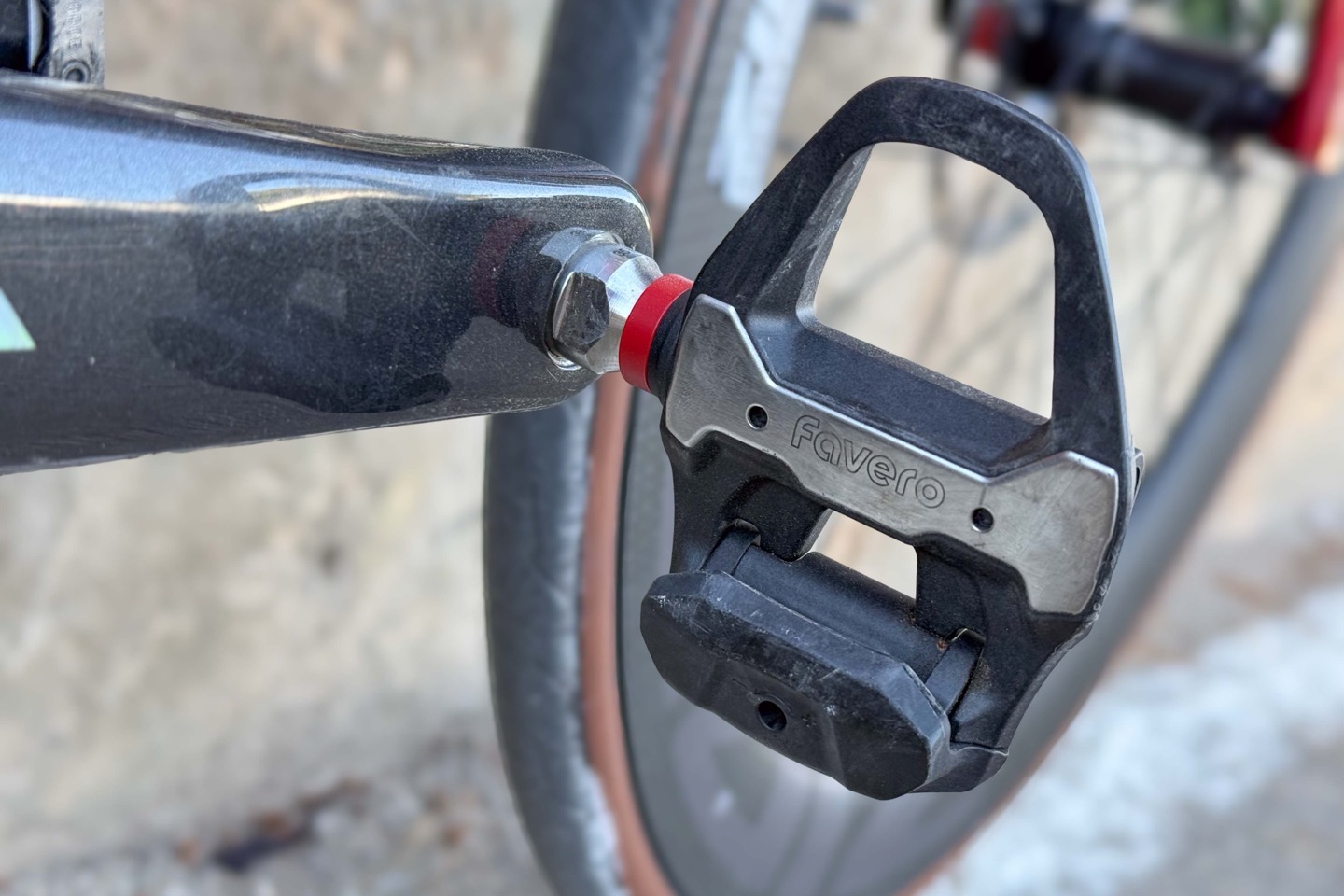
Favero has decided to give all of its Pro RS & Pro MX power meter pedal users a bit of a Valentine’s Day present, more than doubling of their battery life via a simple firmware update. The process takes a mere 3 minutes, and increases the claimed battery life from 60 hours to 160 hours. I could write a bunch more words, but frankly, it’s as simple as that.
You’ll update the Favero App first, if you haven’t done so, and then connect to your pedals. The process took about 3 minutes and 20 seconds for me to complete:
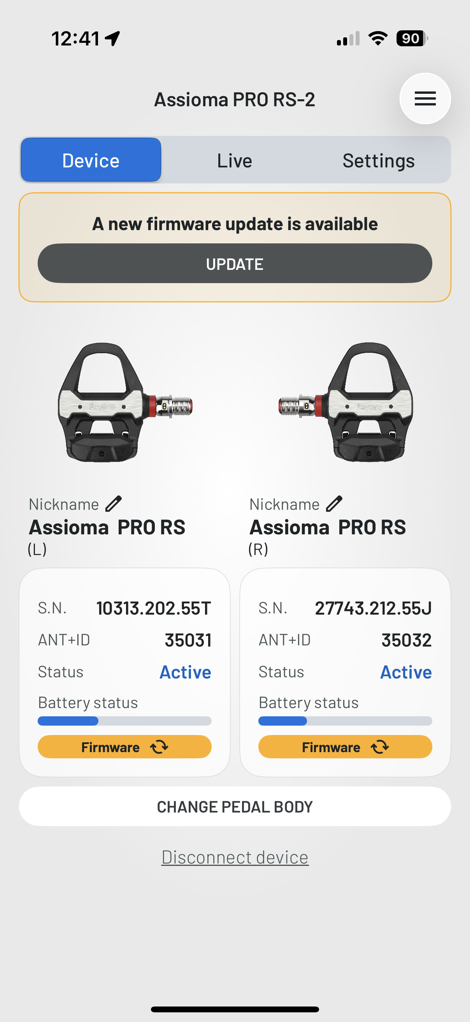
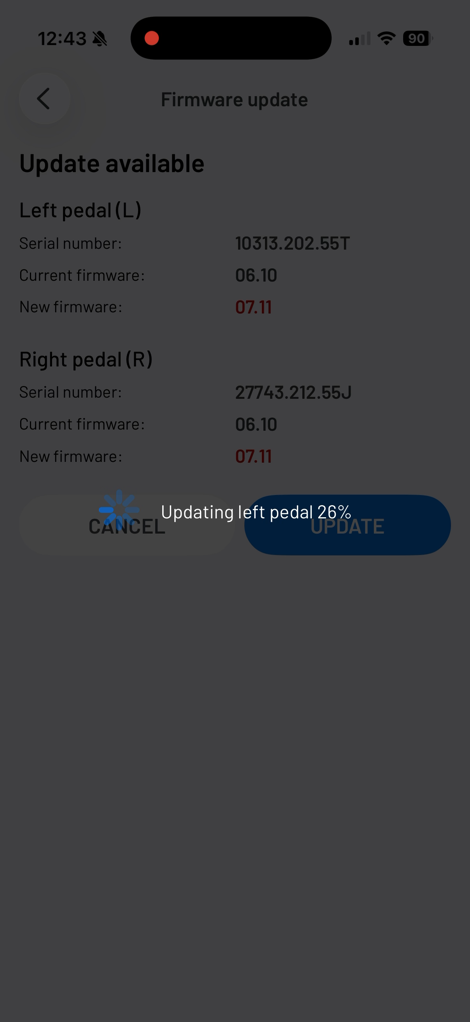
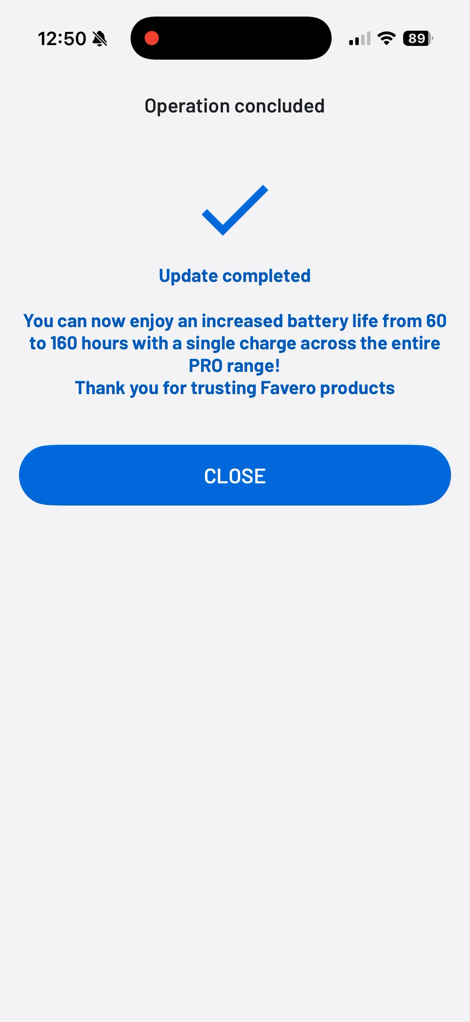
At the end of which, it’ll ask to do a simple calibration (just leave the crank arm vertical for a few seconds), and you’re done. New battery levels unlocked.
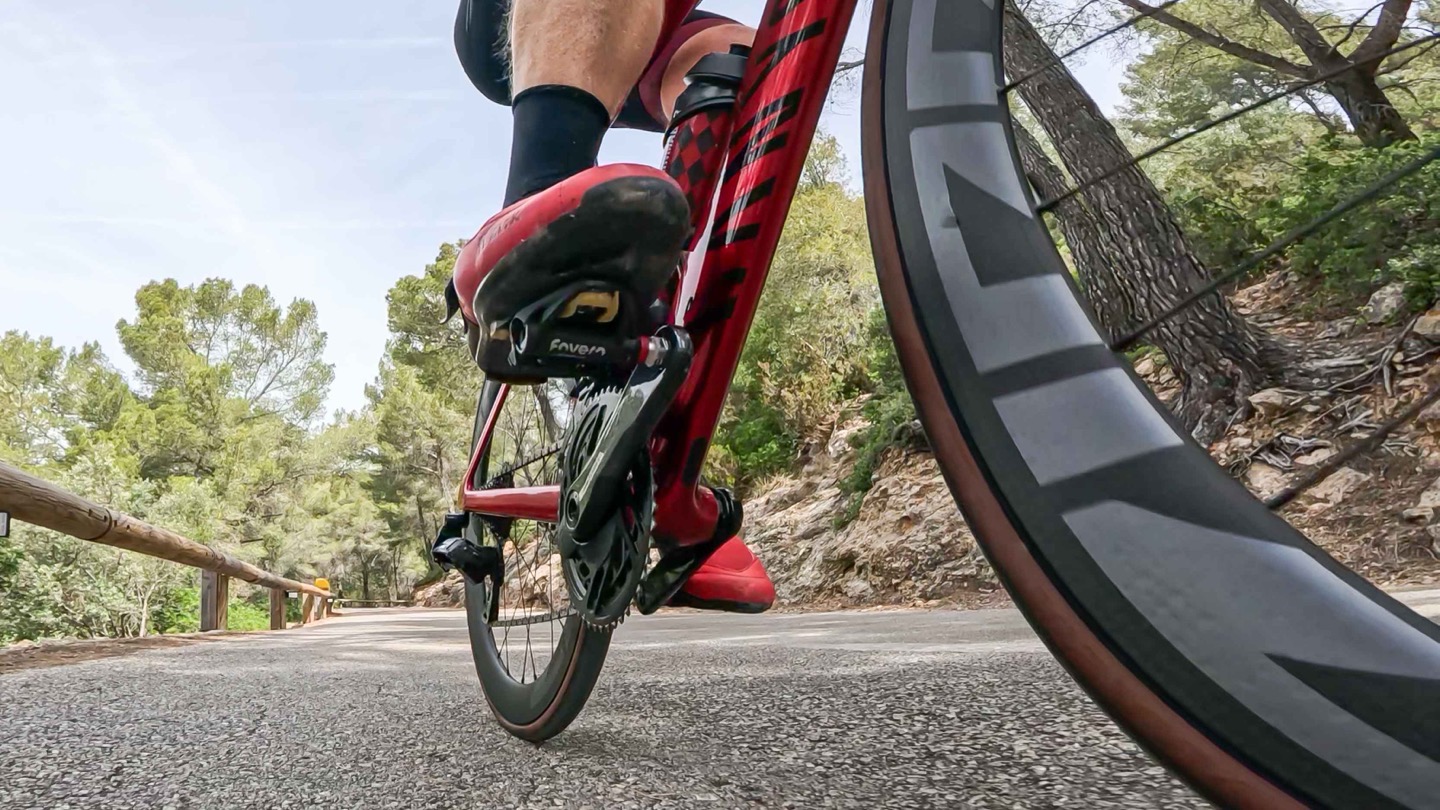
Now, I was curious as to whether or not this impacted transmission range/signal strength. So before I did that, I actually measured the signal strength of the Favero pedals in two spots. First, at my handlebars on a mount, and second, directly atop the right pedal itself (which is the pedal that transmits onwards to your bike computer). In this case, signal strength was measured via Bluetooth, as I didn’t have handy my ANT+ signal strength measuring unit.
Before handlebars: -65dBm
After handlebars: -65dBmBefore at pedal: -36dBm
After at pedal: -35dBm
A value of -40 is basically considered very good, and the lower the value (e.g. -65) indicates further away. Either way, all of these values are great, and indicate effectively no meaningful change. And while I haven’t validated the ANT+ signal strength, generally speaking those two are in tandem off the same chipset.
The reason why signal strength matters in battery tweaking exercises, it can and has absolutely broken some power meters. One only need to remember 4iiii a few years back, trying to dramatically increase their battery claims, only to have endless issues with power meter dropouts on people’s bike computers, because they pushed the limits too far. Signal strength is a big piece of the battery puzzle on these sorts of units, but it’s also a careful balance.
Of course, it’s not the only piece – the other aspects would be (and obviously is) code changes, designed to optimize performance. This can be cleaning up legacy code, cleaning up inefficient ways of doing things, etc… As is always the case when we see these massive battery jumps, we’ll have to wait to see if there are any unintended consequences across not just one or two people, but the population at large.
Favero said in a statement that: “This improvement has been made possible through extensive research and development to optimize the algorithm, ensuring extended battery life without compromising the high accuracy and consistency of data that our products are known for.”
Underlining was included in their quote. Had they really thought it through, for Valentine’s day they’d also have made that text red too. 😂
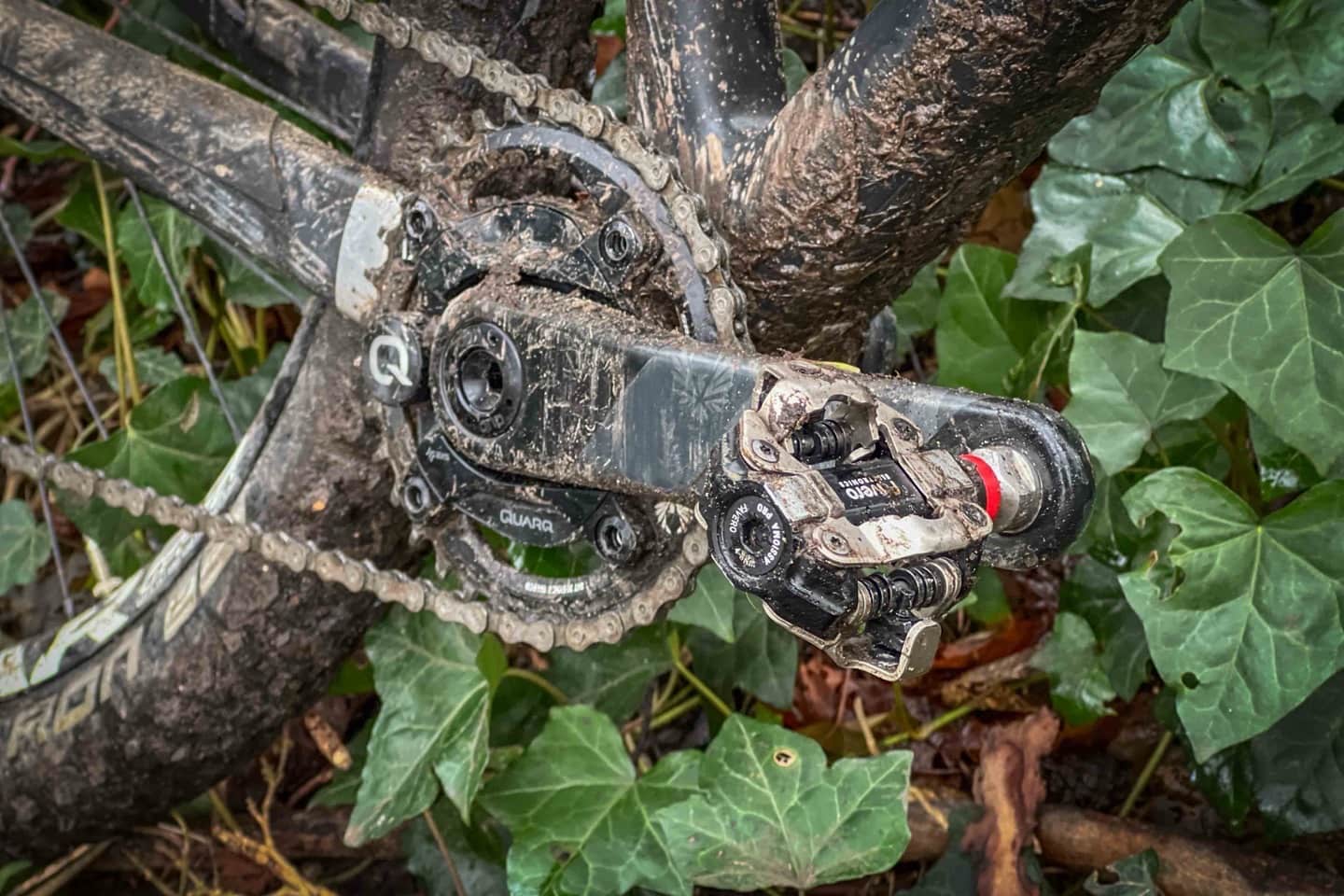
Historically speaking Favero is *very* conservative when it comes to making adjustments and rolling out new hardware/software. I’d struggle to think of any company in the field that spends as much time as Favero on the testing side, save perhaps SRAM. Both are known for final validation programs that extend almost as long as some of their competitors entire development cycles.
In any case, go give it a whirl and let me know how it goes in the comments. While Favero already won most people’s money compared to Garmin’s Rally units (based mostly just on price), the battery was one of the last comparison sheet items that Favero was ‘losing’ from a technical standpoint (Rally x10 series is at 90 hours). That piece of the puzzle is solved, with the only comparison sheet items thing left for Favero is to come out with a Look pedal option for their Pro series.
Either way, I’ve bought a number of Favero Pro RS & MX series units over the last year to use as power meter comparison pedals for both myself and my wife’s bikes, given the price point is great, and the just-works factor is high.
With that, thanks for reading!
Found This Post Useful? Support The Site!
Hopefully you found this review/post useful. At the end of the day, I’m an athlete just like you looking for the most detail possible on a new purchase – so my review is written from the standpoint of how I used the device. The reviews generally take a lot of hours to put together, so it’s a fair bit of work (and labor of love). As you probably noticed by looking below, I also take time to answer all the questions posted in the comments – and there’s quite a bit of detail in there as well.
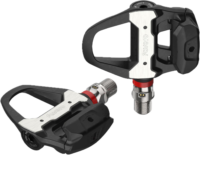
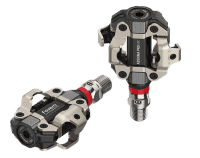
If you're shopping for the Favero Assioma Pro RS (SPD-SL) Power Meter Pedals or Favero Assioma Pro MX Pedals (Dual) or any other accessory items, please consider using the affiliate links below! As an Amazon Associate I earn from qualifying purchases. It doesn’t cost you anything extra, but your purchases help support this website a lot.
And of course – you can always sign-up to be a DCR Supporter! That gets you an ad-free DCR, access to the DCR Shed Talkin' video series packed with behind the scenes tidbits...and it also makes you awesome. And being awesome is what it’s all about!
Thanks for reading! And as always, feel free to post comments or questions in the comments section below, I’ll be happy to try and answer them as quickly as possible. And lastly, if you felt this review was useful – I always appreciate feedback in the comments below. Thanks!











It’s awfully nice of Favero to apply that new algorithm to their current devices (that were already really popular). Plenty of other companies would have kept it in their back pocket for their next hardware release.
What a fantastic company.
Favero forever!
Something is not working for me. The Favero app is at the latest version and the pedals are on version 5.77. When I go to the firmware update page it tells me I need to go to version 6.18 to get the latest features. So, I click “Check for Updates” and it says that I am already on the latest version. Is there a phased rollout or something?